Caoba
Swietenia macrophylla — The true mahogany, once so abundant that its wood defined an era of furniture-making, now survives in Costa Rica mainly through reforestation. Overharvesting drove this magnificent tree to commercial extinction in the wild, making it a symbol of both the forest's value and its vulnerability.
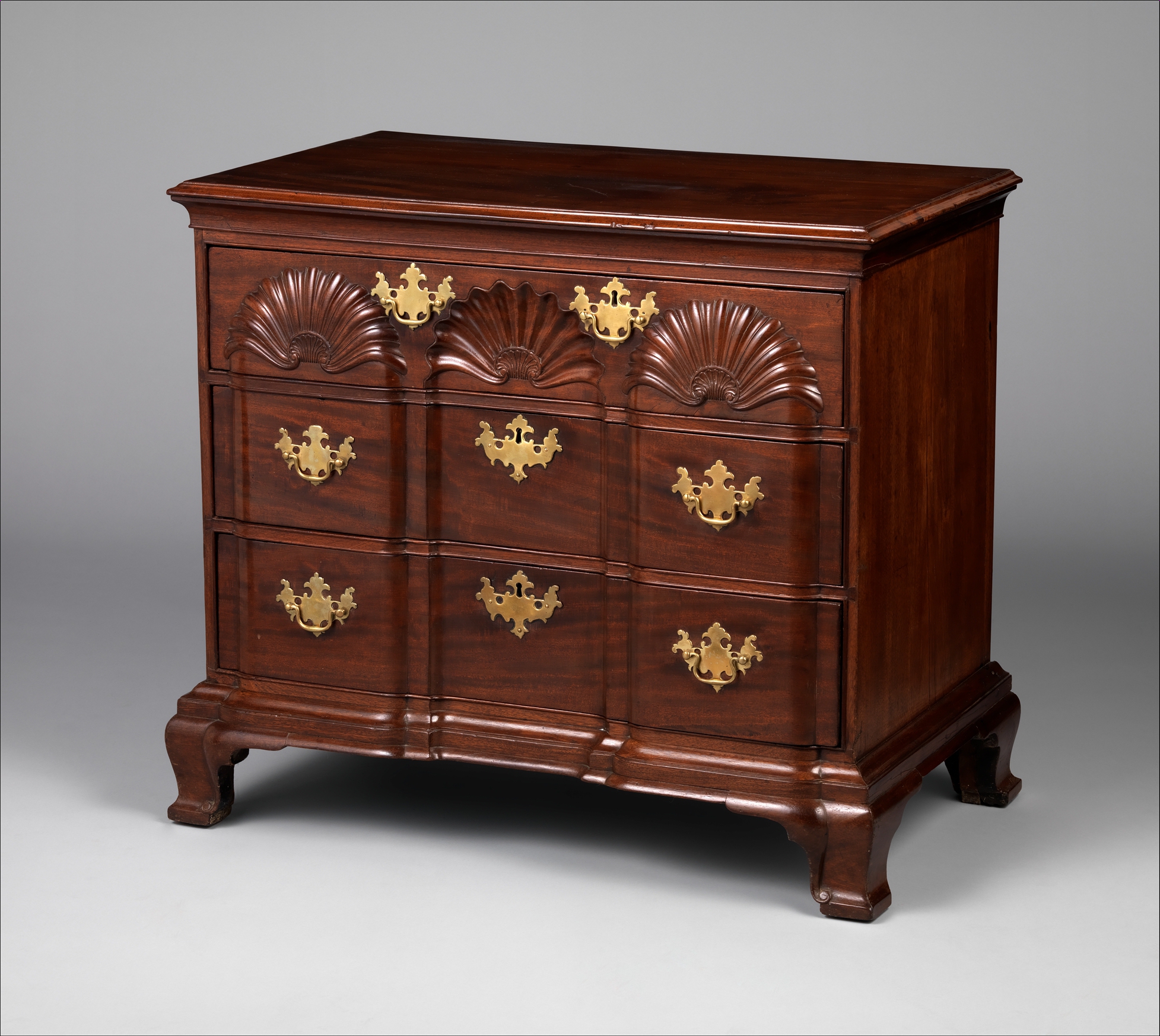
For three centuries, no wood commanded more prestige than mahogany. From the 1720s through the 1820s, the "Age of Mahogany" transformed European and American furniture-making. Thomas Chippendale built his legendary designs around this wood, its fine grain and rich color enabling the slender legs and delicate carvings that defined Georgian elegance. Colonial powers stripped the Caribbean, then Central America, then South America, chasing an ever-receding frontier of old-growth mahogany trees.
In Costa Rica, the story ended early. Wild mahogany populations collapsed under logging pressure, and the species is now considered commercially extinct in its natural habitat. The IUCN classifies it as Vulnerable, and CITES placed it on Appendix II in 2003 after a decade of failed attempts. Yet the tree persists, planted in parks for shade and in reforestation projects throughout the country. In the Brunca region, farmers include mahogany in agroforestry systems, growing it alongside coffee and cacao where it once stood in seasonal forests.
Identification
Physical Characteristics
Crown: The mahogany develops an open, rounded crown that stands out in the dry forest canopy. In Costa Rica, the tree sheds all its foliage near the start of the dry season in December. It remains bare only briefly before new leaves emerge in a spectacular display of pink, red, or translucent pastel hues that gradually deepen to dark green. This flush of color makes mahogany trees visible from a distance during the dry season.
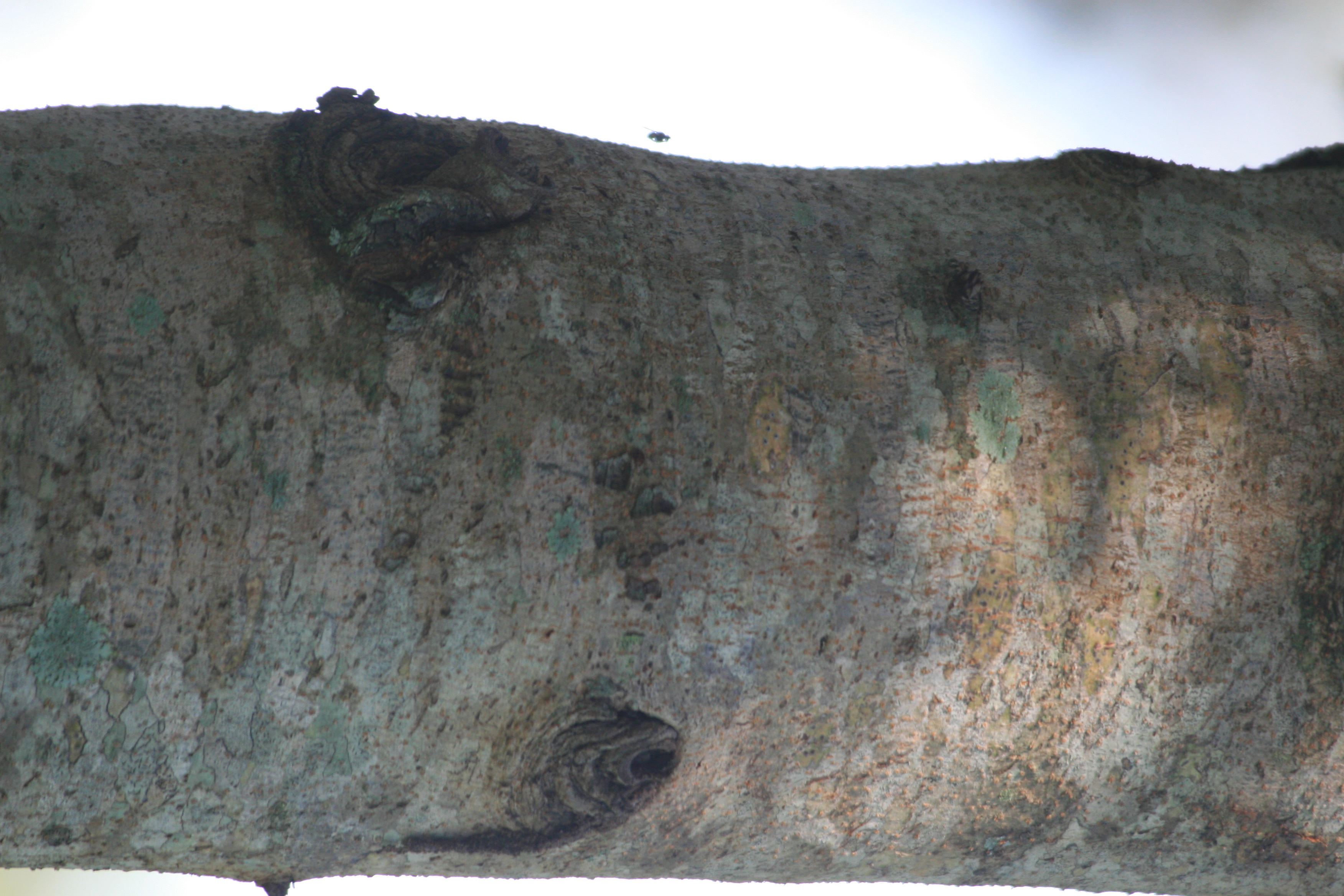
Trunk: Straight and cylindrical with a buttressed base, the trunk can reach 3-4 meters in girth on exceptional specimens. The bark is rough, gray to brown, and flakes off in irregular plates. Young trees show smoother bark that becomes increasingly fissured with age. The bole can rise 9-27 meters unbranched before the crown begins, creating the tall, straight timber that made the species so valuable.
Leaves: Large compound leaves up to 60 cm long bear 6-16 paired leaflets. The leaflets are ovate with pointed tips, asymmetrical at the base. New foliage emerges with the distinctive pink or reddish coloration before maturing to dark green. The leaves are shed during the dry season, though in wetter locations the tree may be only briefly deciduous or nearly evergreen.
Flowers: Small, fragrant flowers appear in axillary panicles shortly after the new leaves emerge, typically in late January or February in Costa Rica. The tree is monoecious, with male and female flowers on the same individual. Flowering occurs sequentially among trees over 3-4 months, with individual trees blooming for 18-34 days. Only trees larger than 30 cm diameter flower consistently; smaller trees may flower occasionally but not annually.
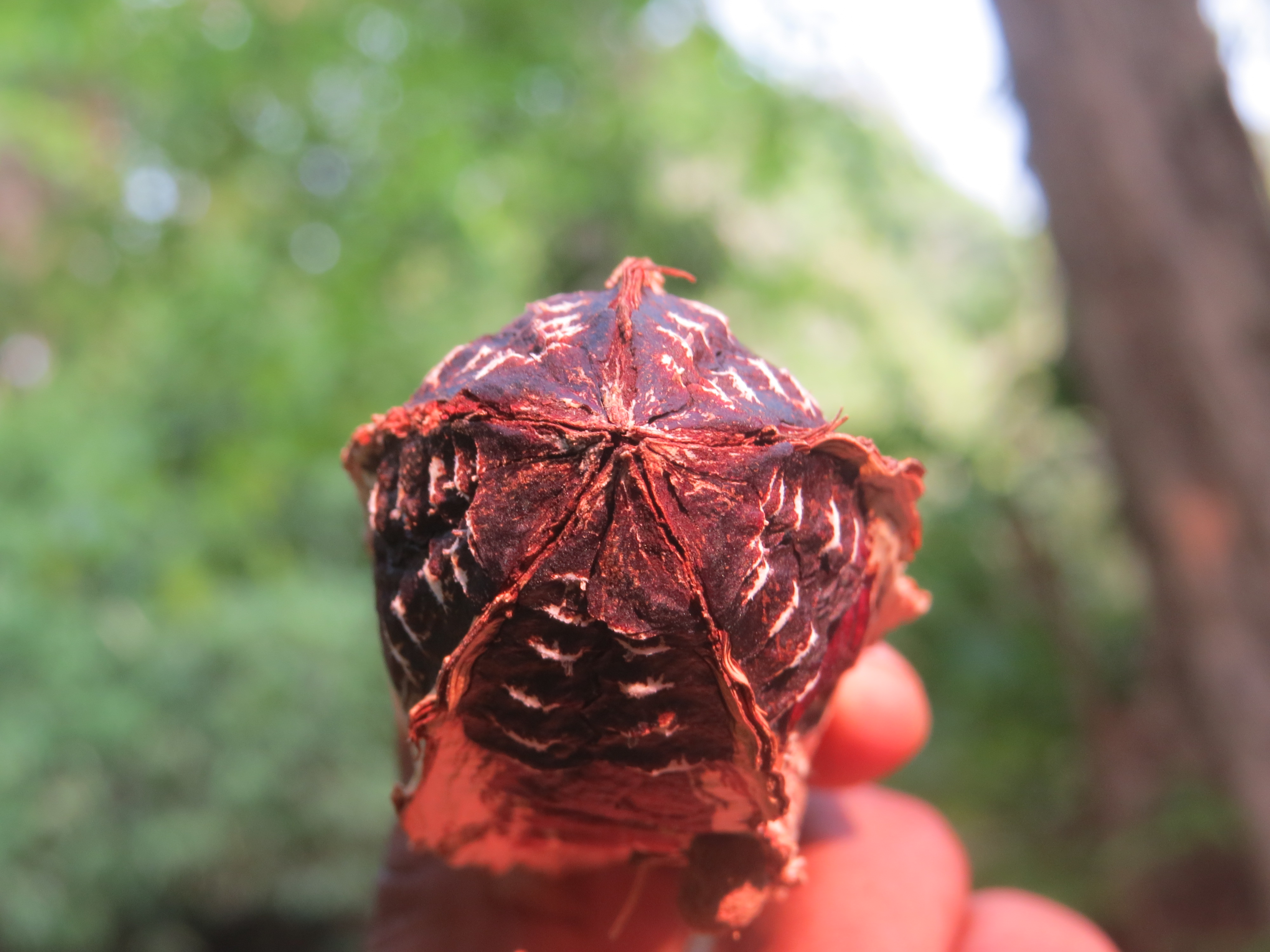
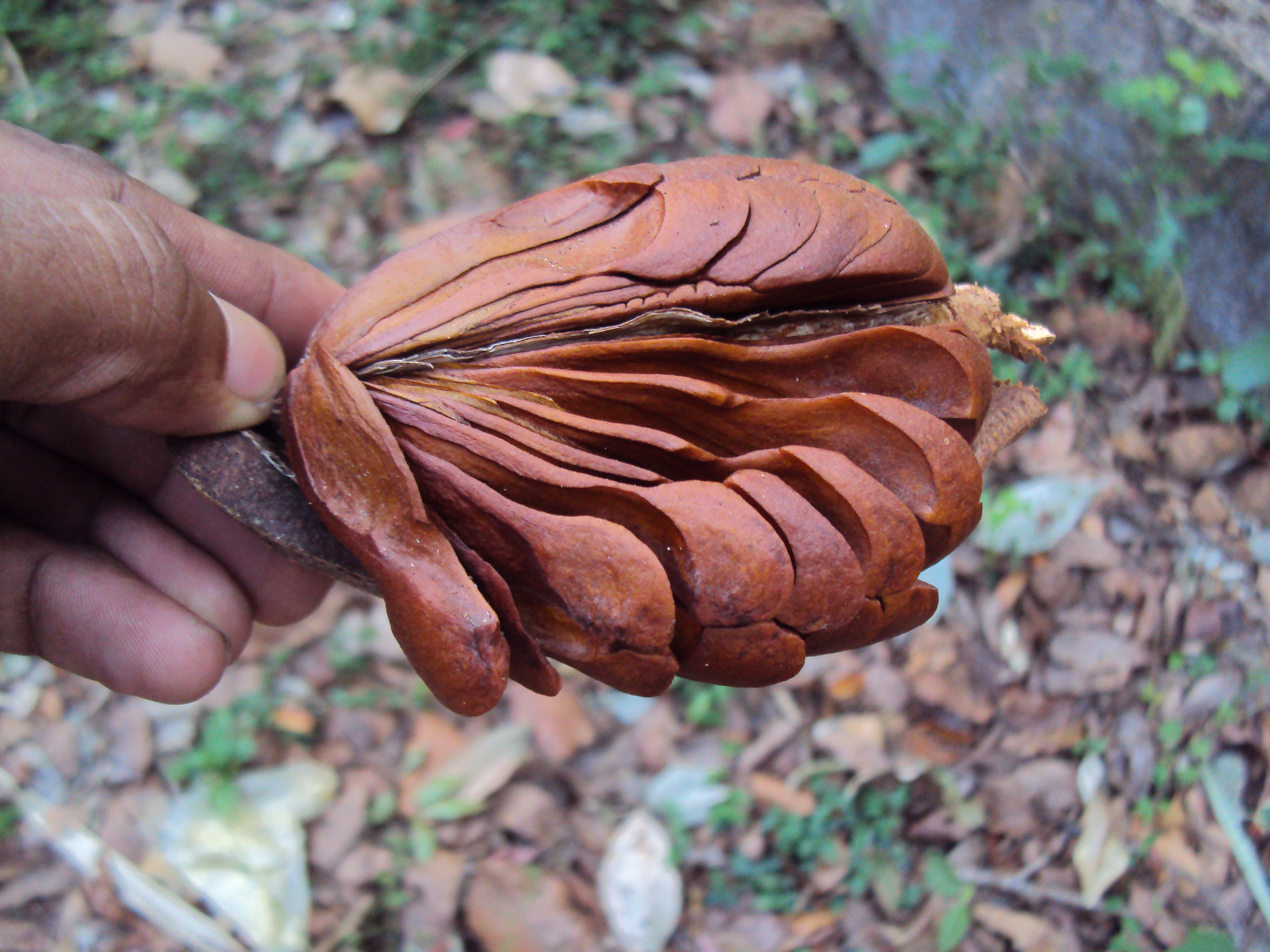
Fruit: A woody capsule approximately 12-15 cm long and 7-8 cm wide, shaped like a large egg and splitting into five sections when mature. Each capsule contains 25-60 seeds, each bearing a thin wing up to 13 cm long. The seeds are relatively heavy for wind-dispersed seeds, typically landing within 32-36 meters of the parent tree, though larger trees with greater seed production achieve dispersal distances over 60 meters. Maximum seed production occurs in vigorous trees of 90-130 cm diameter, which can produce up to 800 capsules in a single year.
Ecology
Habitat and Distribution
Big-leaf mahogany is a species of seasonally dry forests, thriving where annual rainfall ranges from 1,500-3,000 mm with a pronounced 3-6 month dry season. The dry season triggers leaf abscission and synchronizes the tree's flowering and fruiting. It grows at elevations from sea level to 1,500 meters, though commercial plantation recommendations suggest not planting above 1,200 meters due to reduced growth rates at higher altitudes.
In Costa Rica, natural mahogany populations were concentrated in the dry tropical forests of the northern Pacific slope, particularly Guanacaste. A coast-to-coast humid belt running diagonally from northeastern Costa Rica to northwestern Panama creates a natural gap in the species' range, separating populations in seasonally dry regions. The perhumid forests of the Osa Peninsula, which receive over 5,000 mm of rain annually, lie outside the species' natural habitat preferences.
However, the tree is widely planted throughout Costa Rica, including in the Brunca region, where it grows well in agroforestry systems at appropriate elevations. FONAFIFO's Payment for Environmental Services program supports mahogany planting in mixed systems with coffee, cacao, and other crops. The species tolerates a wider range of conditions when cultivated than it naturally occupies, though growth rates remain optimal in seasonally dry sites with deep, fertile alluvial soils.
Reproduction and Dispersal
Mahogany reproduces entirely by seed. The winged seeds spin as they fall, carrying them on wind currents away from the parent tree. Despite this adaptation, most seeds land relatively close to the mother tree. Research in the Brazilian Amazon found that tree size and fecundity strongly influence dispersal patterns: large, highly productive trees contribute disproportionately to long-distance dispersal events beyond 60 meters, while smaller trees have more limited seed shadows.
The tree flowers during the dry season, with individual trees maintaining blooming periods of 18-34 days. However, flowering occurs sequentially among trees in a population over 3-4 months, creating a pattern of incompletely isolated subpopulations that constrains pollen flow. Pollination is accomplished by generalist insects, and studies have found that most pollinations involve nearby trees with relatively little gene flow between distant groups, even within continuous forest.
Fresh seeds germinate readily, with germination commencing 10-17 days after sowing and rates exceeding 90%. Seeds remain viable for about one year under proper storage conditions. Trees begin producing fruit regularly at about 15 years of age, though flowering may begin earlier in open-grown specimens. The species demonstrates excellent self-pruning in plantation conditions, maintaining straight boles without intervention.
The Wood That Built an Era
No timber in history has commanded the prestige of mahogany. The heartwood displays reddish, pinkish, salmon, or yellowish tones when freshly cut, deepening to a rich red or brown with age and exposure to light. Its high luster and "golden appearance," combined with a fine to medium texture and excellent workability, made it the premier wood for high-class furniture, cabinet work, interior paneling, and precision applications like instrument cases and musical instruments.
The wood's density ranges from 485-840 kg/m³, providing strength while remaining workable. It takes an excellent polish and accepts stains and finishes beautifully. These qualities allowed craftsmen like Thomas Chippendale to create furniture with slender, delicate elements that would have been impossible in softer or coarser woods. When Chippendale published his influential design book The Gentleman and Cabinet-Maker's Director in 1754, mahogany was the assumed material for his most sophisticated pieces.
The 1721 Naval Stores Act removed duties on timber imported to England from the American colonies, dramatically stimulating the mahogany trade. Initially centered on British Caribbean islands, especially Jamaica, the trade rapidly expanded to encompass Central America, Cuba, and Hispaniola. Wars against France and Spain shaped the geography of extraction, as colonial powers competed for access to mahogany forests. By the time Central American forests were being stripped, the Caribbean's largest trees were already gone.
Traditional Medicine
Throughout its range, indigenous peoples and rural communities have used mahogany bark medicinally. Decoctions of the bitter bark treat fevers, including malarial fevers, as well as diarrhea and other digestive ailments. The bark contains tannins, flavonoids, and limonoids with documented biological activity. Modern research has confirmed significant antimalarial properties, with bark extracts showing 78% inhibition of chloroquine-resistant Plasmodium falciparum in laboratory studies.
In Indonesia and Malaysia, where mahogany has been introduced and widely planted, traditional healers use the seeds to treat hypertension and diabetes. The Asháninka people of the Amazon use bark preparations for malaria, infections, and inflammatory conditions, often combining mahogany bark with other local herbs. These widespread medicinal uses reflect the tree's rich chemistry, particularly its limonoid compounds, which also confer the wood's natural resistance to insects.
Conservation Crisis
The story of mahogany conservation is one of delayed action and commercial extinction. In 1992, Costa Rica and the United States submitted the first proposal to list mahogany on CITES Appendix II, which would have required export permits and proof of sustainable harvest. The proposal failed. A second attempt by the Netherlands failed in 1994. A third attempt failed in 1997.
Unwilling to wait for international consensus, Costa Rica unilaterally listed mahogany on CITES Appendix III in 1995, requiring certificates of origin for any mahogany exported from the country. Mexico, Bolivia, and Brazil followed in 1997, and Colombia and Peru added their populations in 2000. Finally, in November 2002, CITES member nations voted 68-30 to include mahogany on Appendix II. The listing took full effect in November 2003.
By the time international protections arrived, the damage was severe. Population reductions in Central America exceeded 70% since 1950. The species was reported commercially extinct in El Salvador, Costa Rica, and parts of South America including Mato Grosso, Brazil and Beni, Bolivia. Deforestation reduced mahogany's range by over 60% in Central America and 30% in South America. Even where trees survived, illegal logging continued. A 2005 study found that 12.45% of Peru's mahogany exports came from illegal logging, with 83% of exporting companies selling illegally sourced wood.
The Shoot Borer Problem
Efforts to repopulate mahogany through plantations have faced a formidable obstacle: the mahogany shoot borer (Hypsipyla grandella). This moth's larvae bore into the terminal shoots of young mahogany trees, killing the growing tip and causing the tree to branch repeatedly. The result is a stunted, twisted tree with no commercial timber value. Infestations can reach 100% of trees in a plantation, rendering entire projects worthless.
Over 80 years of research has failed to produce an economically viable control method. The larvae's cryptic behavior inside the shoots makes insecticides ineffective. A single larva per tree is sufficient to cause significant damage, and larvae mainly feed on apical shoots during the growth season but switch to consuming 50-96% of seeds during the fruiting season. Some success has been achieved by growing mahogany in mixed stands under established canopy, which reduces attack rates, but this approach sacrifices growth speed for protection.
Reforestation and Hope
Despite these challenges, mahogany remains an important reforestation species in Costa Rica. FONAFIFO's Payment for Environmental Services program includes mahogany among the native species eligible for incentives in agroforestry systems. When planted alongside coffee, cacao, or short-term agricultural crops, mahogany provides shade, improves soil through its deep roots, and offers a long-term timber investment even if individual trees suffer some shoot borer damage.
Research on genetic resistance continues, with Costa Rica hosting progeny tests to identify strains with greater tolerance to shoot borer attack. The tree's ability to coppice (resprout from cut stumps) and its good fire resistance make it resilient in managed landscapes. And the species demonstrates excellent self-pruning when grown at proper spacing (10 x 3 meters), maintaining the straight boles valued for timber even without intensive management.
Mahogany planted today will not yield timber for 30-35 years, the standard rotation age for the species. But every tree planted represents both a biological and cultural recovery, restoring a species that once defined the forests of tropical America and the furniture of the Georgian era. In parks throughout Costa Rica, mahogany trees planted as ornamentals offer shade during the long dry season, their nearly evergreen crowns a reminder of the resilience that allowed this species to survive its near-extinction.
Key Sources & Resources
Species Information
Detailed species account with Costa Rica-specific information on habitat, phenology, and identification.
Technical information on propagation, growth characteristics, and agroforestry applications.
Comprehensive database entry with cultivation, uses, and timber properties.
Conservation & CITES
Comprehensive analysis of the decade-long effort to gain CITES protection and the factors behind initial failures.
Official CITES page on mahogany conservation efforts and trade regulations.
The 1994 IUCN resolution calling for CITES protection, predating the successful 2002 listing.
Shoot Borer & Plantation Forestry
University of Florida fact sheet on the biology and management of this devastating pest.
Research on mahogany performance in coffee and cacao systems, with elevation recommendations.
Ecology & Reproduction
Research on how larger, more fecund trees contribute disproportionately to long-distance seed dispersal.
How sequential flowering creates incompletely isolated subpopulations constraining pollen flow.
Traditional Medicine
Scientific review of the species' medicinal properties, including antimalarial, anti-inflammatory, and antidiabetic activities.
History of the Mahogany Trade
The history of mahogany in furniture-making and its role in the "Age of Mahogany."
Overview of Thomas Chippendale and the furniture style that made mahogany legendary.