Mountain Arrayán
Vaccinium consanguineum — A fire-resilient blueberry shrub of Costa Rica's highest peaks, this páramo specialist resprouts from its roots after the flames that periodically sweep across the Talamanca highlands.
Above 3,000 meters in Costa Rica's Talamanca range, where the cloud forest gives way to páramo grassland, a shrubby blueberry relative covers the windswept slopes. Vaccinium consanguineum, known locally as arrayán de monte, produces small purple berries that sustain the Volcano Juncos, thrushes, and finches that inhabit this harsh environment. When fires sweep through the páramo, as they have for millennia, the arrayán's above-ground portions are consumed. Within months, new shoots emerge from underground rhizomes. This capacity for regeneration has allowed the species to persist in an ecosystem shaped by fire.
The arrayán de monte belongs to the same genus as cultivated blueberries and cranberries, part of the heath family (Ericaceae) that thrives in acidic, nutrient-poor soils. Its berries are edible and sweet, though foragers must take care not to confuse them with the superficially similar fruits of Pernettya coriacea, which contains a toxic compound. In recent years, Costa Rican agricultural researchers have begun studying the arrayán as a potential crop for highland farmers, drawn by its abundant fruit production and adaptation to the cool, wet conditions of the Central American highlands.
Identification
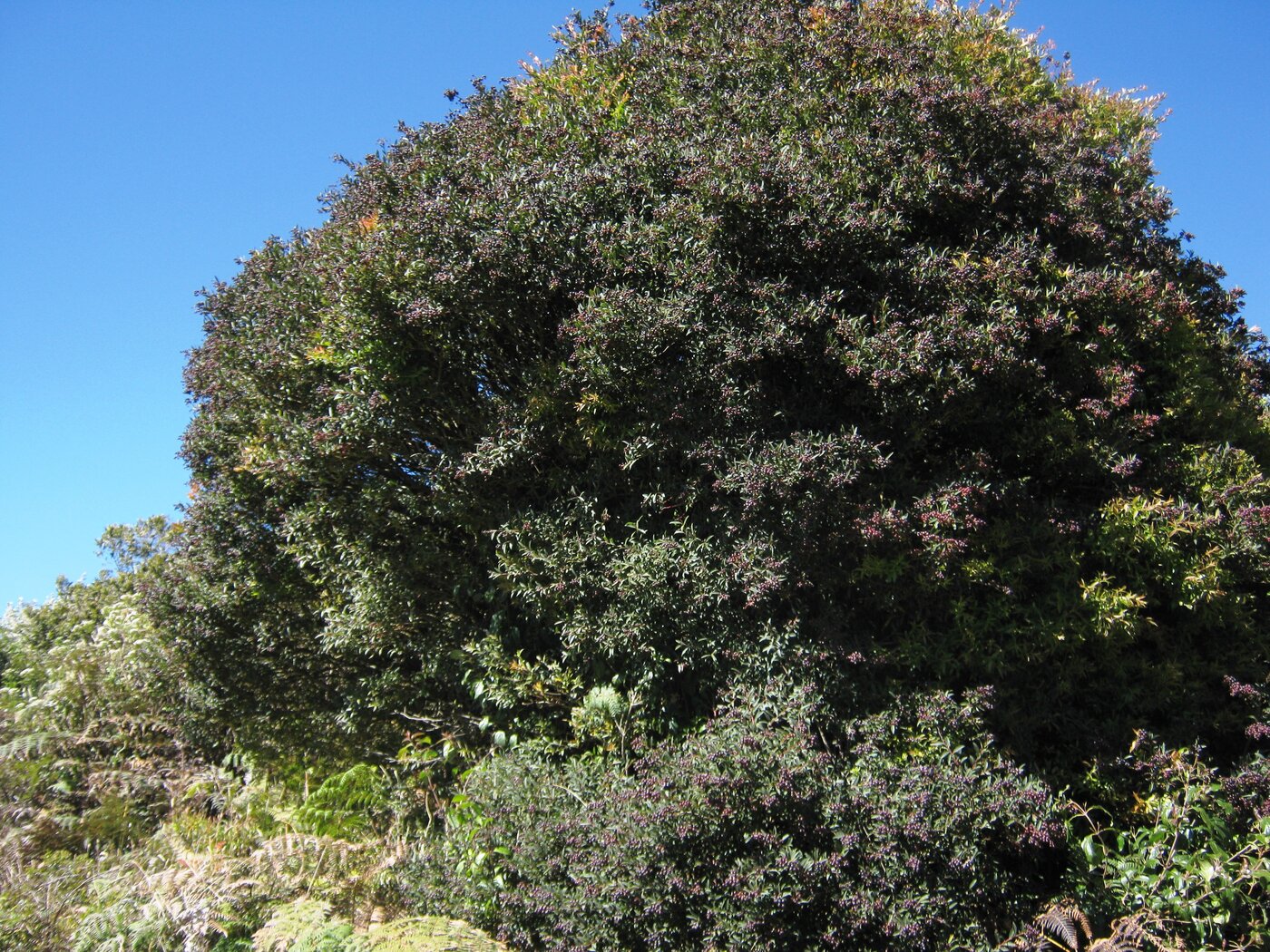
The arrayán de monte was first described scientifically by German botanist Johann Friedrich Klotzsch in 1851, based on specimens collected in Central America. The species belongs to the section Pyxothamnus within the genus Vaccinium, which includes over 450 species of blueberries, cranberries, and related plants worldwide. In Costa Rica, it grows in two main regions: the Talamanca mountain range (including Chirripó National Park and Cerro de la Muerte) and the Central Volcanic range (Volcán Irazú and Volcán Poás).
Physical Characteristics
Growth form: Variable in size, from compact shrubs 0.5 meters tall to small trees reaching 10 meters in favorable conditions. Most commonly encountered as shrubs 1-3 meters in height. The stems are woody, puberulent (finely hairy) when young, becoming smooth with age. Plants are often compact and densely bushy with stiff, rigid branches.
Leaves: Small, evergreen, elliptic to oblong leaves measuring 1-4.6 cm long and 0.5-1.8 cm wide. The margins are thickened and finely toothed (serrulate), with dark glandular calluses at the tips of each tooth. Leaves are leathery, glabrous (hairless) on upper surface, with visible veining. Petioles are short, 1.5-3 mm.
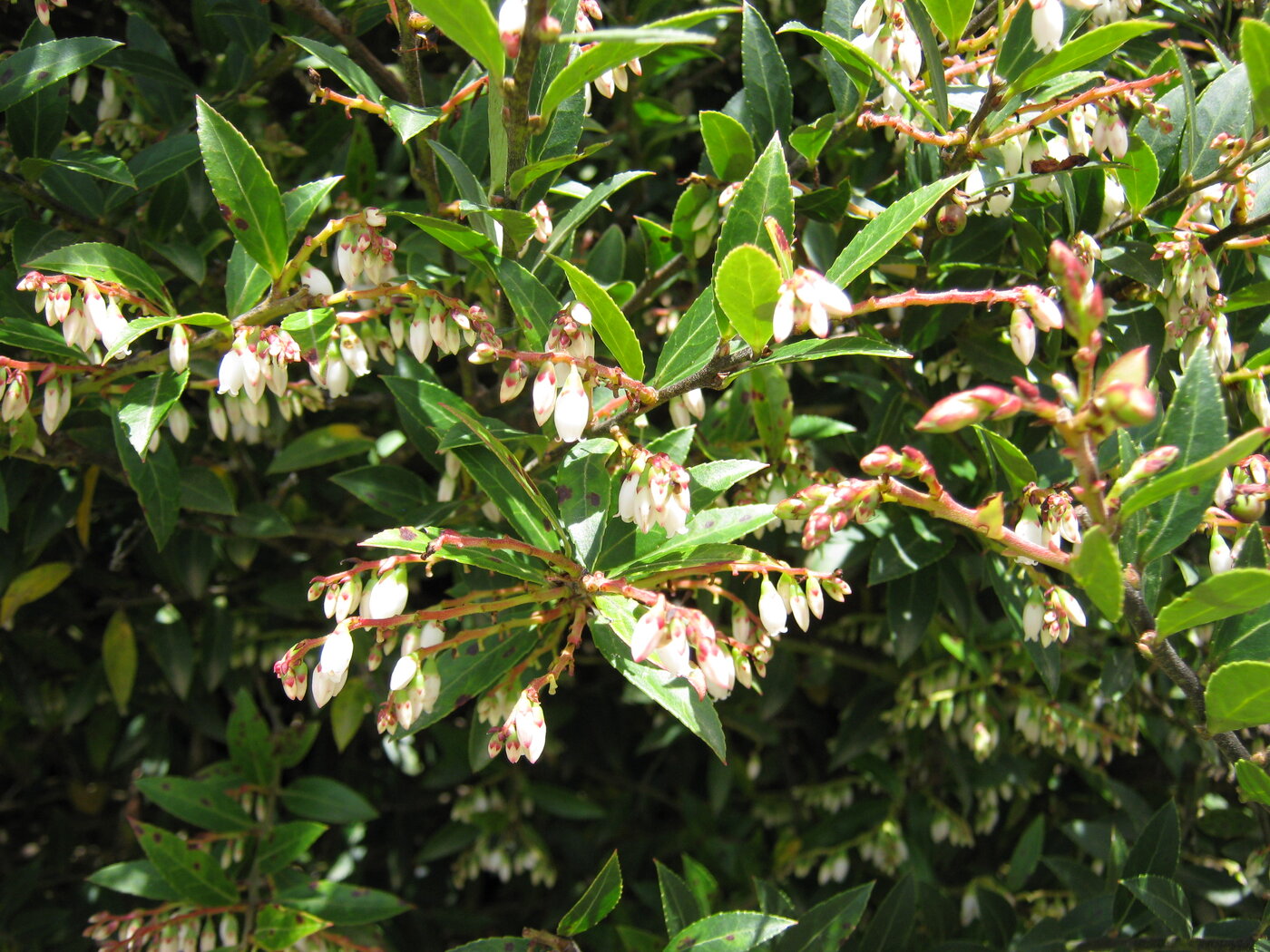
Flowers: Small, urn-shaped (urceolate) flowers borne in axillary racemes. The corolla is cylindric, 5-7.5 mm long and 3-4 mm in diameter, creamy white with tinges of red or pink. Each flower has 8 stamens with ciliate (fringed) filaments. Flowering occurs during the wet season, typically May through October.
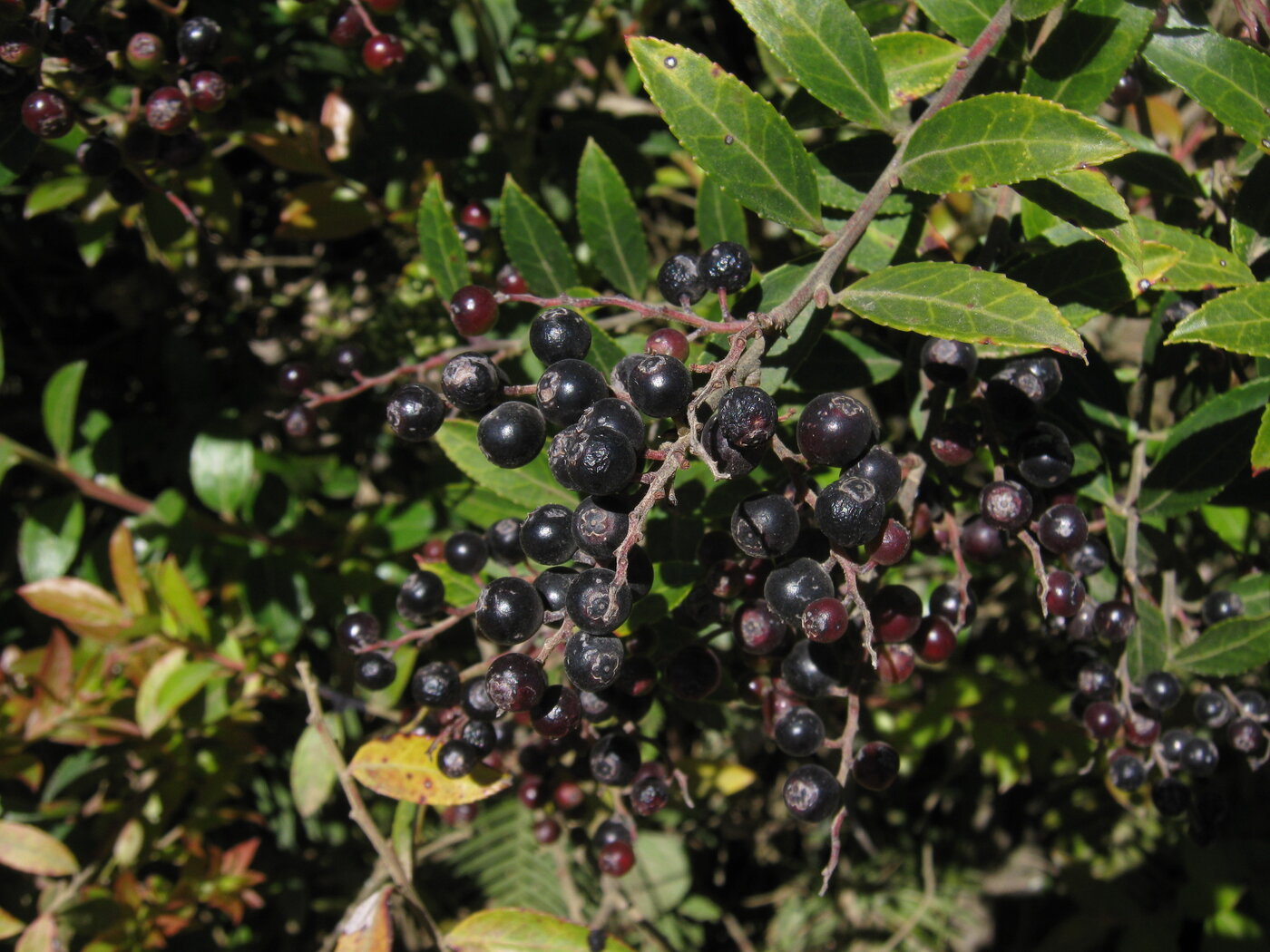
Fruit: Globose berries, 5-6 mm in diameter, ripening from red to blackish-purple. The fruit is juicy and sweet, similar in flavor to cultivated blueberries. Berries appear from December through April, coinciding with the beginning of the dry season. The timing provides an important food source for highland birds and mammals during a period when other fruits may be scarce.
Habitat & Distribution
The arrayán de monte ranges from the highlands of southern Mexico through Honduras, Costa Rica, and into western Panama. Throughout this range, it occupies high-elevation habitats, typically between 2,100 and 3,800 meters above sea level. In Costa Rica, it is most abundant in the páramo zone above 3,200 meters, where it grows alongside dwarf bamboo (Chusquea subtessellata), St. John's wort (Hypericum irazuense), and other highland shrubs.
Ecosystem: Páramo grassland and scrub, cloud forest edges, and disturbed areas within highland oak forest. The species favors exposed sites with high light availability and is common along roadsides and forest margins.
Elevation: 2,100-3,800 meters. Most common above 3,200 meters in true páramo habitat, though an isolated population exists at 2,100 meters on the Caribbean slope.
Key locations in Costa Rica: Chirripó National Park, Cerro de la Muerte (Buenavista páramo), Tapantí-Macizo de la Muerte National Park, and the slopes of Volcán Irazú. The species is particularly abundant at accessible sites along the Inter-American Highway at Cerro de la Muerte, where it can be observed at elevations around 3,340 meters.
Fire Ecology
Fire has shaped the Costa Rican páramo for at least 10,000 years. Charcoal fragments in lake sediment cores from the Chirripó highlands document periodic burning, whether ignited by lightning or by the indigenous peoples who traversed these mountains. In modern times, most fires are human-caused, either accidental (from careless hikers and campers) or intentional (to clear vegetation). Documented fire events at Chirripó include 1953, 1958, 1976, 1977, 1981, and 1992, with the 1976 fire burning over 80% of the high páramo and prompting fears of "irreversible damage" to the ecosystem.
The arrayán de monte has evolved remarkable adaptations to survive fire. While flames consume all above-ground biomass, leaving the landscape blackened, the species resprouts vigorously from basal buds located at the root crown. Research conducted at Cerro Asunción and Cerro Zacatales following the 1992 fire documented survival rates of 88-96% in burned shrubs. Within two years, nearly all individuals had resprouted.
Height recovery is slower. Five years after fire, resprouting shrubs averaged 72-75 cm in height, compared to prefire heights of 100-130 cm. Based on comparisons with older plants at other sites, full height recovery likely requires many additional years beyond that. This slow recovery makes the arrayán vulnerable to repeated fires at short intervals, which can prevent shrubs from accumulating sufficient reserves to survive subsequent burning.
Interestingly, the relative abundance of Vaccinium consanguineum has increased in some páramo areas following fire. Unlike the shrub Hypericum irazuense, which suffers high mortality and must reestablish from seed, the arrayán's ability to resprout gives it a competitive advantage. Long-term studies have documented shifts in vegetation composition, with V. consanguineum and the bamboo Chusquea subtessellata becoming more dominant at the expense of fire-sensitive species.
Wildlife Interactions
The arrayán de monte fruits during the dry season (December to April), a timing that makes its berries an important food resource for highland birds and mammals. The páramo ecosystem supports a distinctive bird community, many of whose members are adapted to feeding on the berries and seeds of shrubs like Vaccinium.
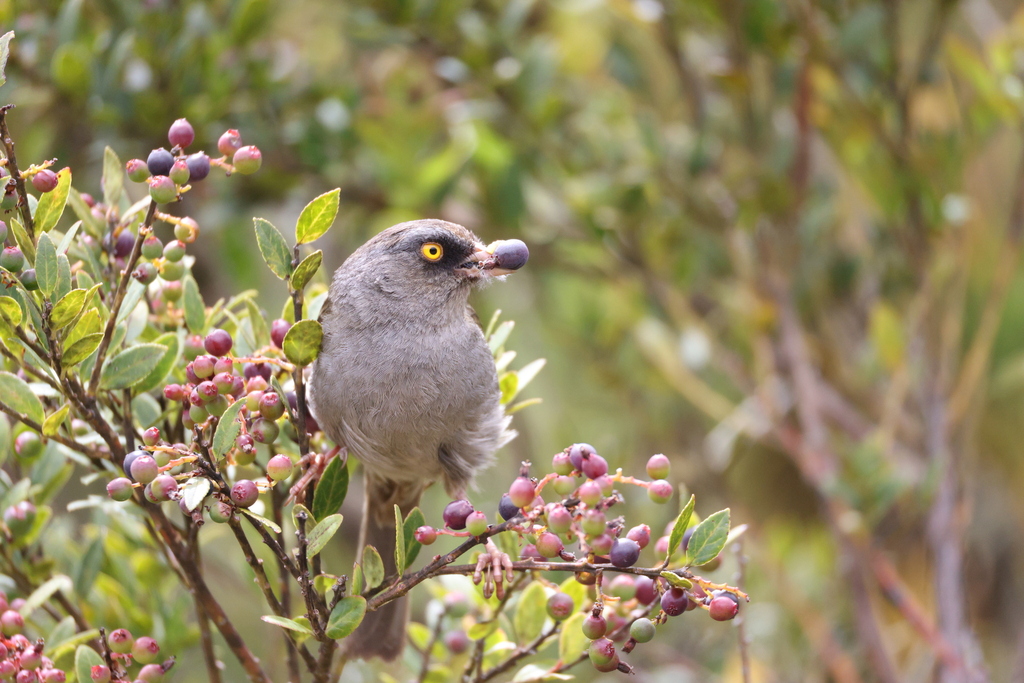

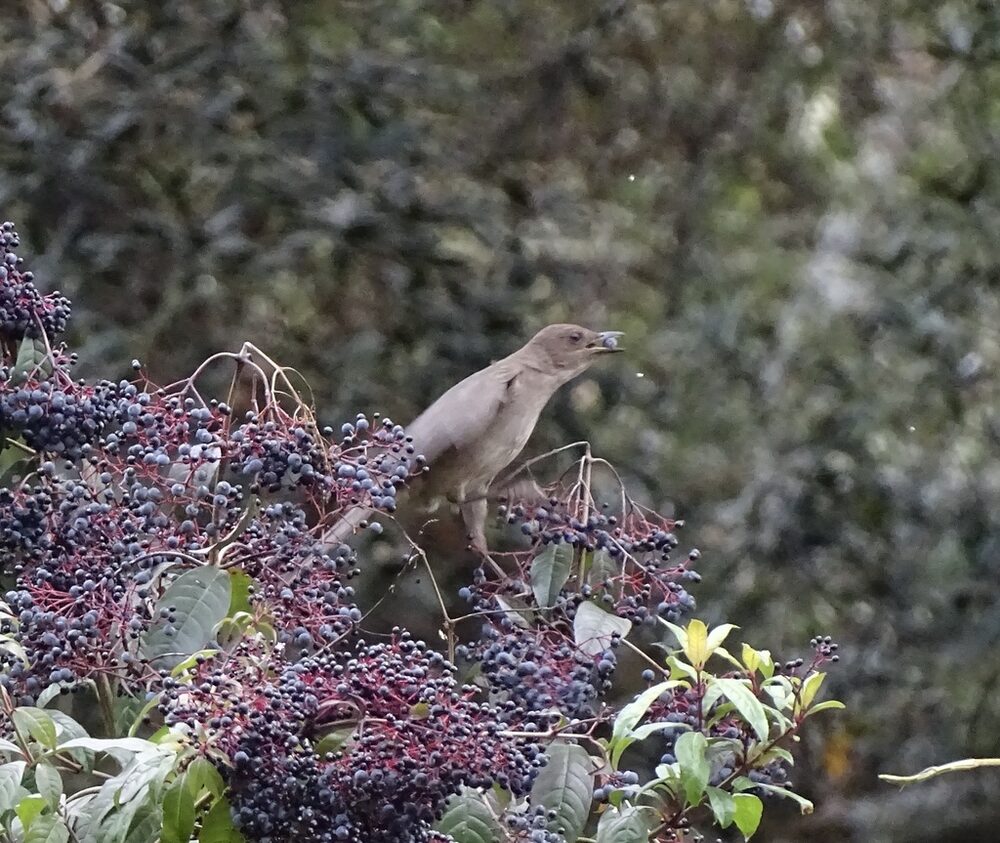

The Volcano Junco (Junco vulcani) is particularly notable. This small sparrow is endemic to the Talamancan highlands of Costa Rica and western Panama, confined to páramo and high-elevation scrub above 3,000 meters. It forages on the ground, running and hopping through the vegetation to glean seeds and fallen berries. The junco's reliance on páramo habitat makes it vulnerable to climate change: as temperatures rise, the species' habitat band shifts upward on the mountain, creating what researchers have called an "escalator to extinction."
Co-occurring Species
The arrayán de monte grows in association with a distinctive community of páramo plants. Understanding these associations helps identify the species in the field and reveals its ecological context.
| Species | Common Name | Ecological Notes |
|---|---|---|
| Chusquea subtessellata | Dwarf bamboo | Dominant groundcover (up to 60%); fastest postfire recovery |
| Hypericum irazuense | St. John's wort | Fellow shrub; high fire mortality; reestablishes from seed |
| Pernettya prostrata | Prickly heath | Fellow Ericaceae; resprouts after fire like Vaccinium |
| Quercus spp. | Highland oaks | Form adjacent forest below páramo; Vaccinium grows at forest edge |
| Puya spp. | Giant bromeliads | Páramo associates in exposed rocky sites |
| Sphagnum spp. | Peat moss | In peatland associations with Vaccinium |
Conservation
All of Costa Rica's páramo is legally protected within three national parks: Chirripó National Park (established 1975), La Amistad International Park (shared with Panama), and Tapantí-Macizo de la Muerte National Park. Together, these parks have been designated a UNESCO Man and Biosphere Reserve and form part of the La Amistad World Heritage Site. The arrayán de monte therefore enjoys complete protection throughout its Costa Rican range.
However, protected status does not eliminate threats. Climate change poses the most significant long-term risk to the páramo ecosystem. Climate models project that the region will become warmer and drier, conditions that are already beginning to manifest. As temperatures rise, the vegetation zones shift upward, squeezing páramo species against the mountain peaks. Studies of specific páramo areas project that 39-52% could become unsuitable for páramo vegetation by mid-century, depending on emissions scenarios.
Fire frequency may increase as climate change creates hotter, drier conditions that make fires easier to start and harder to control. While the arrayán de monte can survive individual fire events, repeated burning at intervals shorter than its nine-year recovery period could exhaust its regenerative capacity. The massive fire in Colombia's Sumapaz páramo in February 2020, which burned at least 30 square kilometers, illustrates the scale of threat that climate-intensified fires pose to these ecosystems.
Human Uses
The berries of Vaccinium consanguineum are edible and have been gathered from wild populations for generations. The fruits can be consumed fresh, like cultivated blueberries, or processed into juice and jelly. The jelly has a consistency similar to blackberry jam and a flavor comparable to other Vaccinium species. Single bushes can produce thousands of berries in a season, making wild harvest productive where populations are accessible.
Costa Rican agricultural researchers have begun investigating the arrayán de monte as a potential commercial crop. The species was incorporated into the national Fruit Growing Program as part of research on non-traditional fruit crops for highland farmers. Scientists have developed tissue culture protocols for propagating the species, using micro-cuttings established in sterile laboratory conditions. These techniques could eventually enable commercial cultivation, diversifying agricultural options for communities in the Talamanca highlands.
The species also reproduces vegetatively through rhizomes, similar to the way Rubus (blackberry) spreads. This growth habit, combined with its fire resilience and abundant fruit production, suggests that the arrayán de monte could prove amenable to cultivation in the cool, wet highlands where few conventional fruit crops thrive.
Key Sources & Resources
Species Information
General overview of the species with information on distribution and characteristics.
Authoritative taxonomic information, accepted name, synonyms, and native range.
Community observations with photographs documenting the species across its range.
Detailed botanical description with morphological measurements.
Global distribution data and occurrence records from herbarium specimens.
Fire Ecology
Key research documenting fire survival and regrowth rates at Cerro Asunción and Cerro Zacatales.
Long-term study of vegetation changes following major fire event.
Páramo Ecosystem
Comprehensive overview of Costa Rican páramo vegetation, ecology, and conservation.
Overview of climate change and other threats to páramo ecosystems across the Americas.
Agricultural Research
Research on tissue culture propagation methods for potential commercial cultivation.