Guapinol
Hymenaea courbaril: This bat-pollinated dry-forest tree produces the stinking-toe pod, amber's living resin analogue, and seeds that agoutis cache. Costa Rica's familiar guapinol became two species in 2018, when botanists separated the wet-forest giant from H. courbaril.
A piece of golden Dominican amber the size of a grape preserves a stingless bee, including its legs, antennae, and compound eyes. Sticky resin covered the insect 20 million years ago and began its transformation into amber. That resin oozed from Hymenaea protera, an extinct relative of the living guapinol.
In Costa Rica's modern botanical treatment, true Hymenaea courbaril is usually 6–20 meters tall and occasionally reaches about 35 meters. The giant guapinoles of Manuel Antonio, Golfito, and the Osa wet forests were separated in 2018 as Hymenaea osanigraseminae. Both trees produce resin, but separating them changes how we read older Costa Rican accounts of guapinol's size, range, and life history.
The Stinking Toe
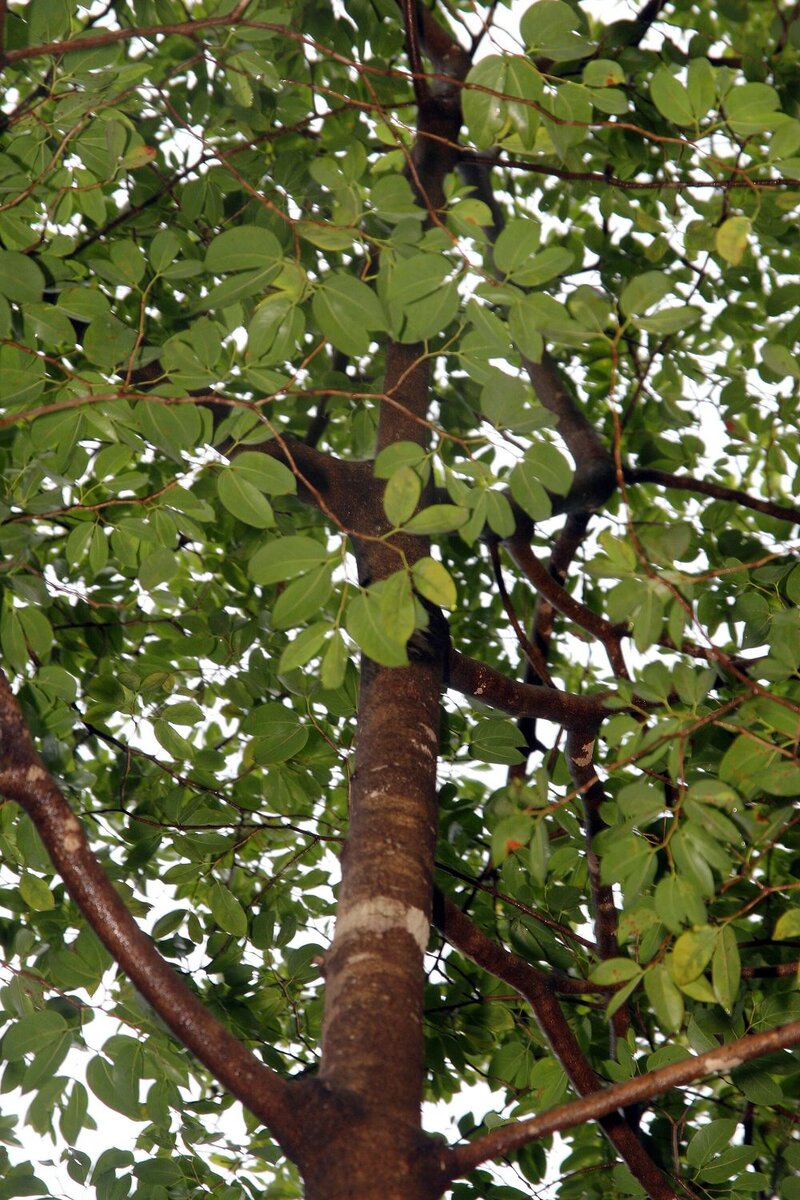
In the Caribbean and much of Central America, the guapinol goes by a less dignified name: stinking toe. The pod earns its nickname as soon as the shell cracks. Each pod, the size of a small potato, contains seeds surrounded by a dry, powdery pulp. When you crack open the hard shell, the aroma that escapes is unmistakable: a rich, fermented smell that many compare to aged cheese or, less charitably, to an unwashed foot. The pods even look the part, their bulbous brown shapes bearing an unfortunate resemblance to toes.
Despite the smell, people have eaten guapinol pulp for thousands of years. In Costa Rica, the sweet, mealy pulp is eaten fresh or stirred into drinks. Secondary accounts repeat a Mesoamerican preparation combining guapinol pulp with maize, peanuts, and cacao, although they do not identify the original ethnographic source. The hard shell must be cracked before the pulp can be eaten.
Identification
The guapinol belongs to the Fabaceae, the legume family, placing it alongside relatives like the almendro (Dipteryx panamensis) and guanacaste (Enterolobium cyclocarpum). Reports conflict on whether guapinol forms nitrogen-fixing root nodules.
Habit and Trunk
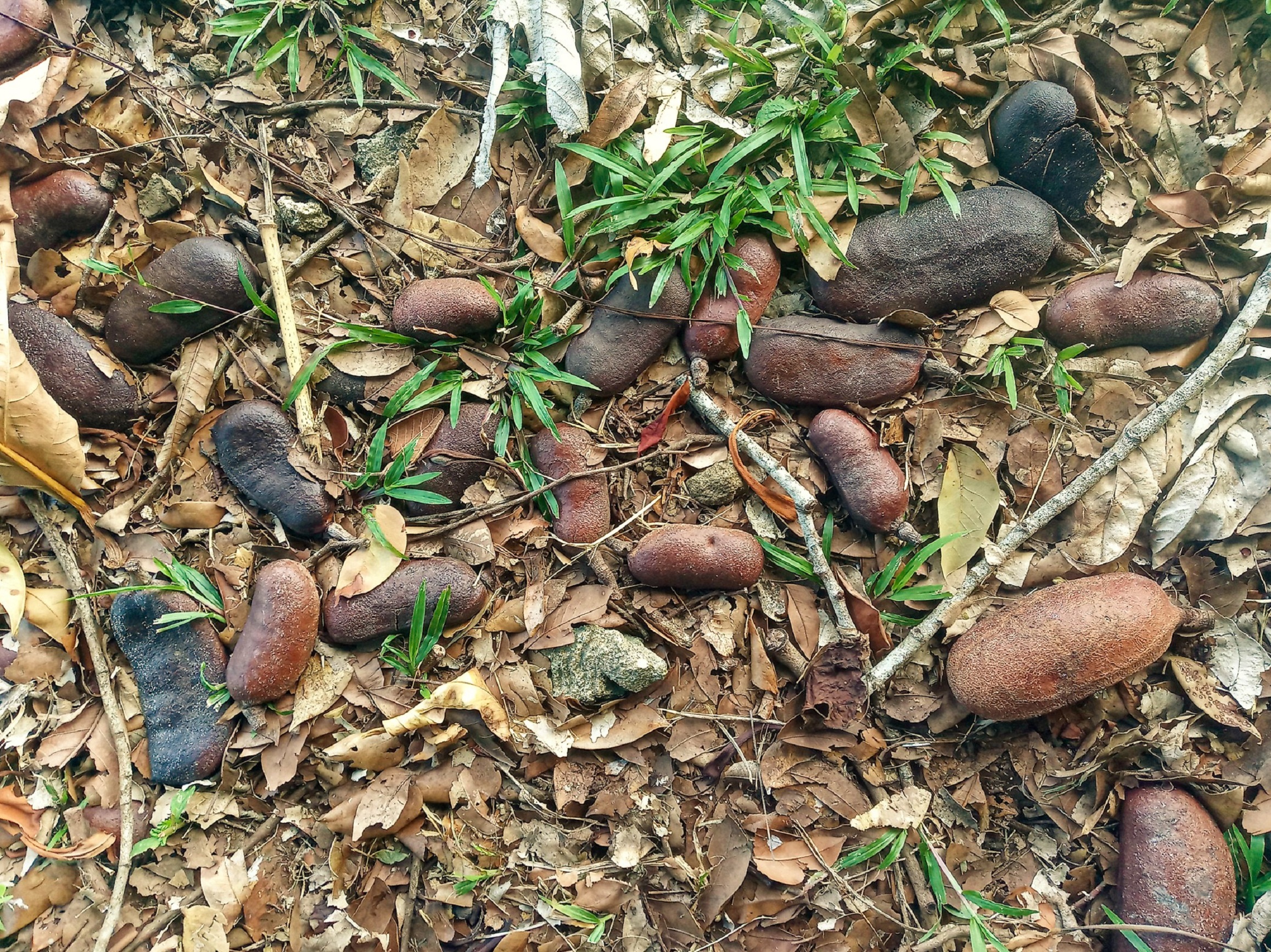
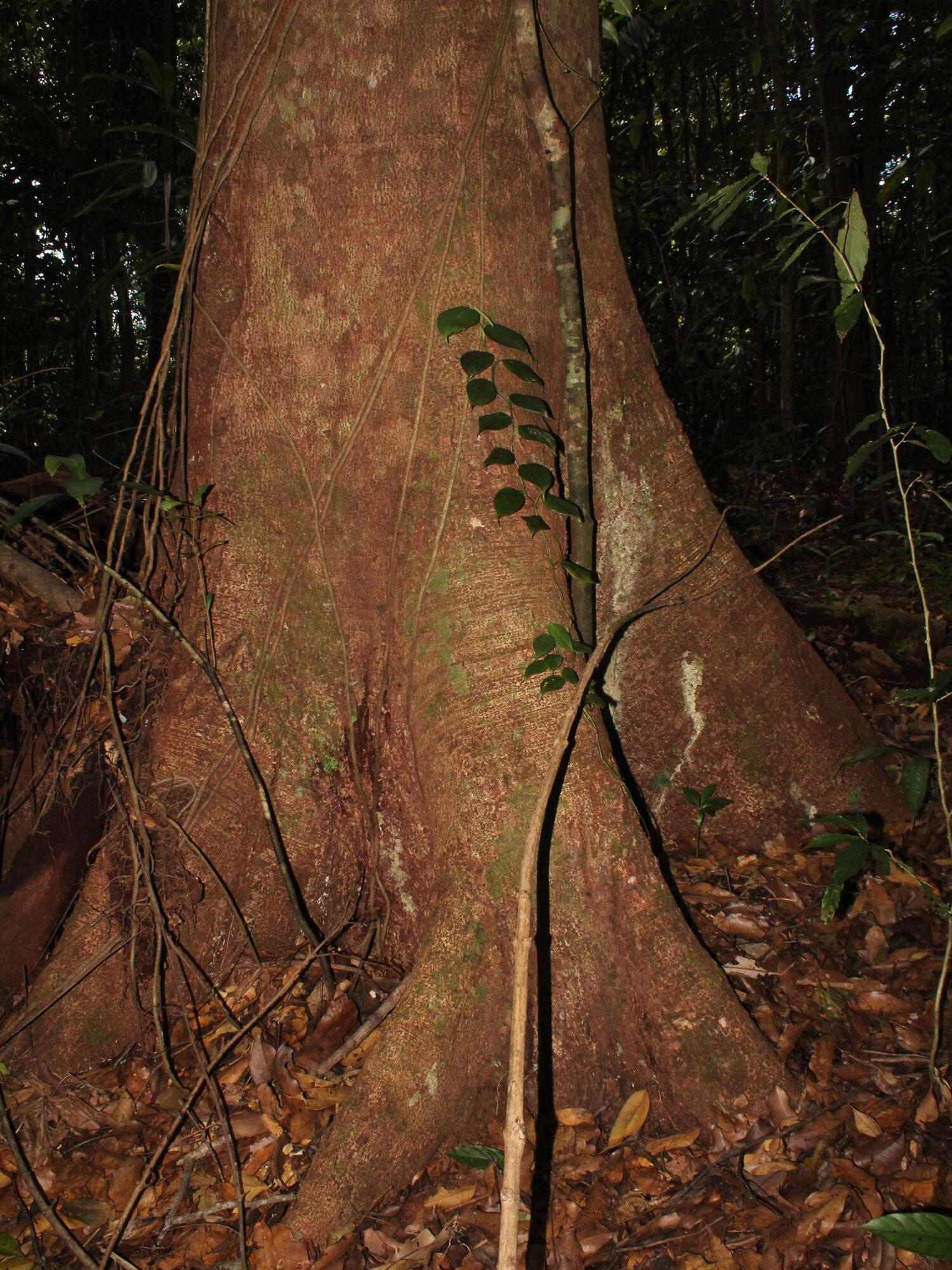
In Costa Rica's seasonally dry forests, mature H. courbaril can reach the canopy. It has a cylindrical, sometimes slightly fluted trunk and a broad crown, and normally lacks buttresses. The bark is comparatively smooth and gray, sometimes finely fissured or mottled with lichens. Wounds can exude clear to pale-yellow aromatic resin, which may harden on the trunk or accumulate in the soil beneath old trees.
Leaves
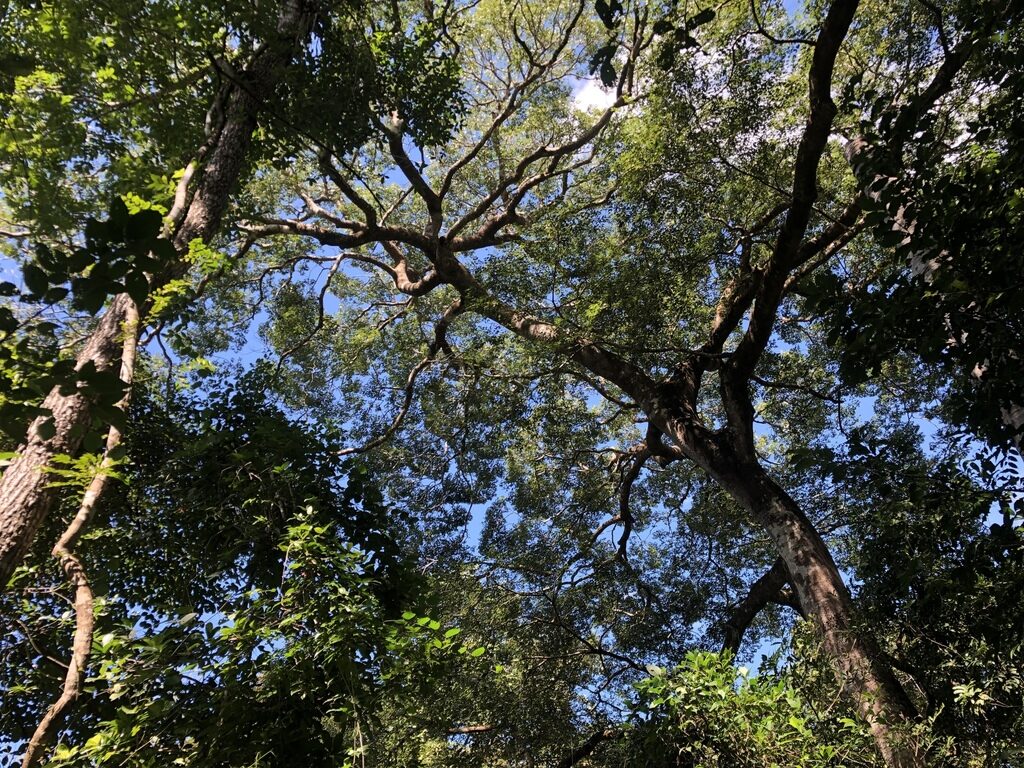
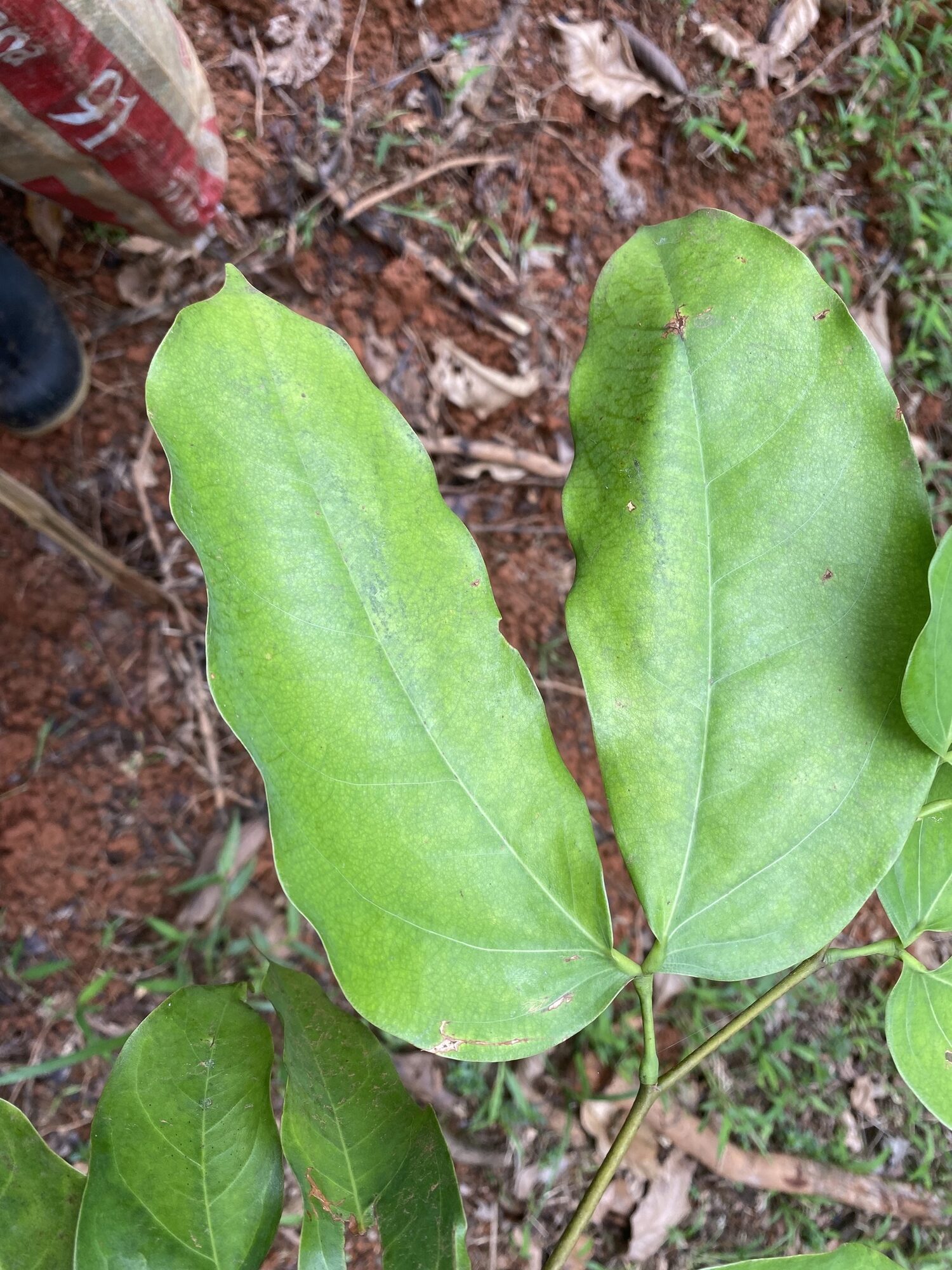
Each compound leaf is reduced to one opposite pair of thick, glossy, asymmetric leaflets, generally 4–10 centimeters long and sometimes a little larger. Hold one toward daylight: the blade is peppered with conspicuous translucent resin or oil dots. Held to daylight, those dots distinguish guapinol from other Costa Rican trees with paired leaflets. A guapinol usually stays green year-round; in the northwest, however, a tree may shed and replace almost its entire crown within one or two weeks near the start of the dry season.
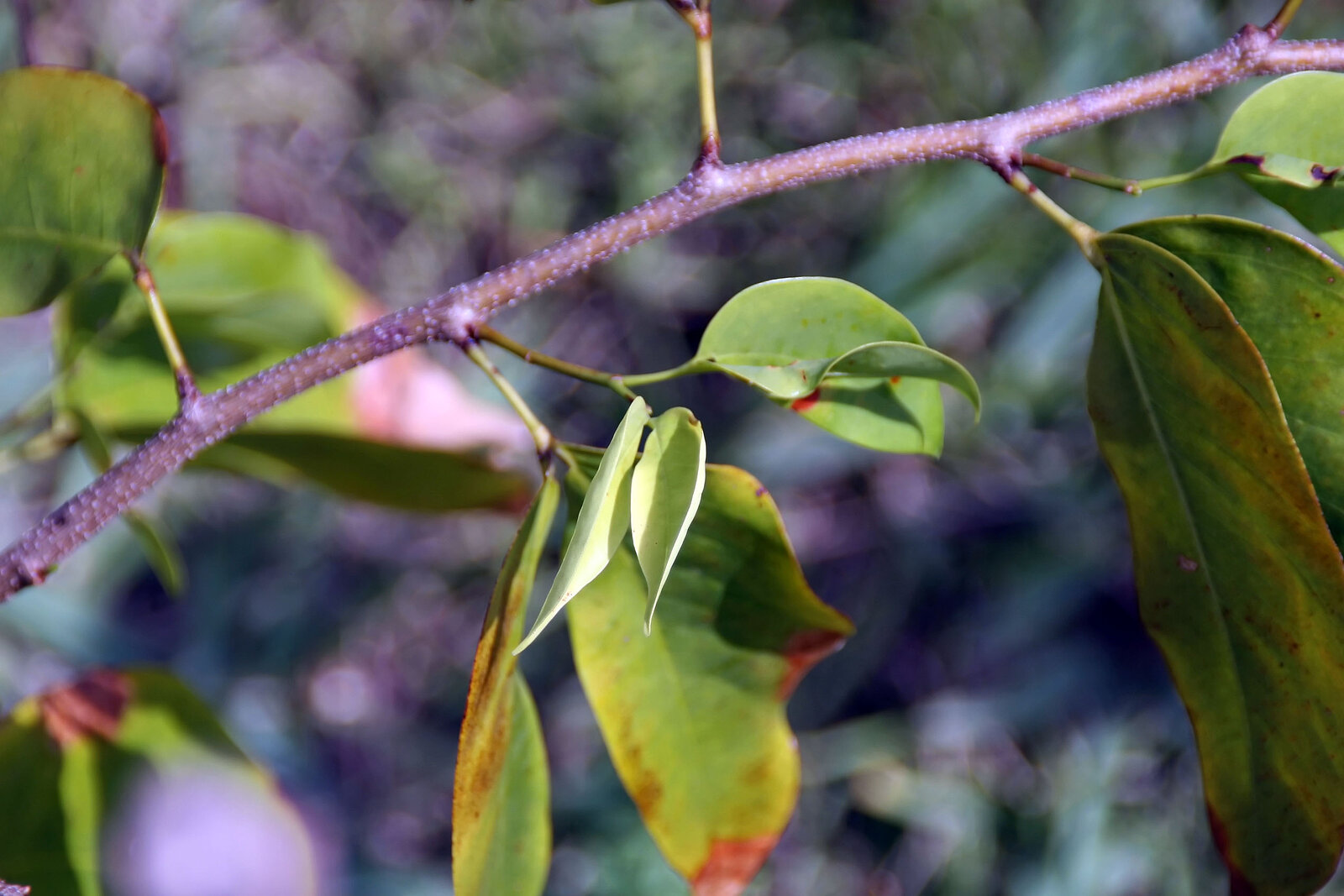
Two look-alikes fail the light test: species of Cynometra and Peltogyne also have paired leaflets, but they lack guapinol's obvious translucent dots. The spiny Pithecellobium unguis-cati may resemble it at a distance, but its leaves are bipinnate.
Flowers
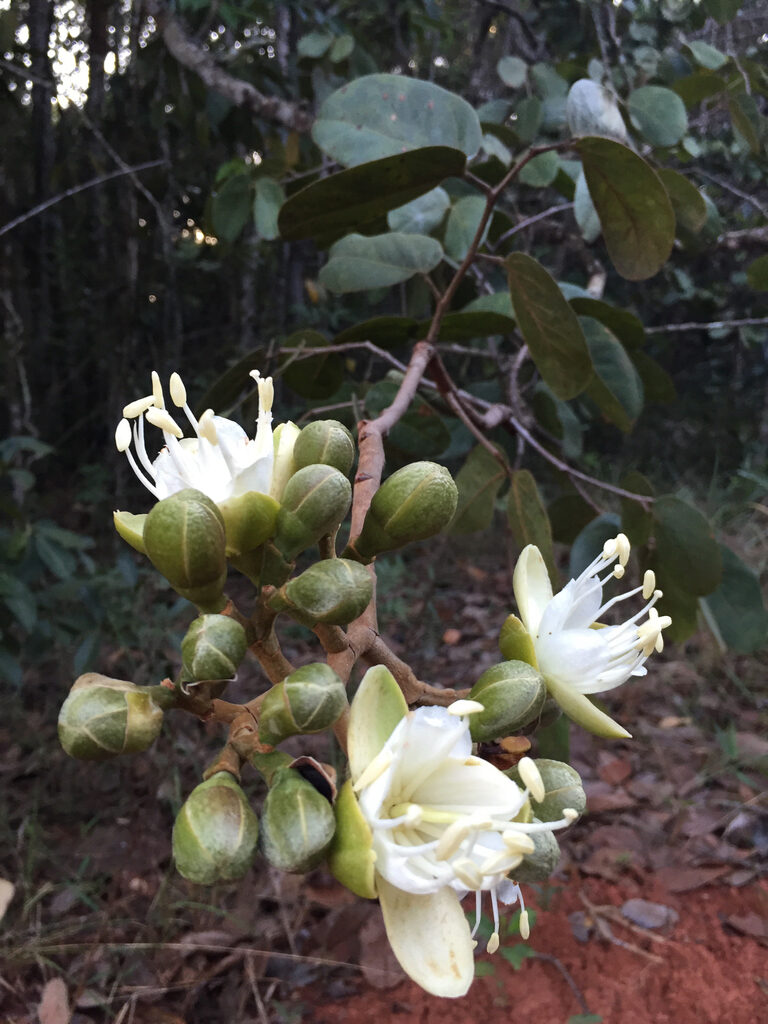
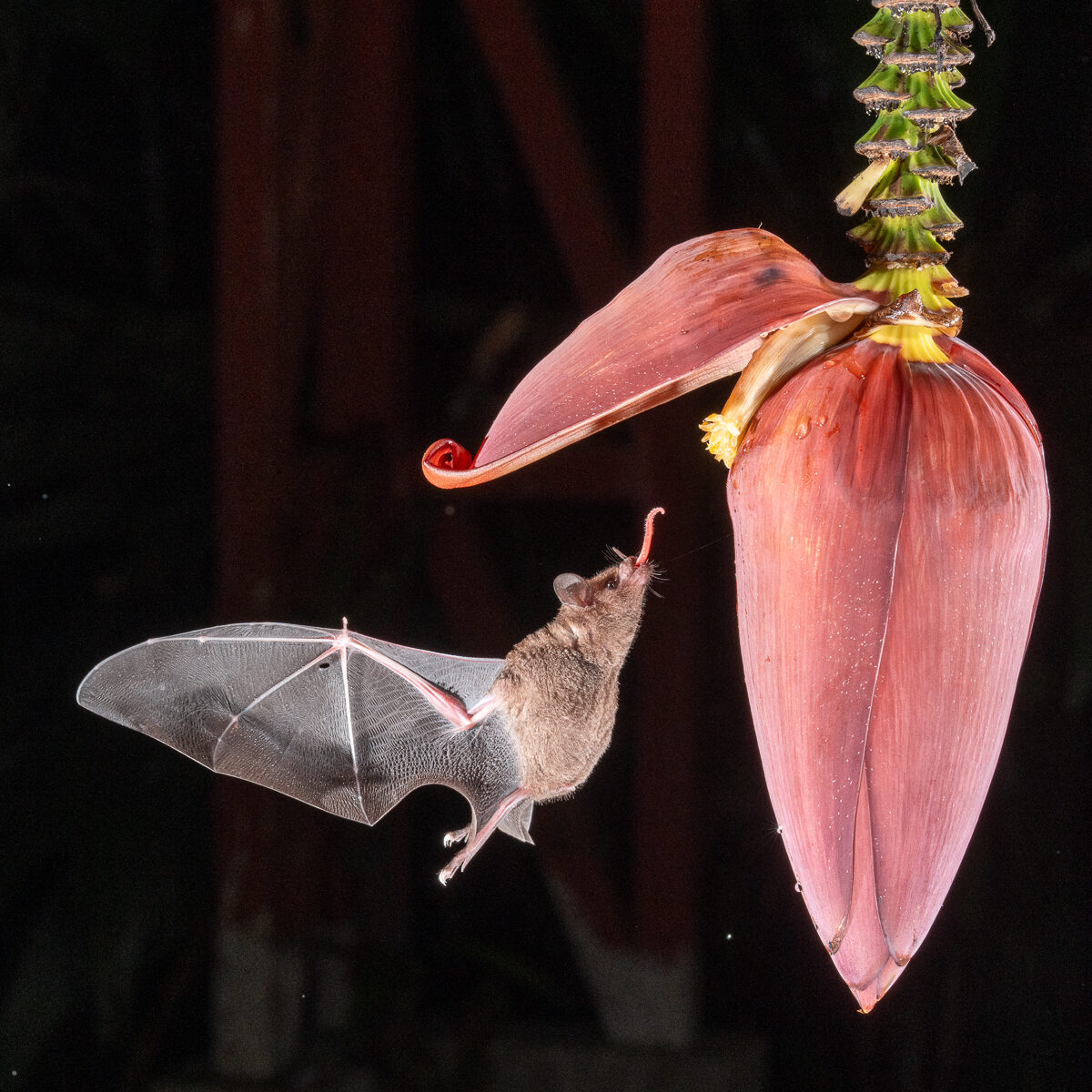
Large terminal panicles can carry 50–150 buds, yet only a few flowers open on a given night. Each cream-white, asymmetric flower has five free petals and ten long stamens. In Costa Rica, flowering extends roughly from late December through June, with local peaks shifting by region. Bees and wasps visit by day; nectar-feeding bats are the principal pollinators after dark.
Fruit and Seeds
The fruit is a hard, woody pod that normally remains closed when ripe. Costa Rican descriptions give a usual length of about 7–12 centimeters, with occasional larger pods. Several large, pale-brown seeds lie separately in dry, pale-yellow, mealy pulp. In dry-forest populations, young fruit develops through the rains, hardens around November or December, and falls intact. The often-repeated 14-month fruit cycle from Manuel Antonio came from the older, mixed species concept and probably describes H. osanigraseminae.
Costa Rica's Two Guapinoles
For generations, Costa Rican books treated nearly every native guapinol as one extraordinarily variable species. Reinaldo Aguilar Fernández, Luis Poveda Álvarez, and Daniel Santamaría-Aguilar showed in 2018 that the wet-forest giant is distinct. They named it Hymenaea osanigraseminae, literally drawing attention to the black seed that separates it from the paler-seeded H. courbaril. This is why older descriptions can be internally contradictory: they were often describing two trees.
| Feature | H. courbaril | H. osanigraseminae |
|---|---|---|
| Stature and bark | 6–20(–35) m; generally no buttresses; smooth gray bark | (15–)30–55 m; small buttresses; reddish, scaly bark |
| Leaves | Smaller; many dots conspicuous against natural light | Larger; dots inconspicuous in ordinary natural light |
| Fruit and seed | Dark, glossy pod with a short basal stalk; pale-brown, two-angled seed | Pale, dull, unstalked pod; black, four-angled seed |
| Habitat | Seasonally drier Pacific and interior sites, 0–1,200 m | Very wet central and southern Pacific forest, mostly 25–200(–350) m |
A Name Older Than the Specimen
Carl Linnaeus published Hymenaea courbaril in 1753. Its nomenclatural anchor is an illustration published by Leonard Plukenet in 1691 and chosen as the lectotype in 1975. The taxonomic revision could establish no secure original collector, collection date, or surviving specimen for that type. The species name courbaril preserves an Indigenous vernacular name from the Guianas, although the exact source language and literal meaning remain uncertain.
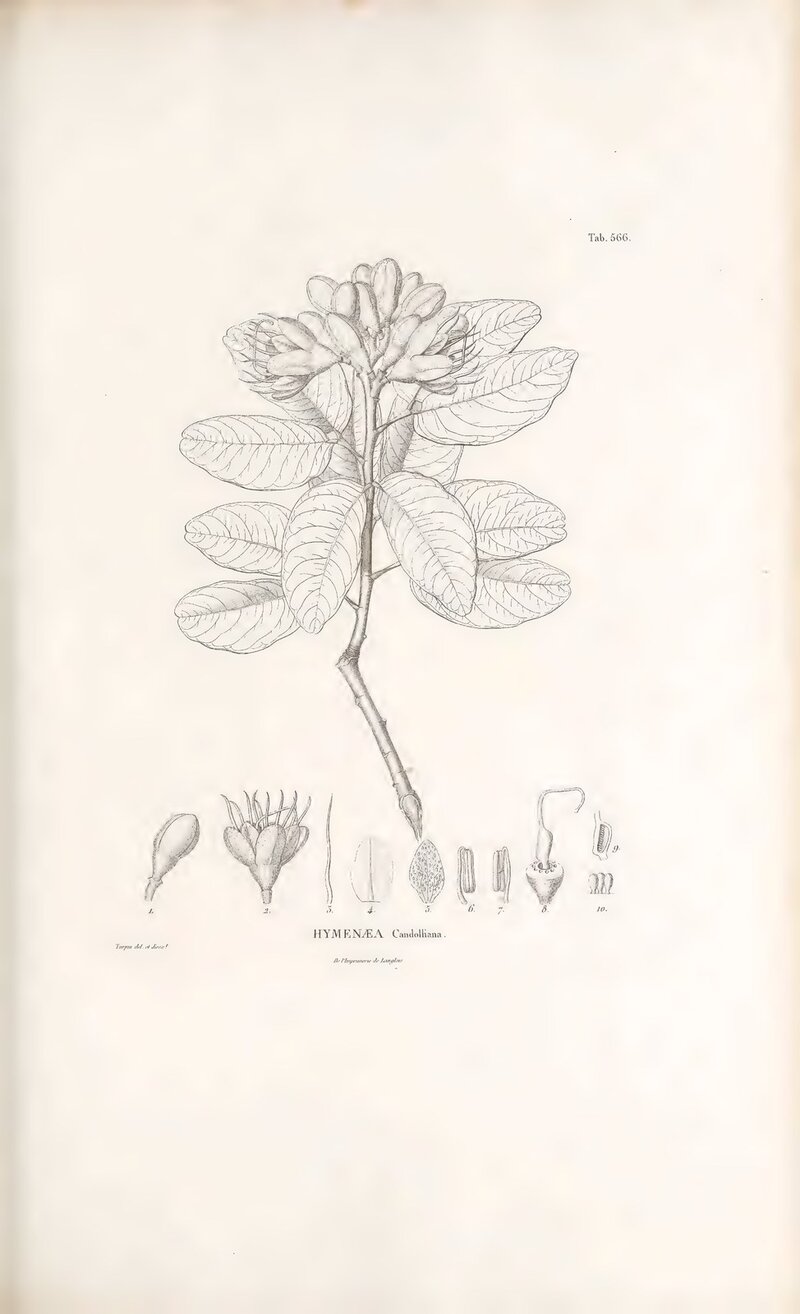
Hymenaea invokes Hymen, the classical god of marriage, traditionally linked to the tree's paired leaflets. The Costa Rican name guapinol has been explained from Nahuatl elements for “tree” and pinol, the flour-like powder evoked by the dry pulp. Over a broad American range, botanists repeatedly named local forms; the Mexican Hymenaea candolleana, illustrated in 1823, is one of the names now folded into H. courbaril.
Habitat & Distribution
Across the Americas, H. courbaril occurs from Mexico and the Caribbean through Central America to tropical South America. Rather than forming one unbroken belt, it occupies separate pockets of seasonally dry forest across that range. It has also been introduced in parts of tropical Africa and Asia.
In Costa Rica it grows on the Pacific side from sea level to about 1,200 meters: the Guanacaste plains, Nicoya and Santa Elena peninsulas, lower slopes of the Guanacaste and Tilarán ranges, the Central Valley, Turrubares and Puriscal, and the Valle del General. The revision confirms it around San Isidro del General, Buenos Aires, and Paso Real. These interior Brunca records remain true H. courbaril; the reassignment concerns principally the very wet forests closer to Manuel Antonio, Golfito, and Osa.
It is most characteristic of mature or advanced secondary forest with a marked dry season, especially along seasonal drainage lines, but it also persists as a broad-crowned remnant in pasture and farmland. An isolated old tree can still flower and fruit. That does not make a pasture equivalent to forest: successful reproduction also requires pollinators, seed-caching mammals, safe places for seedlings, and connections to other trees.
Guapinol seedlings can remain small for years in forest shade and then accelerate when a canopy gap opens. Trees established in open ground also survive drought. In one controlled experiment, 30–50% shade helped young plants withstand water shortage, whereas very deep shade suppressed growth. Their unusually large seeds carry substantial carbohydrate reserves that support them during establishment.
A Year Measured in Bats and Pods
In northwestern Costa Rica, the annual cycle can begin with a rapid change of clothes. Old leaves fall from late December into mid-January, and a crown may turn green again within one or two weeks. Flowering follows through the dry season and into the first rains, roughly from late December to June. At Santa Rosa, field observations found that virtually all large adult H. courbaril flowered each year, but heavy fruiting was less regular: forest subpopulations produced major crops at intervals of about two to five years.
A guapinol does not open all the flowers in one panicle at once. From a cluster of dozens of buds, it may present only two to five fresh flowers in a night. Small nectar-feeding bats, including species of Glossophaga, push past the long stamens and leave with pollen dusted over the head and chest. Classic field observations suggest that a guapinol needs pollen from another tree to set fruit, making connected groups of adults important even where solitary pasture trees still bloom.
The Ghosts of Dispersers Past
The guapinol's heavy, armored fruits pose an ecological puzzle. They fall to the ground and stay there. They do not split open to release their seeds. They do not float on water. They offer no obvious hook or sticky surface for attachment. How, then, does this tree disperse its seeds?
During the Pleistocene, gomphotheres, giant ground sloths, and other megaherbivores lived in Central America. Ecologists have hypothesized that these animals swallowed guapinol fruits and carried the seeds across long distances. Under this hypothesis, the tree's heavy, indigestible pods took shape before those dispersers vanished 10,000–15,000 years ago.
Scientists call these trees "evolutionary anachronisms": species whose traits make sense only in the context of extinct partners. The great dispersers vanished, but guapinol survived. Agoutis, small rodents with powerful jaws, now carry part of that vanished dispersal work.
The Agouti Partnership
Central American agoutis (Dasyprocta punctata) are among the mammals able to gnaw through the guapinol's thick pod wall. These cat-sized rodents use their powerful jaws to crack the shells and extract the seeds. But they do not eat everything they find. Agoutis are scatter-hoarders. They bury seeds in shallow caches across the forest, saving them for times of scarcity.
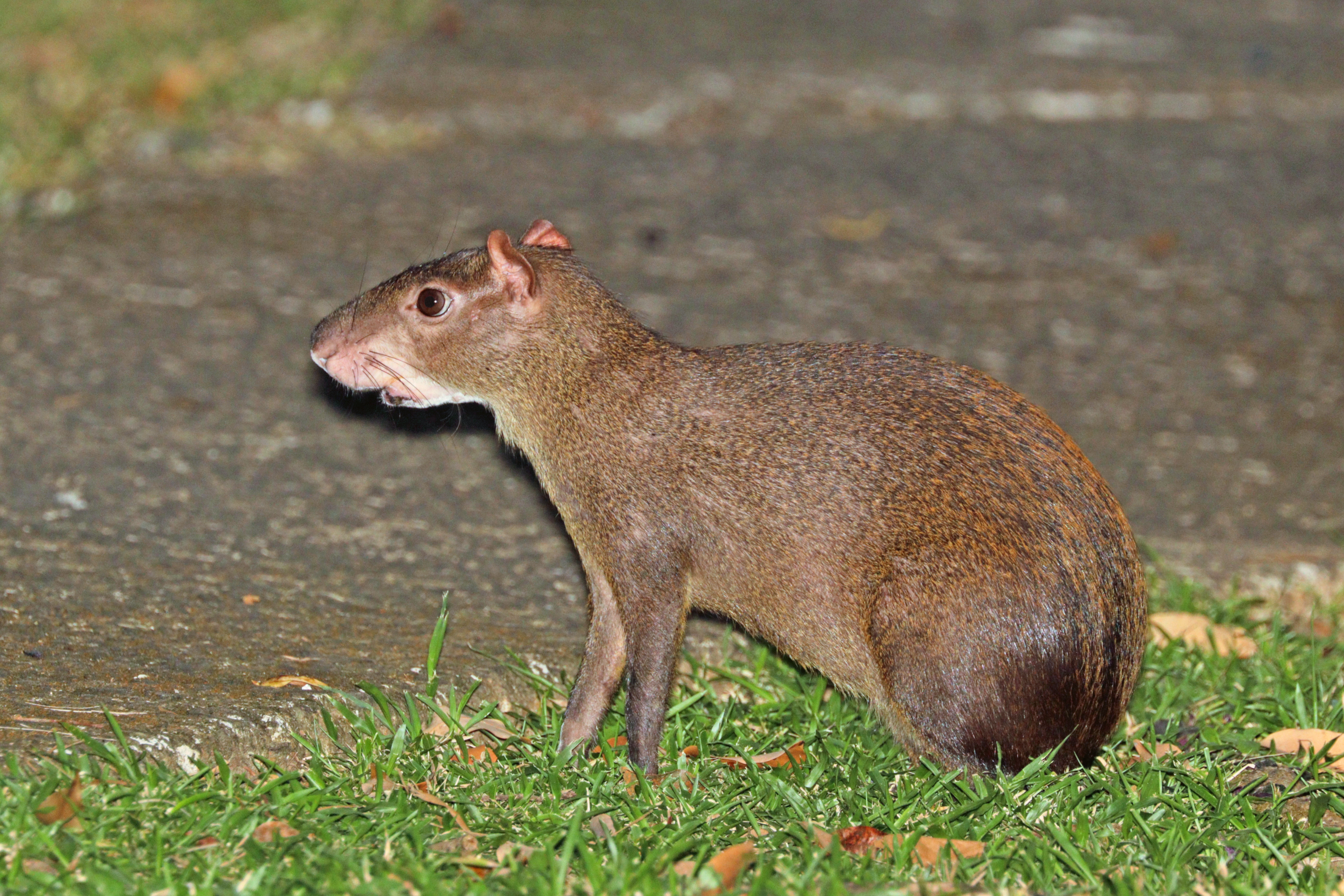
Many cached seeds are eventually retrieved and eaten. But agoutis forget some of their hoards. They die before returning to others. Seeds left in forgotten caches remain buried in rich forest soil, away from the parent tree, where they can germinate. Research in Costa Rican dry forest has tracked agoutis carrying guapinol seeds up to 225 meters from the parent tree.
For guapinol, a forgotten cache can turn predation into a chance to germinate. Near the parent tree, where guapinol seeds and other foods are concentrated, 99% of seeds and seedlings are killed by peccaries, agoutis, and mice. Agouti scatter-hoarding moves guapinol seeds from zones of very high mortality to lower-mortality zones, a dispersal service that may have helped replace extinct megaherbivores.
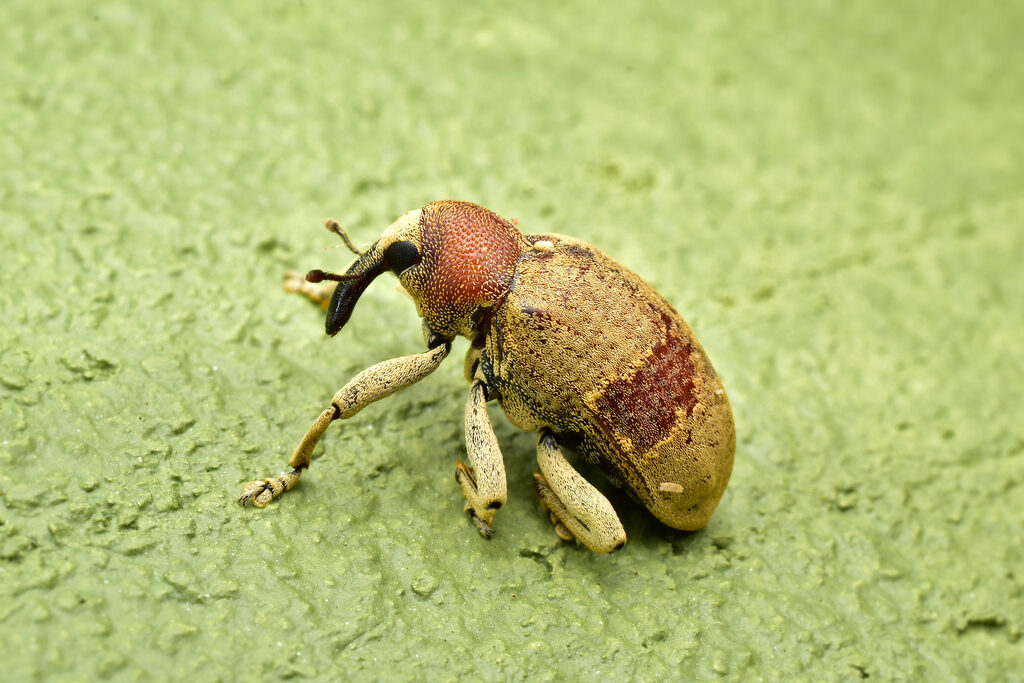
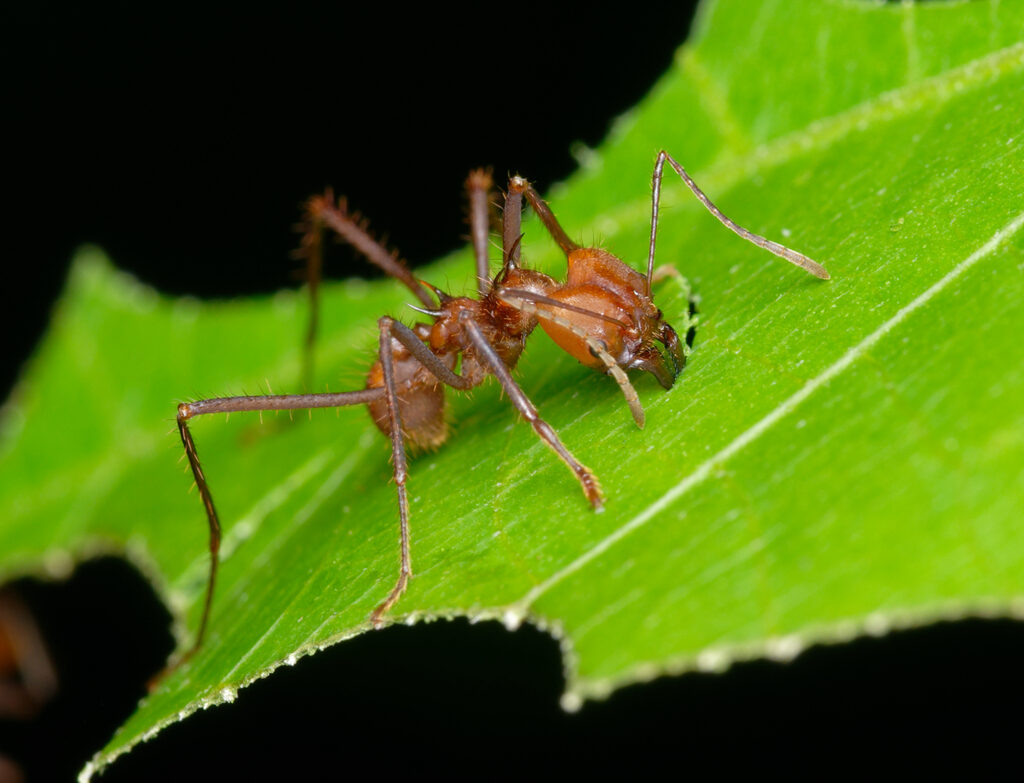
Other animals feed on guapinol. Larvae of Rhinochenus transversalis tunnel through the pulp and can kill nearly every seed in a pod, while small Anthonomus weevils develop inside flower buds. Leafcutting ants harvest the pale, tender new flush but generally avoid the tougher mature leaves. Guapinol's resin chemistry appears to defend hardened foliage and can inhibit the fungus the ants cultivate. Across its life cycle, guapinol is pollinated by bats, dispersed by agoutis, eaten by weevils and ants, and defended in part by its resin chemistry.
Amber and Copal: Windows into Deep Time
When a guapinol tree is wounded, perhaps by a falling branch or a woodpecker, it exudes thick yellow resin. The sticky resin can trap insects, and compounds in the tree inhibit some fungi. As the resin hardens and undergoes long-term chemical maturation and polymerization, it can become amber.
Dominican amber, largely attributed to Hymenaea protera, is exceptionally fossil-rich; published age estimates vary by mine and method from roughly 15–20 million to 30–45 million years. Hymenaea protera was an extinct relative of guapinol whose closest known living relative is the African H. verrucosa. Its resin preserved a vast diversity of organisms, including more than a thousand insect species and small lizards, providing a detailed record of Miocene ecosystems. Chemical studies link the amber to Hymenaea resins, including living guapinol, although fossilization and natural variation leave measurable differences.
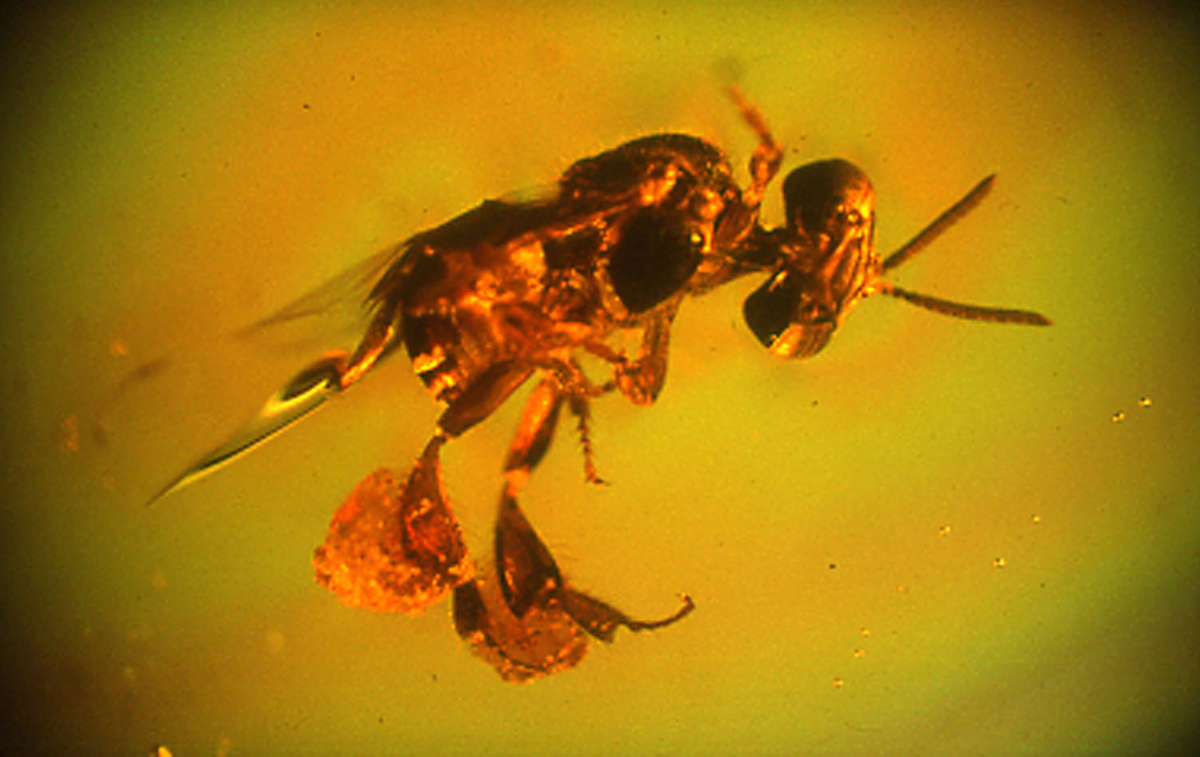
The distinction between copal and true amber is largely one of age. Hardened resin less than a few thousand years old is typically called copal. After millions of years of burial and polymerization, it becomes amber. The boundary is debated. Radiocarbon-dated Colombian Hymenaea copal ranges from less than 60 years old, including post-bomb material, to about 10,612 years old. A separate proposal defines copal as resin dating back to 2.58 million years, but that is a category boundary rather than a radiocarbon measurement. A fresh lump of copal on a Costa Rican forest floor could begin that transformation only if it survives burial and the geological processes that follow.
Food, Medicine, and Sacred Smoke
The fruit's strong smell inspired the English nickname “stinking toe,” but its dry pulp is edible. Costa Rican botanical sources record it eaten directly and used to flavor drinks. Elsewhere it appears in atoles and other flour-like preparations. Recipes change from place to place, as does the pulp's measured composition. Across those variations, one fact holds: people eat it.
Long before Europeans arrived, Mesoamerican peoples burned copal as sacred incense. The word "copal" itself comes from the Nahuatl copalli, meaning "incense." For the Maya, copal smoke carried prayers to the gods. Archaeologists have found Maya incense burners more than a thousand years old in contexts ranging from households and burial mounds to temple steps and caves; multiple sources identify copal as the incense burned in such censers.
Contemporary K'iche' Maya practitioners in Guatemala burn copal in ceremonies tied to the sacred 260-day calendar. The aromatic smoke is believed to purify spaces, please the gods, and facilitate communication with the spiritual realm. Elsewhere in Mesoamerica, living traditions also use copal in healing and purification and in rites for seeds, rain, and harvests.
“Copal” is a material name used for resins from unrelated genera, especially Bursera, Protium, and Hymenaea. Guapinol resin has been burned as incense, but a record of ceremonial copal does not by itself identify H. courbaril.
Traditional Medicine and What Has Been Tested
Guapinol is an important medicinal tree in parts of Brazil and Amazonia. Ethnobotanical reports describe teas, decoctions, syrups, macerations, and poultices prepared from bark or inner bark, leaves, seeds, fruit, and resin. Recorded purposes include cough, flu, sore throat and other respiratory complaints; diarrhea, dysentery and abdominal discomfort; inflammatory pain; anemia and weakness; and urinary or kidney complaints. Communities along Brazil's Unini River have specifically reported using the resin for flu, cough, and sore throat. Costa Rican floras confirm folk-medicine use of the resin but provide fewer reliable details about preparations and ailments.
Laboratory tests and animal experiments have found biological activity in guapinol extracts. These studies do not demonstrate a medical treatment in people. Researchers have identified flavonoids, phenolic compounds, tannins, saponins, terpenes, and coumarins in different plant parts. Extracts have shown antimicrobial, anti-inflammatory, antioxidant, and smooth-muscle effects in test tubes or animals. In one standardized bark-extract experiment, the preparation inhibited a tested methicillin-resistant Staphylococcus aureus isolate but did not inhibit the tested Gram-negative bacteria. That was an in-vitro result, not a treatment trial in people.
Animal and human evidence remains preliminary. In a mouse experiment, a topical 2% sap extract was associated with a smaller wound area early in the study, but by day 14 the groups no longer differed and no wound had completely closed. The small human study tested seed gum instead: 30 men ate bread with or without 7% guapinol seed gum for six weeks. In the 15-man intervention group, triglycerides and VLDL cholesterol fell, while total and LDL cholesterol did not change significantly. The study was too small to validate seed gum as therapy and did not test bark tea or resin.
Reviews have not found robust human clinical trials or a standardized medicinal dose. Experiments have detected toxicity at high concentrations of some guapinol preparations, while human safety data remain incomplete. Interactions with medicines and safety during pregnancy are poorly established. Harvest also has a biological cost: stripping bark, wounding roots, or repeatedly tapping the same wild tree can create infection sites and may kill the source of the remedy. Traditional uses are well documented; research has tested only a narrow set of extracts and preparations, and their safety and efficacy remain uncertain.
Wood and Modern Uses
Guapinol heartwood is reddish-brown and sold as jatoba or Brazilian cherry. It is very hard and durable, with published Janka side-hardness values of about 2,350–3,290 lbf, and is used for construction, flooring, shipbuilding, and furniture. It resists decay fungi and dry-wood termites but has little resistance to marine borers.
Buyers prize guapinol for its hardness and durability, creating timber demand that brings logging pressure. In one 546-hectare Brazilian Amazon study, reduced-impact logging removed 61% of reproductive guapinol trees and altered rare-allele representation and the sampled population's spatial genetic structure. That is a result from one managed forest, not a range-wide logging rate. It matters because younger guapinoles can remain after logging even as most of the trees currently producing pollen and seeds are removed.
The IUCN Red List 2023-1 edition lists H. courbaril as Least Concern globally, reflecting its broad range; the source record itself was issued in November 2022. The cited assessment materials do not provide a quantified global population trend. In Costa Rica, H. courbaril is absent from the national list of tree species under a total cutting prohibition. Its absence from that list leaves all other forestry, land-use, and protected-area rules in force. Local conservation also depends on seasonal forest, fire control, bats, agoutis, and genetic connections among adults.
Guapinol can be valuable in restoration of seasonally dry landscapes. Its large seed reserves and ability to wait in partial shade help it survive establishment, although scarification, drought protection, and control of seed predation may be needed. For restoration, match seed to local conditions and confirm its species; south of Quepos, a bag marked only “guapinol” may hold H. osanigraseminae.
Key Sources & Resources
Species Information
Comprehensive species account with detailed descriptions of morphology, habitat, and distribution in Costa Rica.
Taxonomy, occurrence records, photographs, and mapped observations for guapinol.
Comprehensive information on uses, cultivation, and ecology of the species.
Reference profile covering stature, trunk dimensions, habitat, phenology, and uses.
Taxonomic paper describing the giant trees of the central and southern Pacific wet forests as a new species distinct from H. courbaril.
Accepted name, 1753 publication, synonymy, and native and introduced distribution.
Authoritative nomenclatural record for the name and its 1753 publication.
Independent synthesis of native distribution, cultivation outside the Americas, products, and uses.
Morphological revision, nomenclatural history, synonyms, and the 1691 Plukenet illustration selected as lectotype.
Current legume classification placing Hymenaea in the subfamily Detarioideae.
Ecological requirements, including optimal and absolute annual-rainfall ranges.
Seed Dispersal & Ecology
Foundational study documenting agouti seed dispersal of guapinol, including dispersal distances up to 225 meters.
Research on guapinol seed fate when agoutis are absent, demonstrating the critical role of this disperser.
Classic study comparing Costa Rican and Puerto Rican populations, showing how absence of seed predators affects tree reproduction.
Comparative analysis of the debated hypothesis linking large fruits to extinct megafaunal dispersers.
Independent synthesis used to place North American megafaunal losses in time.
Species-level field study discussing seed removal and scatter-hoarding by agoutis.
Classic Costa Rican evidence for bat visitation and pollination of guapinol flowers.
Study of the large seed's xyloglucan reserves and their use during early seedling development.
Controlled experiment supporting moderate shade during drought-sensitive establishment.
Amber & Copal
Chemical comparison finding Dominican amber closer to American Hymenaea resins, including H. courbaril; links to the accessible University of Leicester manuscript.
Scientific paper defining the distinction between copal and amber, with significance for paleontological studies.
Overview of amber sampling and more than 200 million years of evidence on terrestrial life.
Fossil description identifying the amber-producing species and its closest resemblance among living Hymenaea.
Study reporting Colombian copal radiocarbon ages from post-bomb material to about 10,612 years.
Culture, Food & Medicine
Overview of copal in Aztec and Mexican religious practice, connecting precolonial accounts with modern Indigenous and Chicanx ceremonies.
Archaeological and ethnobotanical documentation of copal use in Maya ceremonies.
Critical ethnopharmacology review covering regional practices, chemical constituents, preclinical findings, and major evidence gaps.
Recent synthesis of traditional uses, plant-part chemistry, experimental activity, toxicology, and the lack of robust clinical validation.
In-vitro study of a standardized extract, including activity against a tested MRSA isolate and no activity against tested Gram-negative bacteria.
Animal experiment reporting an early difference in wound area, but no group difference at day 14 and no complete closure during the study.
Primary preclinical study of antioxidant, anti-inflammatory, and airway smooth-muscle effects.
Full report of the small six-week study of 30 men; useful as the limited human evidence located, but not validation of traditional bark or resin remedies.
Overview of the multiple resin-producing genera and living ceremonial uses grouped under the name copal.
Account of the living 260-day calendar and New Year ceremony among daykeepers in the Guatemalan highlands.
Secondary culinary reference describing fresh pulp, drinks, atoles, and a pinole-style preparation.
Timber & Conservation
Global assessment listing the species as Least Concern; the article does not infer a quantified population trend from the category.
Technical data on wood properties, including density, hardness, and workability.
Brazilian Amazon study quantifying the genetic and spatial effects of harvesting reproductive trees.
Official consolidated text defining the scope of Costa Rica's protection and management of natural forests.
Official Article 1 list of tree species subject to a complete harvest prohibition.