Ciprecillo
A Gondwanan conifer that has persisted in Neotropical cloud forests for tens of millions of years, with olive-shaped leaves that disguise its ancient lineage among the broadleaf trees it shares the canopy with.
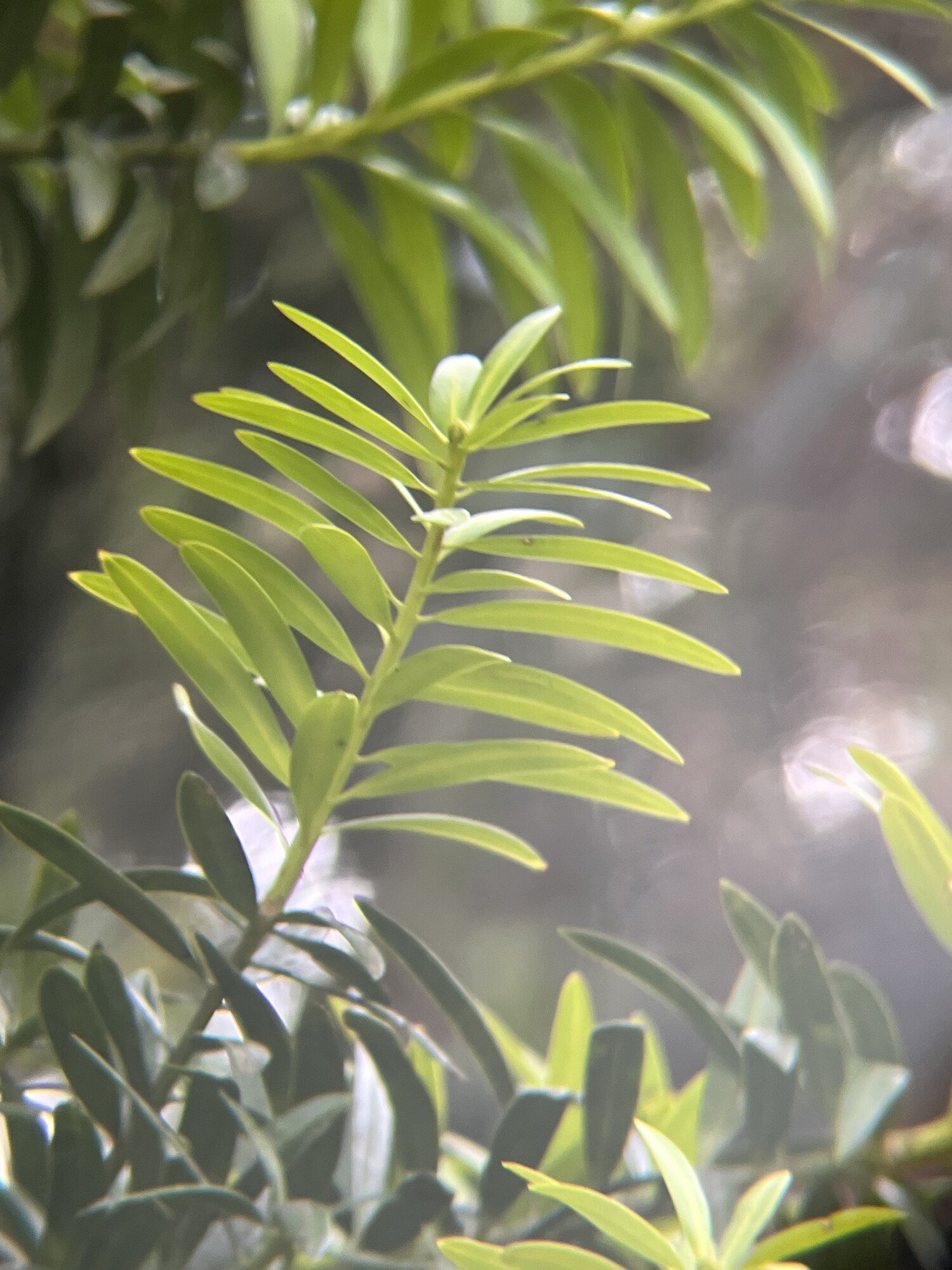
On a trail called Sendero Pantanoso in the Monteverde Cloud Forest Reserve, a swamp forest straddles the Continental Divide at roughly 1,500 meters. The canopy here belongs almost entirely to broadleaf trees and palms, draped in epiphytes and drenched by moisture from both the Caribbean and Pacific slopes. Among them grows the only conifer in the reserve: Podocarpus oleifolius, a tree so thoroughly adapted to life among flowering plants that nothing about its appearance suggests it belongs to a lineage older than the surrounding forest by a hundred million years. Its leathery, lanceolate leaves resemble those of an olive tree. Its trunk, wrapped in lichens and moss, looks no different from the oaks and magnolias around it. Only its reproductive structures give it away: instead of flowers and fruit, it produces waxy male pollen cones and fleshy, brightly colored seed receptacles that attracted frugivorous birds long before the first angiosperms evolved fruit.
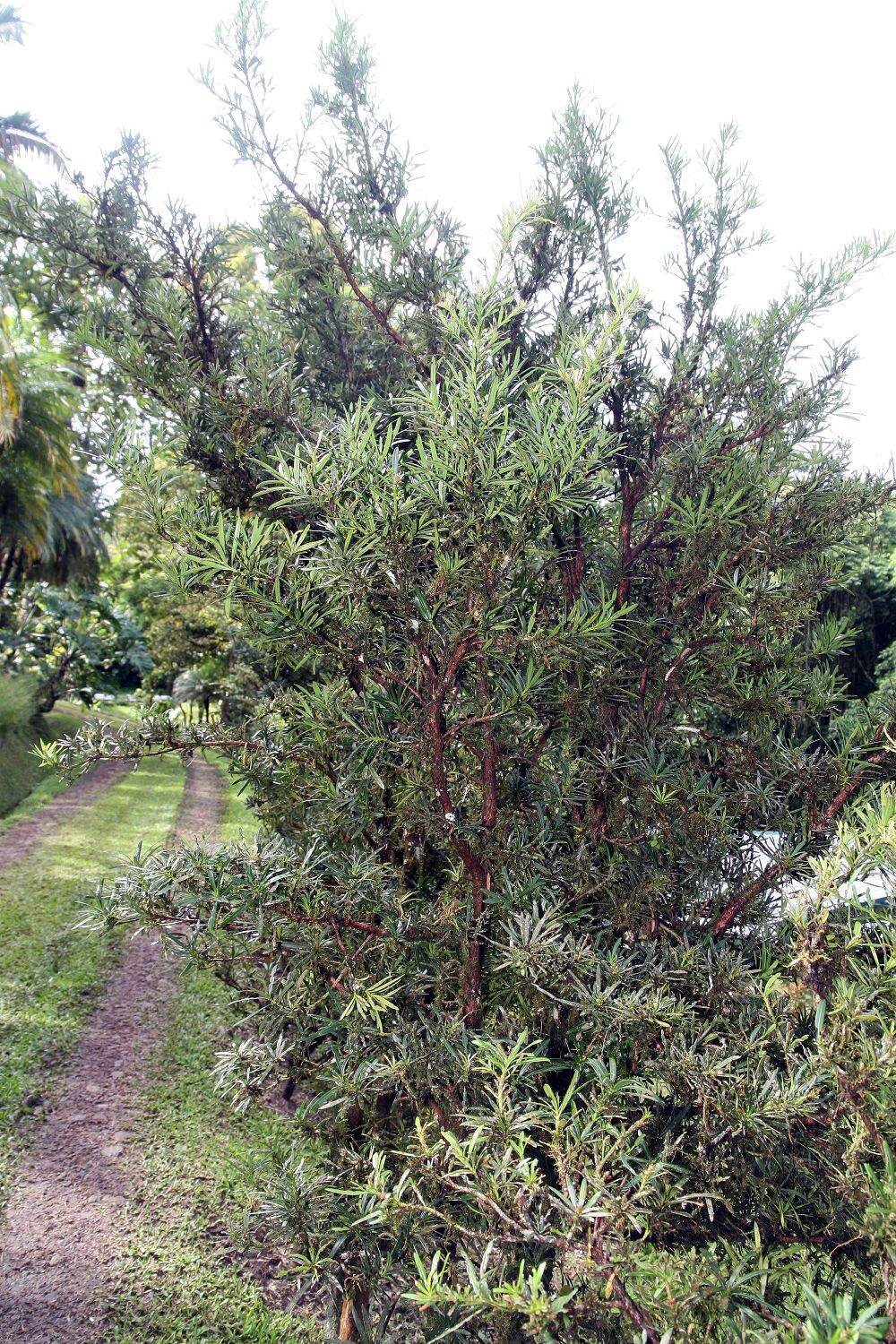
Most conifers thrive where flowering plants struggle: boreal forests, arid mountains, nutrient-poor soils. The Podocarpaceae took the opposite path. Over tens of millions of years, they evolved leaves broad and flat enough to compete for light in the interior of tropical forests, roots that associate with the same arbuscular mycorrhizal fungi as their broadleaf neighbors, and seeds packaged in fleshy, colorful receptacles eaten by the same birds that disperse surrounding fruit. The strategy produced a conifer family that persists in one of the most intensely competitive ecosystems on Earth: wet tropical montane forest, where angiosperm species contest every opening in the canopy. Podocarpus oleifolius occupies this habitat from southern Mexico to Bolivia, scattered among oaks and magnolias, rarely abundant but never absent.
Identification
Habit
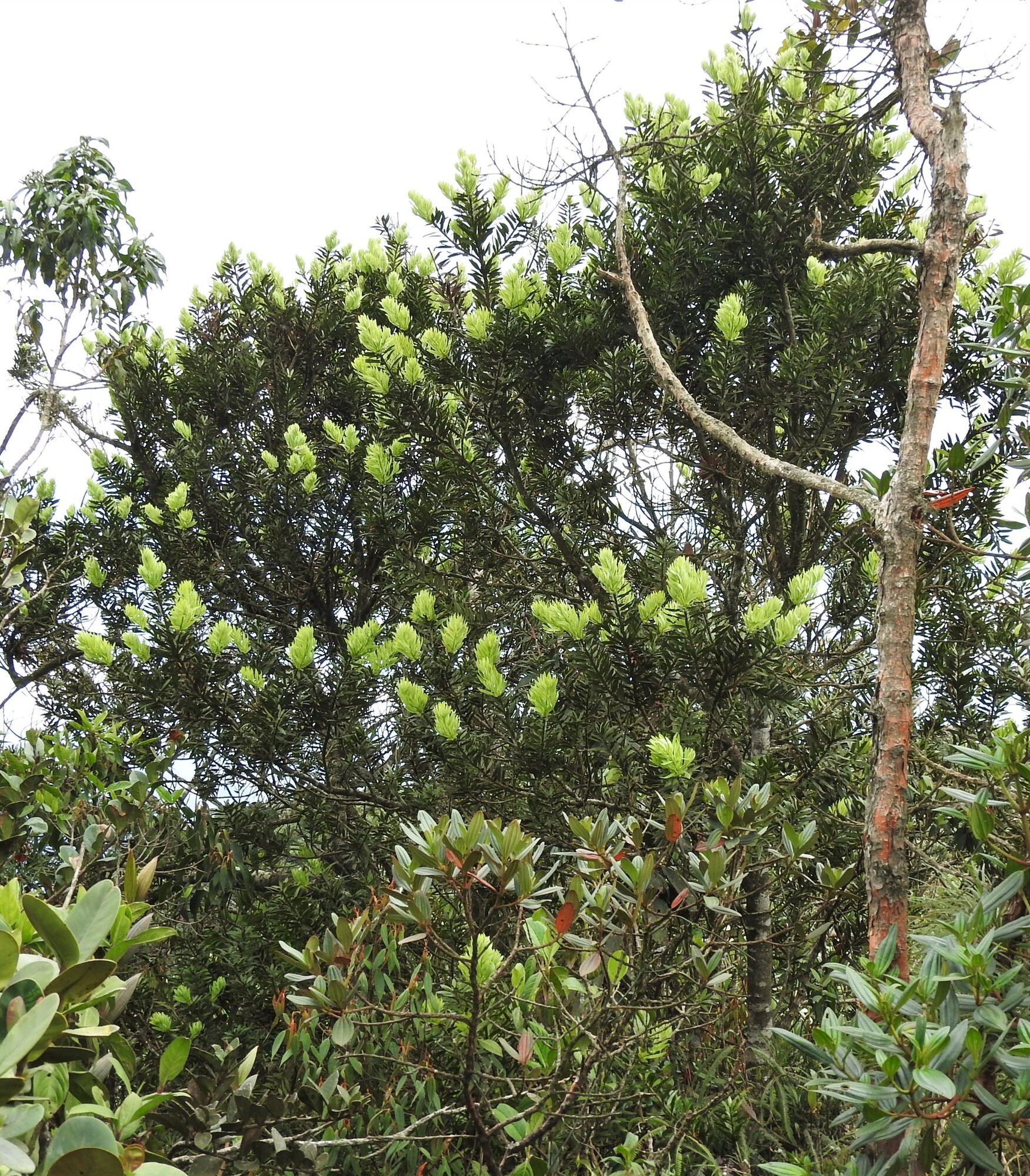
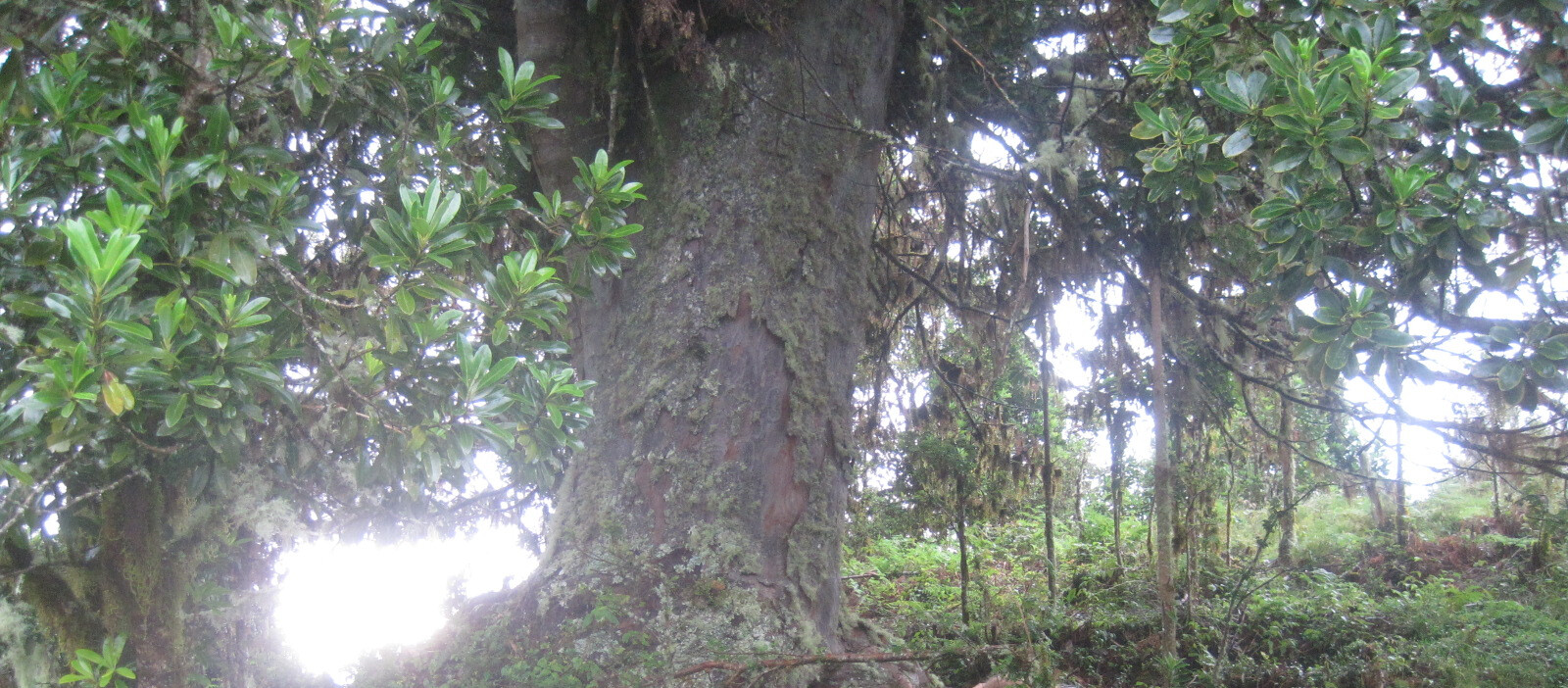
Podocarpus oleifolius grows as a tree to 25 meters tall, occasionally reaching 30 meters, with a straight trunk up to 1.5 meters in diameter and a densely branched crown. At an exceptionally favorable site in Guatemala's Biotopo Mario Dary Rivera, one specimen was reported to approach 50 meters in height with a diameter exceeding 1.5 meters. At the upper limits of its elevational range, the species becomes shrubby, forming a compact tree or large shrub only 2 to 8 meters tall where wind and cold constrain growth. This plasticity in habit reflects the range of conditions the species occupies across nearly 2,500 meters of elevation.
Leaves
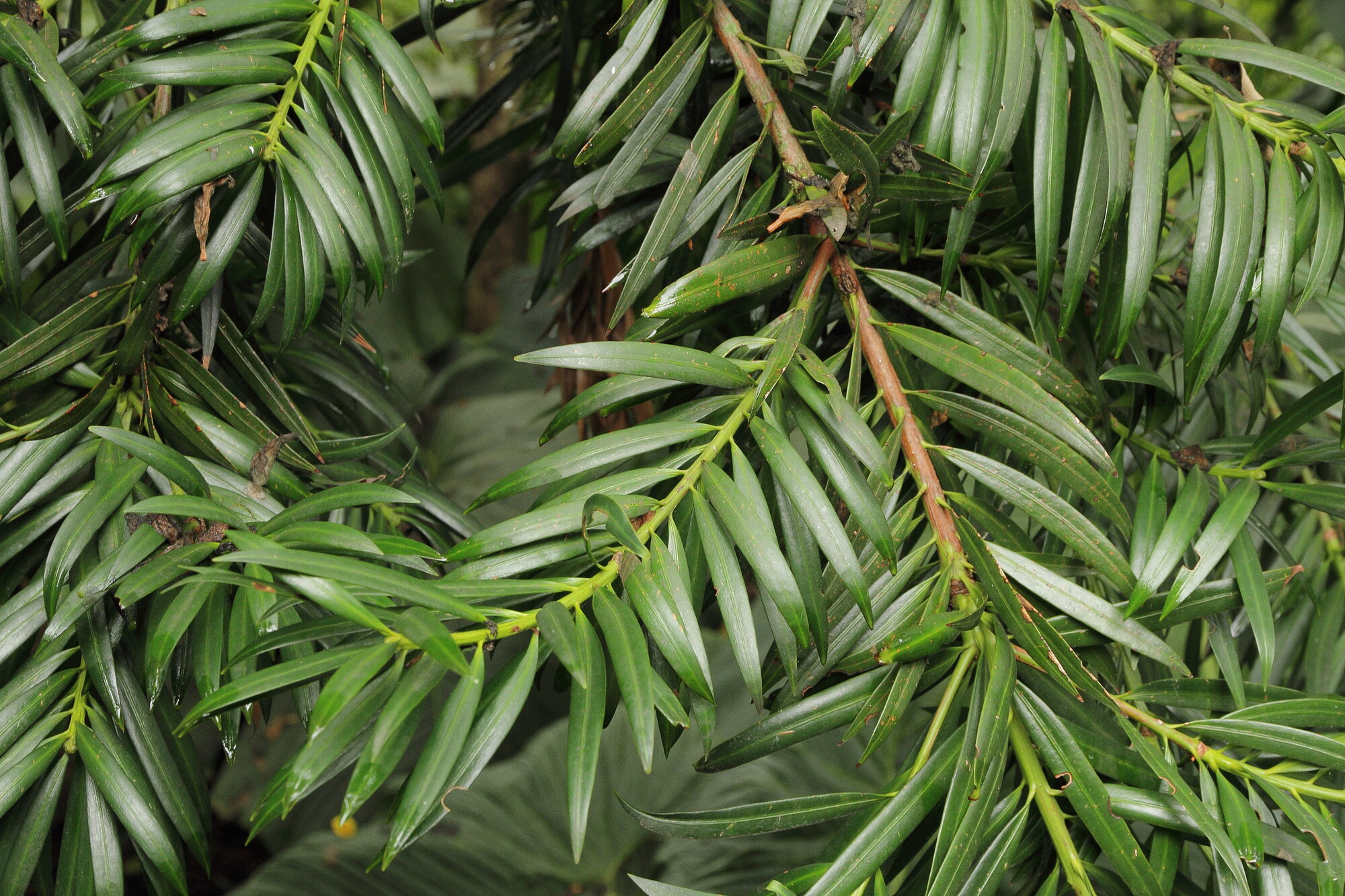
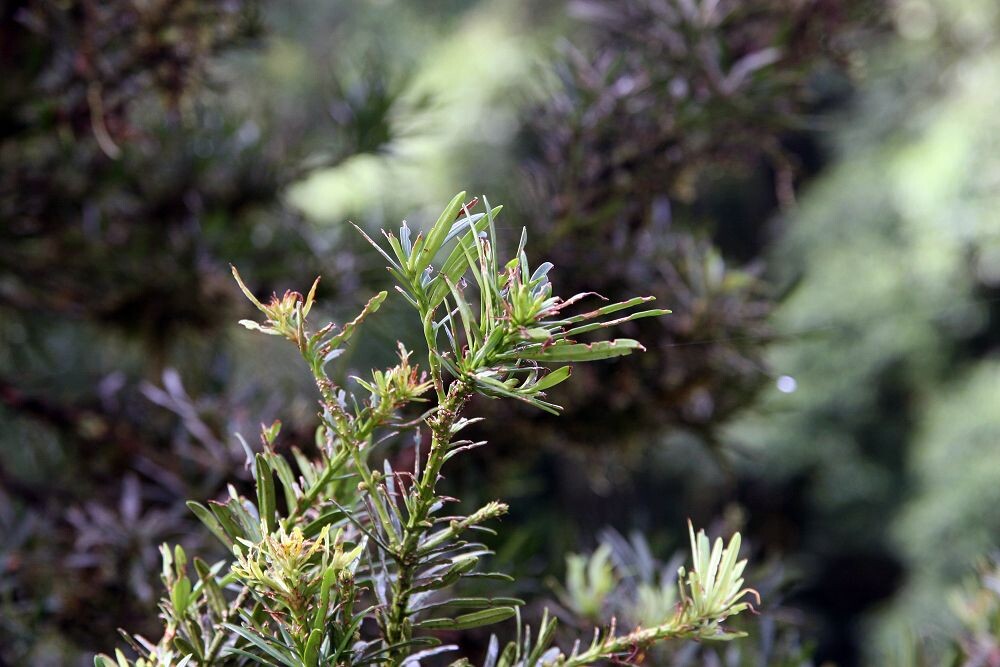
The leaves are lanceolate (lance-shaped), spirally arranged along the stem, and coriaceous (leathery) in texture. They measure 2.5 to 11 cm long and 6 to 15 mm wide, with acute to rounded apices that are sometimes falcate (sickle-curved). Juvenile and fast-growing shoots produce larger leaves than mature branchlets. The upper surface is dark green, and the resemblance to olive foliage that prompted the epithet oleifolius is immediately apparent. Branchlets show prominent grooves and leaf scars where old leaves have fallen. Terminal buds on leading shoots are subglobose, 3 to 5 mm wide, with short, imbricate (overlapping) scales. This bud shape is a key diagnostic feature: it distinguishes P. oleifolius from P. guatemalensis, which has globose buds with a raised upper midrib on the leaves.
Reproductive Structures
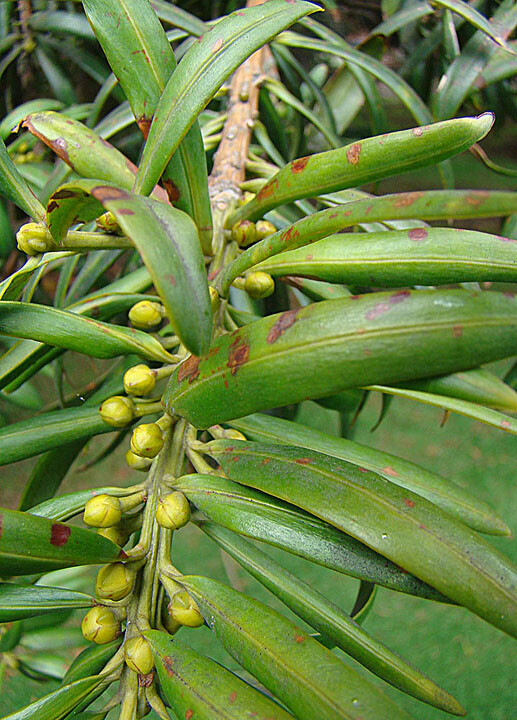
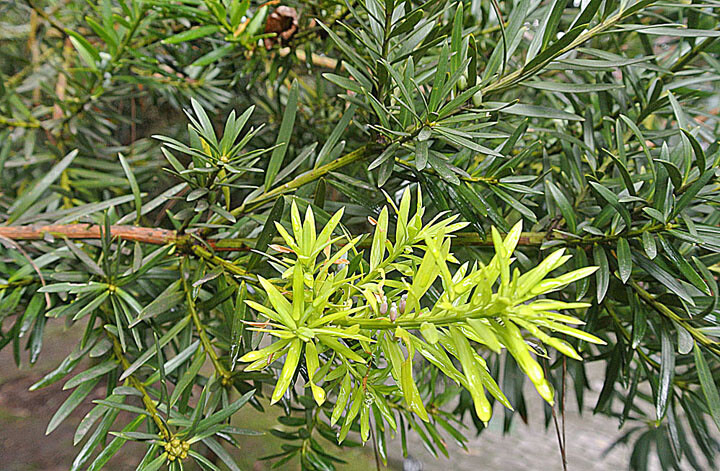
As a conifer, P. oleifolius produces strobili (cones) rather than true flowers. The species is dioecious, meaning individual trees are either male or female. Male strobili are axillary and solitary, producing wind-dispersed pollen. The female reproductive structure is what makes Podocarpus distinctive among conifers: after pollination, the cone scales fuse and swell into a fleshy receptacle that turns bright red or yellow at maturity, resembling a berry. This receptacle sits beneath the seed (and gives the genus its name: pous meaning "foot" and karpos meaning "fruit" in Greek). The seed itself, enclosed in a fleshy covering called an epimatium, measures 4 to 9 mm long and 3 to 6 mm in diameter. Unlike the dry, wind-dispersed seeds of pines and spruces, the combination of fleshy receptacle and seed is adapted for dispersal by frugivorous birds. Studies of the closely related Podocarpus parlatorei in Andean cloud forests found that the white-crested elaenia (Elaenia albiceps) was the most effective seed disperser, though specific disperser studies for P. oleifolius have not been conducted.
Trunk and Bark
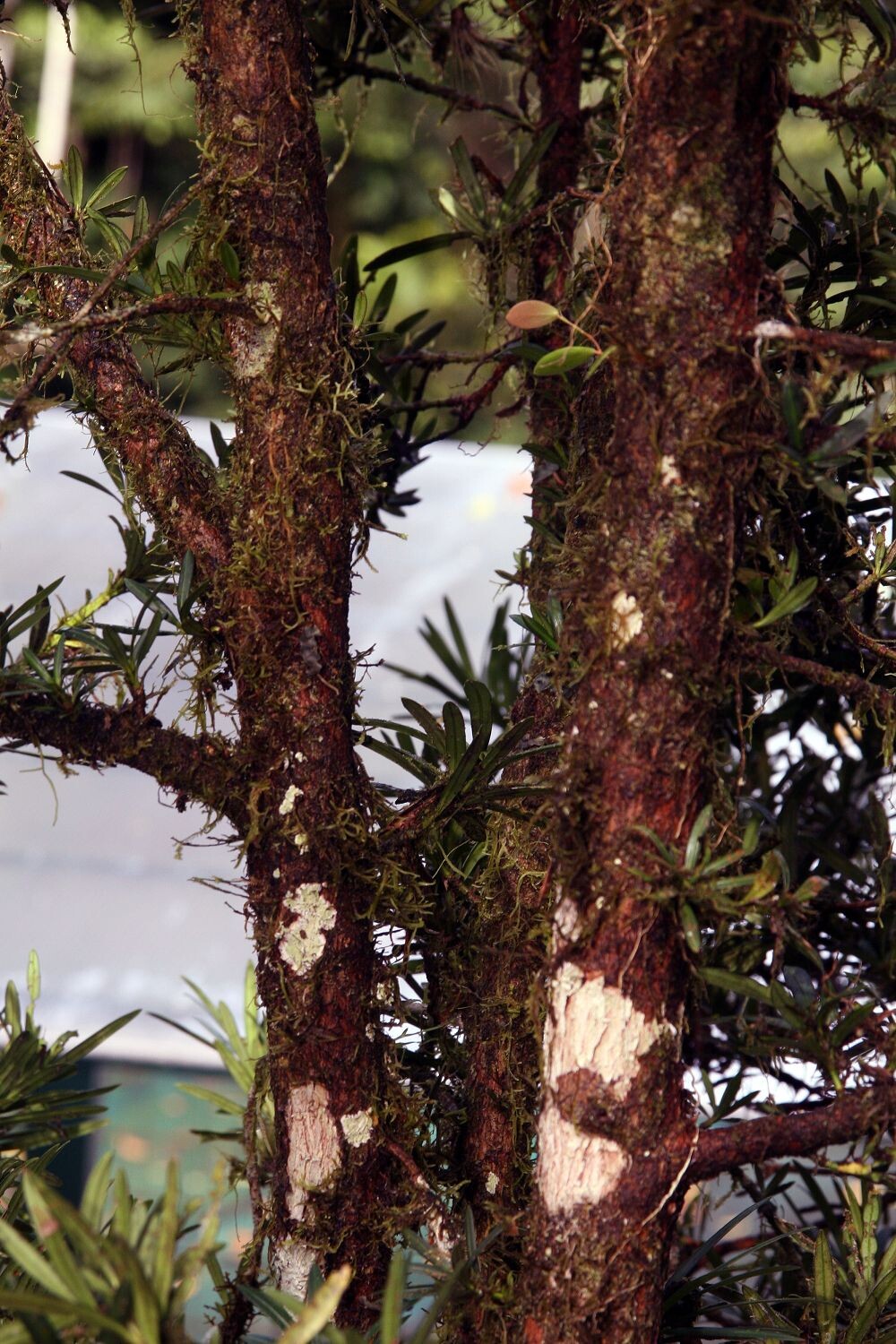
Young trunks have thin, yellowish-brown bark that is smooth to the touch. With age, the bark becomes grey-brown and develops a scaly pattern. In the cloud forests where the species is most common, mature trunks are typically covered in a dense layer of mosses, liverworts, and lichens that obscure the bark surface entirely, giving the tree an ancient, weathered appearance indistinguishable from its broadleaf neighbors. The wood beneath is fine-grained and homogeneous. Sapwood is pinkish cream; heartwood pale brown, with little visible difference between the two in dry condition. The wood has a density of 0.5 to 0.68 g/cm3, placing it among the lighter tropical timbers. It has been used for carving, carpentry, and furniture, and its exploitation for timber depleted populations of large trees across much of the species' range before conservation protections were established.
Distribution
Podocarpus oleifolius has one of the widest distributions of any Neotropical conifer, spanning from the states of Guerrero, Chiapas, and Oaxaca in southern Mexico through Guatemala, Honduras, Nicaragua, El Salvador, Costa Rica, and Panama, and south through the Andes of Colombia, Ecuador, Peru, Venezuela, and Bolivia. Based on 209 collection localities analyzed across its range, the species grows at a mean elevation of 1,970 meters, with a standard deviation of 810 meters; mean annual temperature at collection sites averages 16.8 degrees Celsius, and mean annual precipitation 1,940 mm. In Costa Rica, collection records span nearly a century, from 1928 to 2023, with the highest densities in the provinces of San Jose (38 localities), Cartago (31), and Alajuela (27). Key Costa Rican sites include the Monteverde Cloud Forest Reserve on the Cordillera de Tilaran, Parque Nacional Volcan Poas (the type locality for the Central American variety costaricensis), Parque Nacional Chirripo, Parque Internacional La Amistad, and Parque Nacional Los Quetzales.
Ecology
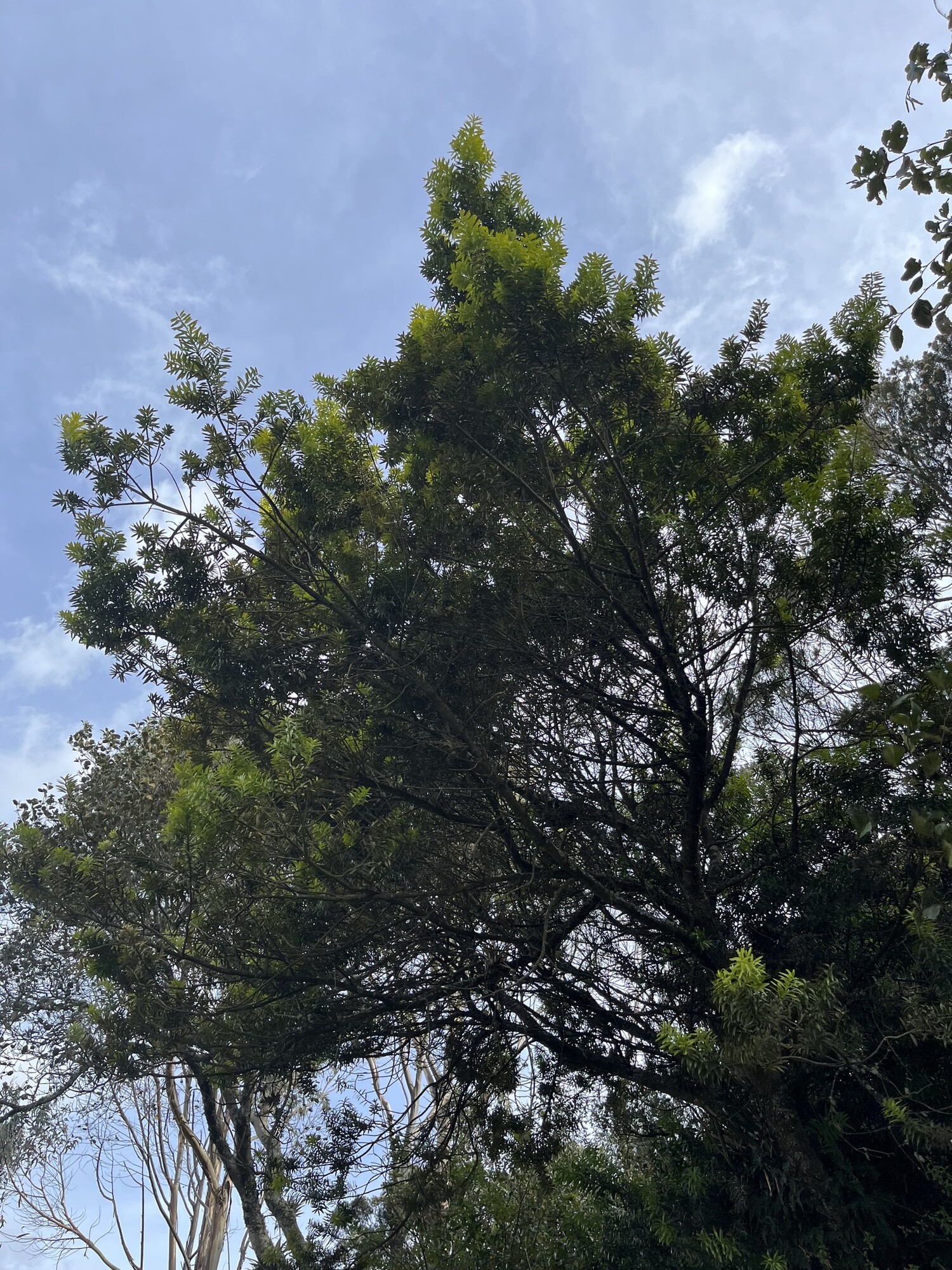
Podocarpus oleifolius is a characteristic tree of upper montane cloud forest, typically found between 1,900 and 2,700 meters in Costa Rica, though it ranges down to 700 meters elsewhere in its distribution. It grows in the canopy alongside evergreen oaks (Quercus costaricensis, which dominates up to 80% of the canopy at 2,650 meters in the Talamanca highlands), magnolias (Magnolia poasana), and species of Lauraceae, Symplocos, and Cedrela. At La Amistad International Park, it occurs in lower montane rainforest alongside Symphonia poasoana, Terminalia amazonia, Cedrela tonduzii, and Ulmus mexicana. In the Monteverde swamp forest, it grows in waterlogged soils on the Continental Divide, where persistent cloud immersion creates a saturated environment favoring mosses, epiphytes, and specialist trees.
The Podocarpaceae differ from most other conifers in their mycorrhizal strategy. Rather than forming ectomycorrhizae like pines and spruces, podocarps associate with arbuscular mycorrhizal fungi (AMF), which may explain their success in wet, nutrient-poor soils where oxygen is limited. Ectomycorrhizae are poorly adapted to saturated conditions, while AMF tolerate them well. This association, along with broad, flat leaves that function more like angiosperm foliage than typical conifer needles, has allowed the Podocarpaceae to persist in tropical forests dominated by flowering plants for tens of millions of years. As one review of the family's ecology put it, the podocarps represent "an evolution of leaves, which in much of the family look very unlike other conifers and largely account for the family's capacity to persist in warm, wet tropical forests dominated by angiosperm trees."
Taxonomic History
The type specimen of Podocarpus oleifolius was collected in the mountains of Peru sometime between 1777 and 1788 by Hipolito Ruiz Lopez, the head botanist of the Royal Botanical Expedition to the Viceroyalty of Peru. Commissioned by King Charles III of Spain, the expedition sailed from Cadiz in 1777 with a team that included Ruiz, Jose Antonio Pavon Jimenez, French botanist Joseph Dombey, and artists Jose Brunete and Isidro Galvez. They arrived in Lima in April 1778 and spent ten years exploring Peru and Chile, collecting 3,000 specimens and producing 2,500 life-sized botanical illustrations. The expedition's misfortunes were considerable: 53 crates containing 800 illustrations, dried plants, seeds, resins, and minerals were lost when their transport ship wrecked on the coast of Portugal.
The Podocarpus specimen took a circuitous route from Peru to publication. After Ruiz died in 1816, Pavon sold portions of the expedition's collections to Aylmer Bourke Lambert, an English botanist and founding member of the Linnean Society who was assembling a comprehensive monograph on conifers. Lambert's work, A Description of the Genus Pinus, was largely authored by David Don, a Scottish botanist who served as librarian at the Linnean Society. Don described the Peruvian material as Podocarpus oleifolius in volume 2, page 20, published in 1824, nearly fifty years after the specimen was originally collected. The type material is held at the Natural History Museum in London (lectotype at BM) with isolectotypes at the Berlin herbarium and a second BM sheet.
The genus name Podocarpus comes from the Greek pous (foot) and karpos (fruit), referring to the fleshy receptacle that supports the seed. The species epithet oleifolius combines the Latin olea (olive) and folium (leaf), describing the resemblance of the leathery, lanceolate leaves to those of the olive tree (Olea europaea). As one authority noted, this description is "equally true of many other species" in the genus.
The Monteverde Podocarpus
In 1991, David de Laubenfels described Podocarpus monteverdeensis from male material collected in the swamp forest on the Cordillera de Tilaran at Monteverde, distinguishing it from Costa Rican P. oleifolius by its narrower leaves (6 to 7 mm wide versus 8 to 10 mm) with a less abrupt apex. Aljos Farjon synonymized it in 2010, arguing that the leaf variation falls within the normal range of P. oleifolius, a widespread species with considerable phenotypic plasticity. Similar narrow-leaved forms occur elsewhere in Costa Rica and in Honduras and Panama, making morphological separation untenable. The story might have ended there, but molecular evidence has complicated it. Nieto-Blazquez and colleagues found in 2020 that P. oleifolius as currently circumscribed is paraphyletic: Costa Rican populations fall in a different clade from Colombian and Bolivian populations, with the latter grouping instead with P. ingensis. This suggests the Monteverde trees may indeed represent something genetically distinct, even if the original morphological basis for separating them was inadequate. Mill's monographic revision (2015) recognizes four Podocarpus species in Central America and reserves final judgment on infraspecific taxonomy pending further molecular study.
Similar Species
Four species of Podocarpus occur in Central America. P. guatemalensis is a lowland species (sea level to 1,000 meters) readily distinguished by its globose terminal buds and leaves with a raised upper midrib; in Costa Rica it is Critically Endangered, with fewer than 250 mature individuals remaining. P. costaricensis is endemic to the Tarrazu region of San Jose Province, distinguished by bud scale morphology similar to P. matudae. P. matudae, with two subspecies, is endemic to Mexico and northern Central America. The only other member of the Podocarpaceae in Costa Rica's montane forests is Prumnopitys standleyi (sometimes placed in Pectinopitys), an Endangered endemic restricted to late-successional montane rainforest between 2,000 and 2,600 meters. It co-occurs with P. oleifolius in the Talamanca highlands, where both share the canopy with Magnolia poasana, Cleyera theaeoides, Weinmannia spp., and various Lauraceae.
A Gondwanan Conifer in Cloud Forest
Podocarpaceae is the dominant conifer family of the Southern Hemisphere, with origins stretching back to Gondwana. Two conifer families, Podocarpaceae and Araucariaceae, dominated the southern supercontinent during the Early Triassic, with divergence estimates of 205 to 280 million years ago. As Gondwana fragmented and angiosperms radiated to dominate terrestrial ecosystems, podocarps carved out a niche as frequent components of wet tropical forests, persisting through an evolutionary strategy unlike that of any other conifer lineage. Today Podocarpus is the second-largest conifer genus after Pinus, with approximately 120 species in about 70 countries.
The macrofossil record tells a story of contraction. In Patagonia, podocarps made up roughly 50% of the flora during the late Eocene and early Oligocene; by the late Miocene, their representation had declined to about 20%, as drying climates favored other lineages. Today, podocarps avoid low-rainfall areas and are most diverse in the wet montane tropics, precisely the niche occupied by P. oleifolius. Molecular studies have also revealed evidence of long-distance dispersal across the Atlantic between South America and Africa, indicating that the genus's current distribution reflects not only the breakup of Gondwana but also more recent oceanic crossings.
Conservation Outlook
Podocarpus oleifolius is rated Least Concern by the IUCN, reflecting its extensive range across 10 countries and reasonable abundance within protected cloud forests. The species is safeguarded within some of Central America's most important reserves: Monteverde Cloud Forest Reserve, Talamanca Range-La Amistad Reserves (a UNESCO World Heritage Site), Parque Nacional Chirripo, and Parque Nacional Los Quetzales. In a 2023 Talamanca study of ten montane tree species, however, only 24 individuals of P. oleifolius were recorded across survey transects, suggesting that while it is widespread, it may occur at low densities in some areas.
The Least Concern status, however, masks a longer-term vulnerability. Large trees have been depleted by timber harvest across much of the species' range, and the cloud forests it depends on face a creeping threat from climate change. As temperatures rise, the cloud base shifts upward, altering the hydrological cycle that sustains these forests. Species from lower elevational zones encroach into montane habitat, and the cloud forest belt compresses. For a tree restricted to narrow elevational bands, this represents an existential challenge that will unfold over decades. Costa Rica has invested in studying P. oleifolius for mixed native-species plantations, and the wood's homogeneous structure makes it potentially attractive for sustainable softwood production. But the species apparently prefers growing with several hardwood species, which mirrors its natural ecology and makes monoculture plantations impractical.
Resources & Further Reading
Species Information
Detailed species account with description, distribution, ecology, and conservation status for this Neotropical podocarp.
Comprehensive morphological description with cultivation notes, maintained by the International Dendrology Society.
Kew's species entry with accepted name, distribution map, and synonym list.
Global occurrence records with distribution data and specimen records from Costa Rica and across the Neotropics.
Colombian flora database with vernacular names and conservation status for this widely used timber species.
Taxonomy & Nomenclature
Nomenclatural data, type specimens, and specimen records from Missouri Botanical Garden.
The most detailed modern treatment of Central American Podocarpus, recognizing four species and resolving infraspecific taxonomy.
The original 1824 publication where David Don described P. oleifolius, digitized by the Biodiversity Heritage Library.
Molecular phylogenetic study revealing paraphyly in P. oleifolius, with Costa Rican and South American populations in different clades.
Ecology & Conservation
Overview of podocarp ecology in the Neotropics, including competitive strategies, leaf evolution, and persistence in angiosperm-dominated forests.
Comprehensive review of the Podocarpaceae family covering Gondwanan origins, fossil record, and global conservation status.
Profile of Costa Rica's endangered endemic Podocarpaceae, which shares montane habitat with P. oleifolius.
Study of frugivorous bird dispersal of a closely related Podocarpus in Andean cloud forests, identifying Elaenia albiceps as the primary disperser.
Related Reading
Wood anatomy, density, and mechanical properties of wild-grown P. oleifolius from Costa Rica's Talamanca highlands.
Annual ring formation and climate sensitivity in Colombian Andean plantations, demonstrating potential for paleoclimate research.
Technical data sheet with wood density, mechanical properties, and recommended end uses for P. oleifolius timber.
History of the 1777-1788 Spanish expedition that collected the type specimen of P. oleifolius, including the loss of 53 crates in a shipwreck.
Overview of the genus with 120 species, covering Gondwanan origins, morphology, and the distinctive fleshy seed receptacle.
Costa Rican forestry profile with local common names and silvicultural characteristics.