Aguacatillo
A cloud-forest laurel with oversized, helically twisted leaves that links the humid sierras of southern Mexico with Costa Rica’s Talamancas and onward to the Northern Andes.
Ocotea helicterifolia was coined by the Swiss botanist C.F. Meisner in 1864 to describe a tree whose leaf blades curl like the twisted fruits of Helicteres. Today Kew consolidates that name under the older Ocotea macrophylla Kunth, a species described from Humboldt and Bonpland's Venezuelan collections in 1817 and now documented from southern Mexico through Central America to Ecuador and Venezuela.
Because the tree tolerates everything from Caribbean foothill fog to dry-season trade winds on Pacific slopes, it appears under many local names—"agua de palo," "monte aguacate," or simply "ocotea"—and its synonyms fill historical floras under Persea, Oreodaphne, and Nectandra. Collectors from the 19th century onward routinely noted that the broad leaves stay glossy even when pressed, a clue that helps separate this species from finial-leaved Ocoteas in the field.
Identification
Leaves
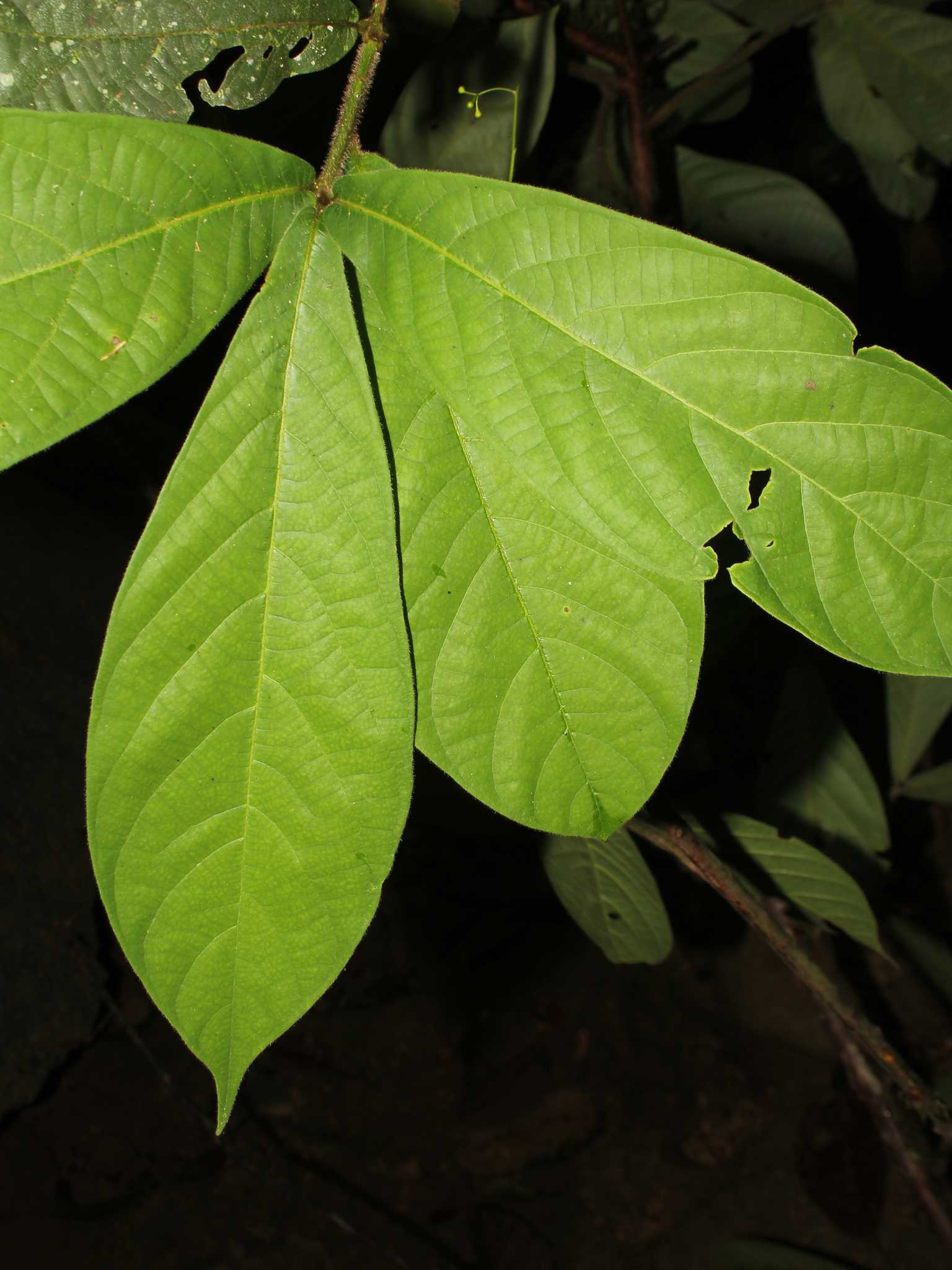
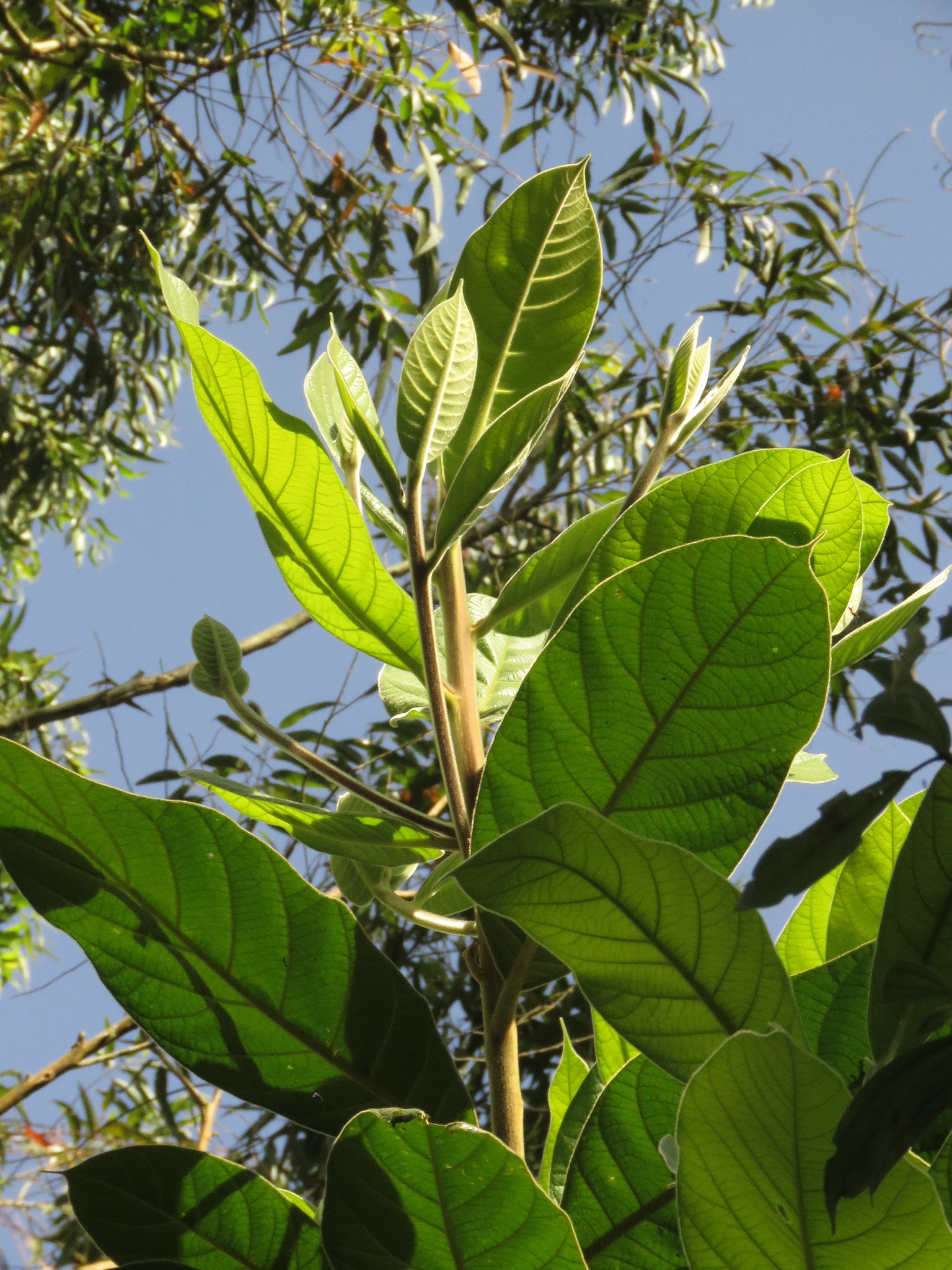
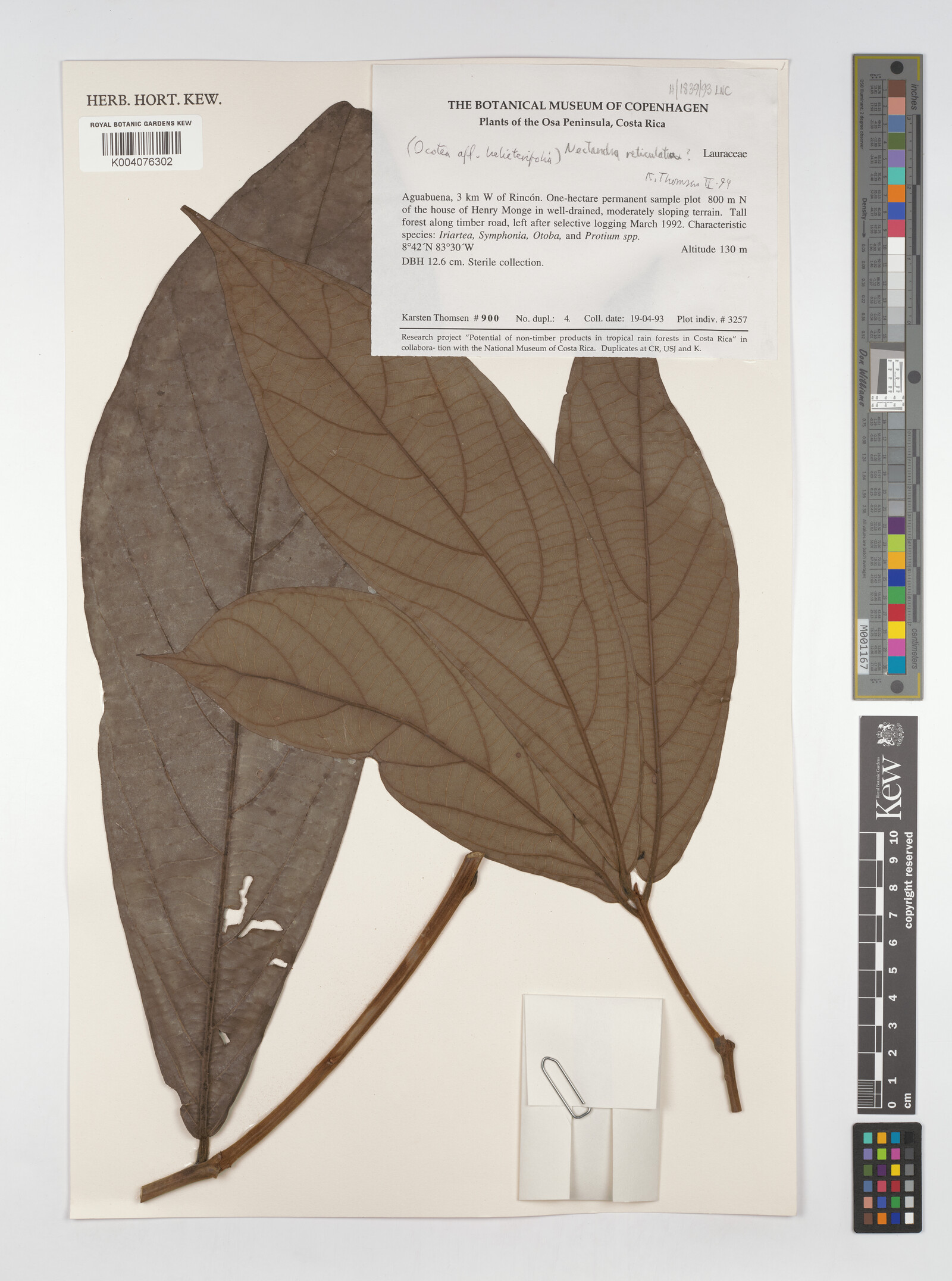
The massive leaves, typically 14–36 cm long by 4.5–13 cm wide, are the tree's most diagnostic feature. They are elliptic with rounded tips and often droop or twist along the midrib (central vein), creating a characteristic spiral appearance that inspired Meisner to name it after the twisted fruits of Helicteres. Near the base of the leaf, the secondary veins form a pair of raised pocket-like structures called domatia on the underside, where symbiotic mites live. The rest of the blade stays glossy and hairless. New growth flushes cinnamon-colored before darkening to deep green.
Flowers & Fruits
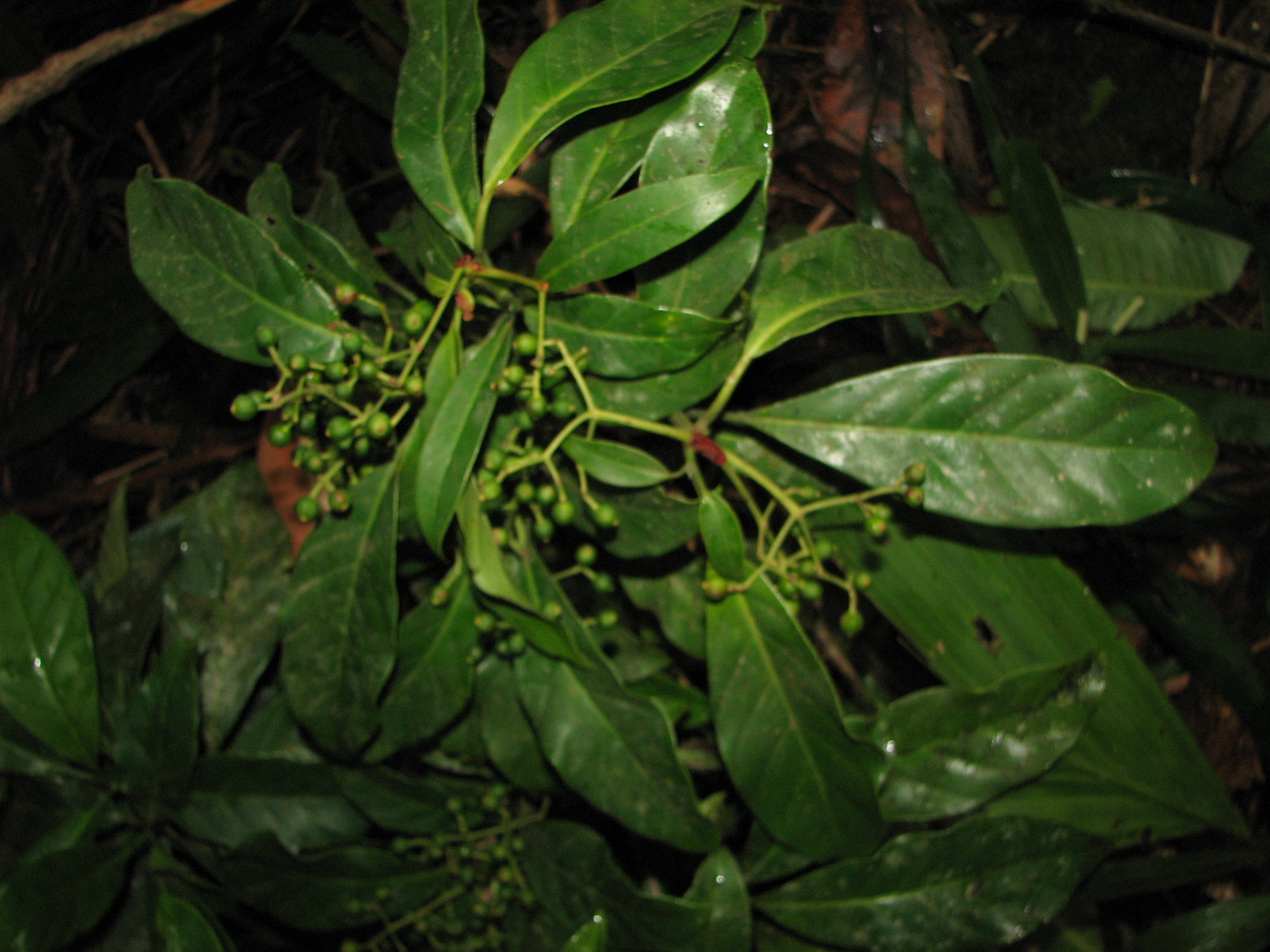
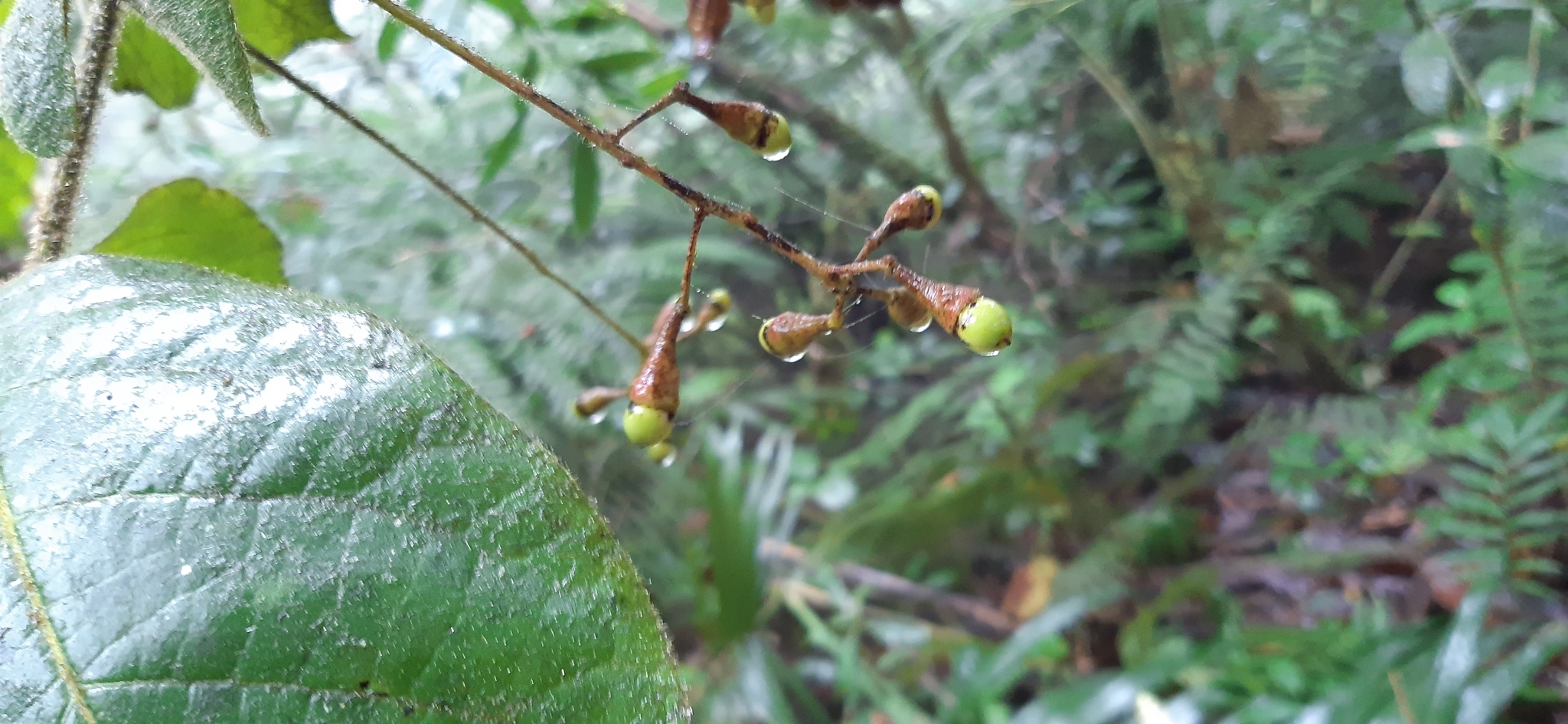
The flower clusters (panicles) are slender and much longer than the leaf stalks, bearing small greenish-white flowers typical of Lauraceae. The fruits are drupes (fleshy one-seeded fruits) that perch on thick stalks (pedicels) above a shallow, collar-shaped cup (cupule) barely 5 mm tall. When the bark is cut, it releases a faint avocado-like scent, a useful field cue for identifying this and other Lauraceae.
Bark & Trunk
Mature trees reach 20–30 meters in height with massive buttresses (flared trunk bases) that can extend 1.5 meters from the trunk. INBio expedition notes from Cerro Frantzius describe trunks 80 cm in diameter supported by these prominent buttresses. Field Museum collectors in Colombia noted the cinnamon-fragrant sap, confirming the avocado-scent characteristic of the family.
Distribution & Range
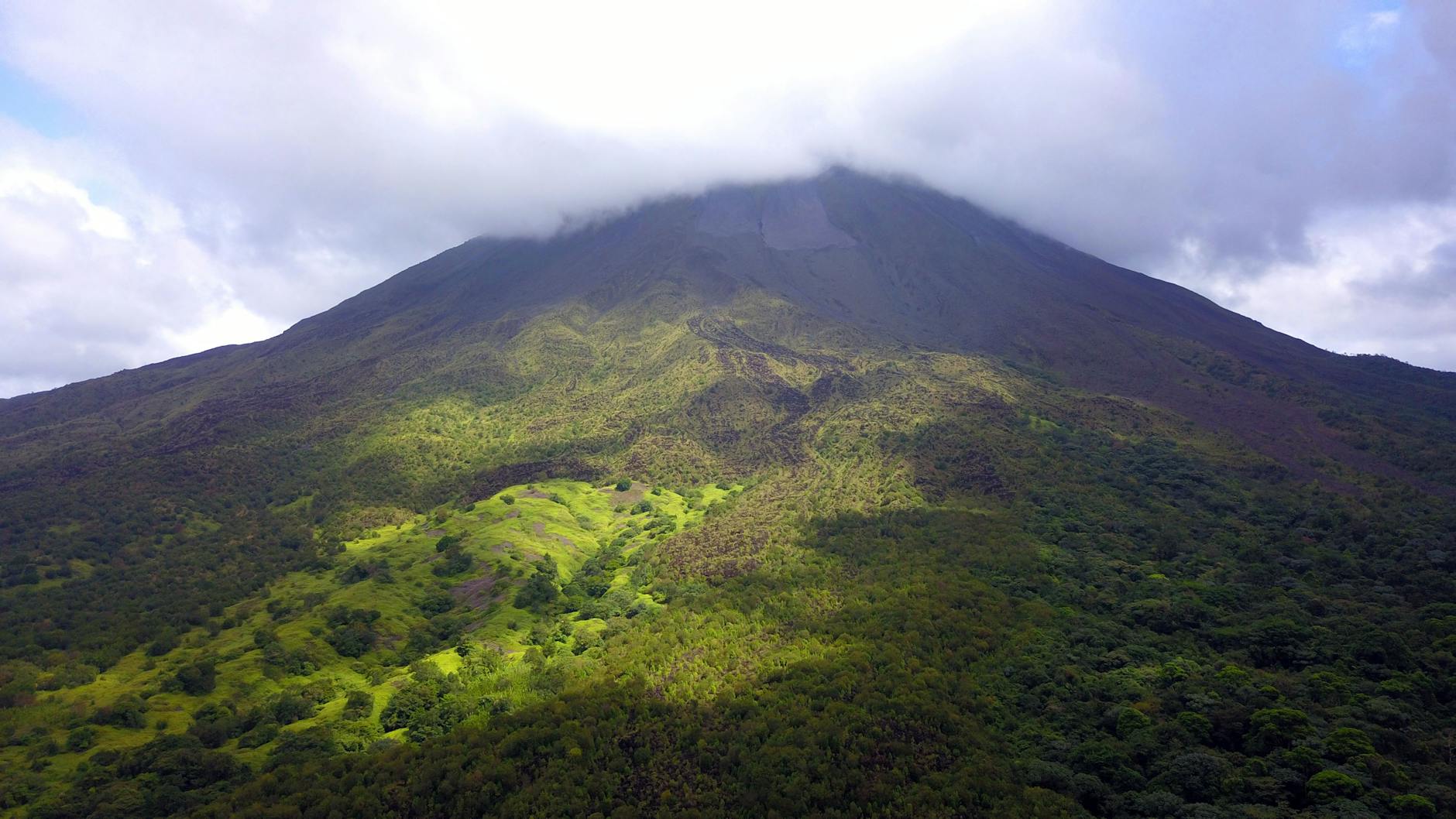
Ocotea macrophylla follows the cloud forests from southern Mexico to the Northern Andes, threading through the humid highlands wherever trade winds pile mist against mountain slopes. GBIF records show the species most densely in Colombia (186 records) and Mexico, with Costa Rica contributing occurrences spread along the Cordilleras Central, de Tilarán, and de Talamanca. Records span from 50 to 3,300 meters elevation, with concentrations in the 1,700–2,100 meter band where cloud belts wrap the ridges most persistently.
Southward through Costa Rica, specimens trail along the Fila Costeña into the Osa Peninsula, while Panamanian and Colombian collections occupy the Caribbean-facing foothills of Bocas del Toro and the Western Cordillera. The tree's tolerance for everything from foothill fog to Pacific-slope trade winds explains its wide elevational range, from just 50 meters near sea level to over 3,300 meters on exposed ridges.
Wildlife Bridges
The aguacatillo fruits twice a year, in March through May and again in September through December, timing its crops to the bimodal rains that drench Central American cloud forests. This schedule matters because no single Lauraceae species fruits reliably every year, so frugivores must move between species and elevations to find food. O. macrophylla's lipid-rich drupes fill gaps in the calendar when other aguacatillos may be barren.
Resplendent quetzals patrol the same elevational band as the tree and gorge on ripe drupes, while northern emerald toucanets and black guans carry seeds downslope into disturbed gaps. In lower foothills, Baird's tapirs browse the saplings in riparian thickets, pruning stems while dispersing fallen fruits along creek corridors.
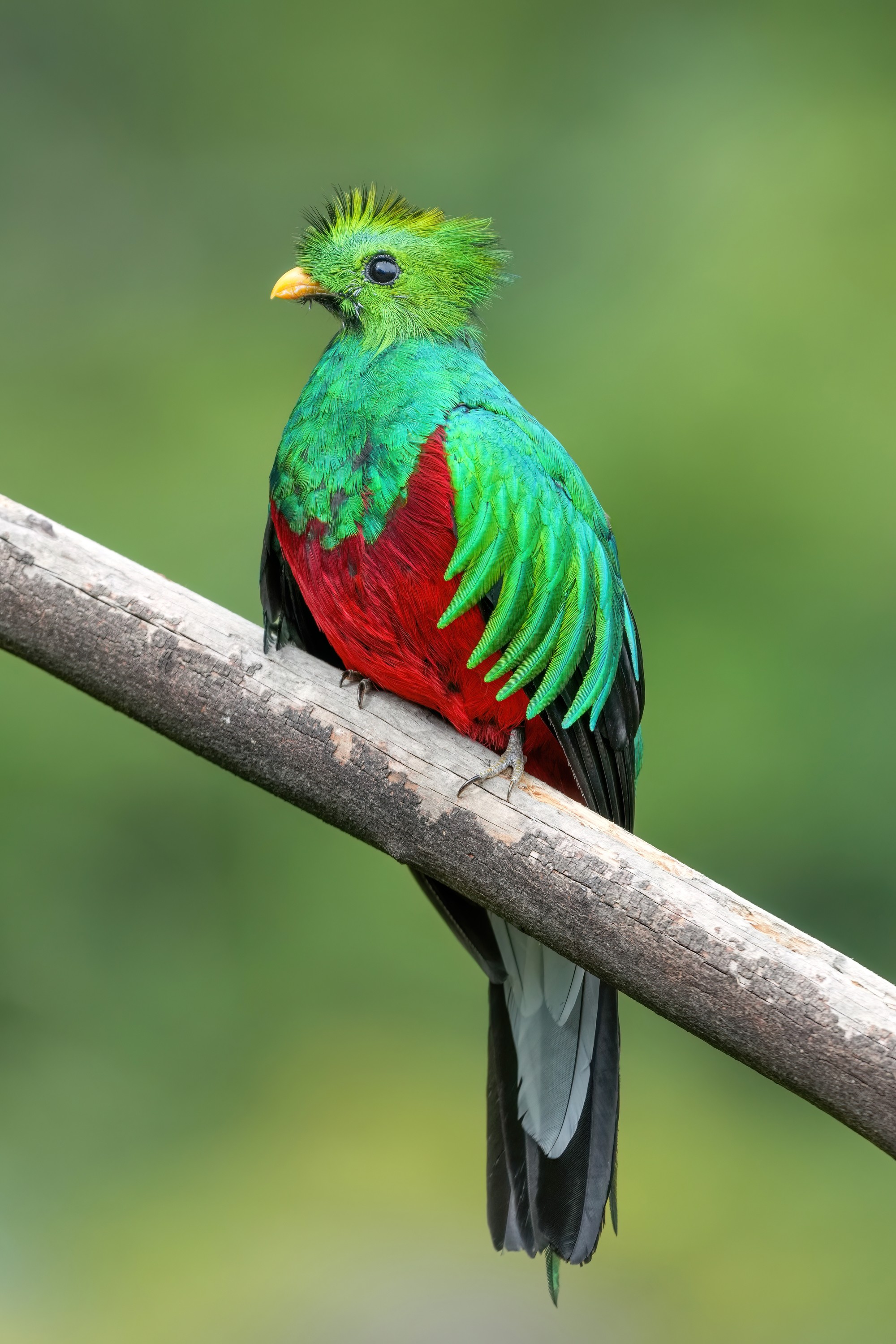
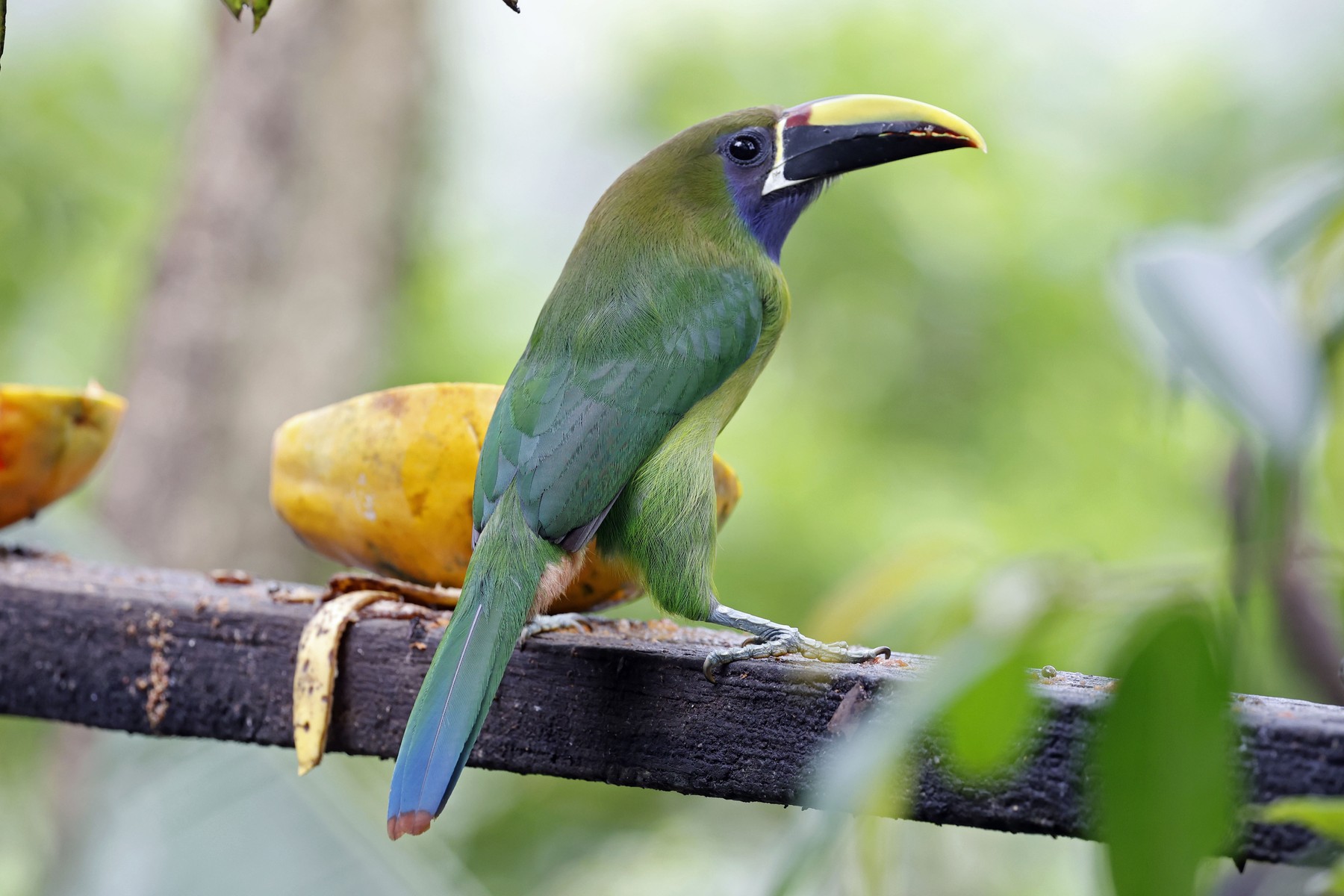
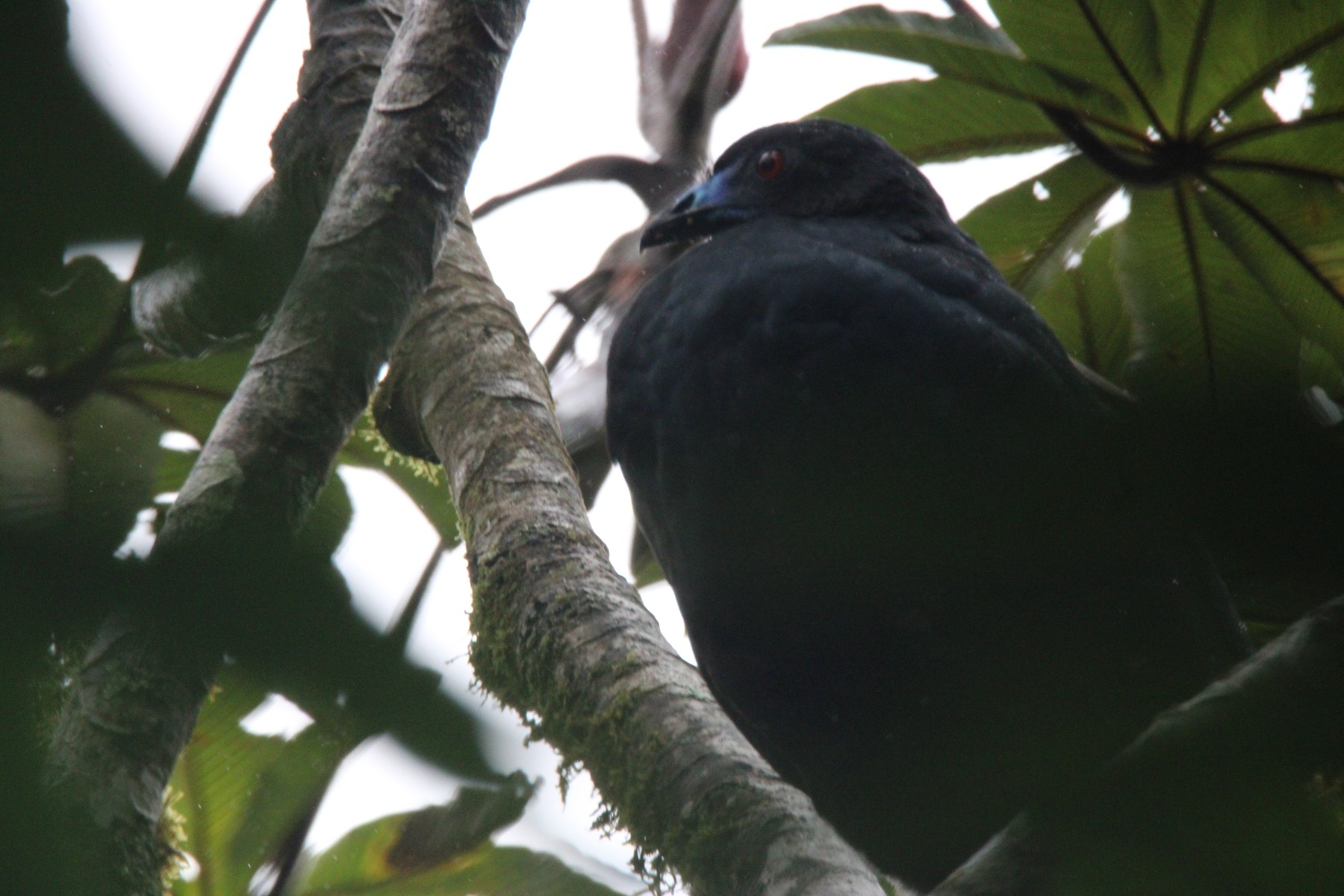
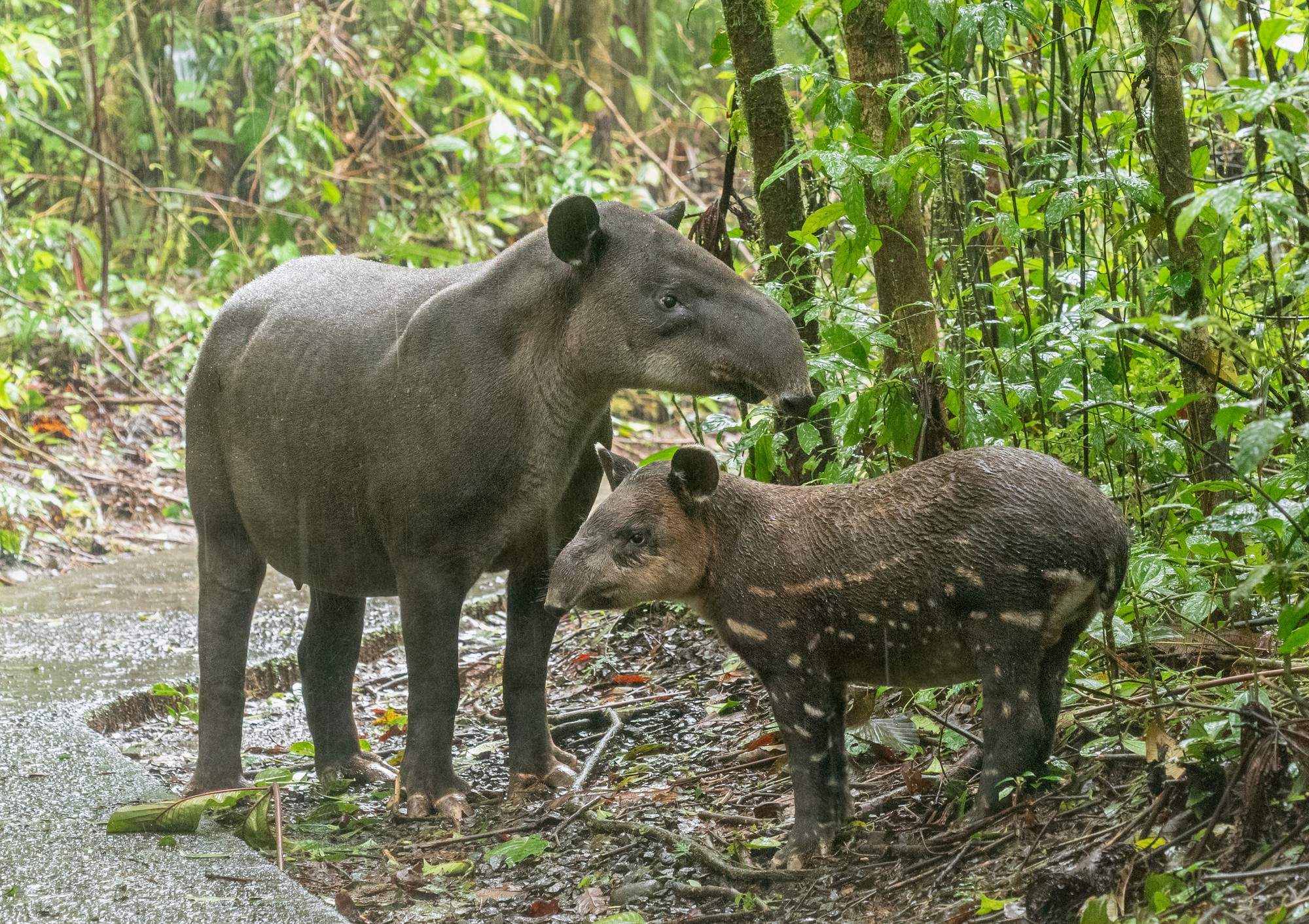
Photos (clockwise from top left): Resplendent quetzal (Giles Laurent via Wikimedia Commons, CC BY-SA 4.0), northern emerald toucanet (Giles Laurent via Wikimedia Commons, CC BY-SA 4.0), Baird's tapir (Rhododendrites via Wikimedia Commons, CC BY-SA 4.0), and black guan (Kelly Fretwell via iNaturalist, CC BY 4.0).
The Bellbird's Pantry
Among the frugivores that depend on O. macrophylla, the three-wattled bellbird (Procnias tricarunculatus) stands out for a radical commitment: it eats nothing but Lauraceae fruit. This Vulnerable cotingid, with fewer than 20,000 individuals remaining, migrates altitudinally across Central America tracking the sequential fruiting of wild avocados. No single Lauraceae species fruits reliably every year, so bellbirds must range widely, moving from Caribbean lowlands in Nicaragua to Pacific cloud forests in Costa Rica as different species ripen.
Monteverde alone harbors 96 Lauraceae species, yet bellbirds require mobility across life zones to find ripe fruit in any given month. The bimodal fruiting of O. macrophylla, with peaks in March–May and September–December, slots into this regional mosaic, providing calories when other species may be barren. Males regurgitate seeds beneath their song perches, depositing them in forest gaps where light levels favor germination. Studies show this targeted dispersal significantly increases seedling survival compared to seeds dropped by other dispersers, making bellbirds not just consumers but architects of the next generation of aguacatillos.
The bellbird's decline, driven largely by deforestation of Lauraceae habitat, threatens this dispersal service. Conservation programs like the Bellbird Biological Corridor now plant mixed Lauraceae species to bridge fragmented forests, ensuring that the birds' seasonal pantry remains stocked across elevations. For O. macrophylla, the bellbird represents both a seed-planting ally and a sentinel: where bellbirds vanish, the tree loses one of its most effective long-distance dispersers.
Chemistry
Colombian researchers have isolated at least eight aporphine alkaloids from O. macrophylla wood and leaves, including nantenine, glaucine, isocorydine, and several newly described compounds. Laboratory tests show that these alkaloids inhibit cyclooxygenase (COX-1 and COX-2) and 5-lipoxygenase (5-LOX), the same inflammatory enzymes targeted by aspirin and ibuprofen. One compound, (+)-N-acetylnornantenine, proved the most potent dual inhibitor of COX-2 and 5-LOX, a mechanism associated with better efficacy and fewer side effects than single-target drugs.
Beyond inflammation, the alkaloid fraction shows antifungal activity against Fusarium oxysporum, a soil pathogen that devastates tomato crops, and antimicrobial effects against Staphylococcus aureus and Enterococcus faecalis. Neolignans extracted from the same species add another layer of bioactivity, with several compounds outperforming reference drugs in platelet aggregation assays. These findings position O. macrophylla as a potential source of lead compounds for drug discovery, though sustainable harvest from wild populations remains a conservation concern.
Buttresses as Ecosystem Engineers
The massive buttresses that INBio collectors measured at 1.5 meters do more than anchor the tree against wind. Research from tropical rainforests shows that buttress zones accumulate 18% more soil organic carbon and 52% more total nitrogen than adjacent non-buttress areas. The flanged roots act as barriers to downslope water flow, trapping leaf litter and fine sediments that would otherwise wash away on steep cloud-forest slopes. This creates pockets of enriched soil where seedlings of other species germinate at higher rates.
By diverting nutrient-rich stemflow (rainwater channeled down the trunk) into these buttress pockets, O. macrophylla effectively gardens its own root zone. The accumulated organic matter supports higher microbial activity, which in turn mineralizes nitrogen into plant-available forms. On ridgelines where shallow soils limit nutrient retention, these buttress-built gardens may explain why the species persists as a canopy dominant while smaller trees struggle. The ecological footprint of a single large O. macrophylla thus extends far beyond its crown shadow, shaping soil chemistry and understory composition for meters around its trunk.
Taxonomic History
Carl Sigismund Kunth described Ocotea macrophylla in 1817 based on specimens collected by Alexander von Humboldt and Aimé Bonpland in Venezuela, giving it a name meaning "large-leaved." The specimens came from the pair's legendary 1799-1804 expedition through Venezuela and the Andes, during which they collected over 60,000 plant specimens, often from dugout canoes on the Orinoco crammed alongside caged birds and roaming monkeys. Darwin later called Humboldt "the greatest scientific traveler who ever lived."
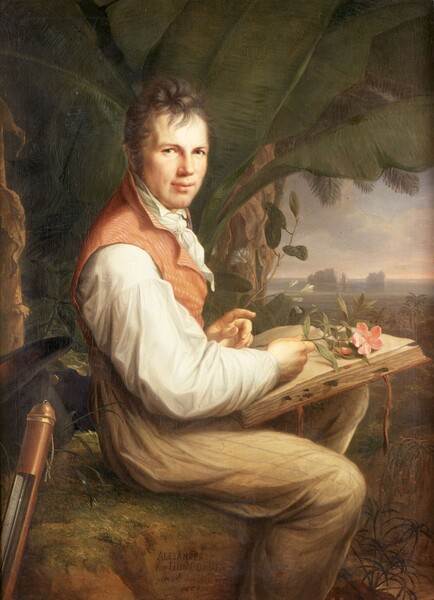
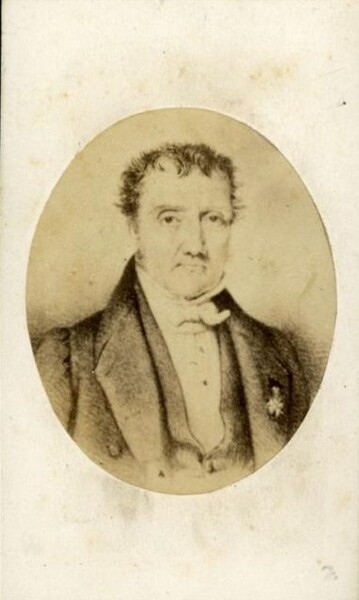
The Swiss botanist Carl Friedrich Meisner later described material from Central America as Oreodaphne helicterifolia in 1864, naming it for the helically twisted leaves that resemble the fruits of Helicteres. William Hemsley transferred Meisner's species to Ocotea in 1882.
Modern Lauraceae specialists at Kew now consolidate these names under Ocotea macrophylla Kunth, recognizing that the Central American and South American populations represent a single widespread species. The sprawl of synonyms under Persea, Oreodaphne, and Nectandra in historical floras reflects the difficulty 19th-century botanists faced in distinguishing Lauraceae genera based on dried specimens alone.
Resources & Further Reading
Floristic References
Lauraceae treatment covering Costa Rican populations of O. macrophylla and related species.
Accepted taxonomy, synonymy, and geographic summary maintained by Kew.
1,300+ georeferenced records showing elevation and country-level trends for the species.
High-resolution herbarium imagery and label data from Colombian material.
Three-Wattled Bellbird & Seed Dispersal
Demonstrates how bellbirds track Lauraceae fruiting across elevations and why no single species can sustain them year-round.
Overview of the Bellbird Biological Corridor planting mixed Lauraceae species to bridge fragmented habitat.
Classic study showing bellbirds deposit seeds in forest gaps where seedling survival is higher than under closed canopy.
Domatia & Mite Mutualism
Reviews how domatia increase predatory mite populations 2–36 times, reducing herbivore and pathogen damage.
Global synthesis showing domatia function primarily as refuges for beneficial mites against predators.
Alkaloid Chemistry & Bioactivity
Isolation and characterization of aporphine alkaloids from Colombian O. macrophylla with antifungal activity.
Demonstrates dual COX-2 and 5-LOX inhibition by alkaloids from O. macrophylla, with implications for anti-inflammatory drug development.
Buttress Root Ecology
Documents 52% higher nitrogen and 18% higher soil organic carbon in buttress zones compared to non-buttress areas.