Huevos de Caballo
A common fence-row tree across Central America, prized for its fragrant night-blooming flowers and paired orange fruits that feed toucans, honeycreepers, and capuchins.
Walk any farm road in the Brunca region at dusk and you will smell this tree before you see it. The creamy, five-lobed flowers unfurl like pinwheels as the sun sets, releasing a gardenia-and-almond perfume that hawkmoths track from hundreds of meters away. By the end of the dry season, the same branches droop with paired orange capsules the size of small rugby balls, which split open to reveal scarlet seeds that tanagers, honeycreepers, and white-faced capuchins eagerly strip away.
Costa Rican farmers have planted huevos de caballo along their fences for generations. The stakes root easily at the start of the rainy season and produce usable shade within two years. The latex-rich bark discourages cattle from chewing the posts, while the fruit feeds wildlife at a time when other food is scarce. It is one of those trees that works for everyone: the farmer gets a living fence, the pollinators get nectar, and the birds get a meal.
Identification
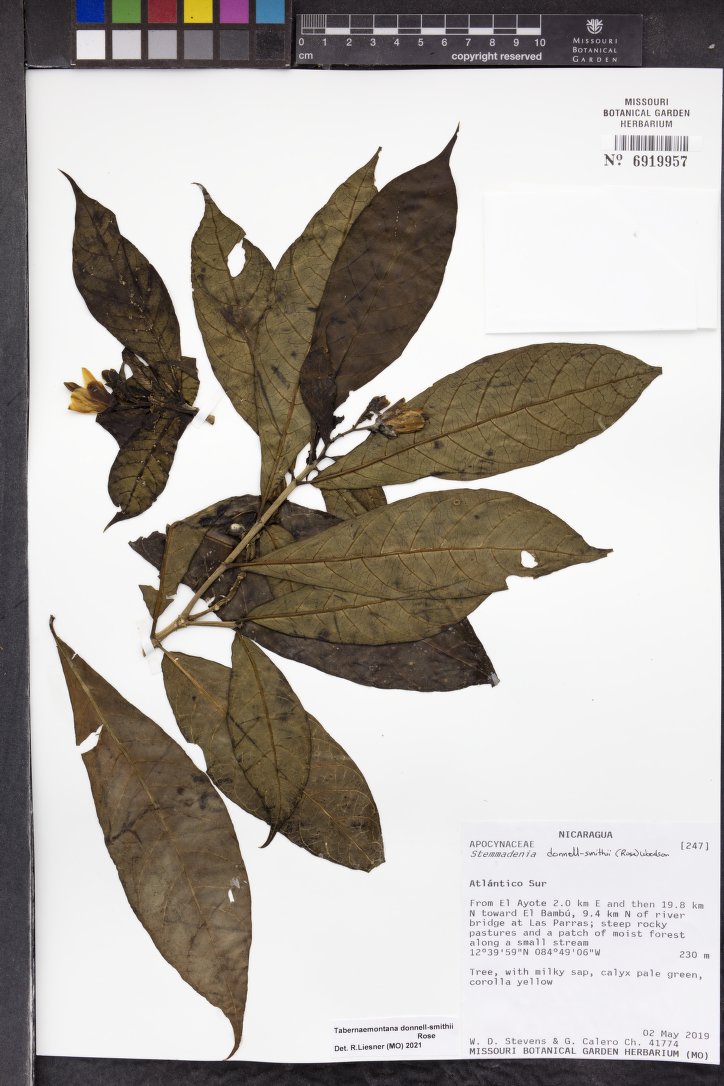
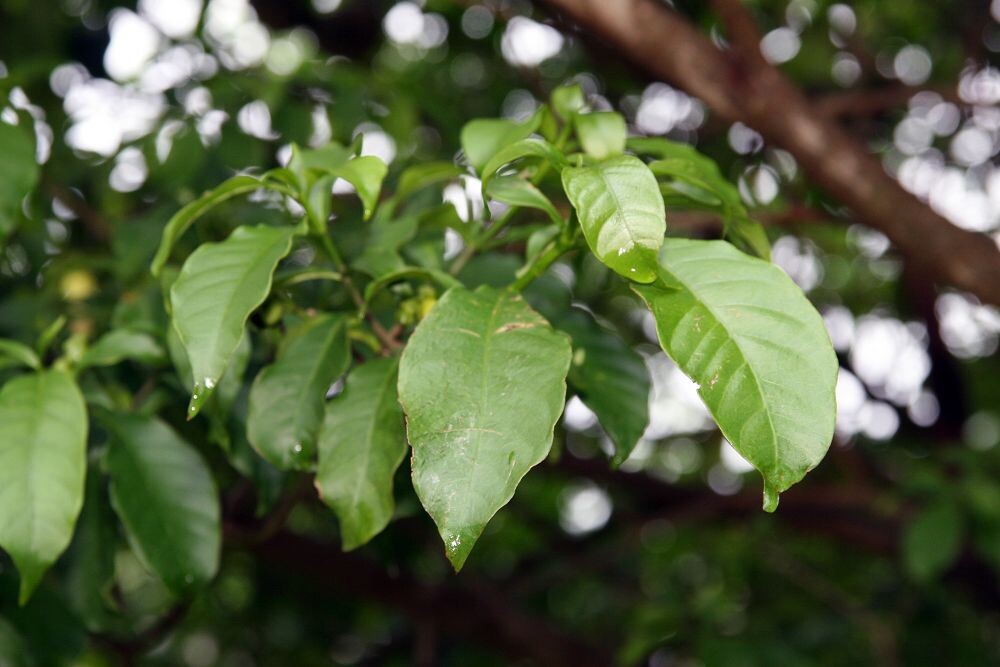
Leaves
The leaves are opposite (paired along the stem), elliptic, 4-18 cm long and 2-5.5 cm wide, with a glossy upper surface and prominent drip tips. Young branches are pale green and exude copious milky latex when cut. The latex is a cocktail of indole alkaloids that deter herbivores but attract stingless bees, which harvest it to waterproof their nests.
Flowers
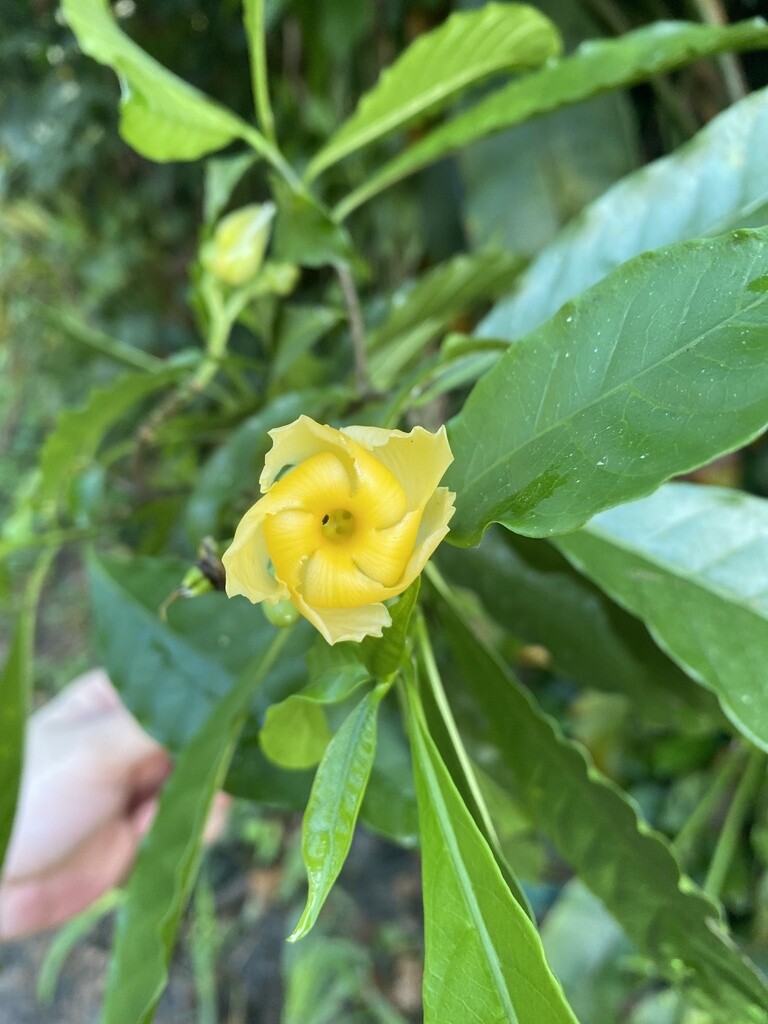
Flowers are borne in clusters of 2-5, each with a tubular corolla 3-5 cm long. The five lobes are thick and twist slightly clockwise, giving the open flower a pinwheel shape. The blooms are cream to pale yellow, and they open at dusk, releasing their strongest fragrance between 7 and 10 PM. Hawkmoths hover to probe the nectar tubes, while stingless bees visit during the day to collect latex from the calyx.
Fruits
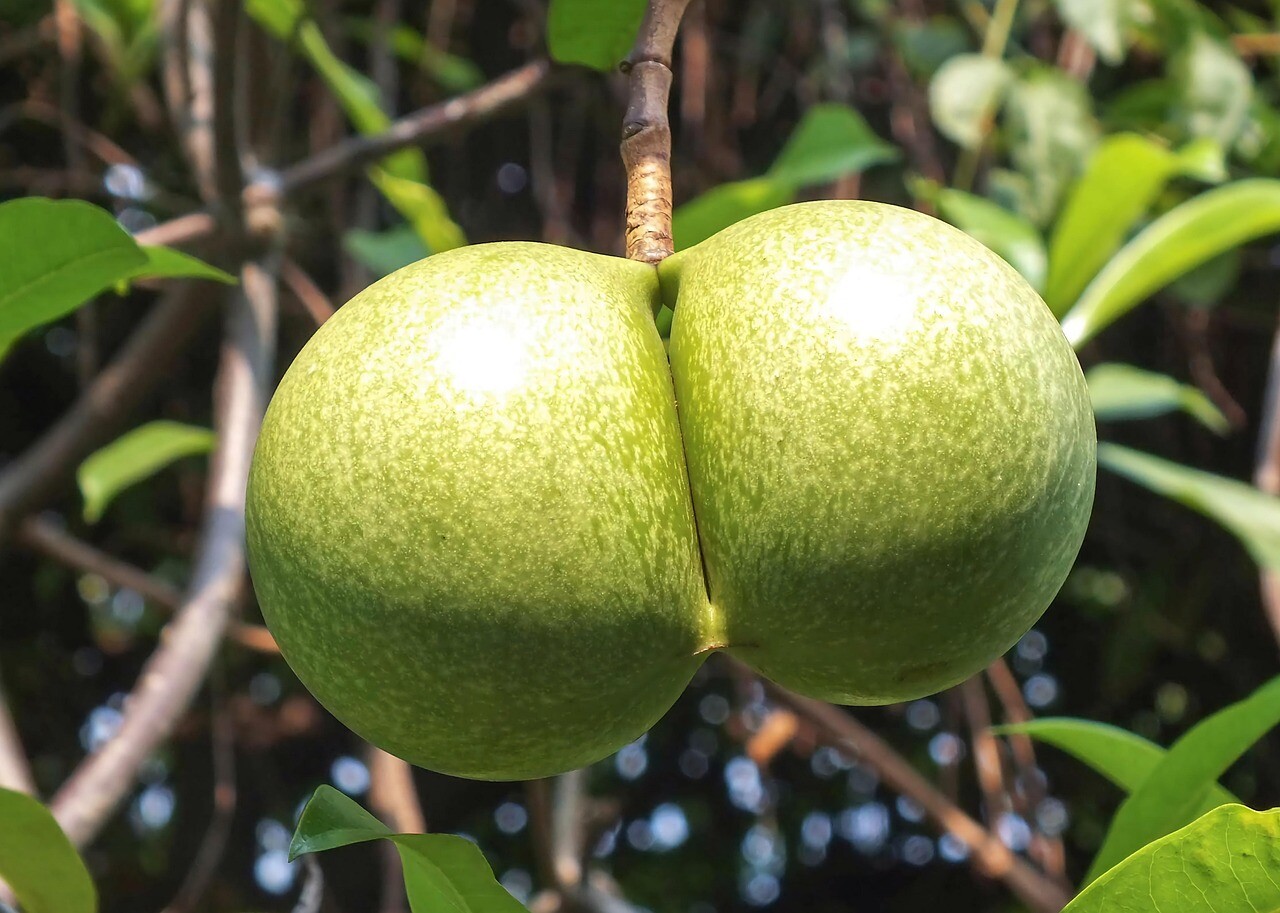
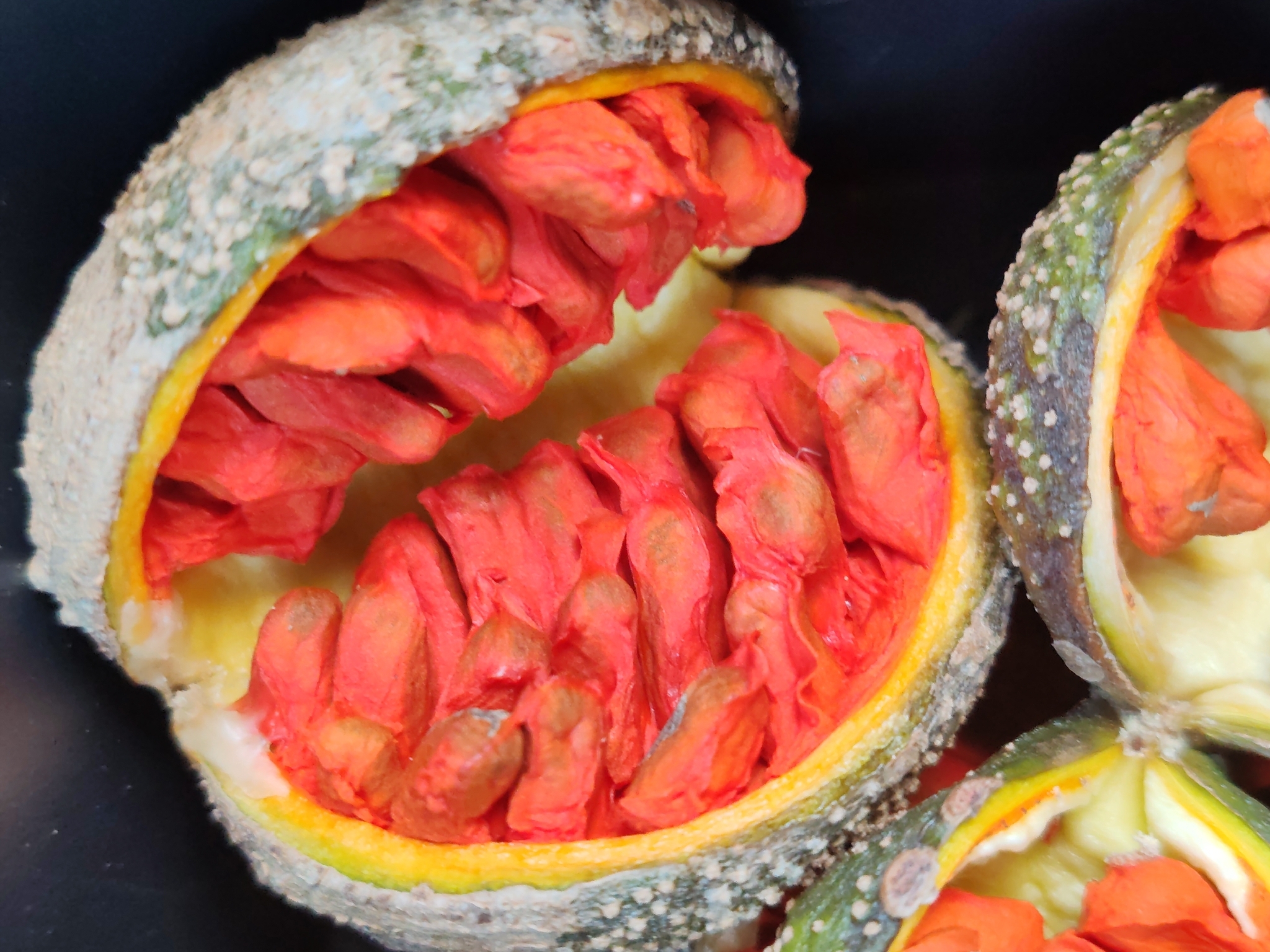
The fruits are the tree's most distinctive feature: paired woody capsules 7-12 cm long, bright orange when ripe, that hang from the branches like oversized ornaments. When they split along the inner seam, they reveal dozens of seeds wrapped in scarlet arils (fleshy seed coats). The local name "huevos de caballo" (horse testicles) refers to their paired, dangling form. Birds swallow the arils whole, digesting the flesh and depositing the seeds far from the parent tree.
Distribution
Huevos de caballo grows from southern Mexico (Veracruz and Oaxaca) through all of Central America to Panama. It thrives from sea level to 1,100 meters, though it is most common between 200 and 800 meters. In Costa Rica, it appears along both coasts and throughout the Central Valley, favoring forest edges, river levees, and the living fences that line farm roads.
The tree flowers twice a year in most areas: once in March to May during the late dry season, and again in August to October at the height of the rains. This double flowering means fruit is available when many other trees have finished, making it an important food source for wildlife during lean months.
At Los Tuxtlas in Veracruz, Mexico, researchers studying forest fragmentation found huevos de caballo among the few species that persist in all edge habitats and pastures. The Sierra de los Tuxtlas holds the largest remaining tract of moist forest in Mexico, but deforestation since the 1960s has left most remnants small and isolated. Regeneration studies show that the tree thrives at forest edges and in secondary growth, making it a potential pioneer for restoration efforts. Its tolerance of disturbed sites, combined with its value to wildlife, positions it as a candidate for reforestation in fragmented landscapes across Central America.
Wildlife Connections
A 1977 study by McDiarmid, Ricklefs and Foster in Costa Rica's dry forest documented 22 bird species eating the fruits, many of them primarily insectivorous species that switch to fruit when protein-rich arils become available. The nutritional analysis explains why: the arils contain 64% lipid, 11% protein, and 17% carbohydrate, an energy density rivaling nuts and seeds. For some species, a single fruiting tree can supply up to 25% of their daily energy needs. Fruits peak during the dry season when other resources are scarce, making huevos de caballo a critical food bridge for forest birds.
Birds swallow the arils whole, and their digestive tracts do double duty: they remove the fleshy coating and scarify the seed coat, both of which dramatically improve germination rates. Seeds that pass through a bird germinate faster and more reliably than those that simply fall to the ground. Capuchins take a different approach, prying fruits apart and dropping seeds along ridges and fence lines as they forage, inadvertently planting the next generation in new territory. At Los Tuxtlas in Mexico, researchers found red-lored Amazon parrots gathering at fruiting trees alongside the many bird species that depend on this food source.
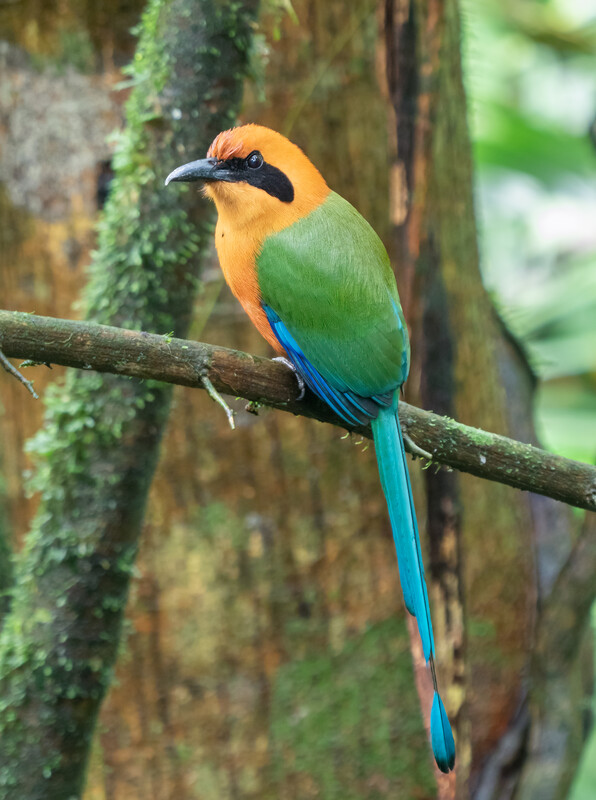
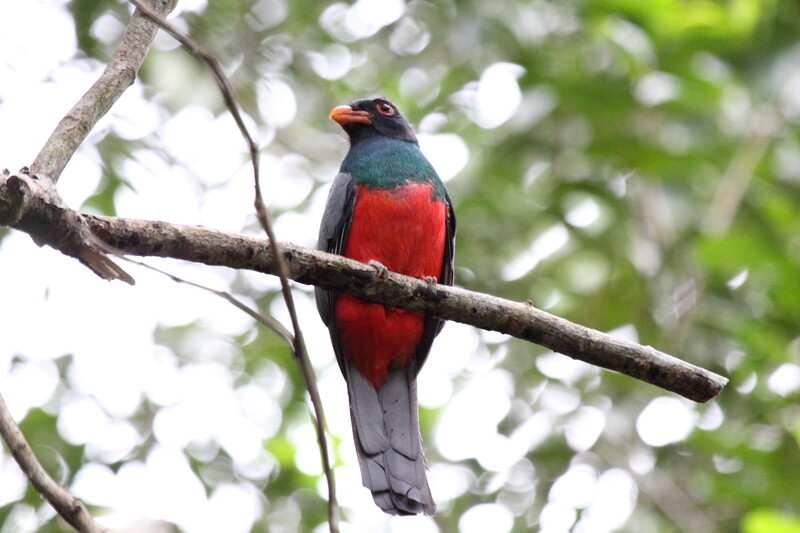
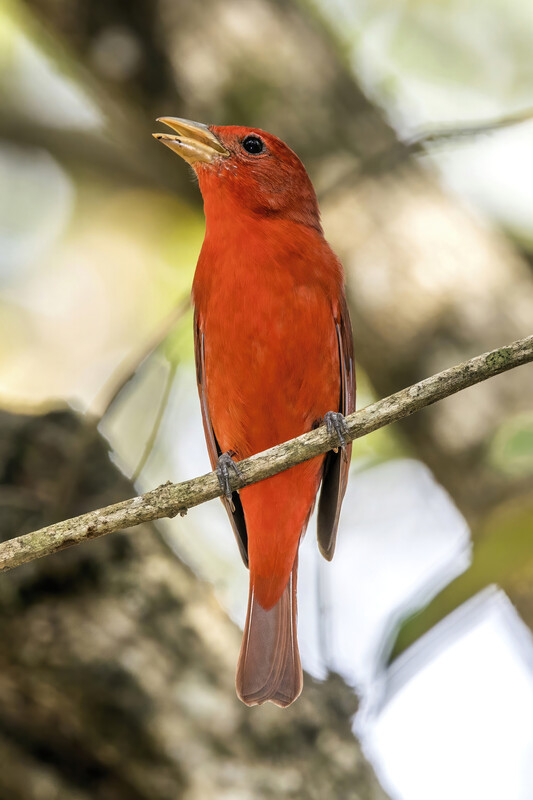

Photos (clockwise from top left): Rufous Motmot (Wikimedia, CC BY-SA 4.0), Slaty-tailed Trogon (Dominic Sherony, CC BY-SA 2.0), Purple Honeycreeper (Wikimedia, CC BY-SA 4.0), and Summer Tanager (Charles J. Sharp, CC BY-SA 4.0).
Taxonomic History
Joseph Nelson Rose described this species in 1893 from specimens collected in San Felipe, Retalhuleu, on Guatemala's Pacific slope. The epithet honors John Donnell Smith (1829-1928), a man whose life arc traced the full span of American history from antebellum Baltimore to the Jazz Age. A Yale graduate and member of Skull and Bones, Donnell Smith served as a Confederate artillery captain, was severely wounded at Gettysburg, and witnessed the surrender at Appomattox. He returned to Baltimore and took up botany with the same intensity he had brought to war.
Over three decades, Donnell Smith published 36 papers titled "Undescribed plants from Guatemala" in the Botanical Gazette, describing hundreds of new species. Many specimens came from Baron Hans von Turckheim, a German coffee farmer and consul in Coban, Guatemala, who spent 30 years exploring the highlands while managing his plantation. Turckheim shipped dried plants to Baltimore; Donnell Smith described them and distributed duplicates to herbaria worldwide under the title "Ex plantis Guatemalensibus." In 1906, the aging collector donated his entire herbarium of over 100,000 sheets and his 1,600-volume botanical library to the Smithsonian, where they remain a historical collection.
Rose originally placed the species in Tabernaemontana, but Robert Woodson transferred it to Stemmadenia in 1928, recognizing that genus as distinct based on morphological characters. For decades Woodson's treatment stood, but molecular phylogenetics in the 2000s revealed that Stemmadenia was nested within Tabernaemontana. Simoes et al. (2010) confirmed this relationship, and the Manual de Plantas de Costa Rica now treats the species under its original name, Tabernaemontana donnell-smithii Rose. The Stemmadenia name persists in nurseries and everyday speech. In Brunca, nobody asks for Tabernaemontana stakes; they ask for huevos de caballo.
Alkaloid Chemistry
In 1958, chemists first isolated alkaloids from this species' bark: quebrachamine, isovoacangine, voacamine, tabernanthine, and ibogamine. These belong to the iboga alkaloid family, structurally related to ibogaine from the African shrub Tabernanthe iboga. The chemistry was academic curiosity until researchers noticed that ibogaine could interrupt opioid addiction with striking speed. In clinical settings, patients report rapid resolution of withdrawal symptoms, with 80% experiencing eliminated or drastically reduced symptoms. A 12-month follow-up study found that 30% of treated patients never used opioids again.
Because African Tabernanthe is scarce, researchers are examining New World species as alternative sources. A 2019 study demonstrated that voacangine from Mexican Tabernaemontana root bark can be converted to ibogaine in a single chemical step. The bark of huevos de caballo contains voacangine and related precursors, meaning the fence posts lining Brunca's pastures could theoretically supply raw material for addiction medicine. A clinic in St. Kitts conducted 257 ibogaine treatments between 1996 and 2004 without deaths or serious adverse events, though the compound's cardiac effects demand medical supervision. The same bitter chemistry that keeps cattle from chewing fence posts may one day help break the grip of opioid dependence.
Resources & Further Reading
Species Information
Conservation status, distribution, and synonymy.
Accepted taxonomy and distribution maintained by Kew.
Occurrence records and distribution maps.
Ecology & Dispersal
Documents 22 bird species that eat and disperse seeds from this tree.
Phenology, pollination, and fruit biology of Costa Rican Stemmadenia.
Taxonomy & Chemistry
Biography of the Baltimore botanist who collected across Central America.
Molecular study showing Stemmadenia is nested within Tabernaemontana.
Extraction of ibogaine precursors from New World species.
First isolation of iboga-type alkaloids from this species.
Archival materials from the botanist honored in this species' name.
12-month follow-up study of ibogaine for addiction treatment.