Manchineel
Hippomane mancinella holds the Guinness World Record as the most dangerous tree in the world. Its caustic sap can blind, its tempting apple-like fruits can kill, and even standing beneath it in rain can burn the skin. Yet this coastal tree is irreplaceable for erosion control and supports wildlife that have evolved immunity to its toxins.
The Little Apple of Death
In 1521, Juan Ponce de Leon returned to Florida to establish a colony. The Calusa people resisted, and during battle an arrow struck the conquistador's thigh. The wound festered. The expedition retreated to Cuba, where the man who had searched for the Fountain of Youth died of his wounds. The arrow, according to tradition, had been tipped with manchineel sap.
The manchineel's Spanish names tell its story: manzanillo de playa (beach little apple), manzanilla de la muerte (little apple of death), and arbol de la muerte (tree of death). The English name derives from the Spanish manzanilla. The scientific epithet mancinella carries the same origin. All refer to the fruit: a green, glossy drupe about the size of a crabapple that smells faintly sweet and tastes, initially, pleasant.
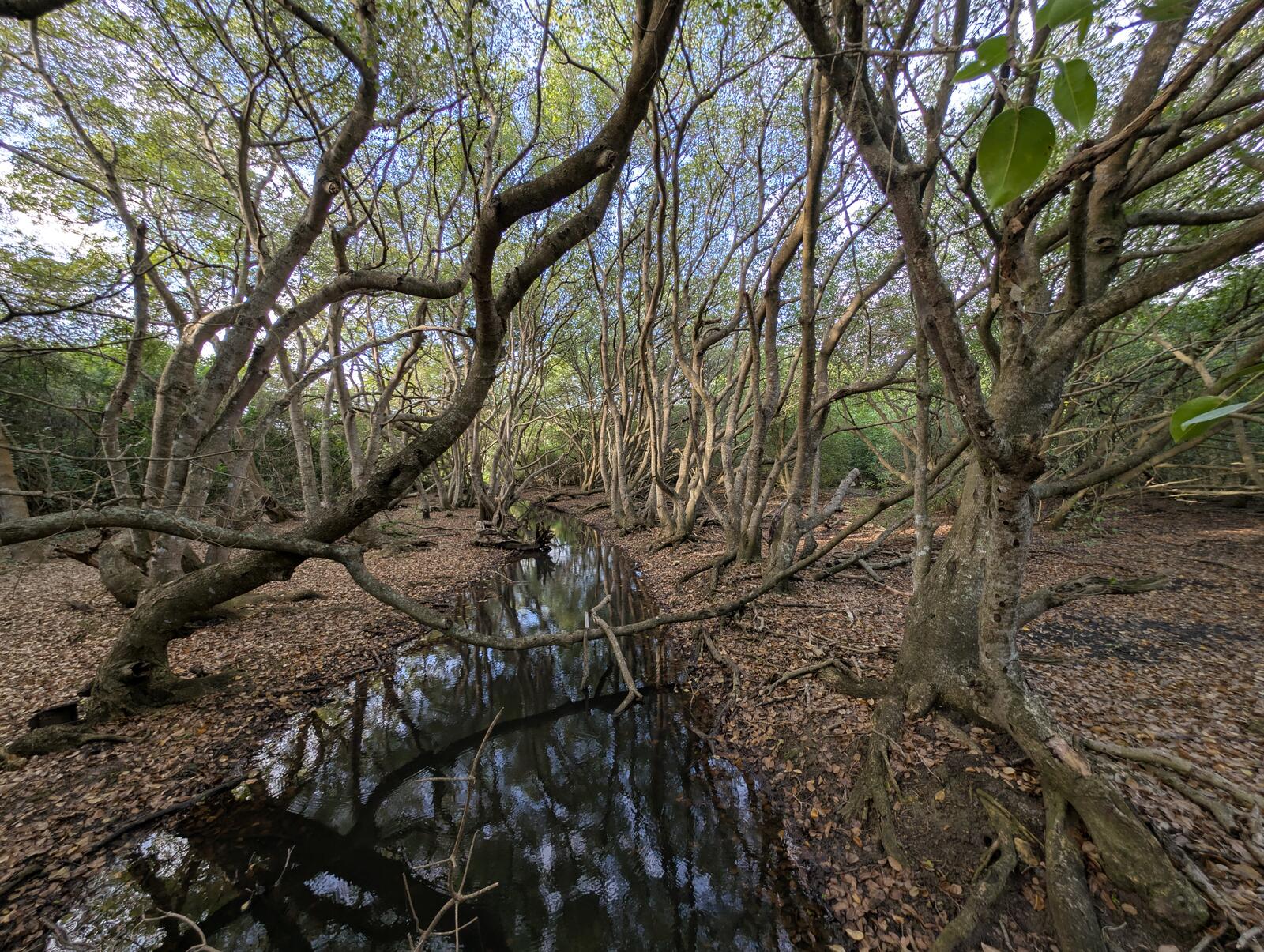
In 2000, radiologist Nicola Strickland published a first-person account in the British Medical Journal describing her experience on a Tobago beach. She and a friend found green fruits scattered on the sand and, curious, each took a bite. The taste was pleasant, sweet. Then came a peppery burning that intensified by the second. Within moments, her throat had swollen so severely she could barely swallow. The pain persisted for eight hours.
A Record-Breaking Tree
In 2011, the Guinness Book of World Records certified Hippomane mancinella as the most dangerous tree in the world. Every part is toxic. The milky white sap contains phorbol esters, hippomanins, and other irritants that cause severe contact dermatitis. Touching the bark can blister the skin. Getting sap in the eyes can cause temporary or permanent blindness. Even standing beneath the tree during rain can be hazardous: water dripping from the leaves carries enough dissolved toxins to burn exposed skin.
The fruit is the most infamous danger. A retrospective study of 97 manchineel poisonings from French Poison Control Centers found that symptoms typically begin 30 minutes after ingestion: oropharyngeal pain (68% of cases), abdominal pain (42%), and diarrhea (37%). While most victims recover, the initial experience is severe enough that children must be kept away from fallen fruit.
Identification
Habit
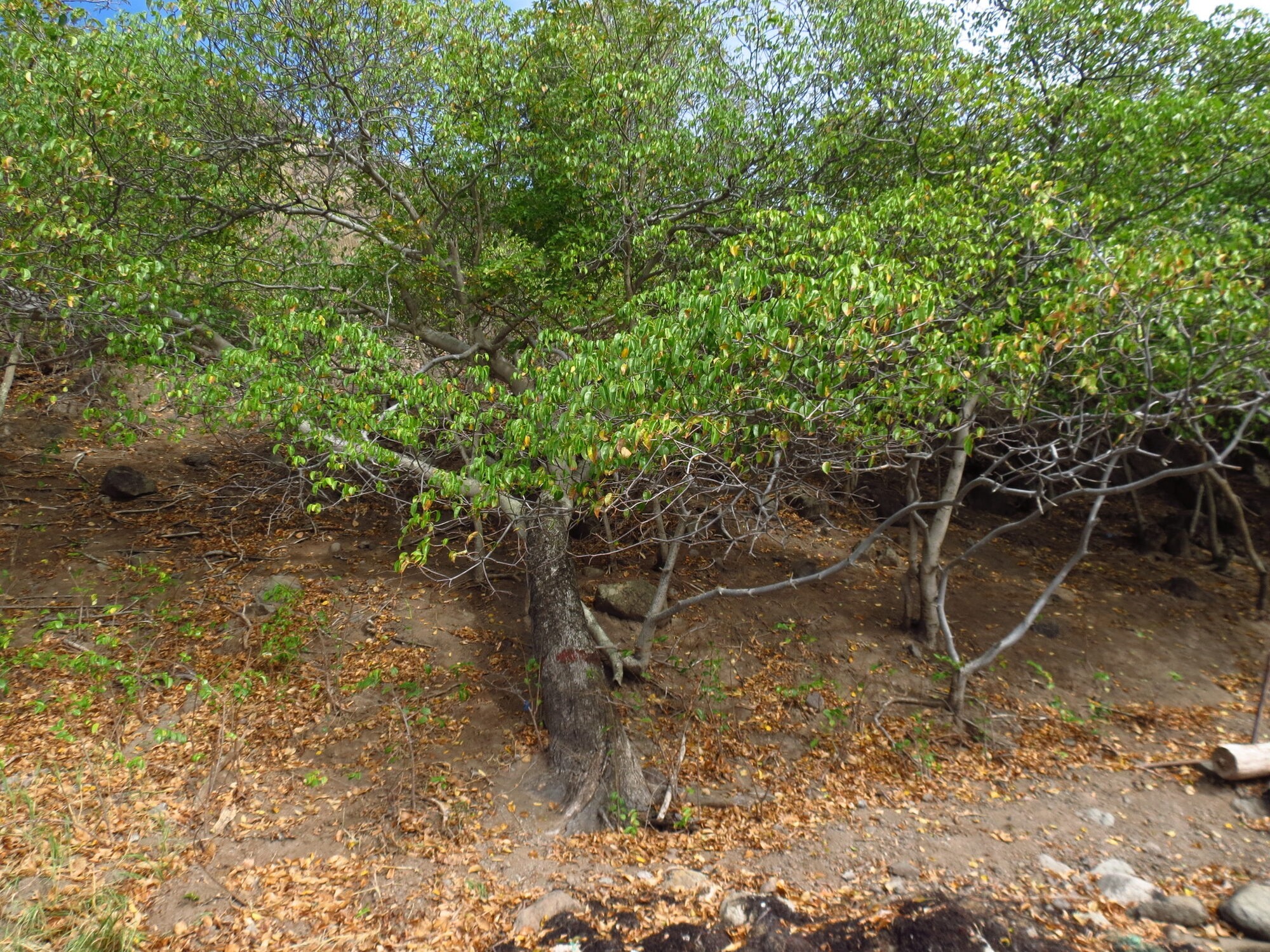
The manchineel is a small to medium-sized evergreen tree, typically 2-8 meters tall, occasionally reaching 18 meters. It often develops a spreading, rounded crown. In coastal habitats subject to harsh conditions, trees may grow twisted or even horizontally after being toppled by unstable sandy soils. The trunk lacks buttresses and is covered in scaly, grayish to reddish-brown bark. The tree remains bright, glossy green during dry season when surrounding vegetation appears desiccated.
Leaves
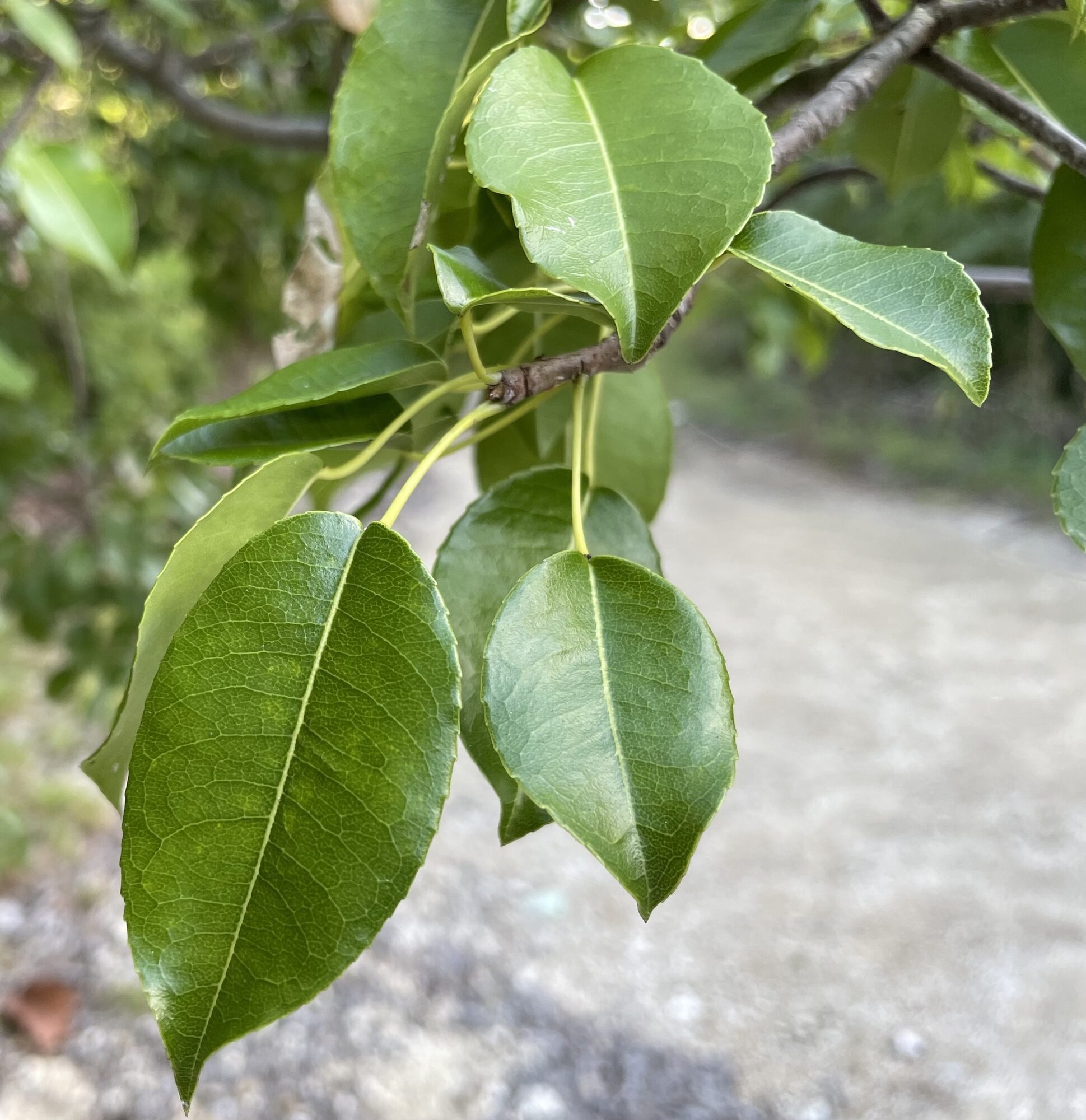
Leaves are simple, alternate, and evergreen. The petiole (12-48 mm long) bears a distinctive darkened gland at its apex where it joins the blade. Leaf blades are 3-8 cm long and 2-5 cm broad, ovate to ovate-oblong, with an obtuse to acute apex bearing a minute gland tip. The margins are finely serrate with 8-20 gland-tipped teeth per side. The upper surface is lustrous, glabrous, and dries stiffly chartaceous, with 7-9 secondary veins per side and a prominent yellow midrib. A waxy coating helps conserve water.
Flowers
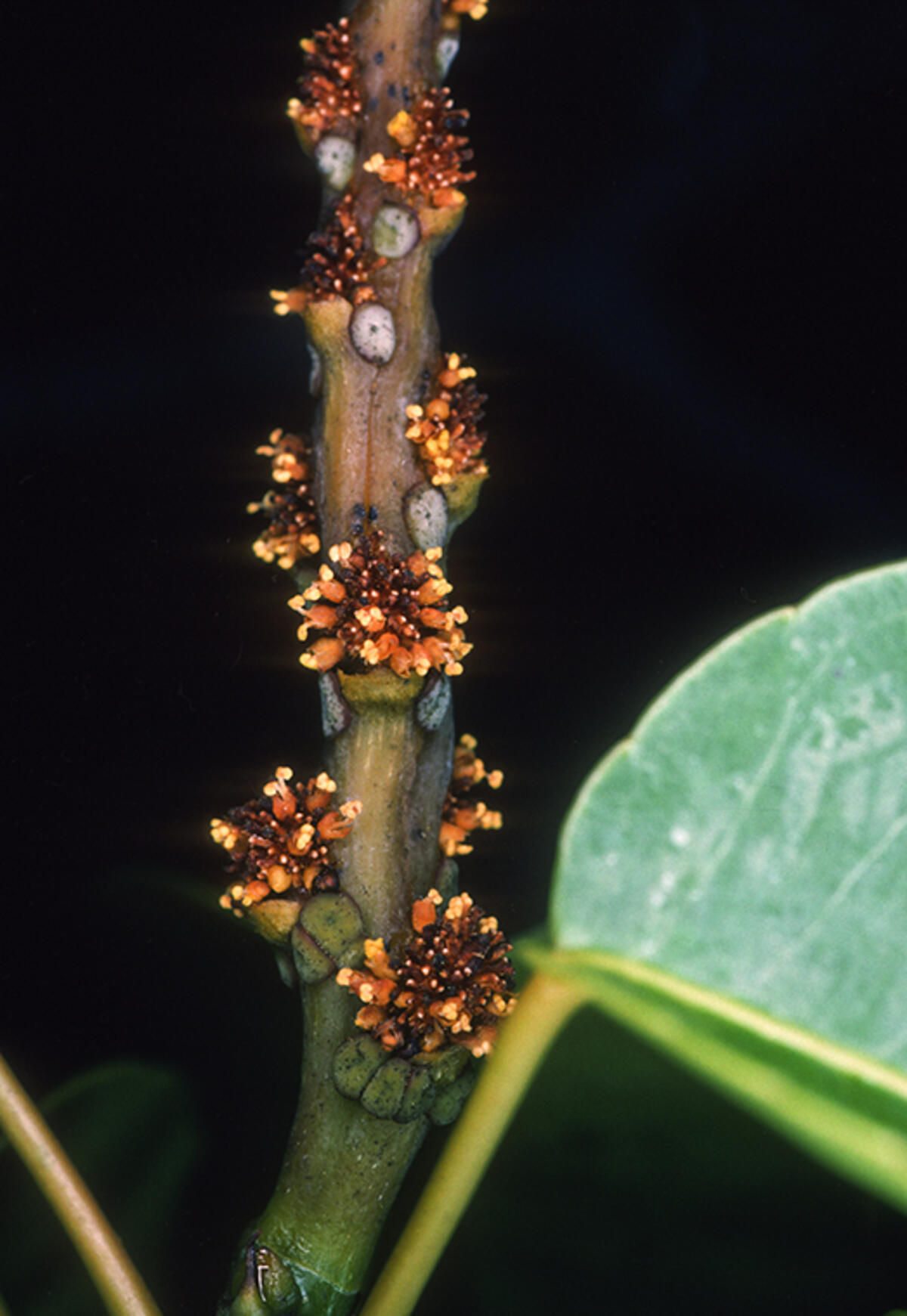
Inflorescences are terminal, solitary, spicate, and bisexual. The spike is 2.8-7 cm long with one or two subsessile female flowers at the base and 8 or more male flowers arranged in alternate sessile glomerules along the thick rachis. Male flowers are small (about 2 mm), yellowish, and lack petals; they have only two stamens united at the base. Female flowers have a cupulate calyx and an ovary with 6-10 locules. The flower structure suggests wind pollination. Flowering occurs primarily in March-April and September-December, though blossoms may appear sporadically year-round.
Fruits
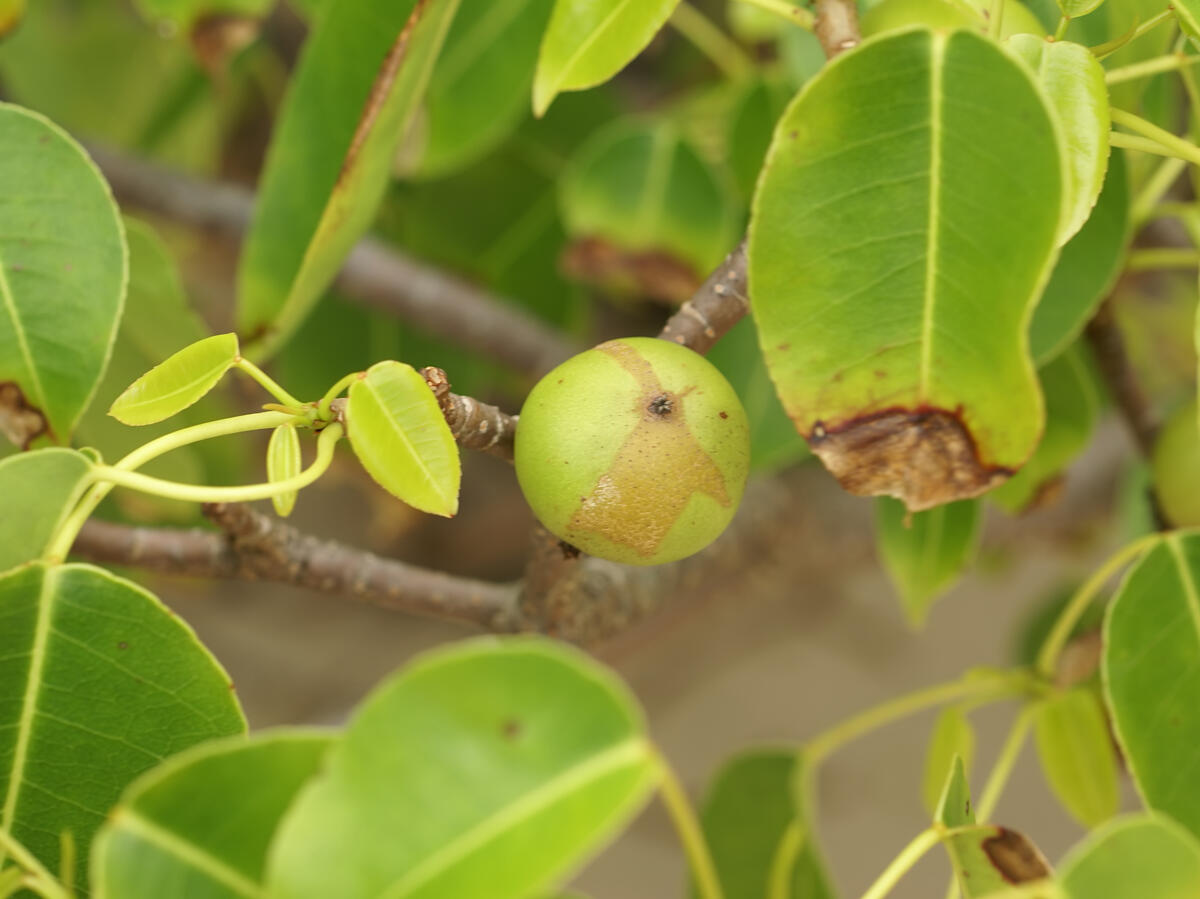
Fruits are drupaceous, globose to oblate, smooth, 1.8-2.5 cm in diameter, and resemble small green apples. They turn yellowish when ripe and have a characteristic apple smell. The fleshy exterior surrounds a woody core containing 4-10 seeds. Seeds are approximately 6-8 mm long, ovoid-compressed, and tan. Fruiting occurs primarily from August to September and December to May. During peak fruiting in April and May, fallen fruits carpet beaches in such numbers that they pose a genuine hazard to barefoot visitors.
Warning: Every part of the manchineel is extremely toxic, including the fruit. Even a single bite can cause severe burning, blistering, and swelling of the mouth and throat. Do not touch or consume any part of this tree.
Distribution and Habitat
The manchineel ranges from the Florida Keys through the Caribbean, Mexico, Central America, and into northern South America (Colombia and Venezuela). It also occurs in the Galapagos Islands, likely having arrived via water-dispersed seeds. In Costa Rica, it grows along sandy coastlines on both the Pacific and Caribbean coasts, from sea level to about 20 meters elevation. It is common on beaches throughout the Area de Conservacion Guanacaste and is particularly notable at Manuel Antonio National Park, where warning signs alert visitors to its presence.
In the Brunca region, manchineel occurs at Playa Carbonera near Puerto Jimenez and in the Reserva Forestal Golfo Dulce. The species favors sandy beaches, coastal scrub, brackish swamps, and the margins of mangrove forests. It tolerates salt spray, periodic ocean inundation, and drought, thriving in conditions that exclude most other trees. It sometimes forms monospecific stands at the edge of beaches.
Ecology
Given its extreme toxicity, few animals interact with the manchineel. Yet some have evolved immunity. The black spiny-tailed iguana (Ctenosaura similis) eats the fruit without harm and lives among the tree's limbs. Its saliva reportedly neutralizes the sap, though the mechanism is not fully understood. In the Galapagos, giant tortoises (Chelonoidis spp.) consume manchineel fruits and disperse the seeds; researchers have documented manchineel seedlings germinating from tortoise scat.
Water dispersal may be more important than animal dispersal. The fruits are buoyant and can float for extended periods, allowing ocean currents to carry them to new beaches. This hydrochory likely explains the species' presence in the Galapagos and its continuous distribution along Caribbean and Central American coastlines.
Despite its dangers, the manchineel provides critical ecosystem services. Its deep root system stabilizes shorelines and prevents beach erosion. It serves as a natural windbreak, protecting inland areas from coastal storms. As climate change intensifies hurricane activity, the manchineel's erosion control role becomes increasingly valuable.
Colonial History and Indigenous Uses
The Carib people recognized the manchineel's toxicity and turned it to their advantage. They extracted the latex and applied it to arrow tips for hunting and warfare. The death of Ponce de Leon demonstrates the effectiveness of this poison. The Caribs also used manchineel leaves to contaminate the water supplies of their enemies.
The tree's history intersects with darker chapters of colonialism. In the 1820s, French colonial physician Jean-Baptiste Ricord conducted experiments on manchineel toxicity in Guadeloupe. Motivated by fears that enslaved people might use the poison against colonists following the Haitian Revolution, he tested the sap on dogs and, in at least one documented case, an enslaved boy. Half the dogs died in agony; the boy survived but suffered painful sores. Such experiments reveal the violent intersection of botanical knowledge and colonial power.
The Arawak and Taino peoples developed an antidote: a poultice of arrowroot (Maranta arundinacea) applied to manchineel wounds. Despite its toxicity, Caribbean furniture makers have valued manchineel wood for centuries. The wood is medium hardness, easy to work, takes a good polish, and reportedly smells of lavender when dried. Workers harvest trees by cutting them and drying the wood in the sun, sometimes burning at the base to fell them, always avoiding contact with fresh sap.
Taxonomic History
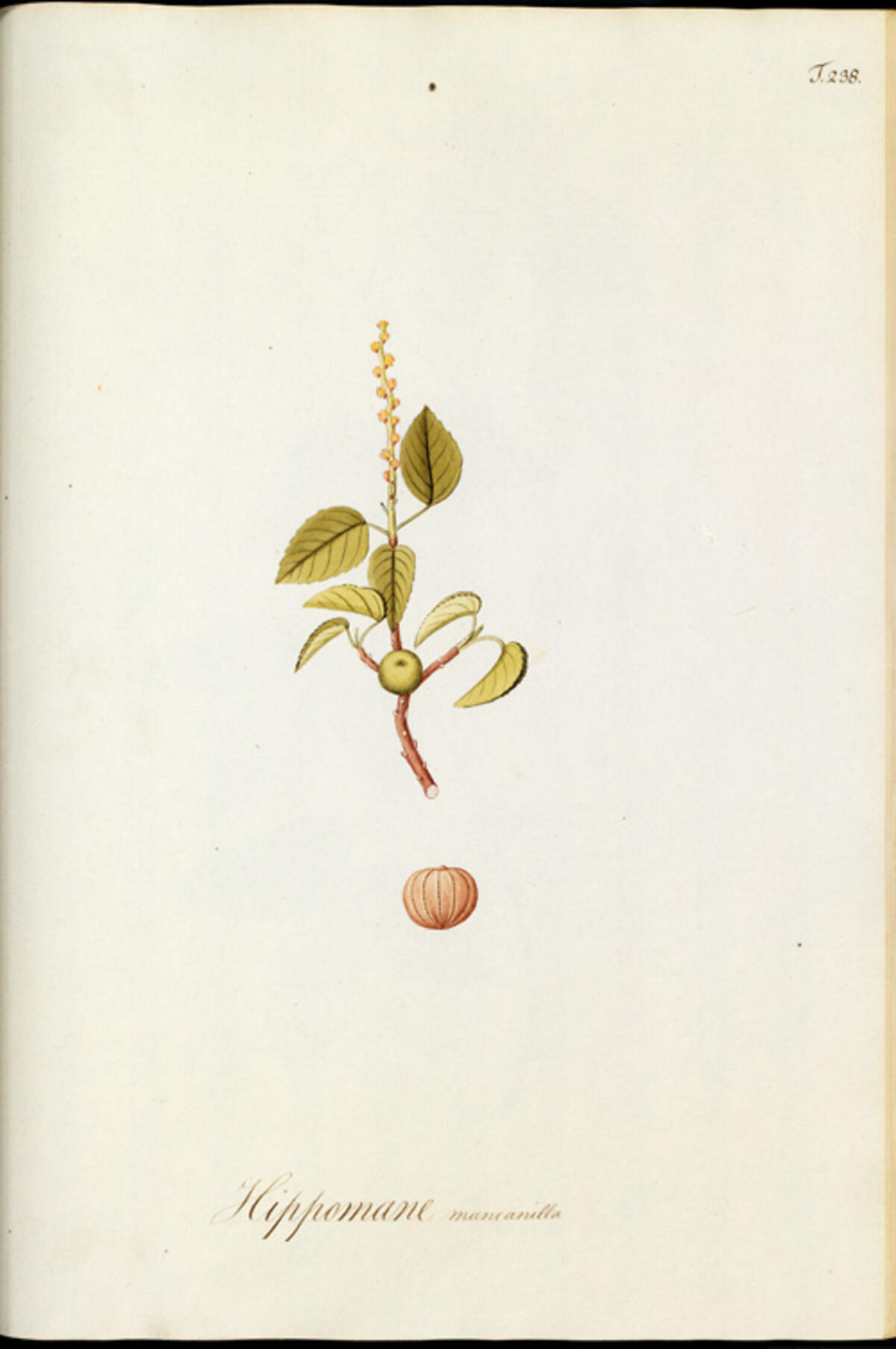
Carl Linnaeus formally described the manchineel in 1753 in Species Plantarum, basing his description on earlier work by Hans Sloane. Sloane, a physician and naturalist, had traveled to Jamaica from 1687 to 1689, documenting some 800 new plant species. His illustration titled "Juglandi affinis arbor julifera, lactescens, venenata pyrifolia, Mancranillo Hispanis dicta" from Voyage to Jamaica (1725) became the lectotype for the species in 1983. The original specimens are housed at the Natural History Museum in London.
The genus name Hippomane derives from Greek: hippos (horse) and mania (madness), meaning "sending horses insane." The ancient Greek philosopher Theophrastus, known as the father of botany, originally applied this name to an unidentified Greek plant that allegedly caused horses to go mad. Linnaeus transferred the name to this toxic New World tree. The genus contains two or three species, with H. spinosa and possibly H. horrida endemic to Hispaniola.
Similar Species
In Costa Rica, the manchineel might be confused with species of Sapium, which also belong to Euphorbiaceae. Key differences: Sapium species have dry capsular fruits (not fleshy drupes), three or fewer seeds, non-caustic sap, and ellipsoid to oblong leaf blades rather than rounded-ovate. The manchineel's seaside habitat, highly caustic sap, and apple-like fruits make it distinctive once recognized.
Conservation
The IUCN assesses Hippomane mancinella as Least Concern globally, citing its wide distribution, large population, and lack of major threats. The population trend is stable. However, this global assessment masks regional concerns. In Florida, the manchineel is listed as state endangered, with only about 20 populations remaining, mostly in Everglades National Park and the Florida Keys.
Throughout its range, manchineel faces threats from coastal development, tourism expansion, and deliberate removal due to safety concerns. In many areas, trees are marked with warning signs or red bands on the trunk to alert visitors. Conservation efforts increasingly recognize that the manchineel's ecological value, particularly its role in erosion control, outweighs its hazards when properly managed. The tree occurs in numerous protected areas including Manuel Antonio, Corcovado, Santa Rosa, and Palo Verde national parks in Costa Rica.
Resources & Further Reading
Species Information
Global conservation assessment with distribution and population information.
Detailed species account with Costa Rica-specific distribution and phenology.
Comprehensive species profile with information on toxicity, habitat, and identification.
Official record certifying the manchineel as the world's most dangerous tree.
Medical and Scientific Studies
First-person account of accidental manchineel fruit ingestion.
Retrospective study of 97 manchineel poisoning cases from French Poison Control Centers.
Review of manchineel toxicology, chemistry, and clinical effects.
Additional Resources
Popular science article on the manchineel's toxicity and natural history.
Overview with information on distribution, toxicity, and historical uses.
Information on the species' occurrence and ecology in the Galapagos Islands.