Aguacatillo del Golfo Dulce
Ocotea macrantha — A critically endangered laurel known only from a few ridges above Costa Rica's Golfo Dulce, where fewer than two dozen trees survive in super-humid foothill forests.
Where the mountains of the Osa Peninsula fall into the Golfo Dulce, the air stays so wet that lichens blanket every branch. It was there, near Bahía Chal, that Costa Rican botanist Reinaldo Aguilar collected the specimens that prompted Lauraceae expert Henk van der Werff to name Ocotea macrantha in Novon 11:508 (2001). The epithet refers to its unusually large flowers, 10–12 mm across, which set it apart from other members of the Ocotea heydeana group.
The species is known only from the Golfo Dulce Forest Reserve on Costa Rica's southern Pacific coast. Every confirmed herbarium sheet comes from a narrow band of ridges between 100 and 300 meters elevation, and the IUCN lists the species as Critically Endangered because fewer than two dozen trees have ever been documented in the wild.
Identification
Leaves
The leaves are large and elliptic, measuring 19–26 cm long by 7–12 cm wide. The upper surface is hairless (glabrous) and dries to a dull green, while the central vein (midrib) and secondary veins are sunken above and prominently raised below. The undersides of the veins bear a fine layer of short, soft hairs (puberulent). Unlike many other lowland Ocotea species, this one lacks domatia—the small pocket-like structures at vein junctions where symbiotic mites often live.
Twigs & Bark
Young twigs, buds, and flower clusters are blanketed in a dense, cinnamon-brown felt that gives fresh shoots the appearance of being dusted with cocoa powder. This pubescence rubs off easily with handling, which is why botanists note the importance of clipping extra branches for herbarium vouchers when monitoring community-tagged trees.
Flowers
The species epithet macrantha ("large-flowered") refers to the unusually broad blooms, 10–12 mm across—noticeably bigger than other members of the Ocotea heydeana group. Each inflorescence carries a loose spray of pale green flowers with nine fertile stamens. Both the inner and outer tepals (petal-like structures common in laurels) are densely covered with tiny bumps (papillose), giving them a granular texture that catches the light.
Fruits
The fruits are oval drupes (fleshy fruits with a single seed) about 28 mm long, seated in a shallow, bowl-shaped cupule 14 mm across. This arrangement—the fruit perched atop a saucer-like structure—is classic Lauraceae design, offering birds an easy landing spot while they extract the lipid-rich pulp that surrounds the seed.
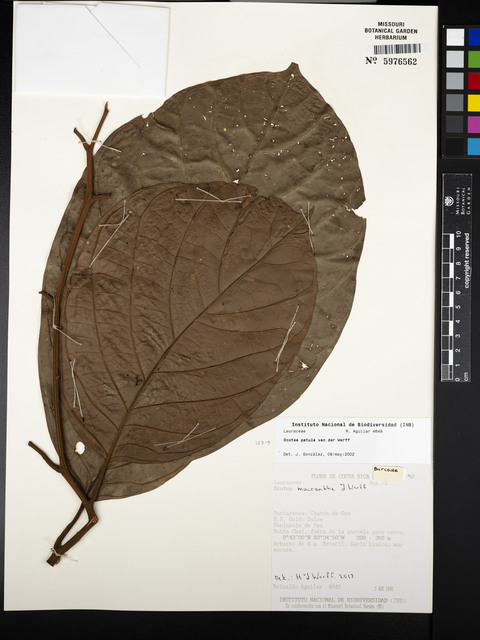
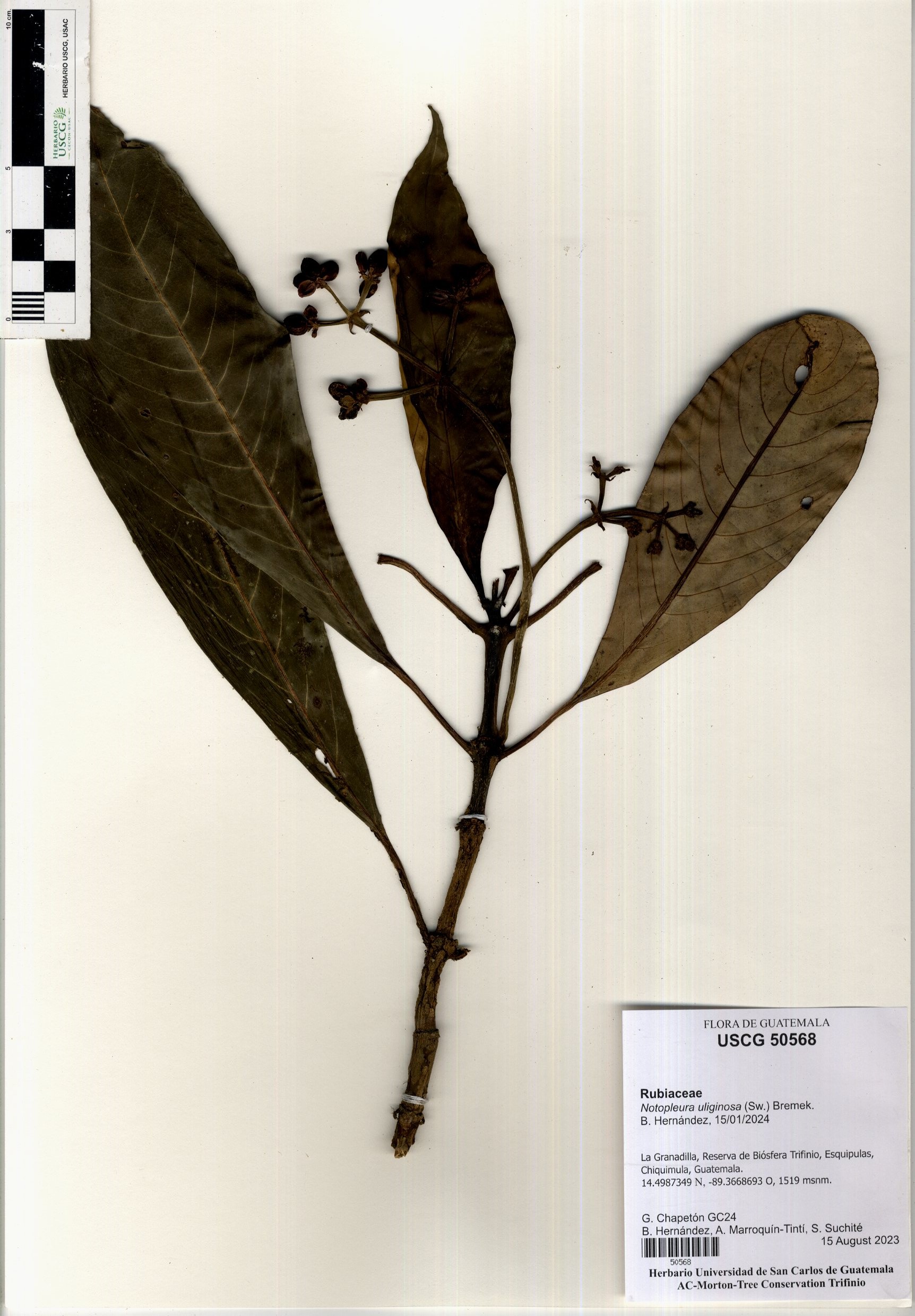
Field Research Notes
Only 23 coordinate-enabled records for O. macrantha appear in GBIF’s December 2025 export—22 from Costa Rica’s Golfo Dulce–Piedras Blancas landscape and one flagged outlier from Guatemala. Those points span 150 to 1,562 meters in elevation, underscoring how narrowly the species hugs the super-humid foothills that ring the Golfo Dulce.
Van der Werff’s 2001 protologue cited Bahía Chal trees bearing fruits in July, and MO vouchers continue to include detailed phenology notes. The Tropicos sheet reproduced above preserves the cinnamon felt on the twigs that rapidly rubs off in field photos, reminding botanists to clip an extra branch for vouchers when monitoring the community-tagged trees in Bahía Chal and Chocuaco.

Distribution and Habitat
All verified records come from the Bahía Chal–Chocuaco sector of the Golfo Dulce Forest Reserve at 8.7°N, where foothill ridges drop toward mangrove-lined bays. GBIF occurrences cluster between 150 and 300 meters, and the IUCN reports an extent of occurrence of only 8 km² with one to two locations. The species grows on hilly terrain that receives more than 5,000 mm of rain annually and experiences a short dry season moderated by the gulf's humidity.
The combination of fertile soils, easy road access, and intense agricultural pressure made this part of the Osa one of the first places where forests were cleared for teak and cacao. Although the Costa Rican government created the Golfo Dulce Forest Reserve in 1979, large tracts remain dominated by private holdings, and incursions for cattle, oil palm, and selective logging continue to reduce the mature forest blocks that sustain O. macrantha.
Conservation Outlook
Because Ocotea macrantha has such a small population, the IUCN recommends both in situ protection and the creation of ex situ collections to safeguard its genetic diversity. Community monitors in the Bahía Chal landscape have begun tagging remaining trees so that seed production, canopy health, and illegal logging threats can be tracked. Even simple measures—maintaining shade-grown cacao buffers instead of pasture, and supporting local guardaparques—directly reduce the pressures on the forest fragments where this laurel survives.
Wildlife Connections
Lowland Lauraceae keep Golfo Dulce’s flagship species fed. Scarlet Macaws and Fiery-billed Aracaris pry open the shallow cupules of O. macrantha, while Baird’s tapirs and white-faced capuchins transport fallen fruits along creek bottoms and ridge trails. Without those wide-ranging frugivores the few surviving groves in Bahía Chal would collapse into isolated seed shadows.
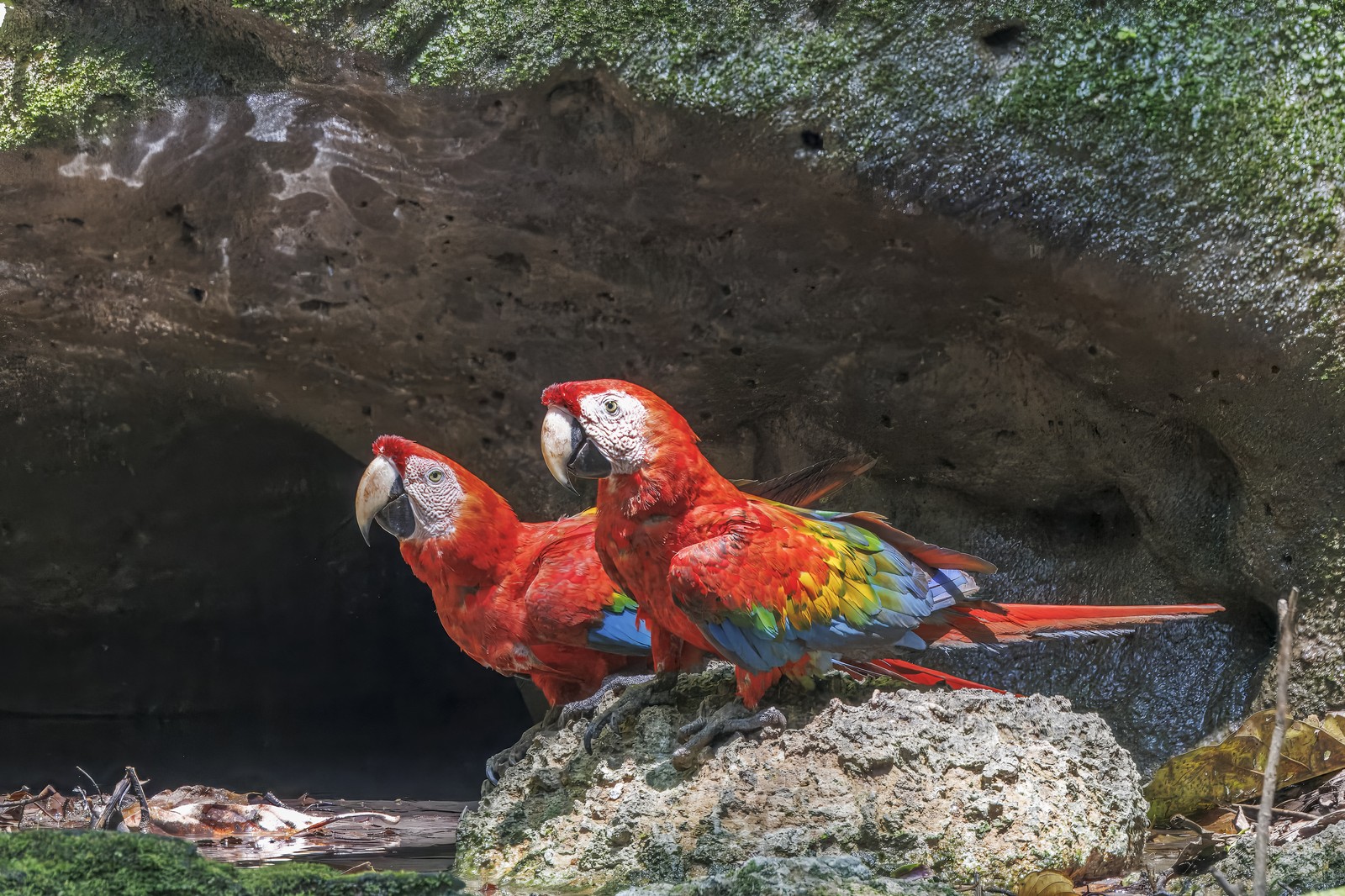
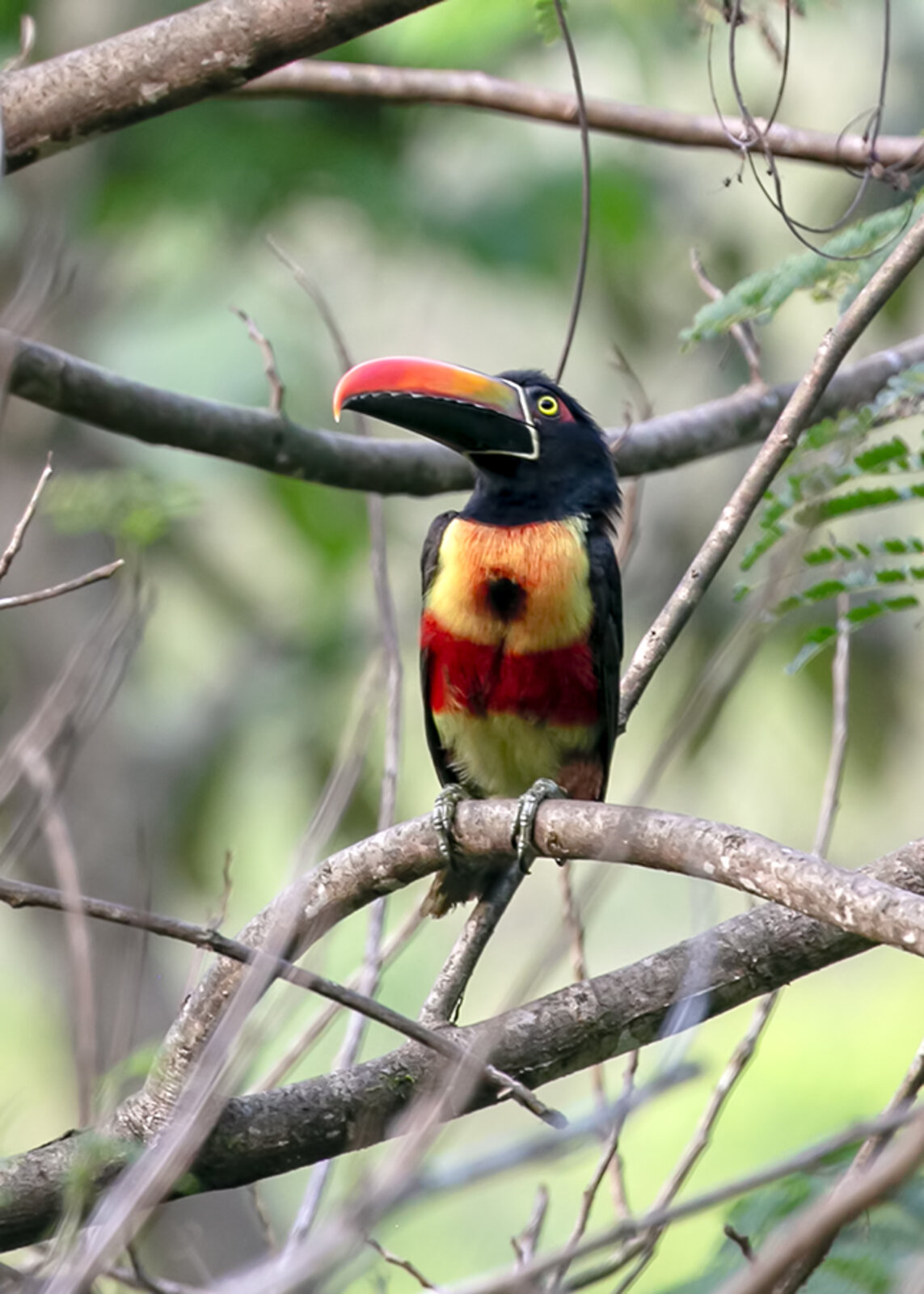
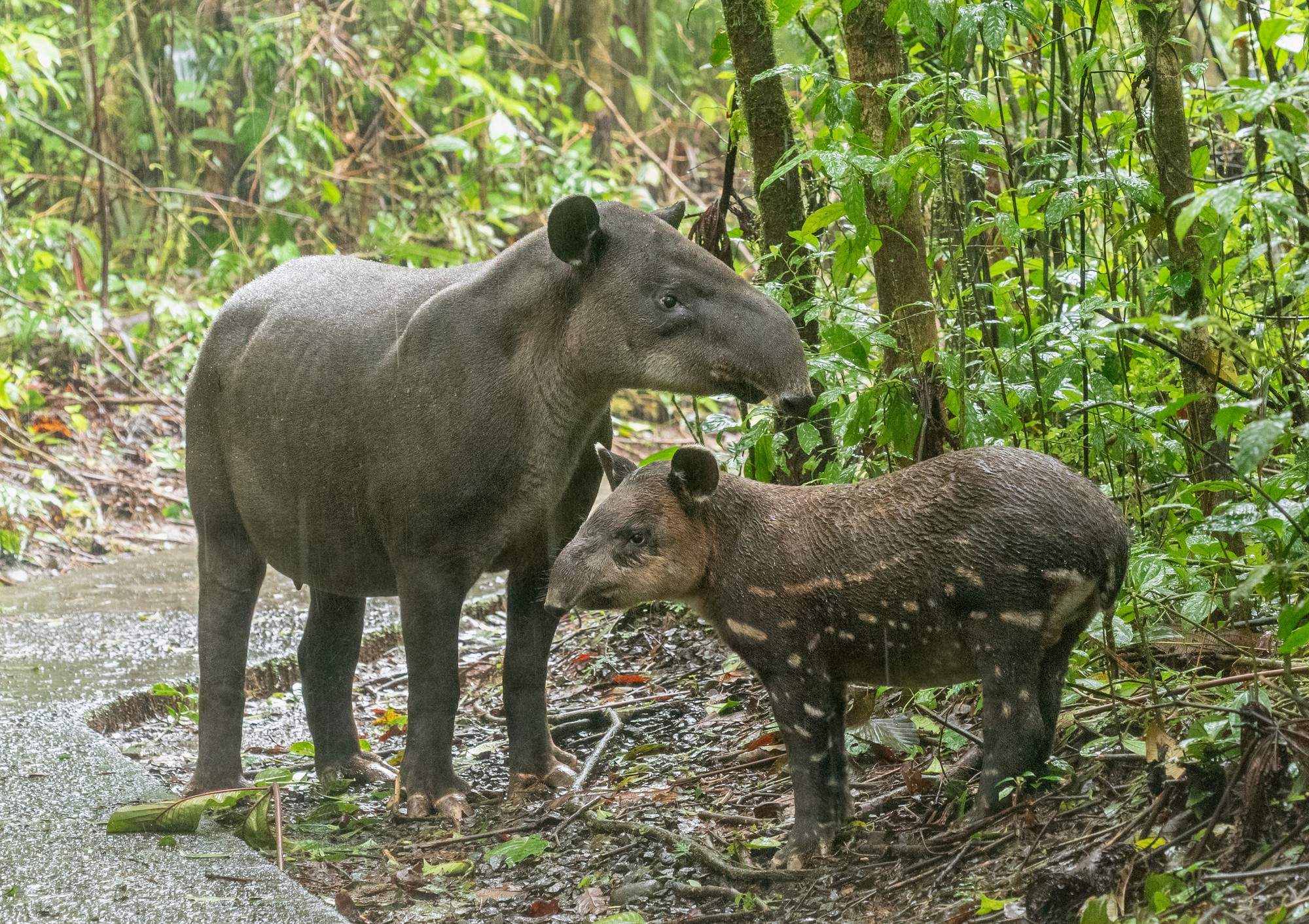
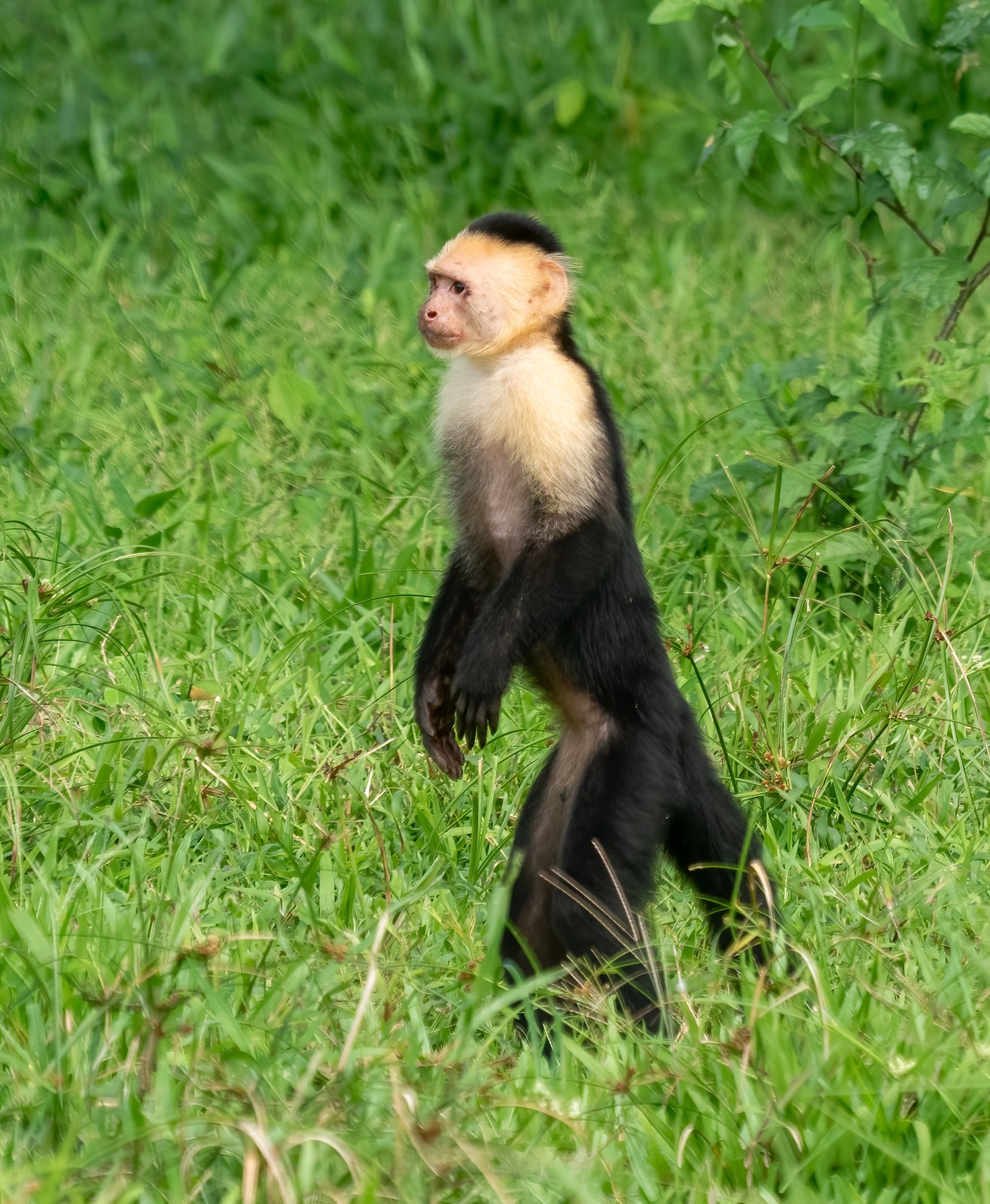
Photos (clockwise from top left): Scarlet Macaw (Charles J. Sharp, CC BY-SA 4.0), Fiery-billed Aracari (Charlie Jackson, CC BY 2.0), Baird’s tapir (Rhododendrites, CC BY-SA 4.0), and white-faced capuchin (Rhododendrites, CC BY-SA 4.0).
Resources & Further Reading
Species Information
Taxonomic authority with accepted name, publication details, and global distribution summary.
Map of georeferenced herbarium records concentrated around Bahía Chal and Piedras Blancas.
Conservation
Assessment explaining the Critically Endangered status, threats, and recommended actions.
Taxonomy & Nomenclature
Original species description, with full morphology, type locality, and comparative notes.