Quizarrá Macho
Ocotea atirrensis — A small understory tree whose hollow stems house entire ant colonies in one of Central America's most intimate mutualisms. The ants defend their host, kill competing seedlings, and may deliver nutrients through their bodies.
In 1979, ecologist Jean Stout examined 50 individuals of a small understory tree at the La Selva Biological Station in Costa Rica. Forty-nine of them had ants living inside their stems. The ants had made living quarters inside the stems by excavating their soft pith. Stout had documented an unusual plant-insect association: her trees, then called Ocotea pedalifolia, probably included both Ocotea atirrensis and O. dendrodaphne, and their ants were probably the species later named Myrmelachista flavocotea.
The quizarrá macho, as it is known in Costa Rica, takes its scientific name from Atirro, a village near Turrialba where early specimens were collected. It is a shrub or small tree of the forest understory, rarely exceeding 10 meters in height. But what makes it remarkable is not its size. It is the architecture of its stems: hollow, angular twigs that serve as living quarters for an entire ant colony, from the ground to the tips of the highest branches.
Identification
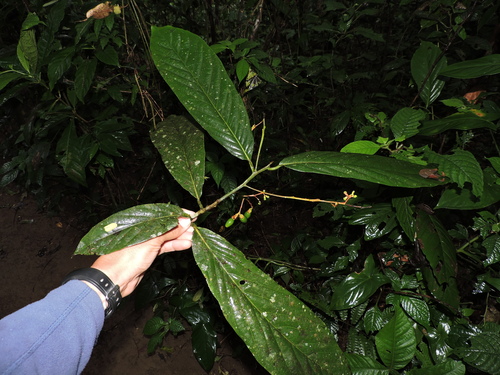
Bark and form: Gray bark, sometimes with small stilt roots at the base. The tree typically grows as a slender understory treelet in heavily shaded mature forest.
Twigs: The diagnostic feature. Terminal twigs are hollow (fistulous) and slightly angular. In most individuals, these hollow stems are inhabited by ants.
Leaves: Simple, alternate, aromatic, elliptic to lanceolate, 10-45 cm long and 3-10 cm wide, with an acuminate apex. A useful field character: the leaves dry dark brown or black, unlike most other Ocotea species.
Flowers: Small, borne in paniculate inflorescences 12-27 cm long. Flowering occurs year-round with peak activity from December to June.
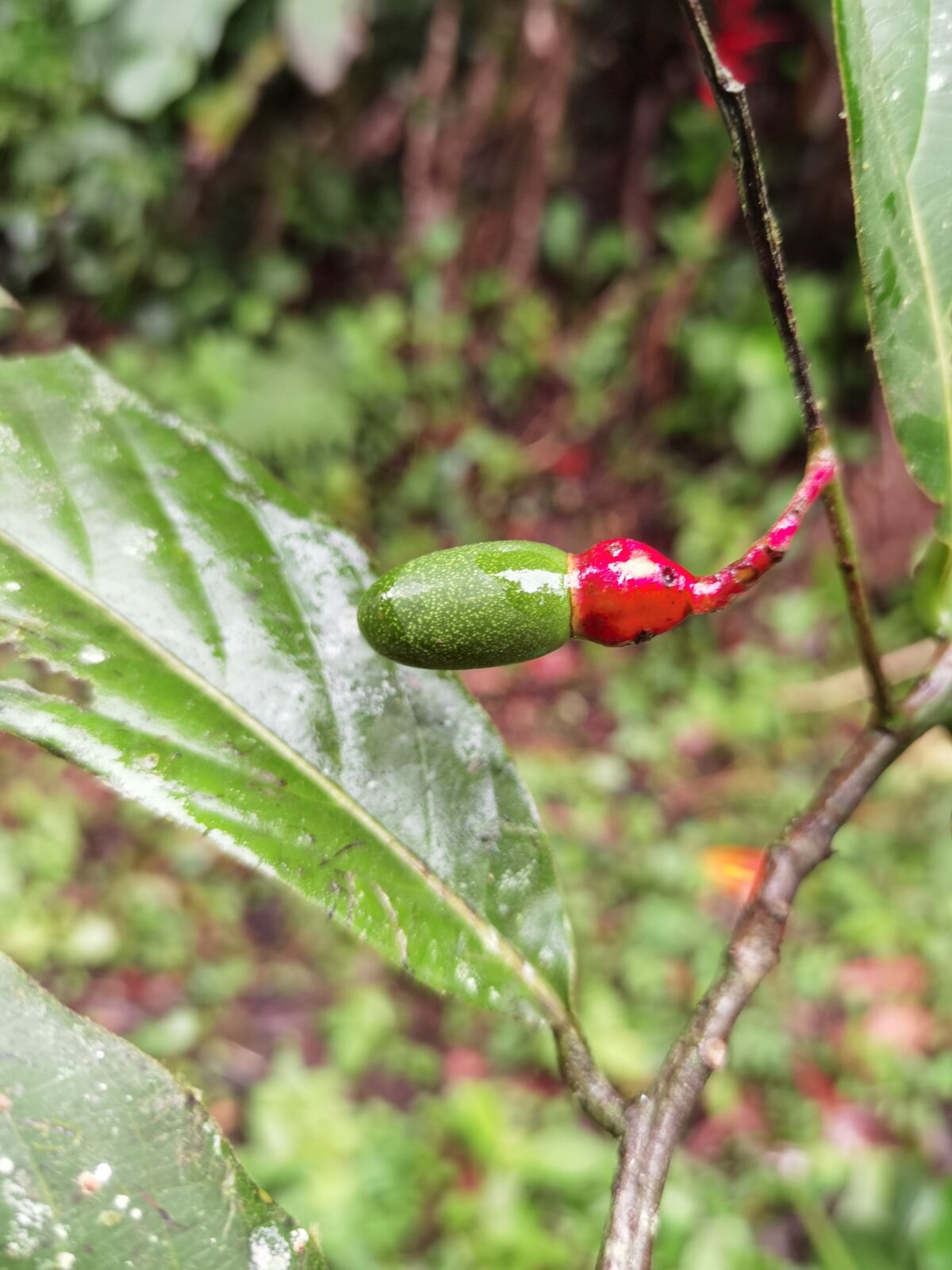
Fruits: Oblong or ellipsoidal drupes, 1.5-3.5 cm long. The fruit sits in a small red cupule. In the Costa Rican flora's treatment, its rim is entire or irregularly split or wavy, without persistent tepal lobes.
The Ants Inside
The relationship between Ocotea atirrensis and Myrmelachista flavocotea begins when the tree is still a seedling. Young plants produce specialized nodules on their main stem that serve as domatia: plant structures that house ants. Founding ant queens discover these seedlings and move in. Multiple queens may colonize the same plant, though eventually one queen typically comes to dominate the colony.
As the tree grows, so does the colony. The ants occupy all the hollow stem space, from ground level to the tips of every branch. A mature colony may contain hundreds to thousands of workers. Low densities of mealybugs (Pseudococcidae) are usually present inside the stems, tended by the ants as a food source.
Evidence for Mutualism
Researchers long questioned whether this relationship was a mutualism. The ants are timid and live inside the stems, and a 2010 study left their net benefit to the host unresolved. A separate 2009 study found no leaf cleaning or response to herbivory in Myrmelachista haberi on an unidentified Ocotea at Los Llanos; those results concern a different ant species. A 2013 dissertation by Kellie Kuhn at the University of Connecticut found evidence that both partners benefit, while showing that the strength of the interaction varies among colonies.
Kuhn discovered that Myrmelachista flavocotea functions as an inducible defense system. The ants respond to chemical cues released by damaged leaves, emerging to patrol and protect the plant when it is under attack. The key variable is not colony size but ant density within the stems: trees with higher concentrations of ants suffer less herbivore damage. Most remarkably, Kuhn found that the ants kill neighboring Ocotea seedlings, likely reducing intraspecific competition for their host tree. She concluded that both organisms receive reciprocal benefits.
Isotope studies have revealed another dimension of the partnership. Myrmelachista flavocotea workers have nitrogen signatures consistent with a carnivorous or scavenging diet, not just mealybug honeydew. The ants consume scavenged and captured insects. The isotope results suggest that they forage on the plant and concentrate nutrients in its hollowed stems. When these ants die, those nutrients may become available to the plant. The ants may function not just as bodyguards but as a nutrient delivery system.
A Connection to Devil's Gardens
The discovery that Myrmelachista flavocotea kills neighboring seedlings connects this species to one of the most famous ant-plant stories in the Amazon. In Peru, the related species Myrmelachista schumanni creates "devil's gardens" (supay chakra): nearly monospecific stands of Duroia hirsuta trees that locals once attributed to evil forest spirits. In 2005, Stanford researchers discovered that the ants systematically poison competing plants by injecting formic acid into their leaves, killing competing non-host plants.
Devil's gardens can contain over 300 trees and have been estimated to persist for centuries. Each worker’s poison gland contains about 0.43 microliters of formic acid, and attacked saplings develop leaf necrosis within 24 hours. Whether M. flavocotea uses the same formic acid mechanism has not been determined, but the parallel is striking: two related ant species, on two different host plant families, independently evolved the strategy of killing competitors to benefit their hosts.
A Supercolony?
One of the more unusual aspects of Myrmelachista flavocotea is its lack of aggression toward ants from other trees. When workers from different colonies are mixed in laboratory experiments, they do not fight, even when the trees are separated by up to a kilometer. This is highly unusual: most ant species show strong aggression toward non-nestmates. The pattern suggests that M. flavocotea may be unicolonial, forming a single supercolony spread across many host trees, rather than competing territorial colonies.
A Treelet, Not a Tree
One of the more puzzling aspects of Ocotea atirrensis is its small stature. Most Ocotea species are canopy trees reaching 20-35 meters. But O. atirrensis and its close relative O. dendrodaphne, both obligate ant hosts, are understory treelets that rarely exceed 4 meters in the forest interior. They flower and fruit in the deep shade where their larger relatives would still be waiting decades to reach the canopy.
Is the small size a consequence of the ant association? Founding ant queens have been collected from stump sprouts of other Lauraceae that grow into large canopy trees, but no large tree has ever been found hosting a Myrmelachista flavocotea colony. Perhaps something about becoming a large tree makes it unsuitable for the ants. Or perhaps the ants somehow keep their hosts small. The cause and effect remain unclear, but the correlation is striking: in this genus, ant-hosting and dwarfism go together.
Distribution and Habitat
Regional floras record Ocotea atirrensis from Nicaragua to Panama, from sea level to about 1,800 meters; Kew also lists Ecuador. In Costa Rica, it grows on both the Atlantic and Pacific slopes, in humid, very humid, pluvial, and cloud forests. The species is common in mature wet forest understory at sites like La Selva, where Stout conducted her original observations, and in the cloud forests of Altos de Campana in Panama.
The wood is used locally in Panama for construction, fence posts, and firewood, though the small size of the trees limits commercial value.
Fruit Chemistry and Bird Dispersal
The Lauraceae are among the most important fruit sources for tropical forest birds, and Ocotea atirrensis participates in this ancient partnership. Lauraceae fruits are notably rich in lipids (fats), providing high-energy nutrition that few other tropical fruits can match. Chemical analyses of Ocotea species reveal seed oils high in lauric acid (a medium-chain saturated fatty acid, also abundant in coconut oil), along with oleic and palmitic acids. This lipid-rich composition makes Lauraceae fruits particularly valuable for frugivorous birds preparing for migration or enduring food scarcity.
Numerous bird species depend on Ocotea and other Lauraceae fruits. The Resplendent Quetzal has been recorded feeding on about 18 Lauraceae species in Monteverde, and shares this food source with other large frugivores including the Three-wattled Bellbird, Keel-billed Toucan, Emerald Toucanet, and Black Guan. These large-gaped frugivores swallow fruits whole and later regurgitate or defecate the seeds after digesting the lipid-rich pulp. In a Monteverde study of Ocotea endresiana, 80% of observed seeds were dispersed within 25 meters of the presumed parent tree. But male bellbirds are exceptional: they carry seeds to habitual song perches in standing dead trees at the edges of canopy gaps, depositing them in open gaps with more light and water, giving the resulting seedlings a better chance of survival. The red cupule of O. atirrensis serves as a visual signal of ripeness, advertising the nutritious fruit to these essential dispersers.
Beyond nutrition, Ocotea species are notable for their chemical complexity. The genus produces benzylisoquinoline alkaloids, including reticuline, which has central nervous system depressant effects in laboratory studies. The leaves contain aromatic essential oils with compounds like α-pinene, β-pinene, β-caryophyllene, and germacrene-D, common across the genus. These chemicals may deter herbivores, though the ants inside the stems provide an additional line of defense.
Taxonomy
The species was described by Carl Mez and John Donnell Smith in 1901, based on specimens from the Atirro area near Turrialba, Costa Rica. Mez was a German botanist whose 1888 doctoral thesis focused on the morphology of Lauraceae, and who went on to produce comprehensive monographs of American Lauraceae working from herbarium specimens in Berlin. Donnell Smith (1829-1928) was an American botanist who assembled a herbarium of over 100,000 specimens, especially rich in Central and South American plants, donated to the Smithsonian Institution in 1905. Their collaboration produced many new species descriptions for the region.
The specific epithet atirrensis commemorates the type locality. Atirro (historically spelled with variants) lies in the Turrialba Valley, a region that became an important center for coffee cultivation after the Atlantic railroad opened in the late 19th century. The nearby Guayabo National Monument preserves Costa Rica's most important pre-Columbian archaeological site. Several names have been placed in synonymy with O. atirrensis, including O. nicaraguensis, O. paulii, O. pedalifolia, and O. wedeliana. The type specimen of O. nicaraguensis was destroyed during World War II, complicating the taxonomic history.
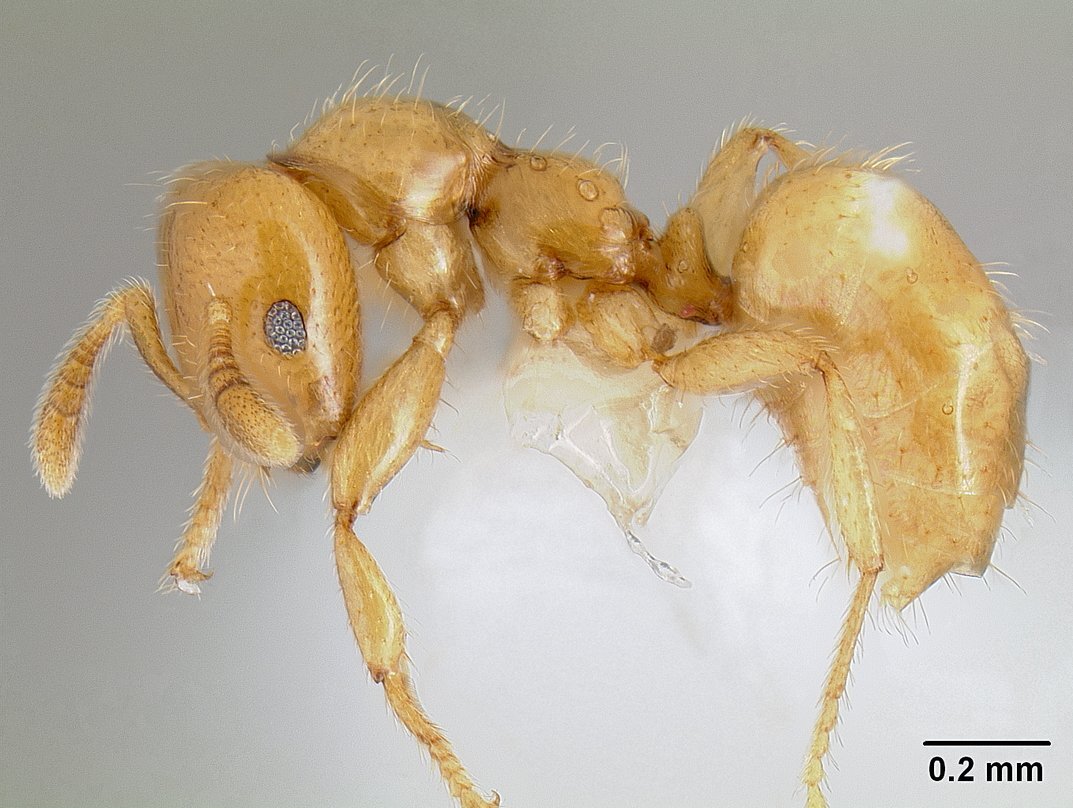
The ant itself was not formally described until 2006, when myrmecologist John Longino published a taxonomic review of the genus Myrmelachista in Costa Rica. He named the species flavocotea, combining the Latin flavo- (yellow, referring to the ant's color) with -cotea (from Ocotea, its host plant). Early ecological research, including Jean Stout's 1979 study, used the plant name Ocotea pedalifolia for the ant-occupied trees at La Selva. Current understanding recognizes that these populations include both O. atirrensis and its close relative O. dendrodaphne, both of which host M. flavocotea colonies.
Resources & Further Reading
Species Information
Costa Rican flora treatment consulted for common names, height, distribution, and cupule structure; publisher’s book record.
Accepted name, botanical treatments, and conservation status supplied by the IUCN.
Authoritative taxonomic information including synonyms and distribution.
Detailed botanical description from the La Selva Biological Station flora.
Observations and photographs, mainly from Costa Rica.
Species profile with habitat information from Costa Rican forest reserves.
Ant-Plant Research
Taxonomic overview discussing Stout’s La Selva observations and the probable identities of her host trees.
Study of leaf cleaning and responses to herbivory in a different ant species at Los Llanos.
Explains the distinction between mealybugs and the broader scale-insect group Coccoidea.
A dissertation supporting the Myrmelachista-Ocotea mutualism hypothesis, with evidence for variable inducible defense and seedling killing.
Research on how multiple ant queens colonize Ocotea seedling domatia, with eventual monogyny.
Isotope study revealing carnivorous diet of ants and potential nutrient transfer to host plants.
The original description of Myrmelachista flavocotea with detailed morphology and natural history.
Comprehensive species profile with morphology, distribution, and natural history.
Detailed taxonomic information and diagnostic characters from the Utah ant database.
Devil's Gardens and Related Research
Follow-up field study documenting garden composition, including other host trees, and herbivory.
Original experiment showing that Myrmelachista ants use formic acid as a herbicide, with an estimate of garden age.
Nature’s coverage of the first reported observation of ants using formic acid as a herbicide.
Overview of the phenomenon created by Myrmelachista schumanni, a relative of the ant living in Ocotea atirrensis.
Lauraceae Ecology and Chemistry
Field study of the quetzal’s diet and dependence on Lauraceae in Monteverde.
Monteverde study of bird dispersal distances, male bellbird perches at canopy gaps, and seedling survival.
Study distinguishing seed dispersal by regurgitation and defecation, seed predation, and seedling recruitment.
Chemical analysis of essential oils in Costa Rican Ocotea, identifying common compounds across the genus.
Accessible introduction to the ecological importance of Ocotea fruits for forest birds.
The authoritative taxonomic treatment of the 102 Ocotea species in Mesoamerica.
Species profile from the Smithsonian Tropical Research Institute with Panamanian distribution and uses.
Historical Figures
Smithsonian obituary describing the size and geographic breadth of John Donnell Smith’s herbarium.
Contemporaneous record of John Donnell Smith’s donation.
Contemporary account of the accident that killed Ferdinand Nevermann.
Historical study including Nevermann’s biography and his Hamburg Farm collections.
Biography of the German entomologist who made the first collection of M. flavocotea in 1925.
Biography of the American botanist who co-described Ocotea atirrensis in 1901.