Almendro de Playa
Terminalia catappa — The beach almond is an introduced coastal tree from Southeast Asia, now naturalized along Costa Rica's Pacific beaches where its fruits feed Scarlet Macaws and other wildlife.
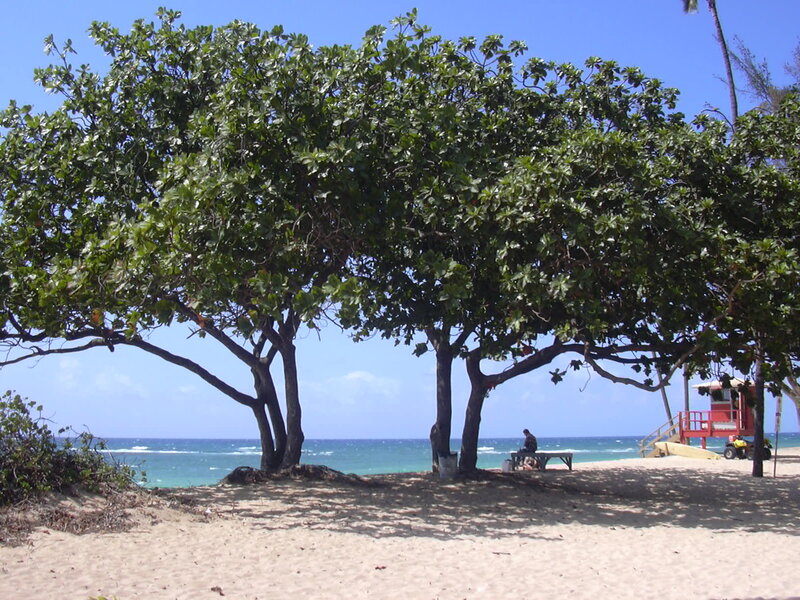
Walk along any beach in Costa Rica's Pacific coast and you will likely pass beneath the tiered branches of the almendro de playa. This distinctive tree dominates the narrow strip of vegetation between sand and forest, its horizontal branches spreading in layers like a living pagoda. Introduced from Southeast Asia, the beach almond has naturalized so thoroughly along tropical coastlines worldwide that many assume it is native.
The tree's large, leathery leaves turn brilliant red before dropping, carpeting beaches with color twice a year. Its almond-shaped fruits float on ocean currents and wash ashore, where they germinate in the sand. For Scarlet Macaws along the Pacific coast, these fruits have become a major food source, comprising over a third of their diet in some areas.
Identification
The beach almond belongs to the Combretaceae family, a group of tropical trees and shrubs that includes the buttonwood mangrove (Conocarpus erectus) and several other coastal species.
Physical Characteristics
Growth form: The beach almond develops a distinctive tiered architecture. Horizontal branches emerge at right angles from the trunk in whorls of five or six, creating the layered, pagoda-like silhouette that makes this tree instantly recognizable. Coastal winds and loose sandy soils often cause trunks to develop a bent or inclined form.
Trunk: Typically 35-50 cm in diameter, with tan-colored bark that is rough in texture. Shallow folds and occasional knobs mark the sites of fallen branches.
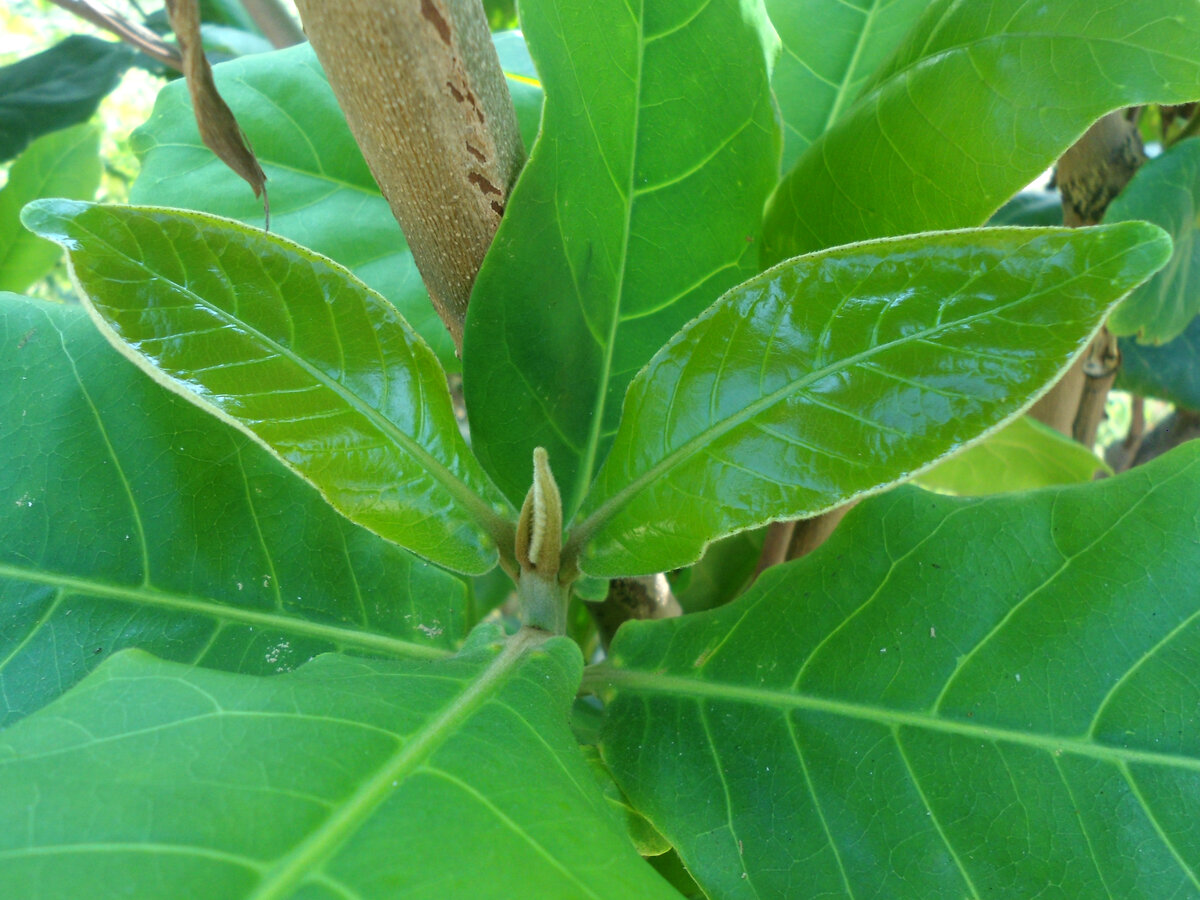
Leaves: Large and simple, approximately 21 by 13 cm, broadly elliptical with a leathery texture. Leaves cluster at the tips of branches. The foliage is glossy dark green above with golden pubescence on the undersides. Before dropping, leaves turn brilliant shades of red, pink, and yellow due to pigments including violaxanthin and lutein.
Flowers: The tree is andromonoecious, bearing separate male and bisexual flowers on spike-like racemes up to 20 cm long. Male flowers cluster near the tip while bisexual flowers occur near the base. Individual flowers are small, petal-less, greenish-white with a sweet, delicate fragrance. Flowering occurs year-round but peaks during the early rainy season (April-July) following leaf renewal.
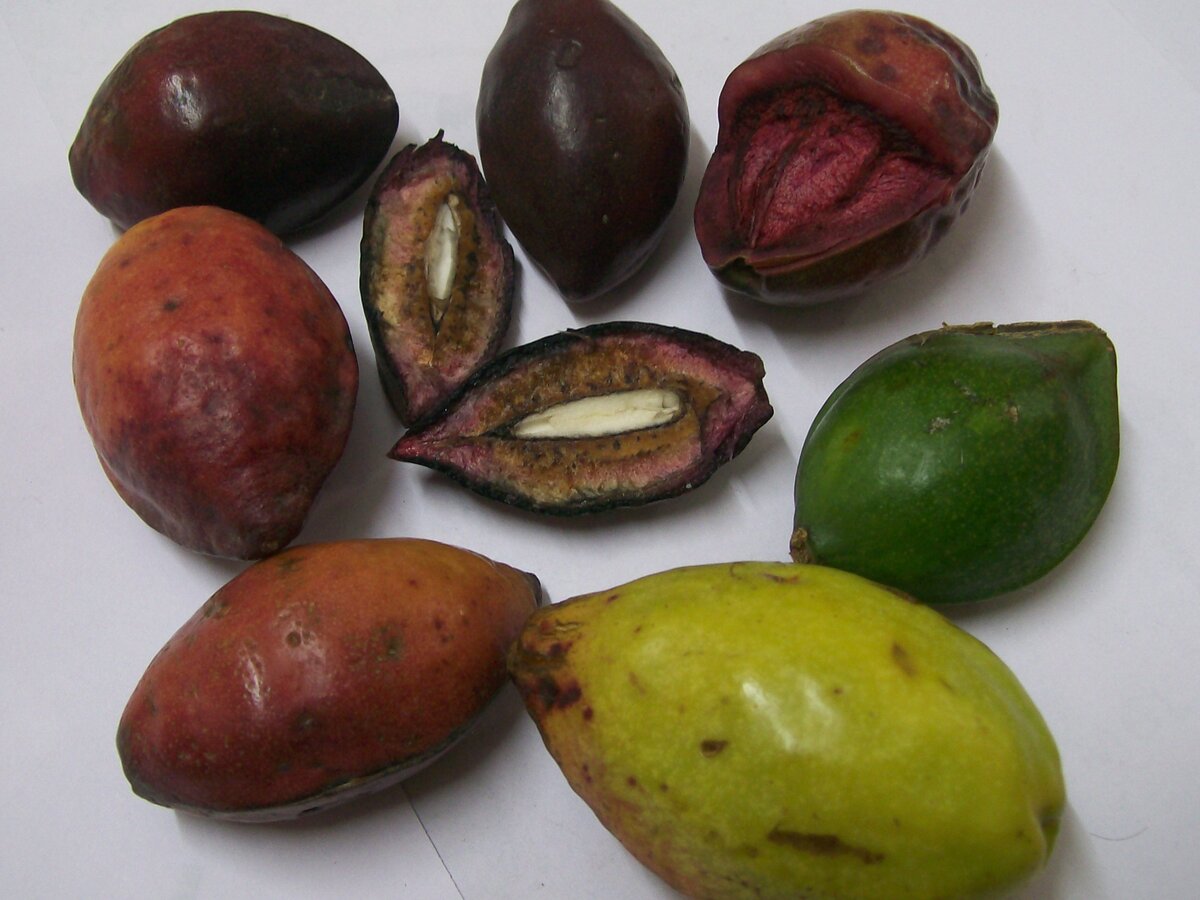
Fruit: Somewhat flattened, ovoid drupes measuring about 6 by 4 cm, with a distinctive lateral lip or wing. Fruits progress from green to yellow when mature, encasing a thick layer of fibrous, edible flesh surrounding a single almond-shaped seed (2.5 by 1 cm). The hard shell makes extraction difficult, but the kernel is edible and almond-flavored. Seeds contain about 50% oil.
Habitat & Distribution
The beach almond is native to tropical Asia, Australia, Madagascar, and the Pacific islands. The exact native range is uncertain because humans have spread the tree so widely. It likely originated in Malaysia and reached other regions through fruits carried by ocean currents and by human introduction.
In Costa Rica, the beach almond naturalizes along the narrow fringe of vegetation bordering sandy coastlines, where it tolerates intense sunlight, salty air, salt spray, strong winds, and drought-prone sandy soils. It is also planted as a shade tree in coastal towns and parks. However, it does not spread into the shaded understory of interior forests.
Elevation: Sea level to approximately 300-400 meters, though most common directly on coastal beaches.
Climate requirements: Tropical and subtropical maritime climates with annual rainfall of 1,000-3,500 mm. The tree is deciduous or semi-deciduous, dropping leaves during dry periods.
Ecological Role
Coastal Ecosystem Services
The beach almond provides several important functions in coastal ecosystems. Its dense root system helps stabilize sandy soils and prevent beach erosion, particularly in regions prone to storms. The tree's broad canopy provides shade for beachgoers and nesting sea turtles alike.
Fallen leaves and fruits contribute organic matter that feeds crabs, fish, and other coastal creatures. However, the accumulation of tannin-rich leaves beneath the canopy inhibits the growth of other vegetation, which can reduce plant diversity in beach-forest transition zones.
Wildlife Interactions
Despite being an introduced species, the beach almond has become an important food source for Costa Rican wildlife. Studies in the Pacific lowlands found that exotic species comprise 52% of Scarlet Macaw diets, with beach almond alone accounting for about 36%. The fruits ripen during the dry season when other food sources are scarce.
A 2011 study of 111 beach almond trees along Costa Rica's central Pacific coast documented production of approximately 194,000 seeds over two months, with 67% consumed by seed predators. Scarlet Macaws took an estimated 49% of seeds while variegated squirrels consumed 18%. This makes the beach almond a significant resource for macaw population recovery along the Pacific coast.
Fruit bats, particularly large flying foxes, regularly forage on beach almond fruits and disperse seeds to new locations. The buoyant fruits also disperse via ocean currents, remaining viable after weeks floating in salt water.
Great Green Macaws have also been observed feeding on beach almonds during their seasonal migrations, adding to the confusion between the two "almendro" species. Researchers in Suerre, Costa Rica documented Great Green Macaws using beach almond leaves as tools, tearing off leaf fragments to scrape the fibrous flesh from the fruits and access the nutritious seeds. This behavior may help them avoid the bitter taste of the fruit's outer layer.
Invasive Potential
The beach almond is considered invasive in Florida, Puerto Rico, the Cayman Islands, and several other Caribbean locations. Its rapid reproduction, shade tolerance in open areas, and ability to suppress native vegetation through allelopathic compounds in its leaves raise concerns. In Costa Rica, it remains largely confined to the beach-forest fringe where few native species can compete.
Human Uses
Edible Seeds
The almond-flavored kernels are edible raw or roasted and give the tree its common name. However, the hard shell makes extraction labor-intensive, limiting commercial harvest. The seeds contain approximately 50% oil, which has potential for culinary and cosmetic applications.
Traditional Medicine
Throughout Southeast Asia, beach almond leaves and bark have been used in traditional medicine for centuries. The leaves contain flavonoids, tannins, saponins, and phytosterols with documented antioxidant and anti-inflammatory properties. Traditional preparations include leaf decoctions for treating skin conditions, wounds, and various ailments.
Aquarium Use
Dried beach almond leaves have become popular among aquarium hobbyists, particularly betta fish keepers. When submerged, the leaves slowly release tannins that lower pH, create a natural "blackwater" environment, and may provide mild antibacterial and antifungal benefits. This use originated with fish breeders in Southeast Asia and has spread globally.
Dyes and Tanning
The bark and leaves produce natural dyes ranging from black to brown, yellow, and gray. The bark contains 11-23% tannin and was historically used for leather tanning, though synthetic alternatives now dominate. In Indonesia, ketapang (as the tree is known locally) remains important for traditional textile crafts. The Batak people of Sumatra use ketapang leaf extract to produce black dye for weaving ulos, their traditional ceremonial cloths. Artisans dye rattan black by burying the wickerwork in mud, then soaking it in a bark decoction and burying it again.
Shade and Gathering Places
Throughout the tropics, beach almonds have been planted in public squares and meeting places for centuries. The tree's broad, layered canopy provides welcome shade in hot climates, and its salt tolerance makes it one of the few large shade trees that thrives directly on beaches. In coastal towns from Southeast Asia to the Caribbean, the beach almond often serves as the de facto town tree, a gathering point where fishermen mend nets, vendors set up stalls, and neighbors meet to talk.
Key Sources & Resources
Species Information
Detailed species account from the CRTrees database, with information on identification, habitat, and ecology in Costa Rica.
Authoritative taxonomic information from the Royal Botanic Gardens, Kew.
Species page with observations, photographs, and distribution maps.
Comprehensive botanical information including uses, cultivation requirements, and ecology.
Detailed horticultural profile including growth characteristics, landscape uses, and management considerations.
Ecological Research
Research documenting the importance of beach almond in Scarlet Macaw diets in Costa Rica.
Documents Great Green Macaws using beach almond leaves as tools to scrape flesh from fruits during their seasonal migrations in Costa Rica.
Comprehensive scientific review of the species' botany, ecology, and uses.
Invasive Species Management
Global overview of the species' invasive status, ecological impacts, and management approaches.
Florida invasive species profile with FISC Category 2 listing and management recommendations.
Caribbean regional context including distribution, impacts on native plant communities, and management.
Costa Rica Context
Information about the beach almond's role in one of Costa Rica's most visited national parks.