Rovirosa's Firebush
A slender treelet of Caribbean swamp forests whose red tubular flowers bristle with unusual crooked hairs. Named for the polymath naturalist of Tabasco whose monument once stood at the University of Berlin.
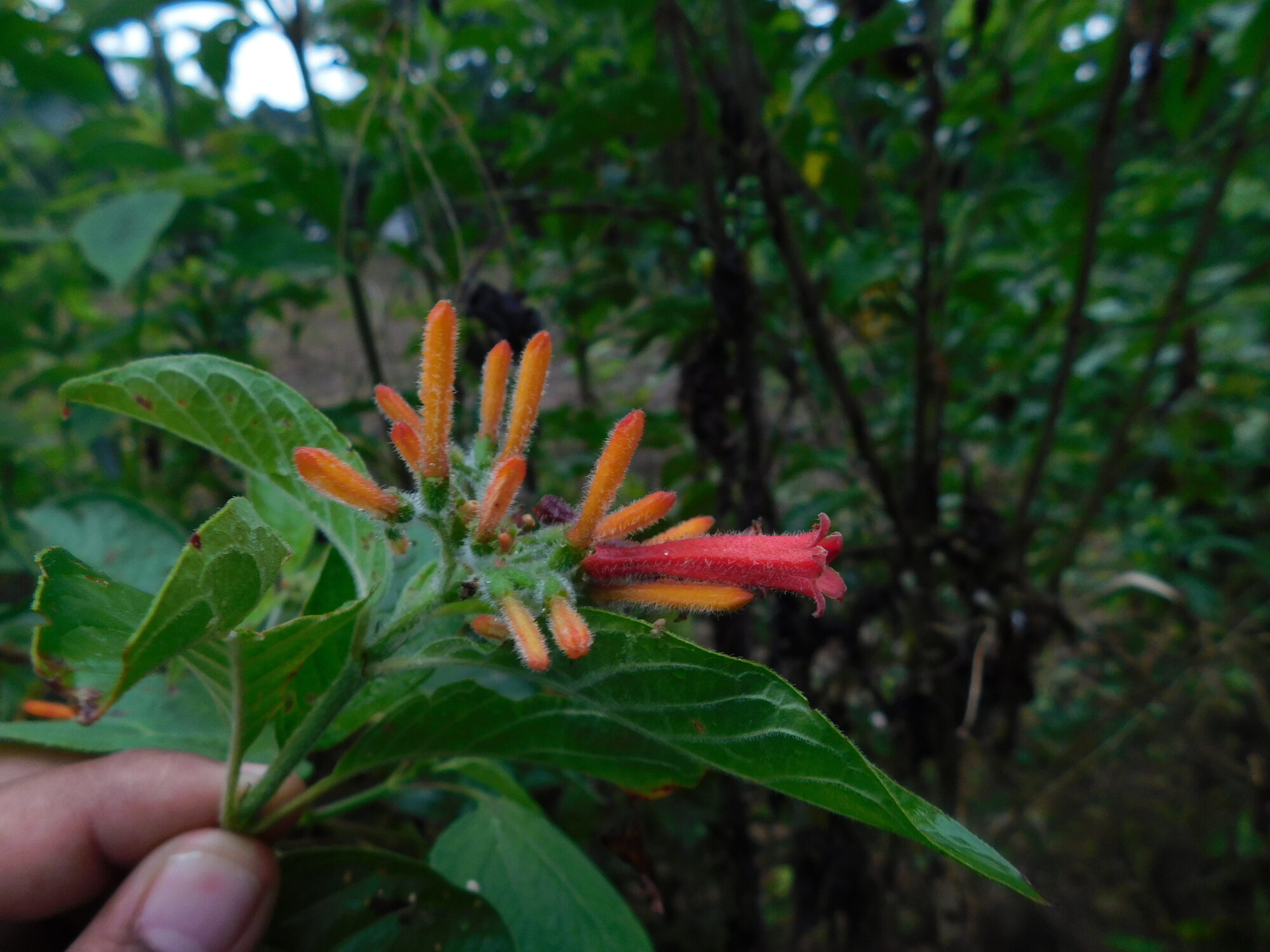
In the waterlogged lowland forests that stretch along Central America's Caribbean coast, from the swamps of Tabasco to the canal shores of Tortuguero, a slender treelet grows among the buttress roots of Carapa and the stilt trunks of Raphia palms. Hamelia rovirosae is the forest-dwelling relative of the ubiquitous firebush (Hamelia patens) that ornaments roadsides and clearings across tropical America. Where its famous cousin thrives in full sun and open ground, H. rovirosae inhabits the understory of primary rain forest and swamp forest, a distinction so consistent that its presence in a landscape signals intact lowland habitat. The two species share bright tubular red flowers that attract hummingbirds, but a hand lens reveals the difference: the flowers and stems of H. rovirosae are covered in peculiar crooked, multicellular hairs found on no other Hamelia species.
The species takes its name from José Narciso Rovirosa Andrade (1849-1901), the most celebrated naturalist of the Mexican state of Tabasco, whose collection number 499 became the type specimen when Herbert Fuller Wernham described it in 1911. In Mexico, the plant is called sanalotodo, "cure-everything," a name that links it to the deep tradition of Maya plant medicine in which its genus has been used for centuries to treat wounds, skin infections, and fevers. Modern pharmacological studies of the closely related H. patens have validated these uses, identifying monoterpenoid oxindole alkaloids shared with Uncaria tomentosa, the famous cat's claw of Amazonian medicine.
Identification
Habit
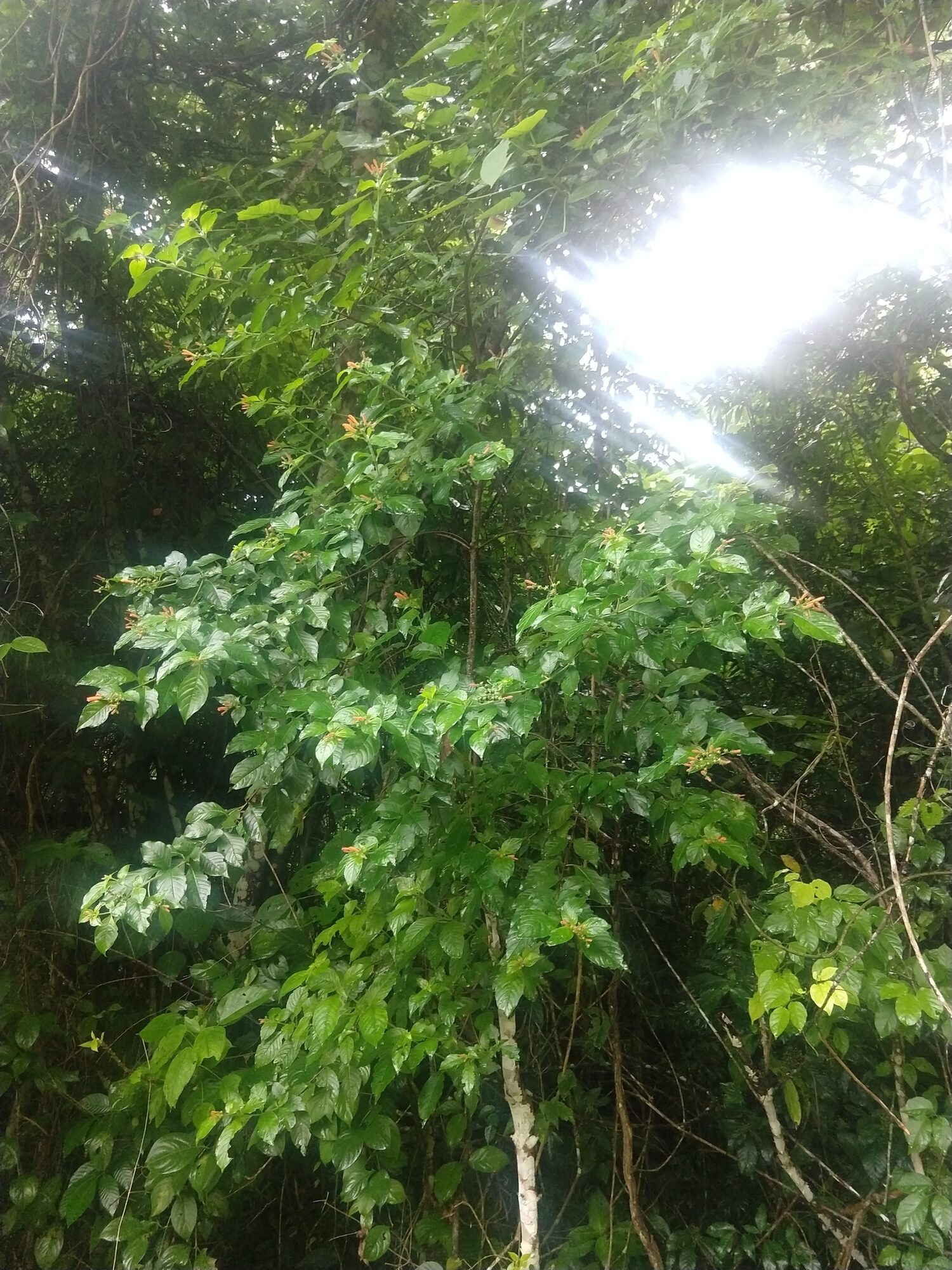
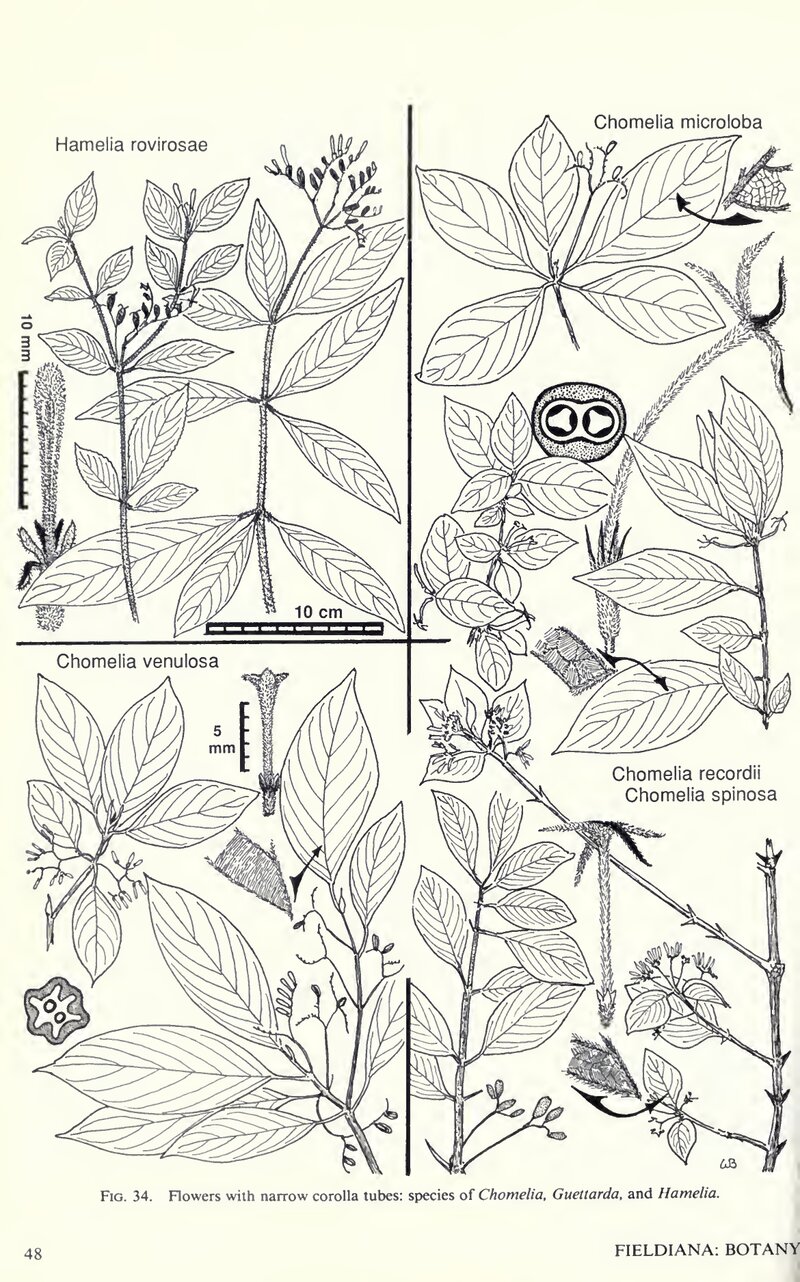
Hamelia rovirosae grows as a shrub or slender treelet, typically reaching 3-5 m in height and occasionally attaining 10 m in favorable conditions. Plants of the World Online describes it as "a scrambling shrub or tree," and the slender stems (0.8-3.5 mm in diameter on leafy branchlets) suggest it may lean against supporting vegetation in dense forest understory. The young branchlets have four longitudinal ribs and are quadrangular in cross-section, becoming cylindrical (terete) and smoother with age. The most immediately distinctive feature of the vegetative parts is the pubescence: the stems bear curved or crooked multicellular hairs 0.3-1 mm long, often arranged in longitudinal rows along the ridges. These peculiar kinked hairs, unlike the straight or appressed hairs of the closely related H. patens, are diagnostic for the species. The stipules (small appendages at the leaf bases) are 2-6 mm long with a short broad base and a long, narrow, linear awn, and they fall early or persist with the leaves.
Leaves
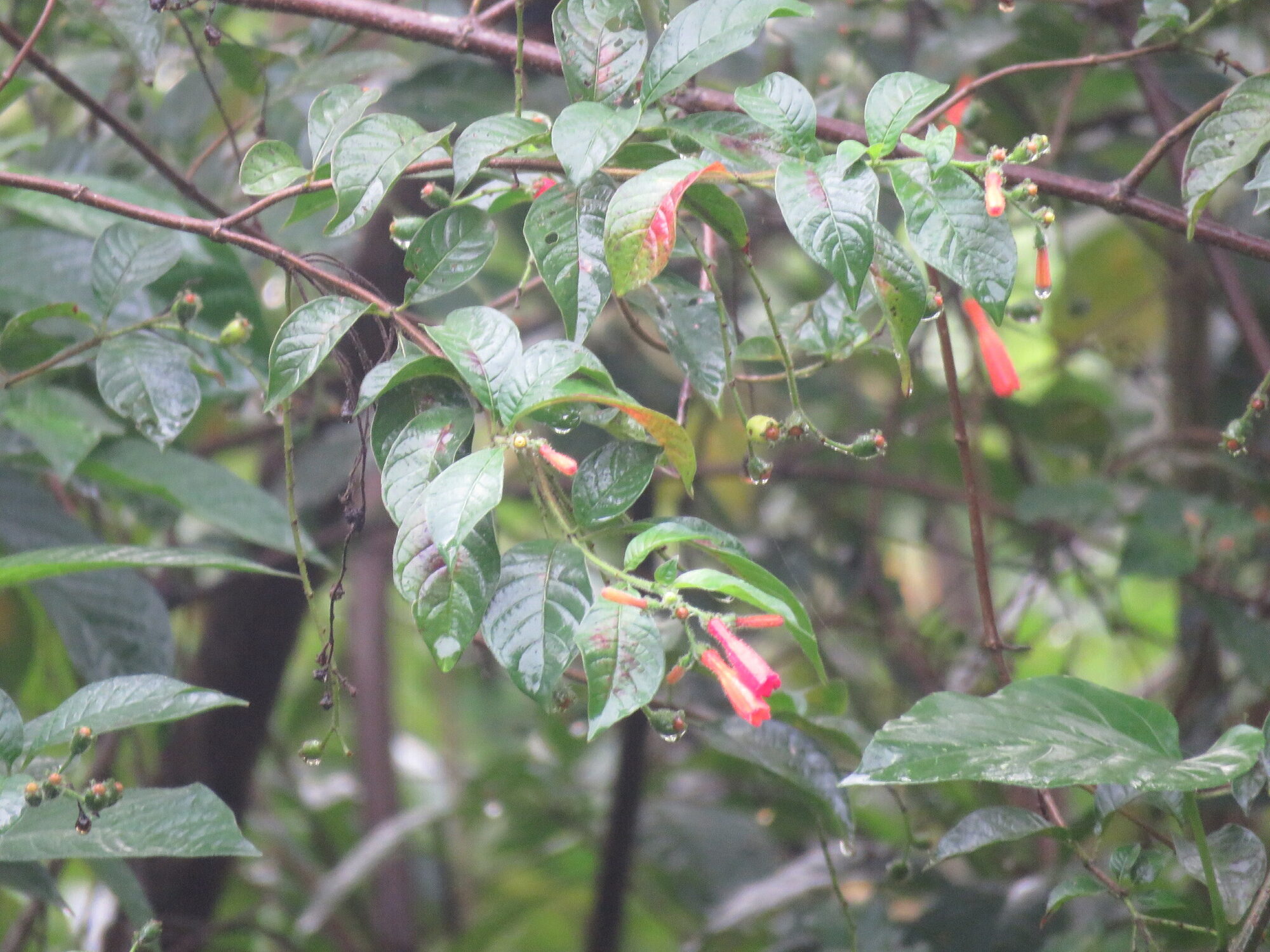
The leaves are usually arranged in whorls of three at each node (rarely opposite), borne on petioles (leaf stalks) 3-14 mm long that are pubescent with short crooked hairs. The blades measure (2.5-)5-15 cm long and (1.5-)2-6 cm wide, elliptic-oblong to elliptic-ovate in shape, with an acute to short-acuminate (tapering) apex and a base that narrows to the petiole and is slightly decurrent (running down the stalk). They dry thin and papery (thin-chartaceous) and are glabrous (hairless) to sparsely pubescent on the upper surface, with sparser to denser villose (shaggy) hairs on the lower surface, 0.2-0.5 mm long, in straight or crooked form. Small tufts of hair in the vein axils form domatia (tiny pockets that often house beneficial mites). The secondary veins are relatively few, 3-7 per side, and weakly loop-connected near the margin. These leaves are moderate in size, narrower than those of the co-occurring H. xerocarpa, which can reach 17 cm or more with 9-13 secondary veins per side.
Flowers
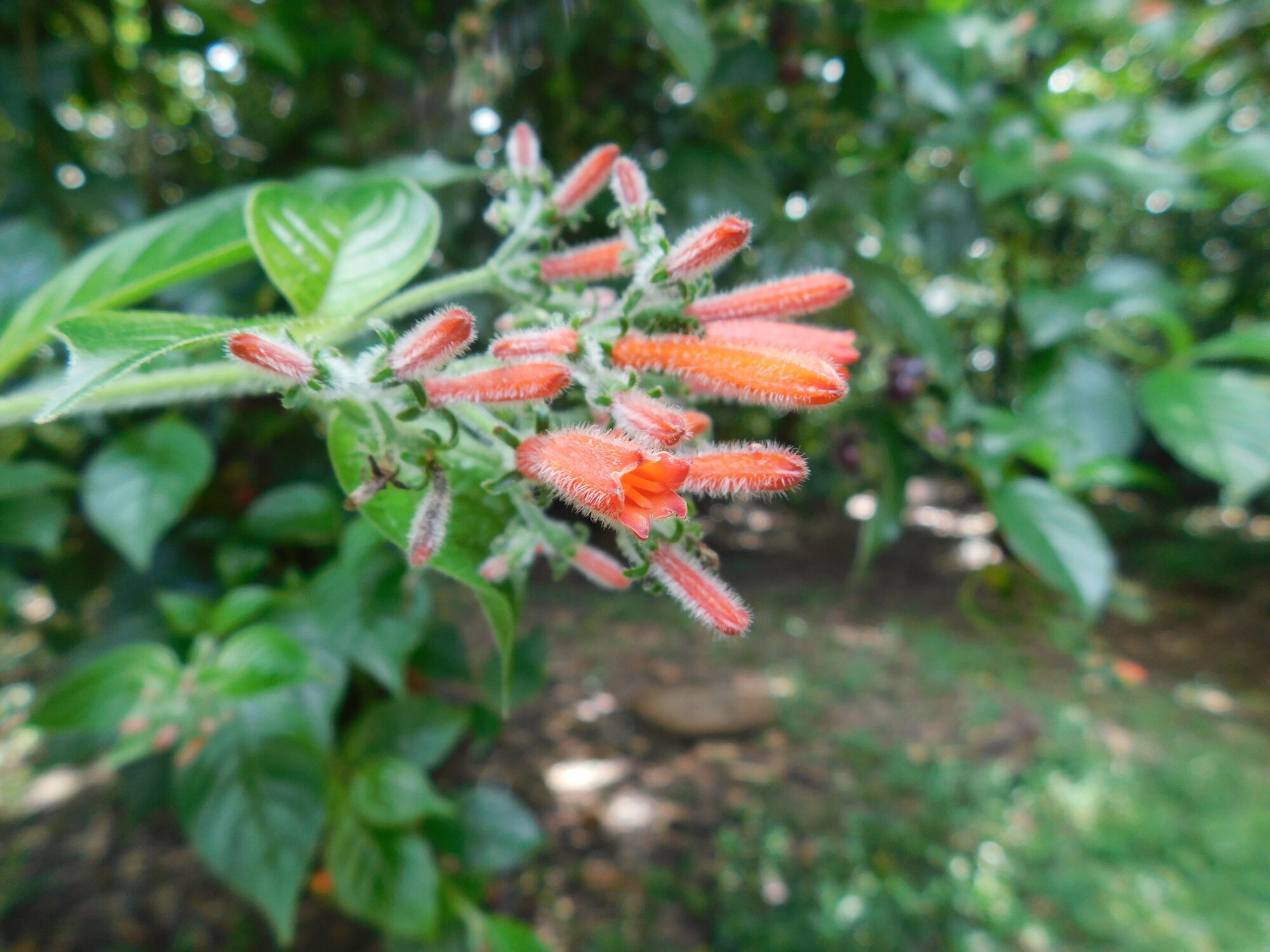
The flowers are borne in terminal corymbose (flat-topped) inflorescences 4-12 cm long and equally broad, on villose peduncles (flower stalks) up to 3 cm long. Each inflorescence branches dichotomously (forking in two), with the distal branches bearing 2-8 flowers along one side. Individual flowers are sessile or on short pedicels (1-2 mm). The corolla is narrowly tubular at anthesis (when the flower opens), 16-22 mm long and only 2-3 mm in diameter, colored reddish-orange to bright red or dark red. The tube is minutely villose with crooked hairs about 0.5 mm long, often arranged in longitudinal rows. The five corolla lobes are small (1-2 mm long), ovate, and barely flare open. The stamens have filaments 7-9 mm long; the anthers, 10-12 mm long, are slightly exserted (projecting beyond the corolla tube), a key distinction from H. patens, whose anthers remain included within the tube. The hypanthium (the cup fused around the ovary) is 2-4.5 mm long and villose, and the calyx lobes are 2-4 mm long, oblong, and enlarge conspicuously in fruit. Flowering in Central America has been recorded in February, April, and July through October.
Fruits
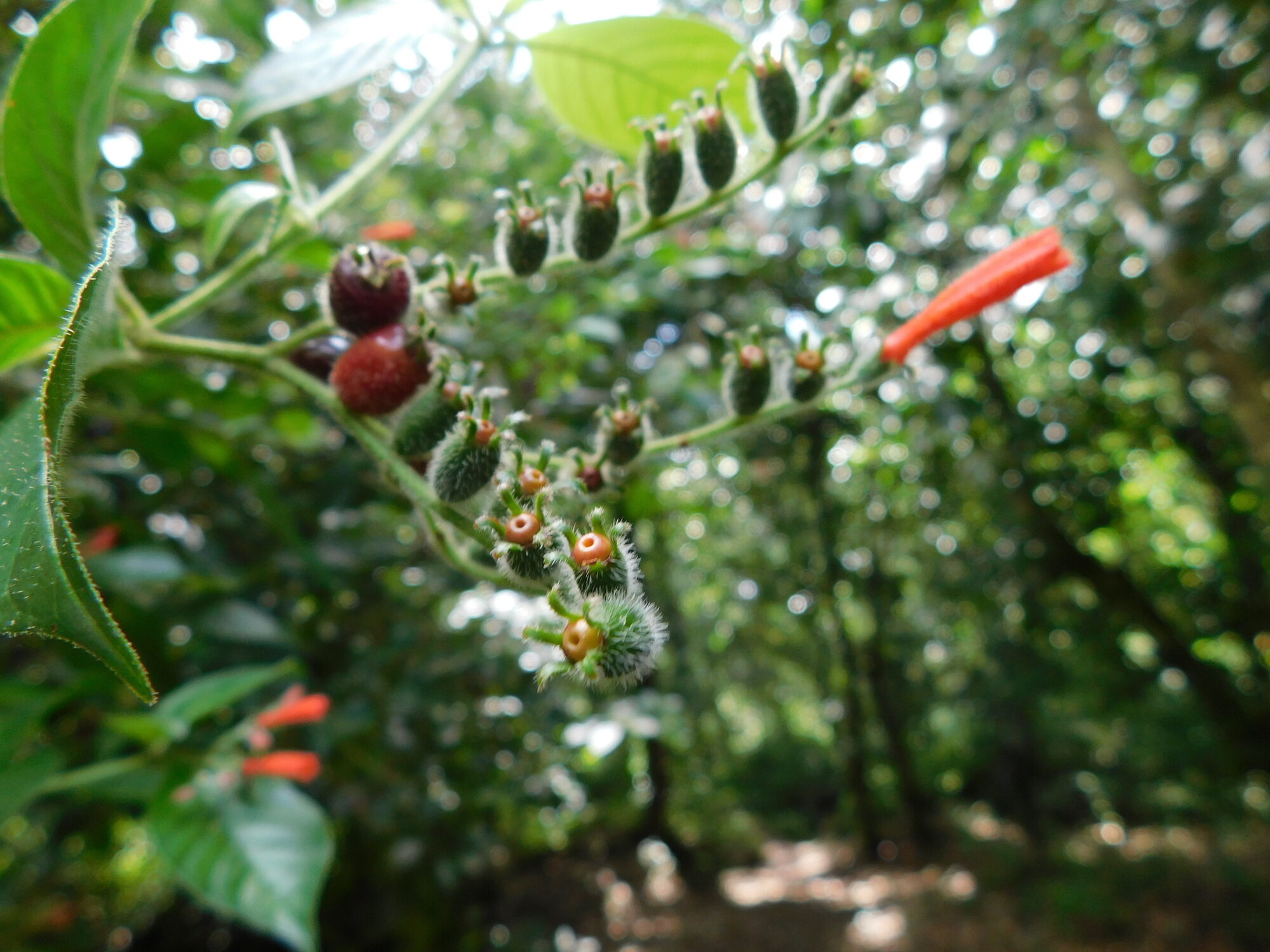
The fruit is a small berry, 8-14 mm long and 4-8 mm in diameter, cylindrical to oblong-ellipsoid, turning red and then black as it matures. The surface is covered with small crooked hairs (about 0.5 mm long), giving the berry a finely pubescent texture. The most visually distinctive feature is the persistent calyx: the sepals enlarge to 6 mm long and 2 mm broad, forming a prominent crown at the apex of the fruit. This crowned appearance inspired the earliest synonym, Hamelia patens var. coronata Donnell Smith (1905), from the Latin coronatus, "crowned." The seeds are tiny, about 1 mm long. Like the fruits of H. patens, the berries are consumed by birds, which serve as the primary seed dispersers. Research on H. patens by Zurovchak (1997) revealed an unusual adaptation: the plant can accelerate its rate of fruit ripening in response to increased fruit removal by birds, producing more ripe fruit when dispersers are abundant.
Distribution
Hamelia rovirosae follows the Caribbean lowlands in a continuous strip from Tabasco and Chiapas in southeastern Mexico through Belize, Guatemala's Petén and Caribbean coast, Honduras, Nicaragua, Costa Rica, and into Bocas del Toro, Panama. Mexico holds nearly two-thirds of the 618 GBIF occurrence records (62%), followed by Belize (11%), Guatemala (10%), and Costa Rica (7%). The species is strictly a lowland plant, recorded from near sea level to about 200 m elevation, and appears entirely absent from Pacific-slope habitats. The center of abundance for both this species and the genus Hamelia (16 accepted species, with 8 occurring in Mexico alone) lies in southeastern Mexico and northern Central America.
In Costa Rica, 43 GBIF records from 31 unique localities document the species primarily in Limón province along the Caribbean coast. The largest concentration of collections comes from Tortuguero National Park, where it grows in the primary forest of Pentaclethra macroloba and Carapa nicaraguensis that flanks the park's famous canal system, and from Barra del Colorado Wildlife Refuge to the north. The earliest Costa Rican record is from 1896, when Henri Pittier collected it in the Matina marshes along the Atlantic railroad. In the Brunca region, two collections from 2000 by Lilliana González document the species in a yolillal (Raphia taedigera palm swamp) along the Río Sierpe within the Humedal Nacional Térraba-Sierpe. This record is biogeographically notable: it represents the only documented occurrence on the Pacific slope, suggesting the species may follow wet lowland corridors across the continental divide in southern Costa Rica.
Ecology
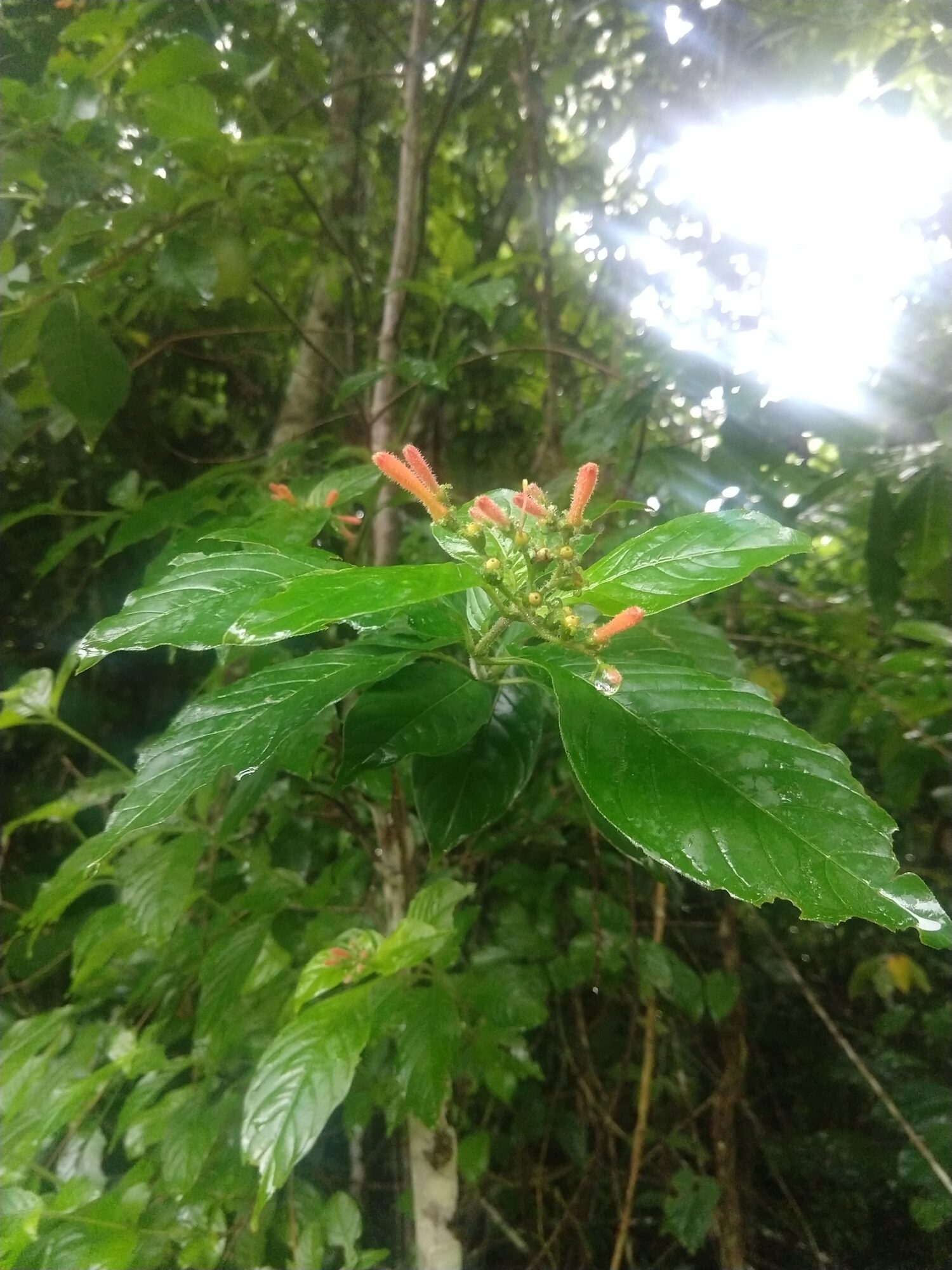
The ecological contrast between H. rovirosae and H. patens is striking. The Flora Costaricensis describes H. patens as a plant of "open evergreen lowland secondary sites" that "appear[s] to germinate only in open sunny sites," a pioneer species of roadsides, clearings, and forest edges. H. rovirosae, by contrast, occurs in primary forest and swamp forest, growing in the understory beneath canopy trees like Pentaclethra macroloba, Carapa nicaraguensis, and Pterocarpus officinalis, and alongside the towering Raphia taedigera palms that dominate permanently flooded areas. These associated species constitute the core of Caribbean lowland swamp forest in Costa Rica; research by Webb and Peralta (1998) found that Pentaclethra, Carapa, and Pterocarpus together account for over 70% of basal area in primary swamp forest in northeastern Costa Rica.
The bright red, narrowly tubular flowers of H. rovirosae match the classic hummingbird pollination syndrome, and the genus is well documented as hummingbird-pollinated. A study by Lasso and Naranjo (2003) at La Selva Biological Station in Costa Rica identified seven hummingbird species as legitimate pollinators of H. patens, along with four nectar-robbing species (three perching birds and one hummingbird that pierced the corolla base). Pollinators accounted for 85.6% of all visits. The closely related H. patens is obligately outcrossing, with RNase-based gametophytic self-incompatibility (studied by Bawa and Beach in 1983), making it entirely dependent on pollinator visits to set fruit. If H. rovirosae shares this self-incompatibility system, then the maintenance of hummingbird populations in Caribbean lowland forests is directly linked to its reproductive success.
Taxonomic History
The genus Hamelia was established by Nikolaus Joseph von Jacquin in 1760, named in honor of Henri-Louis Duhamel du Monceau (1700-1782), a French physician, naval engineer, and arborist who served three times as president of the French Academy of Sciences. Duhamel du Monceau's Traité des arbres et arbustes (1755), a comprehensive treatise on trees with 250 woodcut plates, was among the most influential works of 18th-century silviculture. The genus belongs to tribe Hamelieae within subfamily Cinchonoideae of the Rubiaceae, a placement confirmed by molecular phylogenetic studies after an earlier, erroneous assignment to subfamily Rubioideae based on the presence of raphides (needle-like calcium oxalate crystals).
Herbert Fuller Wernham (1879-1941), a British phanerogamic botanist who served as an assistant in the botany department of the British Museum from 1909 to 1929, described H. rovirosae in his 1911 "Revision of the genus Hamelia," published in the Journal of Botany, British and Foreign (volume 49, page 211). In the same revision, Wernham also described several other new species, including H. magnifolia and H. viridifolia, and lectotypified H. patens Jacquin as the type of the genus. Ill health curtailed Wernham's output after 1921, though his earlier years were highly productive; he also published monographs on Sabicea (1914) and Manettia (1918-1919), establishing 34 new Manettia species names. A centenary commemoration by Stearn (1981) in TAXON reviewed his brief career.
The type specimen, Rovirosa 499, was collected in Tabasco, Mexico, by José Narciso Rovirosa Andrade (1849-1901), the most important naturalist in Tabasco's history. Born at the Acumba estate in Macuspana, Rovirosa distinguished himself as a cartographer, historian, journalist, geographer, draftsman, botanist, meteorologist, and hydrographer. He specialized in the flora of Tabasco and Chiapas through years of fieldwork, discovering several new fern species and publishing the Pteridografía del Sur de México posthumously in 1909. His scientific reputation reached internationally: he represented Mexico at the Paris Exposition of 1889 and the Columbian World's Exposition in Chicago in 1893, and a monument was erected to him at the University of Berlin (later destroyed during World War II bombardments). A natural history museum in Villahermosa, Tabasco, bears his name today. He died on December 23, 1901, in Mexico City, at the age of 52.
Two names are now treated as synonyms of H. rovirosae. John Donnell Smith described Hamelia patens var. coronata in 1905, the name coronata ("crowned") referring to the conspicuously enlarged persistent calyx lobes on the fruit. Sidney Fay Blake, an American botanist at the USDA Bureau of Plant Industry known for his expertise in nomenclature, described Hamelia purpurascens in 1917 from Central American material. Both were recognized as conspecific with Wernham's earlier name in the Flora Mesoamericana (2012). The most comprehensive modern treatment remains the monograph by Thomas S. Elias (1976) in the Memoirs of the New York Botanical Garden, which covered all species in the genus.
Similar Species
Seven Hamelia species occur in Costa Rica. H. rovirosae is most frequently confused with H. patens, the common firebush, which shares similar red tubular flowers attractive to hummingbirds. The key differences: H. rovirosae has crooked multicellular hairs on stems, flowers, and fruits (straight or appressed hairs in H. patens); its anthers are slightly exserted beyond the corolla tube (included in H. patens); the calyx lobes enlarge prominently in fruit (small and inconspicuous in H. patens); and it is restricted to Caribbean lowland primary forest below 200 m (H. patens occurs on both slopes from sea level to 1,900 m in open secondary habitats). The other lowland congener, H. xerocarpa, is distinguished by its larger stipules (6-13 mm, cuspidate with lateral teeth, versus the small awned stipules of H. rovirosae), larger leaves with more secondary veins (9-13 per side versus 3-7), and glabrous to stiffly pilose rather than crookedly hairy stems.
Conservation Outlook
Hamelia rovirosae has not been assessed for the IUCN Red List. With 618 GBIF records across its range and occurrences in multiple protected areas, the species is not immediately threatened with extinction. It is documented in Tortuguero National Park, Barra del Colorado Wildlife Refuge, and the Térraba-Sierpe National Wetland (a Ramsar site) in Costa Rica, and it occurs in protected areas across Belize, Guatemala, and Mexico.
Its long-term prospects, however, depend on the fate of Caribbean lowland wet forest, one of the most heavily converted ecosystems in Central America. In Costa Rica, large areas of Caribbean lowland forest have been cleared for banana and pineapple plantations, cattle ranching, and urban expansion. Because H. rovirosae depends on primary forest and swamp forest, it cannot colonize the secondary habitats and roadsides where its generalist relative H. patens thrives. The species functions as an indicator of intact lowland wet forest: where it persists, the forest structure that supports it remains largely undisturbed. Where that forest is cleared, drained, or fragmented, H. rovirosae disappears and is replaced by the open-habitat H. patens.
Resources & Further Reading
Species Information
Plants of the World Online entry with accepted name, distribution, and synonymy.
Global occurrence records and specimen data (618 records across 8 countries).
Community observations and photographs from Mexico to Belize.
Mexico's biodiversity encyclopedia entry with common names and distribution.
Taxonomy & Nomenclature
Nomenclatural data, type specimens, and literature from Missouri Botanical Garden.
The original publication describing H. rovirosae, in the Journal of Botany vol. 49.
Burger & Taylor (1993). Fieldiana Botany n.s. no.33. Field Museum. Includes the treatment of Hamelia with species key and descriptions.
Ecology & Pharmacology
Hummingbird pollination ecology at La Selva, Costa Rica. Biotropica 35(1): 57-66.
The plant accelerates fruit maturation rate in response to increased fruit removal. Biotropica 29(2): 229-231.
Community ecology of the Caribbean lowland swamp forests where H. rovirosae occurs.
Comprehensive review of alkaloids, pharmacological activities, and ethnobotanical uses. Drug Research 70(5): 188-198.
Scientific validation of traditional wound-healing use. Journal of Ethnopharmacology.
Related Reading
Biographical account of the botanist who described H. rovirosae. TAXON.
Biography of the Tabasco naturalist honored in the species epithet.
Contains Lorence's description of Hamelia veracruzana with genus-level context and key to Mexican Hamelia.
Genus-level profile from a Costa Rican conservation organization.
Gene analysis linking Hamelia alkaloid pathways to Uncaria (cat's claw). PMC.