Carao
Cassia grandis — The pink shower tree, whose spectacular springtime blooms rival cherry blossoms and whose pungent pod honey has treated anemia in Costa Rica for generations.
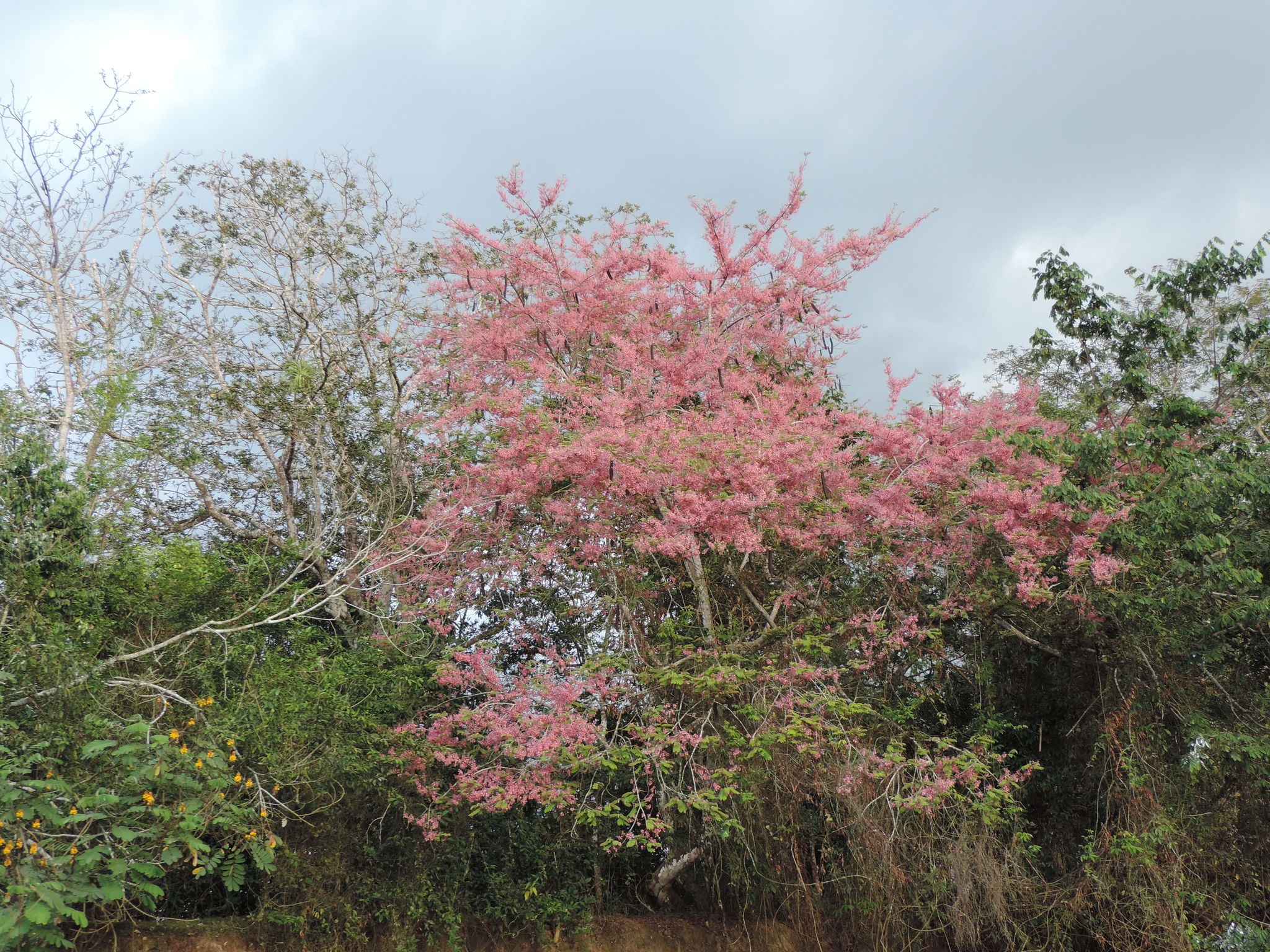
In March and April, when the dry season reaches its peak and the carao stands completely bare of leaves, something remarkable happens. The naked branches erupt in cascades of pink and coral blossoms so profuse they transform the tree into what early botanists described as resembling "an apple tree in both form and blossom coloration." It is, by many accounts, one of the most beautiful flowering trees in Central America.
But the carao offers more than beauty. For generations, Costa Ricans have harvested the tree's long cylindrical pods and stewed their dark, pungent pulp into a molasses-like syrup called miel de carao. Mixed with warm milk, this traditional remedy is taken to combat anemia and build blood. Walk into any Costa Rican natural products store and you will likely find bottles of carao syrup on the shelves, a living link to generations of folk medicine.
Identification
Physical Characteristics
Crown: The carao develops a rounded, umbrella-shaped crown from profuse branching. The canopy is dense when in leaf but becomes completely bare during the peak dry season, creating a striking silhouette against the sky.
Trunk: Straight and cylindrical with smooth, pale gray bark. The trunk can reach one meter in diameter in mature specimens.
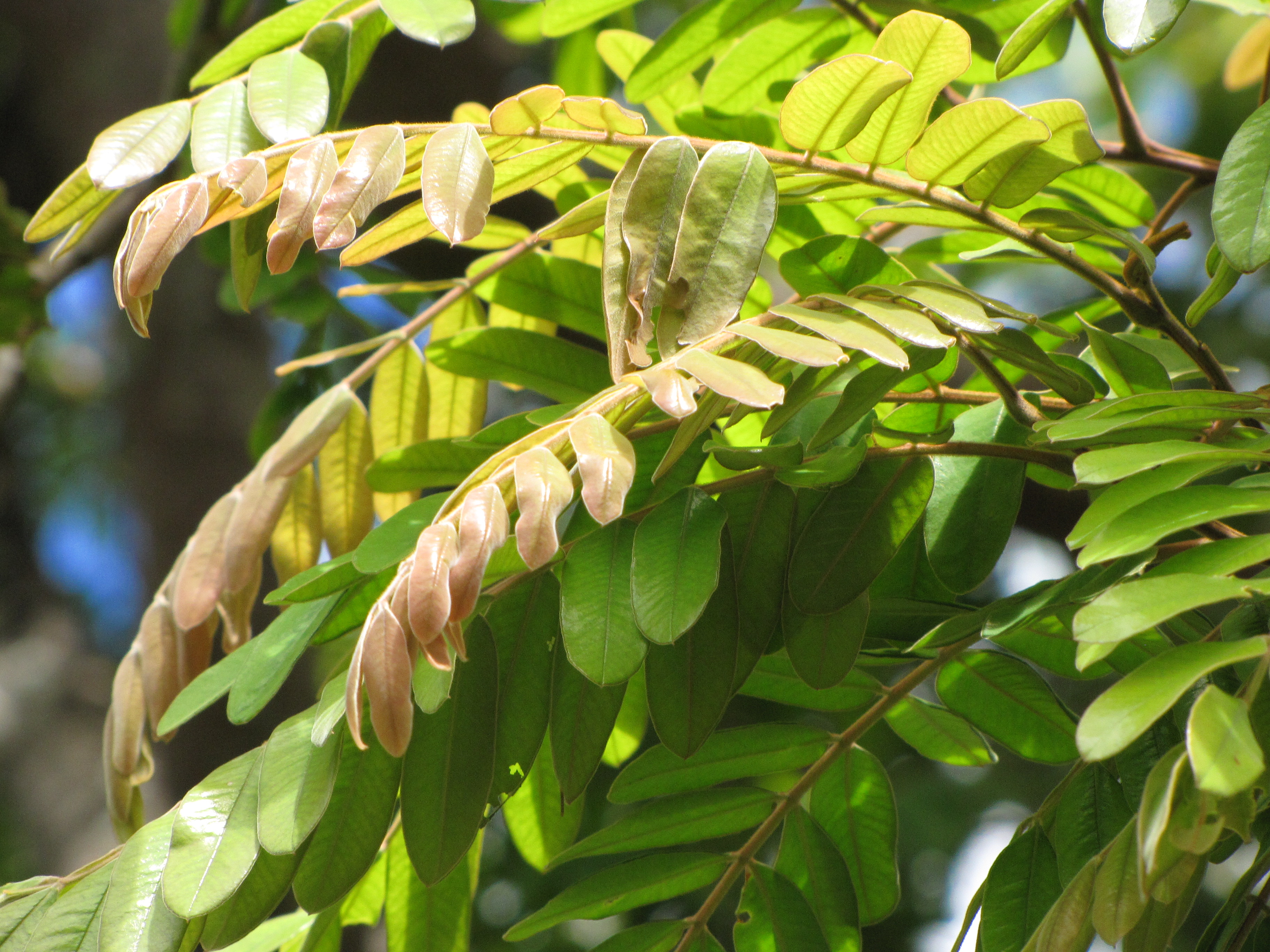
Leaves: Large, paripinnately compound leaves measuring approximately 30 by 10 centimeters, with about 16 pairs of leaflets. Each leaflet is narrowly elliptical, around 4 by 1.5 centimeters, green above with distinctive maroon undersides. Foliage begins to fall in January and the tree stands completely bare by March, remaining leafless through the flowering period.
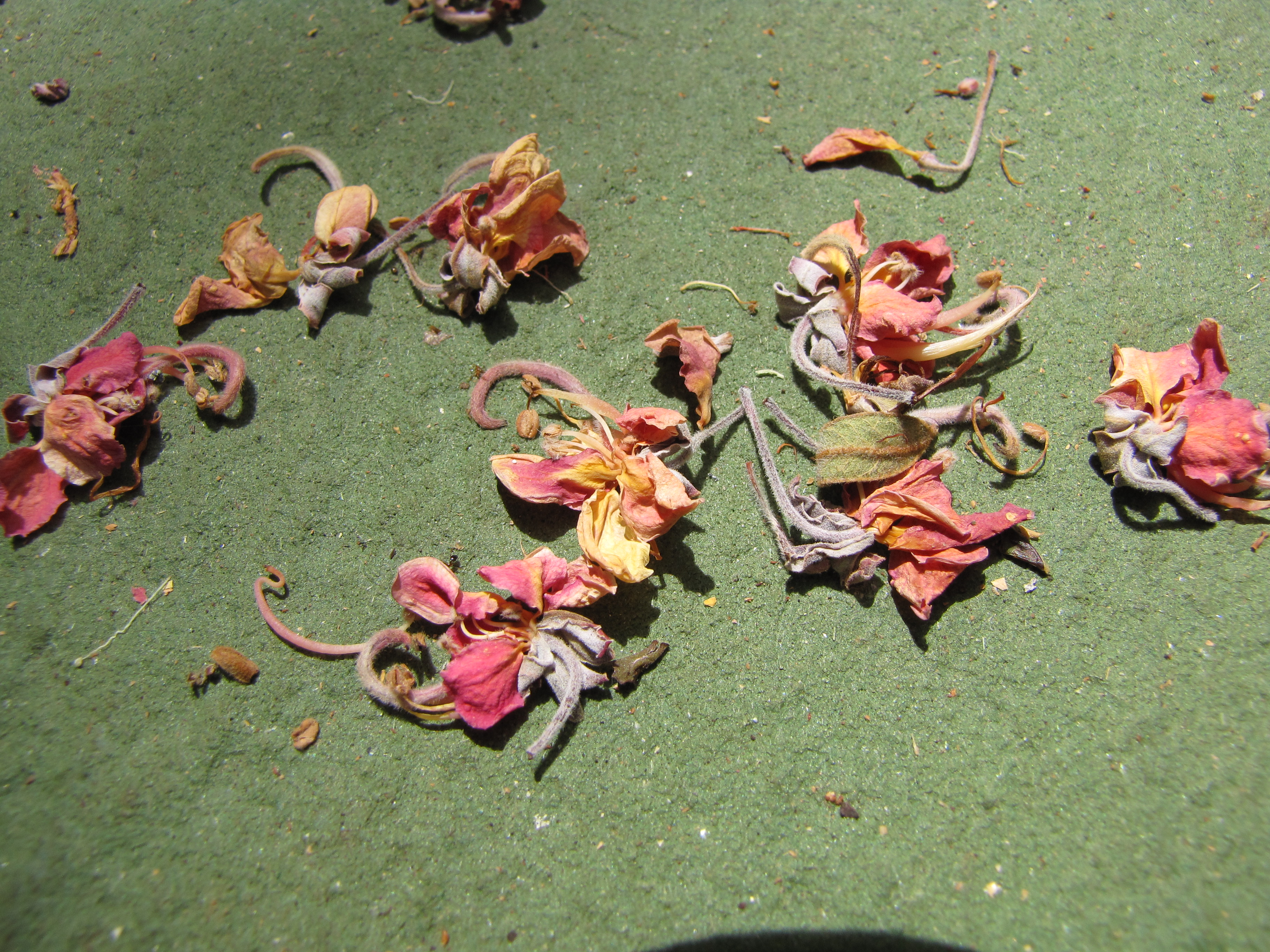
Flowers: Produced in abundance during March and April in long axillary racemes on bare branches. Individual flowers measure about 3 centimeters across and display an unusual palette of pastel pink, coral, and peach tones. Each flower has five lavender sepals, peach-colored petals with a yellow patch on the uppermost petal, three large stamens, and a curved pistil. The flowers are insect-pollinated.
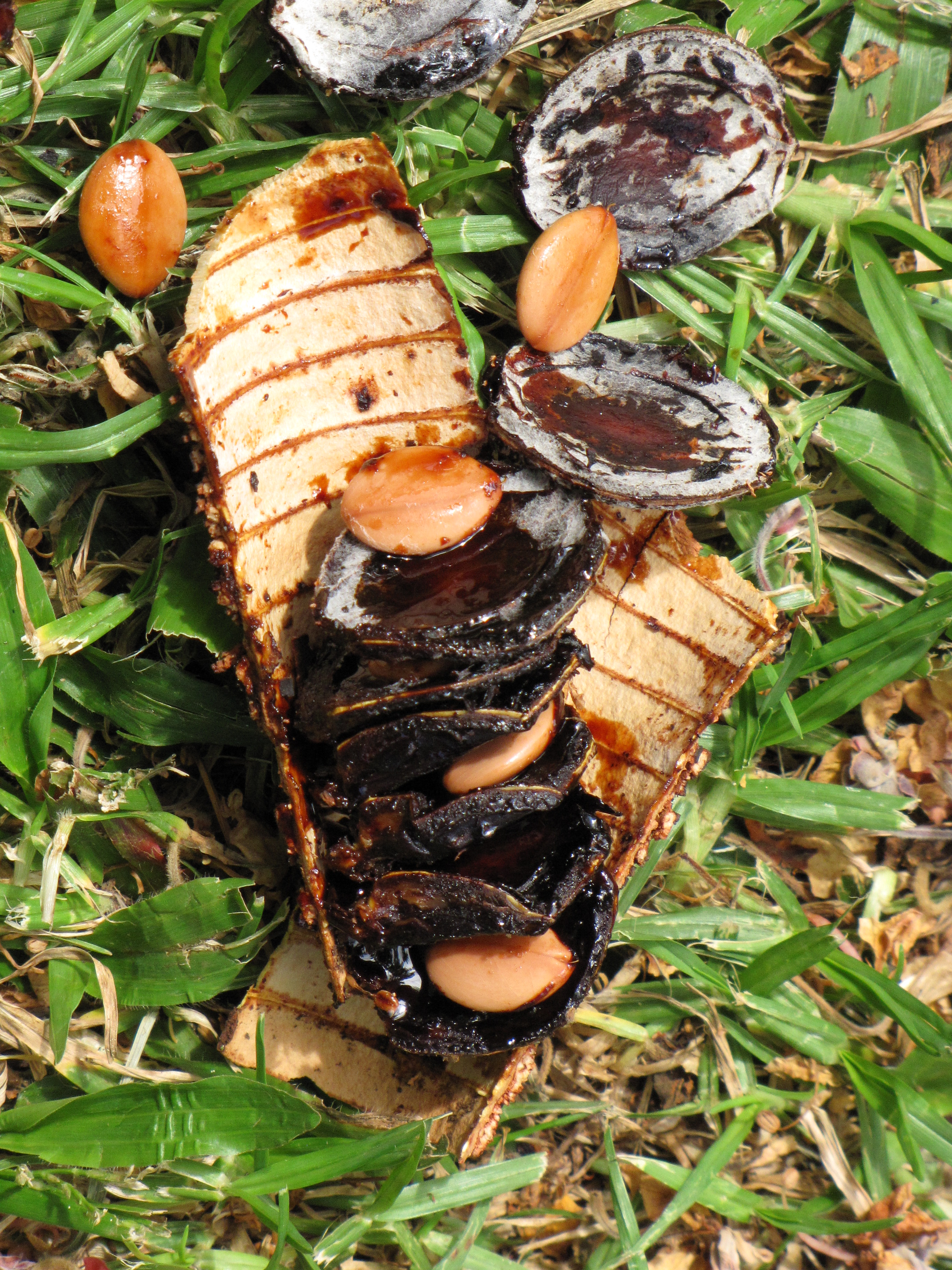
Fruit: Long, cylindrical woody pods reaching 40 centimeters or more in length, with elevated striations along the surface. Inside, transverse compartments contain tan-colored seeds approximately 1.5 centimeters long, embedded in a thick, dark, pungent honey-like pulp. The pods ripen September through December and can persist on the tree year-round, falling sporadically.
Habitat & Distribution
The carao's native range extends from southern Mexico through Central America to northern South America, reaching Suriname and Brazil. It grows naturally on open, brushy, or forested hillsides below 900 meters elevation. The species prefers lowland moist tropical conditions with annual rainfall between 1,000 and 2,800 mm and mean annual temperatures of 21-26°C.
In Costa Rica, the carao is rarely found growing wild in native forests. Instead, it occurs primarily as a cultivated or naturalized tree around settlements, in old orchards, and along roadsides. At Manuel Antonio National Park, for example, planted specimens grow in the old orchard area near the main administration building. The tree has become common as an ornamental throughout the tropics, including Southeast Asia and the Pacific islands.
The Anemia Remedy
For generations, Costa Ricans and other Central Americans have used carao as a blood-building remedy. The preparation begins with the ripe pods, which are harvested when the outer shell turns dark and dry. After cracking open the woody exterior, the pods are soaked for up to 12 hours to soften the dark pulp. The pulp is then boiled and reduced to a thick, molasses-like syrup called miel de carao or jarabe de carao.
The syrup is traditionally mixed with warm milk and taken as a tonic to combat anemia and increase red blood cell production. Some people drink it with water or orange juice. The vitamin C in citrus may enhance iron absorption from the remedy.
Modern analysis shows that carao contains iron, vitamins A, B1, B2, and C, as well as coumarin compounds that may stimulate red blood cell production in bone marrow. While not a concentrated iron supplement in the pharmaceutical sense, carao appears to work as a natural therapy that supports the body's blood-building processes. Indigenous peoples of Nicaragua, who called it "carao tea," used it for treating anemia, digestive problems, kidney issues, and infections.
Ecological Notes
The carao presents an ecological puzzle. Its large, heavy pods persist on the tree year-round, falling only sporadically in what ecologists describe as "a slow and haphazard process." No native animal effectively disperses the seeds today. This pattern suggests that the carao, like the guanacaste and guapinol, may have evolved its large fruits for dispersal by Pleistocene megafauna that went extinct roughly 10,000 years ago.
As a fast-growing pioneer species, the carao establishes readily in gaps and disturbed areas. It tolerates a range of soil conditions and quickly develops a rounded canopy. These traits make it useful for reforestation and land rehabilitation, though its primary value remains ornamental and medicinal.
Other Uses
Timber: The wood is brownish-yellow, hard, and heavy. While it lacks exceptional durability, it serves for building construction, agricultural implements, and fence posts. Wood ash has been used in soap manufacturing.
Seed gum: The seeds yield a gum with potential for pharmaceutical applications as a binding agent.
Ornamental: The spectacular flowering display makes the carao one of the most popular ornamental trees throughout the tropics. Its resemblance to flowering cherry trees during bloom has made it a favorite for parks, gardens, and street plantings.
Key Sources & Resources
Species Information
Overview of the species including taxonomy, description, distribution, and uses.
Detailed species account including phenology, identification features, and distribution in Costa Rica.
Comprehensive botanical and ethnobotanical information including uses, cultivation, and ecology.
Species profile from Costa Rica's Osa Peninsula botanical collection.
Traditional Medicine
Article on the cultural significance and traditional medicinal uses of carao in Costa Rica.
Biodiversity Databases
Community-contributed observations and photographs from around the world.
Global occurrence records and distribution data for the species.