Amargo Colorado
Aspidosperma cruentum — A towering emergent of Neotropical rainforests, this buttressed hardwood ranges from the Maya lowlands of Petén through Central America to Colombia and Venezuela. In Costa Rica, its blood-red latex and dense timber persist in the old-growth stands of Golfo Dulce.
From the broadleaf forests of Guatemala's Petén to the foothills of the Colombian Andes, Aspidosperma cruentum rises above the canopy as one of the Neotropics' most distinctive emergents. The species owes its name to the blood-red latex that seeps from any wound in its bark, a trait that separates it from the white-sapped relatives with which it was long confused. In Costa Rica, the amargo colorado reaches its densest Pacific-slope populations in the ever-wet lowlands around Golfo Dulce, where old-growth stands in Piedras Blancas and Corcovado still harbor individuals topping 40 meters.
Like other giant rainforest trees, it develops plank buttresses that fan outward from the trunk base, bracing the tree against saturated soils and channeling runoff toward the root mat. Along river levees it mingles with Caryocar, Brosimum, and emergent palms; on slopes formed by washed-down sediment it accompanies Carapa, Dipteryx, and the tallest Virola. Its alkaloid-rich bark gives the tree its common name: "amargo" means bitter in Spanish, a reference to the compounds that have made related species targets for antimalarial research.

Identification
Habit
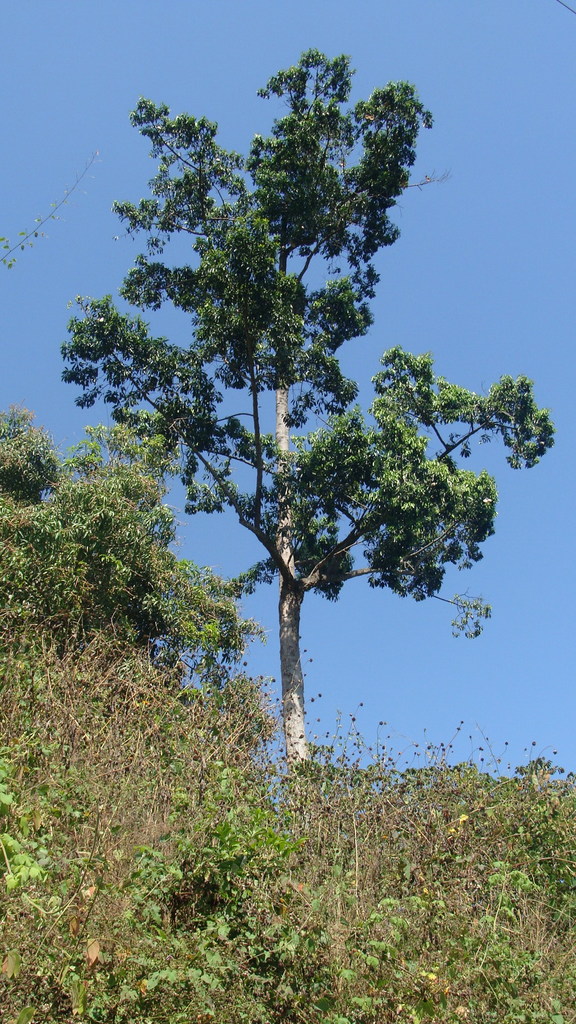
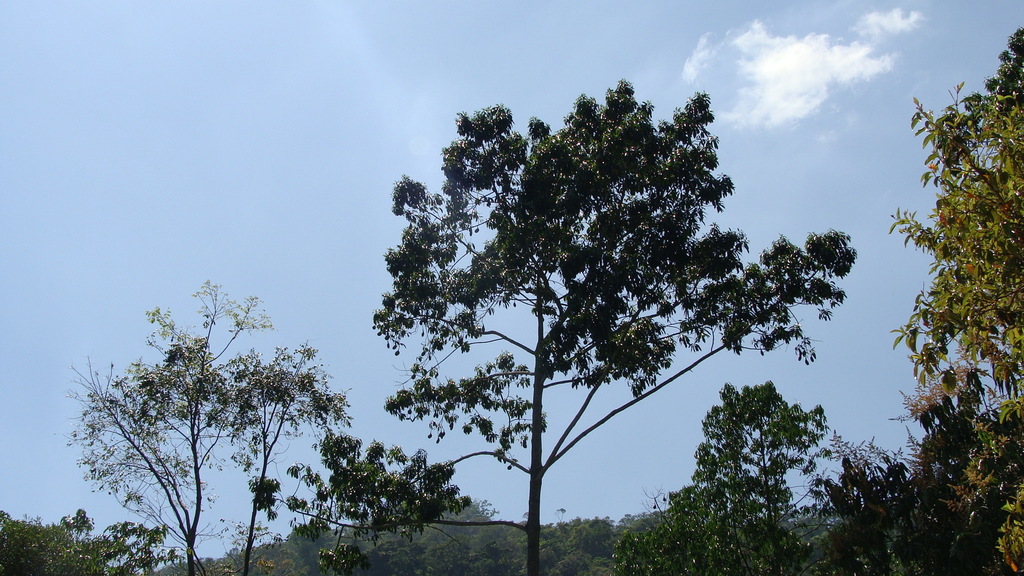
Mature A. cruentum are towering emergents that rise 10–20 meters above the main canopy on pale, straight trunks supported by spreading plank buttresses. Field photographs of fully grown trees remain scarce. The images below show immature individuals (perhaps 10–20 years old) in Chiapas, Mexico, where the tiered horizontal branching and dark foliage are already evident. These are currently the best available photographs documenting the species' growth form.
Bark & Latex
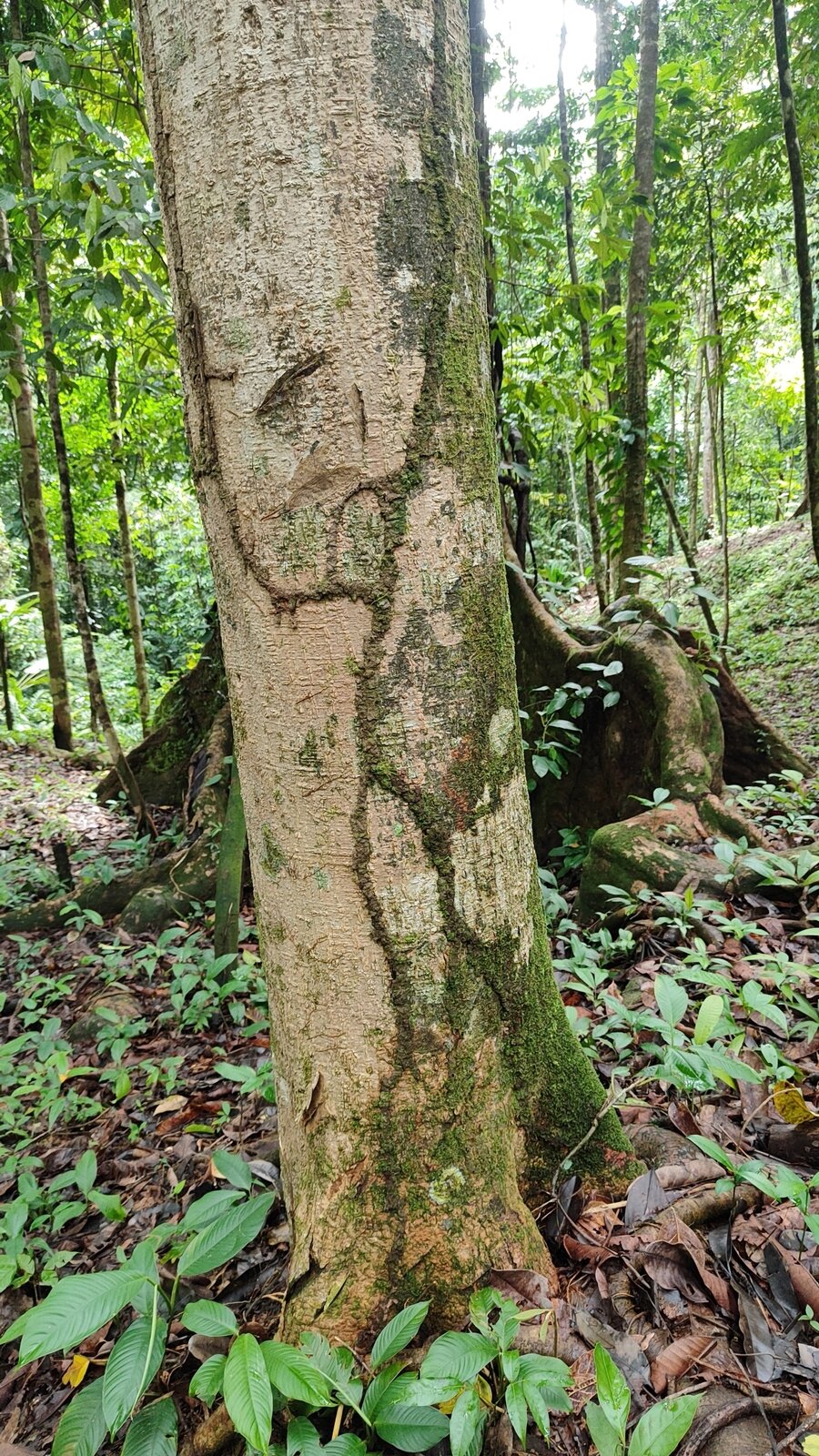
The most reliable field test is a slash cut into the bark. Within seconds, crimson latex wells up and flows down the trunk, oxidizing to chocolate-brown streaks that persist for months. This blood-red sap distinguishes A. cruentum from the white- or cream-latex species in the genus. The bark itself is grayish and shallowly fissured on mature trees, with a cream-colored sapwood beneath a rufous cambium layer.
Leaves
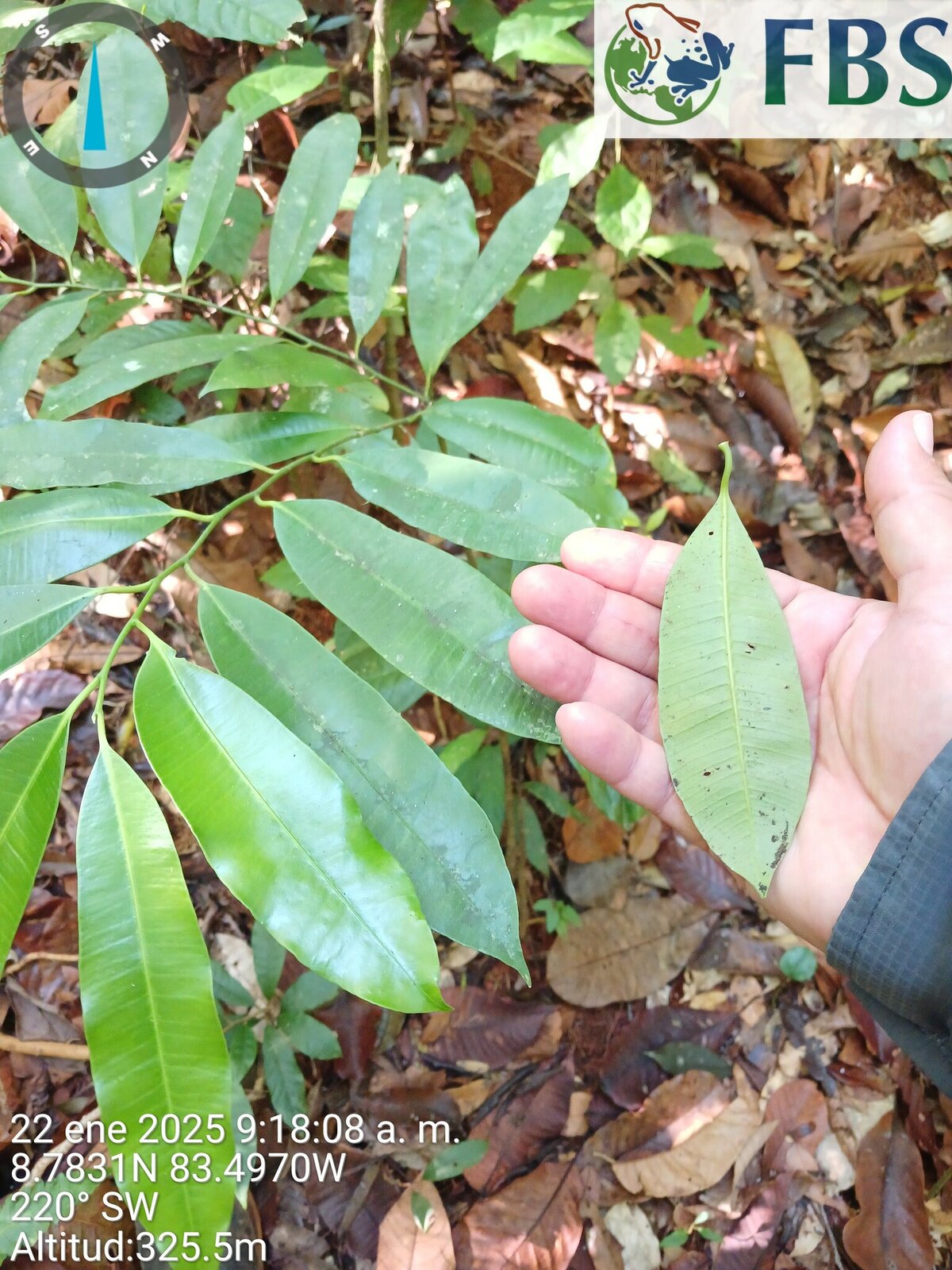
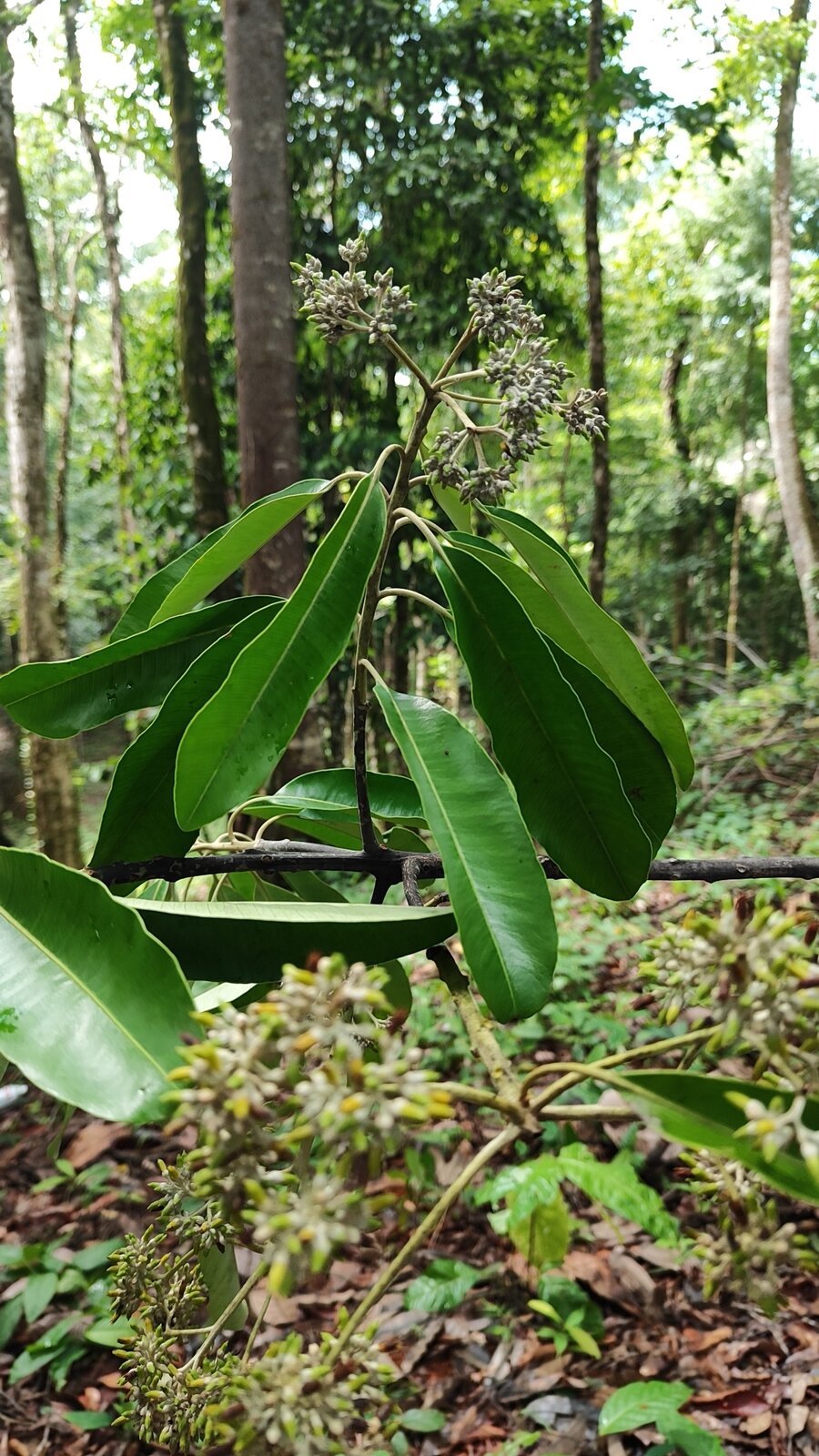
Leaves are opposite, thick, and narrowly elliptic to oblong (12–26 × 4–8 cm), with 28–36 pairs of secondary veins that run straight to the leaf margin rather than looping back toward the midrib. This pattern, called craspedodromous venation, helps distinguish the species from related trees. Even when dried for herbarium sheets, the leaves retain a subtle sheen.

Flowers
The inflorescences are flat-topped clusters (corymbose cymes) bearing dozens of small greenish-white flowers. Each flower has thread-thin corolla lobes barely 1.5 mm wide, a key trait separating A. cruentum from the broader-lobed A. megalocarpon. Flowering peaks from May through December, with a secondary pulse in January. Studies on related Aspidosperma species show that nocturnal moths, especially hawkmoths and settling moths, are the primary pollinators, attracted by faint evening scent and the pale tubular flowers visible at dusk.
Fruits & Seeds
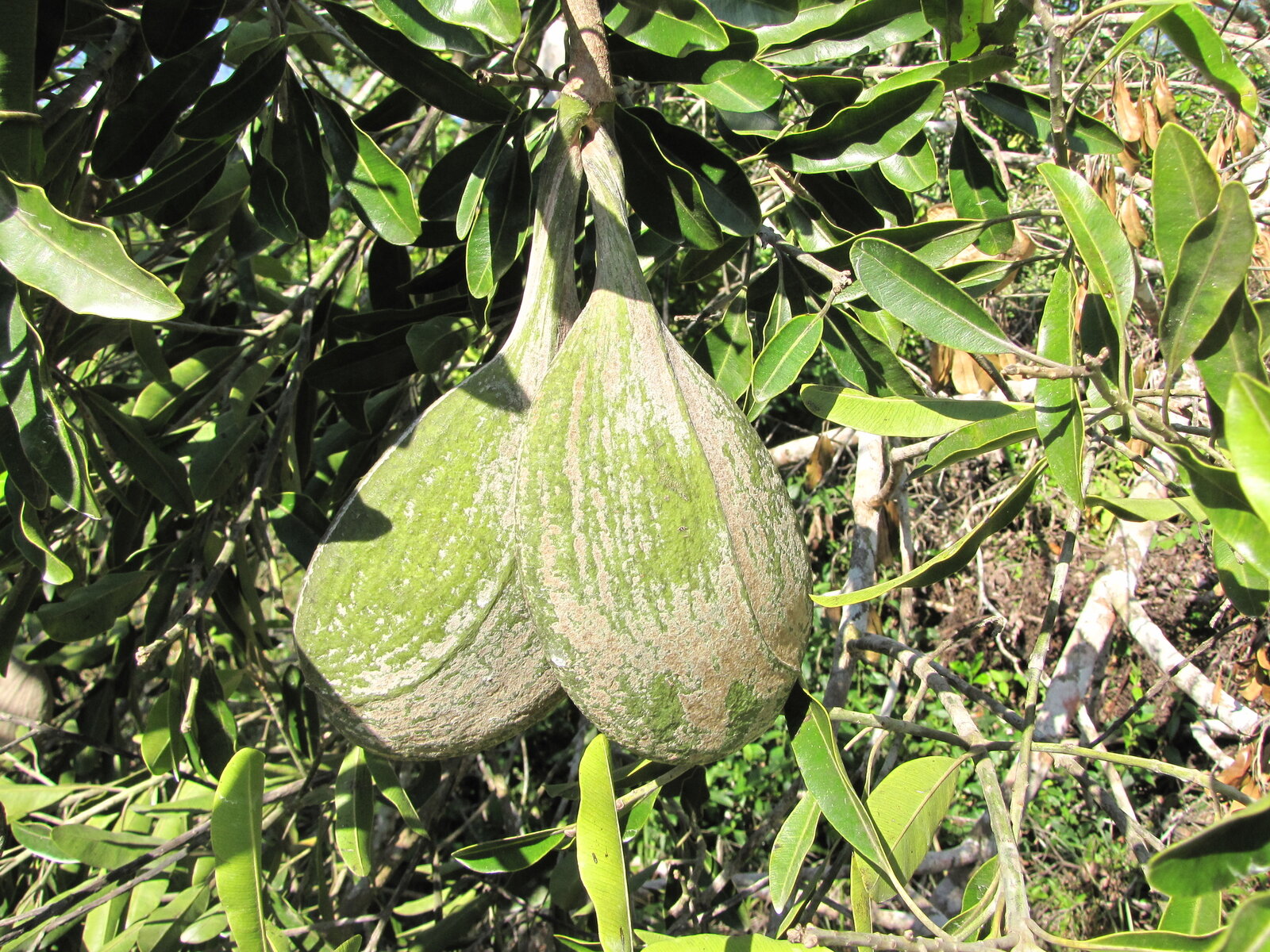
Fruits mature as paired follicles (dry fruits that split along one seam) 15–28 cm long with evident longitudinal grooves. When dry, they crack open along the dorsal suture and release papery seeds, each bearing a single apical wing. Wind catches the wing and carries the seed laterally through the canopy before it spirals down to colonize light gaps created by treefalls. Dispersal pulses peak from January through March, when INBio collectors have noted pale beige seeds scattered across the forest floor.
The autorotation of these winged seeds has drawn attention from aerodynamic engineers. High-speed video reveals that as the seed falls, the asymmetric wing induces spin and generates a stable leading-edge vortex, the same lift mechanism that keeps maple samaras and helicopter rotors aloft. This vortex slows the seed's descent to a fraction of gravitational acceleration, extending the time aloft and the horizontal distance the seed can travel before reaching the understory. In open forest gaps with updrafts, Aspidosperma seeds may travel hundreds of meters from the parent crown.
The paired follicles may recall those of huevos de caballo (Stemmadenia donnell-smithii), another Apocynaceae common in Brunca pastures. The distinction is straightforward: A. cruentum follicles are dry, woody, and grooved, splitting to release wind-dispersed seeds, while Stemmadenia fruits are fleshy, bright orange, and bird-dispersed.
Distribution & Range
Aspidosperma cruentum grows in very humid forest ("bosque muy húmedo"), both primary and secondary, as well as in disturbed areas, clearings, and roadsides at elevations from sea level to 1,000 meters. In Costa Rica, it occurs on the Caribbean slope of the Central Cordillera, the San Carlos plains, and the Pacific slope from Carara south through the Golfo Dulce lowlands. At the Osa Conservation Biological Station it is notably abundant near the beach. Colombian populations reach higher elevations (700-1,300 m) in dense Andean foothill forest.
GBIF records document the species across 11 countries and an elevation range of sea level to 1,680 meters. Mexico (Veracruz and Chiapas) accounts for the most records, followed by French Guiana, Colombia, Belize, Venezuela, Suriname, Brazil, Costa Rica, Guatemala, and Panama. In Costa Rica, the densest clusters arc from La Gamba to Río Rincón, where ever-wet lowlands meet the first Talamancan foothills. The species appears in every Brunca canton, with notable populations inside Piedras Blancas National Park, the Golfo Dulce Forest Reserve, and the buffer zones of Corcovado.
Ecology
As an emergent, A. cruentum rises 10–20 meters above the main canopy, exposing its crown to full sunlight and the wind currents that disperse its seeds. This vertical position also makes the tree a landmark for arboreal mammals navigating between forest patches. The plank buttresses, which can extend several meters from the trunk, serve multiple functions: they brace the tree in waterlogged soils, channel stemflow toward the root mat, and create sheltered microhabitats where leaf litter accumulates and decomposes faster than on the open forest floor.
The blood-red latex is not merely diagnostic but defensive. Like other Apocynaceae, the sap contains indole alkaloids that deter generalist herbivores. When damaged, the pressurized latex floods the wound site as a viscous, sticky liquid that rapidly clots. This physical defense can be lethal: studies of milkweeds show up to 30% of newly hatched caterpillars die trapped in latex before they can take their first bites. The exudate also gums up mouthparts, mires legs, and delivers bitter alkaloids directly into any herbivore foolish enough to persist.
Yet some specialist herbivores have evolved a remarkable countermeasure. In a landmark 1987 Science paper, entomologists David Dussourd and Thomas Eisner documented how monarch caterpillars (Danaus plexippus) and red milkweed beetles (Tetraopes tetrophthalmus) sabotage this defense by cutting leaf veins before feeding. The insect chews a furrow through the midrib or petiole, severing the latex-conducting channels called laticifers, then waits as the pressurized sap drains out and clots. Only then does it feed beyond the cut, where latex outflow has dropped by more than 94%. If fresh latex still wells up during feeding, the insect returns to deepen its sabotage trench before resuming its meal. This vein-cutting behavior has evolved convergently in at least 110 species across 17 insect families, including caterpillars, beetles, and katydids. The Apocynaceae, with their nonarticulated laticifers, are frequent hosts of these vein-cutting specialists. Without such countermeasures, generalist herbivores simply cannot overcome the latex barrier.
Beyond chemistry and latex, the tree provides structural resources: stingless bees collect the resinous exudate to seal their nest entrances, and epiphytic orchids and aroids colonize the fissured bark of older trunks.
Wildlife Associations
Because A. cruentum towers over the canopy, it functions as a wind-dispersal launchpad for its own seeds and as a literal bridge for arboreal fauna. Scarlet Macaws commuting between Corcovado, Piedras Blancas, and the Golfo Dulce Forest Reserve perch on emergent trees like A. cruentum to watch for raptors before gliding across cattle gaps. Geoffroy's spider monkeys rest on the broad lower limbs during midday heat, using the trees as staging platforms before raiding fruiting Dussia or Astrocaryum nearby.
On the forest floor, collared peccaries root among the buttresses, and bark wounds from any source exude latex that attracts stingless bees (Trigona spp.) collecting resin for their nests. These bees, in turn, pollinate night-opening flowers and provide protein-rich brood for motmots and trogons. The tree thus links canopy birds, arboreal primates, ungulates, and social insects into one vertical corridor.
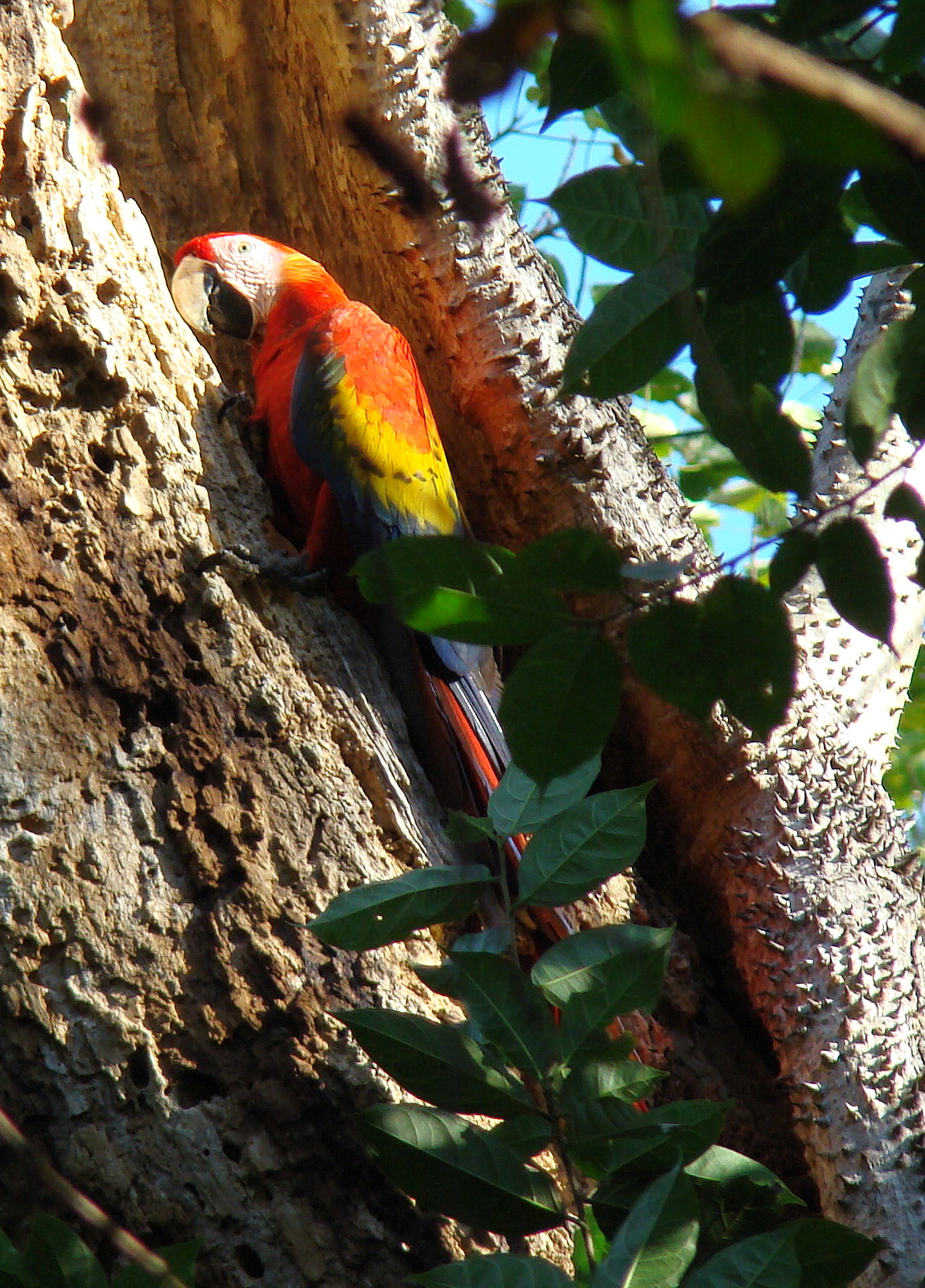
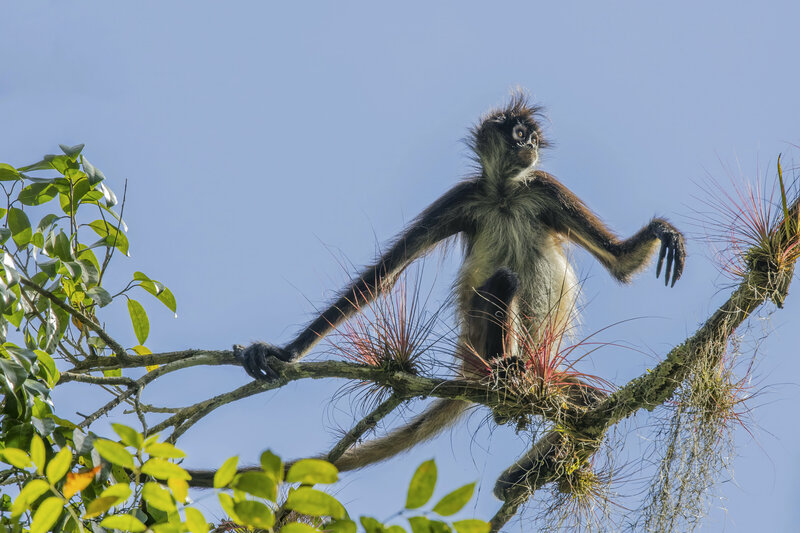
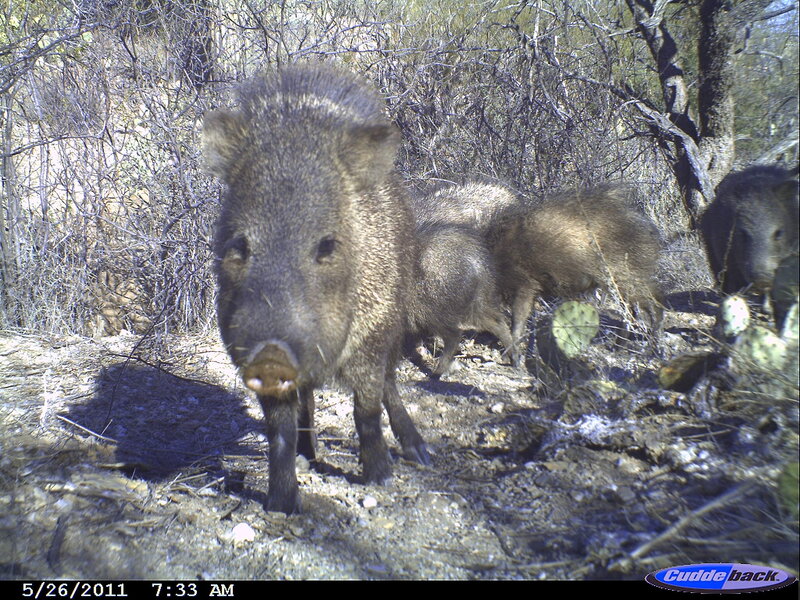
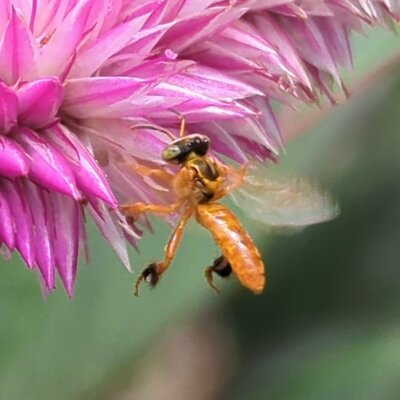
Photos (clockwise from top left): Scarlet Macaw (Anita Gould, CC BY-NC 2.0), Central American spider monkey (Charles J. Sharp, CC BY-SA 4.0), Tetragona ziegleri stingless bee (mettcollsuss via iNaturalist, CC BY), and collared peccary (SaguaroNPS, public domain).
Ethnobotany
The common name "amargo" (bitter) reflects the alkaloid-rich bark that has made Aspidosperma species targets for pharmaceutical research. Across the genus, researchers have isolated over 250 monoterpene indole alkaloids, including aspidospermine, quebrachamine, and yohimbine derivatives. These compounds show antimalarial activity in laboratory studies: bark extracts from several Aspidosperma species inhibit the malaria parasite Plasmodium falciparum at concentrations comparable to plant-derived antimalarials.
Traditional healers in South America have long used Aspidosperma bark decoctions to treat fevers, malaria, digestive complaints, and respiratory conditions. The related species A. quebracho-blanco from the Argentine Chaco entered European pharmacopeias in the nineteenth century as a respiratory stimulant. Whether A. cruentum specifically shares these properties remains unstudied; its alkaloid profile awaits modern chemical analysis. For now, the bitter taste of the bark hints at a rich chemistry that future research may unlock.
The biosynthesis of these alkaloids has recently yielded a remarkable evolutionary story. A 2024 study in PNAS traced the enzyme family responsible for the cycloaddition steps that build the cage-like structures of aspidospermine and related compounds. The authors found that Aspidosperma species repurposed an ancestral carboxylesterase, an enzyme normally involved in breaking ester bonds, to catalyze the ring-closing reactions that create the monoterpene indole scaffold. This enzyme cooption, documented across multiple species in the genus, illustrates how plants recruit existing metabolic machinery for new biosynthetic purposes.
Taxonomic History
Robert E. Woodson Jr. described Aspidosperma cruentum in 1935 based on a specimen collected by H.H. Bartlett in Petén, Guatemala (Bartlett 12570, deposited at Missouri Botanical Garden). Woodson, a specialist in the dogbane family at the Missouri Botanical Garden, noted the crimson latex as the species' most striking feature. For decades afterward, taxonomists treated A. cruentum as a synonym of the widespread A. megalocarpon, despite the consistent differences that field botanists observed.
Morales & Zamora's 2017 revision of Central American Aspidosperma resurrected the species, clarifying the characters that separate it from A. megalocarpon: the blood-red latex (versus white or cream), the thread-thin corolla lobes, and the deeply grooved follicles. Herbarium specimens from Chiapas to the Osa now bear annotations reflecting this updated circumscription, and collectors are encouraged to note latex color in the field.
The same revision also clarified that Costa Rican populations formerly filed under A. spruceanum belong to A. cruentum. The confusion persisted for decades because both species occur in wet lowland forests and share the emergent habit. True A. spruceanum Müll.Arg. is restricted to the Amazon basin, where it differs by white latex that does not oxidize red, leaf undersides that are white-glaucous rather than green, and narrower follicles. The diagnostic is unambiguous in the field: a slash cut produces blood-red latex in cruentum, milky white in spruceanum. Costa Rican herbarium specimens previously identified as A. spruceanum have been re-annotated accordingly.
Timber & Trade
The wood of A. cruentum ranks among the densest of Central American hardwoods, with a specific gravity of 0.85–0.95 and exceptional resistance to both white-rot and brown-rot fungi. Janka hardness tests place it alongside quebracho and ironwood. Historically, the timber was prized for marine applications: boat keels, ribs, and planking; bridge decking; and pilings that resist saltwater borers. It machines easily, takes a high polish, and has served in heavy construction from the Maya lowlands to the Osa Peninsula.
Conservation Outlook
That durability made the species a target for logging. On the Osa Peninsula, A. cruentum has been illegally harvested even within protected areas, according to the Osa Conservation Biological Station. Most remaining populations in Costa Rica now lie inside Piedras Blancas National Park, Corcovado National Park, and the Golfo Dulce Forest Reserve, where enforcement has reduced but not eliminated extraction pressure. Community nurseries in the Golfo Dulce region now propagate seedlings to restore riparian corridors where historic logging removed the emergent buttressed trees that once anchored stream banks.
The IUCN lists A. cruentum as Least Concern across its continental range, reflecting its presence from Mexico to Amazonia. However, regional assessments may tell a different story. In Mesoamerica, where forest cover has declined sharply, local populations face continued pressure from both legal and illegal timber extraction. The species' slow growth and dependence on mature forest for seed dispersal limit its ability to colonize degraded lands without active restoration.
Resources & Further Reading
Species Information
Accepted name, range, synonymy, and bibliographic history maintained by Kew.
Georeferenced records spanning 11 countries from Mexico to the Amazon, with elevation data.
Costa Rican species profile with habitat, distribution by region, and forest type classification.
Local information from the Osa Peninsula, where the species is abundant near the beach.
Taxonomy & Nomenclature
Resurrects A. cruentum from synonymy with A. megalocarpon; clarifies diagnostic characters including vein counts and latex color.
Costa Rican distribution, phenology, and local names for A. cruentum (amargo colorado).
Wood & Timber
Wood density, mechanical properties, and management practices for amargo timber species.
Janka hardness, durability ratings, and construction applications for the genus.
Ecology & Pollination
The landmark study documenting how monarch caterpillars and milkweed beetles sabotage latex defenses by cutting leaf veins before feeding.
Documents hawkmoth and settling moth pollination in a related species; applicable to the genus.
Stingless bee resin foraging and interactions with latex-bearing canopy trees.
Alkaloid Chemistry
Introduction to the 250+ monoterpene indole alkaloids isolated from the genus.
Documents Plasmodium inhibition by Aspidosperma bark extracts with low cytotoxicity.