Ocotea brenesii
Ocotea brenesii — A cloud forest laurel named for Costa Rica's pioneering botanist, this rare tree grows in the misty highlands where Alberto Brenes himself once collected specimens.
In the cloud forests surrounding San Ramón, where mist drifts through the canopy and epiphytes cloak every branch, grows a tree that carries the name of Costa Rica's most prolific botanical collector. Ocotea brenesii commemorates Alberto Manuel Brenes Mora (1870-1948), a self-taught naturalist who amassed over 22,000 plant specimens during his solitary expeditions through these very mountains. The species was described in 1937 by American botanist Paul Carpenter Standley in his monumental Flora of Costa Rica, from collections made in the same region where Brenes spent decades documenting the extraordinary flora of the Cordillera de Tilarán.

Like all members of the Lauraceae, O. brenesii produces aromatic foliage rich in essential oils. Research at the University of Costa Rica has revealed an unusual chemical profile: unlike many Ocotea species that contain phenylpropanoids, this tree's essential oils are dominated by sesquiterpenes, compounds that give the crushed leaves a complex, resinous fragrance quite distinct from the avocado-like scent of its lowland relatives.
Identification
Physical Characteristics
Leaves: The leaves of O. brenesii are relatively broad for an Ocotea, with a distinctive appearance: few secondary veins, thin texture, and a tendency to darken when dried for herbarium specimens. This darkening, noted in the original species description, helps distinguish it from related species. Like all Lauraceae, the leaves are simple and alternate, with entire margins.
Young growth: The young twigs bear appressed indumenta, fine hairs pressed flat against the surface. This pubescence is a useful field character for identification, though it may weather away on older growth.
Inflorescences: The flowers are arranged in racemes, elongated clusters typical of many Ocotea species. The small, inconspicuous flowers are pollinated by insects and likely produce the fleshy, single-seeded fruits characteristic of the Lauraceae.
Alberto Manuel Brenes: Costa Rica's First Botanist
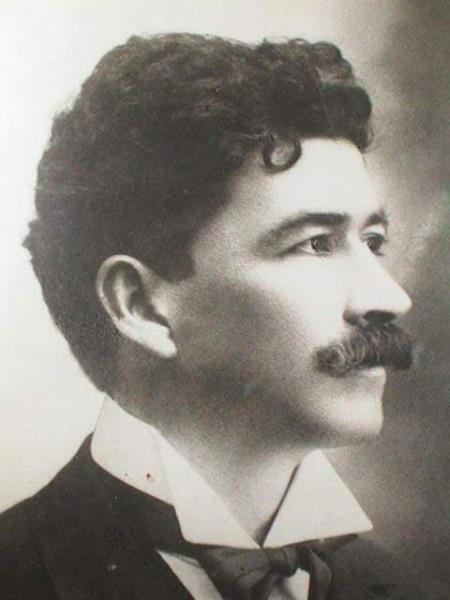
The species epithet brenesii honors Alberto Manuel Brenes Mora, born September 2, 1870, in San Ramón, Alajuela. From humble origins as the son of an unmarried woman, Brenes worked as a child to support his family before receiving his first botanical training in local pharmacies. His sharp intelligence earned him a transfer from the Horacio Mann School in San Ramón to the Liceo de Costa Rica, where he completed his secondary education in natural sciences.
In 1890, President Bernardo Soto Alfaro awarded Brenes a scholarship to study in Europe. He attended the Academy of Lausanne and later the Faculty of Sciences at the University of Geneva, though records suggest he did not formally graduate. When he returned to Costa Rica in 1898, he was said to have come back with "more wisdom than diplomas." The Swiss naturalist Henri Pittier then contracted Brenes to make ten collections of plants with 500 species each, beginning his extraordinary campaign of botanical documentation.
In 1920, under the administration of his fellow San Ramón native President Julio Acosta García, Brenes was named head of the Botany Section at the National Museum. This position enabled him to conduct an extraordinary campaign of plant collection. By 1942, he had accumulated over 22,600 specimens, a collection unrivaled in Central America. Standley praised him in Flora of Costa Rica, comparing his achievements favorably to the great South American collectors Spruce, Glaziou, and Ducke.
Brenes led a solitary existence, described by contemporaries as gruff and reluctant to speak about himself. He published nothing under his own name, maintaining detailed field notes on tiny paper scraps and cigarette cartons, but allowing a certain mystery to develop around his figure. His colleague Juvenal Valerio Rodríguez, director of the National Museum, called him "el botánico nacional" (the national botanist). Even in his native San Ramón, little was known about this taciturn man who spent his days in the forest.
His impact on orchid taxonomy was particularly notable. From Brenes's collections, the German botanist Rudolf Schlechter described 146 species as new to science, 83% from the San Ramón canton alone and 53% from the locality of San Pedro. So impressed was Schlechter with the richness of Brenes's orchid collections that he called San Ramón "El Dorado of orchids." Schlechter named 17 new species and one new genus (Brenesia costaricensis) in his honor, plus four "albertias" using his given name. Scientists honor Brenes through two types of Latin epithets: "brenesias" (using his surname, latinized as brenesii) and "albertias" (using his first name).
Brenes collaborated with internationally renowned botanists including Paul C. Standley (Field Museum, Chicago), Oakes Ames (Harvard University), Georg Cufodontis (Austrian Natural History Museum), and Rudolf Schlechter (Berlin Herbarium). He also made significant contributions to mycology: from his fungal collections, German specialists Hans Sydow and Franz Petrak identified 141 species, with ten dedicated to Brenes and one new genus bearing his name. In 1970, more than two decades after his death, the Costa Rican Legislative Assembly declared Brenes a "Benemérito de las Ciencias" (Meritorious of Sciences).
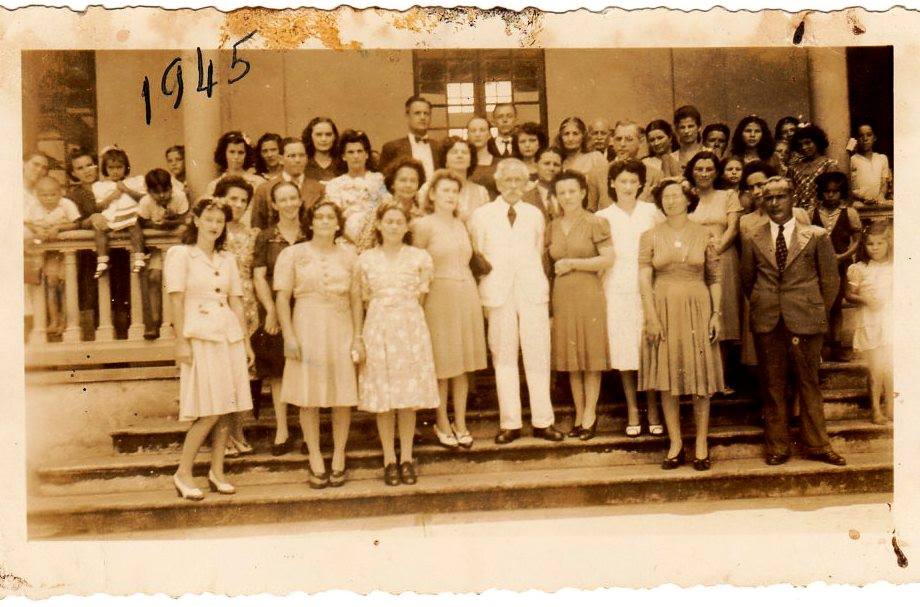
Paul Carpenter Standley
The man who formally described Ocotea brenesii, Paul Carpenter Standley (1884-1963), was an American botanist who "wrote more Floras of Central American plants than any other man alive or dead." Working at the Field Museum of Natural History in Chicago from 1928 to 1950, Standley produced a remarkable series of floristic works including Trees and Shrubs of Mexico, Flora of Guatemala, and the Flora of Costa Rica (1937) in which O. brenesii was first described. After his retirement, Standley moved to the Escuela Agricola Panamericana in Honduras, where he continued botanical work until 1956. He died in Tegucigalpa on June 2, 1963.
Chemistry and Essential Oils
Research by Chaverri and Cicció at the University of Costa Rica analyzed the essential oils of O. brenesii from specimens collected near San Ramón. The results revealed an unusual chemical profile for the genus. While many Ocotea species contain phenylpropanoids or benzenoid compounds, O. brenesii oils are dominated by terpenic compounds, particularly sesquiterpenes.
From the leaves, 64 compounds were identified, accounting for 85.9% of the oil. The major constituents include alpha-copaene (21.1%), delta-cadinene (9.2%), spathulenol (7.3%), globulol (5.6%), and beta-caryophyllene (5.2%). Sesquiterpenic hydrocarbons comprised 53.4% of the leaf oil, while oxygenated sesquiterpenes accounted for 29.9%. The wood oil differed in composition, with alpha-copaene (6.6%), caryophyllene oxide (6.3%), beta-caryophyllene (6.1%), and humulene epoxide (4.6%) as major components.
Aporphine Alkaloids and Pharmacological Potential
A 1996 study in the International Journal of Pharmacognosy isolated three isoquinoline alkaloids from the leaves of O. brenesii: (+)-isocorydine, (-)-3-hydroxynuciferine, and 3-hydroxy-6a,7-dehydronuciferine. This was the first reported isolation of these latter two compounds from nature; 3-hydroxynuciferine had previously been known only through chemical synthesis. The discovery highlighted O. brenesii as a source of novel natural products.
These aporphine alkaloids belong to a privileged scaffold in medicinal chemistry. Isocorydine, in particular, has attracted significant pharmacological interest. Isocorydine demonstrates anti-tumor activity against hepatocellular carcinoma (liver cancer) by inducing G2/M cell cycle arrest and apoptosis. More remarkably, it targets drug-resistant cancer stem cells, specifically reducing CD133+ and EpCAM-expressing cell populations. Research has also documented anti-arrhythmic, vasodilatory, and anti-inflammatory effects.
Researchers have developed derivatives of isocorydine with improved anticancer activity. The compound 8-amino-isocorydine shows enhanced activity against lung, gastric, and liver cancer cell lines, while a pro-drug formulation (8-acetamino-isocorydine) achieved 52.7% tumor inhibition in mouse models with no adverse side effects. The planar molecular structure of these alkaloids allows them to intercalate into the DNA double helix, blocking replication in cancer cells.
The related compound nuciferine, to which 3-hydroxynuciferine is structurally related, has a pharmacological profile similar to some antipsychotic drugs, particularly aripiprazole. Aporphine alkaloids as a class engage multiple receptors in the central nervous system, including dopamine D1/2/5, serotonin 5-HT1A/2A/2C, and adrenergic receptors. The ecological role of these compounds in O. brenesii likely relates to herbivore defense, though this remains to be fully investigated.
Ecology
Ocotea brenesii is a tree of evergreen montane forests, occurring in the life zones between 700 and 2,000 meters elevation. Documented from Costa Rica's central highlands (San Ramón, Poás-Barva) through the Talamanca range (Fila Matama at 1,450 m) and into Panama, the species likely occurs throughout the continuous cloud forest belt connecting these points, including the Brunca highlands where Lauraceae remain under-collected.
The genus Ocotea is the largest Lauraceae genus in Mesoamerica, with about 102 species in the region and approximately 400 species worldwide. Henk van der Werff of the Missouri Botanical Garden, in his 2002 synopsis of Ocotea in Central America and Southern Mexico, noted that the genus has been described as "a catch-all genus for taxa that cannot be confidently placed in more clear-cut Lauraceae genera." Despite this taxonomic complexity, Ocotea species share key features: stamens with four pollen sacs arranged in two horizontal pairs and flowers with free perianth.
Seed Dispersal by Frugivorous Birds
The fleshy, single-seeded fruits of Ocotea species, often called "wild avocados," are dispersed by large frugivorous birds with gapes wide enough to swallow them whole. The principal dispersers include the Keel-billed Toucan (Ramphastos sulfuratus), Emerald Toucanet (Aulacorhynchus prasinus), Black Guan (Chamaepetes unicolor), Three-wattled Bellbird (Procnias tricarunculatus), and the Resplendent Quetzal (Pharomachrus mocinno). Four of these species disperse seeds via regurgitation, while the Black Guan disperses them by defecation.
The conservation of these frugivorous birds is intimately linked to the fate of Ocotea species. The Resplendent Quetzal is Near Threatened and the Three-wattled Bellbird is Vulnerable. The Bellbird Biological Corridor, building on conservation efforts initiated in 1992, works to reconnect habitat from the mangroves of the Gulf of Nicoya to the cloud forests of Monteverde, preserving the migratory routes that these birds follow as they track fruiting Lauraceae through different life zones.
The Alberto Manuel Brenes Biological Reserve
The forests where O. brenesii occurs are protected within the 7,800-hectare Alberto Manuel Brenes Biological Reserve, established in the mountains where Brenes spent his life collecting. Created in 1975 as the San Ramón Forest Reserve and renamed in 1993, the reserve is jointly managed by the University of Costa Rica and the Ministry of Environment. It lies in the southeastern Cordillera de Tilarán, abutting the Monteverde cloud forest reserve and the Children's Eternal Rainforest.
The reserve has an average temperature of 21°C and receives 3,461 mm of rainfall annually. It boasts extraordinary biological diversity, with over 50 species catalogued as endemic to Costa Rica. Researchers have discovered at least 15 plant species new to science within its boundaries, including Ticodendron incognitum, a discovery by botanist Jorge Gómez Laurito that led to the creation of an entirely new plant family, Ticodendraceae. Other endemic species include the showy Ramonean Heliconia (Heliconia ramonensis) and the Passion Flower Tree (Passiflora tica).
The reserve is home to several large mammals including the elusive jaguar (Panthera onca), the endangered Baird's tapir (Tapirus bairdii), and the puma (Puma concolor), as well as three species of monkeys. Over 460 bird species have been documented, including the Resplendent Quetzal. The canopy trees reach heights of 35-45 meters, including Elaegia uxpanamensis, Ocotea morae, and various species of Ficus (fig trees). Approximately 160 orchid species have been recorded, a fitting tribute to Brenes, who was Costa Rica's greatest orchidologist.
Resources & Further Reading
Scientific Literature
Original research by Chaverri and Cicció analyzing the leaf and wood essential oils of O. brenesii, documenting its unusual sesquiterpene-dominated chemical profile.
First isolation of (-)-3-hydroxynuciferine and 3-hydroxy-6a,7-dehydronuciferine from nature, along with (+)-isocorydine, from the leaves of O. brenesii.
Henk van der Werff's comprehensive taxonomic treatment of the 102 Ocotea species in the region, including morphological descriptions and distribution data.
Review of the pharmacological potential of isocorydine, a compound found in O. brenesii, including its anti-tumor activity against hepatocellular carcinoma.
Paul Standley's original Flora of Costa Rica, digitized by the Biodiversity Heritage Library, containing the first description of O. brenesii.
Historical & Biographical
Comprehensive biography of the botanist for whom this species is named, documenting his life, collections, and scientific legacy.
Archival records related to Alberto Brenes at the Smithsonian Institution.
Biographical entry and herbarium specimen collections associated with Alberto Brenes in the JSTOR Global Plants database.
Ecology & Conservation
Accessible overview of the ecological relationship between Ocotea species and frugivorous birds, including the Resplendent Quetzal and Three-wattled Bellbird.
Detailed overview of the reserve's biodiversity, including endemic species and ecological significance.
Conservation efforts for related Ocotea species in Costa Rica's cloud forests, with only 770 mature trees remaining.
Related Sites
Official information about the 7,800-hectare reserve established in 1993 to honor Costa Rica's first great botanist.
Research unit information from the University of Costa Rica, which co-manages the reserve.
Community observations and photographs of this rare species.
Authoritative taxonomic information on the Ocotea genus from the Royal Botanic Gardens, Kew.