Crisped-flower Guettarda
Guettarda crispiflora is a small tree of humid forests from Costa Rica to South America, distinguished by white tubular flowers with distinctively crisped petal lobes that open at night for hawkmoth pollination. Recent molecular studies have transferred this species to the resurrected genus Tournefortiopsis, and pharmacological research has revealed anti-inflammatory compounds in its tissues.
In the premontane forests of Costa Rica's Brunca region, where mist drifts through the canopy at dawn and orchids cling to moss-covered branches, a small tree produces clusters of white flowers that await the night. Guettarda crispiflora belongs to the coffee family (Rubiaceae), one of the largest flowering plant families, and takes its species name from the Latin crispus (curled) and flora (flower), describing the undulate margins of its corolla lobes that appear crimped or crisped at the edges. This distinctive feature makes the flowers immediately recognizable once you know what to look for.
The species ranges from Nicaragua through Costa Rica and Panama to Colombia, Ecuador, Peru, Venezuela, and Bolivia, with disjunct populations in the Lesser Antilles islands of Montserrat, Dominica, and Martinique. In Costa Rica, GBIF documents 566 occurrence records spanning humid forests from near sea level to 2,300 meters, making this one of the better-documented Guettarda species in the country. The Brunca region alone accounts for 58 localities, including Parque Nacional Piedras Blancas, La Gamba, and the Fila Retinto.
Identification
Habit
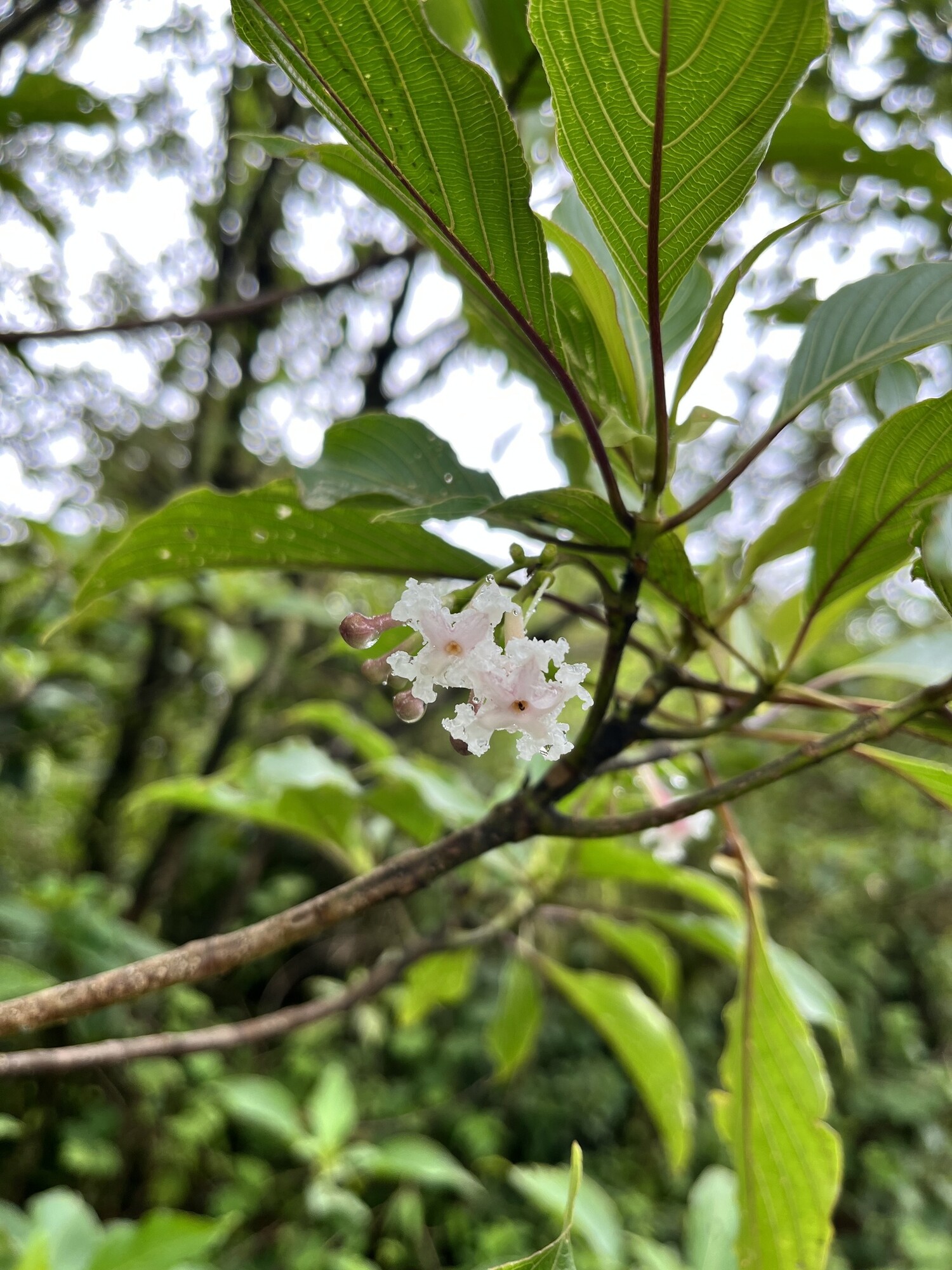
Guettarda crispiflora grows as a small to medium-sized tree typically reaching 5-15 meters, though specimens up to 20 meters have been recorded. The bark is cream to brown and exfoliates in thin layers. Young branches are covered with dense pubescence that becomes sparser with age. The species occupies the understory and midstory of humid forests, tolerating the low light conditions beneath the main canopy.
Leaves
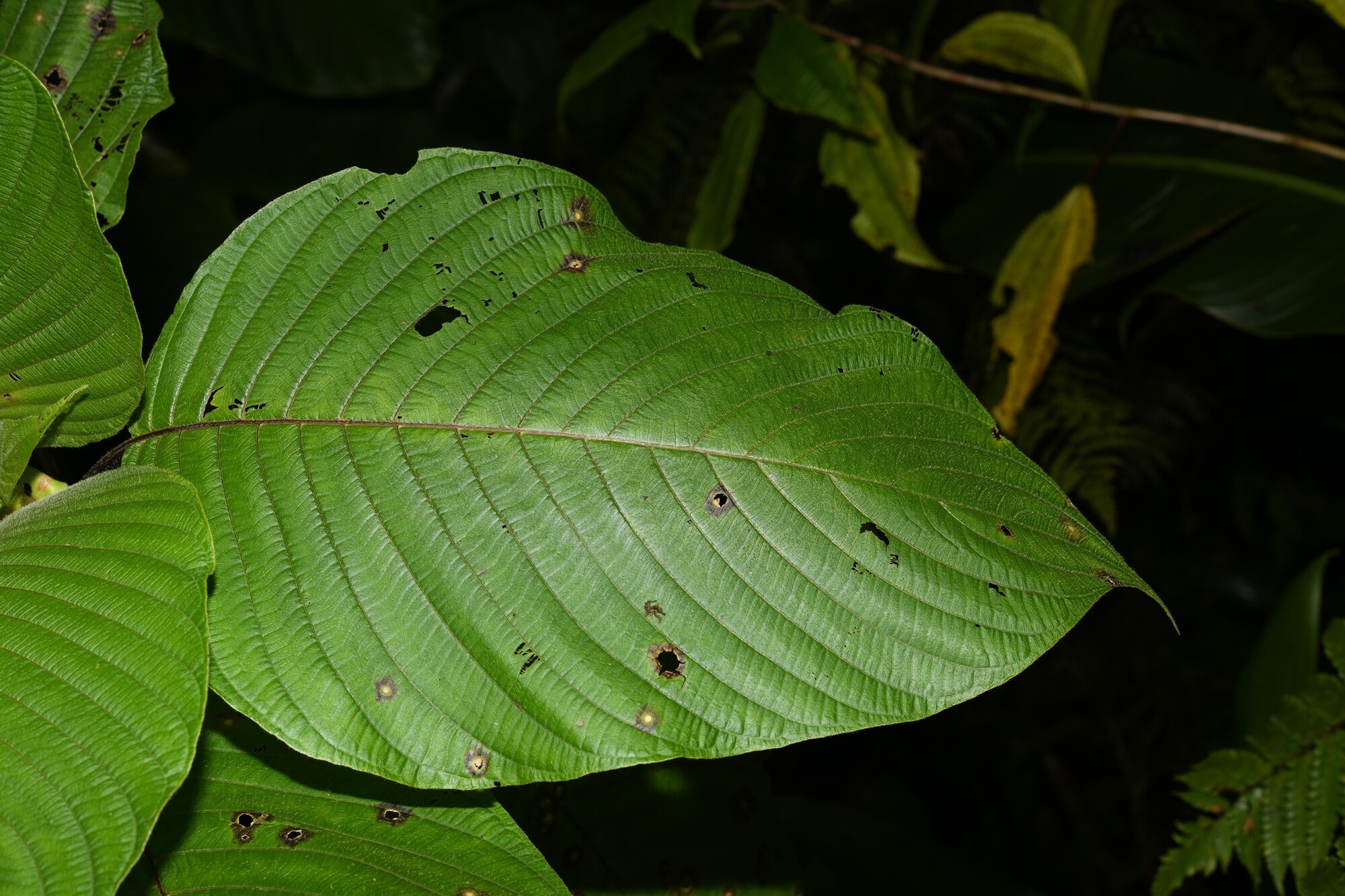
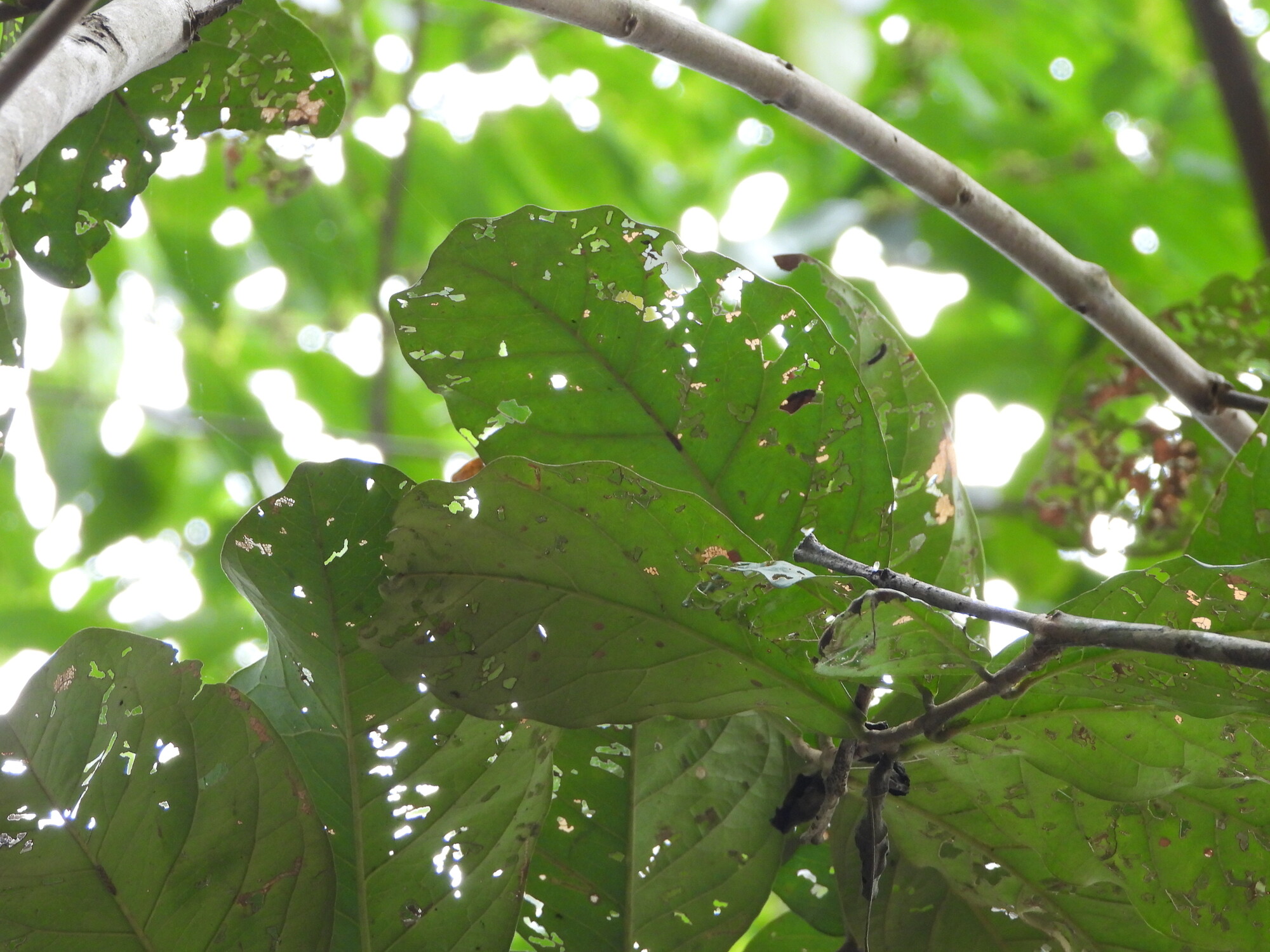
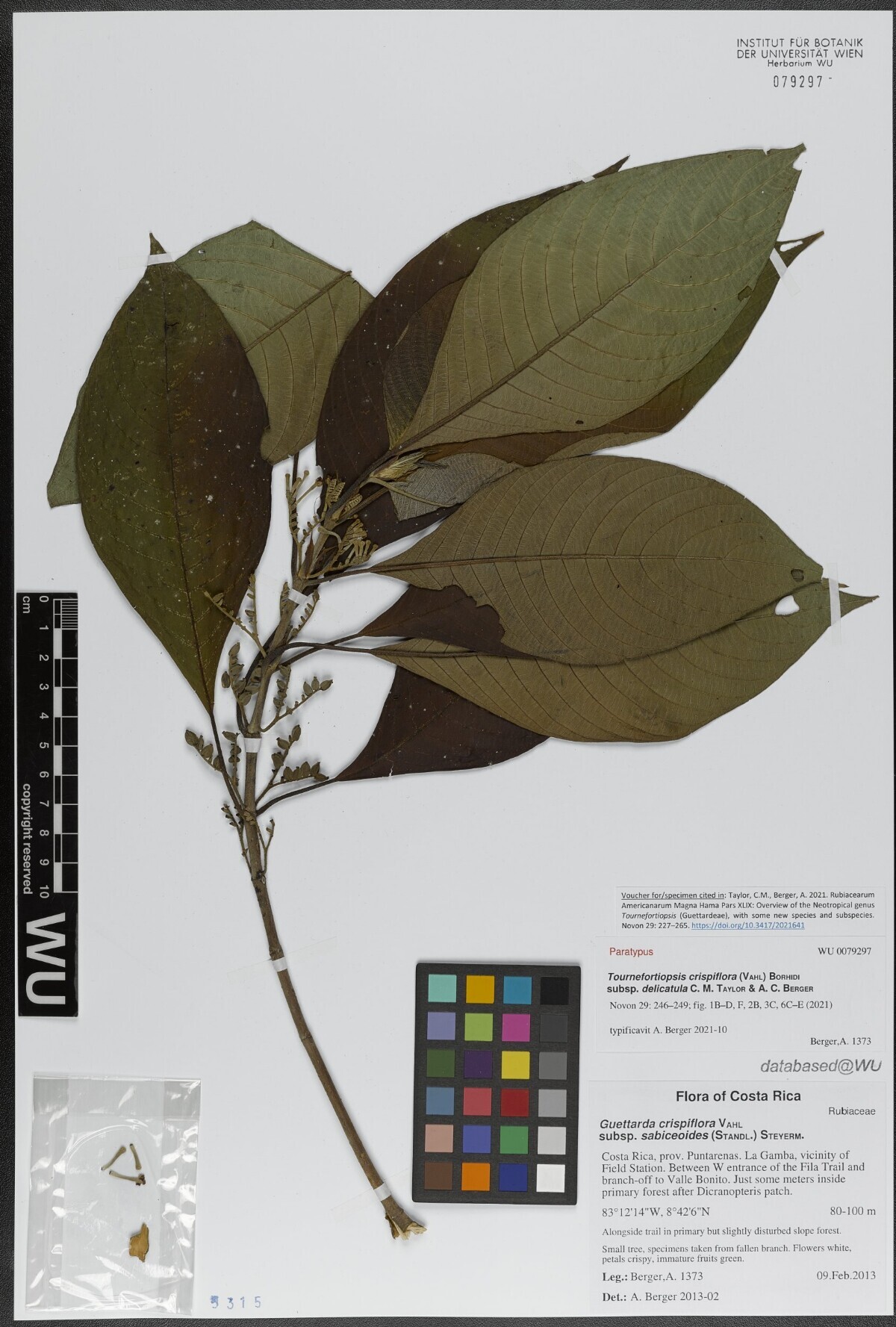
Leaves are simple, opposite, and arranged in decussate pairs as is diagnostic for the coffee family. The blades are ovate-elliptic, 6-22 cm long and 4-13 cm wide, with entire margins and an acute to acuminate apex. The upper surface is dark green and glabrous or nearly so, while the lower surface is paler with pubescence along the veins. Secondary venation is prominent, with 6-10 pairs of lateral veins curving toward the apex in a characteristic pattern. Interpetiolar stipules, the hallmark of Rubiaceae, are present at each node.
Flowers
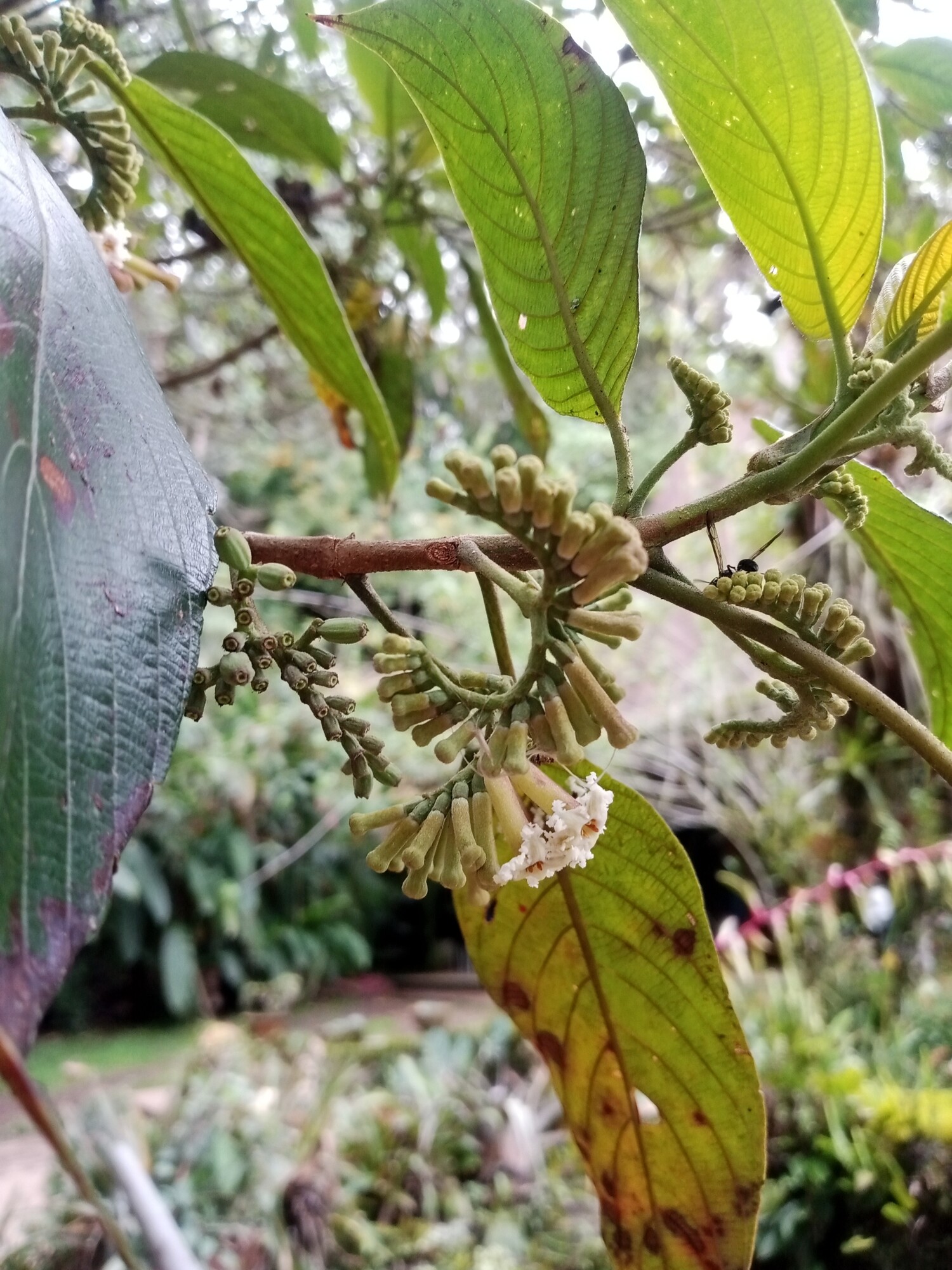
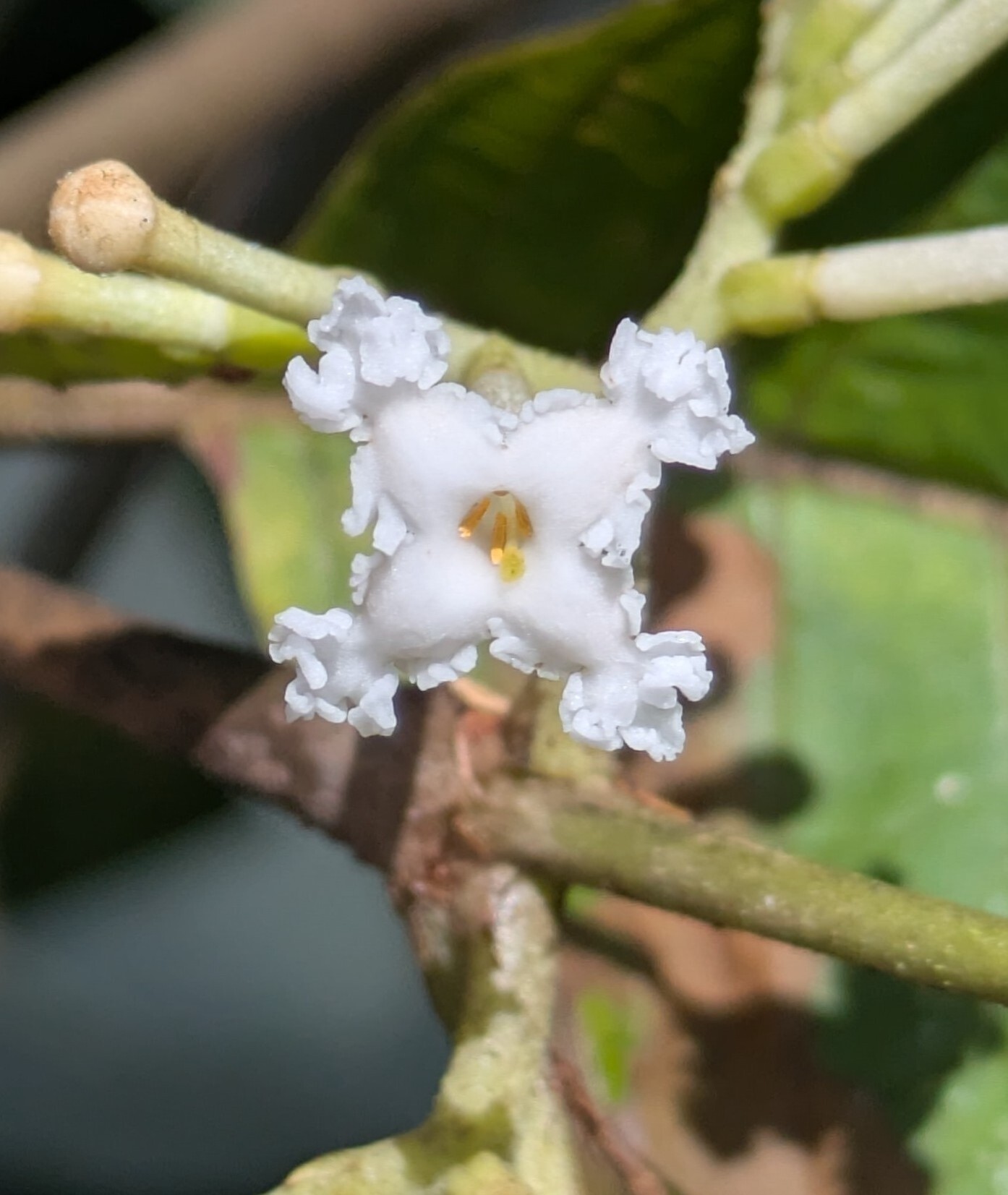
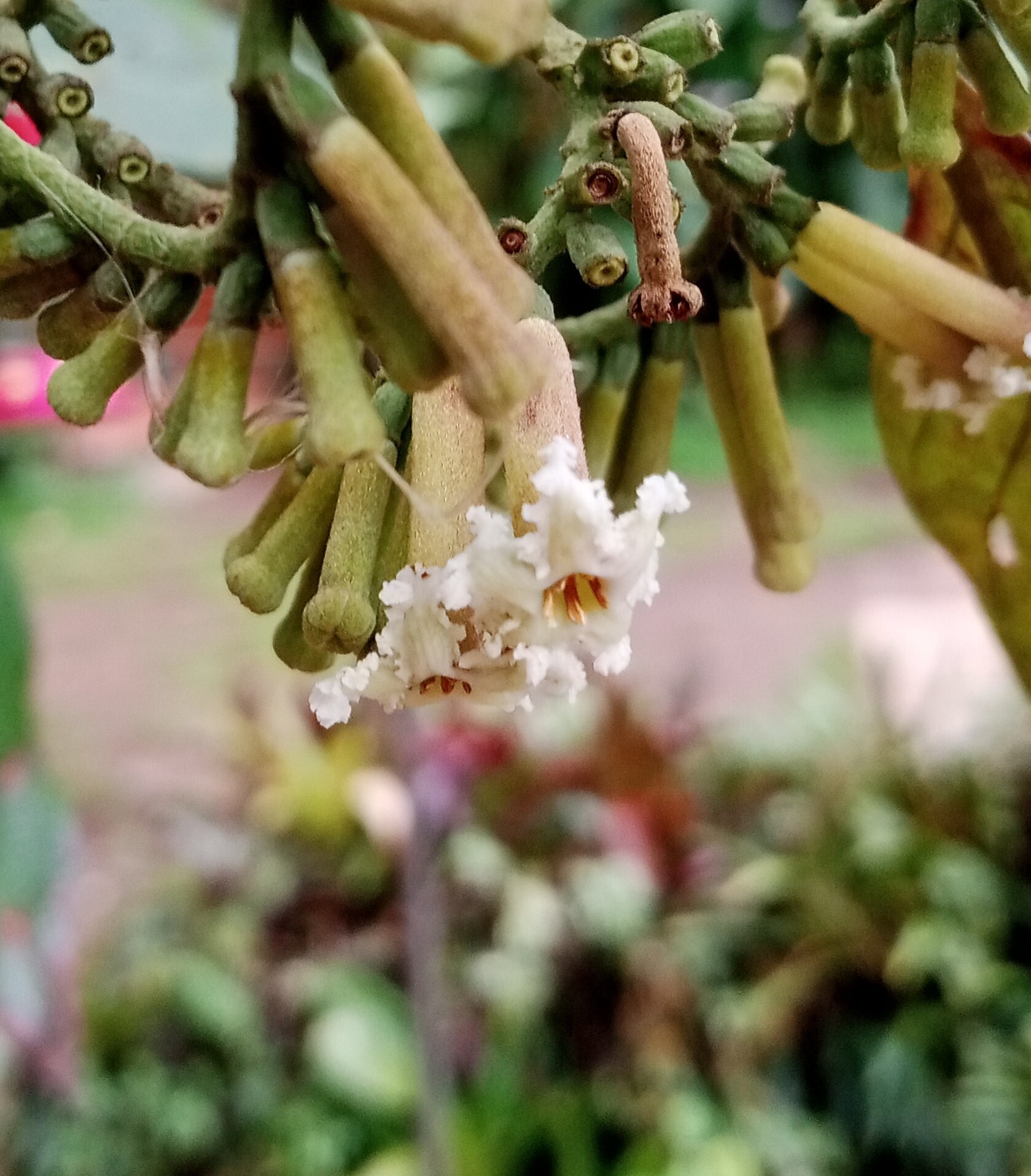
The flowers of Guettarda crispiflora are produced in scorpioid cymes, coiled inflorescences that unfurl as each flower opens in succession. The corolla is white, tubular, 13-18 mm long, and divided into 4-6 lobes with the distinctive undulate or crisped margins that give the species its name. The flowers are adapted for hawkmoth pollination, a syndrome known as sphingophily. Research on Guettarda floral volatiles has documented emission of benzeneacetaldehyde, ocimene, and other compounds that attract nocturnal pollinators. The combination of white color, long corolla tube, and nocturnal fragrance suggests the flowers open in the evening and are visited by sphinx moths. Flowering in Costa Rica has been documented primarily in January and from June through September.
Fruits
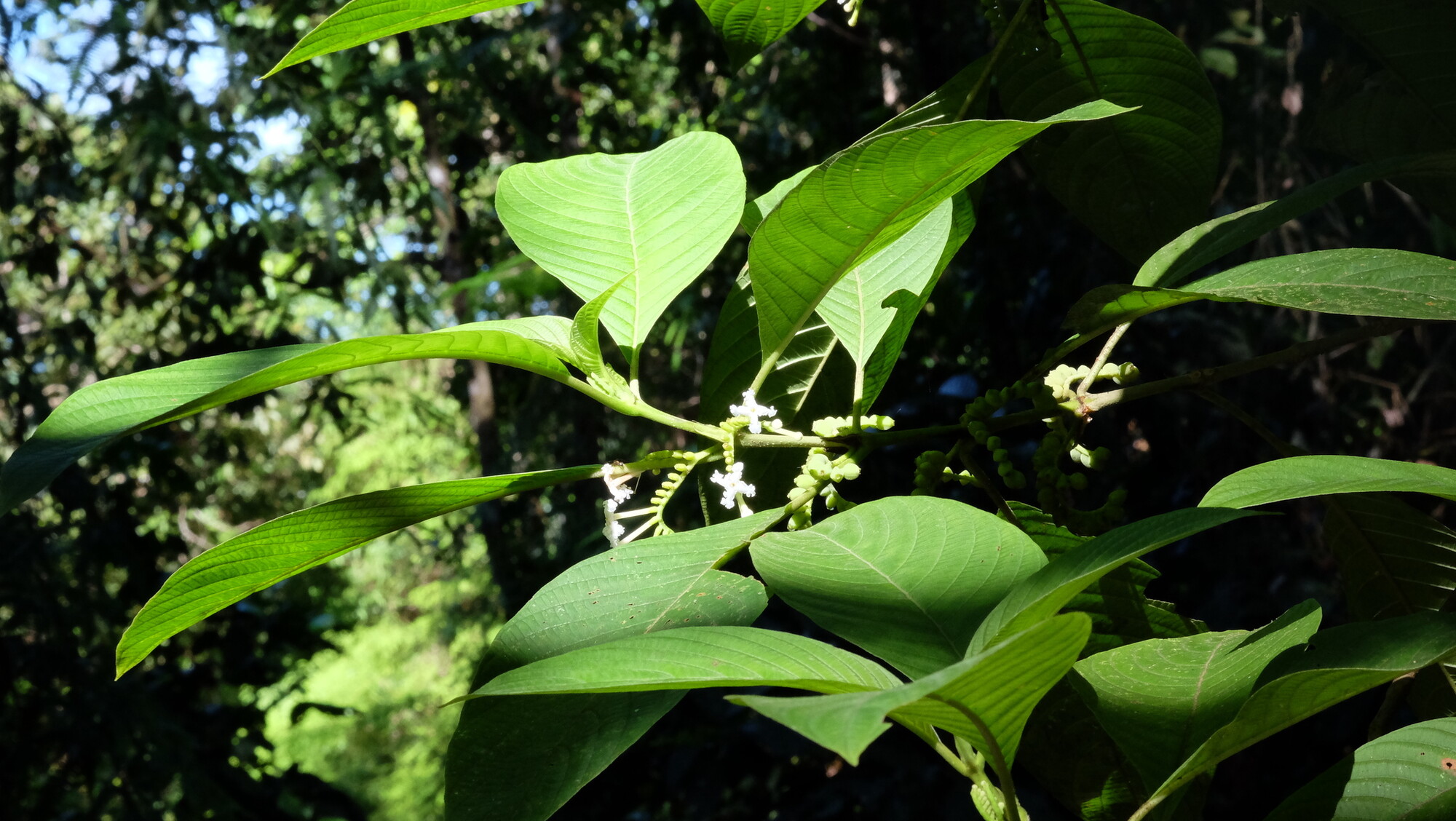
Fruits are oblong drupes, 4-angled, approximately 8 mm long, ripening from green through purple to black. The flesh is white and surrounds 2-4 pyrenes (seed-containing structures). According to Flora Costaricensis, fruiting occurs from March through January with peak production in the late dry season and early wet season. The fruit morphology suggests dispersal by frugivorous birds, as is typical of understory Rubiaceae in the Neotropics. Thrushes, tanagers, and other forest birds likely consume the fleshy fruits and disperse the seeds.
Bark
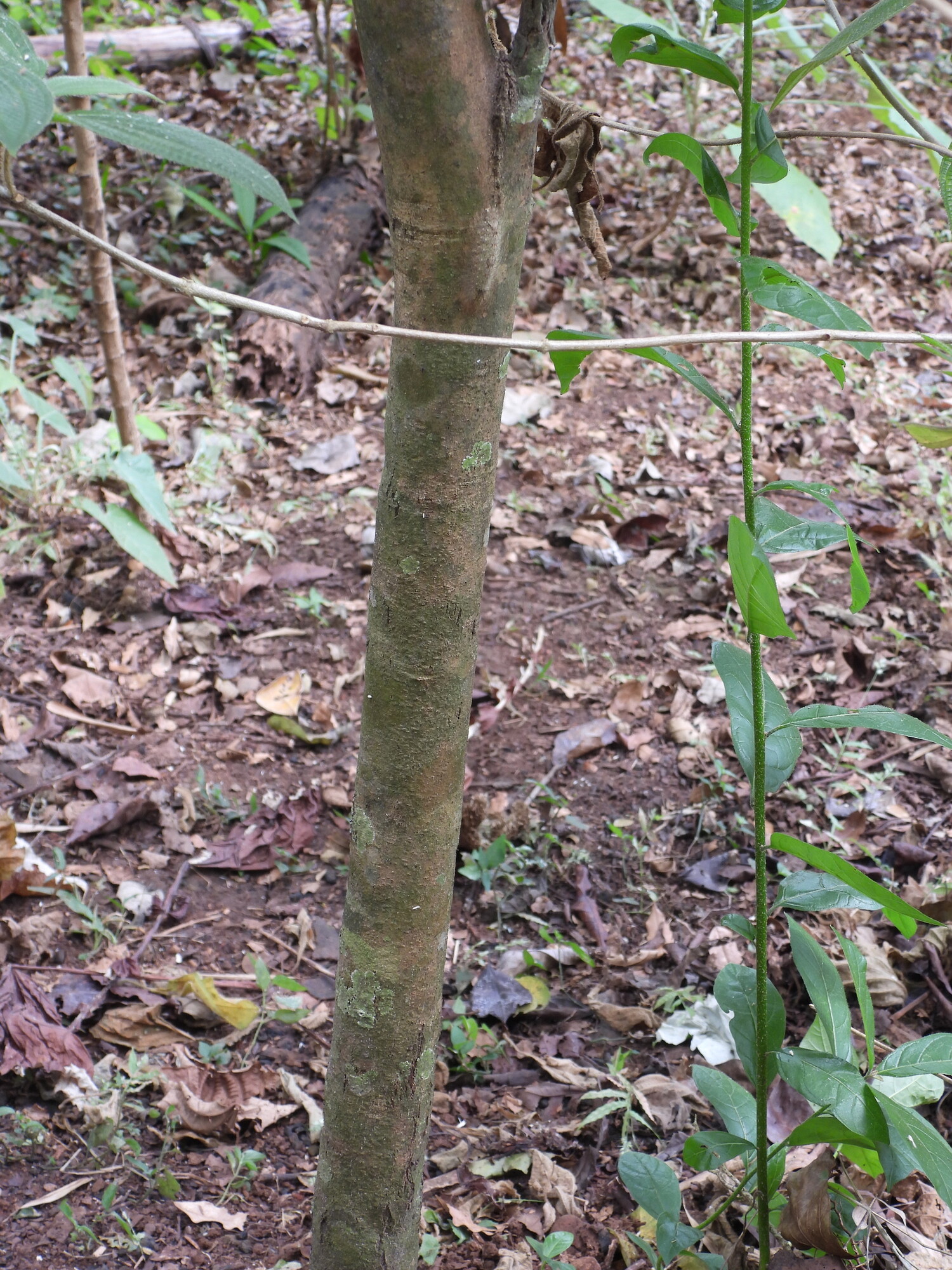
The bark of Guettarda crispiflora is grayish-brown on mature trunks, smooth to slightly fissured, and exfoliates in thin papery layers. The trunk is typically slender, reflecting the species' understory habit, and rarely exceeds 15 cm in diameter. Young branches are densely pubescent with soft hairs that become sparser as the bark matures.
Herbarium Specimens
Distribution
Guettarda crispiflora has a broad neotropical distribution spanning Central and South America with a disjunct population in the Lesser Antilles. The species occurs in Nicaragua, Costa Rica, Panama, Colombia, Ecuador, Peru, Venezuela, Bolivia, and the Lesser Antilles islands of Montserrat, Dominica, and Martinique. Colombia holds the largest number of occurrence records (36% of total), followed by Costa Rica (25%) and Ecuador (10%). The Lesser Antilles populations are geographically isolated from the mainland populations by over 1,500 km of Caribbean Sea.
In Costa Rica, the species occurs throughout the wet forests of both slopes, from the Caribbean lowlands to the Pacific versant. The exceptional elevation range of 20 to 2,650 meters spans life zones from tropical wet forest through premontane and lower montane forest. In the Brunca region, G. crispiflora has been documented at 58 localities including Parque Nacional Piedras Blancas, the forests around La Gamba biological station, Fila Retinto, and the Serranías de Golfito. The species also occurs in Parque Internacional La Amistad and Parque Nacional Tapanti-Macizo de la Muerte.
Ecology
As an understory to midstory tree, Guettarda crispiflora is adapted to the shaded conditions beneath the main forest canopy. The species occurs in primary and mature secondary humid forests, typically in areas receiving over 3,000 mm of annual rainfall. Its broad elevation range suggests considerable ecological plasticity, with the species occurring in tropical wet forest at low elevations through cloud forest at its upper limit.
The floral biology of Guettarda crispiflora points to hawkmoth pollination. Research on related Guettarda species has documented that white tubular flowers with nocturnal fragrance are visited by sphinx moths (Sphingidae), including species of Xylophanes, Agrius, and Manduca. The flowers produce volatiles including benzeneacetaldehyde and ocimene that are specifically attractive to nocturnal pollinators. This pollination syndrome, known as sphingophily, is common in the genus and represents an evolutionary adaptation to the nighttime activity patterns of hawkmoths. The fleshy purple-black drupes are almost certainly dispersed by forest birds, as is common for understory Rubiaceae throughout the Neotropics.
Pharmacology
A 2022 study published in Molecules represents the first pharmacological investigation specific to Guettarda crispiflora. Researchers isolated compounds from the plant and documented anti-inflammatory activity through suppression of Src phosphorylation, a key pathway in inflammatory responses. Additional research on the subspecies poasana has documented fungistatic compounds, suggesting the species may have evolved chemical defenses against fungal pathogens. The genus Guettarda more broadly is known to contain iridoid glycosides, a class of secondary metabolites common in Rubiaceae.
Taxonomic History
Guettarda crispiflora was first described by Martin Vahl (1749-1804) in his Eclogae Americanae (1796-1797), a work containing descriptions of American plants with accompanying illustrations. Vahl was a Danish-Norwegian botanist who studied under Linnaeus at Uppsala before becoming a professor at the University of Copenhagen in 1786. He described over 550 species during his career. The type specimen was collected by John Ryan on the island of Montserrat in the Lesser Antilles and is housed at the Natural History Museum of Denmark in Copenhagen (C).
The genus Guettarda was named by Linnaeus in 1753 to honor Jean-Etienne Guettard (1715-1786), a French naturalist and mineralogist who made pioneering contributions to geology and was the first to create a mineralogical map. However, molecular phylogenetic studies published since 2006 have revealed that Guettarda as traditionally circumscribed is polyphyletic. In 2008, the Hungarian botanist Attila Borhidi resurrected the genus Tournefortiopsis for a group of species including G. crispiflora, based on characteristics of the corolla lobes and pyrene shape. A comprehensive revision by Taylor and Berger in 2021 confirmed this transfer and described several new subspecies, recognizing three subspecies in Mesoamerica: subsp. crispiflora (Lesser Antilles), subsp. delicatula (Central America and northern South America), and subsp. poasana (Costa Rica highlands).
The subspecies poasana was originally described as a full species by Paul Carpenter Standley in 1928 based on material from Volcán Poas at 1,800 meters elevation. Flora Costaricensis and regional treatments continue to use the name Guettarda crispiflora pending broader adoption of the new classification. The species has accumulated 23 synonyms over its taxonomic history, including Guettarda chiriquensis Standl., G. hirsuta (Ruiz & Pav.) Pers., and G. ochreata Schltdl., reflecting the morphological variation across its broad range and the historical tendency to describe regional variants as distinct species.
Similar Species
In Costa Rica, Guettarda crispiflora can be confused with G. conferta Benth., which shares the humid forest habitat and similar overall appearance. The key distinction lies in the inflorescence structure: G. crispiflora has pedunculate (stalked) scorpioid cymes, while G. conferta has sessile or nearly sessile inflorescences clustered at the nodes. The crisped corolla lobes of G. crispiflora are also diagnostic when flowers are available. The highland subspecies poasana can be distinguished by its denser pubescence and occurrence at higher elevations (typically above 1,500 m).
Conservation Outlook
Guettarda crispiflora has not been assessed for the IUCN Red List. The species' broad geographic distribution across ten countries, wide elevation range, and occurrence in numerous protected areas suggest it would likely qualify as Least Concern if formally evaluated. The 566 occurrence records from Costa Rica alone, including 58 localities in the Brunca region, indicate the species is locally common in suitable habitat. The species occurs within Parque Nacional Piedras Blancas, Parque Internacional La Amistad, and Parque Nacional Tapanti-Macizo de la Muerte, providing protection across its elevation range.
As an understory species dependent on intact forest structure, G. crispiflora may be vulnerable to forest fragmentation and degradation even where populations persist. Deforestation remains a significant threat throughout the species' range, particularly in lowland areas outside protected areas. Climate change may also affect the species at the edges of its range, particularly populations at lower elevations that may experience increased drought stress. Long-term monitoring and continued protection of forest corridors will be important for maintaining populations across the landscape.
Resources & Further Reading
Species Information
Kew's taxonomic database with accepted name status, distribution, and synonym list.
Global occurrence records with over 2,200 documented observations and specimens.
Costa Rican botanical database with habitat and distribution information.
Smithsonian Tropical Research Institute database with detailed morphological descriptions.
Taxonomy & Nomenclature
Missouri Botanical Garden nomenclatural database with publication details and synonymy.
Comprehensive taxonomic revision transferring Guettarda crispiflora to Tournefortiopsis with description of new subspecies.
Scientific Literature
First pharmacological investigation of G. crispiflora documenting Src phosphorylation suppression.
Research on floral volatiles and hawkmoth pollination syndrome in the related species G. scabra.
Regional Floras
Burger & Taylor (1993). Fieldiana Botany n.s. no.33. Field Museum. Detailed species treatment and key.
Historical References
Original description and illustration of Guettarda crispiflora in Vahl's foundational work on American plants.
Biography of the Danish-Norwegian botanist who described this species after studying under Linnaeus.