Soursop
Large spiny fruits emerging directly from tree trunks. Flowers that heat themselves to attract beetle pollinators. A crop with both healing promise and neurotoxic warning.
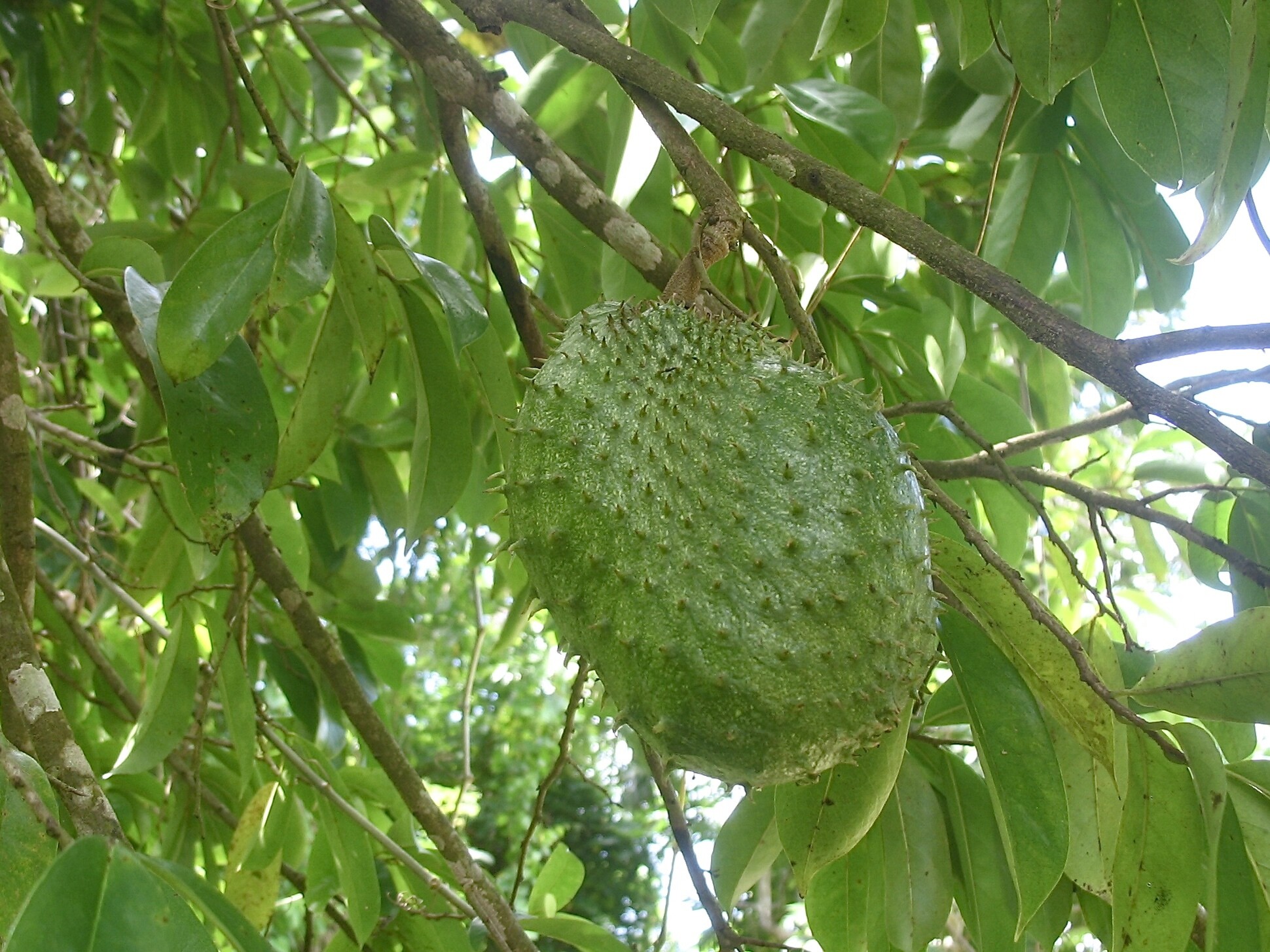
The Taino peoples of the Caribbean called it "anon." Spanish colonizers adapted this to "guanábana." Carl Linnaeus described the species when he formalized botanical nomenclature in 1753, and it was later designated the type species for the entire genus Annona, cementing its taxonomic importance. Its green fruits, weighing up to 5 kilograms and covered with soft flexible spines, emerge directly from trunk and branches in a pattern called cauliflory. Inside the tough rind lies white pulp rich enough in vitamin C that a single fruit provides about 150% of the daily requirement.
Annona muricata originates from tropical America, ranging from southern Mexico through Central America to Venezuela and Peru, though archaeological evidence from pre-Hispanic Peru suggests the species existed there before Spanish contact. The tree adapted so successfully to cultivation that determining its precise native range remains debated. Today it grows throughout the tropics, one of the first American fruits carried to the Old World. In Costa Rica, specimens have been collected from near sea level to 1400 meters in the Atlantic lowlands around Pococí, Guácimo, and Siquirres, with scattered records in Guanacaste and the Brunca region including Corcovado's Agujas Station and the Golfo Dulce watershed.
Identification
Habit
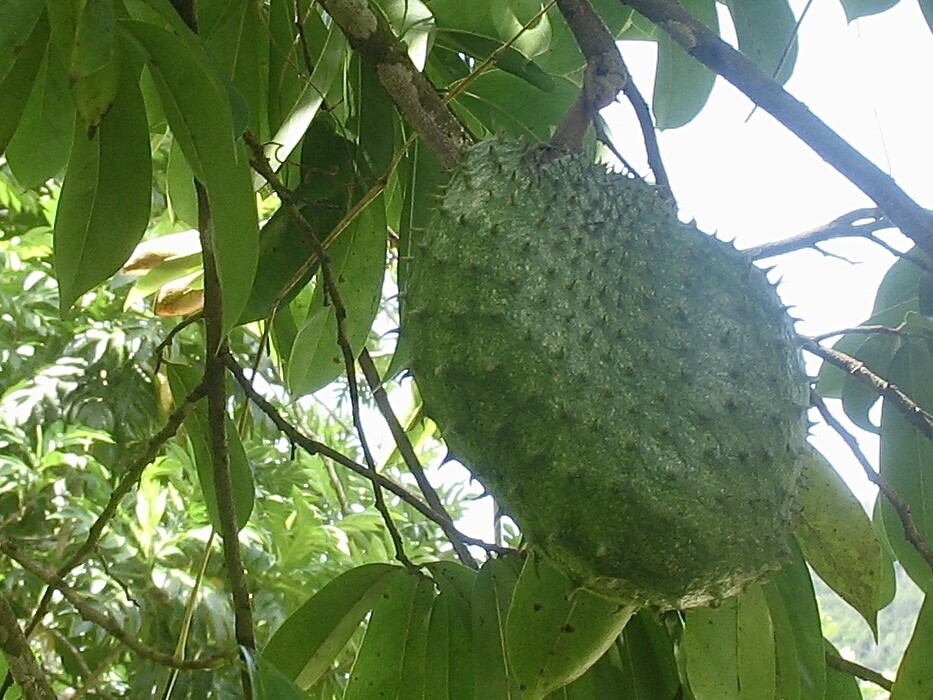
Annona muricata grows as a slender, fast-growing evergreen tree reaching 5 to 10 meters in height, occasionally up to 12 meters. The trunk, rarely more than 15 centimeters in diameter, typically branches from near the base, developing a rounded, spreading crown. Bark appears smooth and dull grey or grey-brown on young trees, becoming rough and fissured with age. The sapwood is whitish, the heartwood brown. As a cultivated species, the tree maintains its leaves year-round in tropical climates, though prolonged drought may enhance leaf fall without causing complete deciduousness.
Leaves
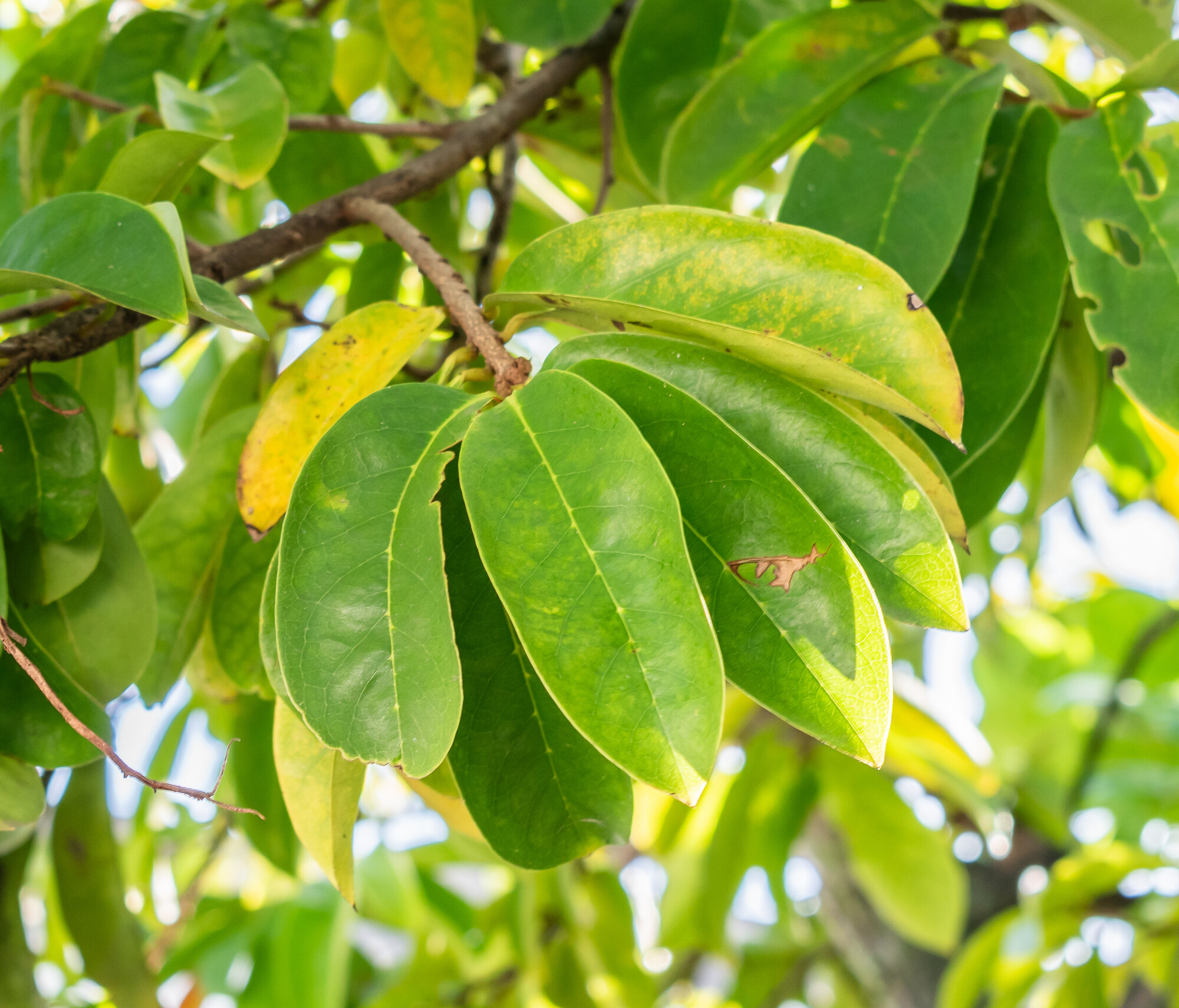
Leaves grow alternately along branches, simple and ovate-lanceolate to oblong-elliptic in outline, measuring 8 to 16 centimeters long and 3 to 7 centimeters wide. The upper surface is dark green, glossy, and glabrous (hairless), while the lower surface appears paler. Texture is coriaceous (leathery) with entire (smooth) margins. The apex tapers to an acute point. Venation shows 9 to 14 lateral veins on either side of the midrib, creating a pinnate pattern. When crushed, leaves emit an aroma reminiscent of blackcurrants.
Flowers
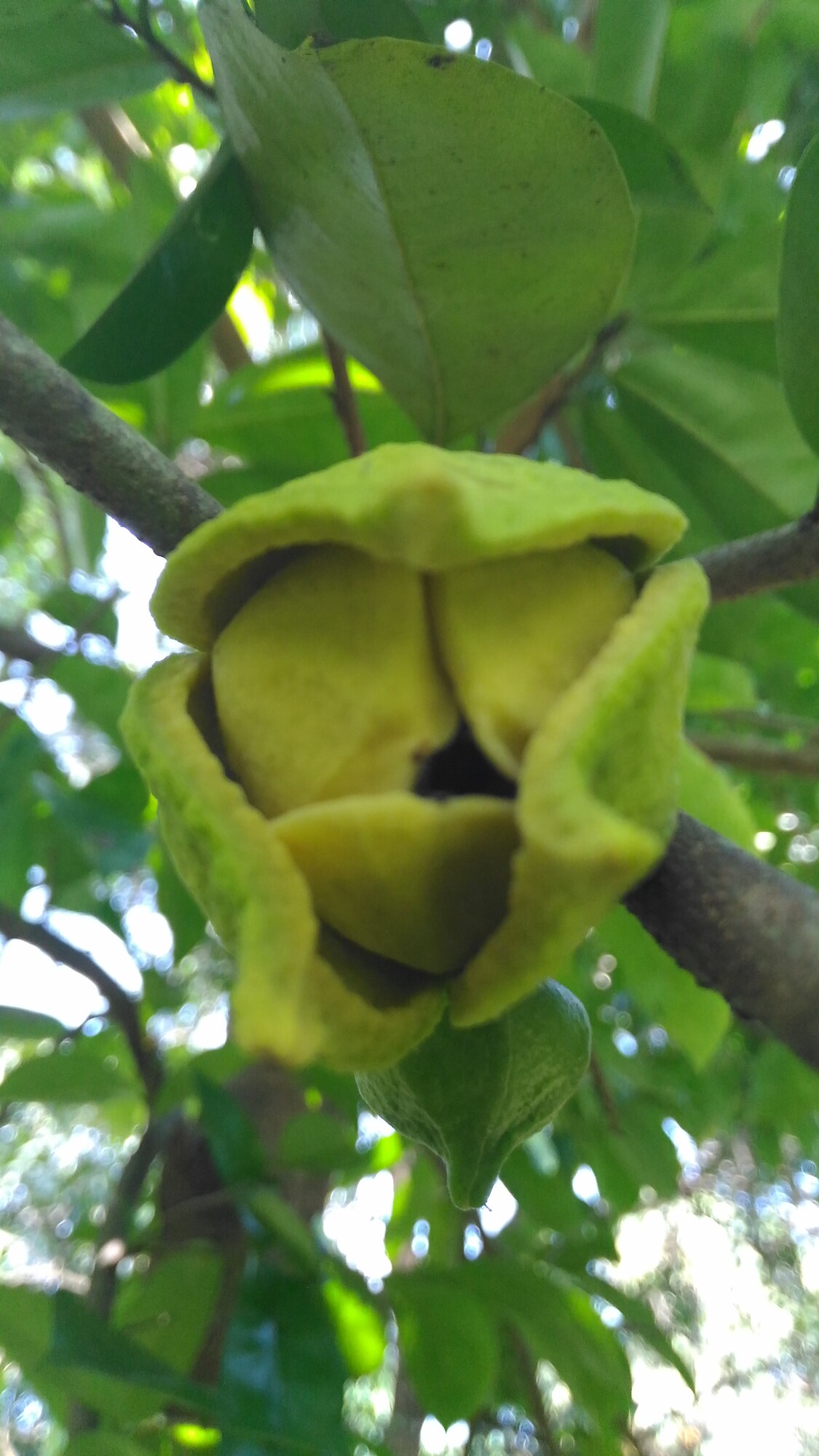
Flowers appear solitary, emerging cauliflorous (on the trunk) or ramiflorous (on branches), sometimes in fascicles on knobby outgrowths. Each flower is complete, perfect, and actinomorphic (radially symmetrical). The calyx consists of 3 unfused green sepals. The corolla displays 6 unfused petals colored yellowish-green to white, thick and fleshy, arranged in an outer smaller set and an inner larger set. Numerous stamens fill the flower center. The flowers exhibit thermogenesis, heating 10 to 15 degrees Celsius above ambient temperature while intensifying scent emissions. This heat production, coupled with the floral architecture, creates a warm chamber that attracts nocturnal beetle pollinators. Flowering occurs sporadically year-round in favorable conditions, with peaks during summer and early autumn where dry seasons impose synchronized flowering.

Fruits
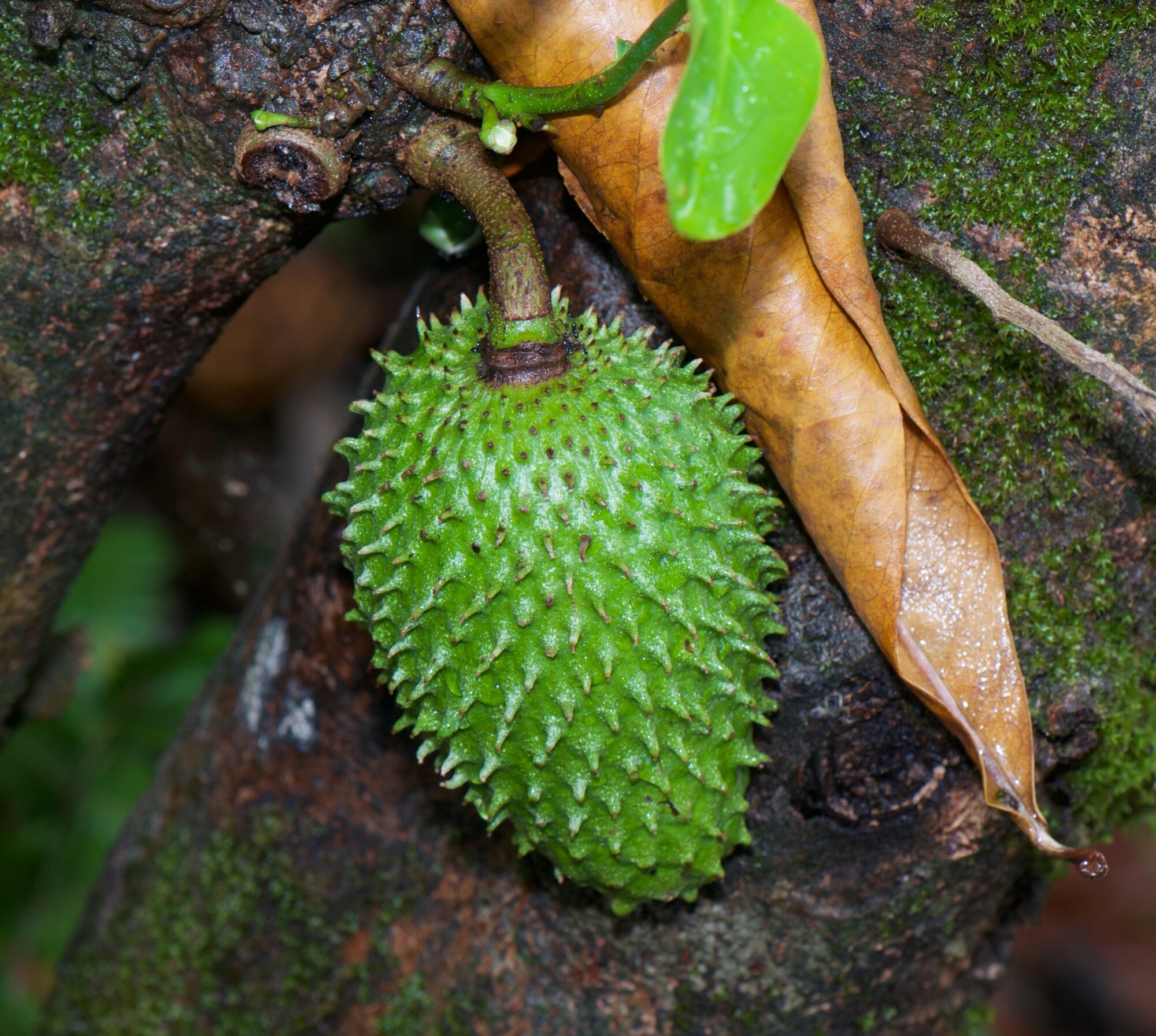
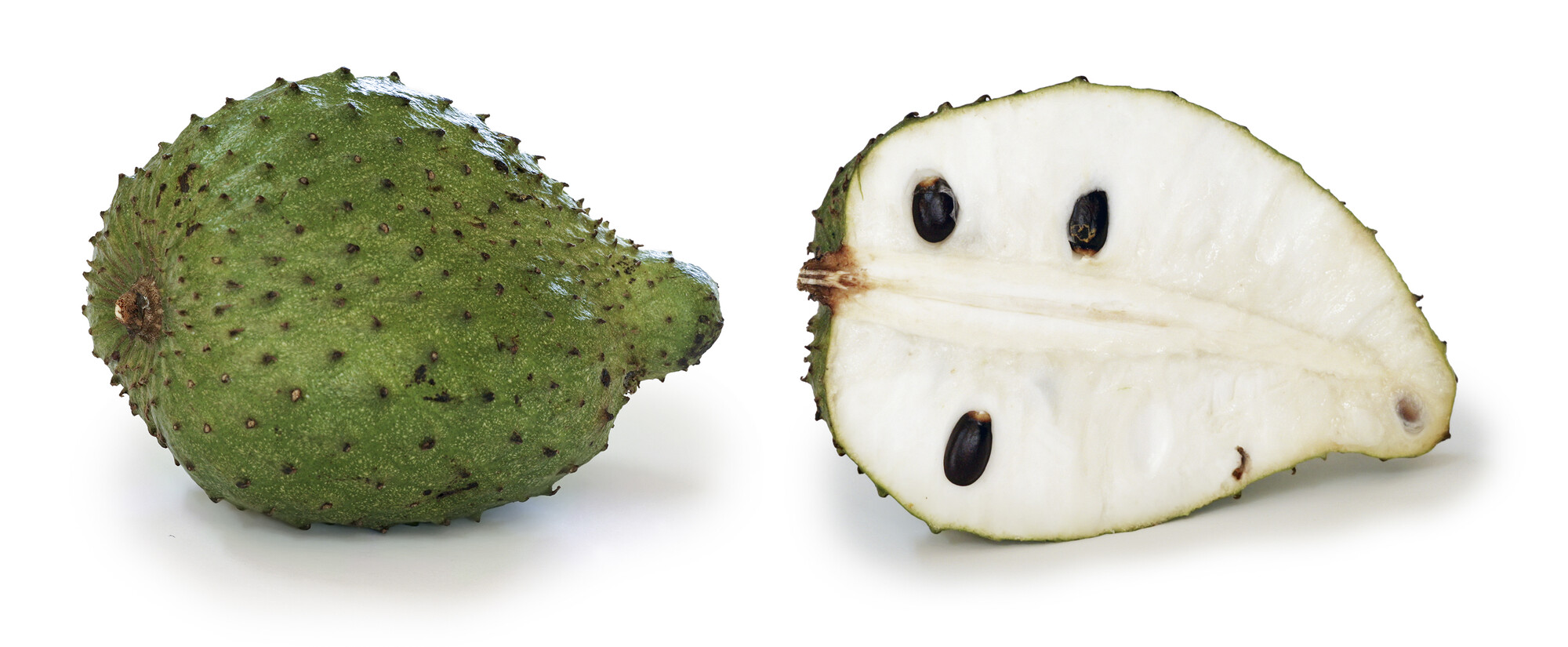
The fruit is a large syncarp (aggregate fruit formed from multiple fused carpels), ovoid in shape, measuring up to 35 centimeters long and weighing 1 to 5 kilograms. The surface is covered with soft, curved spines, actually pulpy projections representing individual carpel components. When young, the fruit appears dark green with firm spines; as it ripens, it becomes lighter green and the spines grow more flexible. This diagnostic feature distinguishes A. muricata from congeners: A. squamosa (sugar apple) has spherical fruit 5-10 cm diameter with thick knobby segments, while A. reticulata (bullock's heart) produces smooth-skinned fruit that turns dull red when ripe. Inside the tough rind lies white, very juicy pulp exceptionally rich in vitamin C. A single fruit contains approximately 129 milligrams of vitamin C (143-172% of daily requirement), along with 21 grams of fiber. The seeds are toxic and should not be consumed.
Distribution
Annona muricata is native to northern South America, southern Central America, and the Caribbean, with its natural range extending from southern Mexico through Central America to Venezuela and Peru. The exact center of origin remains debated. Archaeological evidence indicates the species existed in pre-Hispanic Peru, contradicting 17th-century records suggesting Spanish introduction. The date of Caribbean arrival is uncertain; it may have been introduced in pre-Columbian times or may be native to some islands. Sir Hans Sloane observed the tree growing in Jamaica in the late 17th century. The species was one of the first American fruits carried to the Old World tropics, introduced to Asia via Spanish galleon trade at an early date. Today it has naturalized throughout tropical regions globally, including South India, northern Australia, Polynesia, and African lowlands.
In Costa Rica, Annona muricata occurs primarily in the Atlantic zone lowlands, with main concentrations in the cantons of Pococí, Guácimo, Siquirres, and Limón. Collections date from 1891 to 2021, spanning elevations from 2 meters near Caribbean beaches to 1400 meters in premontane zones. In the Brunca region, the species has been documented at Corcovado National Park's Agujas Station (300 m), the Golfo Dulce Forest Reserve on the Osa Peninsula, and cultivated areas around Playa Hermosa. The tree thrives in moist, humid tropical and subtropical lowlands, preferring well-drained sandy loam with pH 5.5-6.5 and requiring at least 6-8 hours of full sun daily. Optimal conditions include mean annual temperatures of 25-30 degrees Celsius with 1000-2500 millimeters rainfall, though established plants demonstrate moderate drought tolerance.
Ecology
Beetle Pollination
Annona muricata depends on dynastine scarab beetles for pollination, specifically Cyclocephala vestita and C. hirsuta. These beetles serve as the main or exclusive pollinators of Annona species with large flowers and wide floral chambers. Beetle visits begin around 18:30 hours and can extend for two or three consecutive days. During this period, flowers remain in the female phase and beetles feed on nutrient tissues from internal petals. Around 18:00 hours on the fourth day, anthers open and beetles become covered with pollen, ensuring cross-pollination as they move between flowers. The thermogenic flowers heat 10-15 degrees Celsius above ambient temperature, creating a warm microclimate that attracts the nocturnal beetles while intensifying volatile scent emissions. Research demonstrates that conservation of native forest near cultivated orchards favors maintenance of these pollinator agents, reducing pollination deficits and increasing productivity.
Seed Dispersal and Pests
While specific seed dispersers for A. muricata remain undocumented, research on Annonaceae generally indicates that terrestrial birds and mammals serve as the most prominent frugivore guilds dispersing seeds. Larger-seeded fruits like those of guanábana depend on fewer, larger-bodied mammal and bird species. The genus Annona hosts at least 296 arthropod species. The principal pest is Bephratelloides cubensis (Hymenoptera: Eurytomidae), an Annona seed borer wasp that causes up to 60% fruit damage in Mexico, with females ovipositing eggs in seeds while fruits are young. Larvae consume the endosperm throughout development, damaging 5-50 seeds per fruit and resulting in 25% yield reduction. Other documented pests include Cratasomus trunk borers, various fruit borers, scale insects, and Mediterranean fruit fly.
Taxonomic History
Carl Linnaeus described Annona muricata in Species Plantarum, Volume 1, page 536, published on May 1, 1753, the starting point for modern botanical nomenclature. His Latin diagnosis read "Annona foliis ovali-lanceolatis glabris nitidis planis, pomis muricatis" (Annona with oval-lanceolate smooth shining flat leaves, and muricate fruits). William Safford designated the species as the lectotype for the entire genus Annona in 1911, making it the type species against which the genus is defined. Linnaeus cited earlier works by botanists including Plukenet and Sloane, building on knowledge accumulated during early European exploration of the Americas.
The species has accumulated several heterotypic synonyms reflecting historical taxonomic revisions. Annona bonplandiana Kunth, published in 1821, honored Aimé Bonpland (1773-1858), the French botanist who accompanied Alexander von Humboldt on his American expedition from 1799 to 1804. Under nomenclatural rules, Linnaeus's 1753 name maintains priority. Other synonyms include Annona cearensis Barb.Rodr., Annona macrocarpa Wercklé, Annona muricata var. borinquensis Morales, and Guanabanus muricatus (L.) M. Gómez.
Etymology
The epithet "muricata" derives from Latin "muricatus," meaning "muricate" or "rough with short hard points or tubercles like the shell of Murex," a genus of spiny sea snails. In botanical Latin, it refers to tiny prickles appearing on plant parts. The term perfectly describes the fruit's soft-spined exterior. The genus name "Annona" comes from "anon," a word from the Hispaniolan Taino language for the fruit. While some sources suggest derivation from Latin "annona" meaning "food" or "nourishment," scholarly consensus favors the Taino origin. The Spanish common name "guanábana" similarly derives from Taino, reflecting the deep cultural connections between indigenous Caribbean peoples and this fruit tree.

Chemistry and Pharmacology
Annona muricata contains over 100 annonaceous acetogenins, C-35/C37 secondary metabolites derived from fatty acid pathways, making it one of the most chemically complex tropical fruits. In addition to acetogenins, the plant produces alkaloids including annonaine, nornuciferine, and asimilobine, along with flavonol triglycosides, phenolics, and essential oils with beta-caryophyllene predominating. Research has demonstrated diverse biological activities: leaf extracts induce apoptosis in colon and lung cancer cells through mitochondrial-mediated pathways, individual compounds show antimalarial and antiparasitic activity against Leishmania and Plasmodium, and antidiabetic effects reducing blood glucose levels have been documented in studies. Traditional medicine across Africa, South America, and Asia uses all plant parts: leaves treat headaches, insomnia, cystitis, and diabetes; seeds address parasitic infections; fruit treats diarrhea, neuralgia, and fever.
Uses and Cultivation
Ripe fruits are consumed fresh or blended with ice cream or milk for beverages. The pulp is exceptionally juicy, providing 129 milligrams of vitamin C per fruit (143-172% of daily value), 21 grams of fiber, and negligible fat. Immature fruits serve as vegetables in soups. Young shoots can be eaten when cooked. Leaves produce "corossol tea," though the neurotoxicity concerns mentioned above apply particularly to regular consumption of such preparations. The wood is soft and light (specific gravity 0.4), not durable, occasionally used for ox yokes but primarily as fuel. Leaves, seeds, and bark possess insecticidal properties useful for controlling vermin and pests. Seeds are toxic and stems contain irritant sap.
The species is widely cultivated pantropically and has naturalized in many areas. It is suitable for intercropping between larger fruit trees like mango or avocado and commonly appears in coffee agroforestry systems and homegardens. Seeds germinate in 15-30 days after cleaning and soaking in warm water for 24 hours; some may take up to 60 days. Trees grown from seed typically take 3-5 years to begin fruiting. Grafted plants can reduce this to 2-3 years, with commercial cultivars including 'Miami' and 'Homestead'. A. muricata can also serve as rootstock for other Annona species. Established plants demonstrate drought tolerance though prolonged drought causes excessive leaf shedding.
Conservation Outlook
The IUCN Red List classifies Annona muricata as Least Concern (2019). The species is widely cultivated throughout tropical regions and has naturalized in many areas, occurring throughout the West Indies (except the Bahamas) and from Mexico to Brazil, with extensive cultivation across Southeast Asia, Africa, and Oceania. While its native range and precise origins remain subjects of botanical debate, the species faces no significant conservation threats due to its successful adaptation to cultivation and pantropical distribution. In Costa Rica, it occurs in both protected areas like Corcovado National Park and cultivated landscapes, demonstrating adaptability to varied human land uses.
Resources & Further Reading
Taxonomy & Nomenclature
Accepted name, synonymy, and global distribution from Kew Gardens.
Global occurrence records, specimen images, and distribution maps.
Nomenclatural details, type specimens, and publication history.
Authoritative taxonomic information and morphological description.
Crop Science review documenting Safford's 1911 lectotypification of A. muricata as the type species for the genus.
Species Information & Cultivation
Comprehensive species account including cultivation, uses, and propagation.
Agroforestry applications, wood properties, and management practices.
Plant resources of Southeast Asia database entry with regional context.
Agricultural database entry with distribution history and pest management.
Horticultural information and growing requirements.
Classic reference documenting 3-5 year fruiting from seed and propagation methods including grafting.
Costa Rica-specific research on distribution and cultivation.
Ecology & Pollination
Neotropical Entomology study on scarab beetle pollinators and forest conservation importance.
PLOS ONE research on pollinator behavior and multi-day flowering patterns.
Botanical Journal of the Linnean Society review of thermogenesis and beetle pollination.
Research on frugivore guilds and seed dispersal ecology in the family.
SciELO study on the principal seed borer wasp pest of Annona fruits.
Chemistry & Pharmacology
Comprehensive review of over 100 acetogenins and pharmacological research.
Recent review of medicinal properties, bioactive compounds, and traditional uses.
Movement Disorders Journal epidemiological study linking high consumption to neurological effects.
PubMed article on annonacin neurotoxicity and blood-brain barrier crossing.
Research demonstrating that cumulative exposure to Annonaceae products (fruits, nectar, and herbal teas) drives neurological risk.
Documents vitamin C content at 129 mg per fruit (143-172% of daily value) and fiber content.
Related Reading
Etymology and botanical Latin usage of the epithet "muricata."
Etymology of the genus name from Taino "anon."