Cedro Amargo
Cedrela odorata — The legendary "Spanish cedar" whose aromatic, insect-repelling wood has lined cigar boxes and crafted fine furniture for centuries, now threatened by overexploitation throughout its range.
Identification
Cut a branch of the cedro amargo and bring it to your nose. An unmistakable onion-like odor rises from the wound, the same pungent scent that gives this tree both its common name ("bitter cedar") and its scientific epithet odorata. This aromatic chemistry is no accident: the volatile compounds that produce the smell also repel insects, making cedro amargo wood the material of choice for storing fine cigars, clothing, and anything else that moths or beetles might damage.
Physical Characteristics
Crown: Broad and spreading when open-grown, with a rounded or flat top. The tree is deciduous, dropping its pinnately compound leaves during the dry season. This seasonality makes cedro amargo easy to spot in the forest canopy when surrounding evergreen trees remain green.
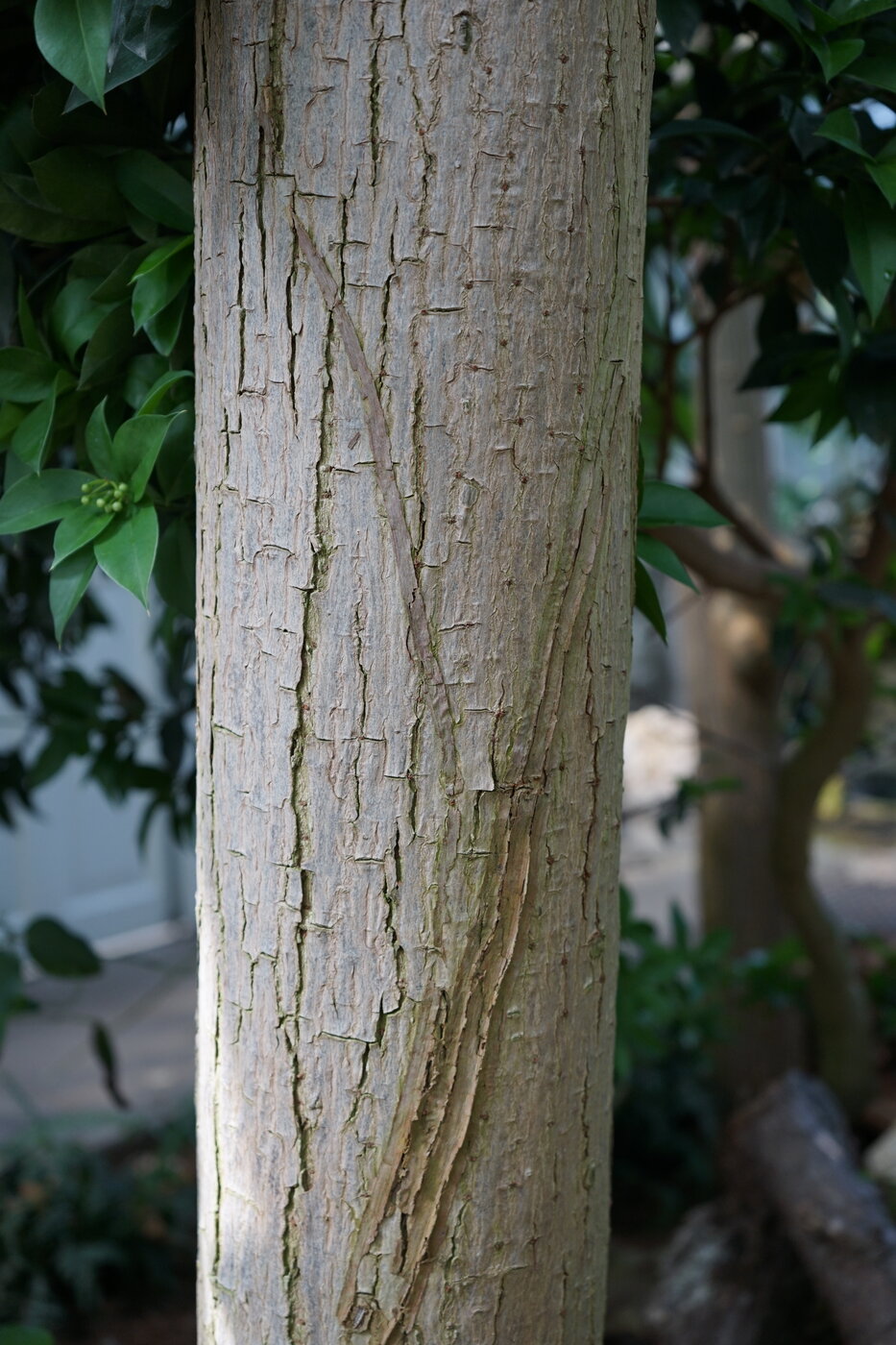
Trunk: Straight and cylindrical, often unbranched for 15-24 meters before the crown begins. Mature trees develop buttresses extending up to 3.6 meters up the bole. The bark is thick, deeply fissured, and grayish-brown with irregular vertical ridges. When slashed, the inner bark releases the characteristic garlic or onion-like odor.
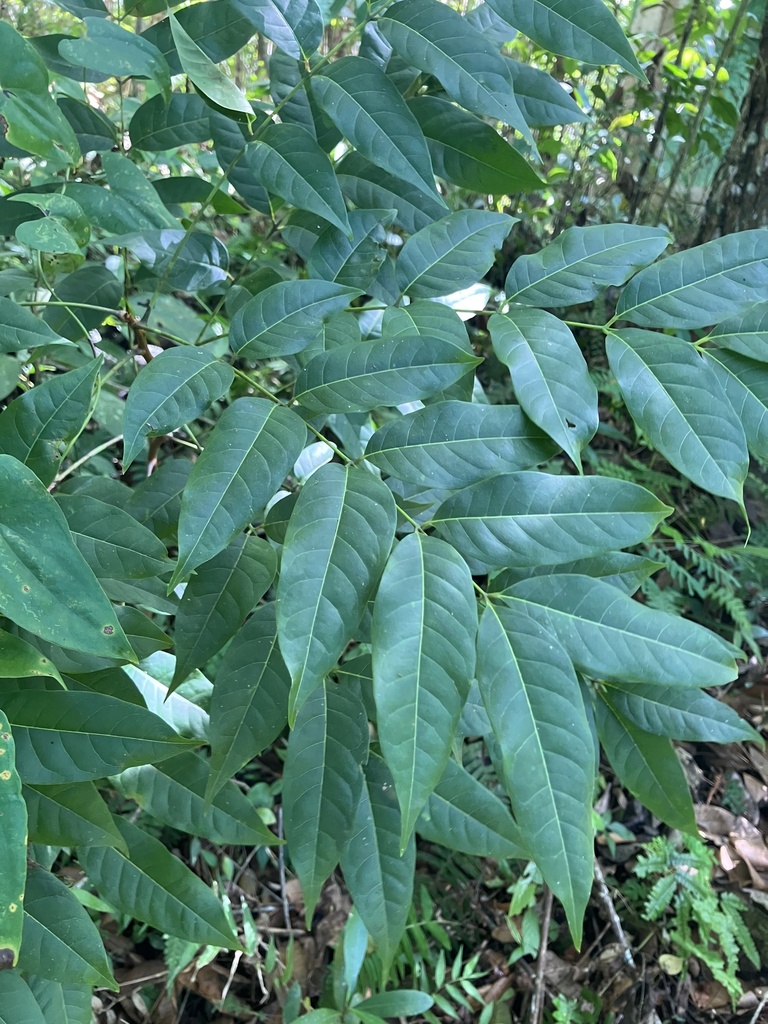
Leaves: Large pinnately compound leaves, 30-60 cm long, with 10-22 opposite leaflets. Each leaflet is lance-shaped, 8-15 cm long, with an asymmetric base. When crushed, leaves release the same pungent odor as the bark. New foliage emerges reddish before turning deep green.
Flowers: Small, fragrant, greenish-white flowers borne in large terminal panicles up to 40 cm long. The flowers are functionally unisexual despite having both parts, with male and female flowers on separate trees. Flowering occurs at the end of the dry season, typically in July in Costa Rica.
Fruit: Woody capsules, 3-5 cm long, that split open when mature to release numerous winged seeds. The capsules hang in clusters and turn from green to brown as they ripen. Each capsule contains 20-40 papery-winged seeds that spiral down on the wind, sometimes traveling hundreds of meters from the parent tree.
Habitat & Distribution
The cedro amargo has one of the widest distributions of any Meliaceae species in the Americas, occurring from northern Mexico through Central America to Argentina, and throughout the Caribbean islands. This remarkable range reflects the tree's adaptability: it grows in humid rainforests receiving over 3,000 mm of annual rainfall as well as in seasonally dry forests with prolonged drought periods.
In Costa Rica, cedro amargo occurs on both slopes from sea level to approximately 1,900 meters elevation. Research has documented distinct populations adapted to mesic (Atlantic and South Pacific) and dry (North Pacific) conditions, with measurable differences in seedling characteristics between these regional groups. The species is found throughout the Brunca region, including Pérez Zeledón where it has been studied as a shade tree in coffee plantations, and in the lowland forests of the Osa Peninsula.
As a pioneer species, cedro amargo colonizes forest gaps and disturbed areas, growing rapidly in full sun before being overtopped by slower-growing climax species. Under favorable conditions, young trees can add 2.5 cm in diameter and 2 meters in height per year. This fast growth makes it valuable for reforestation, though a devastating pest complicates plantation establishment.
The Mahogany Shoot Borer Problem
No discussion of cedro amargo is complete without mentioning its nemesis: Hypsipyla grandella, the mahogany shoot borer. This small moth is arguably the most economically important forest pest in all of tropical America. Its larvae bore into the growing tips of cedro amargo and its relatives in the Meliaceae family, destroying the leading shoot and causing the tree to branch repeatedly. The result is a forked, unmarketable trunk.
The moth is attracted to the very volatile compounds that make cedro amargo wood so valuable. Research has shown that compounds including limonene, pinene, α-copaene, β-caryophyllene, and germacrene D draw the moths to vulnerable trees. Ironically, shaded trees suffer dramatically less damage: Brazilian field experiments found that trees under more than 40% canopy shade suffered zero shoot borer attacks, while trees under less than 20% shade had a 50% infestation rate. Shade likely reduces volatile emissions and slows the vigorous growth that attracts the pest. This finding has led foresters to experiment with planting cedro amargo under partial canopy cover or in mixed-species systems rather than open monocultures.
The Wood That Built Empires
Despite the challenges of cultivation, cedro amargo has been one of the most commercially important timber species in Latin America for centuries. The Spanish colonizers quickly recognized its value, shipping vast quantities to Europe where it became known as "Spanish cedar" despite being unrelated to true cedars (Cedrus species of the Old World).
The heartwood is pale creamy when freshly cut, deepening to pinkish-brown or reddish-brown with exposure. It has a medium texture, straight to interlocked grain, and works beautifully with hand and machine tools. The wood is moderately lightweight (specific gravity 0.30-0.60 depending on growing conditions) with a Janka hardness of 610 lbf, making it relatively soft for a hardwood but easy to carve and finish. Most importantly, the aromatic oils that permeate the wood repel insects and resist decay, making it highly durable against termites and the fungus Trametes versicolor.
Medicinal & Traditional Uses
Beyond its timber value, cedro amargo has a long history in traditional medicine throughout its range. The bitter bark, which gives the tree its common name, is prepared as a decoction to treat fevers and malaria. Modern research has validated this traditional use: the bark contains gedunin, a terpenoid compound that has demonstrated significant antimalarial activity in laboratory studies with mice. The seeds have vermifugal properties and are used to expel intestinal parasites. In Brazilian traditional medicine, bark preparations are also used to treat diabetes. Topically, bark decoctions are applied to wounds, sores, and skin eruptions.
Conservation Status
Centuries of exploitation have taken their toll. The IUCN lists Cedrela odorata as Vulnerable, with populations declining more than 20% over the past three generations due to selective logging of the largest, straightest trees. In 2019, the species was elevated from CITES Appendix III to Appendix II, and in October 2022, all Cedrela species were added to Appendix II, requiring export permits and documentation of legal harvest for international trade.
To combat illegal logging, researchers have developed forensic genetic tools, including a 140-marker DNA assay that can determine the geographic origin of confiscated timber. This technology helps enforcement agencies verify whether wood was legally harvested from its claimed source region.
The combination of overexploitation and the shoot borer pest creates a challenging conservation picture. Large, mature seed trees have become increasingly rare, while plantation establishment remains difficult. Conservation efforts focus on protecting remaining wild populations, developing pest-resistant varieties through breeding programs that have achieved 82% genetic gain for volume, and integrating cedro amargo into agroforestry systems where mixed plantings reduce borer damage. In Costa Rica and Panama, cedro amargo is commonly planted as shade in cacao plantations, where it follows 12-25 year rotations and actually increases cocoa yields compared to unshaded systems.
In Costa Rica's Brunca region, cedro amargo survives in protected areas like Corcovado National Park and as scattered individuals in pastures and coffee farms, where farmers have long valued it as a shade tree. These remnant trees represent an important genetic resource for future restoration efforts.
Key Sources & Resources
Species Information
Comprehensive botanical information including uses, cultivation, and ecology.
Species account from the Osa Peninsula region of Costa Rica.
General overview of the species with distribution and uses.
Detailed information on medicinal and traditional uses.
Research
Research on morphological variation between mesic and dry populations in Costa Rica.
Detailed information on the major pest affecting cedro amargo and mahogany.
Research identifying the chemical compounds in cedar that attract the devastating shoot borer moth.
Comprehensive review of conservation challenges and genetic improvement strategies for cedro amargo.
Forensic genetics tools developed to combat illegal logging by tracing timber origins.
Costa Rican study evaluating timber quality from cedar grown as shade in cacao plantations.
Conservation & Trade
International action plan for conservation and sustainable trade of threatened timber species.
Habitat modeling to identify priority areas for cedar conservation and restoration.
Timber Properties
Technical wood properties including density, hardness, workability, and sustainability status.
Authoritative silvicultural reference covering ecology, growth, and management recommendations.
Biodiversity Databases
Community-contributed observations and photographs from Costa Rica.
Taxonomic information and native range from the Royal Botanic Gardens, Kew.
Detailed species datasheet including distribution, ecology, and management.