Chacruna de Brunca
Psychotria viridis connects Costa Rica's riparian forests with Amazonian ceremony: a 2–4 meter cafecillo whose clustered inflorescences and DMT-rich leaves feed both understory wildlife and the ayahuasca tradition.
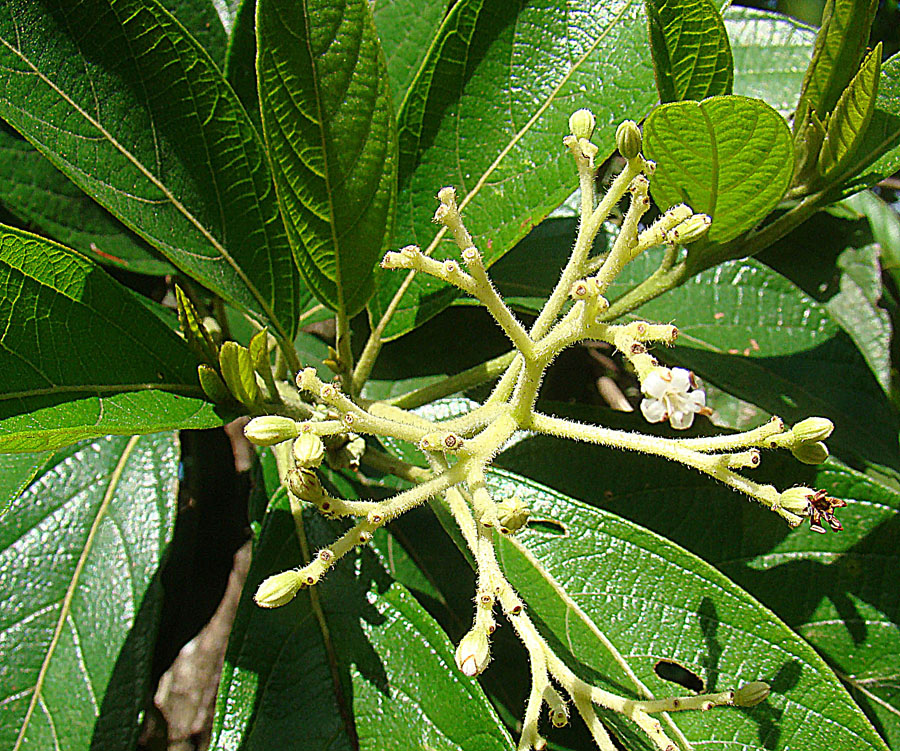
Herbarium labels from Limón’s Sixaola basin and Cartago’s Río Reventazón describe the same plant that Shipibo and Asháninka healers know as chacruna: Psychotria viridis, a small tree whose coppery undersides and red drupes stitch Brunca’s wet foothills to the Amazonian lowlands. Even in Costa Rica it favors riparian corozales and secondary forest slivers, matching the habitats of Bastimentos Island, Panama, where Dick Culbert’s widely shared photograph captured the species.
The leaves dry dull red-brown and carry domatia near the apex, while the inflorescences reduce their lateral axes so strongly that flowers cluster like beads along the primary rachis—a silhouette that separates the species immediately from the broader-crowned P. carthagenensis also present in the region. The resulting drupes ripen through orange to scarlet, supply birds with subcentimeter fruits, and point to the same plant chemistry that positions chacruna at the heart of the ayahuasca brew.
Identification
Habit and Bark
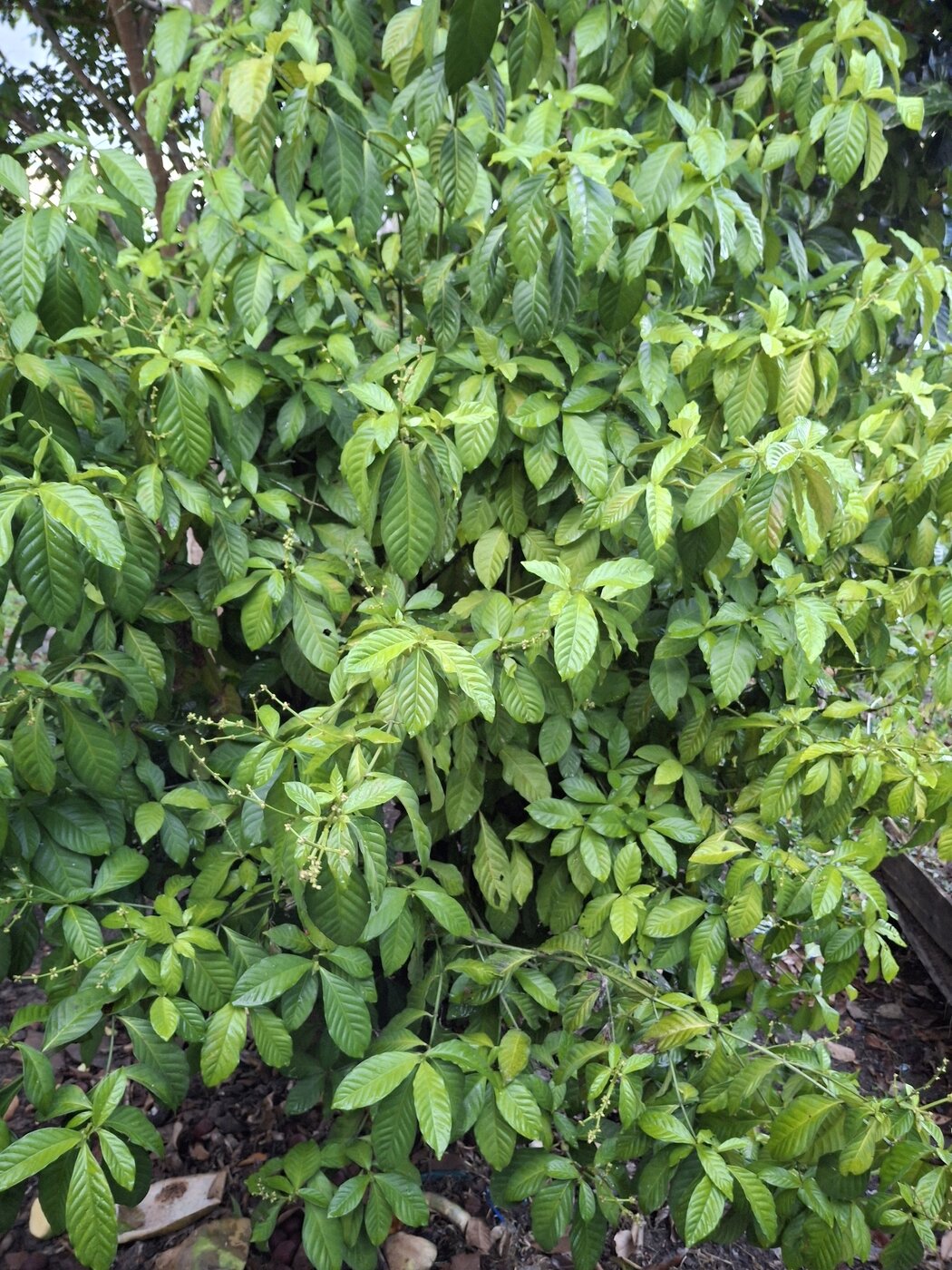
Chacruna grows as a 2–4 m shrub with multiple upright stems rising from near the base. At each node, a pair of leaf-like stipules (small appendages where leaf meets stem) clasps the twig before turning red-brown along the edges and dropping off, leaving a pale scar. The young stems between nodes stay smooth and hairless (glabrous), giving the whole plant a clean, shining look under the filtered light of the forest understory.
Leaves
The leaves sit almost directly on the stem or on very short stalks (petioles) up to 8 mm long. Each blade is elliptic-obovate (oval but wider toward the tip), typically 9–15 cm long and 4–6 cm wide, tapering gradually toward the base. The surface is smooth and hairless, though if you run a finger along the edge you may feel tiny fringe-like hairs (cilia). Five to ten pairs of secondary veins angle off the midrib at about 45–55° and curve gently toward the leaf margin. Near the leaf tip, small pits called domatia (tiny pockets that shelter beneficial mites) often appear where the veins meet. When pressed and dried for herbarium collections, chacruna leaves turn a distinctive dull red-brown or green-brown that makes them easy to spot among other specimens.
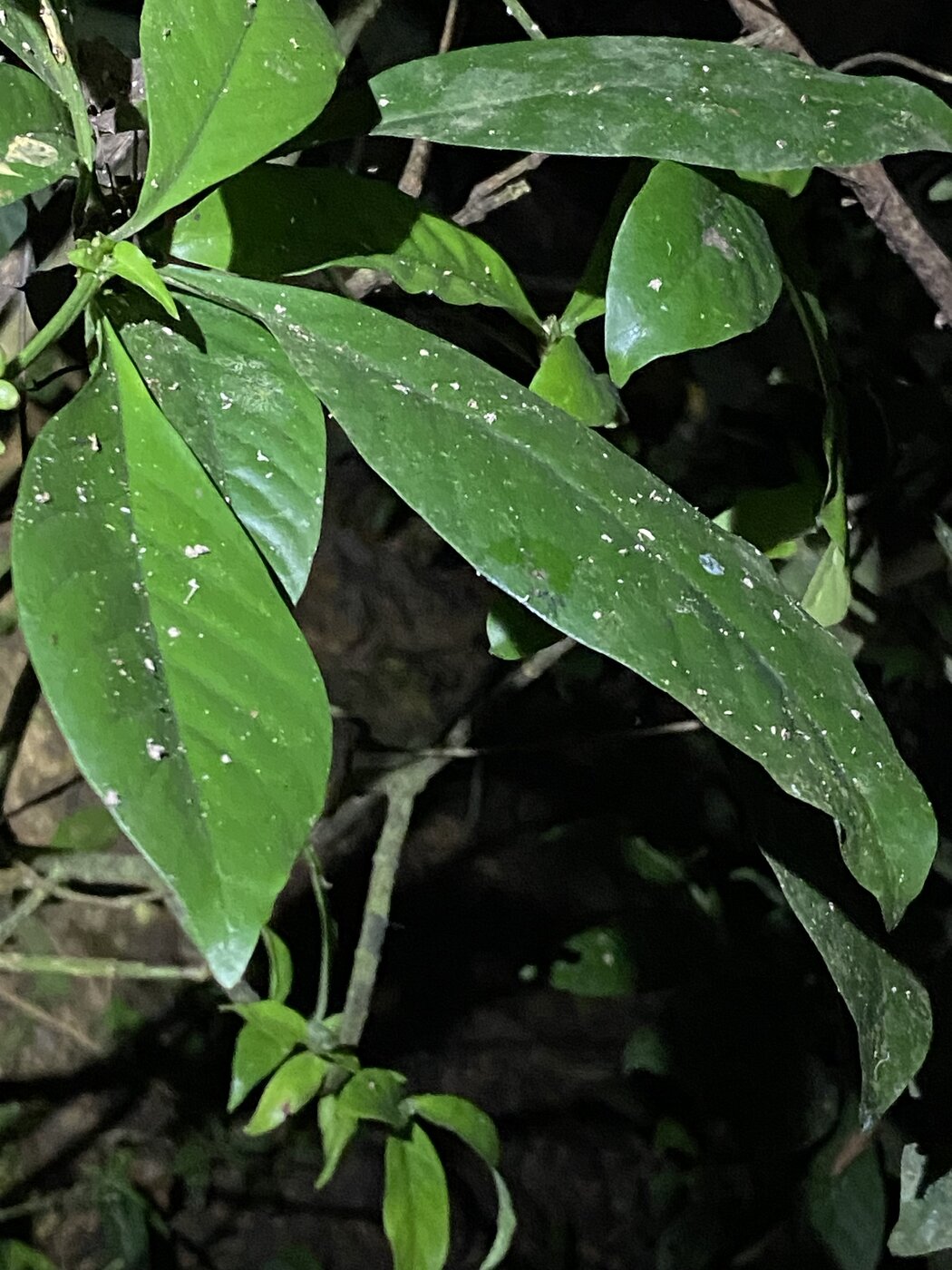
A note on leaf texture: Some photographs show chacruna leaves with a puckered or quilted surface (raised areas between veins), while others—like the image above—appear smooth. We have not found literature explaining this variation; it may relate to leaf age, light conditions, water status, regional differences, or an error in one of the online identifications. If you can shed light on this, please get in touch.
Inflorescences and Flowers
The flower clusters are one of chacruna's most recognizable features. Instead of spreading out into open sprays, the side branches of each inflorescence stay short and stubby, so the tiny white flowers bunch together like beads strung along the main stalk (rachis). Each flower is only about 1.5 mm across, with a short tube opening into small pointed lobes. Unlike many of its relatives, which produce two flower types with stamens and styles at different heights to enforce cross-pollination (a system called distyly), chacruna flowers are homostylous: stamens and style sit at the same level. A ring of fine hairs inside the flower tube catches pollen where visiting flies and small bees can pick it up.
Fruits
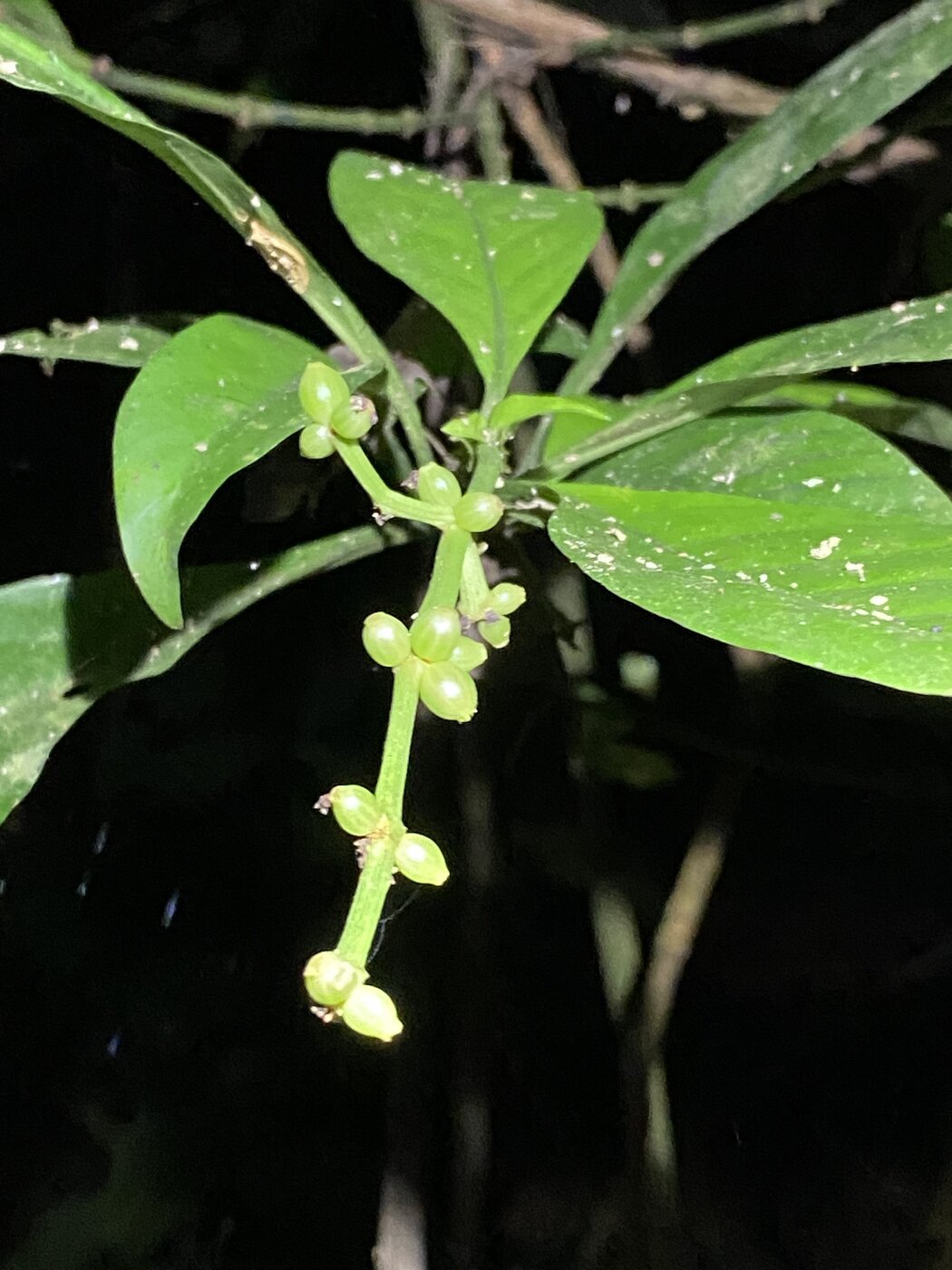
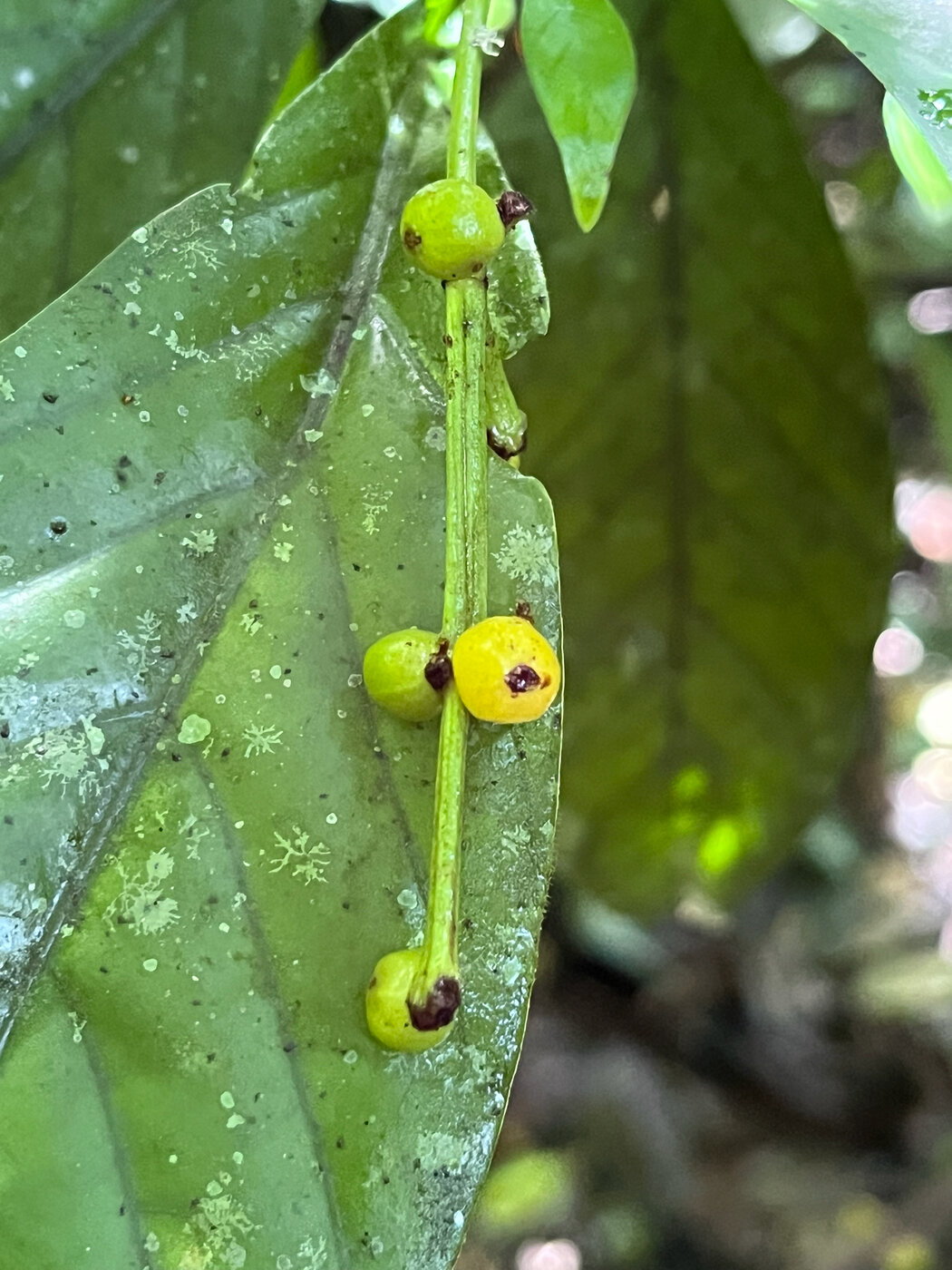
The fruits are small fleshy drupes (single-seeded berries) shaped like tiny footballs, only 4.5–5 mm long and 3–3.5 mm wide. They ripen from green through orange to bright red, then dry to a red-brown color. The old flower parts (calyx) persist at the tip, forming a small beak. Inside, each seed carries two deep grooves on its inner face and up to five on its outer face. These furrow patterns help distinguish chacruna from the other cafecillos that grow alongside it in Brunca's wet forests.
Distribution
Chacruna ranges from southern Mexico and the Greater Antilles through Central America to Colombia, Venezuela, Ecuador, Peru—where it is extremely common—Brazil, and Bolivia. Taylor's 1989 revision documented sparse but steady Central American populations, including Costa Rican collections from both slopes: the Río Reventazón basin in Cartago on the Caribbean side, and the lower Parismina and Sixaola drainages in Limón.
Current GBIF data list 89 georeferenced Costa Rican records, with 68 falling within the Brunca region. Pacific-slope clusters appear near Golfito, Río Claro, and the Térraba floodplain, while Caribbean populations persist in the foothills around Sixaola. Despite its reputation as an Amazonian specialist, the species clearly thrives in both Costa Rican refugia wherever riparian forest remains intact.
Ecology
Herbarium notes place P. viridis along shaded riverbanks, corozal mounds, and mature secondary forest at 0–1,000 m, especially in perhumid belts where palms, Banisteriopsis, and cacao agroforestry patches coexist. Flowering collections span September–March and fruits appear from January–June with a secondary pulse in September, supporting the idea that the shrub feeds understory frugivores nearly year-round.
Ecologists often contrast P. viridis with Costa Rica's distylous cafecillos, because Central American populations show only a homostylous morph: anthers and stigmas share the same height, so pollen transfer relies more on contact with visiting insects than on the reciprocal herkogamy seen elsewhere in the genus. The reduced inflorescences also expose nectar close to the rachis, favoring hoverflies and small bees that navigate narrow gaps.
Understory Adaptation
Chacruna is a true shade specialist. While many tropical shrubs tolerate low light, Psychotria species survive in the most heavily shaded microhabitats of the forest understory, where only 2–3% of incident solar radiation penetrates the canopy. Studies on related Rubiaceae show extremely low light compensation points, meaning these plants can maintain positive carbon balance even under dense canopy cover approaching 90%. In cultivation, chacruna grows taller and greener under 30–50% shade cloth, while full sun exposure produces smaller, yellowish leaves. The ideal balance of 50–70% shade mimics the dappled light conditions of its native riparian forest edges.
This shade tolerance places chacruna among the late-successional species that dominate mature forest understories. Unlike pioneer plants that colonize gaps and require direct sunlight, shade-tolerant shrubs like P. viridis establish beneath existing canopy and persist for decades without gap formation. The forest understories of humid Neotropical lowlands are numerically dominated by just a few plant families: Rubiaceae (including Psychotria and Palicourea), Melastomataceae, Piperaceae, and Marantaceae. In these species-rich communities, chacruna occupies a narrow niche along stream margins and limestone outcrops where high humidity buffers against the desiccation that limits other understory plants.
Seed Dispersal
Birds are the primary dispersers of chacruna's small red drupes. Classic studies of understory frugivory in Panama found that Psychotria fruits rank among the most important food sources in the forest understory, second only to melastomes. Of nearly 1,100 fleshy fruits recovered from regurgitation samples and fecal deposits of 103 bird species, Psychotria alone accounted for 27% of items. Six species dominated these records: three manakins (Pipra and Manacus spp.) and three migrant thrushes (Catharus spp.) together took 97% of all Psychotria fruits sampled. Manakins were the heaviest consumers, accounting for 75% of fruits eaten.
These two bird groups differ in how they handle fruits. Manakins are "gulpers": they swallow fruits whole and drop no seeds during handling, making them efficient dispersers that move intact seeds away from the parent plant. Tanagers and finches, by contrast, are "mashers" that crush fruits in their bills and often drop large seeds on the spot. Seeds pass through manakin and tanager digestive tracts at similar rates, but passage through finches is much slower. For chacruna's small drupes (under 5 mm), manakins provide optimal dispersal: the seeds travel intact through the gut and are deposited in feces beneath display perches or along flight paths. Seasonal behavior amplifies this effect: manakins become more mobile during the Psychotria fruiting season, when they are not tied to breeding leks, spreading seeds across a wider landscape.
Mite-Domatia Mutualism
The domatia mentioned in the leaf description are more than passive anatomical features: they anchor a three-way mutualism among the plant, predatory mites, and leaf-damaging organisms. Domatia are small, semi-enclosed chambers on the underside of leaves, typically located where secondary veins meet the midrib or near the leaf apex. They may take the form of tufts of hairs, open pockets of laminar tissue, or closed pits with small pores. In Psychotria, these structures are constitutive (present regardless of mite occupancy) rather than induced by mite activity, suggesting strong evolutionary selection for their maintenance.
Research on the related Psychotria horizontalis in Panama found that domatia are often (66%) occupied by mites, which use them for shelter, egg-laying, and juvenile development. On average, 70% of all mites found on leaves were inside domatia, and over three-quarters of these were predaceous or microbivorous (fungus-eating) taxa that benefit the plant. Excision experiments demonstrate the functional significance: when domatia are removed or blocked with resin, leaves harbor 2–36 times fewer predatory mites and suffer higher fungal infection and herbivore damage. The domatia also buffer mites against environmental extremes; oviposition drops significantly in plants with blocked domatia at low humidity, suggesting the structures provide critical refuge from desiccation on exposed leaf surfaces.
Chemical Defense
The alkaloid arsenal that makes chacruna valuable to human cultures may also function as chemical defense against herbivores. Alkaloids are among the most potent plant secondary metabolites: they deter feeding, inhibit insect growth, and disrupt neurotransmitter signaling. Although no study has directly tested DMT's anti-herbivore effects in P. viridis, research on related Psychotria species (P. hoffmannseggiana, P. capitata, P. goyazensis) shows that leaf extracts are significantly toxic to pest insects, reducing hatching rates, body weight, and survival while increasing repellence and mortality in both beetles and caterpillars. Given that P. viridis produces DMT, NMT, and trace β-carbolines, a similar defensive function is plausible.
The genus Psychotria as a whole is chemically diverse, producing not only indole alkaloids but also monoterpene indole alkaloids, quinoline alkaloids, and cyclopeptides. This diversity positions the genus as a rich target for bioprospecting, but from an ecological standpoint it underscores the arms race between plants and herbivores that has driven alkaloid evolution. Chacruna's specific metabolite profile, with DMT peaking at dawn and dusk, may represent fine-tuned chemical defense synchronized to periods of high herbivore activity.
Vegetative Propagation
Chacruna possesses a remarkable reproductive backup: detached leaves can root and produce new plants. When a leaf falls to the forest floor and lies in contact with moist soil, adventitious roots form from the petiole (the leaf stalk), eventually giving rise to a complete plantlet. This clonal strategy is unusual among tropical shrubs and suggests adaptation to conditions where pollinators or seed dispersers are scarce or unreliable. In indigenous cultivation, the trait allows rapid multiplication from cuttings or even partial leaves pressed into soil under high humidity. In nature, it may ensure population persistence in small, isolated patches where sexual reproduction alone would be insufficient.
The connection between leaf and root formation runs through the main vascular system of the petiole, allowing nutrients stored in the blade to fuel initial root and shoot development. Seeds, by contrast, are notoriously slow to germinate (2–5 months under optimal conditions) and remain viable for only a few months, limiting long-distance dispersal through time. The combination of bird-dispersed seeds for colonizing new sites and vegetative spread for consolidating local populations mirrors the dual reproductive strategies seen in many clonal forest plants.
Phytochemistry
Dried chacruna leaves contain 0.1–0.61% N,N-dimethyltryptamine (DMT), the indole alkaloid responsible for the visionary effects of ayahuasca. Phytochemical analyses have also identified trace amounts of N-methyltryptamine (NMT), 5-methoxy-DMT, 5-hydroxy-DMT, and N-methyltetrahydro-β-carboline. Beyond alkaloids, the leaves yield pentacyclic triterpenes (ursolic and oleanolic acid), steroids (stigmasterol, β-sitosterol, 24-methylene-cycloartanol), squalene, and various fatty acids. This chemical diversity suggests that chacruna's pharmacological profile extends beyond psychoactivity into antioxidant, anti-inflammatory, and antimicrobial domains that remain underexplored.
DMT concentrations fluctuate across the day. Studies measuring consecutive samples from the same plant found the highest levels at dawn (8.97 mg/g) and before dusk (9.52 mg/g at 6 p.m.), with a midday trough. Researchers hypothesize this diurnal rhythm may protect against solar radiation or relate to UV-absorbing functions, though a 2025 metabolomic survey found that DMT itself did not vary significantly across different environmental conditions. What did vary was the biosynthesis of carbohydrates (responding to seasonality) and flavonoids (responding to shade versus full sun). The traditional practice of harvesting leaves at dawn thus aligns with peak alkaloid availability, whether by coincidence or accumulated observation.


Cultural Significance
Archaeological and Historical Record
The oldest direct evidence of an ayahuasca-like preparation comes from a 1,000-year-old leather ritual bundle excavated at Cueva del Chileno in Bolivia's Lipez Altiplano at 4,000 meters elevation. Liquid chromatography analysis identified at least five psychoactive compounds including DMT, harmine, bufotenine, and cocaine derivatives. The co-occurrence of DMT and harmine suggests an ayahuasca-like preparation, though specific plant sources were not definitively identified from the residues. The bundle, dating to the Tiwanaku civilization (550–950 CE), also contained carved wooden snuffing tablets, a snuffing tube with human hair braids, and llama bone spatulas. Researchers called it "the first evidence of ancient South Americans potentially combining different medicinal plants to produce a powerful substance like ayahuasca." An even older ceremonial vessel from Ecuador's Pastaza culture (500 BCE–50 CE) shows engravings consistent with ayahuasca ritual use, though chemical confirmation is lacking.
Western science first documented ayahuasca when British plant explorer Richard Spruce observed Tukanoan peoples using the brew on the Rio Uapes in the Brazilian Amazon in 1851–1852. Spruce collected specimens of Banisteriopsis caapi and sent them to the Royal Botanic Gardens at Kew, where they sat unanalyzed until 1969. Over the following six years he encountered the brew among the Guahibo of the Orinoco (who chewed the bark rather than brewing it) and learned the name "ayahuasca" from the Záparo on the Pastaza River at the Ecuador-Peru border. Spruce's detailed notes, including personal accounts of subjective effects, were not published in full until 1908 in Notes of a Botanist On The Amazon and Andes.
Indigenous Knowledge and Preparation
Among the Shipibo of Peru, the ayahuasca brew is called "Oni" (wisdom), and the healers who work with it are "Onanya" (wisdom-keepers). The Asháninka call it "Kamarampi." Traditional preparation involves pounding the B. caapi vine, layering it with chacruna leaves in a ratio of roughly 1 kg vine to 250–500 g leaves, and boiling the mixture for 8–12 hours while singing icaros (spiritual songs) to imbue the brew with healing intention. The recipe, passed down through oral transmission, produces a dark, concentrated tea whose pharmacology depends on precise botanical knowledge: the β-carboline MAO inhibitors in the vine (harmine, harmaline, tetrahydroharmine) prevent gut enzymes from degrading DMT, allowing it to cross the blood-brain barrier and produce visionary effects lasting 4–6 hours.
In Costa Rica, where ayahuasca retreats led by Peruvian Shipibo healers have proliferated since the mid-2010s, safeguarding wild chacruna patches preserves options for plant medicine gardens. Ceremonies typically occur at night in a maloca or open-air hut, led by a curandero who guides participants through purging, visions, and integration.
Therapeutic Research
Recent neuroscience has begun to explain why ayahuasca produces lasting psychological effects. DMT binds not only to serotonin receptors (5-HT2A, among others) but also to the sigma-1 receptor, an intracellular chaperone located at the interface between the endoplasmic reticulum and mitochondria. Activation of sigma-1 receptors promotes neuroplasticity, neurogenesis, and neuroprotection. In stroke models, rats given DMT showed reduced ischemic lesion volumes and improved motor function compared to controls; when a sigma-1 antagonist was co-administered, these benefits disappeared, confirming the receptor's role. Researchers hypothesize that sigma-1 activation may also facilitate trauma processing by reopening a "plastic window" in which fear memories become labile and can be reconsolidated with reduced emotional charge.
Clinical trials have tested ayahuasca in patients with treatment-resistant depression. The first randomized placebo-controlled trial found significant reductions in depression severity (HAM-D and MADRS scales) by Day 1 after a single dose, with effects strengthening through Day 7 of follow-up. A longitudinal observational study followed 20 clinically depressed patients before an ayahuasca ceremony and at 1-day, 1-month, and 1-year follow-ups: Beck Depression Inventory scores dropped from a baseline mean of 22.7 to 11.45 at one day, 12.89 at one month, and 8.88 at one year. Emerging evidence also points to potential benefits for PTSD, anxiety disorders, addiction, grief, and eating disorders, though most studies remain small and open-label. The field awaits larger randomized controlled trials before ayahuasca-assisted therapy can enter mainstream clinical practice.
Taxonomic History
Hipólito Ruiz López and José Antonio Pavón Jiménez published the species in volume 2 of Flora Peruviana et Chilensis (1799), based on material they collected during Spain's Royal Botanical Expedition to Peru. Commissioned by King Carlos III in 1777, the expedition sent Ruiz, Pavón, French botanist Joseph Dombey, and artists José Brunete and Isidro Gálvez to document the flora of what was then the Viceroyalty of Peru. Over 11 years of fieldwork across coastal deserts, Andean highlands, and Amazonian lowlands, they amassed more than 3,000 specimens and produced 2,254 botanical drawings. Ruiz and Pavón returned to Spain in 1788 and spent decades publishing their findings, while collaborator Juan Tafalla continued sending shipments from Peru until 1815. The original watercolor illustration of P. viridis (plate 210, figure b) survives in the archives of Madrid's Real Jardín Botánico alongside the holotype specimen.
Later workers transferred the species through Uragoga viridis and Palicourea viridis before Chelsea Taylor consolidated all Central American material—including the Cuban names P. glomerata and P. trispicata—under one species concept. A 2022 genomic study assembled the first complete organellar genomes for P. viridis, revealing a 154,106 bp chloroplast genome with standard angiosperm structure and two distinct mitochondrial haplotypes (615,370 bp and 570,344 bp) whose complex repeat regions enable up to 16 isoforms through recombination. This heteroplasmy offers the first window into the evolutionary biology of a plant whose cultural importance far outpaces its genomic documentation.
Conservation Outlook
No IUCN assessment exists for P. viridis, but GBIF records and modern photos confirm that it persists in Osa, Golfo Dulce, and Caribbean refuges where riparian forest remains intact. Because the shrub naturally occupies stream margins and shaded cacao breaks, maintaining mixed agroforestry corridors throughout Brunca protects both ecological functions (understory forage for birds) and cultural uses (community ayahuasca gardens).
Resources & Further Reading
Floras & Revisions
Morphology, phenology, and specimen citations for P. viridis from Chiapas through Panama.
Accepted taxonomy, synonymy, and global native range compiled by Kew.
Ecology & Frugivory
Examines how bird-mediated seed dispersal shapes genetic structure in four Psychotria species on Barro Colorado Island.
Panama study on mite-domatia mutualism in Psychotria, showing 66% domatia occupancy and plant defense benefits.
Comprehensive review of leaf domatia across angiosperms, explaining how these structures mediate defense mutualisms with predatory mites.
Demonstrates the extremely low light compensation points that allow Psychotria and relatives to survive under 90% canopy cover.
Comprehensive database of 10,175 frugivory interactions including Psychotria and its avian dispersers across the Neotropics.
Genomics & Phytochemistry
First genomic resources for the species: 154 kb chloroplast and two mitochondrial haplotypes with complex heteroplasmy.
Identifies DMT, NMT, triterpenes, steroids, and fatty acids from Brazilian specimens.
Documents peak DMT concentrations at dawn (8.97 mg/g) and dusk (9.52 mg/g), with midday minimum.
Ethnobotany & Pharmacology
Explains why chacruna leaves rich in DMT are paired with B. caapi vines and summarizes traditional admixtures.
Describes the standard combination of Banisteriopsis caapi vine and P. viridis leaves and the pharmacology behind the brew.
Clinical Research
First randomized placebo-controlled trial showing significant depression reduction by Day 1, with effects strengthening through Day 7.
Proposes how DMT's sigma-1 receptor binding may facilitate trauma memory reconsolidation and neuroplasticity.
Comprehensive review of ayahuasca's potential for depression, PTSD, anxiety, addiction, and eating disorders.
Archaeology & History
First direct archaeological evidence of ayahuasca-like plant combinations from Cueva del Chileno, Bolivia (Tiwanaku culture).
JSTOR Plants archive preserving the original botanical illustration from Flora Peruviana plate 210.
Documents the growth of ayahuasca retreats in Costa Rica "over the past decade," with Peruvian Shipibo healers leading ceremonies.
Data Portals
Downloadable Costa Rican and global records showing Brunca populations along Río Claro, Térraba, and Sixaola.