Roble de Brenes
Quercus brenesii — A small red oak of Central American cloud forests, distinguished by its aristate-toothed leaves and named in honor of Alberto Manuel Brenes, Costa Rica's pioneering botanist.
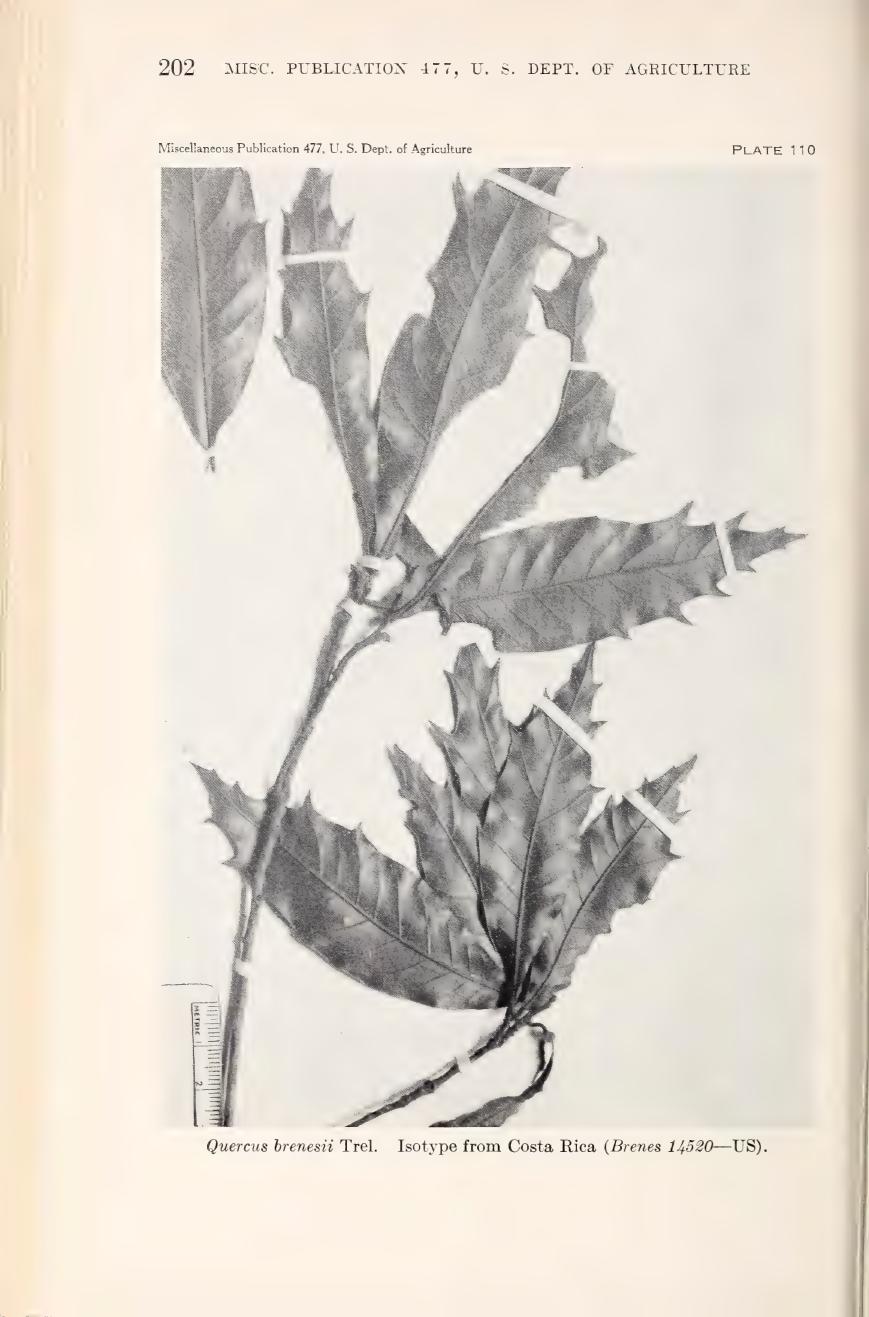
Quercus brenesii is a small red oak described by American botanist William Trelease in 1924, named to honor Alberto Manuel Brenes Mora (1870-1948), Costa Rica's pioneering botanist. The type specimen was collected by Brenes himself near San Ramón and San Mateo in Costa Rica's central highlands, and the holotype is deposited at the Smithsonian Institution (US herbarium). Brenes collected over 22,000 plant specimens throughout his career, and many species across multiple plant families bear his name.
Quercus brenesii belongs to section Lobatae (red oaks) and more specifically to the series Acutifoliae, a group of ten oak species ranging from the southeastern United States to Costa Rica. Unlike temperate red oaks with deeply lobed leaves, the Acutifoliae series is characterized by lanceolate leaves with aristate (bristle-tipped) teeth rather than lobes. Q. brenesii is distinguished from the closely related Q. cortesii by having fewer secondary veins and divergent teeth, whereas Q. cortesii has more veins and straight, non-divergent teeth.
Identification
Physical Characteristics
Form: Quercus brenesii is a relatively small oak, typically reaching 6-10 meters in height. The bark is smooth, and the branches are slender (1-3 mm diameter), reddish, and glabrous or nearly glabrous.
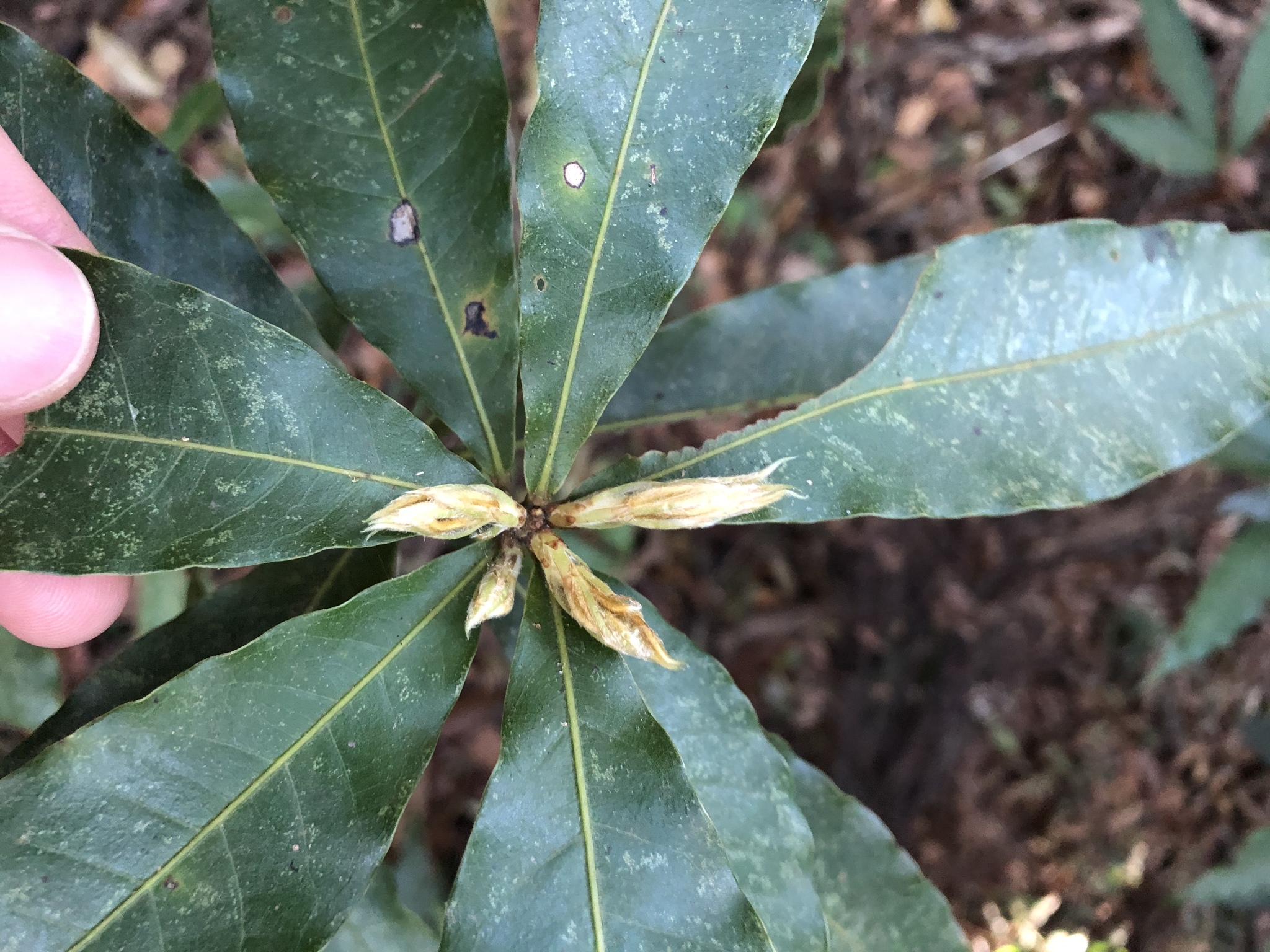
Leaves: The leaves are subcoriaceous (somewhat leathery) and lustrous, narrowly elliptical, measuring 5-12 cm long by 1-3.5 cm wide. A key identifying feature is the presence of 4-6 divergent, aristate (bristle-tipped) teeth on each side, distributed in the upper half of the blade. The secondary veins in the upper half frequently form an S-shape as they enter the teeth to form the terminal aristas. This combination of narrow leaves with divergent teeth distinguishes Q. brenesii from its closest relative, Q. cortesii.

Acorns: As a member of section Lobatae (red oaks), Q. brenesii produces acorns that likely require two years to mature, as is typical of the group. The inside of the acorn shell would be woolly, another characteristic of red oaks. Detailed descriptions of the acorns remain scarce in available literature, reflecting the species' poorly documented status.
Ecology and Distribution
Despite being named after a Costa Rican botanist, Quercus brenesii is not endemic to Costa Rica. Herbarium records and recent surveys document the species from three countries: Costa Rica, Nicaragua (Jinotega), and Mexico (Veracruz, Puebla, and Chiapas). The species occurs at elevations between 600 and 2,000 meters in evergreen tropical forest and montane oak forest habitats. In Costa Rica, documented localities include Monteverde (1,440 m), Cerro Trinidad in San José Province (2,000 m), and Mercedes Sur (1,500 m).
GBIF (Global Biodiversity Information Facility) records 33 occurrences of Q. brenesii, with specimens deposited at major herbaria including the Smithsonian Institution (US), Instituto de Biología UNAM (MEXU), Instituto de Ecología A.C. (XAL), and the Museo Nacional de Costa Rica. The species' presence across such a wide geographic range, from Chiapas to Costa Rica, suggests it may be more common than previously thought, though it remains poorly studied compared to other oaks in the region.
The Legacy of Alberto Manuel Brenes
The species epithet brenesii honors Alberto Manuel Brenes Mora, born in San Ramón, Costa Rica on September 2, 1870. Though he began his career as a schoolteacher, Brenes pursued formal training in natural sciences at the University of Lausanne and spent six years at the University of Geneva. He became a botany lecturer at Costa Rica's School of Pharmacy in 1898, and later taught mineralogy, zoology, and botany at the College of San Luis Gonzaga from 1903 to 1910. In 1920, he was appointed head of botany at the National Museum of Costa Rica, a position he held until his retirement in 1939.

Brenes assembled over 22,000 botanical specimens throughout his career, collaborating with leading taxonomists including Rudolf Schlechter (Berlin), Paul C. Standley (Chicago), and Oakes Ames (Harvard). Schlechter alone named 17 new orchid species plus an entire genus (Brenesia) after him. It was Trelease who honored Brenes with this oak species in 1924, based on the specimen Brenes himself collected near his birthplace of San Ramón. The director of the National Museum, Juvenal Valerio Rodríguez, called Brenes "the national botanist." In 1970, the Costa Rican Legislative Assembly declared him "Benemérito de las Ciencias" (Meritorious of Sciences), and the Alberto Manuel Brenes Biological Reserve in the Tilarán mountains preserves the cloud forests he spent his life documenting.
Conservation
Quercus brenesii is currently listed as Data Deficient by the IUCN, meaning there is insufficient information to assess its extinction risk. While the species was long considered rare, the 33 herbarium records now documented from three countries suggest it may be more widespread than initially believed. However, the Data Deficient status reflects genuine uncertainty about population trends, habitat requirements, and threats across its range from southern Mexico to Costa Rica.
The evergreen tropical forests and montane oak forests where Q. brenesii occurs face ongoing pressure from agricultural conversion, logging, and climate change. In Costa Rica, protected areas including the Alberto Manuel Brenes Biological Reserve in the Tilarán mountains and the Monteverde Cloud Forest Reserve encompass documented localities for the species. The presence of specimens from Cerro Trinidad and other sites in San José Province suggests the species may also occur within the Central Volcanic Range's protected areas.
Priority conservation actions for Q. brenesii include systematic surveys across its known range, particularly in the cloud forests of Veracruz, Chiapas, and the Nicaraguan highlands where historical records exist but recent documentation is lacking. Understanding whether the species is genuinely rare or simply under-collected would inform appropriate conservation strategies. As an oak named for Costa Rica's pioneering botanist, Q. brenesii represents not only a component of Central American biodiversity but also a living link to the region's botanical heritage.
Resources & Further Reading
Taxonomy & Species Information
The definitive taxonomic treatment of Q. brenesii and related species, with morphological descriptions and distribution data.
33 occurrence records from herbaria across Mexico, Nicaragua, and Costa Rica, with specimen data and collection information.
Authoritative taxonomic information from the Royal Botanic Gardens, Kew.
Citizen science observations with photographs from across the species' range.
Original species description on page 186, plate 377 of Trelease's monograph on American oaks.
Complete monograph with 124 botanical plates illustrating Central American oaks. USDA Miscellaneous Publication No. 477.
Alberto Manuel Brenes
Comprehensive biography of Alberto Manuel Brenes and his contributions to Costa Rican botany (in Spanish).
Biographical record from the Smithsonian, where Brenes' type specimen of Q. brenesii is deposited.
Cloud forest reserve in the Tilarán mountains named in Brenes' honor, preserving habitat where the species occurs.
Oak Forests and Ecology
Scientific chapter on the ecology of Costa Rica's montane oak forests by Maarten Kappelle and colleagues.
IUCN conservation assessment of the world's oak species, including Central American endemics.