White-backed Cafecillo
Arachnothryx buddleioides (Benth.) Planch. is a Brunca understory treelet whose velvety white leaf backs and distylous, fragrant flower spikes connect the misty slopes of Talamanca with cloud forests from Oaxaca to Darién.
Botanists working the Coto Brus ridges kept writing the same note when they pressed Arachnothryx buddleioides: "follaje de envés blanco." The undersides of its opposite leaves are paneled in dense, snow-colored hairs, creating the pale glow the new nickname "white-backed cafecillo" captures. Missouri Botanical Garden field sheets from Las Tablas, La Amistad, and Monteverde describe shrubs 2–6 meters tall with downy, white-backed foliage and a perfume strong enough to notice hours after cutting a branch (Manual de Plantas de Costa Rica, specimen log).
This member of the coffee family slipped under radar because it readily takes over disturbed slopes—road cuts above Tejar, secondary gullies in Fila Bustamante, even pasture edges near Turrubares. Yet those same herbarium labels document it thriving inside mature cloud forest on both flanks of Talamanca, underscoring how important intact canopy and persistent mist are for sustaining its flowering cycle.
The name "cafecillo" (little coffee) refers to appearance rather than use. Like true coffee, these shrubs have opposite, glossy leaves and clusters of small fruits, but no ethnobotanical record documents the seeds being roasted or consumed. Attempts with related Psychotria species have reportedly produced only bad flavor and headaches. The resemblance is purely superficial: cafecillos share a family tree with coffee but none of its chemistry.
Identification
Habit and Bark
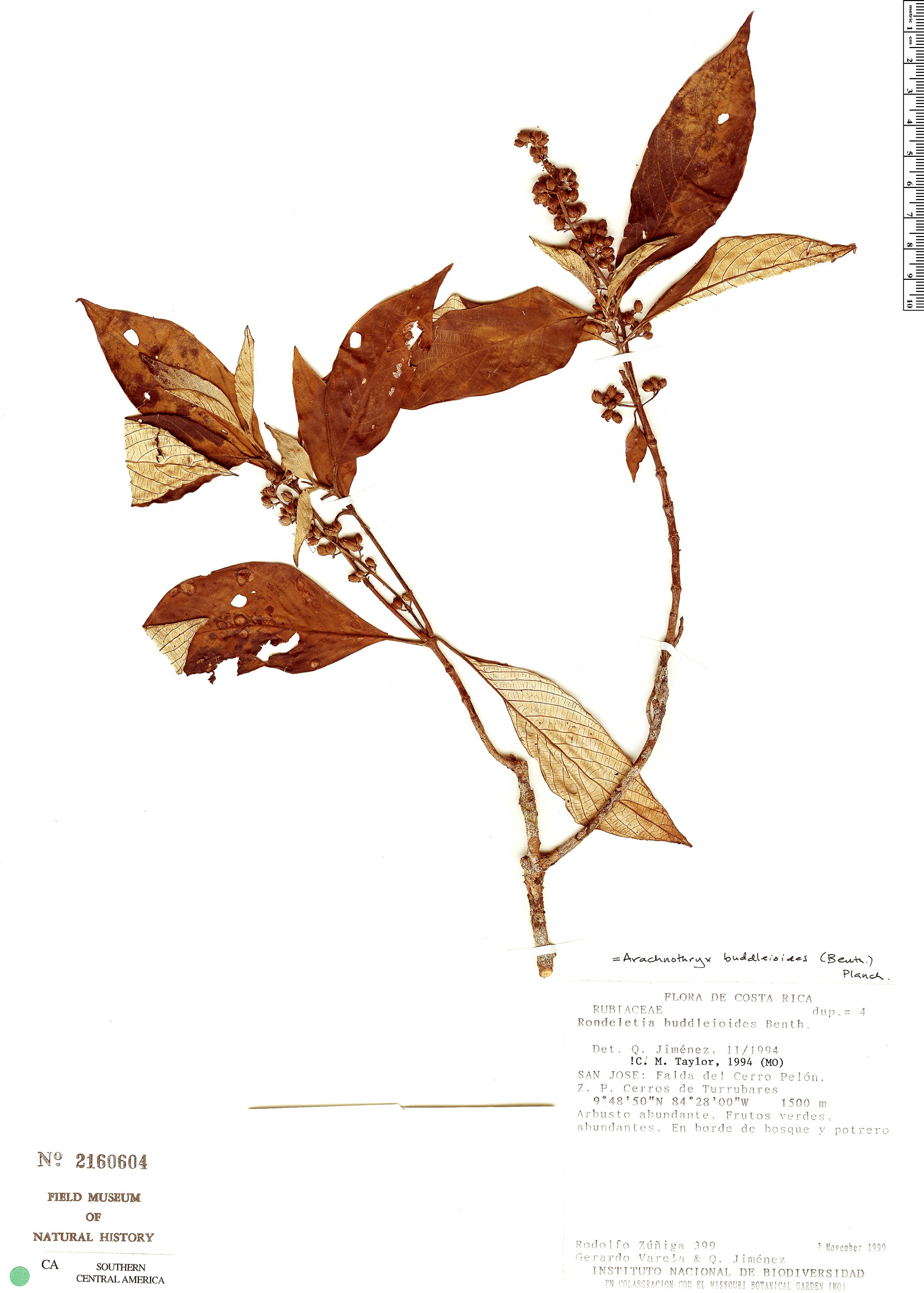
White-backed cafecillo typically grows as a multi-stemmed shrub or small tree reaching 2–6 meters in Costa Rica, though specimens inside protected forests like Tapantí or La Amistad occasionally stretch to 8 meters with trunks 10 cm across. Young twigs are araneose-tomentose (covered in cobwebby, woolly hairs), but the bark matures to a smooth gray-brown. Plants branch freely from the base, forming loose clumps that spread several meters across slopes and road cuts. This variable growth habit explains why field collectors often labeled adjacent specimens as both "arbusto abundante" (abundant shrub) and "arbolito de 6 m" (small tree of 6 m).
Leaves
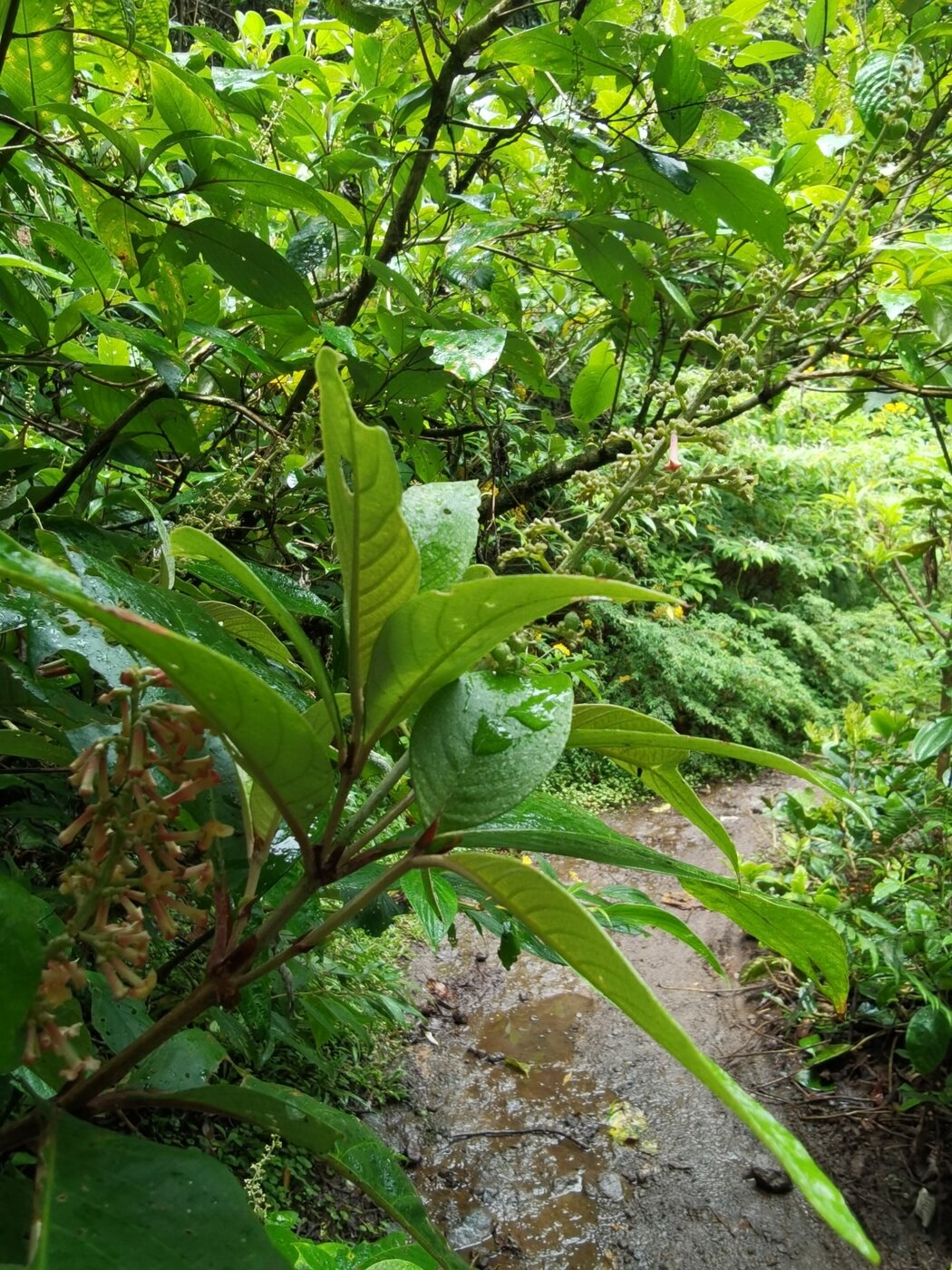
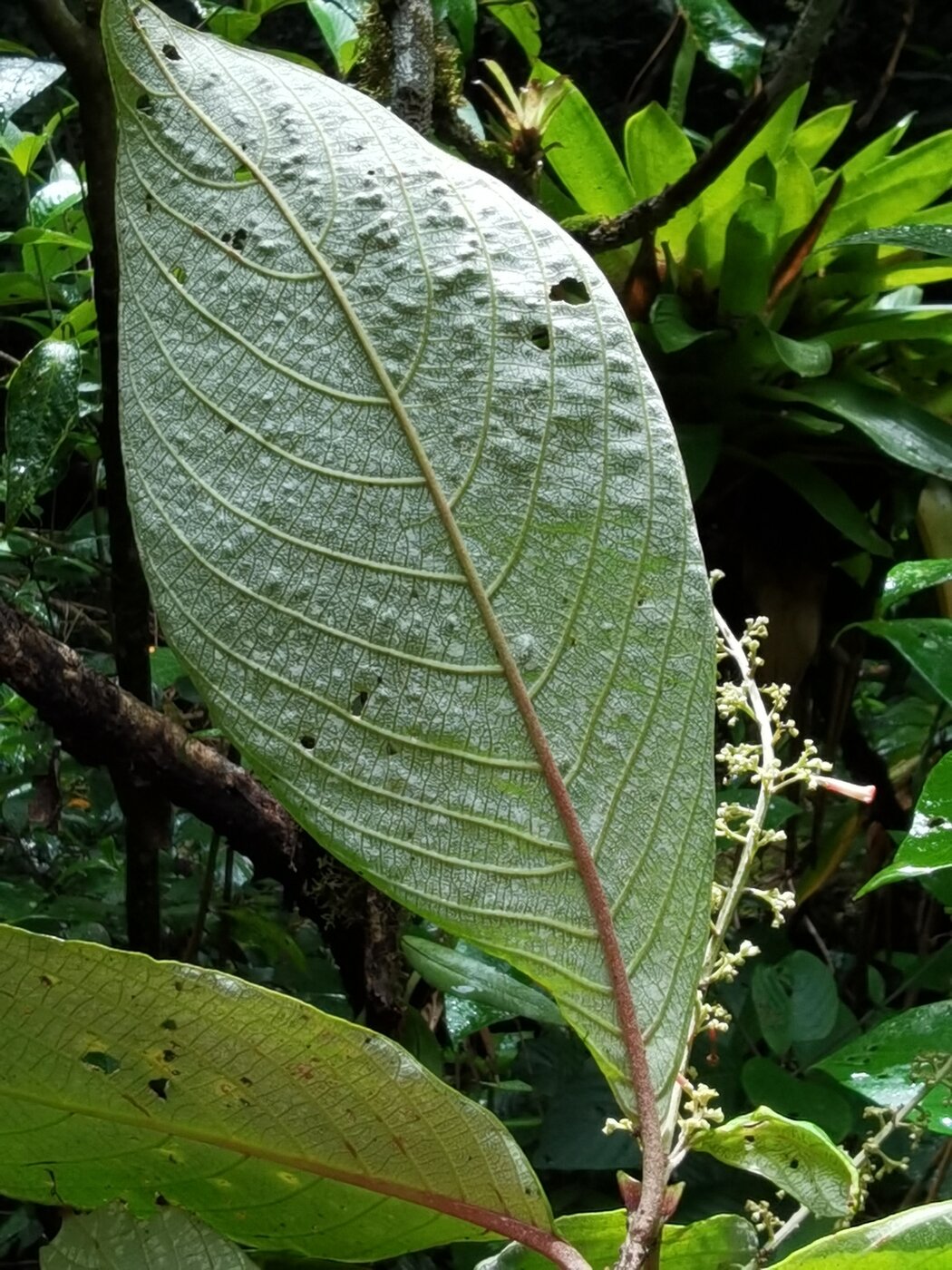
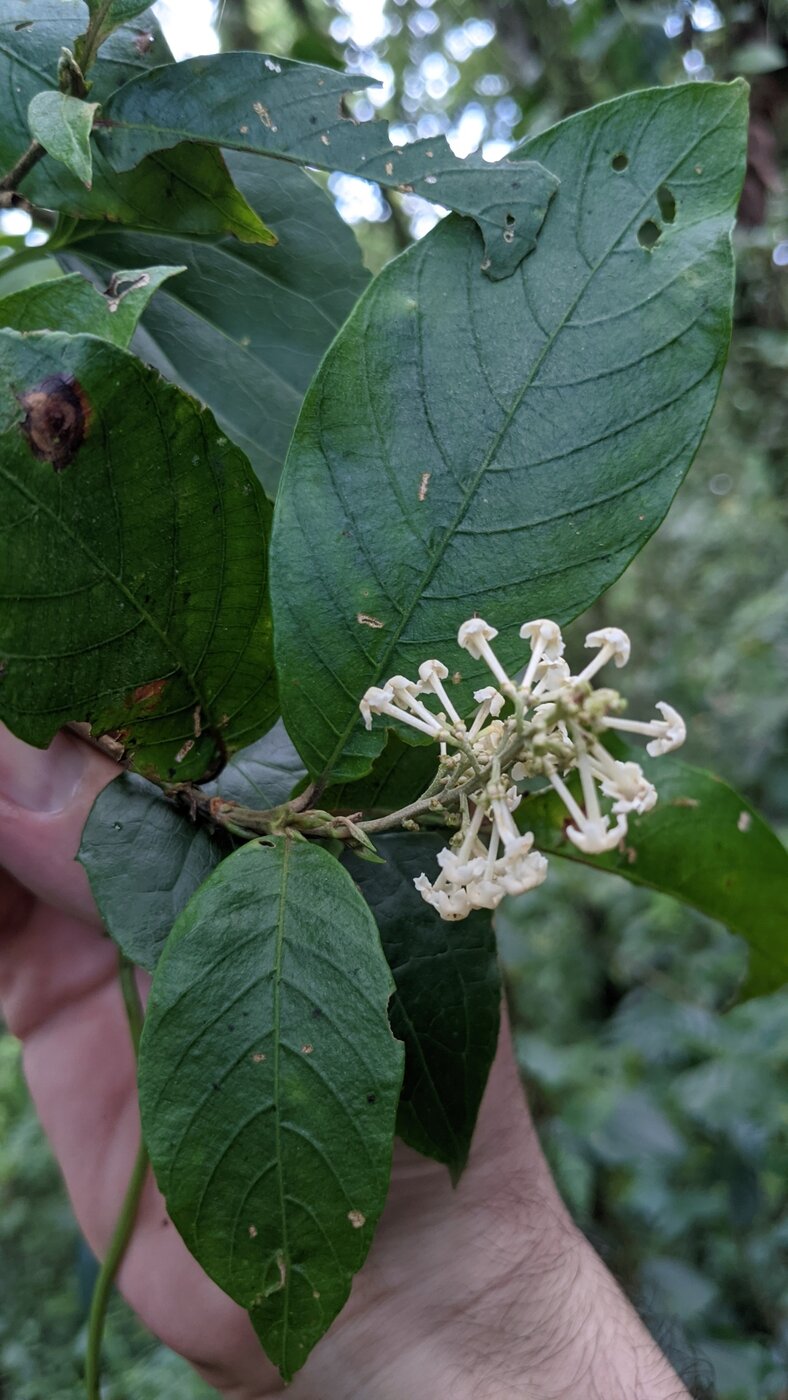
The leaves grow in opposite pairs (two per node, facing each other) and are elliptic to narrowly lanceolate (oval to narrow spear-shaped), measuring 4–22 cm long and 1–9.5 cm wide. Each blade has 8–13 pairs of gracefully arching secondary veins, and the margins curl slightly downward. The upper surface dries to an olive tone, but the underside stays chalk-white thanks to a dense mat of spider-silk hairs. This snowy backing is the species' most distinctive field mark, noted by botanists from Coto Brus to Monteverde ("hojas con envés blanco"). The petioles (leaf stalks) reach up to 40 mm long, and at each node a pair of interpetiolar stipules (small leaf-like appendages between the stalks) clasp the stem like narrow green darts, persisting even after the leaves mature.
Flowers
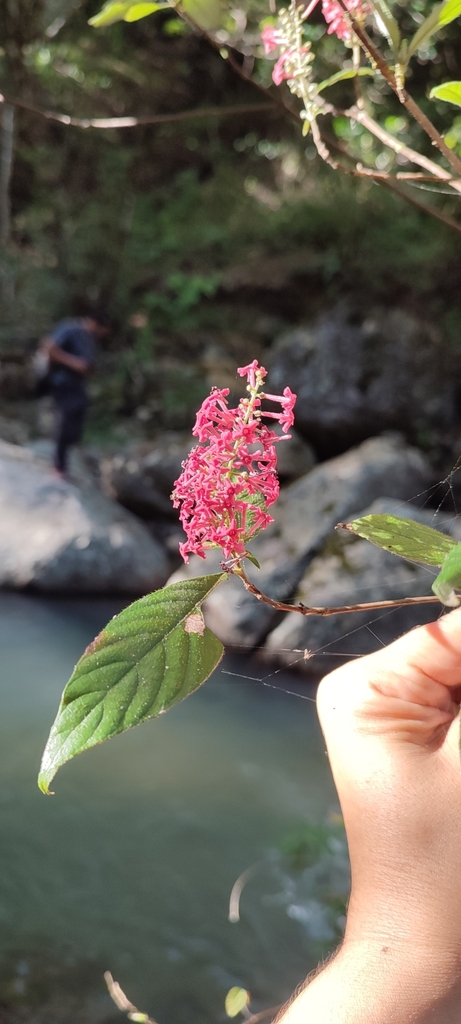
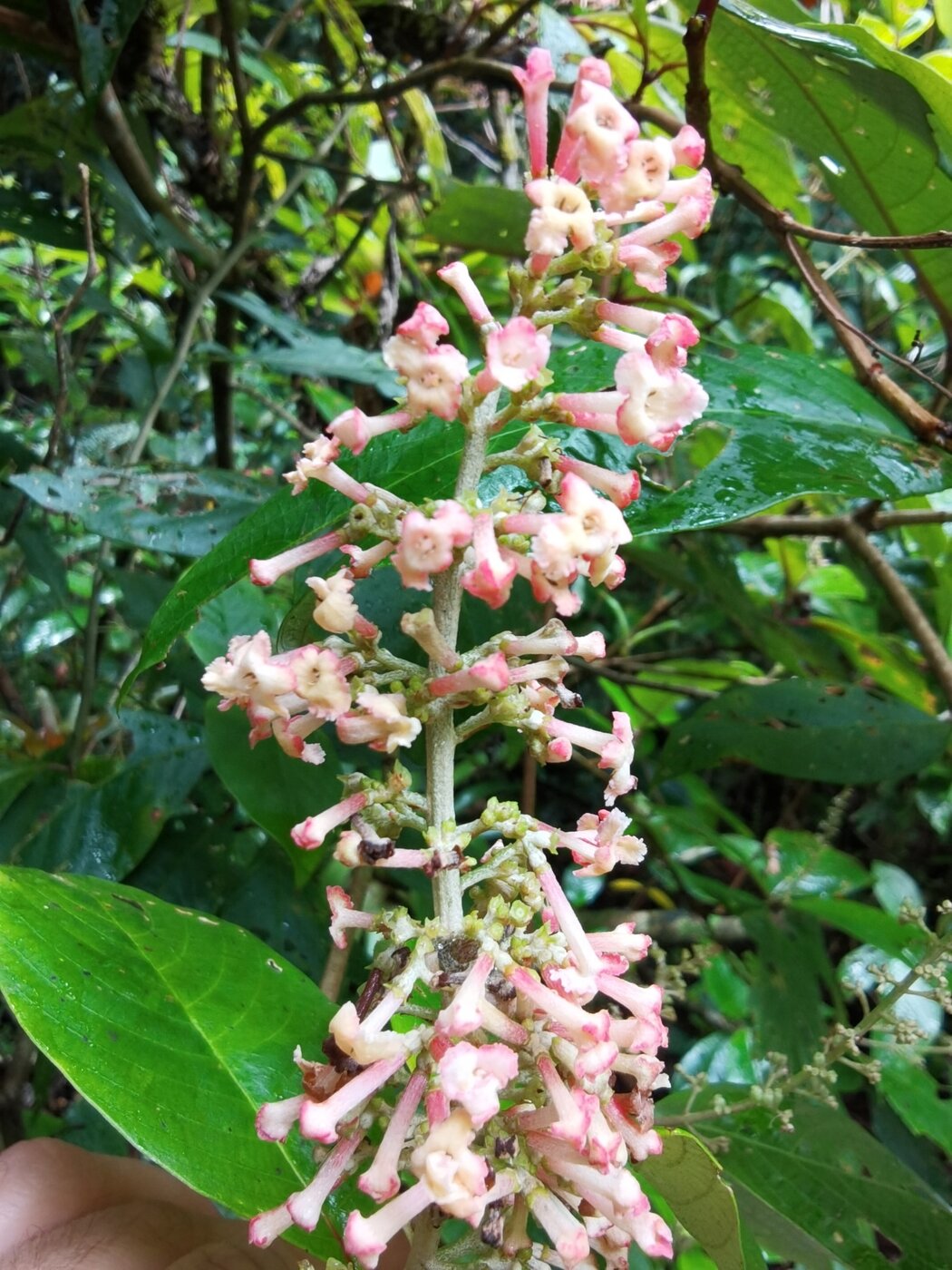
The flower clusters are narrow thyrses (elongated, branched spikes) 14–25 cm long, sometimes stretching to 30 cm. Densely pubescent (covered in soft hairs), these inflorescences often droop like pale bottlebrushes over ravines. Individual flowers sit directly on the main axis without pedicels (individual stalks), each with a tiny cup-shaped hypanthium (the fused base below the petals) only 1–1.5 mm long. The calyx (the outer whorl of green sepals) is deeply four-lobed, with segments that may be uneven in size. The corolla is salverform (trumpet-shaped, with a narrow tube that flares into flat lobes), the tube measuring 5.5–11 mm and the lobes 1.5–2.5 mm wide. Flower color varies remarkably: white, pale yellow, pink, orange, and red all occur, sometimes on different plants in the same population. Many Costa Rican herbarium labels note a powerful fragrance ("flores blancas, muy olorosas"). The species is distylous, meaning it produces two flower forms: some plants have short styles with high anthers, others have long styles with low anthers. This arrangement promotes cross-pollination between different plants. Flowering runs from June through February, peaking during the wet season.
Fruits
The fruits are tiny septicidal capsules (dry fruits that split along the walls between their internal chambers) only 3–4 mm long. When ripe, each capsule cracks open about halfway to release two seeds coated in sticky endocarp (the inner fruit layer). Green capsules dangle in clusters through the Costa Rican dry season; field notes from Acosta, Turrubares, and Tenorio mention fruits from August through April. Because the infructescences (fruit clusters) hang within easy reach of tanagers and small mammals, these animals likely probe the pale capsules at forest edges. This may explain why seedlings often pop up near gaps months after flowering, carried there by fruit-eating visitors.
Distribution
White-backed cafecillo ranges from Mexico's Pacific and Gulf slopes through Belize, Guatemala, Honduras, Nicaragua, Costa Rica, and into western Panama. In Mexico it grows in the states of Jalisco, Colima, Veracruz, Chiapas, Oaxaca, and Tabasco, where Oaxacan coffee farmers know it as "palo blanco." The species is frequent in humid forests from sea level to about 1,550 m, flowering June through February and fruiting October through April.
In Costa Rica, collections span from Coto Brus and Buenos Aires across the Cordillera de Talamanca, westward to Acosta, Puriscal, Monteverde, and Tenorio. Botanists have repeatedly found it between 500 and 1,700 meters, both inside mature forest and along pasture edges. Over 440 specimens have been documented from the Brunca region alone, underscoring how common it is in the area's protected forests and community reserves.
Ecology
The species thrives in humid understory light but also tolerates edges and semi-open slopes. Herbarium notes describe it “común en áreas alteradas” along Acosta ridges, abundant on pasture margins in Turrubares, and reappearing in secondary forests at Monteverde and Tenorio just a few years after clearing (Manual de Plantas de Costa Rica). Because the corolla is long, narrow, and distylous, it likely relies on hummingbirds and long-tongued insects for cross-pollination; collectors frequently remarked on the powerful perfume, suggesting moth activity during dawn and dusk.
Its leaves also support wildlife: larvae of the brush-footed butterfly Adelpha demialba were reared on Rondeletia (now Arachnothryx) buddleioides collected in Área de Conservación Guanacaste’s Sector Cacao, demonstrating its role in montane food webs (Butterflies of America, voucher 02-SRNP-24518). Fruiting branches feed tanagers, thrushes, and probably small mammals that carry seeds into adjacent ravines.
Taxonomic History
George Bentham first described the species as Rondeletia buddleioides in 1849 (Fl. Serres Jard. Eur. 5: 442). Jules Émile Planchon later transferred it to the genus Arachnothryx, a group distinguished by spider-web pubescence and narrow thyrses (Plants of the World Online). Subsequent authors described numerous regional segregates—Rondeletia affinis, R. rothschuhii, Duggena nivea, Gonzalagunia tonduzii, Arachnothryx longipetiolata, A. tabascensis—but current world checklists treat all of them as synonyms of A. buddleioides, reflecting the species’ remarkable plasticity across Mesoamerica.
Conservation Outlook
The IUCN Red List categorizes the species as Least Concern thanks to its broad geographic range and persistence in both primary and secondary forests (IUCN 2021 via eFlora Mex). Nevertheless, the traits that allow it to rebound along pasture margins also underline where it suffers: deforestation for cattle or sun-grown coffee strips away the humid canopy it needs for consistent flowering. Smithsonian and Missouri Botanical Garden records from Tejar, Acosta, and Turrubares show individuals clinging to remnant windbreaks; when those shelterbelts are removed, local populations can vanish.
Maintaining riparian buffers and mixed agroforestry corridors throughout the Brunca foothills will preserve the white-backed cafecillo’s role in feeding pollinators, butterflies, and fruit-eating birds. The species’ documented tolerance of secondary growth makes it an excellent indicator that community conservation and restoration projects are reconnecting fragments along the Talamanca front.
Resources & Further Reading
Species Information
Extensive voucher notes from Coto Brus, Talamanca, Monteverde, and Guanacaste highlighting habit, colors, and habitats.
Flora Mesoamericana and Flora de Nicaragua descriptions with measurements, phenology, and synonymy.
Taxonomy & Nomenclature
Author citations, basionym (Rondeletia buddleioides), and heterotypic synonyms across Mesoamerica.
High-resolution specimen photograph (R. Zúñiga 399) showing diagnostic leaves and inflorescences.
Conservation & Data
Lists Mexican states where the species is native and cites the 2021 IUCN Least Concern assessment.
Downloadable specimen and observation records, including 400+ vouchers within the Brunca bounding box.
Related Reading
Details the Guanacaste caterpillar rearing that confirmed A. buddleioides as a larval food plant.