Lobed Pentagonia
Star-shaped flowers emerge from the trunk of this palm-like understory tree, whose lobed leaves break every rule in the coffee family. Possibly endemic to the rainforests of southern Costa Rica.
In the Rubiaceae, one of the largest plant families in the Neotropics and home to more than 13,000 species worldwide, leaves are almost universally simple and smooth-edged. Among all those thousands of species, only one genus breaks the pattern: Pentagonia. Several of its roughly 43 species bear deeply lobed or even fully pinnate leaves, a morphological anomaly so improbable that when botanist Gerardo Herrera collected an unfamiliar lobed-leaved specimen on the Osa Peninsula in the 1990s, he labeled it "Pentagonia cf. lobata" because P. lobata was one of the few reference points available for such a peculiar plant. That specimen turned out to be an entirely different species, described two decades later. The real P. lobata itself had only been named in 1995, from a collection made just a few years earlier in the forests near Golfito.
Charlotte Taylor, the Missouri Botanical Garden curator who has described more new plant species than any woman alive (over 500 and counting), published Pentagonia lobata in the journal Novon in June 1995. Every verified herbarium record is from Costa Rica, spanning the wet forests of the southern Pacific lowlands from near sea level to 1,200 m elevation. Most collections come from the Brunca region: the Golfo Dulce corridor, Piedras Blancas, the Osa Peninsula, and the Golfito National Wildlife Refuge. Two recent (2024) unverified iNaturalist observations from Chiriquí, Panama hint at a possible range extension, but no herbarium specimen has yet confirmed the species outside Costa Rica.
Identification
Habit
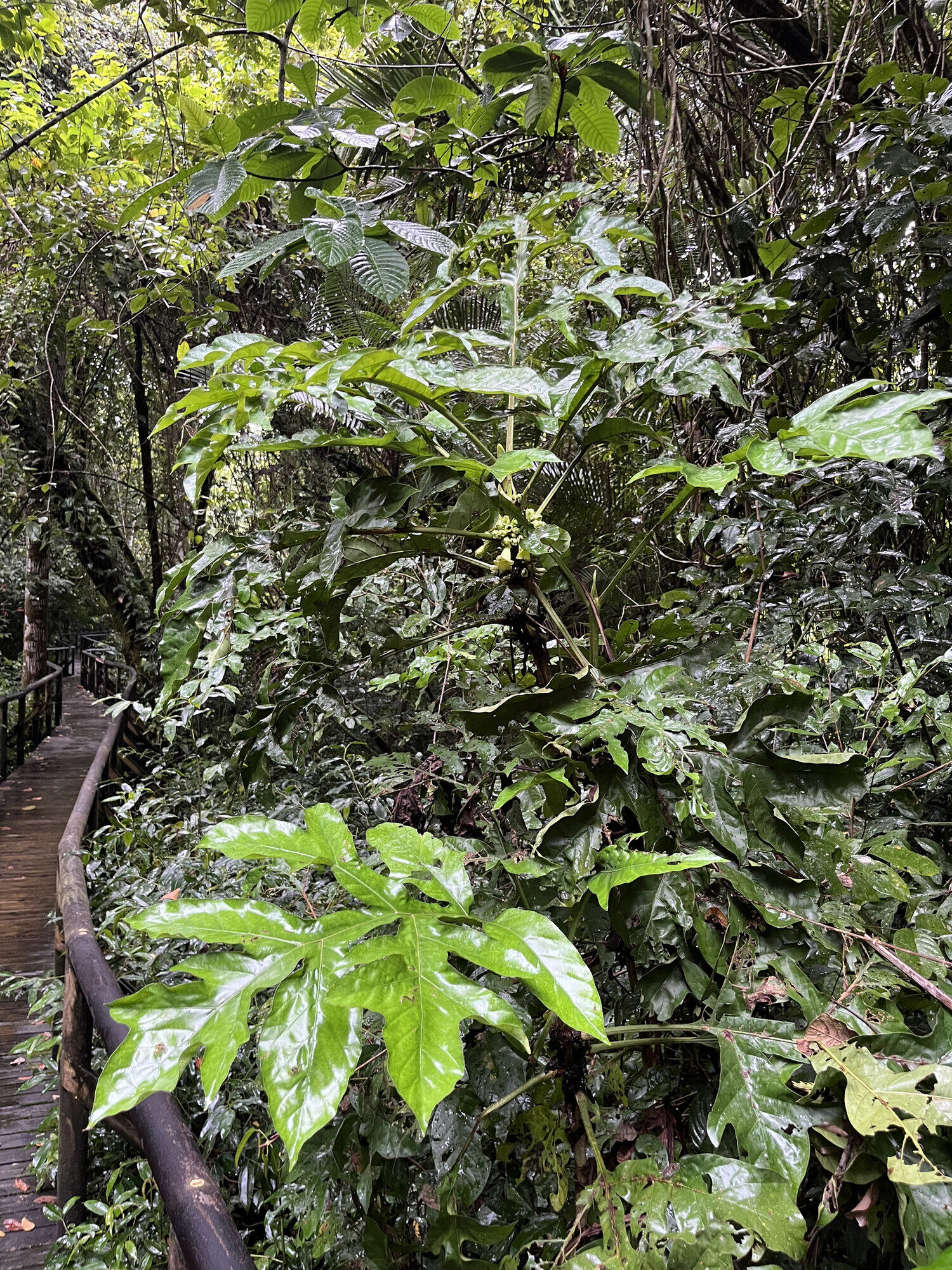
Pentagonia lobata grows as an evergreen shrub or small tree, reaching approximately 4.5 m tall according to the type collection notes. Like most members of its genus, it has a distinctly monopodial (single-stemmed) growth form that gives the plant a palm-like silhouette: a single unbranched trunk crowned with a whorl of large leaves clustered near the apex. This architecture is typical of shade-tolerant understory plants in tropical wet forests, where a compact crown positioned to intercept diffuse light is more efficient than spreading lateral branches. The genus Pentagonia occupies the understory to midstory layer of mature forest, well below the 30-40 m canopy of the surrounding trees. In its native habitat around Golfito and the Osa Peninsula, P. lobata grows amid the dense, dripping vegetation of lowland and premontane wet forest.
Leaves
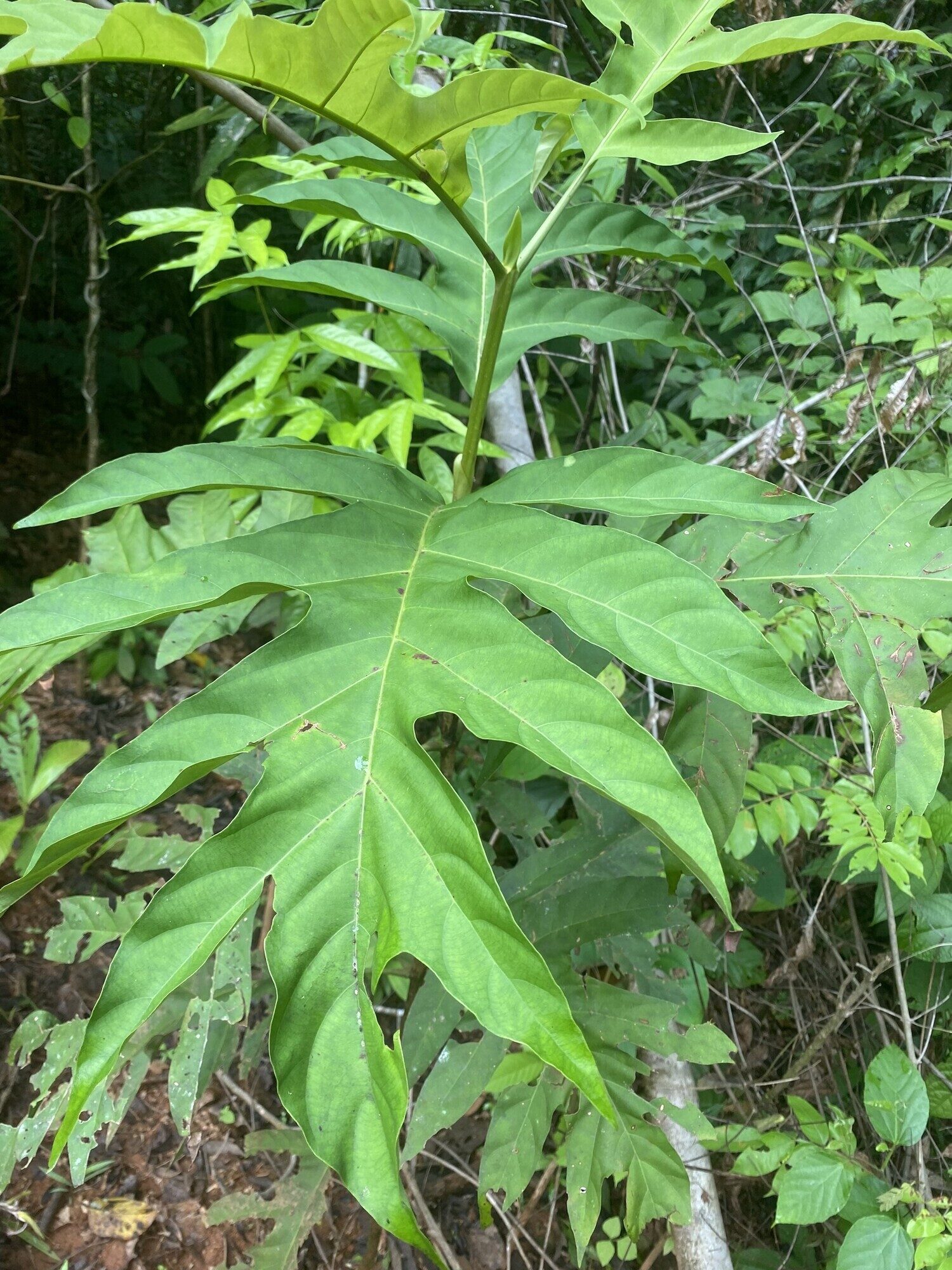
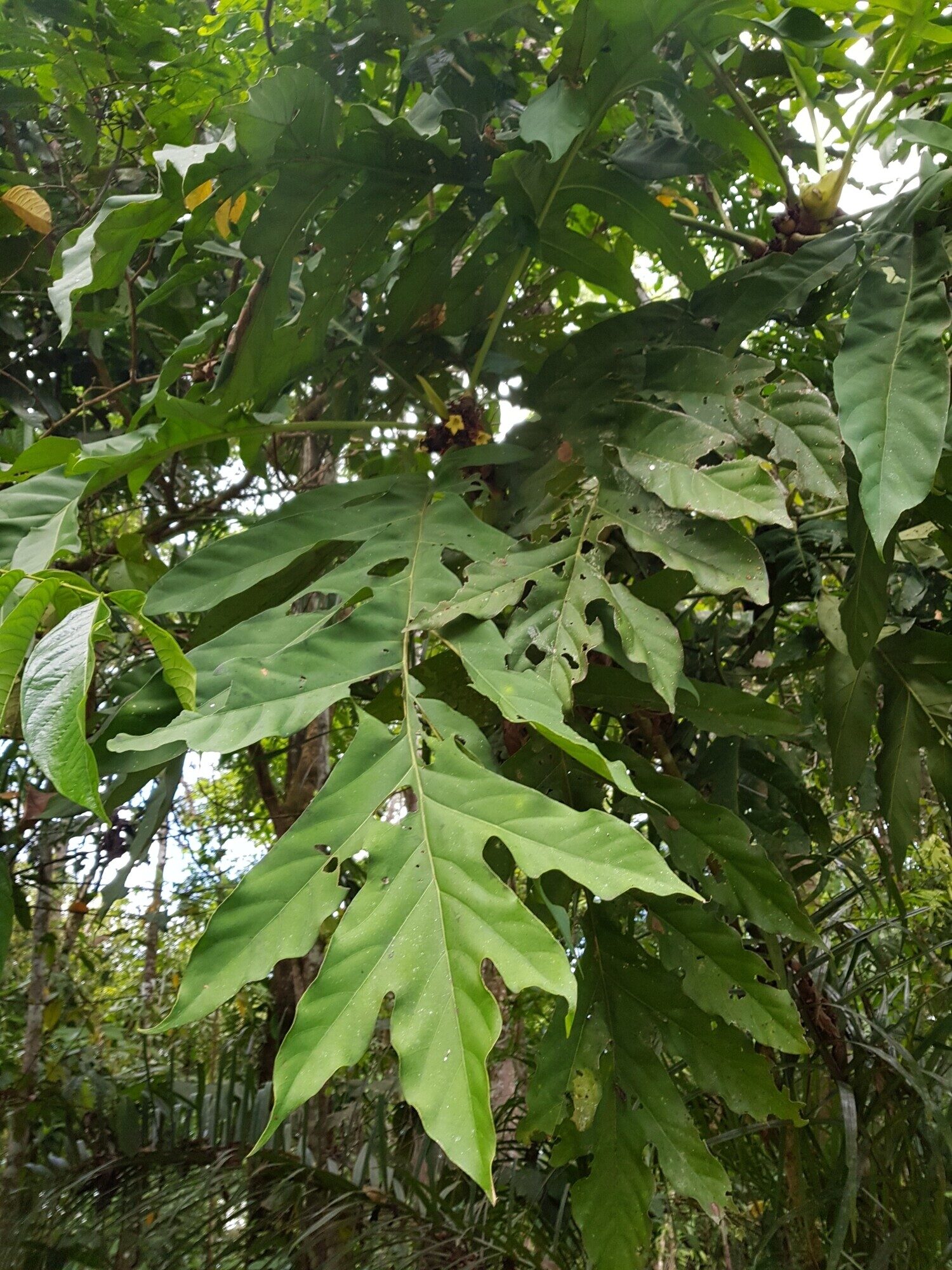
The leaves are the species' most striking feature and the source of its name. Arranged in opposite pairs as in all Rubiaceae, each leaf is pinnately lobed with 4 to 6 principal lobes per side, reaching up to about 1 m long according to the type collection. The lobing is relatively shallow compared to other lobed-leaved Pentagonia species: the sinuses (indentations between lobes) cut roughly one-third of the way to the midrib, versus three-quarters or more in the deeply lobed P. tinajita. The leaf surface is estrigulose (covered in fine, appressed hairs pointing one direction) to puberulent (finely hairy), becoming glabrescent (nearly smooth) with age. Domatia (small pockets that harbor mites) are absent. The venation is eucamptodromous, meaning secondary veins curve upward and fade before reaching the leaf margin.
A diagnostic feature shared across the genus is the striate epidermis: fine, closely spaced epidermal fibers that become visible on dried specimens. This character links Pentagonia to its closest relatives, Hippotis and Sommera, all three placed in the tribe Dialypetalantheae within the subfamily Ixoroideae. The large, strongly carinate (keeled) interpetiolar stipules are another genus-level marker, measuring up to 7.5 cm long in some species.
Flowers
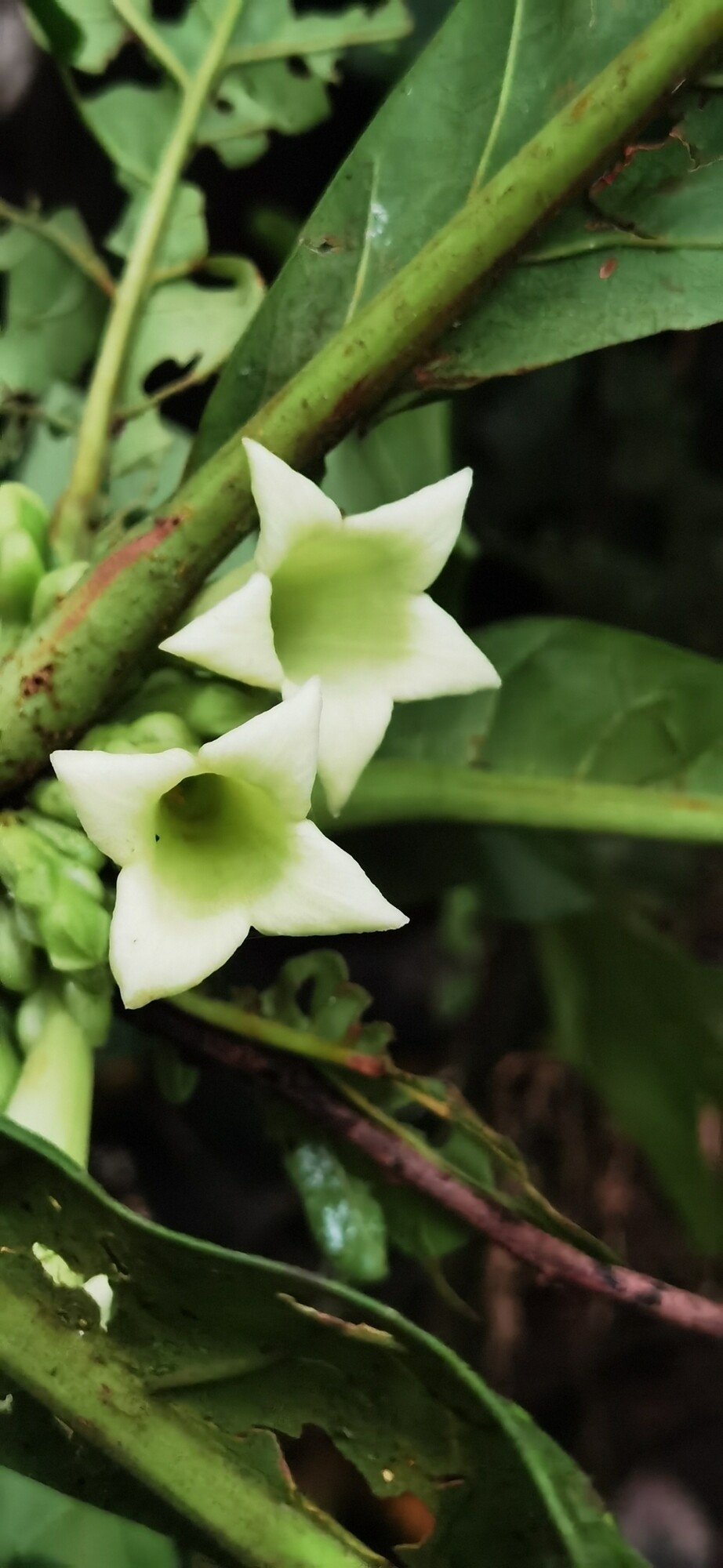
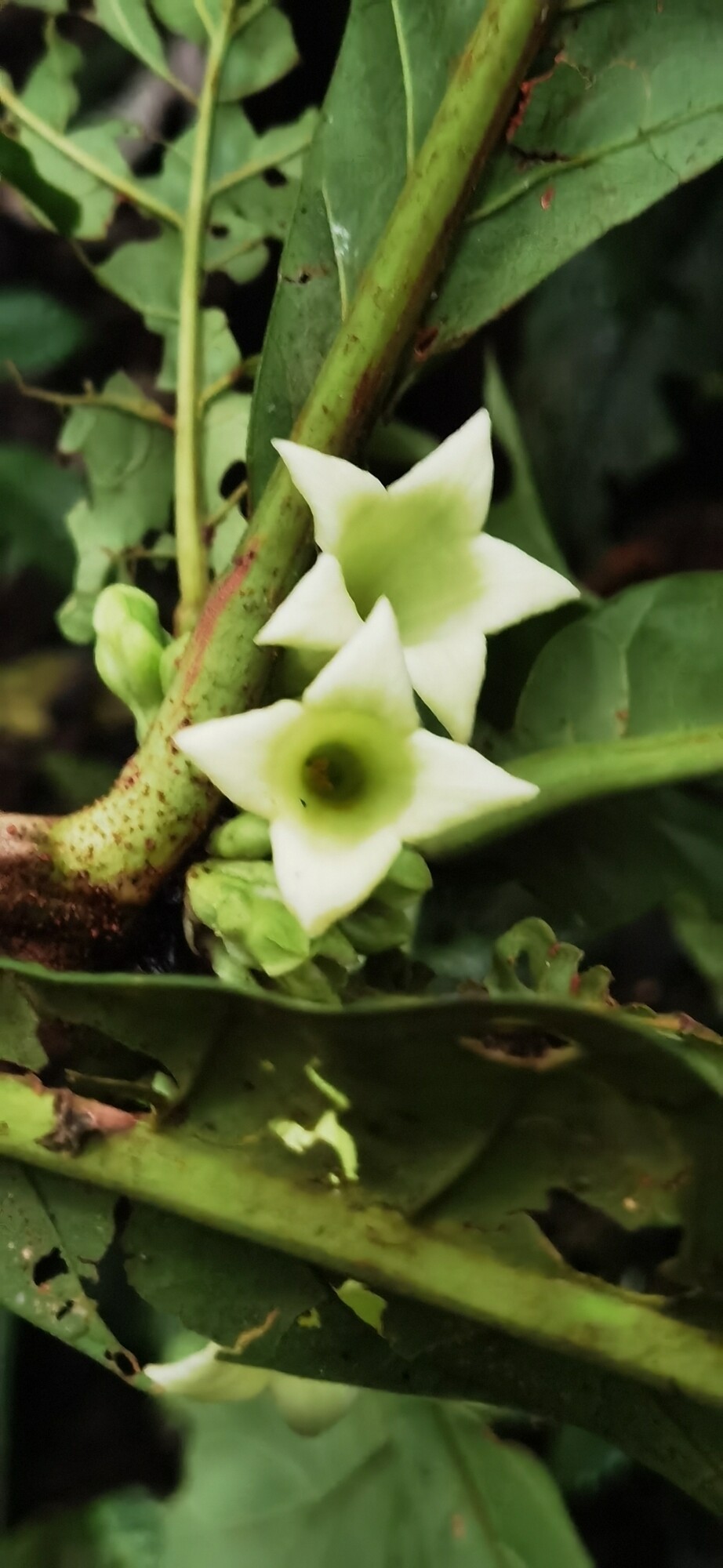
The flowers of P. lobata are borne in axillary, pedunculate cymes (branching flower clusters arising from the leaf axils). The corolla is greenish-white, broadly funnelform, and glabrous (smooth) on the outside, with five pointed lobes that spread outward to form a distinctive star shape. The calyx is spathaceous: rather than dividing into separate lobes, it splits along one side like a sheath, a character that helps distinguish P. lobata from species with conventional five-lobed calyces. Glands are positioned approximately at the middle of the flower tube. The collector Barry Hammel noted on the type specimen label that the "corola verde, rompiendo y saliendo del lado del caliz, el caliz asi quedando espadiforme" (green corolla, breaking out from the side of the calyx, the calyx thus becoming spathe-shaped), capturing the unusual floral mechanics in field observations.
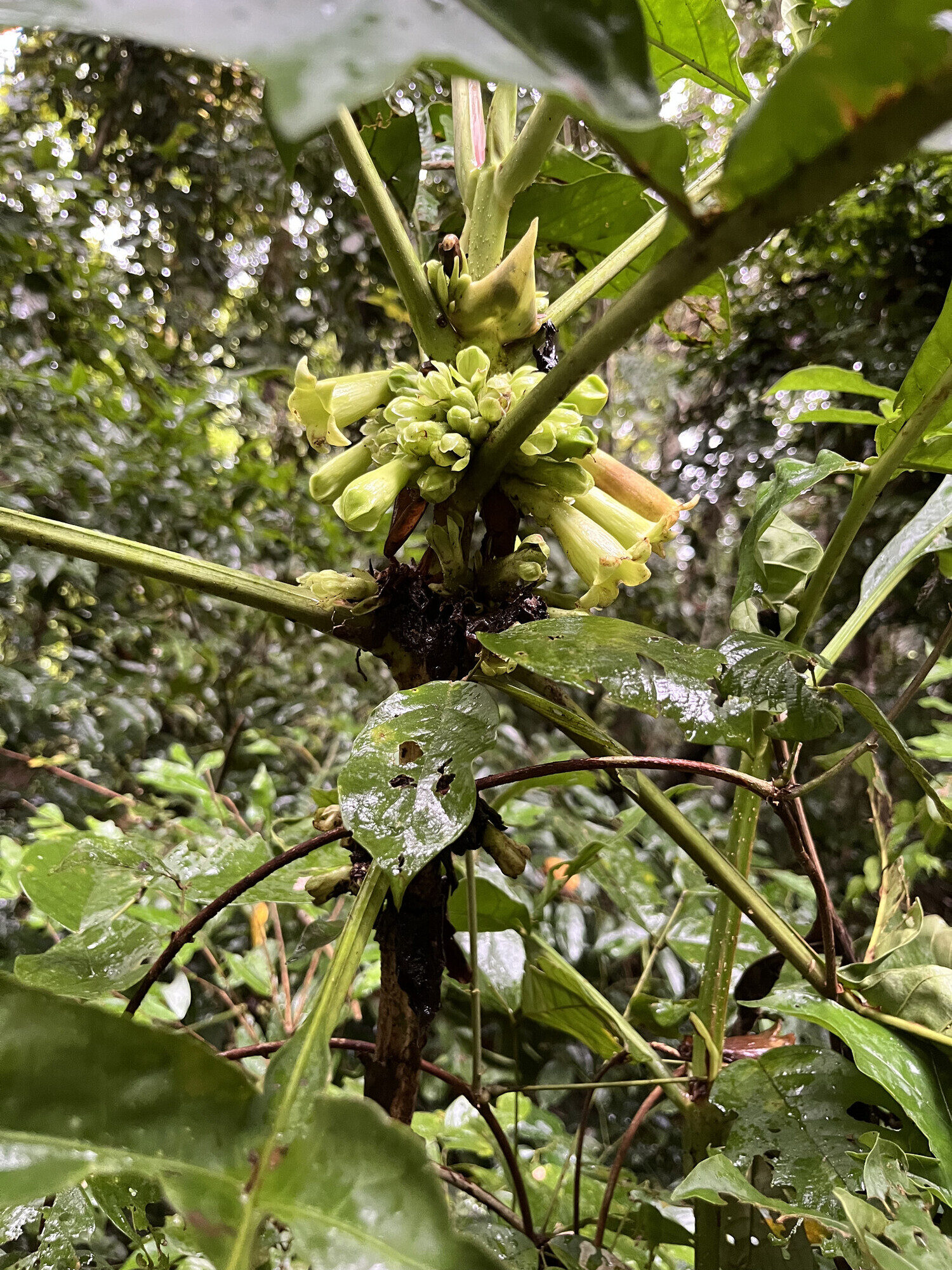
Flowers in the genus Pentagonia are pentamerous (five-parted), bisexual, and fleshy. An unusual feature documented in the closely related P. macrophylla at La Selva Biological Station is protandrous temporal dioecy: flowers go through a two-day cycle in which they function first as male (pollen-producing) and then as female (pollen-receiving), with all flowers on a single plant synchronized to the same phase on the same day. Pistillate-phase flowers produce more nectar than staminate-phase flowers, yet hummingbirds visit both phases at similar rates, ensuring effective cross-pollination between individuals at different stages.
Fruits
Fruits of Pentagonia are fleshy berries, ellipsoid to subglobose, containing angular seeds. In the better-studied P. macrophylla, fruits are globular and reach up to 28 mm in diameter, with edible pulp. Fruit color across the genus ranges from dark yellow to green to red-brown; in P. pinnatifida, ripe fruits are red-brown, ovate, and up to 3 cm long. Specific fruit descriptions for P. lobata have not been published in accessible sources, but given its phylogenetic position, the fruits likely follow this general pattern of medium-sized fleshy berries.
Herbarium Specimens
Distribution
Every verified herbarium record of Pentagonia lobata is from Costa Rica: 74 of the 75 GBIF records carry an explicit Costa Rica country tag, and the 75th is the Field Museum isotype of the type collection (Hammel 18619) from RNVS Golfito, which has no country tag in the database. Plants of the World Online lists the species' native range as Costa Rica only, making it a likely national endemic. The species is concentrated in Puntarenas Province, with 35 localities in the Brunca region alone. Key collection sites include the Refugio Nacional de Vida Silvestre Golfito (where the type was collected), the Reserva Forestal Golfo Dulce, Fila Gamba, Bahia Chal, Rio Piro, and several sites on the Osa Peninsula including the Los Charcos area. Additional records come from the Fila Tinamastes between Dominical and San Isidro de El General, and from the Cuenca del Savegre and Rio Baru drainages in San José Province, at elevations of 820-950 m. Collections span from 1951 to 2014, with the bulk of records concentrated in the 1990s and 2000s.
Its habitat spans two Holdridge life zones: tropical wet forest (bosque muy húmedo tropical) in the lowlands and premontane wet forest (bosque muy húmedo premontano) at higher elevations. It is an understory species of primary forest, inhabiting the dark, humid layer beneath the canopy where annual rainfall typically exceeds 4,000 mm. The Golfo Dulce region where most collections originate is one of the wettest and most biodiverse corners of Costa Rica, a zone where Chocoan and Central American floral elements intermingle.
Ecology
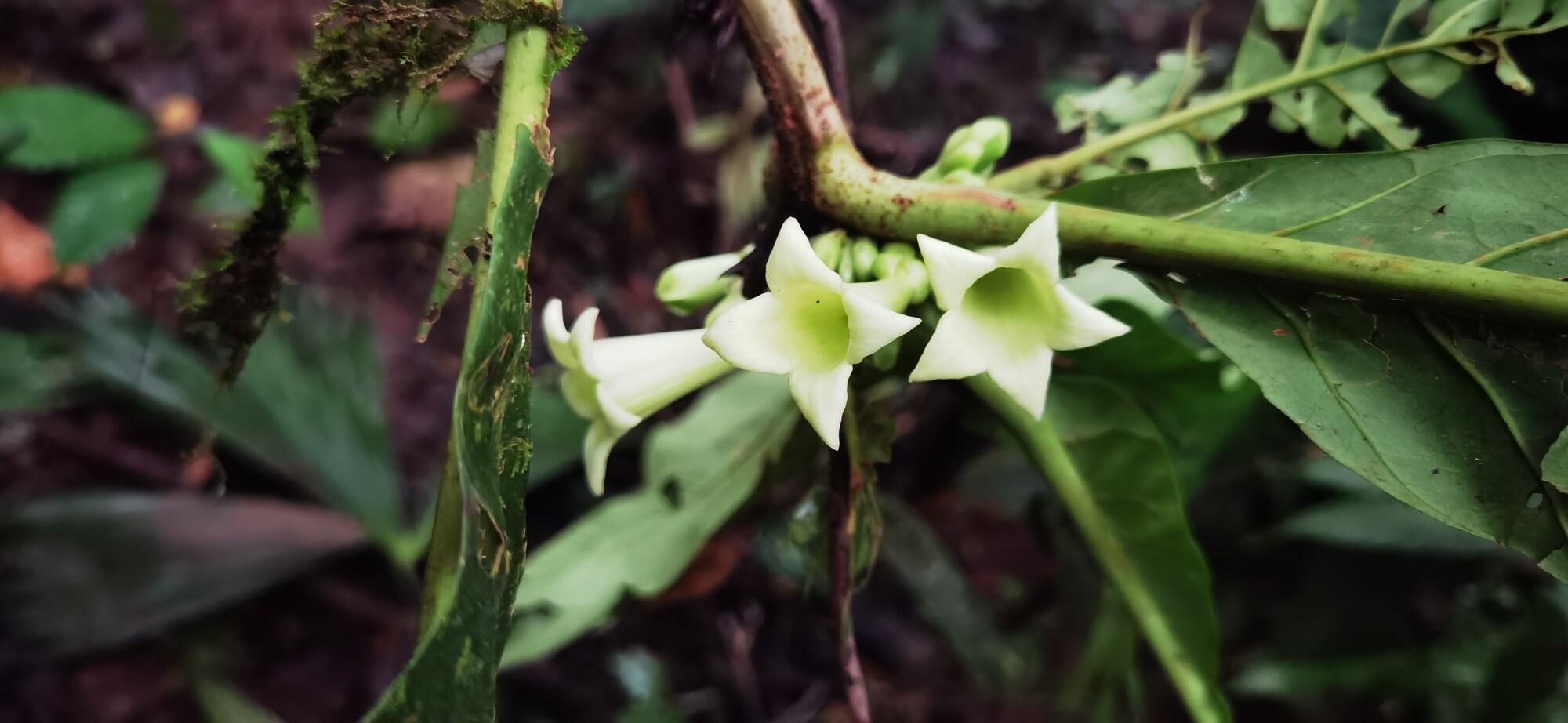
No ecological studies have focused specifically on P. lobata, but research on congeners provides insight into its likely biology. Lucinda McDade's 1986 study of P. macrophylla at La Selva Biological Station documented hummingbird pollination and the protandrous system described above. The greenish, funnelform flowers of P. lobata are consistent with this pollination syndrome: fleshy corollas with nectar glands positioned at the tube's midpoint would attract hummingbirds probing for nectar. The flowers' axillary position on the stem, close to the trunk, also suits hummingbird access rather than wind or bee pollination.
Seed dispersal in Pentagonia involves parrots, bats, and monkeys, reflecting the large, fleshy berries typical of the genus. In the wet forests of the Osa Peninsula and Golfito, likely dispersers include white-faced capuchins (Cebus imitator), spider monkeys (Ateles geoffroyi), and fruit bats such as the Jamaican fruit bat (Artibeus jamaicensis), all common frugivores in these forests. The edible pulp documented in P. macrophylla and P. pinnatifida suggests the fruits reward their dispersers with a nutritive investment. Among some Pentagonia species, local people eat the fruit raw, and the leaves and fruits of P. pinnatifida are brewed as a tea used traditionally as a blood purifier.
Taxonomic History
The genus Pentagonia was established by George Bentham in 1845 in The Botany of the Voyage of H.M.S. Sulphur, based on material collected during Captain Sir Edward Belcher's expedition (1836-1842) along the Pacific coasts of Central and South America. The type species, P. macrophylla, was described from material collected along the Pacific coast of the Americas. The name derives from Greek pente (five) and gonia (angle), describing the five-parted flowers. Today the genus contains approximately 43 accepted species, ranging from Guatemala to northern Brazil. Colombia is the center of diversity with 22 species, while roughly 12 occur in Costa Rica. More than half of the described species were named in the past two decades, reflecting how poorly explored these understory plants have been.
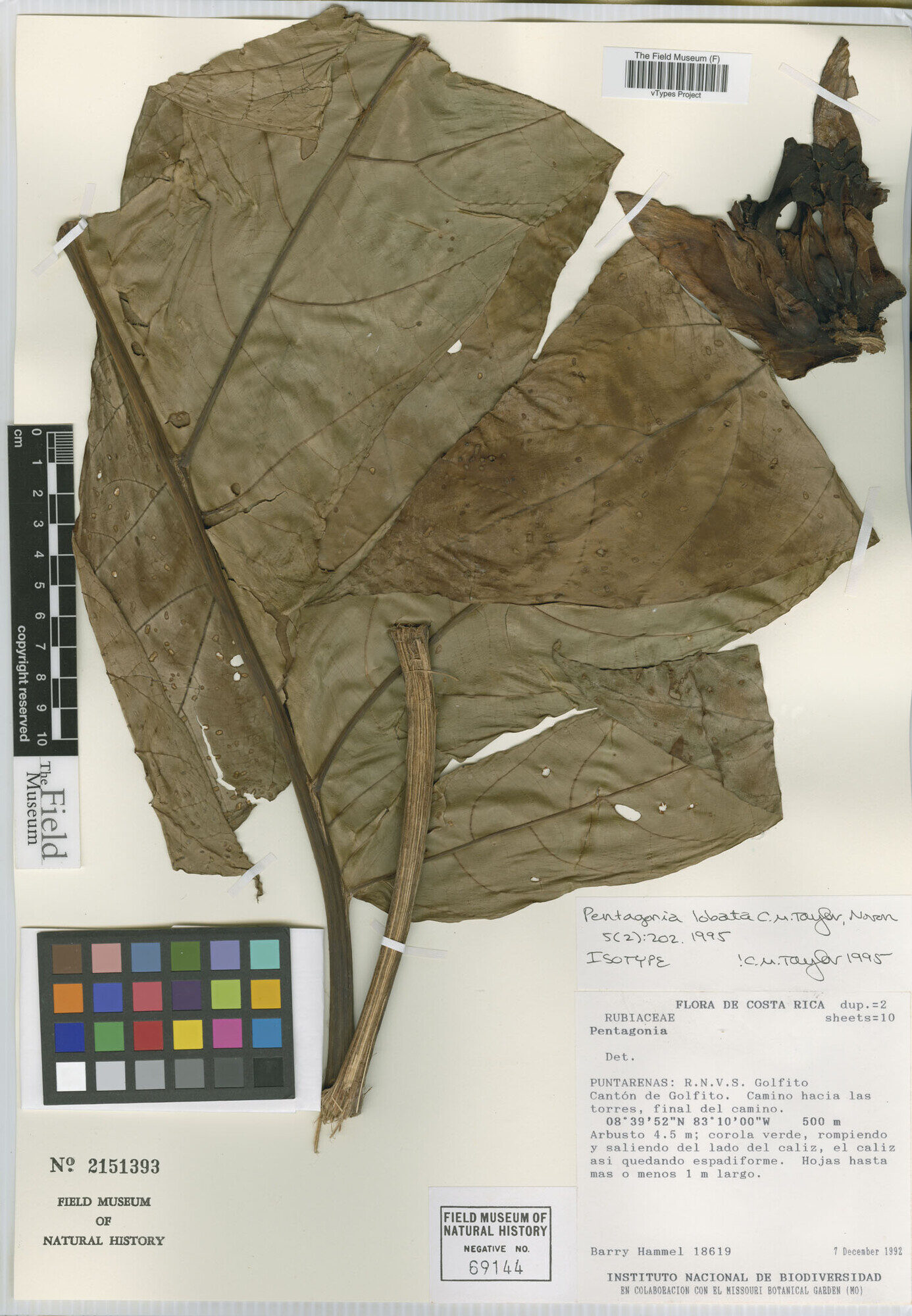
Pentagonia lobata itself was described by Charlotte M. Taylor in June 1995, published in Novon (volume 5, page 202, with illustration fig. 1D) as part of a paper on new Rubiaceae from Costa Rica and Panama. Taylor (born 1955), who earned her Ph.D. from Duke University in 1987, is a curator at the Missouri Botanical Garden and one of the most prolific botanical taxonomists of her generation. She specializes in Neotropical Rubiaceae and has described over 500 species, including many Pentagonia. The type collection was made by Barry E. Hammel (collection number 18619) on 7 December 1992 at the Refugio Nacional de Vida Silvestre Golfito, Cantón de Golfito, Puntarenas Province, at 500 m elevation. Hammel, also of the Missouri Botanical Garden and long based at INBio in Costa Rica, is an editor of the Manual de Plantas de Costa Rica and one of the country's most prolific plant collectors. The holotype is deposited at the Missouri Botanical Garden (MO), with isotypes at the Museo Nacional de Costa Rica (CR) and the Field Museum (F).
The specific epithet lobata, from Latin lobatus meaning "lobed," refers to the pinnately lobed leaves. The species has remained nomenclaturally stable since its description, with no synonyms or transfers to other genera. It is treated in the Flora Mesoamericana (Davidse et al. 2012) and in the Manual de Plantas de Costa Rica, Volume VII (Hammel et al. 2014), which covers the Rubiaceae.
Similar Species
Before 2015, only two of the ten Pentagonia species known from Costa Rica had lobed leaves: P. lobata and P. tinajita. That year, Barry Hammel described P. gambagam as a third. The three can be distinguished by the depth of their leaf lobing: P. tinajita has the deepest lobes, cut three-quarters or more of the way to the midrib; P. lobata is intermediate, with lobes reaching about one-third of the distance to the midrib; and P. gambagam has the shallowest lobes of all. On the Osa Peninsula, the striking P. osapinnata (also described by Hammel in 2015) pushes the envelope further with fully compound, pinnate leaves bearing 8 to 10 separate leaflets per side, making it the first pinnately compound species in the entire Rubiaceae. A specimen of P. osapinnata had been collected by Gerardo Herrera over twenty years before its formal description and tentatively labeled "Pentagonia cf. lobata," illustrating both the rarity of these lobed-leaved species and how poorly known they were. Other Costa Rican congeners such as P. donnell-smithii, P. wendlandii, and P. costaricensis have entire (unlobed) leaves and are readily distinguished.
Conservation Outlook
Pentagonia lobata has not been formally assessed for the IUCN Red List of Threatened Species. Its restricted range, known almost entirely from the wet forests of southern Pacific Costa Rica, would likely qualify it for at least Vulnerable status under IUCN criterion B (limited geographic range) if the population proves to be genuinely endemic. The 75 GBIF records across 43 mapped localities suggest the species is not extremely rare within its range, but it is geographically concentrated in a region that faces ongoing pressure from agricultural conversion, particularly oil palm and cattle ranching, and from settlement expansion in the Golfito and Osa corridors.
The species benefits from the extensive protected area network in its core range. Collections from the Refugio Nacional de Vida Silvestre Golfito, the Reserva Forestal Golfo Dulce, Corcovado National Park, and Piedras Blancas National Park confirm its presence within reserves. These protected areas form a biological corridor encircling the Golfo Dulce, providing connectivity between populations. As an understory species of mature wet forest, P. lobata depends on intact canopy cover and is unlikely to persist in degraded or fragmented habitats. Its future depends on the continued protection of the lowland wet forests of the Osa-Golfito region, one of the last large tracts of such forest remaining in Central America.
Resources & Further Reading
Taxonomy & Nomenclature
Plants of the World Online entry with accepted name, distribution, and synonymy.
Nomenclatural data, type specimens, and literature from Missouri Botanical Garden.
International Plant Names Index record with publication details and type specimen data.
Phytoneuron 2015-46. Key taxonomic treatment with P. lobata comparisons, describing P. gambagam, P. osapinnata, and P. gomez-lauritoi.
New species from Colombia with genus-level review, species counts, and tribal classification in Dialypetalantheae.
Comprehensive overview of Rubiaceae classification in Taxon, covering tribal placement of Pentagonia.
American Journal of Botany. Molecular phylogeny showing the relationships of Pentagonia, Hippotis, and Sommera.
Species Information
Global occurrence records and specimen data for P. lobata, including 75 records, all from Costa Rica.
Direct GBIF record for the P. lobata isotype at the Field Museum, confirming the 75th GBIF record is a Costa Rica type specimen from RNVS Golfito (no country tag in the database).
Citizen science observations with field photographs from Costa Rica and Panama.
Costa Rican forestry and ecology reference with genus-level information on habit, ecology, and dispersal.
Detailed species account for the type species of the genus, with morphology, ecology, and uses.
Related Reading
Oecologia 68(2):218-223. Hummingbird pollination biology and temporal dioecy at La Selva, Costa Rica.
Journal of Natural Products 66(8):1132-5. Antifungal compounds from Pentagonia roots active against resistant Candida albicans.
News on the discovery of P. osapinnata, the first pinnately compound species in Rubiaceae, initially misidentified as P. cf. lobata.
Novon 20(4):470-480. New species including P. osaensis, another Osa Peninsula endemic.
Biography of the author of P. lobata, one of the most prolific living botanical taxonomists.
Feature article on Taylor's career and contributions to tropical plant taxonomy.
Chemotaxonomic review of the tribe containing Pentagonia, documenting alkaloids, terpenoids, and fatty acids.