Hot Lips
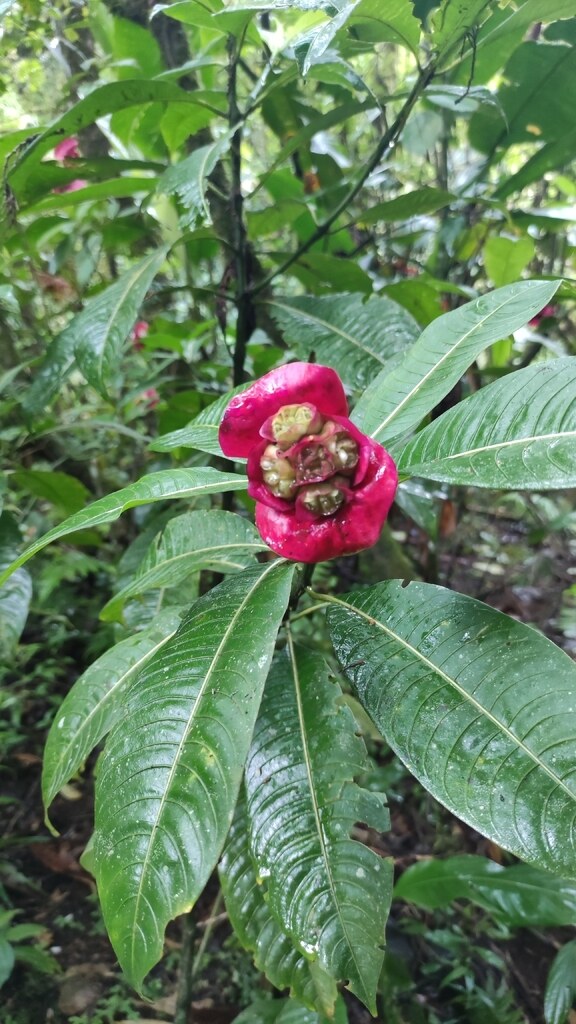
Palicourea elata (Sw.) Borhidi — The unmistakable "kissing plant" of Central American rainforests, whose brilliant red bracts open like painted lips to attract hummingbirds before revealing the true flowers within.
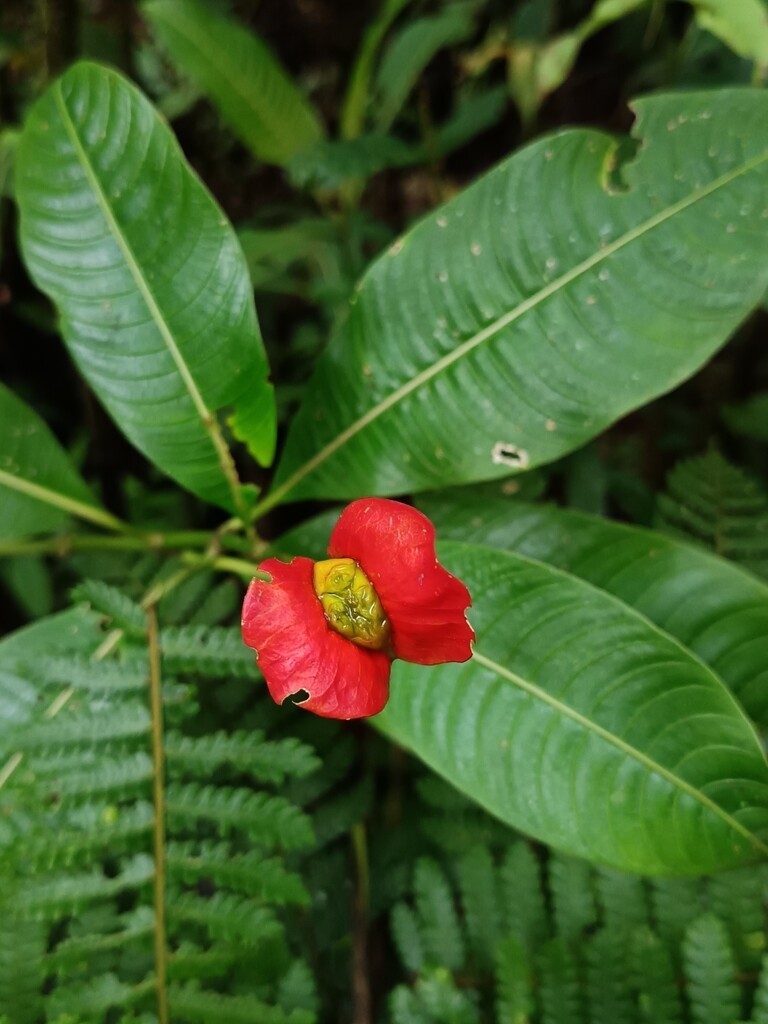
Few plants in the Neotropical understory command attention quite like Palicourea elata. Rising from the dim forest floor on slender stems, its inflorescences glow like beacons: pairs of fleshy red bracts that look exactly like a woman's lips, rouged and slightly parted. The resemblance is so uncanny that the plant has earned the Spanish name labios de puta (prostitute's lips), along with more polite alternatives like "hot lips" and "girlfriend kiss." But what appears to be a flower is actually an elaborate deception. The showy red structures are bracts, modified leaves that serve as billboards to attract pollinators. The real flowers are small, tubular, and nearly hidden within.
Despite becoming one of the most shared botanical images on social media, hot lips remains surprisingly understudied. Its viral fame has not translated into effective protection. The species depends entirely on intact rainforest, and as deforestation across Central and South America continues to fragment its habitat, populations outside protected areas face an uncertain future.
Identification
Bracts and Flowers
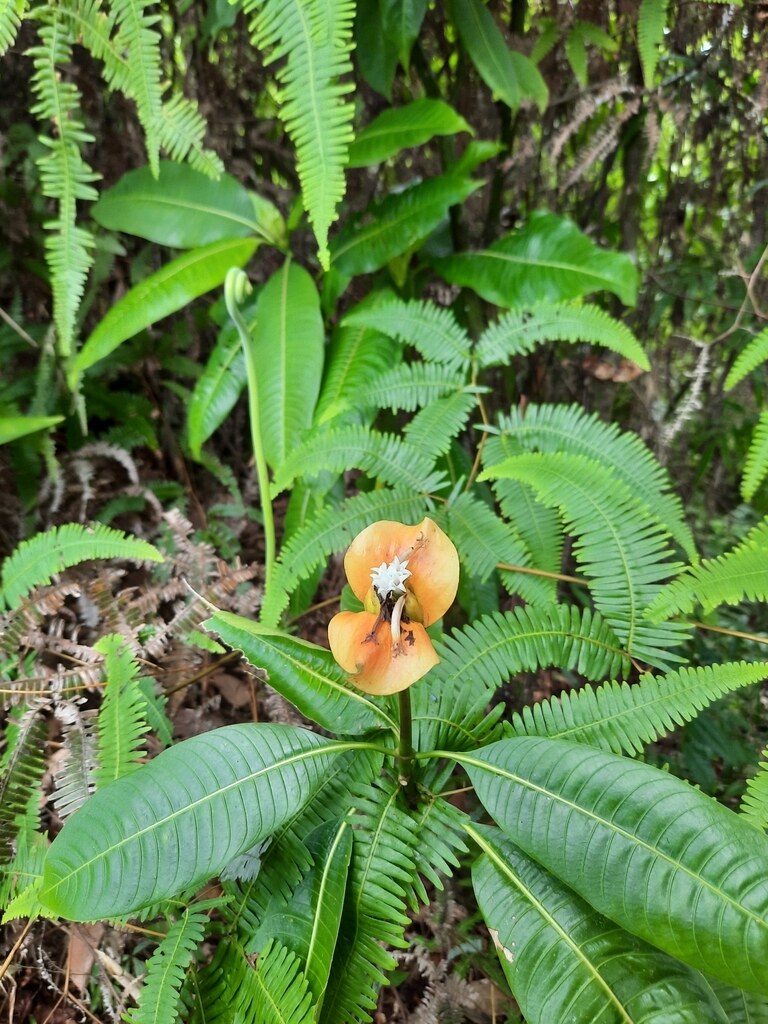
The famous "lips" are technically bracts: modified leaves that subtend the true flowers. When young, the pair of bracts press tightly together, creating the unmistakable lip-like appearance that has made this species an internet sensation. The bracts are thick, fleshy, and intensely red, sometimes with orange or pink tones. As the inflorescence matures, the bracts spread apart to reveal small tubular white or yellow flowers clustered within. Each flower is about 1-2 cm long with a narrow corolla tube that opens into five small lobes. The bracts may persist for weeks, slowly fading from brilliant red to dull maroon as the flowers develop into fruits.
Leaves and Growth Form
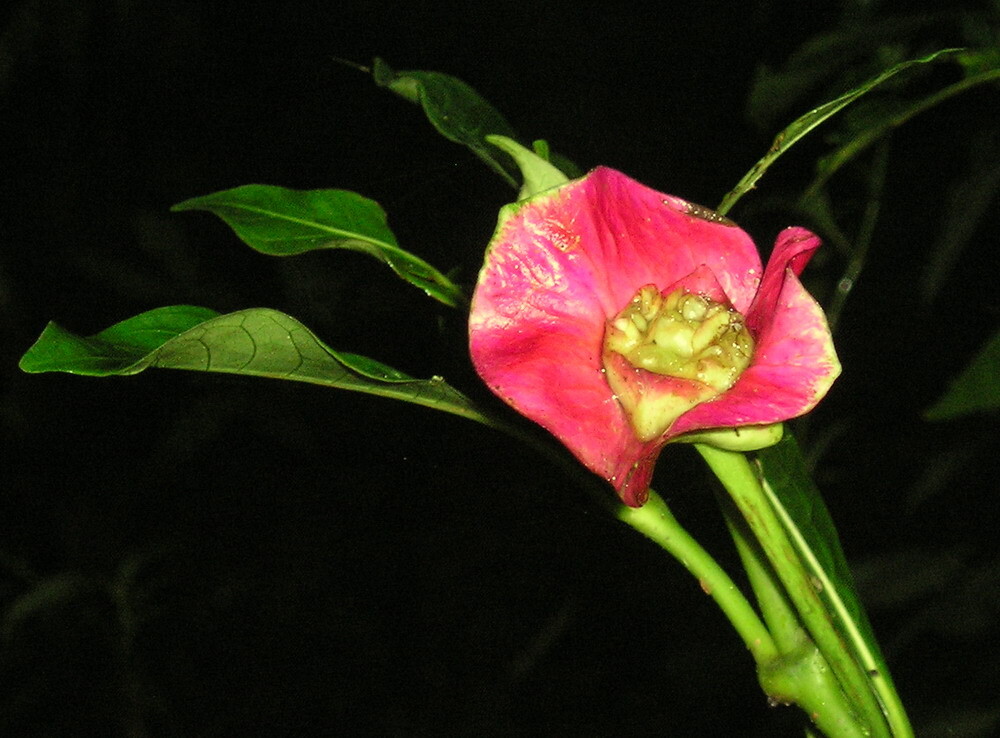
Hot lips grows as a shrub or small treelet, typically 1-3 meters tall, with an open, somewhat spindly architecture adapted to catching light in the forest understory. The leaves are large, elliptic to oblong, 15-30 cm long, with prominent veins and a glossy dark green upper surface. They are arranged oppositely on the stems, with interpetiolar stipules characteristic of the coffee family. The stems are soft and green when young, becoming woody with age but never achieving significant girth. Plants often develop multiple stems from the base, forming loose clusters rather than single-trunked trees.
Fruits
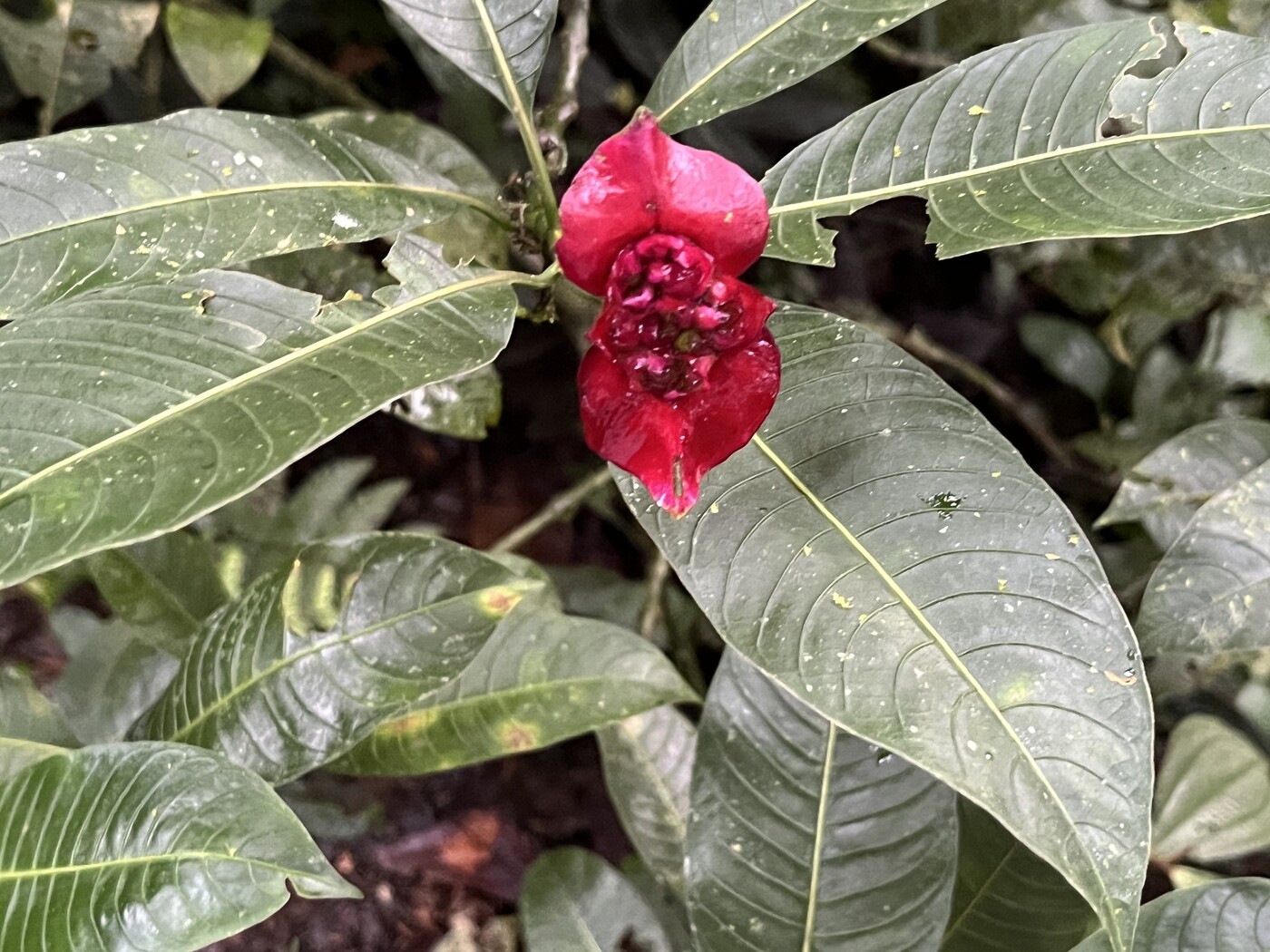
After pollination, the flowers develop into small drupes that ripen from green to dark blue or black. Each fruit is about 5-8 mm in diameter and contains one or two seeds surrounded by thin, somewhat sweet pulp. The dark fruits attract frugivorous birds, particularly tanagers, thrushes, and manakins, which swallow the fruits whole and disperse the seeds after passing through their digestive systems. This bird-mediated dispersal allows the species to colonize new understory sites throughout the forest.
Distribution
Palicourea elata ranges from central Mexico through Central America to Colombia and Ecuador, with a disjunct population in Jamaica. The species follows the wet lowland and foothill forests of the Caribbean and Pacific slopes. GBIF records show the species most densely in Costa Rica, with over 1,800 documented occurrences concentrated in Puntarenas province (including the Osa Peninsula and Golfo Dulce region), followed by Guanacaste, Alajuela, and Cartago.
In the Brunca region, hot lips grows scattered through the wet forest understory, particularly along streams and in ravines where humidity remains high. The species requires deep shade and moist conditions, thriving best where intact canopy keeps the understory dark and humid. Elevational range spans sea level to about 1,750 meters, with most populations concentrated below 500 meters in the lowland wet forest zone, though the 2015 pollination study included a population at Zurquí at 1,570 meters. When landowners clear forest for pasture or crops, these understory specialists are among the first casualties.
Ecology
Why would a plant evolve to look like lips? The answer lies in the ecology of pollination in the dark rainforest understory. Unlike many flowers that attract pollinators with fragrance, Palicourea elata produces no detectable scent. In the dim, humid conditions where it grows, volatile chemical signals dissipate quickly and travel poorly through dense vegetation. Visual signals, however, can travel through the understory light and stand out dramatically against the green background. The bright red bracts function as flags, advertising the presence of nectar to passing hummingbirds.
Pollinators
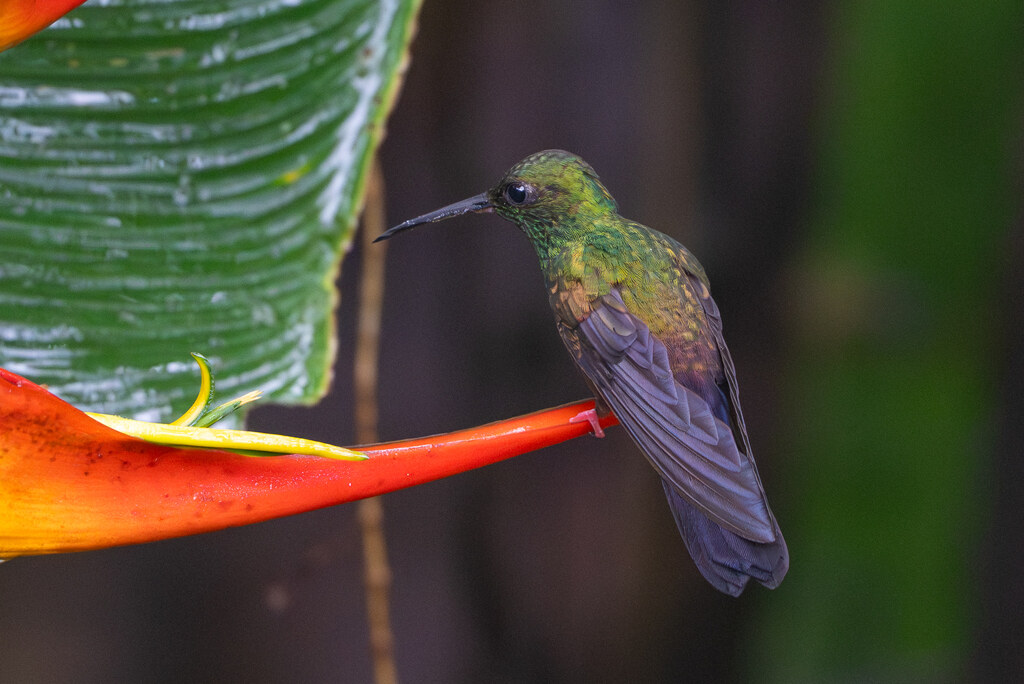
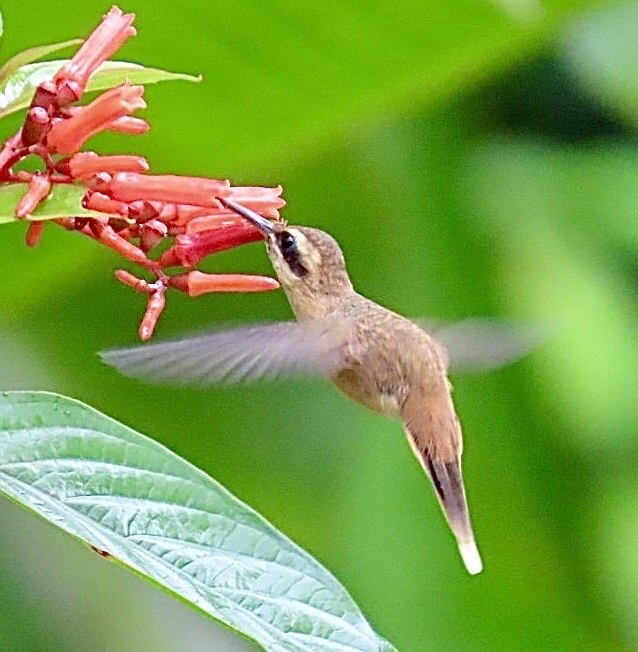
A 2015 study of four populations along Costa Rica's Atlantic slope identified the bronze-tailed plumeleteer (Chalybura urochrysia) as the most consistent hummingbird pollinator, visiting flowers in all populations studied. This aggressive, territorial species forages in the understory and mid-strata, and is known to defend patches of Palicourea flowers against rivals. The stripe-throated hermit (Phaethornis striigularis) also visits, though its behavior varies: in some populations it serves as a legitimate pollinator, while in others it acts as a nectar thief, taking nectar without inserting its beak into the corolla tube and thus failing to contact the reproductive parts.
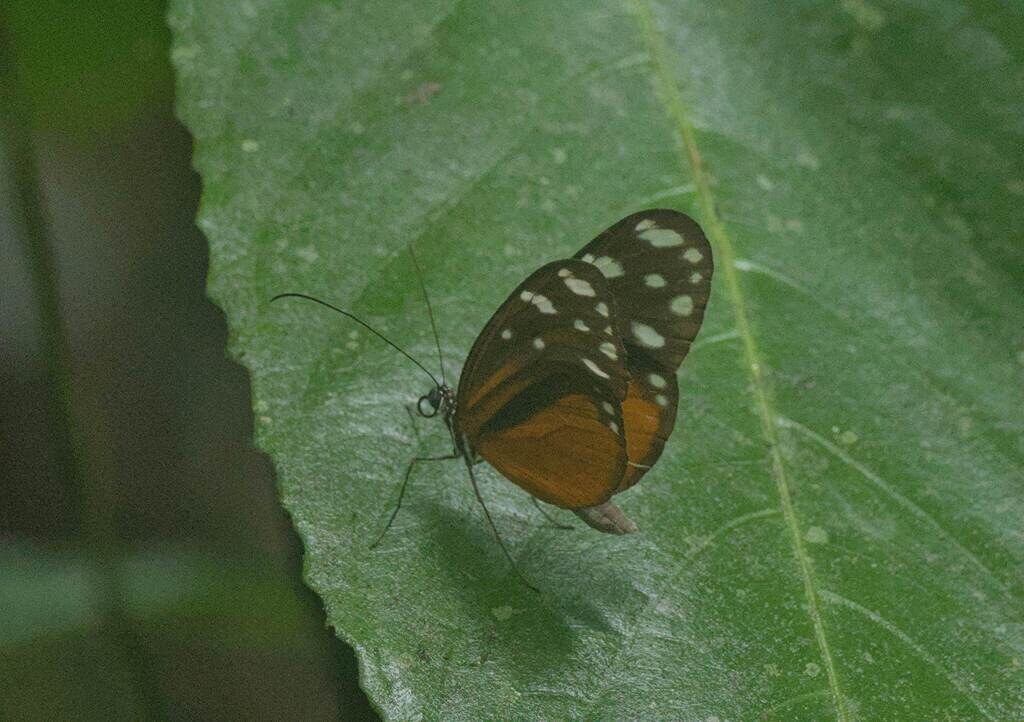
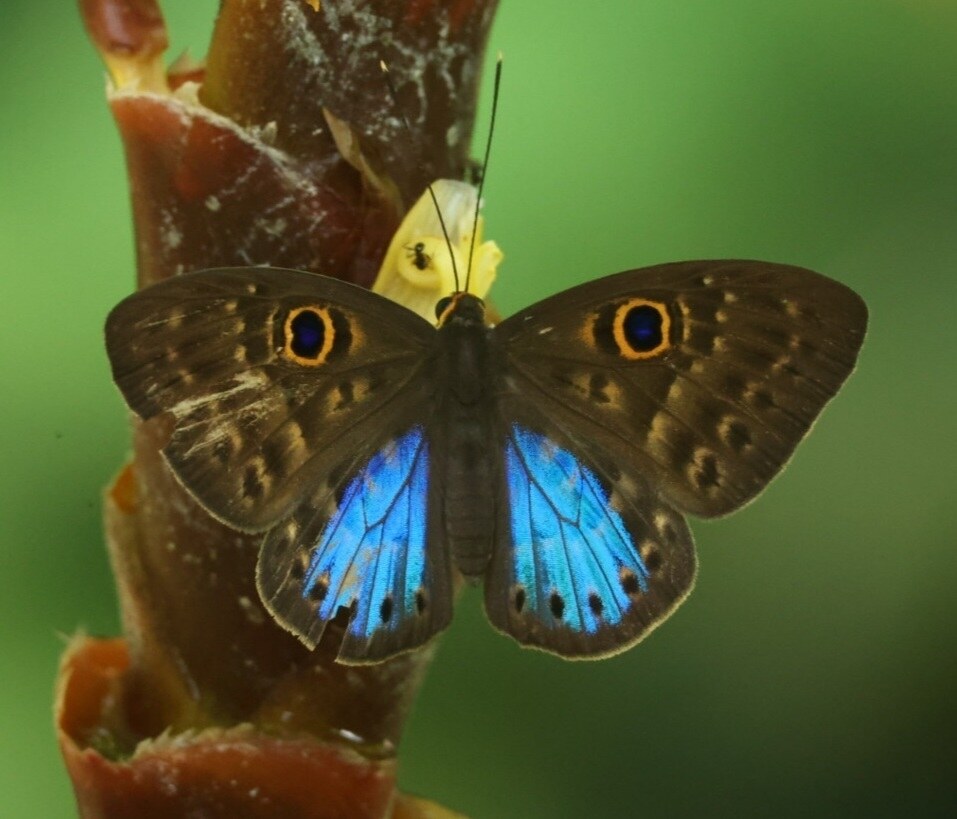
Butterflies contribute to pollination as well. Two species appear consistently across populations: Hyposcada virginiana evanides (Nymphalidae) and Eurybia lycisca (Riodinidae). While butterflies are generally less effective pollinators than hummingbirds for tubular flowers, their frequent visits may provide backup pollination when hummingbird activity is low.
Distyly and Breeding System
Like many members of the coffee family, Palicourea elata exhibits distyly: flowers come in two forms that differ in the relative positions of stamens and stigma. "Pin" flowers have long styles with the stigma exposed at the mouth of the corolla and short stamens hidden within; "thrum" flowers have the reverse arrangement. This reciprocal positioning promotes cross-pollination between morphs and reduces self-fertilization. In Costa Rican populations, researchers found that thrum morphs were preferred by pollinators (receiving 78-92% of visits in some sites), and fruit set was highest in thrum flowers. However, multiple populations showed signs that the distylous system is breaking down. All four studied populations deviated from the expected 1:1 ratio of pin to thrum plants, a condition called anisoplethy. At Rara Avis, only 3 pin plants existed alongside 19 thrums. The self-incompatibility mechanism itself showed breakdown in at least two populations, with seedless fruits forming at sites where pollen limitation appeared severe. Small, isolated populations may be driving the erosion of a breeding system that depends on both morphs being present in roughly equal numbers.
Taxonomic History
The species was first described by Swedish botanist Olof Swartz in 1788 as Cephaelis elata, based on specimens he collected during his pioneering botanical expedition to Jamaica (1783-1786). Swartz, a student of Carl Linnaeus the Younger at Uppsala, spent three years exploring the Caribbean, amassing over 6,000 plant specimens that would form the basis of his landmark Prodromus and Nova Genera et Species Plantarum. The type specimen, collected from Jamaican forests, is now held at the Swedish Museum of Natural History. Swartz was among the most important post-Linnaean botanists of the Caribbean.
The species has accumulated a long trail of synonyms as subsequent botanists placed it in different genera: Callicocca elata (Gmelin, 1791), Tapogomea elata (Poiret, 1806), Evea elata (Standley, 1916), Uragoga elata (Kuntze, 1891), and Psychotria elata (Hammel, 1991). A heterotypic synonym, Cephaelis punicea Vahl, was described from different material but refers to the same species. For most of the 20th century, the name Psychotria elata dominated the literature.
However, phylogenetic studies revealed that Psychotria as traditionally defined was not monophyletic: its species belonged to several distinct evolutionary lineages. In 2011, Hungarian botanist Attila Borhidi transferred the species to Palicourea, which now includes most of the hummingbird-pollinated species formerly placed in Psychotria. The genus Palicourea contains roughly 694 accepted species across the Neotropics, making it one of the largest plant genera on earth. Many share the strategy of attracting pollinators with brightly colored bracts rather than fragrant flowers. The current accepted name is Palicourea elata (Sw.) Borhidi.
The genus name itself carries a human story. Palicourea was coined by French botanist Jean Baptiste Aublet in 1775, during his survey of the plants of French Guiana. Rather than derive it from Latin or Greek, Aublet named the genus after the Palikur people, an indigenous group of the Guiana coast. His contemporaries considered this practice of borrowing indigenous names "barbarous," but Aublet's name survived, and it now applies to one of the most species-rich plant genera in the Americas.
Similar Species
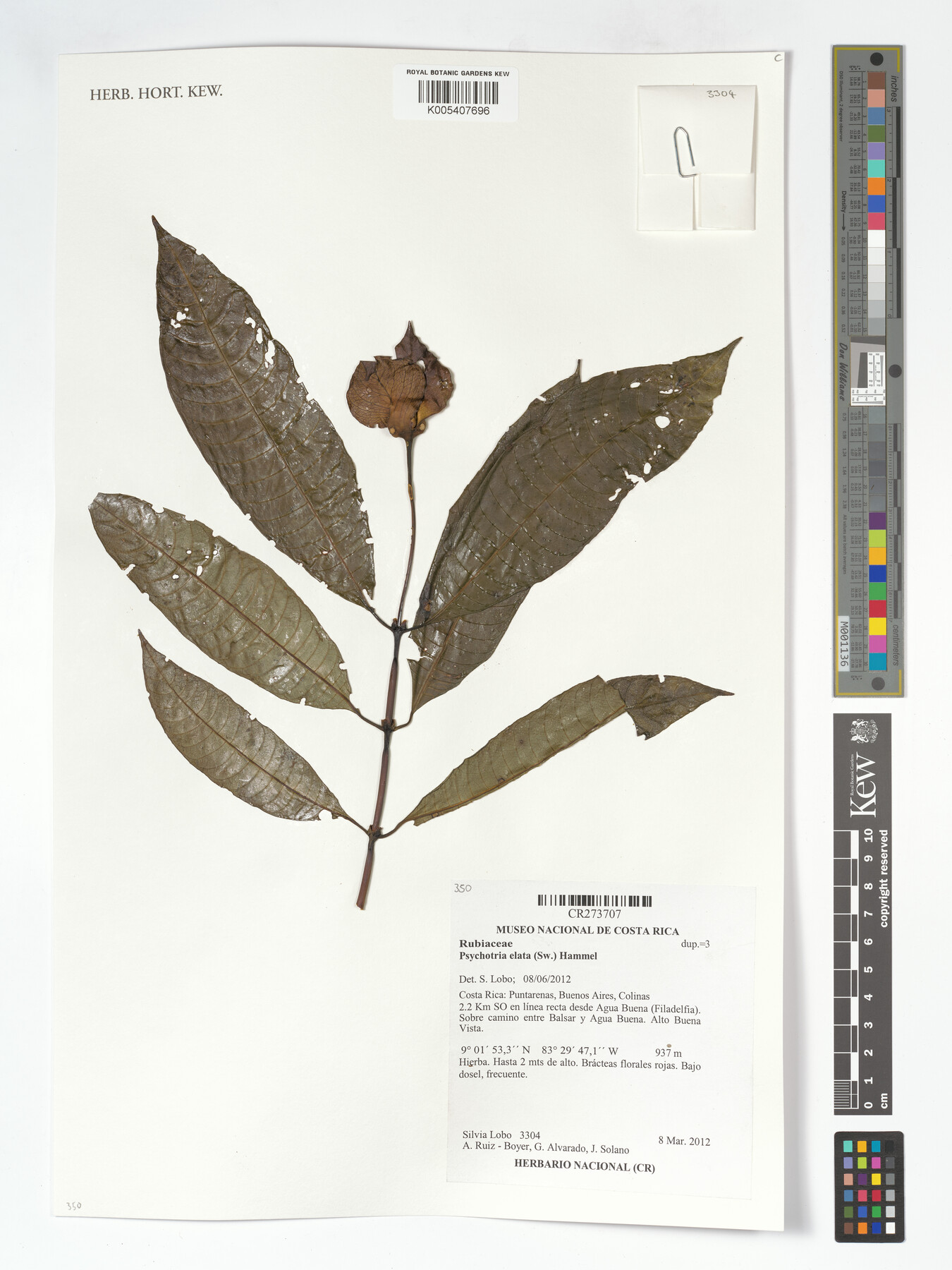
Several related species also produce showy bracts that may be confused with P. elata. Palicourea tomentosa (syn. Psychotria poeppigiana) is the most frequent source of confusion: it also has red bracts but they are usually smaller and more rounded. The most reliable field character is texture. P. elata is glabrous throughout: smooth bracts, smooth stems, smooth leaves. P. tomentosa, as its name suggests, is tomentose: bracts, stems, and leaves are all covered in soft hairs. Fruit color also differs: P. elata produces black or dark blue-black drupes, while P. tomentosa has bright blue fruits. Both species occur in the Brunca region, sometimes growing near each other in the same forest patches, and casual observers frequently apply "hot lips" to either species.
Chemistry & Traditional Uses
The Guna (Kuna) people of Panama and Colombia and the Ngabe-Bugle (Guaymi) people of western Panama use bark and leaf preparations of P. elata to treat dyspnea and other respiratory ailments. In western Panama, decoctions of the plant have also been documented for treating earaches, coughs, skin rashes, dizziness, and dementia. These traditional uses extend to related Palicourea species throughout the Neotropics, where indigenous and mestizo healers apply leaf infusions and decoctions for body aches, arthritis, and skin conditions.
Alkaloid Chemistry
Phytochemical surveys of Costa Rican Palicourea species have identified strictosidine as the major alkaloid in P. elata. Strictosidine is a tryptamine-iridoid alkaloid, biosynthesized from the amino acid-derived tryptamine and the monoterpene-derived iridoid secologanin. This compound serves as the universal precursor to over 2,000 monoterpene indole alkaloids, many of which possess powerful pharmacological effects. The genus Palicourea is renowned for its intriguing diversity of such alkaloids, including simple tryptamine analogues, β-carbolines, and various structural types that have attracted pharmaceutical interest.
The broader Palicourea and Psychotria complex includes species with β-carboline alkaloids that act as reversible monoamine oxidase inhibitors (MAOIs), compounds of pharmacological interest for treating neurodegenerative disorders. The famous ayahuasca brew of Amazonian shamanism uses Psychotria viridis (chacruna) as its DMT source, though P. elata itself has not been documented in traditional preparations. Research has also uncovered antimicrobial and anti-inflammatory properties in related species, validating at least some traditional medicinal applications.
Laboratory work has lent some support to the traditional respiratory uses. A 2010 study by Guerrero et al. tested fractions from a Panamanian plant identified as Psychotria poeppigiana (a synonym the authors equated with Cephaelis elata) on rat thoracic aorta tissue, finding significant vasorelaxant activity. The most active fraction contained scopoletin, a coumarin that both relaxed blood vessels directly and inhibited angiotensin II-induced contraction. However, a taxonomic caveat applies: in current nomenclature, Psychotria poeppigiana corresponds to Palicourea tomentosa, a different species from P. elata. Whether the Guerrero team's material was truly P. elata, P. tomentosa, or a mixture remains unclear from their paper.
Endophytic Fungi
Beyond its own chemistry, P. elata harbors a community of endophytic fungi that produce their own bioactive compounds. Austrian and Chinese researchers isolated four novel cytochalasans from Xylaria sp. strain WH2D4, a fungus living within the leaves of Costa Rican hot lips plants. Cytochalasans are a class of fungal metabolites known for disrupting cell division and have attracted interest as potential anticancer agents. This discovery highlights the unexplored pharmacological potential of rainforest plants and their microbial associates.
Conservation Outlook
The IUCN currently lists Palicourea elata as Least Concern, but this assessment may understate the pressures facing this understory specialist. The species absolutely requires intact forest canopy to survive: when surrounding trees are logged or cleared, the increased light and reduced humidity quickly eliminate hot lips populations. Across its range from Mexico to Ecuador, deforestation for agriculture, cattle ranching, and illegal logging continues to fragment and reduce rainforest habitat. In Costa Rica, protected areas provide crucial refugia, but many populations persist on private lands where their fate depends on individual landowner decisions.
The plant's social media fame represents both an opportunity and a risk. Increased awareness could translate into conservation support, but it has also led to over-collection by poachers who sell plants or cut inflorescences for floral arrangements. In some areas, wild populations have been depleted by collectors seeking to cash in on the species' internet notoriety. Sustainable use likely requires cultivation rather than wild harvest, and some nurseries in Costa Rica and elsewhere now propagate hot lips for the ornamental trade.
Resources & Further Reading
Species Information
Overview of the species including taxonomy, distribution, and ecology.
Community observations and photographs from across the species' range.
Global distribution records and specimen data from herbarium collections.
Taxonomy & Nomenclature
Kew's authoritative taxonomic reference with complete synonymy and native range.
The paper that established the current accepted name, transferring species of Psychotria subgenus Heteropsychotria to Palicourea based on molecular and morphological evidence.
Ecology & Pollination
Study of four Costa Rican populations documenting pollinators, distyly, and breeding system breakdown. Primary source for pollination data cited in this article.
Educational overview of the genus Palicourea and the function of its colorful bracts.
Distribution and ecology of the primary hummingbird pollinator of hot lips in Costa Rica.
Chemistry & Pharmacology
Research on novel fungal compounds isolated from Costa Rican hot lips plants.
Study documenting vasorelaxant activity and scopoletin content in material identified as Psychotria poeppigiana (equated by the authors with Cephaelis elata), though the taxonomic identity of the material is ambiguous.
Phytochemical survey identifying strictosidine and other tryptamine-derived alkaloids across Costa Rican Palicourea species including P. elata.