Quizarra Amarillo
Ocotea mollicella — A soft-textured cloud forest laurel with gray-velvety leaves, endemic to Costa Rica's middle elevations from Zarcero to the Dota highlands.
In the cloud forests that blanket Costa Rica's volcanic ridges, a small laurel with velvety gray leaves marks the transition between oak-dominated highlands and the warmer slopes below. Known locally as quizarra amarillo, Ocotea mollicella grows along the Continental Divide from Zarcero south through the Irazú massif to the coffee lands of Copey and Dota. Unlike its larger relatives that tower in the canopy, this modest tree rarely exceeds 16 meters, preferring the filtered light of landslide scars and road cuts where clouds settle each afternoon.
The species epithet mollicella means "soft" or "tender," describing the soft texture of the fine gray felt that coats the undersides of the leaves. That velvety pubescence, visible even from the ground when clouds part and light catches the foliage, is the easiest way to recognize the tree in the field. Fruiting crowns draw emerald toucanets and three-wattled bellbirds during the May–August dispersal season, linking this unassuming laurel to the charismatic wildlife that ecotourists travel to see.
Identification
Leaves
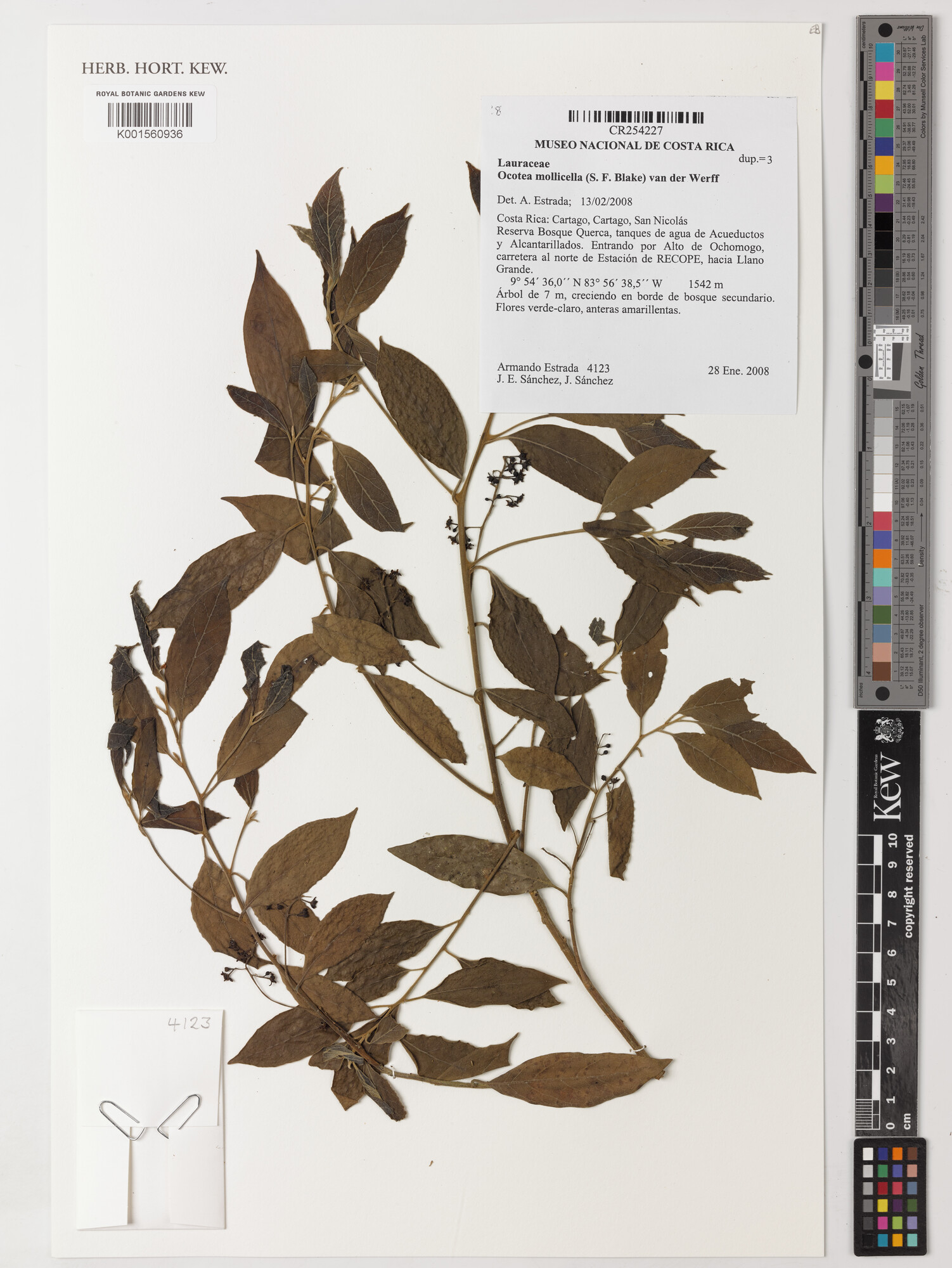
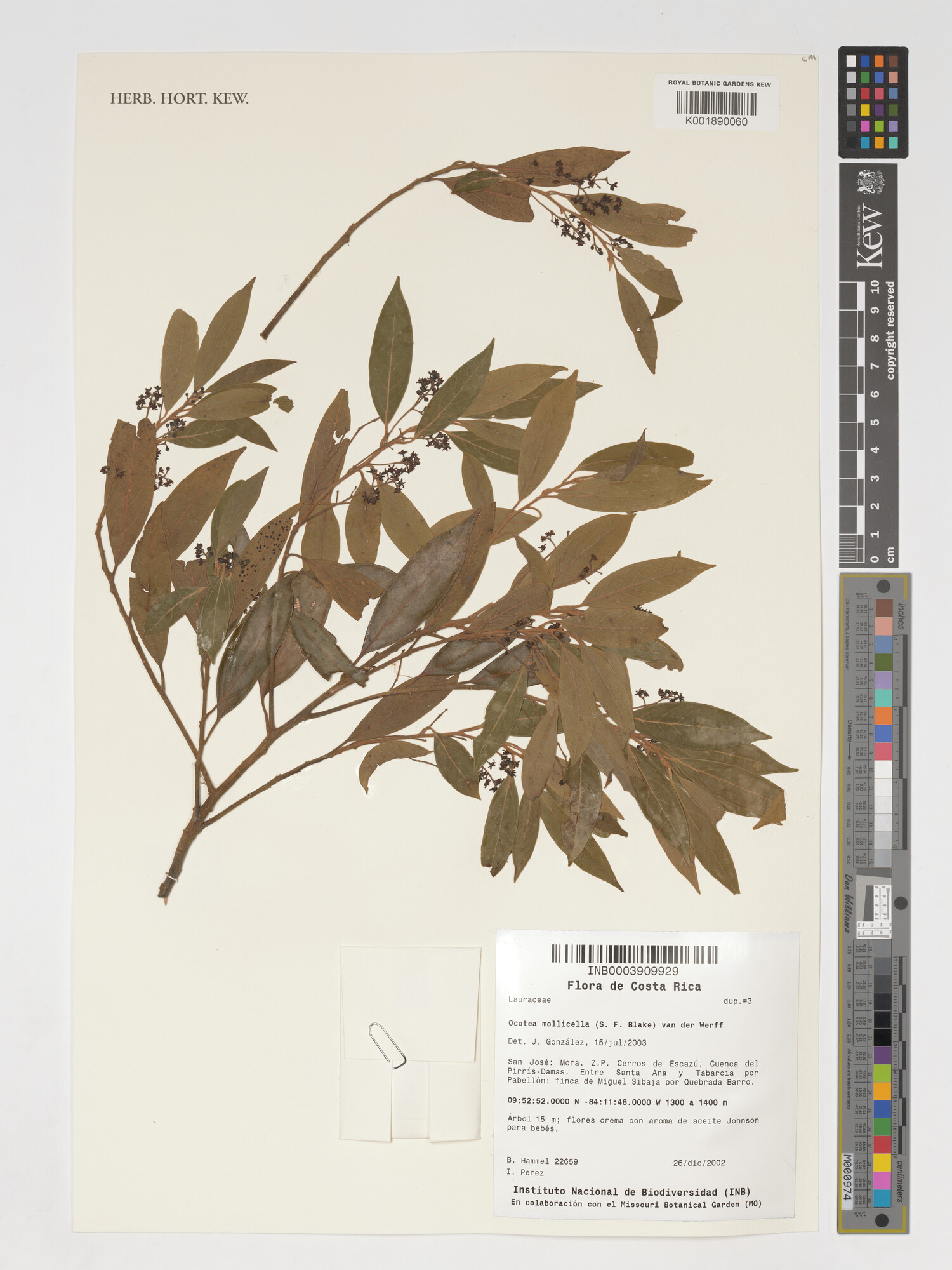
The leaves are narrowly elliptic, only 3–7 cm long (occasionally to 9 cm) and 1–2.3 cm wide, tapering to a pointed tip and base. Unlike O. monteverdensis, they never form decurrent wings (leaf tissue that extends down along the stem). A soft, gray coat of very fine hairs (puberulent, 0.1–0.4 mm) covers the lower surface, giving it a velvety texture, while the upper face dries dark and slightly shiny. The leaf stalks (petioles) are short, just 6–12 mm, and flattened on top.
Flowers
Flower clusters are small branched arrangements (racemose panicles) up to 6 cm long, often appearing beside older leaves. The buds measure 2–3 mm, but open flowers expand to 4–6 mm across. Each flower has six hairless tepals (petal-like structures typical of laurels) that darken when dried. Nine fertile stamens surround three tiny staminodes (sterile, non-functional stamens) in the center. This combination of glabrous tepals and persistent staminodes is one of the key characters separating O. mollicella from the similar O. pittieri.
Fruits
Mature fruits are small drupes (fleshy fruits with a single seed) that sit in shallow, cup-shaped structures called cupules, about 6 mm across. Short, persistent lobes from the flower remain attached at the cupule rim. The soft, oily pulp attracts cloud forest birds that disperse the seeds across the volcanic ridges.
Distribution
Ocotea mollicella follows the volcanic ridges from Zarcero and San Ramón south through Irazú to the coffee highlands of Copey and Santa María de Dota. It grows in misty oak-laurel forest between 1,400 and 2,300 meters, favoring old landslides and roadcuts where filtered light reaches the understory. The species is notably absent from the drier stretch between Poás and western Irazú, suggesting it needs persistent cloud cover to thrive.
Nearly all known collections come from San José, Cartago, and Puntarenas provinces, with a few from Alajuela. Seed collectors working in Copey and Dota have learned to check for the short leaf stalks and velvety undersides before gathering material, since the similar O. pittieri grows in the same forests.
Conservation Outlook
IUCN (via GBIF) lists the species as Near Threatened: it is secure inside Los Quetzales National Park, Tapantí, and the privately protected cloud forest blocks of the Los Santos region, yet deforestation of coffee slopes quickly erodes available habitat. Maintaining corridors between the Turrialba–Irazú massif and the Dota hills is key to keeping the fruiting season staggered for wildlife.
Because herbarium fruiting material is scarce, Burger and van der Werff warned that even small cuts in reproductive trees could jeopardize seed supply. Local nurseries therefore propagate O. mollicella from naturally fallen drupes collected beneath tagged mother trees, ensuring that restoration plantings mirror the soft pubescence that distinguishes the species.
Wildlife Connections
Cloud-forest dispersers quickly find the soft yellow fruits of O. mollicella. Northern emerald toucanets and three-wattled bellbirds raid fruiting crowns at dawn, black guans carry seeds downslope into forest gaps, and azure-hooded jays stash drupes along the continental divide. Together they keep the species’ staggered subpopulations linked across Zarcero, Irazú, and the Dota highlands.
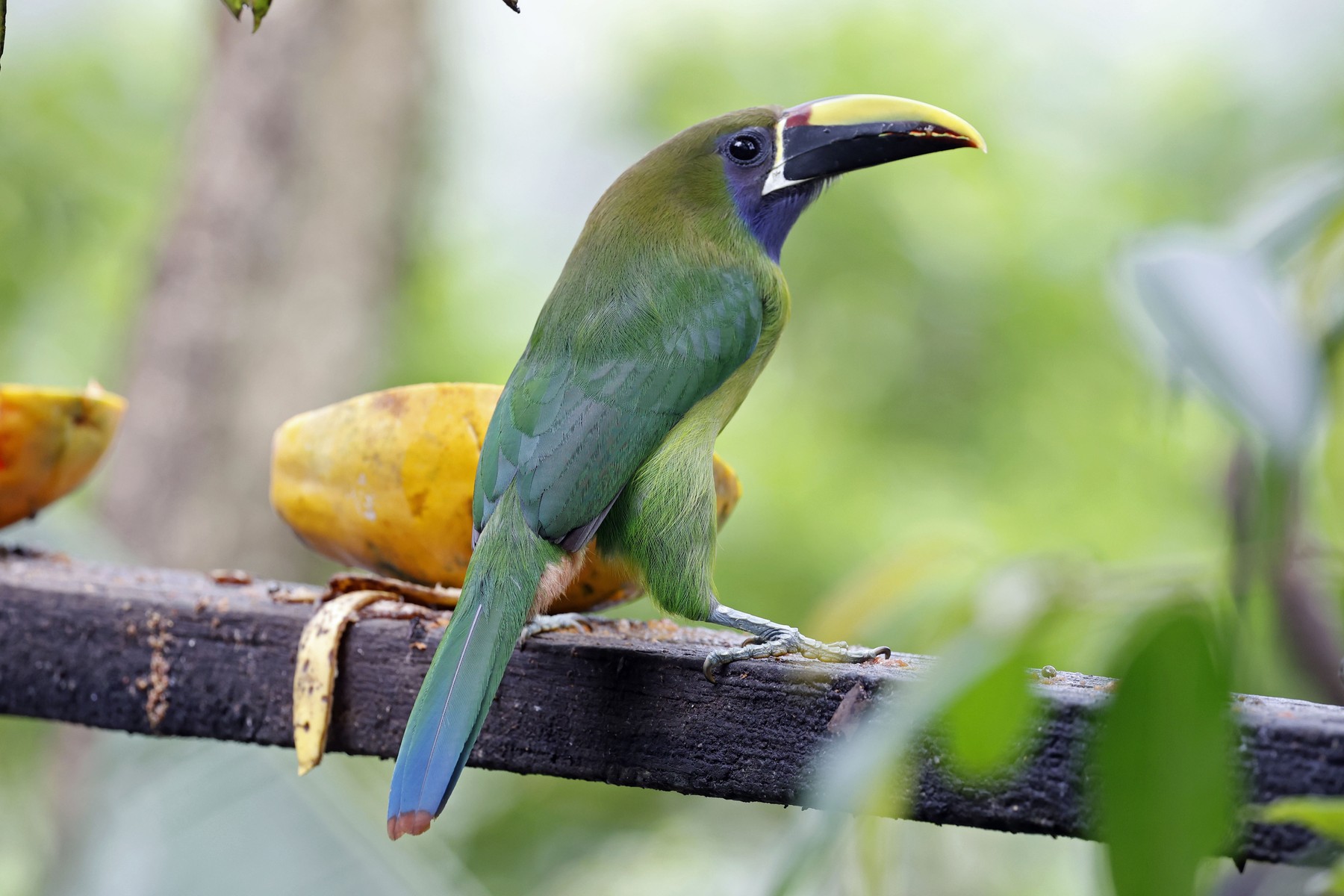
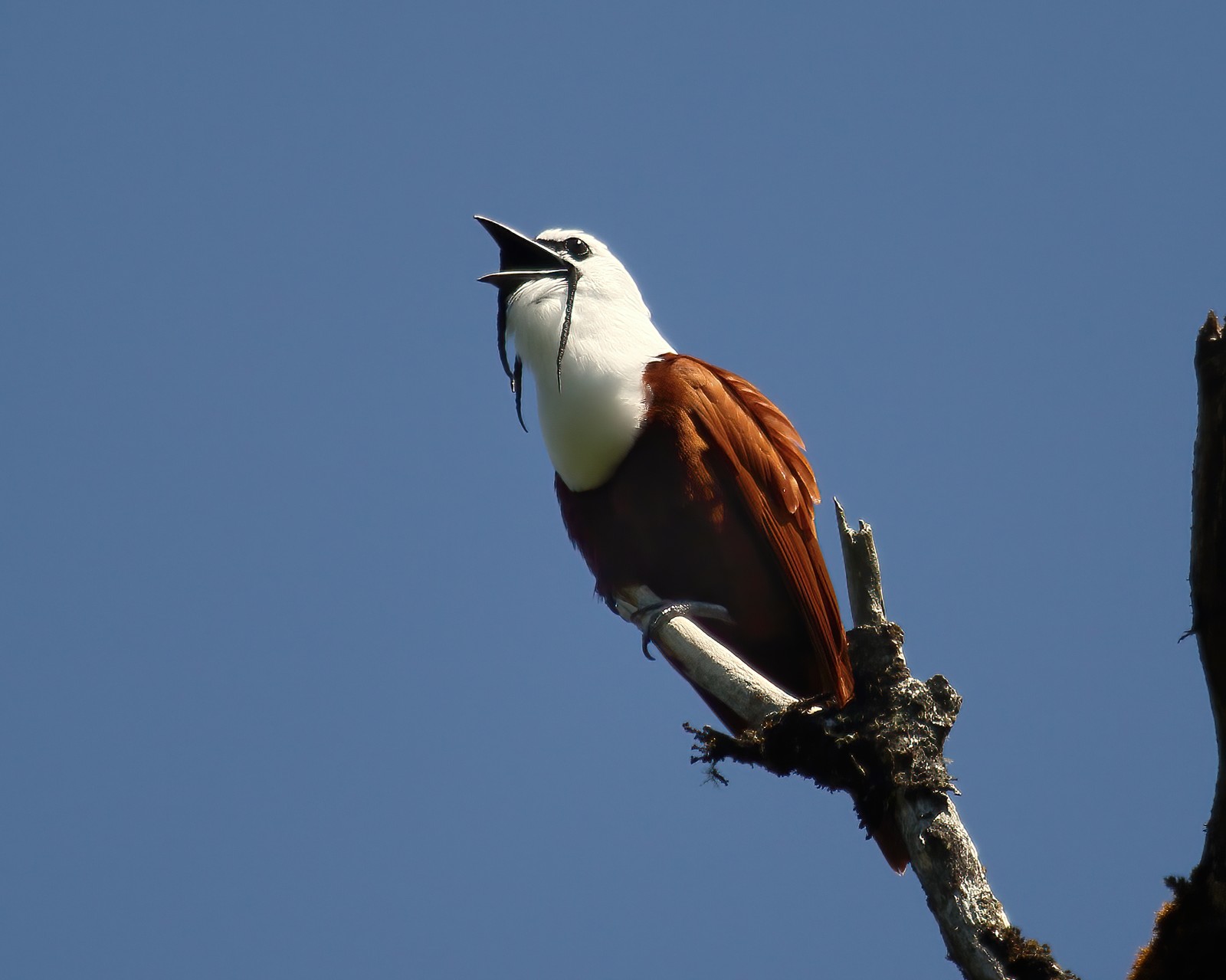
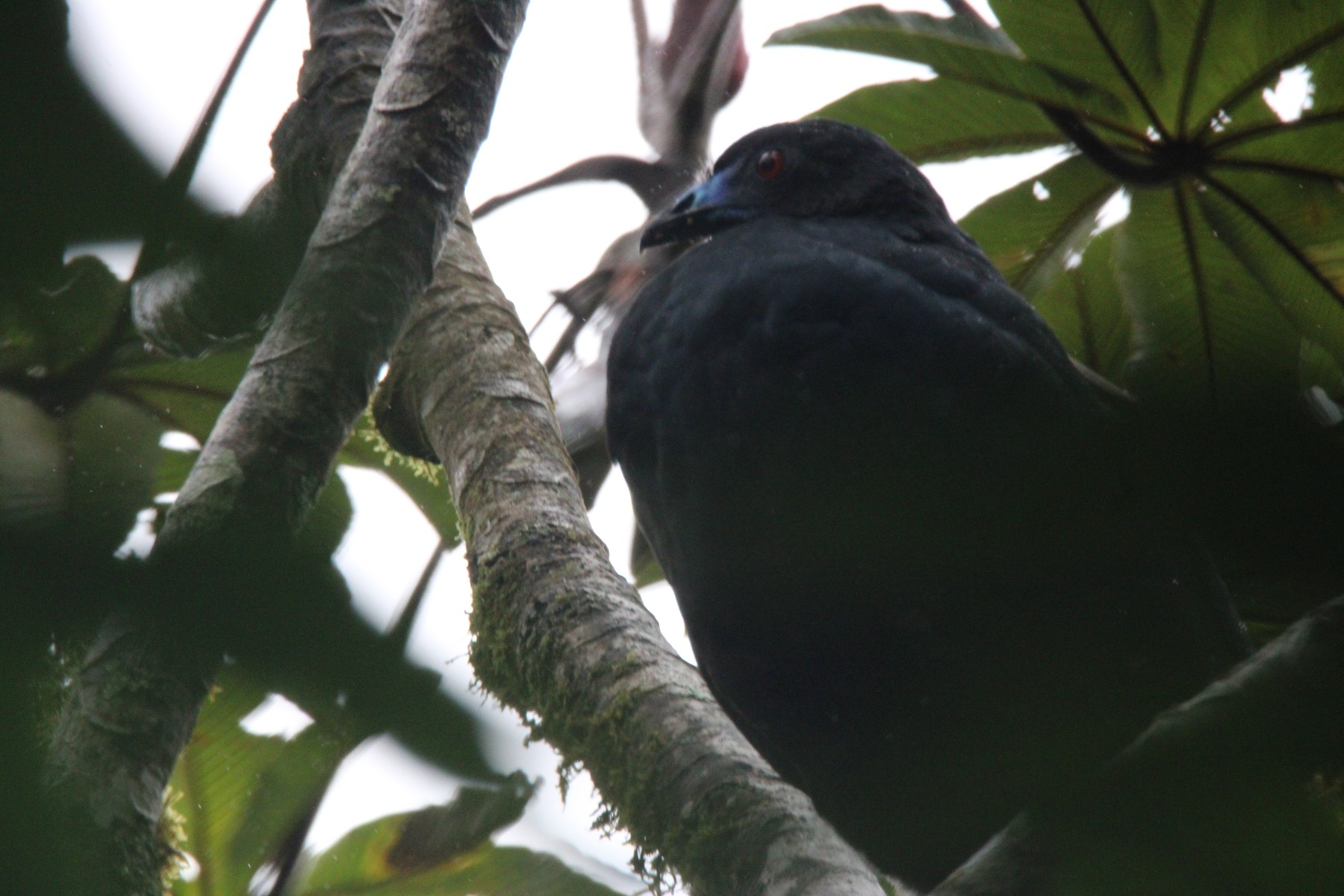
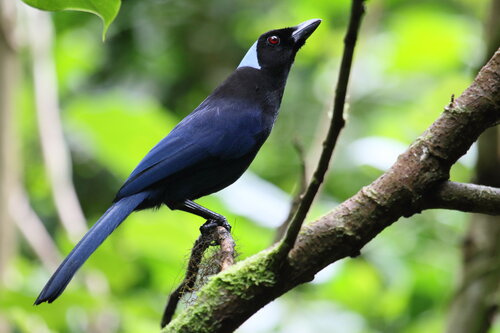
Photos (clockwise from top left): Northern emerald toucanet (Giles Laurent, CC BY-SA 4.0), Three-wattled Bellbird (Cephas, CC BY-SA 4.0), Black Guan (Kelly Fretwell, CC BY 4.0), and Azure-hooded Jay (Wikimedia Commons, CC BY-SA 4.0).
Taxonomic History
Sidney Fay Blake described this species in 1917 from a specimen collected by Adolphe Tonduz in Costa Rica's highlands. Tonduz, a Swiss-born botanist who spent decades exploring Central American forests, gathered the type collection (Tonduz 11676) that Blake deposited at the Gray Herbarium of Harvard University. Blake placed the new species in Phoebe, a genus then used broadly for New World laurels with persistent tepals and glandless stamens. His epithet mollicella, meaning "softly hairy," described the velvety gray indument on the leaf undersides that remains the species' most recognizable field character.
The species wandered through several genera as botanists refined their understanding of Lauraceae relationships. André Kostermans, the Dutch specialist who reorganized much of the family at mid-century, transferred it to Cinnamomum as C. mollicellum. That placement never gained wide acceptance among Costa Rican botanists, who noted that the tree lacked the aromatic bark and three-veined leaves typical of true cinnamons. In 1990, Henk van der Werff and William Burger moved the species to Ocotea in their Flora Costaricensis treatment, a decision supported by floral structure: nine fertile stamens arranged in three whorls, with the innermost whorl bearing paired glands at the filament base.
Van der Werff revisited the species in 1999 when he circumscribed the Ocotea helicterifolia group, a cluster of Central American cloud-forest laurels sharing large leaves, small flowers, and gray-pubescent undersides. Within this group, O. mollicella is distinguished by its narrowly elliptic leaves that lack decurrent bases and its nearly glabrous tepals. The similar O. pittieri has broader leaves and hairy flower parts, while O. monteverdensis shows the winged petioles absent in O. mollicella. Collectors working in the Copey and Dota highlands still carry van der Werff's 1999 key to separate these species in the field.
Resources & Further Reading
Species Information
Nomenclatural data and accepted distribution from the World Checklist of Vascular Plants.
Missouri Botanical Garden's taxonomic backbone with synonyms, type citations, and literature references.
Maps the 150+ georeferenced records clustered in San José, Cartago, and Puntarenas provinces.
Taxonomy & Nomenclature
Original species description based on Tonduz 11676 from Costa Rica's highlands.
Flora Costaricensis treatment transferring the species to Ocotea with detailed morphology.
Circumscription of the cloud-forest laurel group to which O. mollicella belongs, with identification key.
Regional synopsis with keys and species accounts for all Central American Ocotea.
Comprehensive Costa Rican flora treatment with updated distribution and vernacular names.
Conservation
Near Threatened assessment citing habitat loss in Costa Rica's central highlands.
Herbarium Collections
Digital images of Costa Rican collections including Estrada 4123 from Cartago.
Related Reading
The namesake of the species group, a giant cloud-forest laurel with spiraling leaves.
Browse all wild avocado relatives in our tree taxonomy guide.