Balsamillo
A yellow-flowered understory shrub of primary forests, discovered by Swedish botanist Olof Swartz during his legendary Caribbean expeditions. Its tubular golden corollas mark it as something distinct from the familiar red-flowered firebush.

In the shaded understory of the Osa Peninsula's primary forests, a shrub with slender yellow flowers occupies a different ecological niche from the familiar red-flowered firebush that colonizes disturbed clearings. This is Hamelia axillaris, a shade-tolerant specialist of intact forest interiors, bearing tubular golden corollas that flare open like tiny trumpets at anthesis. The species was first collected by Swedish botanist Olof Peter Swartz during his 1783-1786 explorations of Jamaica, Puerto Rico, Haiti, and Cuba—an expedition that would yield nearly 6,000 botanical specimens, now housed at the Swedish Museum of Natural History, fundamentally advancing scientific understanding of Neotropical flora.
The Siona and Secoya Indians of eastern Ecuador have long recognized the medicinal properties of this unassuming shrub, grating its roots to prepare decoctions for diarrhea and stomach ailments. In Ecuador, families sometimes cultivate it in home gardens specifically for therapeutic use. Yet while its close relative Hamelia patens—the sun-loving pioneer of disturbed habitats—has been extensively studied for its oxindole alkaloids and pharmacological properties (antioxidant, antimicrobial, antidepressant, hepatoprotective activities), H. axillaris itself has received virtually no phytochemical investigation. This research gap is particularly striking given the species' documented ethnobotanical applications and its distinct ecological specialization as a primary forest understory species.
Within the genus Hamelia, this species belongs to subgenus Amphituba, characterized by yellow corollas that expand distally into a funnel shape at anthesis. This distinguishes it taxonomically from subgenus Hamelia, which includes the red-orange flowered H. patens whose narrowly tubular corollas do not enlarge at flowering. The subgeneric distinction, established in Thomas S. Elias's 1976 monograph of the genus, reflects fundamental differences in floral morphology and likely pollination ecology between these two groups.
Identification
Habit

Hamelia axillaris grows as an evergreen shrub 1-5 meters tall, occasionally developing into a small treelet reaching 5 meters in favorable conditions, with exceptional individuals attaining 9 meters. The plant typically occupies the understory layer of dense primary forests, where its slender form allows it to exploit gaps in the canopy mosaic. This contrasts sharply with its congener H. patens, which grows as a robust pioneer shrub in disturbed, high-light environments. The branching pattern is characterized by four-angled young stems with four longitudinal ribs, a distinctive feature that becomes less pronounced with age as the stems become terete (cylindrical in cross-section).
Stems and Stipules
The leafy branchlets measure 1.2-4 mm thick and are glabrous (completely hairless), a key diagnostic feature distinguishing this species from the pubescent H. patens. The four-ribbed, four-angular structure of young stems is taxonomically significant within the genus. Stipules are small but persistent, measuring 2-6 mm long (occasionally to 8 mm) and approximately 1 mm broad, with a triangular to narrow shape featuring folded margins. These interpetiolar stipules are characteristic of the Rubiaceae family.
Leaves

The leaves are opposite (rarely occurring in whorls of four at a node), borne on petioles 1-4 cm long (occasionally extending to 7 cm), approximately 1 mm wide, glabrous to sparsely and minutely papillate-puberulent. The blades measure 5-17 cm long (occasionally to 23 cm) and 2-8 cm broad, with a narrowly elliptic, elliptic-oblong, obovate, or narrowly obovate-oblong shape. The apex is acuminate, tapering to a distinct tip approximately 1 cm long. The base is attenuate and decurrent on the petiole, meaning it gradually narrows and runs down along the petiole. When dried, leaves become chartaceous (papery) to membranaceous, typically drying greenish to pale grayish in color—a useful field character, as the similar H. magnifolia typically dries reddish-brown.
The venation pattern is distinctive: 5-9 secondary veins per side, loop-connected near the leaf margin in a characteristic arc. The upper surface is glabrous, while the lower surface is glabrous or minutely (0.1 mm) papillate-puberulent. A remarkable feature visible on the lower surface when the leaf is dry is the presence of short (0.1-0.3 mm) linear cystoliths—calcium carbonate deposits that appear as tiny white linear structures. These cystoliths are unusual for Rubiaceae and serve as an additional diagnostic character.
Perhaps most ecologically significant are the domatia—small tufts of kinky white hairs located in the vein axils on the lower leaf surface. These domatia house predatory mites in a mutualistic relationship: the mites gain shelter and a site for reproduction, while the plant gains protection from herbivorous mites and potentially from pathogens. Research on leaf domatia across plant families reveals that approximately 28% of plant families have domatia-bearing species, with Rubiaceae showing particularly high frequency (26% of species). The domatia of H. axillaris represent an elegant example of plant defensive mutualisms mediated through architectural provisioning of habitat for beneficial arthropods.
Flowers

The flowers are the most distinctive feature of this species and the primary basis for its placement in subgenus Amphituba. They are borne in axillary or terminal inflorescences 3-8 cm long and 3-8 cm broad, consisting of compound dichasia with lateral branches 1-4.5 cm long. A characteristic feature is the scorpioid (coiled) arrangement, with 3-15 secund flowers positioned along the uppermost side of the distal branches. This coiled, one-sided pattern is botanically termed a "scorpioid cyme," a sympodial determinate inflorescence whose lateral branches all develop from one side. The peduncles measure 5-15 mm long and are glabrous or minutely and sparsely puberulent. Bracts are small (0.5-1 mm long) and narrow. Flowers are sessile or borne on short pedicels.
The floral structure is complex and beautifully proportioned. The hypanthium (the fused basal portion of the perianth and stamens) measures 1.5-3 mm long and approximately 1.2 mm in diameter, glabrous. Calyx lobes are 0.5-1.5 mm long and 1 mm wide at the base, glabrous to puberulent. The corolla is yellow—a key diagnostic character—and narrowly urceolate (urn-shaped) to funnelform. The corolla tube measures 8-13 mm long, approximately 1 mm in diameter near the base, expanding to 3-5 mm wide distally at anthesis. This expansion at flowering distinguishes subgenus Amphituba from the narrowly tubular flowers of subgenus Hamelia. The corolla lobes are short, 1-2 mm long, and broadly triangular. The entire corolla is glabrous.
The androecium consists of five stamens with filaments 4-5 mm long bearing anthers 5-8 mm long. The anthers have an apical connective extension 0.5 mm long. The style is 8-10 mm long, terminating in stigmas 3-4 mm long. In Costa Rica, flowering occurs primarily from late June through October, with peak flowering typically in the latter part of this period. The yellow coloration and tubular structure suggest adaptation to hummingbird pollination, though the yellow hue (versus the red-orange of H. patens) may attract a different assemblage of pollinators, potentially including bees and smaller butterflies that are more responsive to yellow floral cues.
Fruits

The fruits are small fleshy berries, 4.5-7 mm long and 3-4 mm in diameter, ovoid-oblong to subglobose in shape. The persistent disc at the apex measures 0.5 mm high and 0.7 mm broad. Seeds are small, approximately 1 mm long. Fruiting in Costa Rica occurs in February and from June through December, with fruits turning dark red to purple-black when mature. This extended fruiting season, spanning most of the year, is ecologically significant: it provides a reliable food resource for frugivorous birds across multiple months, potentially supporting resident bird populations through periods when other fruit sources are scarce. Research on understory Rubiaceae in neotropical forests has documented significant correlations between the abundance of fruiting Rubiaceae shrubs and captures of fruit-eating birds, suggesting that species like H. axillaris play an important role in maintaining understory avian communities.
Distribution
Hamelia axillaris has a remarkably broad Neotropical distribution spanning three major geographic regions. In Mexico, it occurs in the southeast (Chiapas, Oaxaca, Veracruz, Tabasco) and southwest (Guerrero). The Central American range includes Belize, Guatemala, Honduras, Nicaragua, Costa Rica, and Panama. The Caribbean populations are extensive, occurring throughout the larger islands (Cuba, Jamaica, Haiti, Dominican Republic, Puerto Rico) and extending to the Leeward Islands, Windward Islands, and Trinidad and Tobago. In South America, the species ranges from Colombia and Venezuela through Ecuador, Peru, and Bolivia, reaching the northern regions of Brazil.
In Costa Rica, H. axillaris shows a distinctive distribution pattern, occurring primarily on the evergreen Caribbean slope and the Osa Peninsula on the Pacific side, from near sea level to 600 meters elevation, occasionally reaching 1,000 meters. This distribution reflects the species' requirement for high humidity and dense forest cover. Within the Brunca region, the Osa Peninsula and the Golfo Dulce area represent the core of the species' Pacific-side distribution. Populations are documented from the humid forests surrounding Parque Nacional Corcovado, the lowland forests of Reserva Forestal Golfo Dulce, and the forested slopes around Golfito and Puerto Jiménez. The species thrives in wet tropical and very humid tropical forests, occupying the understory of both primary forest and mature secondary forest, though it shows clear preference for undisturbed primary forest environments.
Ecology
Hamelia axillaris occupies a specialized ecological niche as a shade-tolerant understory shrub of primary forests, distinguishing it fundamentally from its more familiar congener H. patens, which thrives as a pioneer species in disturbed, high-light environments. This ecological specialization has important implications for conservation, as primary forest specialists are typically more vulnerable to habitat fragmentation and edge effects than generalist species. The plant occurs in humid and very humid forest environments at elevations up to 1,500 meters (in Costa Rica typically 0-600 m, occasionally to 1,000 m), where it exploits the low-light conditions of the forest floor.
Although no pollination studies have been conducted specifically on H. axillaris, research on the closely related H. patens provides relevant ecological context. At La Selva Biological Station in Costa Rica, H. patens flowers attract seven species of hummingbird pollinators plus four nectar robbers (one hummingbird and three perching birds), with pollinators accounting for 85.6% of visits. The yellow tubular-funnelform flowers of H. axillaris, measuring 8-13 mm in length with a distal expansion to 3-5 mm, display the classic morphological syndrome of hummingbird pollination: tubular structure restricting access to long-billed visitors, and concealed nectar encouraging repeated probing visits. However, the yellow coloration (versus the red-orange of H. patens) may attract a somewhat different pollinator assemblage, potentially including bees and smaller butterflies that show stronger color preferences for yellow flowers. An additional complication in Hamelia pollination ecology is the presence of hummingbird flower mites (Proctolaelaps kirmsei), which hitchhike on hummingbird beaks between flowers and consume nectar without contributing to pollination, effectively acting as floral parasites.
The fleshy dark berries are typical of ornithochorous (bird-dispersed) Rubiaceae and are consumed by a variety of frugivorous birds and small mammals. Research on H. patens has revealed a fascinating aspect of fruit ripening ecology: facultative ripening in response to disperser availability. When fruit removal rates are high—for example, during periods of bird migration when frugivore abundance peaks—the plant accelerates the ripening of immature fruits to capitalize on high disperser activity. Conversely, when removal rates are low, many fruits simply rot on the plant. This dynamic ripening strategy suggests that Hamelia species have evolved sophisticated phenological plasticity to track temporal variation in disperser communities. For H. axillaris, the extended fruiting season from June through December, with an additional fruiting pulse in February, provides a reliable food resource for resident frugivorous birds across most of the year, potentially supporting forest bird populations during periods when other fruit sources are scarce.
Traditional Uses
The Siona and Secoya Indians of eastern Ecuador have documented traditional use of Hamelia axillaris as a medicinal plant. According to ethnobotanical research by W.T. Vickers and T. Plowman published in Fieldiana Botany in 1984, the root is grated and boiled to prepare a decoction used as a remedy for diarrhea and stomach ache. In some communities, families cultivate the plant in home gardens specifically to ensure access to this traditional medicine. This pattern of home garden cultivation for medicinal purposes suggests that the therapeutic properties are well-established and valued within indigenous pharmacopoeia.
The closely related Hamelia patens has been extensively investigated for its phytochemistry and pharmacology, revealing a rich profile of bioactive compounds. The species contains numerous monoterpenoid oxindole alkaloids including isopteropodine, rumberine, palmirine, maruquine, pteropodine, speciophylline, tetrahydroalstonine, aricine, uncarine F, and the novel alkaloid (-)-hameline. These compounds show diverse pharmacological activities: pteropodine and isopteropodine positively modulate muscarinic M1 and 5-HT2 receptors; extracts demonstrate antioxidant, antimicrobial, anthelmintic, antidepressant, acetylcholinesterase inhibition, hepatoprotective, wound healing, and anti-hyperglycemic effects. Given the phylogenetic proximity of H. axillaris to H. patens and the documented medicinal use in traditional medicine, the complete absence of phytochemical studies on H. axillaris represents a significant research gap. Investigating whether H. axillaris contains similar oxindole alkaloid profiles could both validate traditional medicinal uses and potentially identify novel bioactive compounds.
Taxonomic History
The scientific discovery of Hamelia axillaris is inseparable from the remarkable career of Olof Peter Swartz (1760-1818), a Swedish botanist whose contributions to Neotropical botany were foundational. Swartz studied under Carl Linnaeus the Younger at Uppsala University, receiving his doctorate in 1781. His particular brilliance lay in the taxonomy of difficult groups: he became the first specialist in orchid taxonomy and made fundamental contributions to the systematics of pteridophytes (ferns), mosses, and lichens.
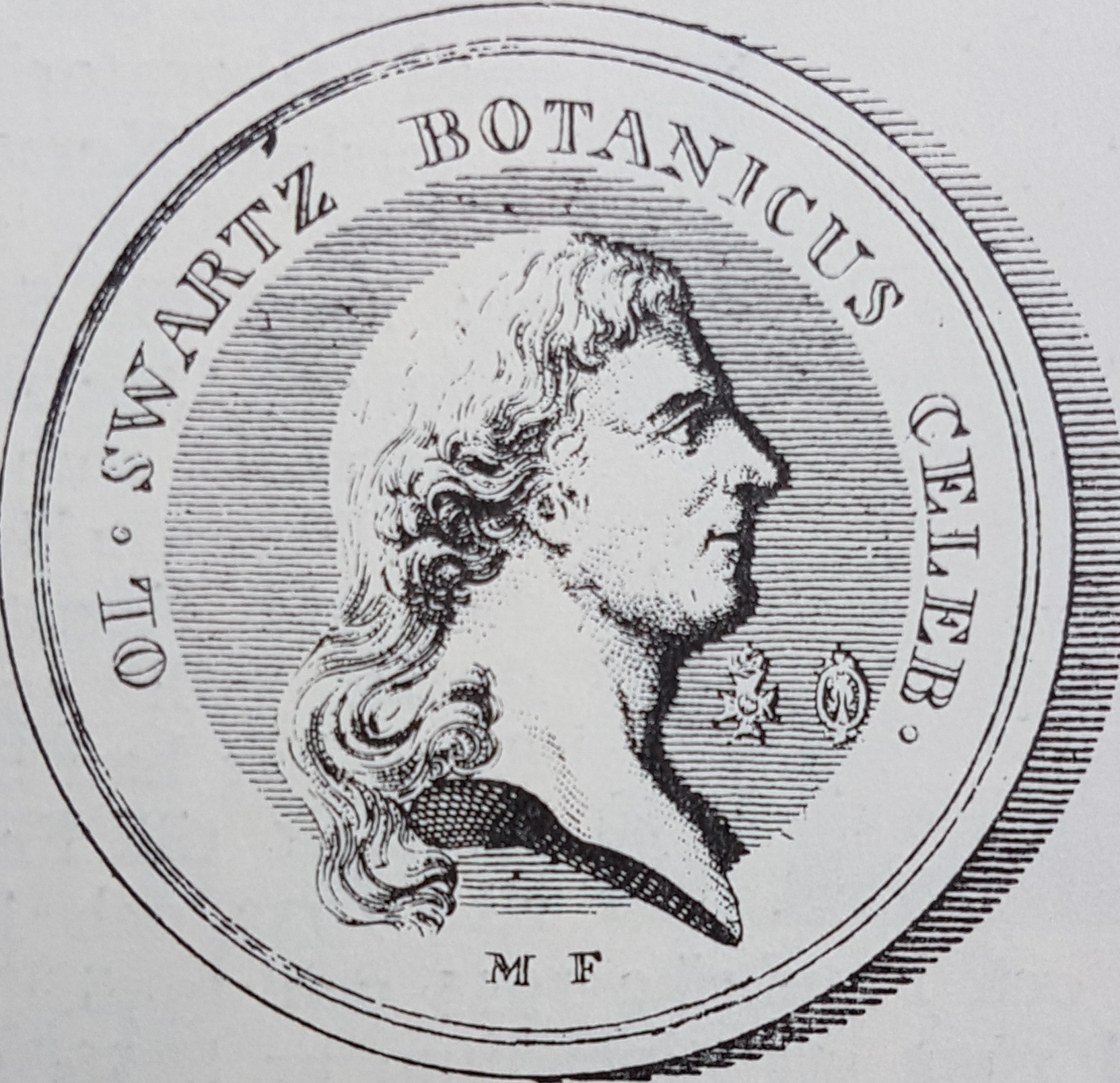
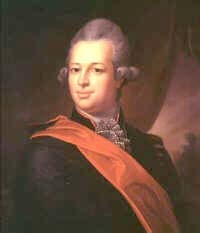
Swartz's journey to the West Indies began in 1783, traveling first through eastern North America (Boston, Philadelphia), then to Jamaica, Puerto Rico, Haiti, and Cuba over the following two years. The Caribbean expedition of 1783-1786 was extraordinarily productive: Swartz accumulated approximately 6,000 botanical specimens, now preserved at the Swedish Museum of Natural History as part of the Regnellian herbarium. The type specimen of H. axillaris—designated as the lectotype—is Olof Swartz s.n. (without collection number), housed at the Swedish Museum (herbarium code S). Based on the expedition itinerary, the type specimen was most likely collected in Jamaica, though the precise locality has not been recorded.
After leaving the Caribbean in 1786, Swartz traveled to London where he compared his collections with those of Linnaeus and Banks at the Natural History Museum. This comparative work led to the publication of Nova genera et species plantarum seu Prodromus in 1788, in which Hamelia axillaris was first formally described on page 46. The protologue citation reads: Prodr. Veg. Ind. Occ.: 46 (1788). This work was part of Swartz's larger project that would ultimately result in descriptions of nearly 900 new plant species, fundamentally advancing scientific knowledge of Caribbean and Neotropical flora.
Over the subsequent two centuries, H. axillaris accumulated nine synonyms as different botanists independently described what they believed to be new species. The homotypic synonym Duhamelia axillaris (Sw.) Pers., published in 1805, represents Persoon's attempt to place the species in a segregate genus. The heterotypic synonyms include Hamelia chrysantha Jacq. (1791), Hamelia lutea Rohr ex Sm. (1811), Hamelia appendiculata C.F. Gaertn. (1806), and Hamelia breviflora A. Rich. The synonyms chrysantha (golden flower) and lutea (yellow) both reference the distinctive yellow flower color that sets this species apart from most other Hamelia species. Particularly notable is Hamelia lutea, published by James Edward Smith in Rees's Cyclopædia in 1811—Smith, an eminent English botanist who purchased Linnaeus's collections and founded the Linnean Society of London, contributed 3,348 botanical articles to Rees's Cyclopædia between 1808 and 1819. Rees's Cyclopædia was one of the most important 19th-century British encyclopedias, and Smith's contributions made it a major botanical reference work of its era.
The definitive modern taxonomic treatment of the genus came with Thomas S. Elias's 1976 monograph "A Monograph of the Genus Hamelia (Rubiaceae)," published in Memoirs of the New York Botanical Garden volume 26(4), pages 81-144. This comprehensive work established the subgeneric classification that remains in use today, dividing Hamelia into two subgenera based on floral morphology. Subgenus Hamelia is characterized by narrowly tubular flowers that do not enlarge distally at anthesis, with red, orange, or yellow coloration. Subgenus Amphituba, in contrast, has yellow corolla tubes that expand (slightly to conspicuously) distally at anthesis—the funnelform shape for which H. axillaris serves as an exemplar. Elias noted that flowers of subgenus Amphituba remain narrowly tubular until just before anthesis, when the distal expansion occurs, potentially making them difficult to distinguish from subgenus Hamelia on herbarium specimens where flowers have not yet opened. This subgeneric classification reflects fundamental differences in floral architecture and, by implication, pollination ecology between the two groups.
Etymology
The specific epithet "axillaris" derives from the Latin axilla, meaning "armpit" or "side," referring to the angle or point of divergence between the upper side of a branch, leaf, or petiole and the stem from which it springs. In botanical terminology, structures described as "axillary" arise from this axil. The name directly references the axillary position of the inflorescences in this species—though Flora Costaricensis notes that inflorescences may be either axillary or terminal, the axillary placement is sufficiently characteristic to have motivated Swartz's choice of epithet in 1788.
The genus name Hamelia honors Henri-Louis Duhamel du Monceau (1700-1782), a French physician, naval engineer, botanist, and agronomist whose scientific career exemplified the 18th-century ideal of the polymathic natural philosopher. The name derives from "Hamel," a shortened form by which Duhamel du Monceau was known in some contexts—his name appeared variously in publications as Hamel, du Hamel, or Monceau. Born into a family of maritime administrators, Duhamel du Monceau gained admission to the French Academy of Sciences in 1728 after discovering that a parasitic fungus was destroying saffron plants in the Gâtinais region, demonstrating the practical applications of botanical knowledge to agricultural problems. His scientific contributions were remarkably diverse: he was the first to distinguish soda from potash (1736), a fundamental advance in chemistry; he published important works on the structural properties of wood and ship rigging, combining botanical anatomy with naval engineering; and he authored influential treatises on agricultural practices. His La Physique des Arbres (1758) is considered a foundational text in forest botany and tree physiology. The genus Hamelia, established to honor this multifaceted scientist, thus memorializes not just a botanist but a figure who embodied the interconnections between pure botanical science, agricultural application, and technological innovation.
Similar Species
Within Costa Rica, Hamelia axillaris is most likely to be confused with H. magnifolia, which also occurs on the Osa Peninsula and shows overlapping habitat preferences. The two species can be distinguished by several morphological characters: H. magnifolia has larger leaves (10-32 cm long vs. 5-23 cm in H. axillaris), more secondary veins (7-12 pairs per side vs. 5-9), longer inflorescences (8-18 cm vs. 3-9 cm), narrowly tubular (not funnelform) corollas, and larger fruits (6-10 mm vs. 4-7 mm). Additionally, the leaves of H. magnifolia typically dry reddish-brown to pinkish gray, while those of H. axillaris typically dry greenish to pale grayish. Flora Costaricensis notes that there may be intermediates or hybrids between H. axillaris and H. magnifolia on the Osa Peninsula, suggesting zones of contact where gene flow occurs between these species. Such hybridization zones are of considerable evolutionary interest, as they represent natural experiments in reproductive isolation and character displacement.
The common firebush, Hamelia patens, is easily distinguished by its red to orange-red flowers (vs. yellow), pubescent stems and leaves (vs. glabrous or nearly so), and longer corolla tubes (16-23 mm vs. 8-13 mm). Beyond these morphological differences, the two species occupy fundamentally different ecological niches: H. patens is a pioneer species of disturbed habitats and forest edges, while H. axillaris is a shade-tolerant specialist of primary forest understory. This ecological differentiation is correlated with their subgeneric placement: H. patens belongs to subgenus Hamelia with its narrowly tubular red-orange flowers, while H. axillaris belongs to subgenus Amphituba with its funnelform yellow flowers.
Conservation Outlook
Hamelia axillaris has not been formally evaluated for the IUCN Red List, and thus its conservation status remains officially undetermined. However, several lines of evidence suggest the species is not immediately threatened with extinction at a global scale. The geographic range is remarkably extensive, spanning from Mexico to Bolivia and throughout the Caribbean—a distribution encompassing at least 20 countries across three major biogeographic regions. In Puerto Rico alone, the species occurs in three protected areas: El Yunque National Forest, Maricao State Forest, and Rio Abajo State Forest. This presence in multiple protected areas suggests at least some populations are buffered against immediate habitat loss.
Nevertheless, the species' ecological specialization as a primary forest understory shrub creates specific vulnerabilities that warrant monitoring. Unlike generalist species or pioneer colonizers, primary forest specialists typically cannot persist in degraded or fragmented habitats. Forest fragmentation creates edge effects that penetrate into remaining forest patches, altering microclimatic conditions (increased light, reduced humidity, higher temperature variability) that may exceed the tolerance range of shade-adapted understory species. In Costa Rica's Brunca region, where the species occurs in the forests of the Osa Peninsula and Golfo Dulce area, ongoing pressures from agricultural expansion, selective logging, and human settlement expansion continue to reduce and fragment primary forest cover. Climate change adds an additional stressor, as altered precipitation patterns could shift the boundaries of wet tropical forest zones to higher elevations, potentially reducing the extent of suitable lowland habitat.
The most effective conservation strategy for H. axillaris and other primary forest specialists is the protection of large, continuous tracts of intact humid forest. In the Brunca region, Parque Nacional Corcovado and Reserva Forestal Golfo Dulce provide critical protected habitat. Maintaining forest connectivity between protected areas through biological corridors would enhance long-term population viability by allowing gene flow and providing refugia during climate fluctuations. For a species whose traditional medicinal uses remain documented in indigenous communities but whose phytochemistry remains unstudied, conservation also represents protection of potential pharmaceutical resources and preservation of traditional ecological knowledge systems.
Resources & Further Reading
Taxonomy & Nomenclature
Comprehensive nomenclatural data, synonymy, and distribution information from Kew.
Nomenclatural database from Missouri Botanical Garden with specimen records.
Burger & Taylor (1993). Fieldiana Botany n.s. no.33. Definitive treatment for Costa Rica.
Definitive taxonomic treatment establishing subgeneric classification. Memoirs of the New York Botanical Garden 26(4): 81-144.
Species Information
Comprehensive species account with information on habitat, uses, and cultivation.
Distribution and conservation status in Puerto Rico protected areas.
Biography & History
Biography of the Swedish botanist who described this species during his Caribbean expeditions.
The French botanist and agronomist honored by the genus name Hamelia.
The important 19th-century British encyclopedia where James Edward Smith published the synonym Hamelia lutea.
Ecological Studies
Study of fruit ripening dynamics in response to disperser availability. Oecologia 74: 203-208.
Pollination ecology at La Selva Biological Station. Biotropica 35: 57-66.
Spatial distribution study documenting correlations between Rubiaceae and fruit-eating birds.
Comprehensive study of domatia distribution and defensive mutualisms across plant families.
Phytochemistry & Pharmacology
Phytochemical characterization of Hamelia patens. Phytomedicine 11: 436-441.
Comprehensive review of bioactive compounds and traditional uses. Pharmacognosy Journal 4(29): 1-4.
Recent review of pharmacological activities in Hamelia patens extracts.
Ethnobotany
Ethnobotanical documentation of medicinal uses. Fieldiana Botany New Series No. 15.