Mangle Piñuela
Pelliciera rhizophorae — A living fossil and the sole survivor of ancient Eocene mangroves, this species is the only mangrove known to be pollinated by a hummingbird: the endangered Mangrove Hummingbird, found nowhere else but Costa Rica.
In the labyrinthine waterways of Térraba-Sierpe, where the Sierpe River spreads into one of the largest mangrove systems in Central America, a tree grows that has witnessed the rise and fall of entire ecosystems. Pelliciera rhizophorae, the mangle piñuela or tea mangrove, is no ordinary coastal tree. It is a survivor from a world that vanished 50 million years ago, when its ancestors dominated the tropical coastlines and formed the first mangrove forests of the Americas.
Today, this relic species clings to scattered patches along the Pacific coast from Costa Rica to Ecuador, with small Caribbean populations in Nicaragua, Panama, and Colombia. In Costa Rica's Brunca region, the Térraba-Sierpe wetland harbors one of its most significant strongholds, where it makes up nearly 40% of the mangrove forest and shares the waterways with its ecological successor, Rhizophora. But what makes this tree truly remarkable is its relationship with an equally endangered partner: the Mangrove Hummingbird, an endemic Costa Rican species that depends on the mangle piñuela's flowers for survival. Together, they form the only known hummingbird pollination system among mangroves worldwide.
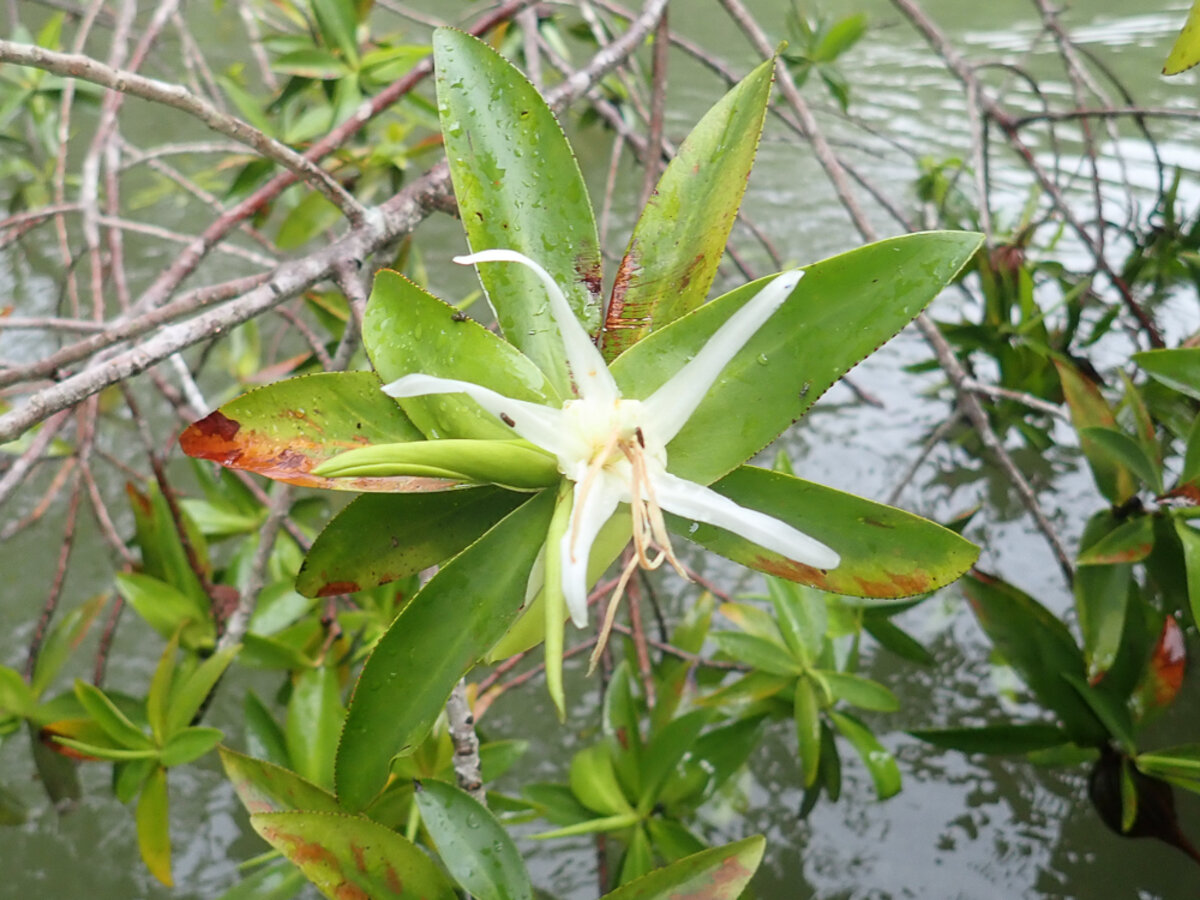
Identification
Taxonomy & Nomenclature
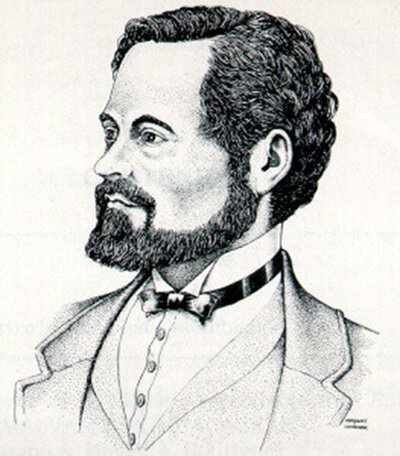
The mangle piñuela was first described scientifically in 1862 by Colombian botanist José Jerónimo Triana and French botanist Jules Émile Planchon in the Annales des Sciences Naturelles. They named the genus Pelliciera in honor of Guillaume Pellicier (c. 1490-1568), Bishop of Montpellier and a patron of Renaissance botany who fostered the renewal of natural sciences at the University of Montpellier. The species epithet rhizophorae (literally "root-bearing") refers to its resemblance to the Rhizophora mangroves among which it grows, though it notably lacks their stilt roots.

For over a century, Pelliciera was placed in its own family, Pellicieraceae, reflecting its unique evolutionary position. Modern molecular analyses have now included it within Tetrameristaceae, a small family in the order Ericales that also contains the Southeast Asian genus Tetramerista. Despite this reclassification, Pelliciera remains highly distinctive. It was long considered a monotypic genus, but recent systematic work by Cornejo and Bonifaz (2020) and Duke (2020) has provided evidence for recognizing a second species, P. benthamii, in the Caribbean, based on differences in floral bract color and plant stature.
Physical Characteristics
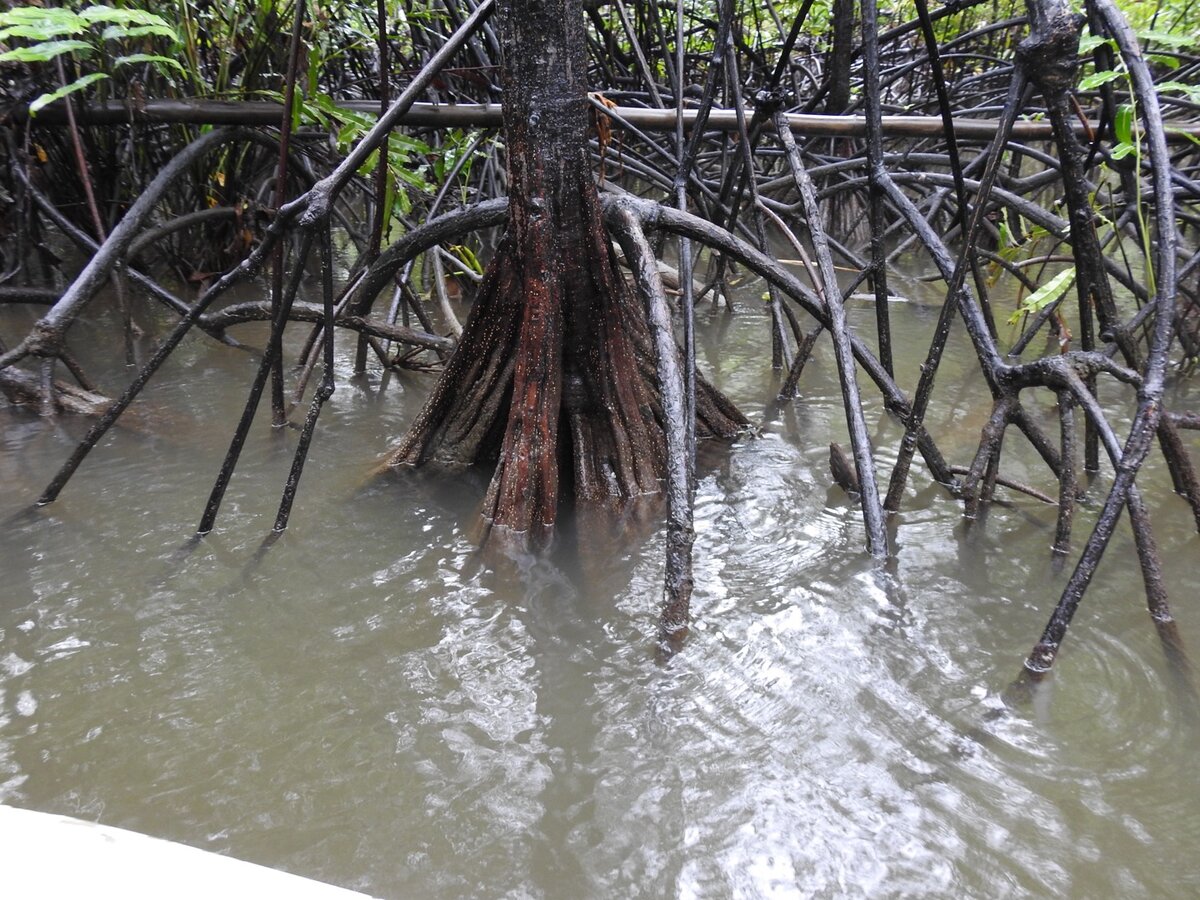
Trunk and bark: The mangle piñuela develops as a columnar, somewhat tiered tree with an often acute crown. The bark is dark gray, roughly fissured, and the trunk is distinctively buttressed at the base with spreading, sinuous buttress roots. Unlike the red mangrove (Rhizophora) with its dramatic stilt roots, or the black mangrove (Avicennia) with its pencil-like pneumatophores, Pelliciera produces no aerial root structures. Its buttresses originate as a series of short aerial roots that develop acropetally (from base toward tip).
Two morphotypes: Across its range, Pelliciera exhibits striking variation in size. Pacific coast populations, such as those in Costa Rica's Térraba-Sierpe, typically grow as smaller trees, often under 3 meters in height, with pink to rose-colored floral bracts. The tall morphotype, exceeding 15 meters with white to cream-colored bracts, occurs on both the Caribbean coast (such as Panama's Bocas del Toro) and the Panamanian Pacific. These differences, combined with molecular and physiological data, suggest the two populations may be undergoing incipient speciation, possibly driven by adaptation to different climate regimes.
Leaves: The leaves are persistent, alternate, sessile (lacking a stalk), and arranged spirally on the branches. They are simple with entire margins that bear tiny glandular teeth. The leaves have a leathery texture and are dorsiventral, with stomata mainly on the lower (abaxial) surface. The mesophyll contains sclerenchymatous idioblasts and raphide crystals. Extra-floral nectaries at the base of the leaves attract ants, which may provide some defense against herbivores.
Flowers
The flowers of Pelliciera are among the showiest of any mangrove species. They are solitary, arising from the leaf axils, large, regular, and 5-merous. Each flower is subtended by two elongate, foliaceous bracts that can reach 7 cm in length and 2 cm in width, ranging from crimson or rose-pink in Pacific populations to white or cream in Caribbean forms. These colorful bracts surpass the petals in length and give the flowers their showy appearance.

The petals are usually white, occasionally pink, narrowly ovate, and can reach up to 7 cm long and 1.5 cm wide. They are membranous except for a thickened median portion. The sepals are oblong-elliptic, strongly concave, and crimson, measuring 1.5-2 cm long, and bear glandular pits on their inner surface, a character the genus shares with Tetramerista. The stamens have filaments up to 3.5 cm long with linear anthers up to 3 cm in length. Flowering occurs primarily from April to June, with fruiting from November to December.
Fruit & Propagules
The fruit is large, non-fleshy, and indehiscent (not splitting open at maturity), measuring 7-11 cm long and up to 13 cm in diameter. It is ovoid-turbinate (top-shaped) with a distinctive long beak at the apex that can extend up to 2.5 cm. The wall is leathery, and the surface is brown to blackish-brown, dull, furrowed and ridged. Each fruit contains a single seed without an endosperm or testa (seed coat). Instead, the embryo fills the fruit cavity with fleshy cotyledons that enclose a conspicuous red plumule.
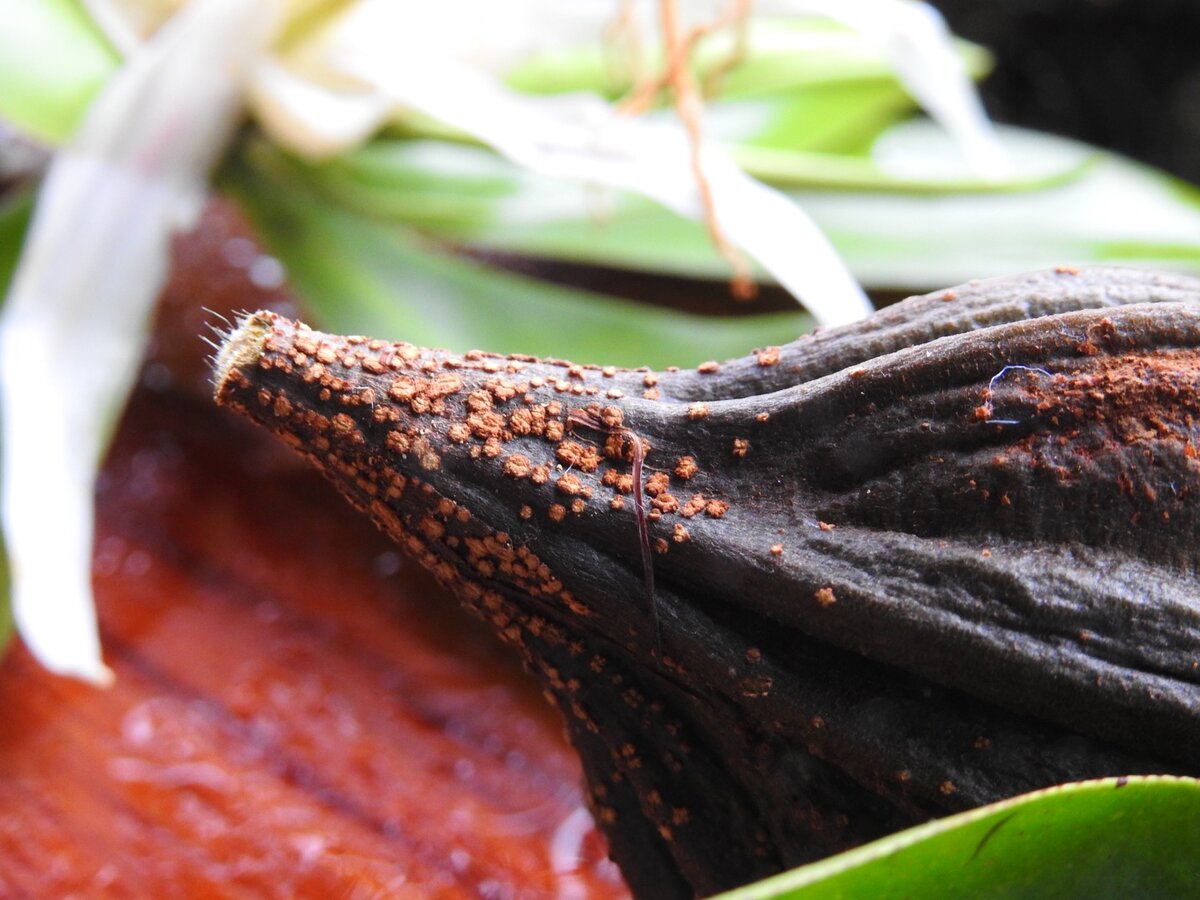
Unlike the red mangrove, whose torpedo-shaped propagules can float in salt water for several months and maintain viability for over a year, Pelliciera propagules have a maximum flotation period of barely a week and a maximum viability of about 70 days. This limited dispersal capacity has profound implications for the species' distribution and genetic structure. It explains why Pelliciera populations are fragmented and isolated, with minimal gene flow between them, and why the species occupies a much narrower ecological niche than its more mobile competitors.
A Living Fossil
The mangle piñuela is not just another mangrove species. It is a window into the distant past, a survivor from an era when the coastlines of the Americas were dominated by very different forests. To understand what makes this tree so remarkable, we must journey back 50 million years to the Eocene epoch.
Eocene Origins
Pelliciera originated in the early Eocene in northwestern South America. By the Middle Eocene, it had become the dominant tree in Neotropical mangrove communities, with pollen counts reaching up to 60% of the mangrove record in some localities. This was a world without Rhizophora, the red mangrove that dominates tropical coastlines today. Pelliciera was the first mangrove-forming tree known from the Neotropics, and for millions of years, it was the king of the coastal wetlands.
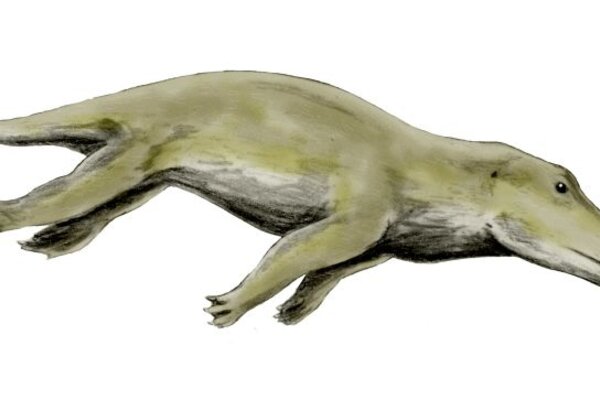
The Eocene world was radically different from today. The dinosaurs had been extinct for some 16 million years, and in their place, South America had developed its own bizarre fauna. Marsupials, xenarthrans (the ancestors of armadillos and sloths), and strange native ungulates roamed the interior, while terror birds up to 3 meters tall hunted in the open country. Along the warm coastlines where Pelliciera thrived, early whales were just beginning to evolve from their land-dwelling ancestors. The climate was far warmer than today, with mean annual temperatures around 30°C and high rainfall. Antarctica was still connected to South America and remained ice-free, covered in forests. This warm, wet world was ideal for mangroves, and Pelliciera flourished.

The fossil record of Pelliciera is preserved in its distinctive pollen, classified by palynologists as Lanagiopollis crassa. This pollen originated locally in the Early Eocene but did not attain significant abundances until the Middle Eocene. Across the Eocene (17 fossil sites have been studied), Pelliciera was common or abundant in most localities, with its distribution restricted to northwestern South America (present-day Colombia and Venezuela), with outlying sites in Panama and the Caribbean island of Jamaica.
Decline & Replacement
Then came the Eocene-Oligocene transition, approximately 34 million years ago. This was a period of dramatic global cooling and sea-level change that restructured ecosystems worldwide. For Pelliciera, it marked the beginning of a long decline. Rhizophora arrived in the Neotropics and quickly became dominant, with its superior colonizing ability and environmental tolerance. The Eocene mangroves dominated by Pelliciera were replaced by different communities led by Rhizophora, the precursors of modern mangroves.
In the Oligocene and Oligo-Miocene periods (18 fossil sites), a significant abundance decline was observed in Pelliciera, which fell to values below 5% in most localities except two sites in Venezuela. Despite its reduced abundance, Pelliciera experienced what researchers call "thinning expansion," spreading across most of the Neotropics while populations thinned to very low densities. The Miocene-Pliocene saw major range contraction, with Pelliciera retreating toward the southern Caribbean margin. The most recent fossil records, found in Venezuela, suggest that by the early Pleistocene, roughly 2.6 million years ago, Pelliciera had vanished from the Caribbean fossil record.
A Taxon Cycle
The history of Pelliciera may represent the first empirically verified taxon cycle in plants. A taxon cycle is a pattern of successive range expansions and contractions over evolutionary time, through which species either maintain core distributions or face extinction. Pelliciera followed a classic trajectory: it originated in a local area, expanded to dominate an entire region, then contracted as competitors arrived and environmental conditions changed. Today, it persists in scattered refugia, maintaining genetic diversity in isolated populations.
How did Pelliciera survive when Rhizophora proved so much more successful at colonizing new habitats? The answer lies in niche segregation. Field observations suggest that Pelliciera persists in microrefugia, occupying shaded understory positions beneath Rhizophora canopy where the newcomer's dominance is incomplete. Research has shown that Pelliciera seedlings are actually intolerant of full sun but tolerate a range of salinity levels, the opposite of most mangrove species. This shade tolerance may have allowed it to carve out a survival niche in the understory of the very forests that displaced it.
The Mangrove Hummingbird
In the mangrove forests of Costa Rica's Pacific coast, an endangered bird finds sustenance in the flowers of an endangered tree. The Mangrove Hummingbird (Amazilia boucardi, recently reclassified as Chrysuronia boucardi) is found only in Costa Rica, making it one of the country's few endemic bird species. Its primary food source is the nectar of Pelliciera rhizophorae. This relationship makes the mangle piñuela the only mangrove species known to be pollinated by a hummingbird.

The Mangrove Hummingbird is a small, green hummingbird with distinctive bronze-green upperparts and a bluish-green breast, and a slightly curved bill it uses to probe the large flowers of Pelliciera. The global population is estimated at just 1,500 to 7,000 mature individuals, earning it an Endangered classification from the IUCN. Though locally common where Pelliciera thrives, many seemingly suitable mangrove sites remain unoccupied by the hummingbird, suggesting that the bird's distribution is limited by factors beyond simple habitat availability.
The hummingbird is not the only visitor to Pelliciera flowers. Bats and moths have also been recorded visiting the blossoms, likely attracted by the copious nectar production. However, the hummingbird appears to be the primary pollinator, and the population dynamics of P. rhizophorae are intimately linked to the movement of pollen by these birds. When not feeding on Pelliciera flowers, the hummingbird has been observed taking nectar from Inga, Heliconia, and Maripa plants in terrestrial forest clearings near mangroves.
Habitat & Distribution
The mangle piñuela occupies a restricted range compared to most mangrove species. On the Pacific coast, it occurs from Costa Rica's Gulf of Nicoya southward to Ecuador's Esmeraldas River. On the Caribbean coast, small and isolated populations persist in the estuary of the Prinzapolca River in Nicaragua, the Chiriquí Lagoon and Las Minas Bay in Panama, and the bays of Cartagena and Barbacoas in Colombia. The estimated area of occupancy (AOO) is approximately 816 square kilometers, below the upper AOO threshold for Vulnerable status under IUCN criterion B2.
Térraba-Sierpe: A Stronghold
In Costa Rica, the Térraba-Sierpe National Wetland represents one of the most important refugia for Pelliciera. This vast estuarine system, where the Térraba and Sierpe rivers meet the Pacific Ocean, encompasses over 30,000 hectares and is recognized as a RAMSAR Wetland of International Importance. Research has documented that Pelliciera rhizophorae makes up nearly 40% of the mangrove forest in relative abundance (39.92%, across 5,824.94 hectares), making it the second most abundant species after Rhizophora racemosa (45.44%).
Within Térraba-Sierpe, Pelliciera is widely distributed along channels like Estero Guarumal, where researchers have identified 12 distinct forest communities containing the species. The structural and floristic characteristics of these stands vary predictably with environmental gradients. Pure forests of P. rhizophorae are located at the ends of estuaries, in the upper reaches where salinity is lowest. In the intermediate zone, Pelliciera is displaced by Rhizophora racemosa. The environmental variables that best discriminate between these forest communities are distance to the mouth of the estuary and interstitial salinity, followed by flooding height and sediment compaction.
Co-occurring Species
In Costa Rica's mangrove forests, the mangle piñuela grows alongside a characteristic community of species adapted to the estuarine environment. Understanding this community helps explain Pelliciera's ecological niche and its relationship with competing species.
The zonation pattern in Térraba-Sierpe follows a gradient from ocean to inland, with species distributed according to their tolerance for flooding and salinity. Rhizophora mangle occupies the deepest water and highest salinity near the coast. Avicennia species and Laguncularia tend to distribute in sandier substrates. Pelliciera, uniquely, thrives in the upper reaches of the estuary where freshwater influence is strongest and salinity is lowest. Research has shown that there is a confirmed dependence between the presence of mangrove species and substrate type, with Pelliciera distributing homogeneously over muddy substrates.
Wildlife Interactions
Beyond its unique relationship with the Mangrove Hummingbird, the mangle piñuela participates in the broader ecological web of the mangrove ecosystem. Crabs, birds, fish, and other organisms all interact with Pelliciera forests, though fewer studies have focused on its specific wildlife associations compared to other mangrove species.
In Neotropical mangroves, crabs are the dominant invertebrates and play critical roles in nutrient cycling, sediment aeration, and propagule predation. Species like Ucides cordatus (the dominant litter-consuming crab), Goniopsis cruentata (an omnivore), and Aratus pisonii (the mangrove tree crab) process leaf litter, consume propagules, and modify the forest floor through their burrowing activities. The limited dispersal capacity of Pelliciera propagules compared to Rhizophora may make them more vulnerable to crab predation, potentially influencing the species' distribution patterns.
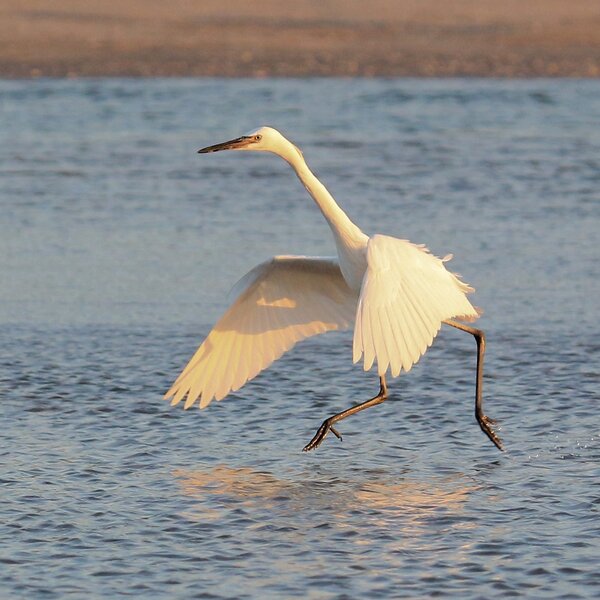
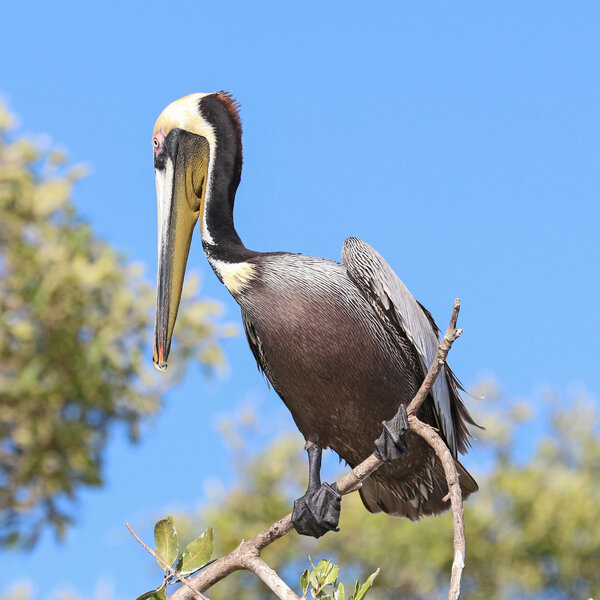
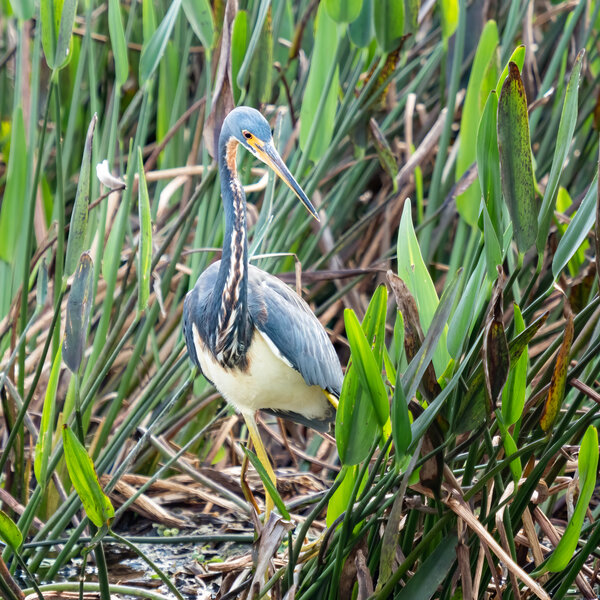
The mangrove ecosystem as a whole, including Pelliciera stands, provides critical nursery habitat for countless fish and invertebrate species. The roots and detritus of mangrove forests support food webs that extend far beyond the estuary, providing vital habitat for commercially important fish species. Herons, egrets, pelicans, and other wading birds hunt in the shallow waters around Pelliciera forests, while the canopy provides perching and nesting sites for frigatebirds, cormorants, and raptors.

Conservation
The mangle piñuela is classified as Vulnerable by the IUCN Red List, based on its reduced range and isolated populations. Genetic evidence suggests that minimal gene flow occurs among subpopulations, and they are severely fragmented, found mostly in small and isolated stands. This fragmentation is not new. It reflects both the species' evolutionary decline over millions of years and more recent human impacts on its remaining habitat.
Research has shown that mangrove fragmentation is particularly severe in urban areas. Between 2000 and 2016, human activity caused 62% of global mangrove loss, with commodity production (aquaculture and agriculture) alone accounting for 47% of losses. While conversion to human settlements accounts for only about 3% of this loss globally, it remains an important driver at local scales, particularly in areas of accelerated urban expansion. The recent recognition of two Pelliciera species (P. rhizophorae and P. benthamii) likely makes both more threatened than previously thought, as each now has a smaller total range.
The Térraba-Sierpe National Wetland provides crucial protection for Costa Rica's Pelliciera populations. Designated as a Forest Reserve in 1977 and recognized as a RAMSAR site in 1995, this wetland system represents one of the most extensive and important mangrove forests in Central America. Restoration efforts in the region have sown propagules of Rhizophora, Laguncularia, and Avicennia to restore damaged areas. Similar efforts could potentially be directed toward Pelliciera, though its more restricted ecological requirements and slower growth may present challenges.
The intertwined fates of the mangle piñuela and the Mangrove Hummingbird add urgency to conservation efforts. Coastal development, illegal logging, shrimp pond construction, and hydrological changes threaten the integrity of the narrow Pacific coastal strip where both species survive. Protecting this living fossil and its endangered pollinator requires maintaining not just individual trees but entire functioning mangrove ecosystems with the environmental gradients that allow Pelliciera to find its niche in the upper reaches of estuaries.
In the end, the mangle piñuela's story is one of resilience. It has survived the arrival of more competitive species, the disappearance of its once-vast Caribbean range, and millions of years of environmental change. Now it faces a new challenge: whether it can survive the pressures of the Anthropocene. In the labyrinthine waterways of Térraba-Sierpe, where hummingbirds still probe its showy flowers and its ancient lineage persists in the upper estuaries, the mangle piñuela continues its quiet vigil, a living reminder of the deep time that shapes our coastal forests.
Key Sources & Resources
Species Information
Overview of the genus with information on taxonomy, distribution, and ecology.
Authoritative taxonomic information and nomenclatural history from the Royal Botanic Gardens, Kew.
Community observations, photographs, and distribution data.
Detailed botanical description of the family including morphological characteristics.
Open-access monograph and primary source for the genus's etymology, morphology, and phenology, and the recognition of a second species, P. benthamii.
Evolutionary History
Comprehensive study documenting Pelliciera's evolutionary history from Eocene dominance to present-day decline.
Research on molecular, morphological, and physiological differences between Pacific and Caribbean populations.
Conservation
Study on threats to Pelliciera populations from urbanization and coastal development.
Official conservation status assessment and threat analysis.
Primary Vulnerable assessment, with the area of occupancy figure and criterion B2 rationale.
Source for the 2000-2016 mangrove-loss figures: 62% driven by human activity, 47% by commodity production, 3% by settlements.
Costa Rica Mangroves
Research on spatial distribution of mangrove species including Pelliciera in the Térraba-Sierpe wetland.
Overview of Costa Rica's mangrove ecosystems and species.
Information about one of the largest mangrove wetlands in Central America.
Mangrove Hummingbird
Species information on the endangered hummingbird endemic to Costa Rica.
Detailed species profile including diet, habitat, and conservation status.
Endangered assessment and source for the population estimate of 1,500 to 7,000 mature individuals.