Rio Hondo Palicourea
Palicourea hondensis is a Central American understory shrub with a secret: unlike most of its genus, which sport bright flowers to attract hummingbirds, this species blooms in white at night. First collected by Henri Pittier along the Río Hondo in 1901, it took over a century and two genus changes before botanists placed it in its current home.
Most members of the genus Palicourea are showoffs. Their flowers blaze in reds, oranges, and purples, tubes perfectly shaped to fit hummingbird bills. But Palicourea hondensis breaks the pattern. Its flowers are white and tubular, opening apparently at night rather than for daytime pollinators, suggesting visits from moths or other nocturnal creatures. This unusual pollination syndrome, combined with its plain appearance as a leafy understory shrub, meant the species was overlooked for decades, shuffled between genera as botanists tried to decide what it actually was.
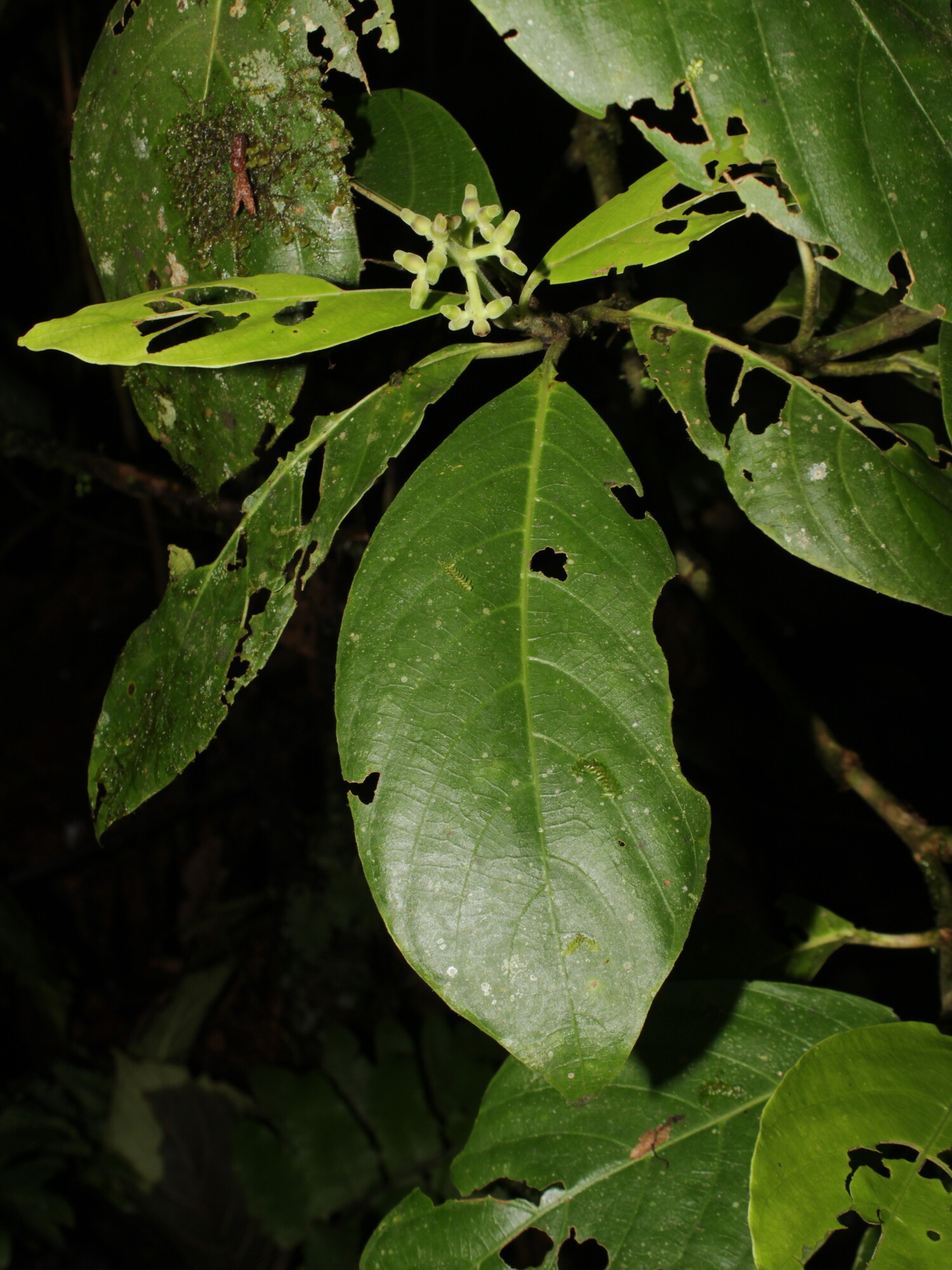
The species is native to the wet forests of Central America, ranging from Nicaragua through Costa Rica and Panama. It is most common in Costa Rica, where over 400 herbarium specimens have been collected from both the Atlantic (Caribbean) and Pacific lowlands. The species thrives in the shaded understory of mature rainforest, typically at elevations from sea level to around 1,000 meters, though it has been recorded as high as 1,250 meters.
Identification
Habit
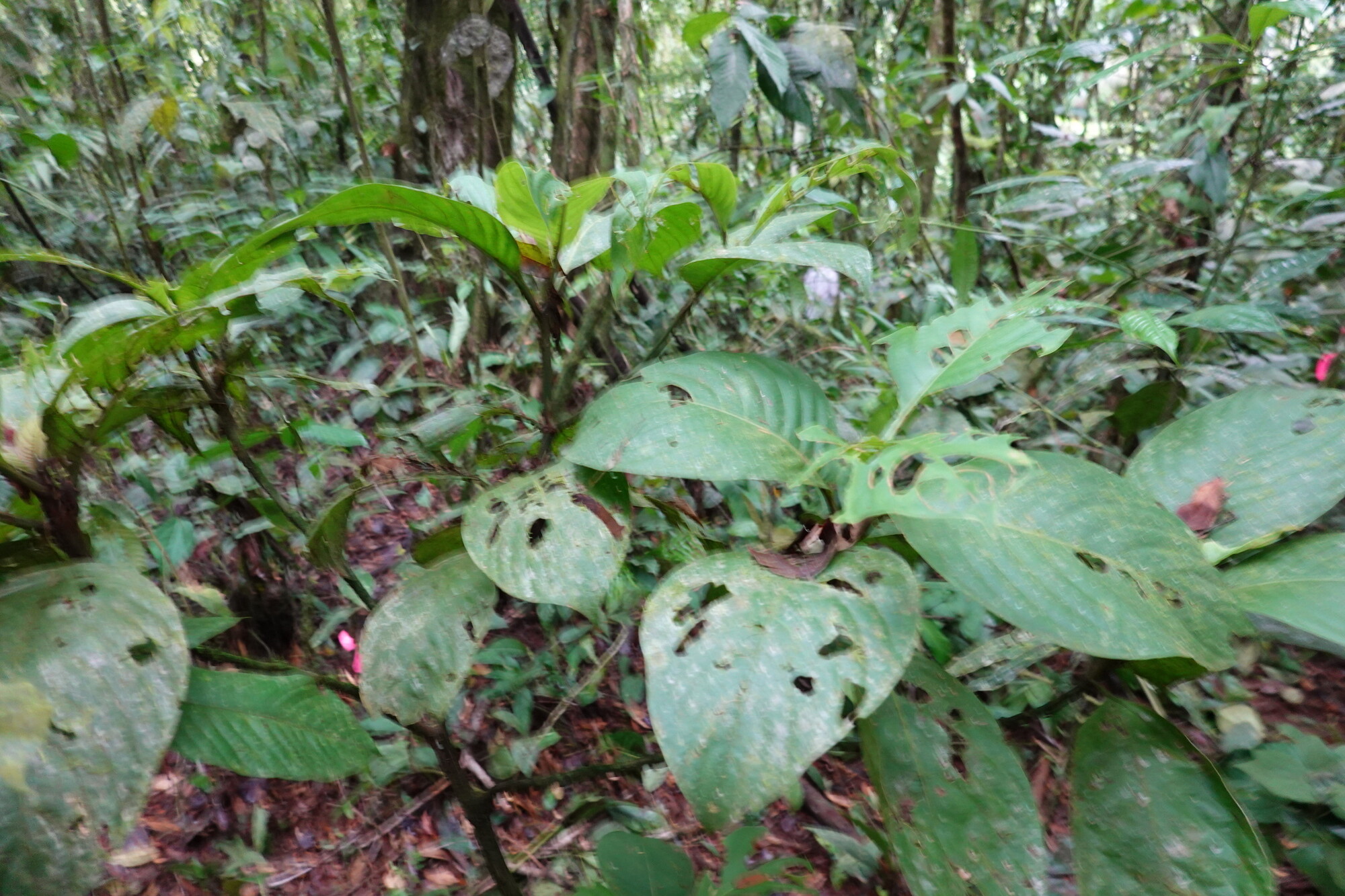
Palicourea hondensis is a shrub or small tree of the forest understory, typically reaching 2-5 meters in height. Like other members of the genus, it grows in the shaded conditions beneath the forest canopy, where light levels are low and humidity is high. The plant has a somewhat open, branching architecture typical of understory species.
Leaves
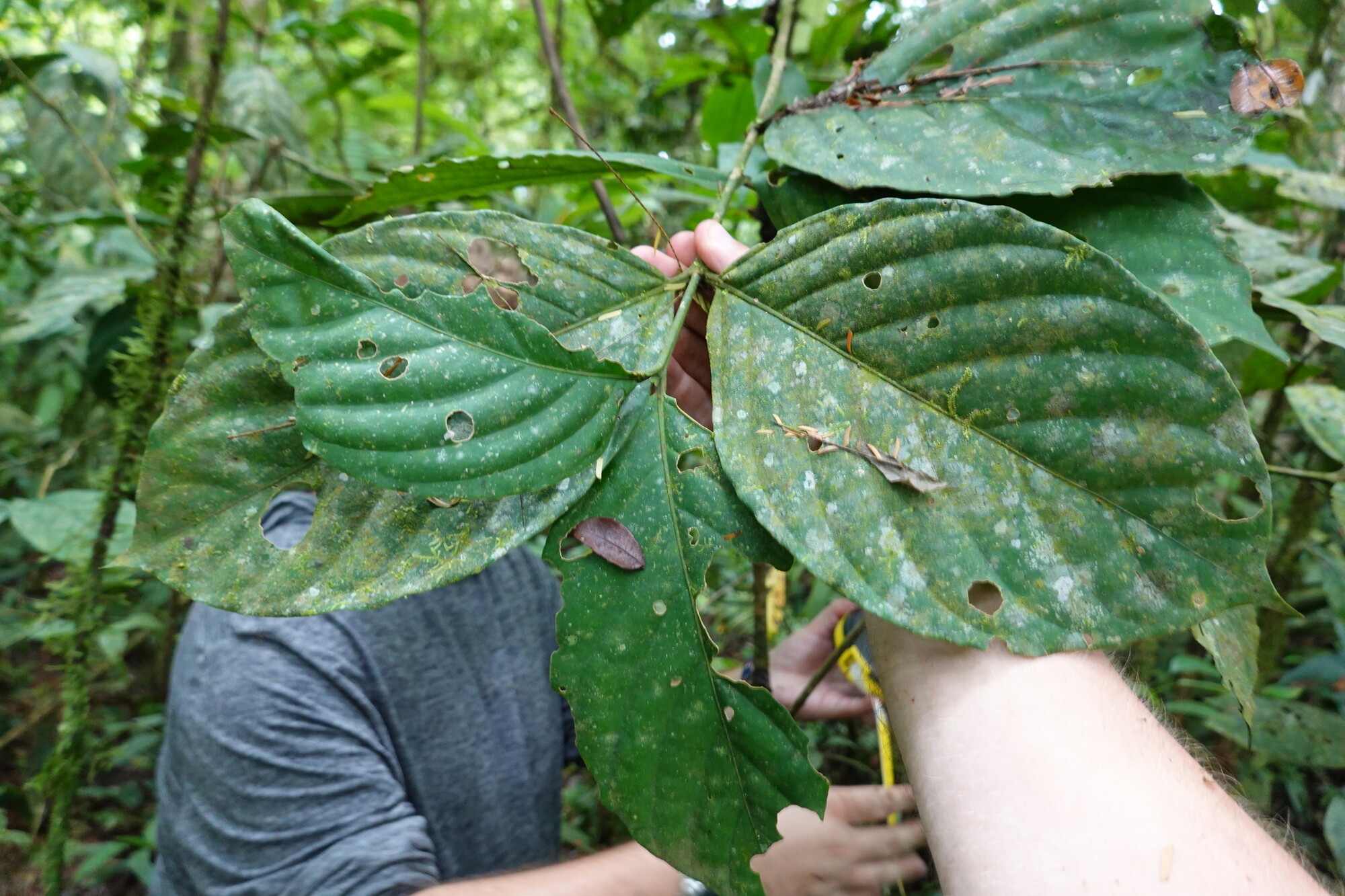
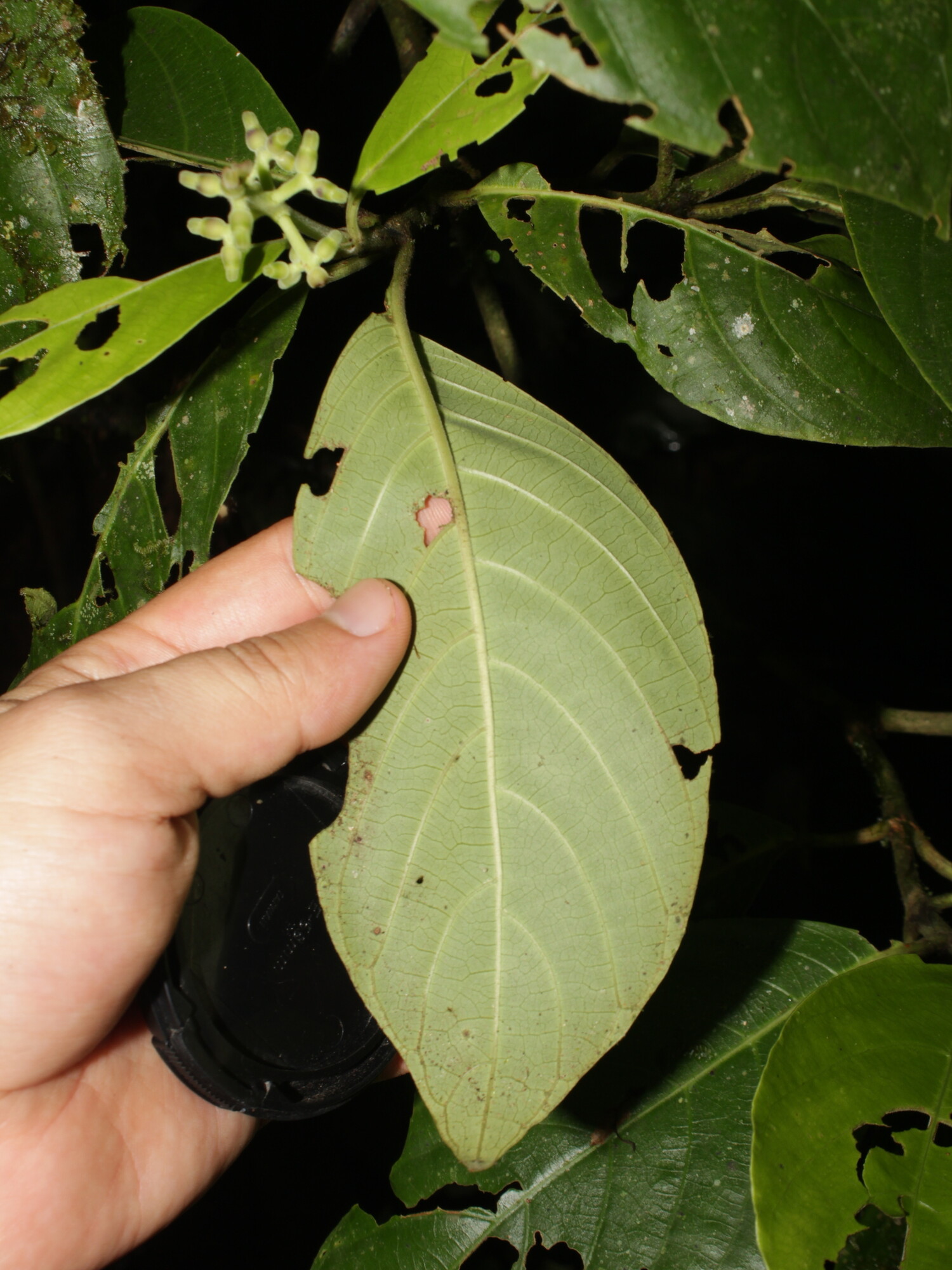
The leaves are large and arranged in opposite pairs, a characteristic feature of the Rubiaceae family. They are elliptic to broadly ovate, with a leathery texture and prominent secondary venation that creates a distinctive ribbed appearance. The upper surface is dark green and slightly glossy, while the underside is paler with clearly visible veins. Between each pair of leaves, persistent stipules are present, another diagnostic feature of the coffee family.
Flowers
The flowers are what make Palicourea hondensis unusual within its genus. While most Palicourea species have brightly colored, tubular flowers adapted for hummingbird pollination, this species has white flowers with well-developed corolla tubes that apparently open at night. The inflorescence is a terminal cyme (a branched cluster) with pubescent (finely hairy) peduncles and branches. The individual flowers are pentamerous (five-parted) with the typical Rubiaceae structure.
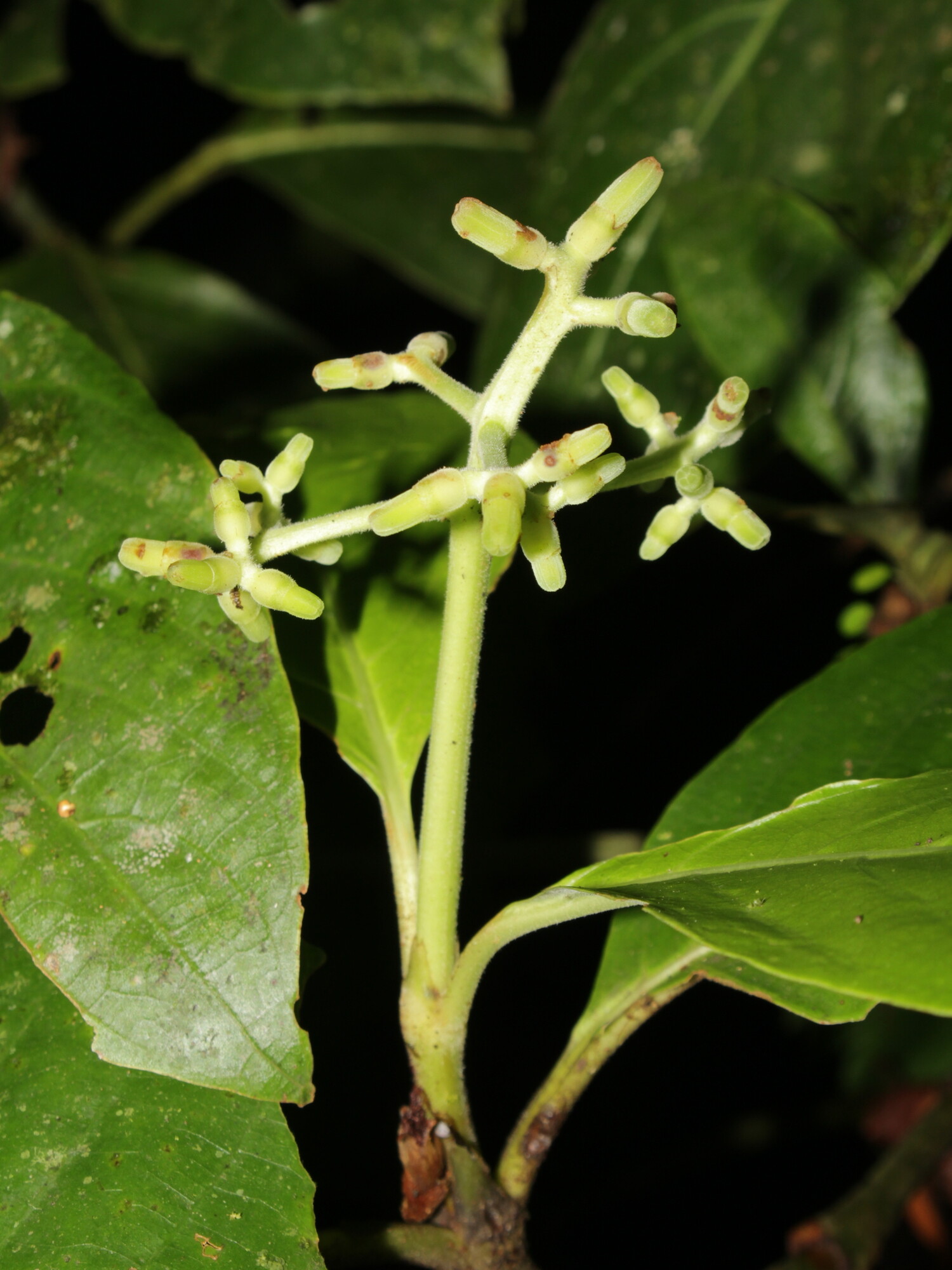
Like most Palicourea species, P. hondensis is likely distylous, meaning it produces two flower forms with reciprocal placement of stigmas and anthers. This breeding system promotes cross-pollination between different plants. The nocturnal flowering habit suggests pollination by moths or other night-flying insects rather than the hummingbirds that visit most Palicourea species, though specific pollinator observations have not been published.
Fruits
The fruits are fleshy drupes containing two pyrenes (seed-bearing stones), typical of the genus. In most Palicourea species, the fruits ripen to blue or purple and are dispersed by birds. Studies of related species have found that tyrant flycatchers and other small frugivores consume the fruits and disperse the seeds. Fruiting phenology for this species has not been documented in detail.
Distribution
Palicourea hondensis ranges from Nicaragua through Costa Rica to Panama, and the vast majority of records come from Costa Rica, on both the Caribbean and Pacific slopes. GBIF holds over 430 occurrence records, with about 388 from Costa Rica, 29 from Panama, and 8 from Nicaragua. The largest concentrations are on the Caribbean slope, in Limón Province, including Braulio Carrillo National Park and the Tirimbina area. On the Pacific side the species reaches the Brunca region of the deep south, with records from around Golfito, the La Gamba field station, and Piedras Blancas National Park.
The species occurs from sea level to approximately 1,250 meters elevation, though most records are from lowland and premontane forests below 1,000 meters. It inhabits the understory of mature wet and moist tropical forests, where it grows in the shade of the canopy on well-drained soils.
Ecology
As an understory species, Palicourea hondensis is adapted to the low-light conditions beneath the forest canopy. The genus Palicourea is one of the largest in the Neotropics, expanded to more than 700 species after absorbing much of Psychotria; many of its species are hummingbird-pollinated and bird-dispersed. The nocturnal white flowers of P. hondensis represent a departure from this pattern, suggesting this species has evolved to exploit a different pollinator community.
The species belongs to a group of Central American Palicourea species that share nocturnal flowering with white corollas. This group, sometimes called the Psychotria domingensis-Coussarea hondensis complex, was the subject of a taxonomic revision in 2010 that transferred several species into Palicourea. The ecological significance of nocturnal flowering in these species remains understudied.
Taxonomic History
The taxonomic history of this species reflects the long effort to understand relationships within the coffee family. The plant was first described by Paul Carpenter Standley in 1928 as Psychotria hondensis. The type specimen was collected by Henri Pittier (collection number 16161) in August 1901 at Río Hondo, on the Atlantic (Caribbean) slope, and is deposited at the United States National Herbarium (Smithsonian Institution). The epithet "hondensis" derives from this type locality, Río Hondo, meaning "deep river" in Spanish.
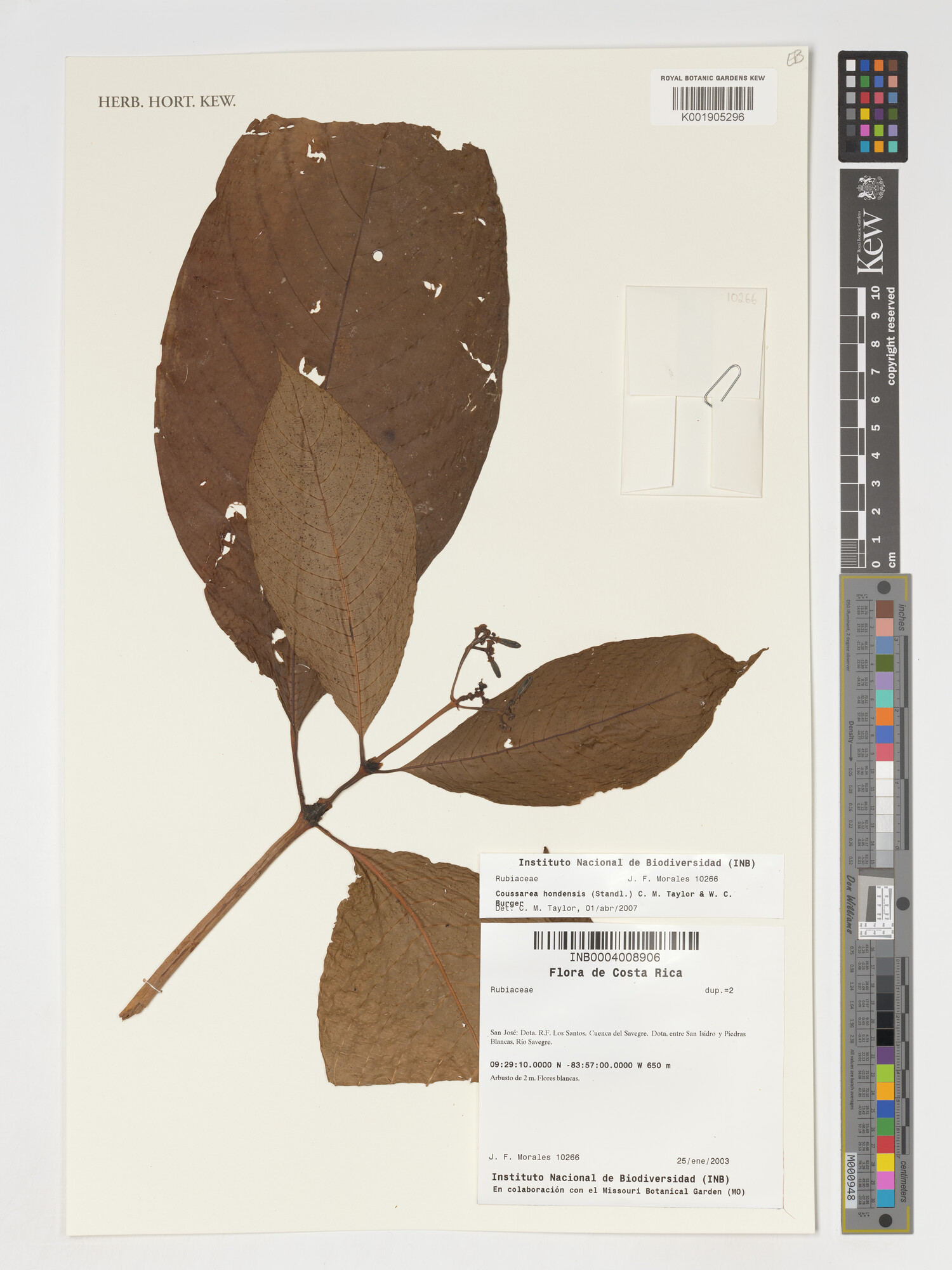
The species was subsequently transferred to Coussarea as Coussarea hondensis (Standl.) C.M. Taylor & W.C. Burger, where it was placed alongside other Central American species with similar white, tubular flowers. However, a 2010 revision by Taylor, Lorence, and Gereau demonstrated that this group of species was problematic within Coussarea, which is properly characterized by 4-merous flowers and single-seeded fruits. Since C. hondensis and its allies have 5-merous flowers and fruits with two pyrenes, they were transferred to Palicourea, creating the current combination Palicourea hondensis (Standl.) C.M.Taylor, published in Novon 20:488 (2010).
Henri Pittier (1857-1950), who collected the type specimen, was a Swiss-born geographer and botanist who founded Costa Rica's Physical Geographic Institute and made extensive botanical collections throughout Central America from 1887 to 1904. His collections formed the foundation for much of what we know about Costa Rican plant diversity. Paul Standley (1884-1963), who described the species, was one of the most prolific botanists of his era, describing thousands of new species from Central America while working at the Field Museum in Chicago.
Conservation Outlook
Palicourea hondensis has not been assessed for the IUCN Red List. However, the species appears to be relatively common within its range, with extensive herbarium collections and regular iNaturalist observations from Costa Rica. The species occurs within several protected areas, including Braulio Carrillo National Park on the Caribbean slope and various protected areas in the Golfito region of the Brunca.
As an understory species dependent on mature forest conditions, P. hondensis is vulnerable to deforestation and forest degradation. However, Costa Rica's strong protected area system and forest recovery over recent decades provide favorable conditions for the species' long-term persistence. The species' ability to tolerate a range of elevations (sea level to 1,250 m) may also provide resilience to climate change.
Key Sources & Resources
Taxonomy & Nomenclature
Nomenclatural information from the Missouri Botanical Garden.
Accepted name, synonymy, and distribution from Kew.
The taxonomic revision that transferred this species to Palicourea.
Genus Information
Overview of the genus Palicourea with information on morphology, ecology, and diversity.
Occurrence Data
Global occurrence records and specimen data.
Community-submitted observations with photographs and locations.