Astrocaryum confertum (Chontadura)
Astrocaryum confertum — The most heavily armored palm in Costa Rica's forests, its trunk bristling with needle-sharp spines up to 17 centimeters long. This fortress of a tree guards its orange fruits until they fall to the forest floor.
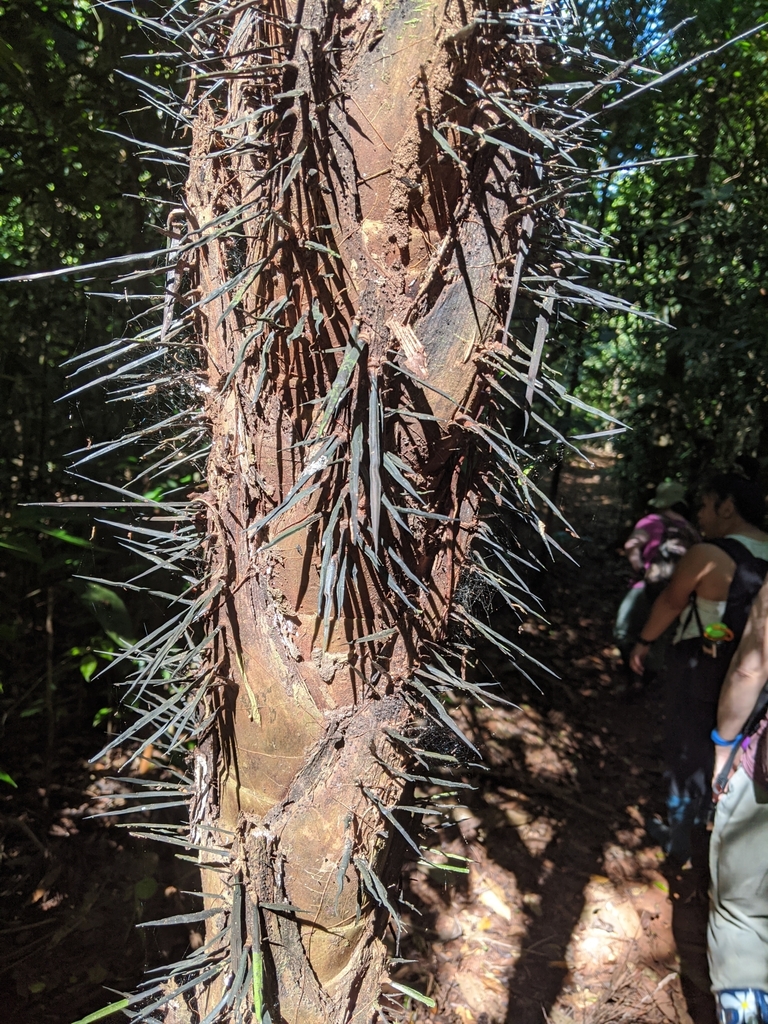
Deep in the primary forests of the Osa Peninsula, where the canopy blocks most of the sunlight, a palm rises from the understory wearing armor that would make a medieval knight envious. Astrocaryum confertum, known locally as chontadura, wraps its trunk in such a dense thicket of needle-sharp spines that from a distance the whole tree appears woolly and black. These spines can reach 17 centimeters in length, longer than a human hand, and they serve a purpose that has shaped the palm's entire reproductive strategy.
Identification
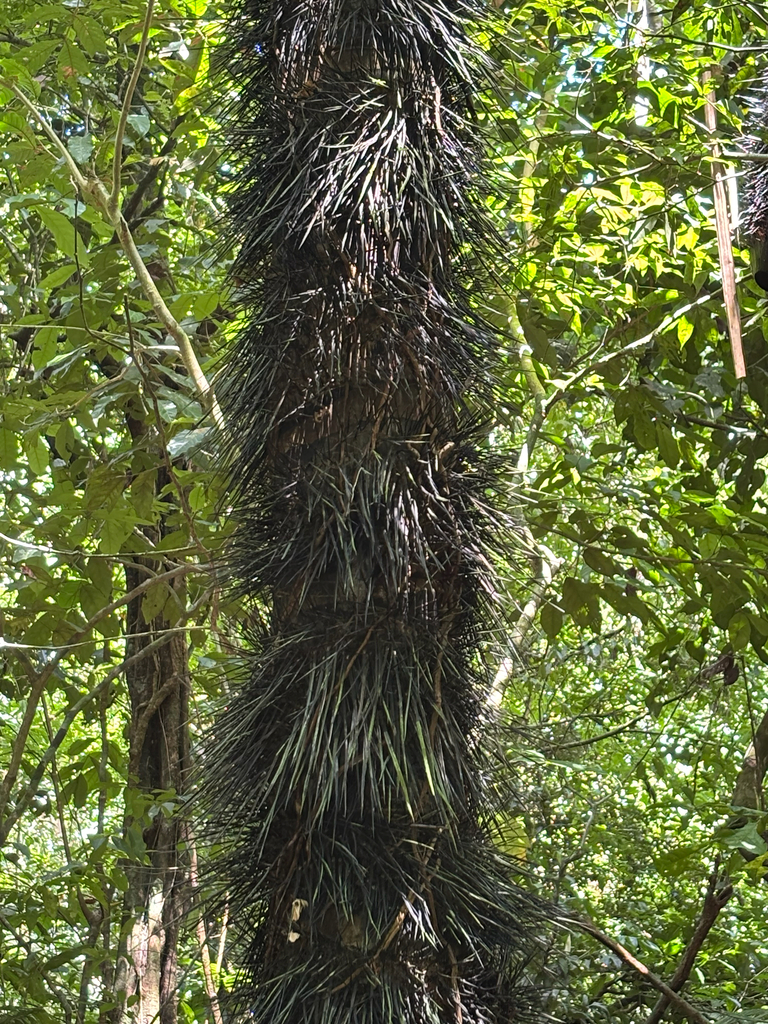
The chontadura is one of the only tall palms on Costa Rica's Pacific slope that bears spines. This intimidating armor makes it impossible to confuse with any other palm in the region. The trunk is uniformly cylindrical and straight, reaching about 25 cm in diameter, but its surface disappears beneath a cloak of piercing needles. Though the spines give the trunk a dark, almost black appearance from afar, the actual wood beneath is smooth and tan or flesh-colored.
Spine density varies along the trunk and changes with age. Young palms and the upper trunk near the crown bear the densest armament, giving these sections a bristly, almost woolly appearance. As the palm ages, the lower trunk gradually sheds its spines, leaving behind only circular scars arranged in rings between the old leaf bases. Very old individuals may have relatively smooth lower trunks while remaining fiercely armed near the crown.
Leaves and Crown
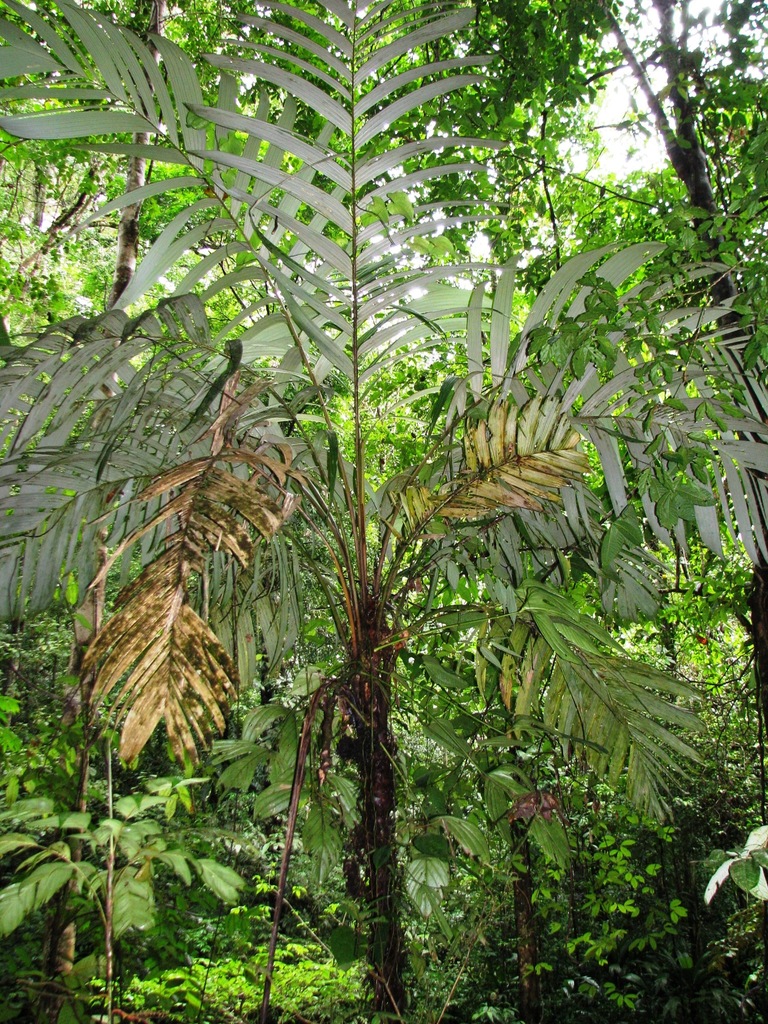
The crown forms a nearly globular, feathery sphere of large fronds measuring about 2.5 meters long. Each frond consists of many long, narrow, ribbon-like leaflets arranged pinnately along a heavily spined petiole. Unlike many palms whose leaflets lie flat in a single plane, the chontadura's leaflets extend randomly in multiple directions, giving the leaves a distinctly plumose or feathery appearance.
Ecology: The Logic of Armor
Why would a palm invest so much energy in growing such elaborate defenses? The answer lies in its reproductive strategy. The chontadura produces large clusters of orange fruits that ripen over several months, from May through August. While most trees with edible fruit protect their unripe seeds by making green fruits unpalatable through bitter compounds, the chontadura takes a different approach: physical fortification.
The spines serve as a daunting deterrent to premature harvest. Hungry monkeys, known to yank off green clusters of unripe fruits only to taste and reject them, face a formidable barrier. By the time the fruits ripen and fall to the forest floor, their seeds have developed enough to be viable. Ground-dwelling animals like agoutis, raccoons, and coatis then disperse the fallen fruits, carrying the seeds away from the parent tree.
Bees likely pollinate the chontadura's flowers. Each palm can produce up to three large fruit bunches, each measuring about 50 cm long and hanging on meter-long stalks. When the large racemes of orange fruits are present, they provide a rare and eye-catching embellishment to the forest understory.
Habitat and Distribution
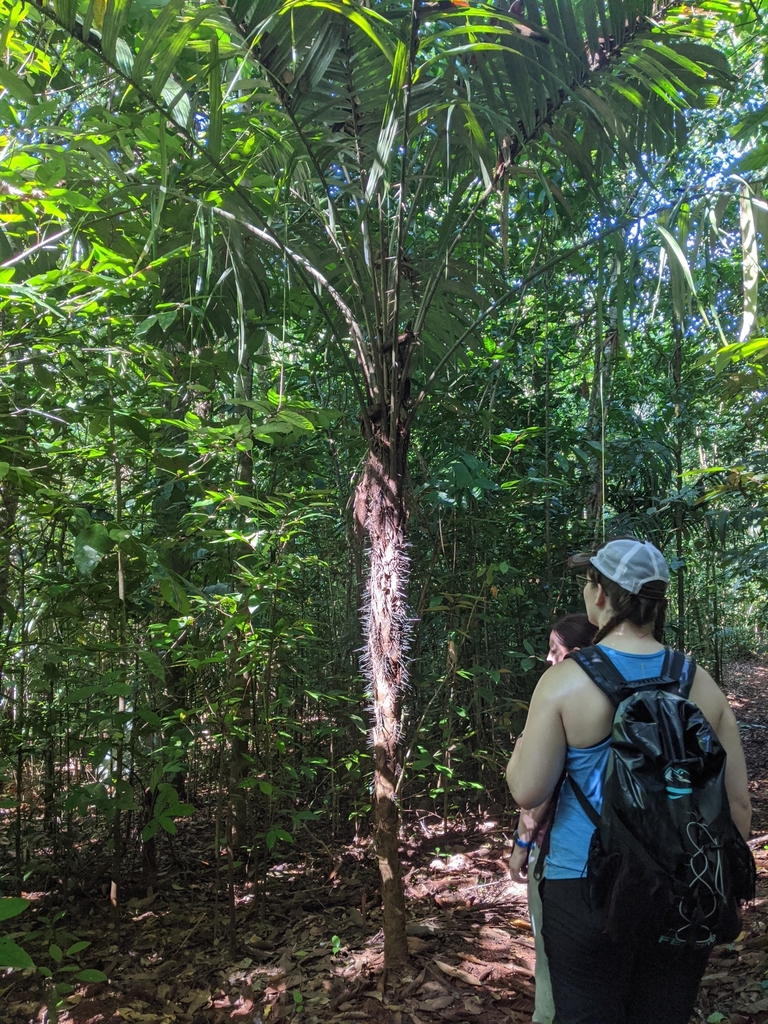
The chontadura grows almost exclusively in thick primary forest, where it rises as an understory tree beneath the taller canopy giants. It prefers lowland rainforest on soils not subject to flooding, at elevations below 250 meters. The palm does not inhabit extreme coastal zones. In Costa Rica, it is known from the Osa Peninsula, where it shares the forest with other large palms like Welfia regia and Iriartea deltoidea. Its range extends from Nicaragua through Costa Rica to Panama.
Related Species in Costa Rica
Costa Rica harbors three species of Astrocaryum, all bearing the genus's characteristic spiny armor. Astrocaryum alatum, the coquillo, is the most common and least spiny of the three. It is distinguished by having leaflets arranged in a single plane (rather than the plumose multiple planes of the other species) and by bearing fruits with spines on their tips. Astrocaryum standleyanum, the black palm or chunga, closely resembles the chontadura but is found primarily on the Pacific slope from central Costa Rica to Ecuador. It can be distinguished by its massive, long-stalked inflorescences that hang pendulously even when laden with fruit, while the chontadura's inflorescences remain erect.
Uses
Despite its formidable defenses, local communities have long harvested the chontadura from the wild. The orange fruits are edible, with a thin leathery skin covering a layer of fibrous, soft flesh surrounding a single central seed. The spines themselves, being highly flammable, serve as useful kindling for starting fires. But the most valued product is the wood. Beneath that bristling exterior lies wood that is exceptionally hard and black, prized for making walking canes, ornamental boxes, and archery bows.
Conservation
The chontadura depends on primary forest habitat and does not thrive in disturbed or secondary forests. This makes it vulnerable to deforestation, though its occurrence within protected areas like Corcovado National Park provides some security. Because the palm is harvested from the wild rather than cultivated, sustainable management practices are important to ensure its continued presence in the forests of the Osa Peninsula and beyond.
Key Sources & Resources
Species Information
Detailed species account including description, habitat, and uses.
Observations and photos from citizen scientists.
Related Species
Overview of the closely related black palm found from Costa Rica to Ecuador.
The most common and least spiny Astrocaryum in Costa Rica.