Topic
Nature
16 articles
Articles tagged with this topic across every collection on the site.
What a tree does with light
We follow carbon through leaves, roots and trunks to investigate why more sunlight need not bring proportionally more wood, even when a tree reaches the canopy.
When Is a Mouse a New Species?
How taxonomy learned to both split and lump species: an Andean rat, a salamander on Cerro de la Muerte, and the hidden diversity of Costa Rica's peaks.
When Does Heat Become Forest Failure?
Satellite maps show more tropical canopy crossing a measured threshold for leaf stress. But the maps do not show where forests are dying. Laboratory leaf tests, flux towers and long-term plots each mark a different temperature at which heat starts to cost a forest something, and the heat added by clearing is the part a land-use decision can still prevent.
The Tallest Trees Were Supposed to Die First
A 2026 study found the tallest tropical trees are not the drought-fragile giants theory predicted. The neotropical evidence splits, and no published study has measured how Costa Rica's almendro and ceiba move water.
Roots in the Tide
Mangroves cover about a tenth of a percent of the world's land, and from that sliver they feed coastal fisheries, take the force out of storm surge, and store several times more carbon per hectare than an inland forest. On International Mangrove Day, a look at what they are, where the great ones stand, and why 99.85 percent of Costa Rica's are on a single coast.
The Forest That Will Not Come Back
Ten hectares of forest on Isla del Coco were left to recover on their own in 1881. A hundred and forty-five years later, they still are not forest.
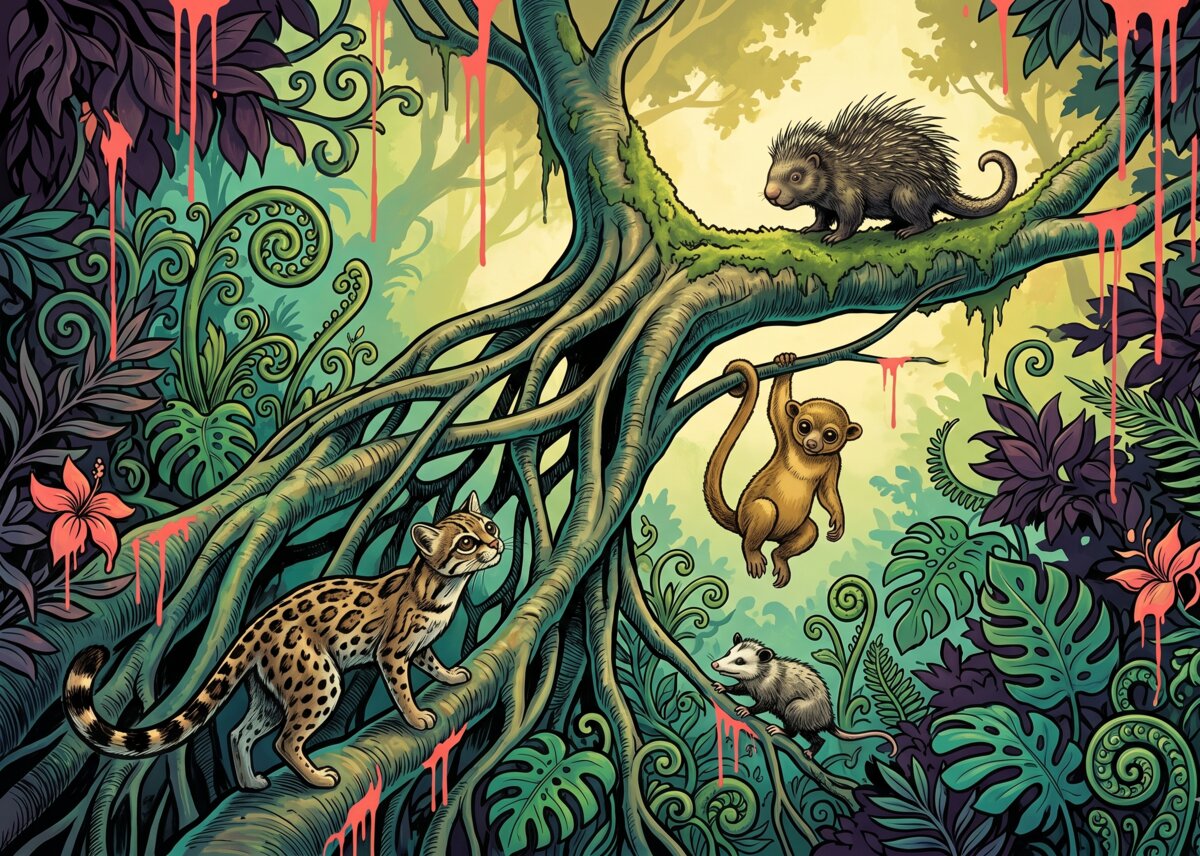
One fig, seventeen visitors
Camera traps thirty meters up in a Monteverde fig recorded seventeen mammal species using one platform across sixty days, on a tree species that climbing tours are starting to favour.

Thirty-three years of capuchins, and a forest that won't sit still
Thirty-three years of trail-walking at Lomas Barbudal show twelve capuchin groups rearranging themselves as the forest dries.
A Developer Walks Into a Forest
Three decades of Sala IV rulings have built a doctrinal architecture that makes destroying biodiverse habitat extraordinarily hard to do legally. Here is how it locks together.

The Species We Lost
Costa Rica's deforestation erased reservoirs of endemic species, many of them never named. What regrew is genetically narrower.
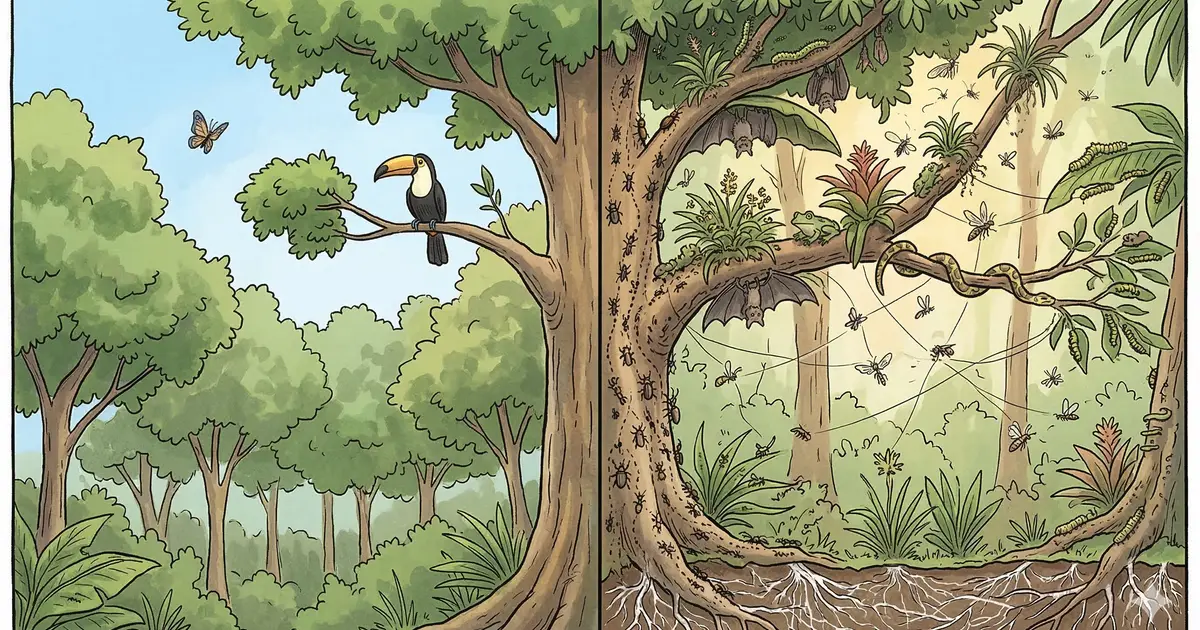
What is Biodiversity, Anyway?
The word was invented in 1986 to fit a conference title. It now describes the most complex system science has tried to understand. What it actually means.
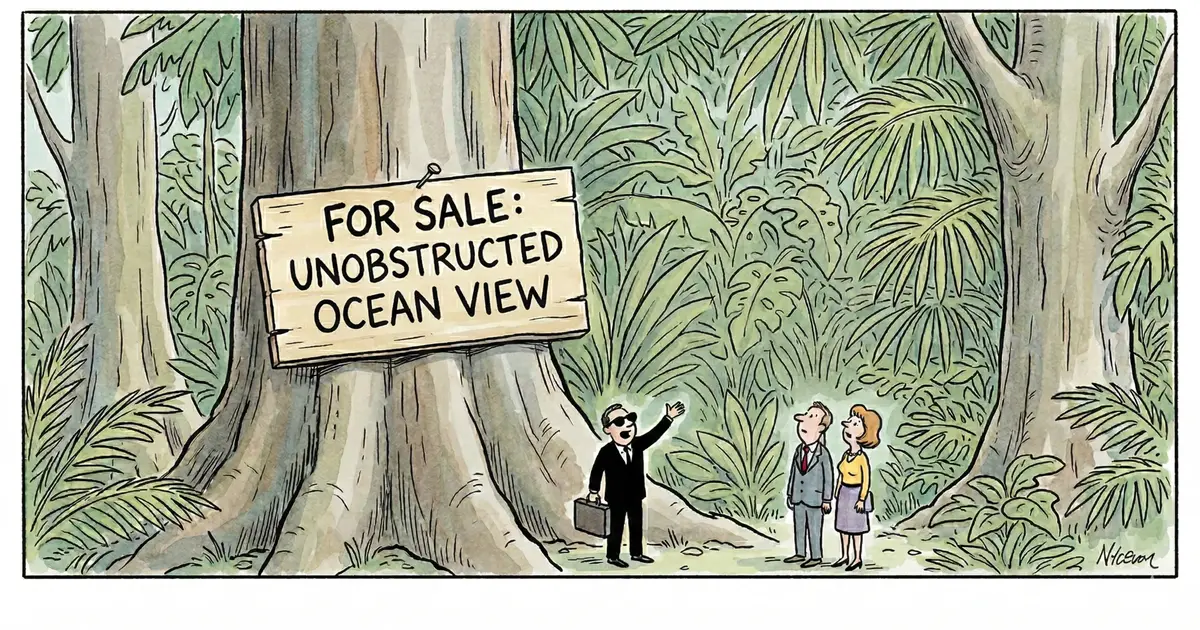
Letter to a Realtor: Why Biodiversity is Precious
An open letter to a Brunca real-estate broker. The forested ridge you are selling is an irreplaceable library, not a building site.
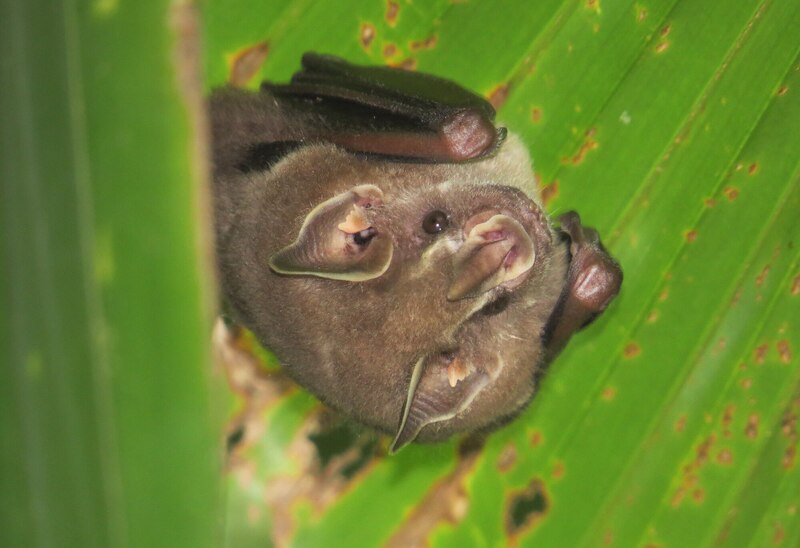
Wildlife Corridors Are Not Just for Animals
We picture jaguars and monkeys when we think of wildlife corridors. The invisible passengers are the trees, and their journey takes centuries.
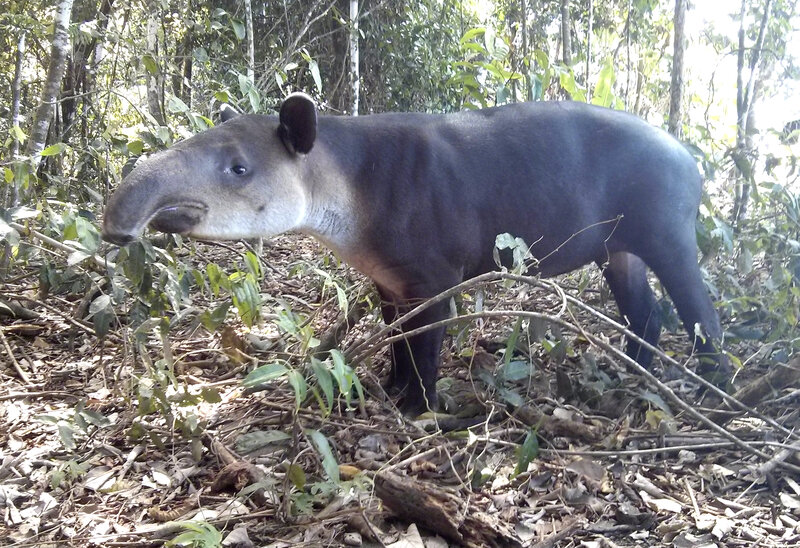
The Importance of Paso de la Danta
Jack Ewing and ASANA built one of Costa Rica's most vital wildlife corridors from the ground up. Why its protection matters now for the whole Brunca region.
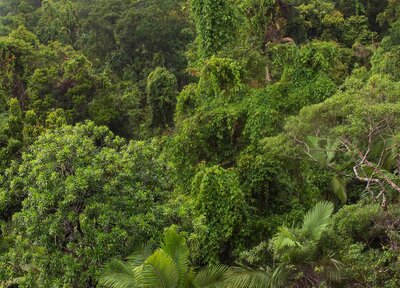
What Is a Forest?
The legal definition meets deep ecology, exploring how canopy structure creates microclimates, primary vs secondary succession, and why 70% coverage matters. Understanding both law and ecosystem function.
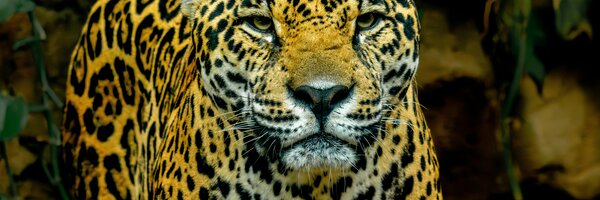
Wildlife Corridors: Lifelines for Biodiversity
33% of Costa Rica is biological corridor. How SINAC and corridor councils stop habitat fragmentation, as Paso de la Danta's 2025 victory proved.