Letter to a Realtor: Why Biodiversity is Precious
You see a forested ridge with ocean views. You calculate lot sizes and access roads. But you are standing in one of the most extraordinary concentrations of life on Earth, and what you are proposing to sell cannot be bought back.
I know you're not literally operating the bulldozer. You may not be subdividing the land yourself. But you and your colleagues are the gatekeepers to this region. You are the brand ambassadors. You send out the marketing. You bring buyers in. You show them what's possible. You tell them what can be developed and what cannot. Every transaction you facilitate shapes what happens to these forests. The developers follow where you lead.
I understand the economics. A hectare of forest in the Brunca region generates $44 to $110 per year under Payment for Environmental Services. Used for cattle ranching, the same hectare might yield $300-650 annually. Subdivided into ocean-view lots, it sells for $200,000 to $500,000. Conservation income trails development returns by a factor of 4,500. From a spreadsheet, the decision looks obvious.
But there is something the spreadsheet does not price.
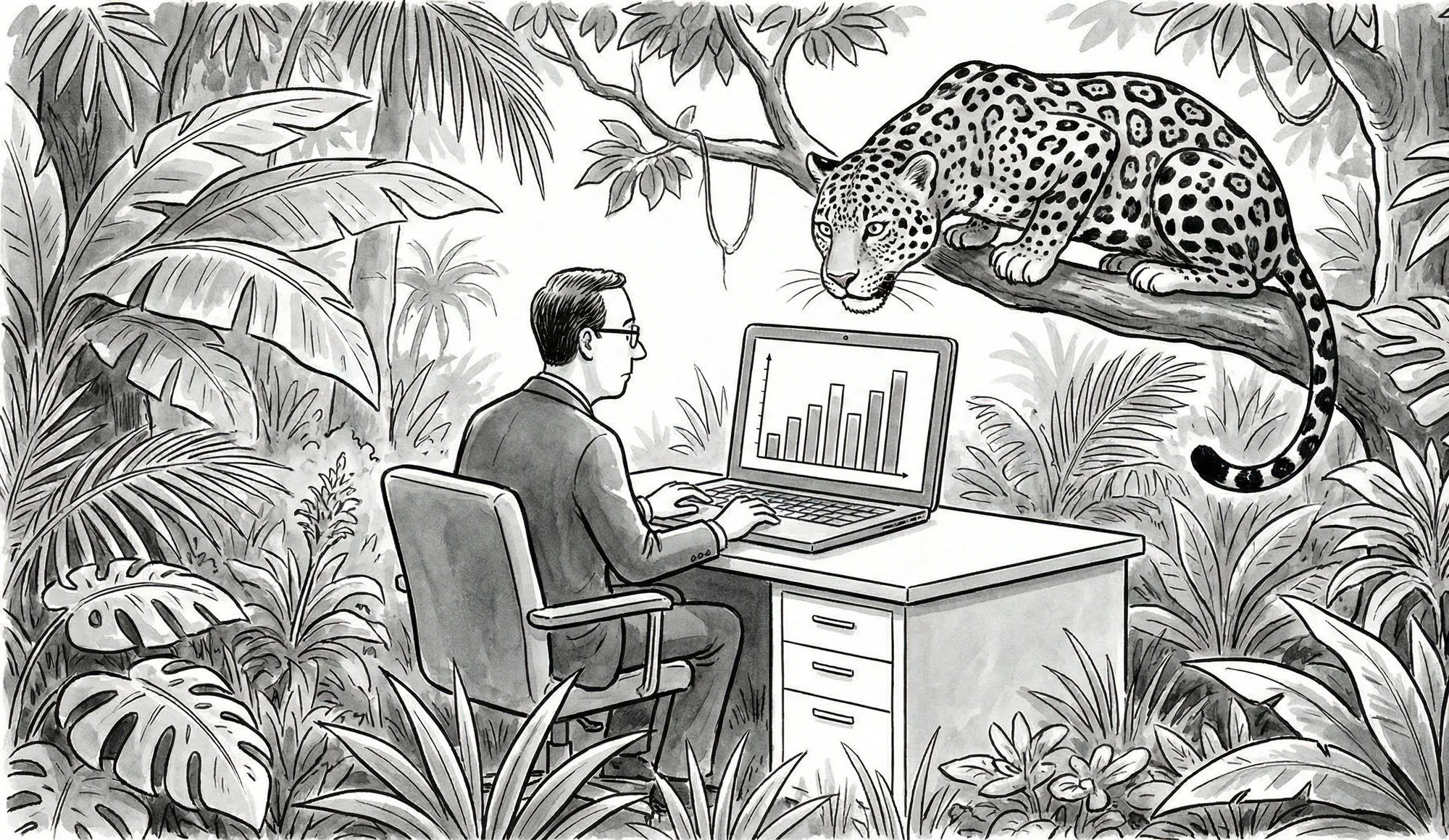
You Are Standing in a Library
You've heard the statistics. Every tourism article starts with them. Costa Rica occupies 0.03% of Earth's land surface. It contains approximately 5% of all known species. The Brunca region, where you're calculating lot values, is the most biologically dense section of one of the most biologically dense countries on the planet. The forests surrounding Corcovado National Park, extending through the Paso de la Danta corridor northeast to the mountains, harbor an estimated 500,000 species. Many have never been cataloged. Some exist nowhere else.
Thomas Lovejoy, who introduced the term "biological diversity" to science in 1980, framed what biodiversity actually is: each species is "a set of solutions, pretested by evolution, to a particular set of biological problems." Those solutions accumulated over hundreds of millions of years. That is the library you are standing in: each species a volume, written by evolution, irreplaceable once lost. In a region this biologically dense, a single hectare cleared can erase species that exist nowhere else on Earth. Whatever those species might have offered medicine, agriculture, or materials science vanishes with them. Economists call this "option value": the worth of preserving resources for needs that cannot yet be specified. The cost of keeping a forest standing is finite and known. The cost of losing what it contains is unknown and irreversible. Real estate markets cycle. Extinction is permanent.
The scale of that dependence is already measurable. A 2021 review commissioned by the UK Treasury estimated that over half of global GDP, some $44-58 trillion annually, depends moderately or highly on functioning ecosystems. Pollination services alone underpin $235-577 billion in annual food production. Natural capital per person has declined 40% since 1992, even as produced capital doubled. By 2030, biodiversity loss could reduce global GDP by $2.7 trillion annually.
When you clear a hectare of this forest for a vacation home, you are burning parts of a library that took geological time to write, converting a permanent income stream into a single capital event. This is liquidation. You are mining a non-renewable resource.
The "Highest and Best Use" Fallacy
Real estate economics teaches you to find the "highest and best use" of a property: the use that generates the maximum financial return. In your profession, this is rational. For a forested ridge in "Costa Ballena," the highest and best use appears to be luxury residential development.
But "highest and best use" includes a qualifier your profession knows well: the use must be legally permissible. Under Costa Rica's Ley Forestal 7575, converting forest to other land uses is prohibited. Article 19 forbids cambio de uso del suelo on forested land. Article 61(c) makes unauthorized conversion a criminal offense. By the doctrine's own terms, the highest and best use of a forested parcel cannot be development.
Even where development proceeds, the economics are self-defeating. The premium on these properties comes from what surrounds them: forest canopy, wildlife, ridge views, the "pristine" and "untouched" language in every listing. Each new development degrades exactly what creates that premium. The first buyers get the forested ridge. Later buyers look out at other rooftops.
And, above all, this is a market failure. The market values the view of nature over nature itself. It privatizes the benefits (your commission, the developer's profit, the "front row" ridge, the "white water view," the buyer's sunset) while socializing the costs: lost water recharge, lost carbon sequestration, lost genetic resources, lost soil retention, lost landslide protection, lost climate resilience, lost tourism potential, and lost options for future generations. These externalities don't appear on closing documents. They appear in dried wells, in species never discovered, in ecosystems that no longer function.
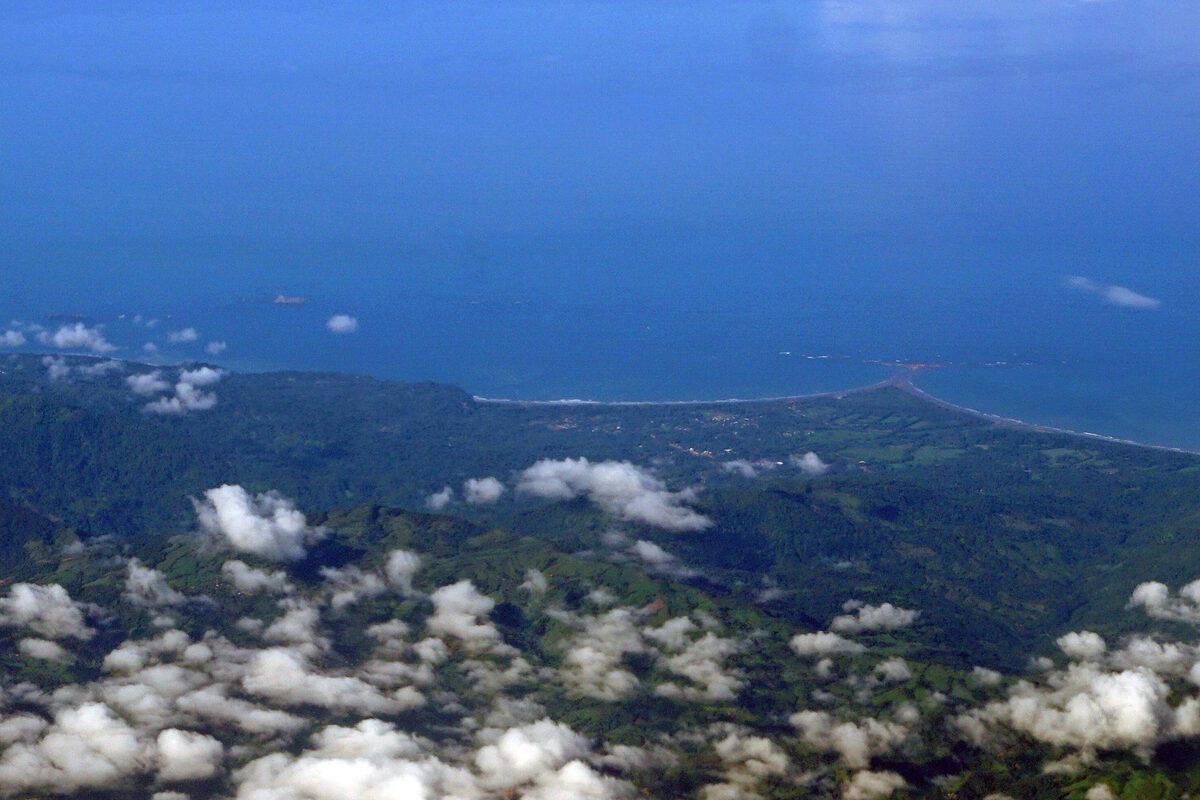
The Brunca Is Not Just Corcovado
When people think of biodiversity in southern Costa Rica, they think of Corcovado National Park, National Geographic's "most biologically intense place on Earth." But Corcovado alone cannot sustain the region's wildlife. Jaguars require 100 square kilometers of territory. Tapirs need genetic exchange between coastal and highland populations. Resplendent quetzals migrate seasonally across elevational gradients. Scarlet macaws follow fruiting trees across landscapes. These species cannot survive in fortress parks alone. They need the biological corridors that connect the Osa to the mountains.
Those corridors run through the forested ridges you are subdividing. Every gated community, every cleared lot, every paved access road severs the connections that allow wildlife to move between habitats. Thomas Lovejoy spent forty years documenting what happens to isolated forest fragments in his Amazon experiments. The results were unambiguous: fragments smaller than 100 hectares lost up to 50% of their bird diversity within 15 years. Large mammals vanished first. Even fragments of several thousand hectares showed signs of ecological decay.
Here's the part that matters for your listings: the damage doesn't stop at the clearing. When you cut a road through forest or clear a plantel, you create an "edge," a border between forest and open land. That edge lets in sun and wind. The forest interior, which evolved in cool, humid, still conditions, suddenly dries out. Trees that thrived in shade stress and die. The effect penetrates 100 to 400 meters into supposedly "preserved" forest. That means a single access road through a narrow corridor can kill trees on both sides for the length of the cut. A 50-meter-wide clearing doesn't affect 50 meters of forest. It affects up to 850 meters: the clearing plus 400 meters of edge death on each side. Your client's modest footprint is actually a wound that bleeds inward.
But Lovejoy also documented what works. When fragments reconnected to continuous forest, species loss stopped. Ecosystems began recovering. Connectivity isn't a theoretical abstraction. It's the difference between slow death and gradual renewal. When you fragment a corridor, you're not just affecting one property. You're severing the lifeline for every species that depends on that passage.
The Legacy You're Actually Building
You market these as "legacy investments," something unique and irreplaceable, passed from one generation to the next. Let's talk about legacy.
What do you want to leave your children and grandchildren? Is the plan to extract what you can from Costa Rica while the extracting is good, then pass them a nest egg in Miami or Texas? Do you want to leave them a Costa Rica transformed into a gated enclave for wealthy foreigners, where the locals who grew up here, your neighbors, your employees, the families who've worked this land for generations, are priced out of their own communities? Where the forests are reduced to backdrop, the wildlife to memory, the rivers to drainage for golf courses?
Or does some part of you want to leave them the Costa Rica you fell in love with when you first arrived? The one that made you stay? The howler monkeys at dawn, the toucans in the cecropia, the scarlet macaws overhead, the forest so thick you could feel it breathing? If you grew up here, you remember what it was. If you came from somewhere else, you came because it was different from the places you left. What exactly are you building, if you're building another version of what you fled?
Legacy isn't the commission check. Legacy is what remains when you're gone. Right now, you're building a legacy of fragmentation: forest islands that will slowly die, species that will quietly vanish, communities that will lose their character and their children. That's the inheritance you're creating, one transaction at a time.
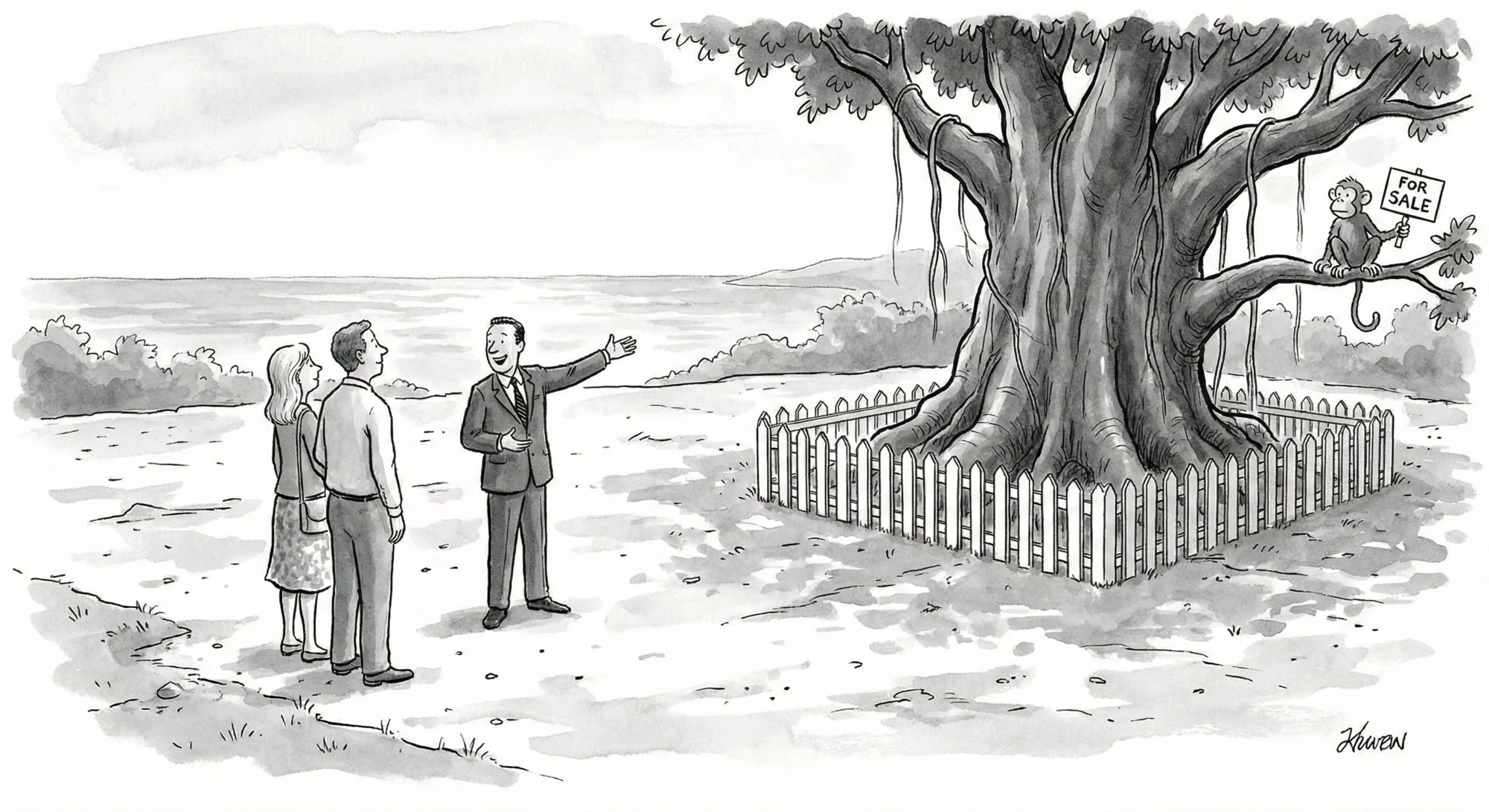
Costa Rica Already Decided
Costa Rica's Forest Law and Biodiversity Law recognize forests and species as national treasures. These laws exist because Costa Ricans, having witnessed their country nearly stripped bare by the 1980s (forest cover crashed from 75% to 21% in four decades) made a collective decision to reverse course. Some losses were already permanent: the Monteverde golden toad, found nowhere else on Earth, went extinct in 1989. It became an international symbol of species loss, featured in Elizabeth Kolbert's Pulitzer-winning The Sixth Extinction and in David Attenborough's broadcasts. Dozens of other endemic species were likely lost before anyone recorded them. Those extinctions helped write the environmental laws you now operate under, and they became part of the conservation narrative that draws tourists and buyers to Costa Rica in the first place.
The country created parks, banned forest clearing, and pioneered payments for conservation. Forest cover has since climbed back to nearly 60%. That recovery built the "Green Republic" brand that now generates billions in tourism revenue and employs over 500,000 people. When you bulldoze forest for luxury housing, you violate both the spirit and letter of that social contract.
What the Law Actually Says
I am sure you have noticed, but this is not the United States. The people are far nicer, and the laws are significantly different. How well do you know them? There is a wide gap between what you have probably been told about Costa Rica's environmental laws and what those laws actually say. The Forest Law, the Biodiversity Law, the water protection regulations, the biological corridor designations: these are complex, and getting them wrong has consequences. When SINAC or the TAA gets involved, your clients will find out what the law actually says.
Secondary forest has identical legal protections to primary forest. That ridge your client wants to clear because "it was pasture twenty years ago" is protected under exactly the same provisions as old-growth rainforest. The Forest Law does not distinguish between forest that has been standing for centuries and forest that regenerated after abandonment. Once land meets the legal definition of forest, it is protected. Period.
The famous "10% rule," the provision allowing limited clearing for construction, is not written into the Forest Law itself. It comes from Decretos 25721 and 35883, the implementing regulations, and it was specifically designed for small-footprint ecotourism lodges that preserve the surrounding forest while providing access to nature. The 10% includes all infrastructure: roads, trails, building pads, driveways, everything. The regulations go further: any intervention must minimize "efecto de borde" (edge effect), prioritize already-disturbed areas, and cause the least possible damage to the surrounding forest. In practice, this means the 10% should be clustered in as compact a footprint as possible, not scattered across the property.
Some realtors in the region advise landowners to keep the understory chopped while a property is listed, gradually degrading the forest toward something that might not qualify as bosque under the Ley Forestal. The Contraloría General has a name for this: socola, the progressive clearing of vegetation to create ever-larger openings until the land falls below the legal forest definition. The Procuraduría General has identified socola as a form of cambio de uso del suelo, the same offense prohibited by Art. 19, and the Fiscalía General's official prosecution policy treats it accordingly. The case law is not yet settled, but conservation groups are actively looking for the right case to settle it. It would be wise not to be the test case.
There is also a question of personal liability. If you tell a buyer that forested land can accommodate a housing development, and Art. 19 makes that development legally impossible, the buyer has grounds to sue you directly: for contract annulment under vicios del consentimiento, for damages under Art. 1045 of the Civil Code, and potentially for criminal estafa under Art. 216 of the Penal Code, which carries up to ten years for fraud exceeding ten times the base salary. The defense that you did not know the law does not help. Article 129 of the Constitution provides that no one may claim ignorance of the law. A professional who charges a commission for real estate expertise has a duty to know fundamental restrictions on the properties they market. Ignorance of Art. 19, a provision in force since 1996, is itself negligence.
There is one more thing your buyers should know. Under Costa Rican law, illegally cleared forest does not stop being forest. The land keeps its legal classification, the prohibition on changing its use stays attached to it, and the State's power to order the forest restored is not extinguished by a sale. These restrictions are propter rem: they run with the land through every transaction, and a purchaser acquires the property already burdened by them. Costa Rican courts have ordered crops uprooted and a road destroyed on land held by a buyer who had nothing to do with the clearing, holding that a good-faith purchaser has no standing to oppose the restoration and cannot keep the authorities out. Your client may not have caused the damage. They will still own a property they cannot lawfully develop. Are you doing enough diligence to ensure your clients are not walking into obligations that will bury them?
If you want to organize a seminar for your colleagues to dig into details like these, get in touch. Coalición Floresta or Osa Vive would be happy to bring in an environmental attorney for a few hours to walk you through the basics: what's actually legal, what's not, and what the consequences look like when enforcement catches up. Or you can start by reading the material on this site. The information is here. What you do with it is up to you.
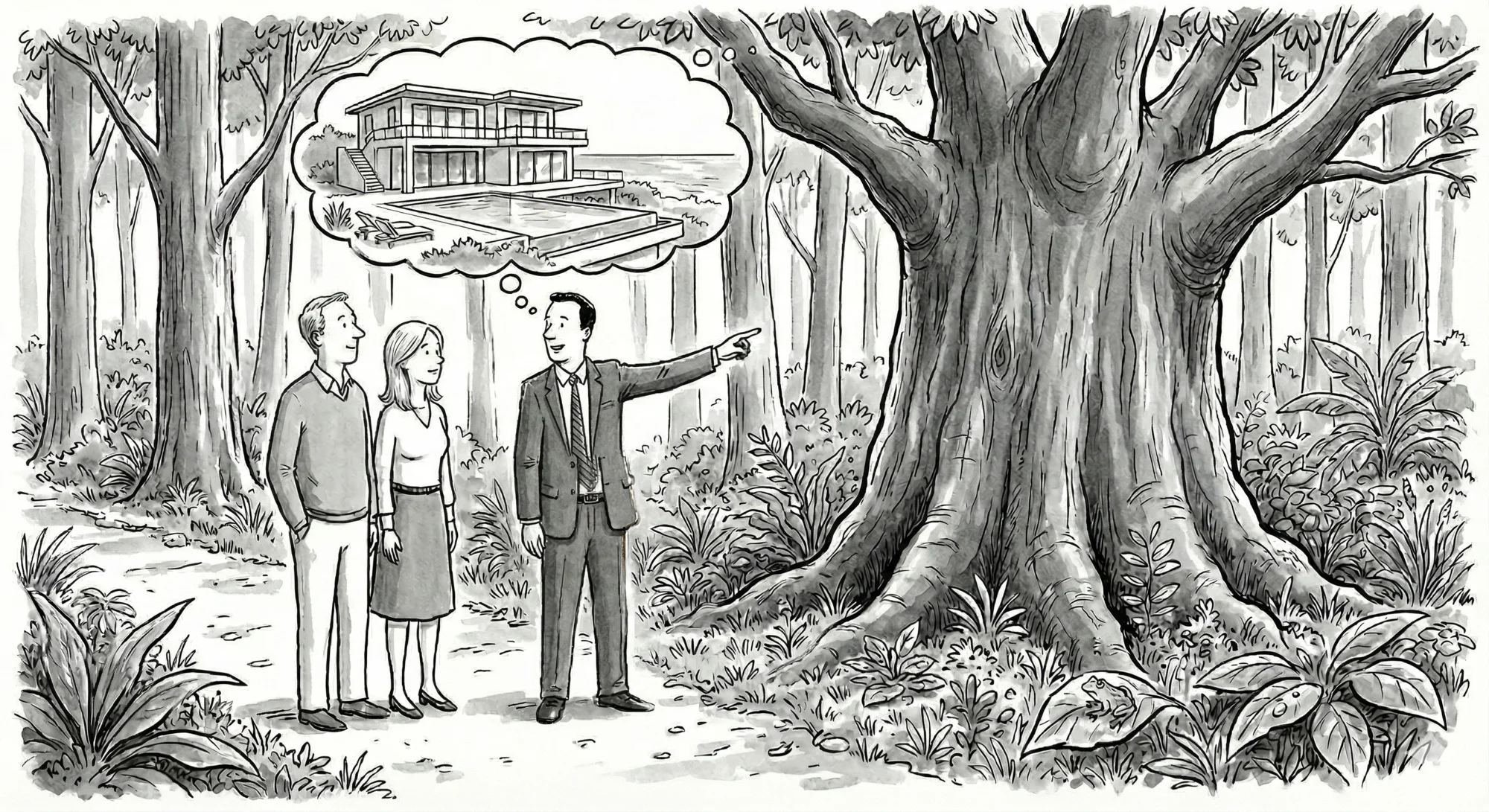
What You Could Do Instead
I am not asking you to abandon your profession. I am asking you to understand what you're selling, and to make choices accordingly.
If you must sell land in the Brunca region, sell the already-degraded parcels, not the forested ridges that connect ecosystems. Prioritize properties that don't fragment biological corridors. Educate your clients about which purchases harm connectivity and which don't. Be honest about what they're destroying. Some buyers don't know. Others don't care. But some will, given the information.
Better still, recognize that the mass-market development model you're enabling has already compromised Guanacaste: drained aquifers, salinized wells, displaced communities, collapsed coral reefs. The Southern Zone is watching that model creep south and has the opportunity to refuse it. The ocean views help sell lots, but the ecosystem is what makes this region worth marketing at all. Try writing your listings without mentioning forests, sloths, and toucans, and see what happens to your engagement. You are selling the thing that makes your product valuable.
Tell your clients the truth. Some of them will thank you for it. The ones who won't? Ask yourself if those are the clients you want.
The Transaction You Cannot Undo
Most of your transactions are reversible. Properties change hands, buildings go up and come down, land gets repurposed. Forests are different. When a corridor is severed and the species that depended on it disappear, no future buyer, no future regulation, no amount of money can undo it. The seller profits once, and the loss is permanent.
The plant and animal families in these forests are ancient, but the assemblage itself is young: a product of the land bridge that joined two continents over the last few million years, mixing lineages found nowhere else in combination. No one in this transaction created any of it, and no one can recreate it once it's gone. E.O. Wilson, who alongside Lovejoy established the modern field of conservation biology, stated it plainly: "Every scrap of biological diversity is priceless, to be learned and cherished, and never to be surrendered without a struggle."
Thomas Lovejoy warned that we are "burning the library to heat the house." You are in the library. You have a match. What you do next matters.
Key Sources & Resources
Biodiversity Economics
Landmark 2021 analysis commissioned by the UK Treasury finding that $44-58 trillion of global GDP depends on nature, that natural capital per person declined 40% since 1992, and that our demands on nature "far exceed its capacity to supply them."
The 1992 international treaty recognizing biodiversity conservation as "a common concern of humankind," now ratified by 196 nations. Establishes that biological diversity underpins food security, medicines, fresh water, and economic stability.
Fragmentation Science
Thomas Lovejoy's pioneering fragmentation experiment, launched in 1979, documenting how isolated forest patches lose species over decades and why connectivity is essential for ecosystem survival.
Overview of Lovejoy's contributions to conservation biology, including his framing of each species as "a set of solutions, pretested by evolution, to a particular set of biological problems."
Costa Rica Context
The ecotourism exceptions in Article 19 of the Forest Law, the undefined terms developers exploit, and the 2-hectare threshold that enables permit fragmentation.
Why the 10% and 25% development caps sound precise but may be measuring the wrong thing, and what happens when percentage-based regulation meets ecological thresholds.
The principle of irreducibility: why clearing forest does not change its legal status, and what the Procuraduría ruled in 2009 about land that "used to be" forest.
The legal definition of "forest" in Costa Rica, how it intersects with ecological reality, and why the 70% canopy threshold matters for every property you list.
How volunteers are racing against development to maintain forest connections in the Brunca region, and why the biological corridor that runs through your listings is essential for species survival.
Why the mass-market tourism model that drained Guanacaste's aquifers and collapsed its coral reefs is not a template for the Southern Zone, and what the alternative looks like.
How forests themselves migrate through corridors, and why fragmenting those pathways condemns species to "thermal prisons" as climate change makes their current locations uninhabitable.
Why water law violations are the easiest to prove and the hardest for developers to evade. Protection zones, SENARA authorization requirements, and what happens when a project threatens a community's water supply.
How documenting a single endangered species on a property can invoke Resolution 092-2017 and shift the burden of proof onto the developer.
A complete guide to the legal framework: the Forest Law, the Biodiversity Law, the Water Law, Constitutional Article 50, and how they work together to protect ecosystems.
The history of Costa Rica's near-total deforestation by the 1980s and the policy changes that allowed forest recovery, the social contract your transactions are testing.