When Is a Mouse a New Species?
A small Andean rat spent a century classed as one species, or as two, depending on which biologist you asked. Settling it took a method that can read DNA and still refuse to split, the same one now turned on the animals of Costa Rica's peaks, where the species count is far from finished.
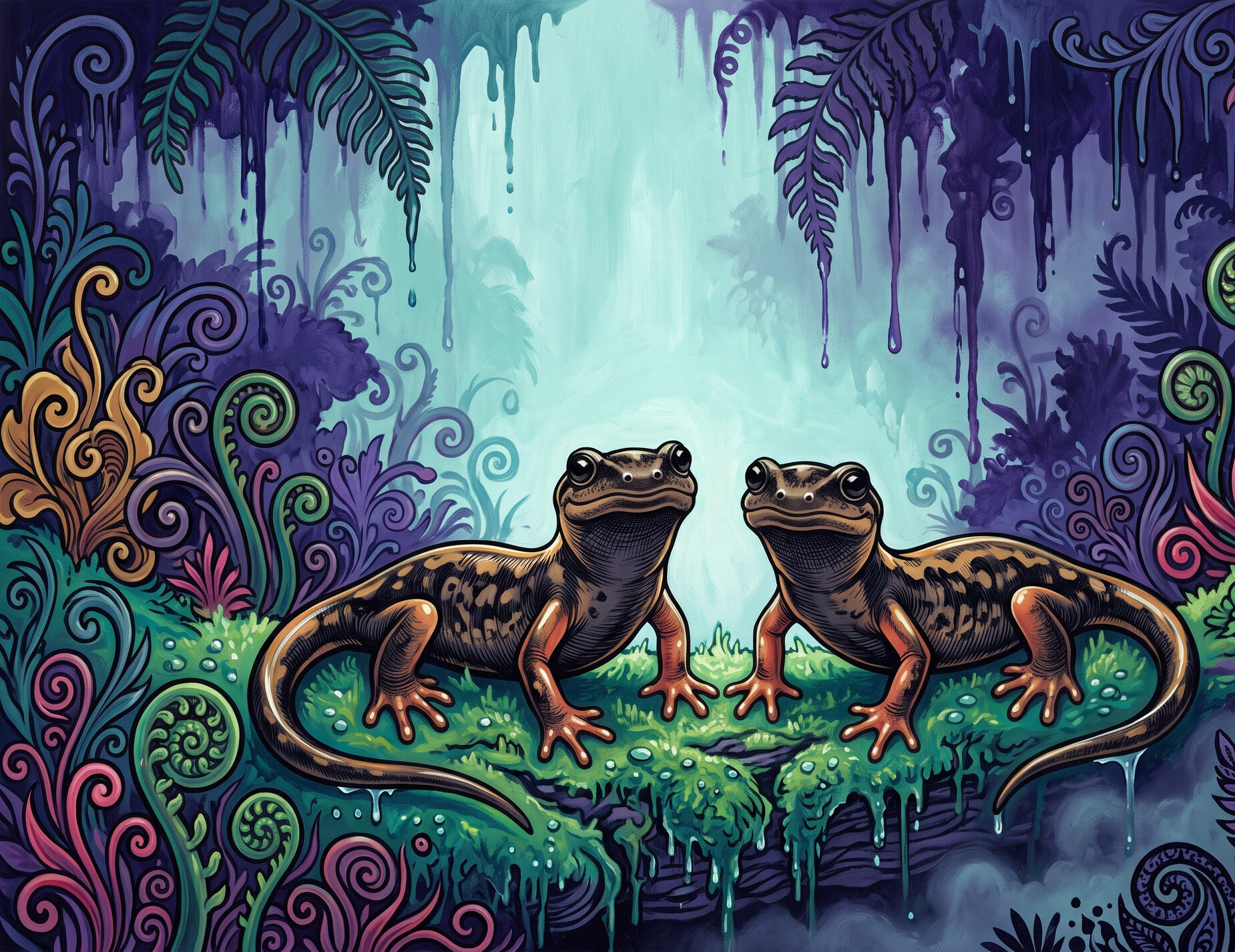
On the high road over Cerro de la Muerte, after dark, the cloud comes down to the asphalt and the cold comes with it. Above three thousand meters, a salamander the length of a finger sits on a wet roadbank, black and still, breathing through its skin because it has no lungs. A few ridges away, across a low gap where the air is warmer, another one sits exactly like it. Put the two in your hand and you couldn't tell them apart: the same dark body, the same blunt head, the same small black eyes. And yet one of them is a species the other is not.
Recognizing those salamanders as separate species takes more than finding a difference between them. DNA can reveal divisions invisible to the eye, but some of those divisions separate populations that still belong to one species. What persuaded biologists that neither appearance nor DNA could settle the matter alone? And how do taxonomists decide which differences mark a species boundary when anatomy, genes, and behavior disagree?
The age of the eye
For almost the whole history of biology, you decided whether two animals belonged to the same species by looking at their bodies. You laid specimens side by side, counted and measured their parts, and sorted the ones that matched. Those comparisons became the foundation of classical taxonomy. It built libraries of knowledge. Jay Savage, for example, spent decades assembling Costa Rica's herpetofauna, animal by animal, from the shape of a scale and the curve of a bone.
But the eye sometimes draws species boundaries in the wrong places. Sometimes it erases one that is really there: two creatures that have been apart for millions of years still look the same to us, so visual classification treats them as one species and undercounts the true number. Biologists call such look-alike but distinct animals cryptic species, and Costa Rica's forests are full of them. Three short-tailed fruit bats of the genus Carollia share the same roosts, so alike that a researcher often cannot put a name to an individual without a DNA test. And sometimes the eye draws a line that isn't there: a single creature varies smoothly across its range, a little paler in the cold heights, a little darker in the wet forest, with every shade in between. Set the two extremes side by side and they can appear to belong to different species, though an unbroken chain of intermediates connects them, and one species gets split into several that were never there.
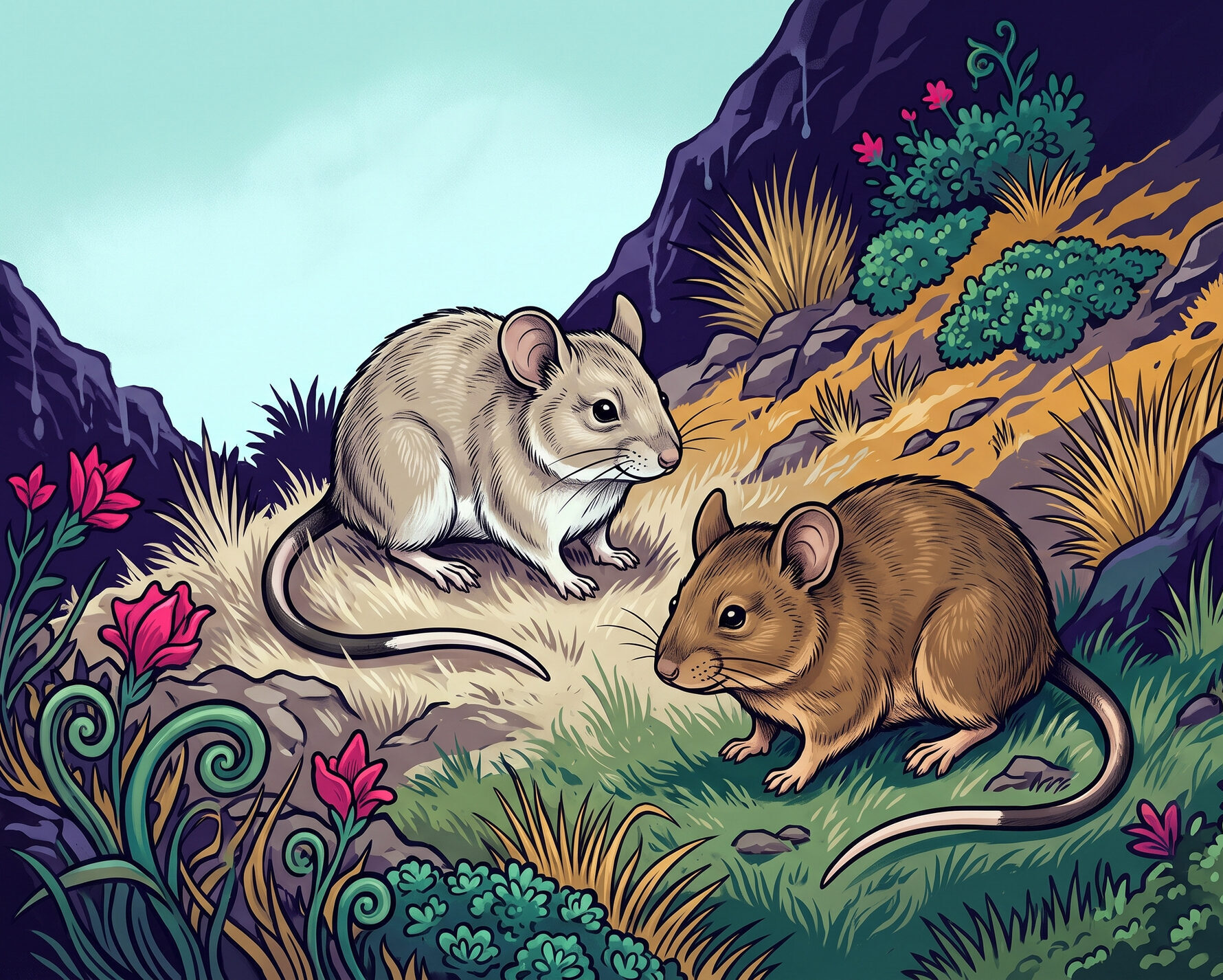
For a small Andean rat, the difficulty was deciding whether differences in appearance and habitat justified separate species. Andinomys lives a continent south of here, on the cold slopes of the central Andes, ranging from wet cloud forest up into grassland so high and dry it is almost desert. For the better part of a century biologists could not agree whether it was one species or two. Because the pale highland animals and dark forest animals looked different and occupied different habitats, taxonomists kept disagreeing over whether to split them. By eye and by habitat, two species seemed reasonable.
The molecule's promise, and its lie
The rat's contrasting coats and habitats suggested a division that biologists needed another way to test. DNA offered one: they could ask whether animals that looked different also formed distinct genetic groups, or whether look-alikes concealed divisions that anatomy had missed. A short stretch of the mitochondrial gene COI often differed enough between animal species to serve as an identifier, giving the technique its name: DNA barcoding. Among its early successes was Astraptes fulgerator, a common butterfly of northwestern Costa Rica that had been treated as one species since 1775. By comparing its barcodes with the caterpillars' colors and food plants, researchers proposed 10 species hidden beneath much the same adult appearance. DNA barcodes produced an even larger revision among parasitoid wasps in the same region: researchers had sorted them into 171 species by sight but found 313 with barcodes. Almost all were new to science, and most attacked only one or two kinds of caterpillar out of thousands.
Yet distinct species can have DNA barcodes that differ little or not at all. At the Lankester botanical garden, near Cartago, botanists pulled apart a notoriously variable orchid, Specklinia endotrachys, into at least six species. One new species had distinctive flowers, yet its nuclear DNA barcode, a region called ITS, differed from its neighbor's by only 2 of roughly 800 base pairs. A rule demanding a larger genetic gap would have counted them as the same species. Two other species, distinct in flower and in the field, had identical barcodes. As the Costa Rican team explained, a gene tree groups sequences by relative similarity, with no universal cutoff that turns a cluster into a species. They warned that DNA is “subject to many of the same pitfalls” as the visual taxonomy it was meant to correct.
Another problem is that different stretches of DNA (called genetic markers) can divide the same animals into different groups, leaving biologists to decide which, if any, should count as species. Mitochondrial DNA is inherited only through the maternal line and evolves fast enough to distinguish many populations. That sensitivity helps find candidates, but maternal inheritance records only one part of a species' history and cannot classify a species by itself. In a 2017 study of Central American anoles, researchers compared mitochondrial DNA with nuclear DNA, inherited from both parents. For the lizard Anolis heteropholidotus, the mitochondrial analysis recovered 4 distinct lineages, while the nuclear analysis grouped them as one. Analyses combining both sources still recovered the 4 lineages. The researchers left their species status open, calling for other kinds of evidence before revising the classification.
Some early barcode-based splits weakened even when researchers tested the same DNA data in different ways. In 2006, Andrew Brower reanalyzed the Astraptes fulgerator sequences, checking how consistently the proposed groups survived repeated sampling of the data and alternative ways of constructing the gene tree. His analyses supported between 3 and 7 genetic groups that might represent species, leaving the original count of 10 in doubt. Ecologists warned of taxonomic inflation: species counts swelled as taxonomists promoted old varieties under looser rules rather than discovering new animals. In 2017, two biologists showed what the popular DNA methods were counting. The methods identify genetic population structure rather than species. They find the genetic fingerprints of populations, which are real, and mistake them for species boundaries that the other evidence may not support. A simpler approach carries a similar risk: choose a percentage of DNA difference as the cutoff, then count populations above it as separate species. When a 2017 study of Andinomys recovered 4 deeply separated genetic lineages, the researchers faced precisely this problem. They had designed the study to compare anatomy, DNA, and climate, so the genetic divisions were possible species boundaries to test against the other results.

A verdict needs more than one witness
The 2017 Andean rat study ultimately supported one species, despite finding 4 genetic lineages. The researchers reached that conclusion by weighing the genetic divisions against anatomy and climate. Their approach drew on a distinction explained by biologist Kevin de Queiroz in 2007: a species is a population evolving independently of other populations, while the criteria used to recognize it can differ.
One definition groups animals by their ability to breed with one another in nature and produce offspring that survive and can themselves reproduce. Other definitions emphasize consistent differences in anatomy or separate branches on a genetic family tree. Anatomical differences, barriers to breeding, and separation on genetic family trees can develop at different times and in different orders as populations diverge. In de Queiroz's framework, each criterion contributes evidence of independent evolution; agreement among several strengthens the case.
Populations can spend many generations evolving apart, with differences accumulating gradually. Their bodies may become distinguishable before they lose the ability to breed with each other, so definitions based on anatomy and reproduction can recognize separate species at different stages of divergence. The interval when populations meet some criteria for separate species but not others is the gray zone of speciation.
Integrative taxonomy replaces the search for one decisive test with a comparison of several independent tests. For the Andean rat, that meant measuring anatomy to fractions of a millimeter, comparing DNA sequences, and mapping the climate wherever the animal had been found. Climate records allow researchers to test whether the proposed species occupy different climatic niches. If they do, a statistical model built from each population's records should predict its range better than one model built from both. If the pooled model performs better, it weakens the case for treating their habitats as distinct.
No one lens can be trusted alone. The small-eared shrews of the Costa Rican highlands, the genus Cryptotis, show why. Several of them have powerful forelimbs for burrowing, and for a long time the shape of the arm bone was used to sort them into groups. Genetic analysis showed that the arm-bone groups did not represent related shrew lineages. The burrowing arm had evolved independently in shrews that were not close relatives. The bone looked like a family trait, but different lineages had evolved the same tool for the same job. The skeleton had grouped strangers as family. Other animals present the opposite error: DNA-based methods split populations whose anatomy supports one species. Comparing the results helps biologists detect both mistakes.
Pablo Jayat and his colleagues found that the Andean rat's genetic divisions did not line up with clear differences in body or habitat. The 4 lineages replaced one another from north to south along the Andes, which did not match the proposed division between high, dry grassland and lower, wet forest. Skull measurements overlapped between the 2 named forms; a single climate model also fit their known distribution better than separate models for each. Even the coat colors and tail stripe failed as distinguishing marks: pale fur shaded gradually into dark across the landscape, while animals with and without the stripe turned up at the same locality. Taken together, those results supported keeping Andinomys as one species whose deep genetic divisions probably reflected past fragmentation of its populations.
DNA can expose deep divergence without deciding where species boundaries fall. Integrative taxonomy keeps the rat as one species, yet separates other animals when anatomy or ecology corroborates a genetic split.
The mountains keep the count
Costa Rica's mountain geography repeatedly isolates and reconnects populations, complicating species boundaries. Three of Costa Rica's cordilleras, Tilarán, Central, and Talamanca, rise into cold, wet cloud forest; the highest, Talamanca, reaches nearly four thousand meters at Cerro Chirripó. During the ice ages, glaciers covered that summit and cold vegetation belts descended more than a kilometer, linking cool habitat across peaks. Warmer periods isolated each peak's population above the valleys. Animals now occupy every stage of divergence, and integrative studies have begun to distinguish one species from several.
The same mountain pass can isolate one bird's populations while allowing another's to mix. The Timberline Wren (Thryorchilus browni) keeps to dense undergrowth above the treeline, an aggressive little homebody that will not cross open ground. Across the ranges, its populations diverge in song, genes, and bill length. The greatest divergence occurs across a single low pass between two cordilleras. The Sooty-capped Bush Tanager (Chlorospingus pileatus) lives on the same mountains, but it forages high in the canopy in roving flocks and crosses the passes readily, so its populations barely differ. Studies of both described variation within a species; neither proposed a taxonomic split.
The salamanders from the dark roadbank show how the degree and breadth of divergence can lead to opposite classifications. David Wake's group found three deeply divergent genetic clusters of Bolitoglossa along Cerro de la Muerte but kept them in one species because the differences reflected history within one lineage. A fourth population from a neighboring Talamanca locality differed in genes, proteins, and body, so the team recognized it as a separate species. The authors described these salamanders as being in “a state of incipient species formation” and wrote that even on this ridge “more species exist than are currently recognized.” Near-identical neighbors can therefore belong to one species while a slightly more divergent population belongs to another.
Higher up the slopes, male Scotinomys mice rear onto their hind legs and give long, high trills to hold territory. Two populations separated by the valley between Volcán Irazú and the Talamanca ridge differ by only about half a percent in mitochondrial DNA. Along the continuous ridge, two other populations differ by more than five percent in their mitochondrial sequences, a gap often associated with separate species. The expected geographic barrier therefore does not match the genetic pattern. Researchers have proposed recognizing the populations as full species. A dedicated taxonomic treatment was reported in preparation in 2024; no resulting species descriptions appear in the current mammal taxonomy.
Calls offer another way to distinguish populations. A Costa Rican dart frog, Allobates talamancae, was pulled apart into proposed new species in a study that used no DNA analysis. Its call gave it away. On the Pacific the frogs deliver single-pulse notes; on the Caribbean slope the notes carry two pulses, or three, and the bodies differ to match. Researchers proposed two populations as species new to science on the strength of sound and shape. They also declared the old widespread name a species complex that hides others still unnamed.
In the Resplendent Quetzal, genetic divergence has outpaced changes in song and breeding behavior. Northern and southern populations separated at least three million years ago and differ at thirty-two fixed DNA positions, leading some researchers to propose two species. Yet each population responds to recordings of the other, and their songs and breeding behavior have barely diverged. Researchers have therefore treated the proposed split cautiously.
Combining methods can support a split without accepting every division suggested by DNA. A team led by Daily Martínez-Borrego applied 3 computer methods to the broader Reithrodontomys mexicanus group of harvest mice and obtained 3 different counts: 15, 11, and 10 species. To evaluate the proposed boundaries, the team compared skull shape and the environments where the animals had been collected. Within the narrower R. mexicanus species complex, it proposed 4 candidate species, mostly supported by the anatomical and ecological comparisons. Some skull differences were weak, but genetic and environmental distinctions still supported separation. The study also supported a separate candidate species from Costa Rica's Volcán Poás, outside those 4. Unlike the Andean rat, these mice retained support for splitting after the genetic results were checked against other traits.
Integrative studies have revised many Costa Rican classifications. One supposedly widespread bat became six species; researchers distinguished a Talamanca palm-pitviper from its look-alike after more than a century and divided a common deer mouse into two. A distinct Caribbean lowland pocket mouse still lacks a name. In the palm Chamaedorea, the Talamanca restricts gene flow between wet and dry slopes, although low passes allow some exchange. Each completed or pending revision changes which organisms scientists recognize in Costa Rica.
Costa Rican researchers are also extending taxonomy into poorly classified groups. The Central Volcanic Cordillera holds unnamed velvet-worm forms first noticed in photographs submitted by amateurs. University teams study squirrels, frogs, and salamanders; at the University of Costa Rica's Lankester Botanical Garden, researchers published a national catalogue of 1,684 orchid species in 2023. That was 324 more than the catalogue published twenty years earlier, with the increase mainly coming from species new to science.
What the count is for
Species classifications shape conservation decisions by determining which populations are assessed together. When one widespread name covers several species with smaller ranges, each may be much rarer than assumed. A 2025 study of the Central American Craugastor podiciferus rainfrog group found at least 12 unconfirmed candidate species within its 11 recognized species, including unnamed lineages in Costa Rica's highlands. If those candidates are confirmed, each will need its own range mapped and its conservation status assessed.
Those range maps matter especially on mountains, where a population already near the summit has little room to follow cool habitat uphill. Models of 48 birds endemic to the Talamanca highlands project average range losses of 15 to 40 percent by 2070, depending on the warming scenario. Treating several distinct mountain species as one widespread animal could conceal how much of each species' habitat is at risk. Premature splits can also divert conservation resources toward species names that later collapse.
On Cerro de la Muerte, the two salamanders still look alike. Giving them separate names means drawing a separate range for each, with an edge that the old map could not show. The same care that kept the Andean rat whole can reveal how little ground another species occupies. If that species disappears, finding its look-alike on the next ridge will not mean it has survived. A name lets us recognize an animal whose loss might otherwise pass unnoticed.
Resources & Further Reading
The anchor case and the idea of a species
The Andean rat. Body, DNA, and climate together show four deep mtDNA lineages (up to ~4.8% apart) arranged by latitude, not by habitat, so the genus is one species. The source for the lumping lesson.
The unified species concept: a species is a population on its own evolutionary path, and the old definitions are symptoms it acquires one at a time, not rival rulebooks.
The program statement for weighing several lines of evidence together rather than trusting any one.
The genomic study that named and quantified the "gray zone of speciation," the intermediate stretch where the different species definitions disagree.
Reading DNA, and its limits
The Costa Rican butterfly that became ten under the barcode.
The Guanacaste wasp survey: 171 species by sight, 313 once the barcodes were read, almost all of them undescribed.
The Lankester orchid case: distinct species with identical DNA barcodes, and the argument that clustering on a gene tree is no proof of one species.
Mitochondrial and nuclear analyses grouped A. heteropholidotus differently; combined analyses retained 4 lineages, with their species status left for further investigation.
The reanalysis finding that only three to seven of the ten butterfly species held up, the early warning against over-splitting.
Names the rise in species counts driven by promoting old varieties rather than by discovery.
The demonstration that popular DNA methods detect population structure and tend to over-split.
The origin of the niche-model test used on the Andean rat: separate models should beat a pooled one only if the two forms are truly distinct species.
When one lens lies: convergence and corroboration
The shrews whose burrowing arm-bone evolved independently more than once, so the skeleton grouped unrelated animals together until the DNA corrected it.
Costa Rica's mountains, case by case
The salamander that opens and closes the story: three deep clusters of Bolitoglossa pesrubra kept as one species, a more divergent neighbor split off.
The territorial wren whose populations a low mountain pass carves apart, all within one species.
The canopy bird that crosses the same passes freely, the contrast that shows how an animal's way of life governs whether isolation bites.
Two lineages parted ~3 million years ago, with conserved song and behavior, a split proposed and held with caution.
The singing mice diverging on a continuous ridge with no barrier, with a formal species treatment still in progress.
Skull shape and climate confirm a harvest mouse the molecules had flagged, the clean split.
Four candidate species within the R. mexicanus complex, mostly supported by skull and environmental comparisons; separate support for the Volcán Poás candidate.
The country-wide survey that flags the deer-mouse split, the unnamed Heteromys, the singing-mouse subdivision, and several other cryptic forms.
At least 12 unconfirmed candidate species within a rainfrog group with 11 recognized species, including unnamed Costa Rican highland lineages.
A Costa Rican-led study that found the squirrel genus Sciurus does not hold together as defined.
The bat case: molecular work showed the "widespread" Sturnira lilium to be a paraphyletic complex of six species.
The venomous Talamancan palm-pitviper (Bothriechis nubestris), cryptic sister of B. nigroviridis, unrecognized for over a century.
The understory palm whose Caribbean/Pacific gene flow the Talamanca blocks, permeable only through low passes.
Contributed photographs revealing undescribed Costa Rican velvet worms (Onychophora).
Citizen-science photographs and common names for still-unnamed Central American velvet worms.
The UCR team's catalogue documents 1,684 orchid species in Costa Rica, an increase of 324 over its predecessor, mainly from discoveries of species new to science.
Direct evidence for Pleistocene glaciers and moraines on Chirripó (7.4–8.0 °C glacial cooling), the ice-age engine behind the sky islands.
What's at stake
Models of 48 highland-endemic birds project average range losses of 15 to 40 percent by 2070 across different warming scenarios.
Models of upslope shifts and shrinking cool-forest habitat that squeeze high-elevation species against the summits.