Wildlife Corridors Are Not Just for Animals
When we think about wildlife corridors, we picture jaguars and monkeys. But there are invisible passengers traveling these green highways, and their journey takes centuries.
The forest engineer stopped mid-stride along the narrow strip of newly planted trees, her eyes fixed on a cluster of seedlings pushing through the grass. "I didn't plant those," she said, kneeling to examine the young saplings. She recognized several species from the old-growth forest patches several kilometers away, their seeds likely dropped by birds or bats passing through. She gestured down the corridor, a green ribbon barely wider than a road cutting through cattle pasture. "This corridor isn't just a lifeline for jaguars," she explained. "It's a lifeline for the forest itself."
Those unexpected seedlings tell a story that conservation science has only recently documented at landscape scales. When we talk about wildlife corridors, the mental image is almost always the same: a jaguar prowling through forest connections, a howler monkey swinging between treetops, birds flitting across the canopy. This animal-focused vision misses half the story. The same landscape connections that let wildlife move are also highways for forests themselves, enabling tree species to colonize new terrain, maintain genetic diversity, and respond to climate change. The catch? Trees travel on geological time scales, and the seeds that started those saplings hitched rides on wings and fur, depositing their payload in a landscape that would otherwise remain barren pasture.
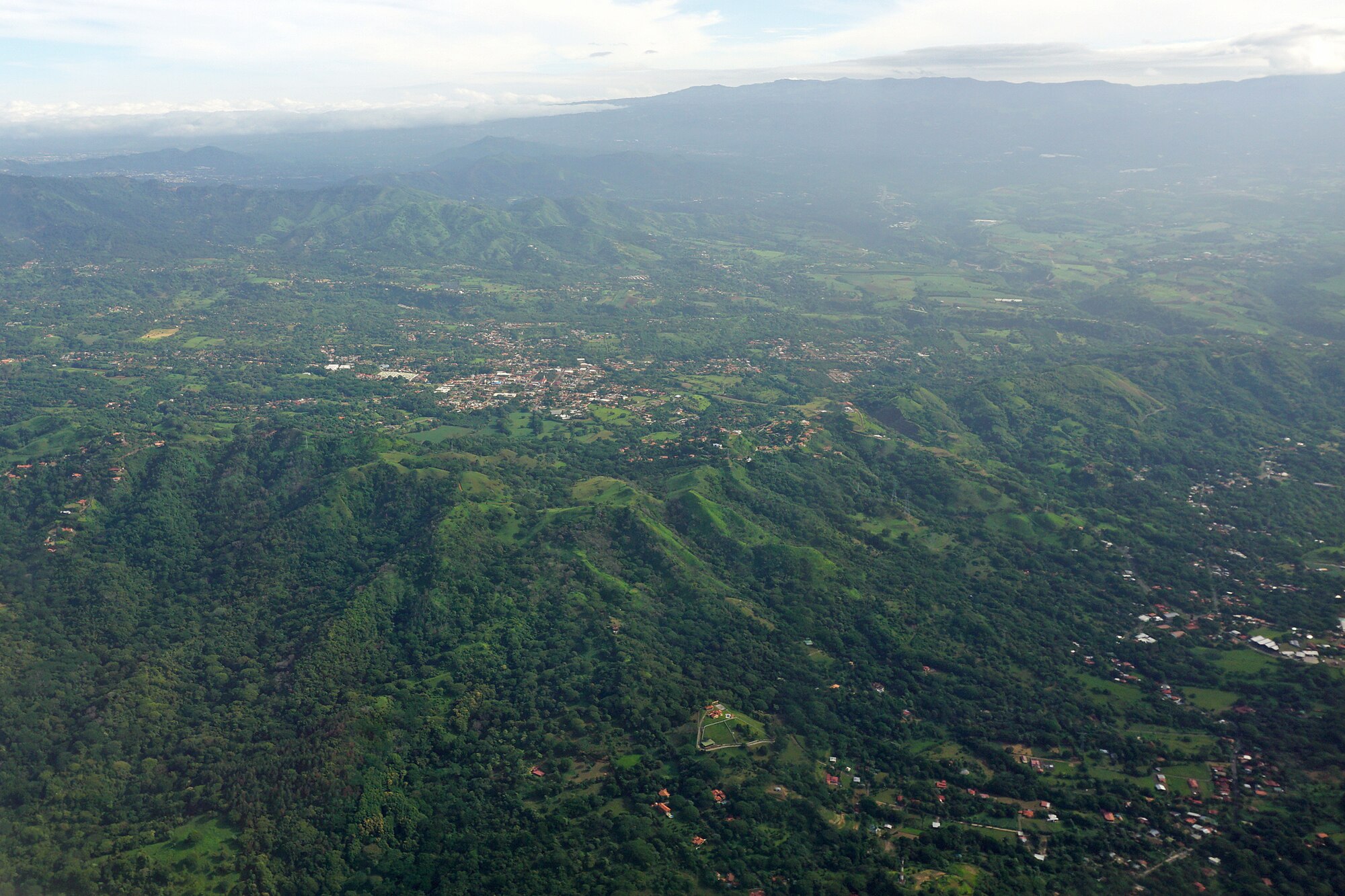
Genetic islands in a sea of cattle
To understand why corridors matter so desperately for trees, you have to understand what happens when forests fragment. In 1979, legendary biologist Thomas Lovejoy launched what would become the world's longest-running experiment on habitat fragmentation. In the Brazilian Amazon near Manaus, his team isolated forest patches of different sizes (1, 10, and 100 hectares) from the surrounding continuous rainforest, then watched what happened over decades. The results revolutionized conservation biology. These fragments didn't simply retain a smaller sample of the original biodiversity. They underwent fundamental structural and functional collapse.
The numbers were sobering. In the first 10 to 17 years after fragmentation, plots within 100 meters of edges lost up to 36% of their biomass, a change that proved essentially permanent. Large old-growth trees, never adapted to stand against raw wind, toppled at the edges. The "edge" itself became a distinct ecological zone: hotter, drier, with more light penetration. These conditions proved hostile to the slow-growing hardwoods that form the structural backbone of intact rainforest. Lovejoy's work showed that these edge effects penetrated deep into fragments, effectively reducing the core area of suitable habitat to a fraction of the total size. A 100-hectare fragment might have only 50 hectares of functional interior forest. One-hectare fragments had essentially no core at all, just edge.
But beyond the immediate loss of species, something more insidious occurred. The fragments became what conservation biologists now call "genetic islands." When continuous forest shatters into isolated patches, gene flow between populations plummets. Trees are long-lived, creating an illusion of stability. A 400-year-old tree persisting in a tiny fragment might look healthy, but the population may no longer be recruiting (successfully producing seedlings that survive to reproductive maturity). The adults remain, but the next generation never arrives.
The mechanism is genetic erosion through inbreeding. Many tree species are obligate outcrossers, requiring pollen from distant relatives to produce viable seeds. In small fragments, they're forced to breed with close neighbors (likely siblings) or self-pollinate. This inbreeding depression manifests as reduced seed viability, poor seedling vigor, and diminished capacity to adapt to environmental stress. Studies examining European beech populations fragmented over 600 years ago confirmed this pattern. While continuous forests showed random mating across large areas, these long-isolated fragments showed significant genetic differentiation, indicating that the free flow of genes had been severed centuries ago and never recovered.
Genetic isolation alone would be devastating. Lovejoy's work proved the problem extends far beyond genetics to encompass the entire ecological machinery that allows forests to persist, reproduce, and adapt. Fragmentation doesn't just isolate genes. It dismantles the complex web of interactions between trees, their pollinators, their seed dispersers, and the broader ecosystem processes that determine whether a forest can survive for centuries or will slowly collapse over decades.
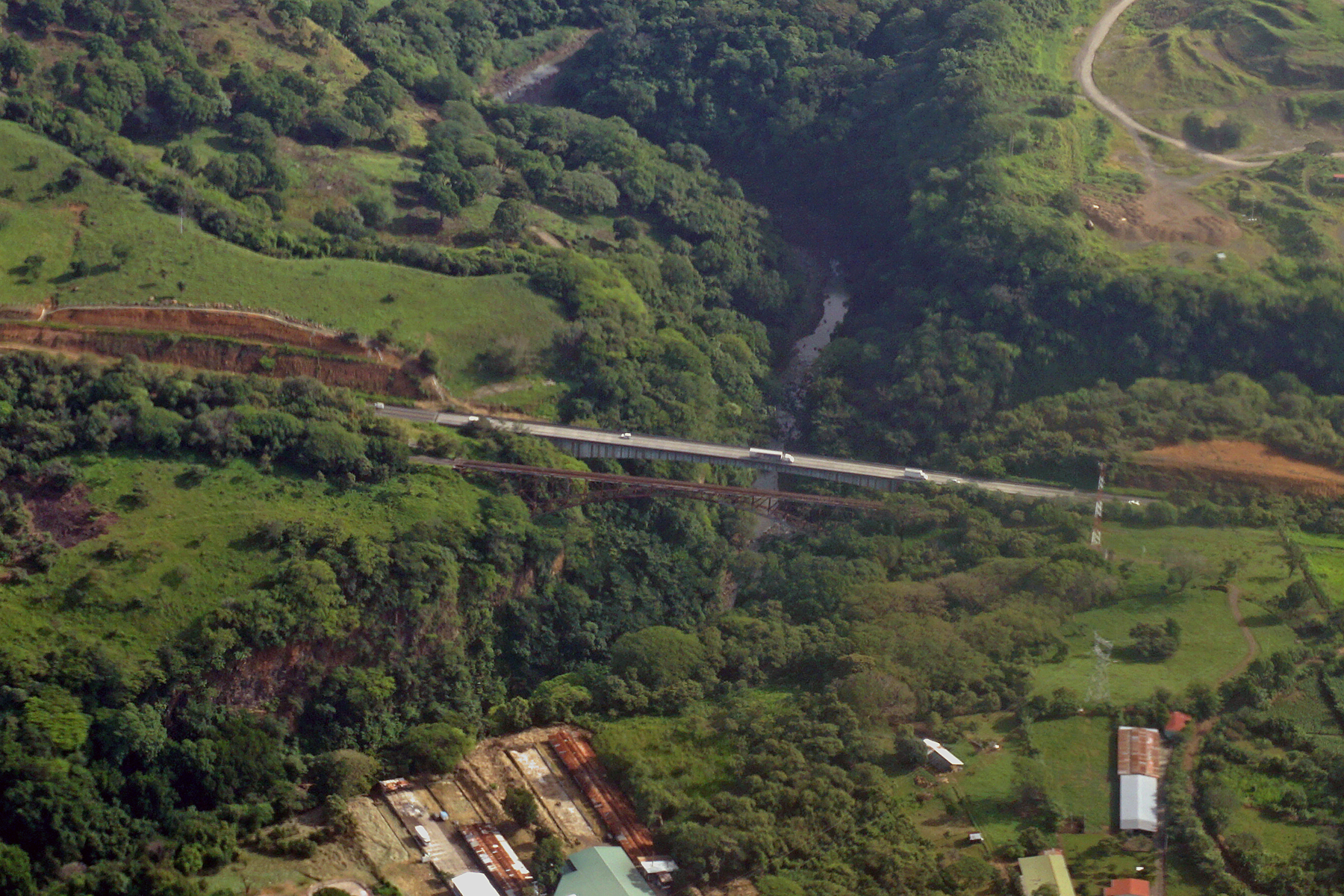
Thermal prisons
Climate change adds an entirely different threat, one that conservation biologist Daniel Janzen understood earlier than most. Working in Costa Rica's Area de Conservación Guanacaste, Janzen recognized that tropical species face a unique vulnerability. Unlike temperate species adapted to survive winter freezes and summer heat, tropical organisms evolved in remarkably narrow, stable temperature zones. They occupied niches that remained constant for millennia. When temperatures shift even slightly, these species have no physiological capacity to tolerate the change. They must move.
Janzen calls this the "thermal prison." Picture a small protected reserve, carefully guarded, its boundaries marked on maps and enforced by rangers. As the planet warms, the temperature zone that supported the forest shifts, perhaps moving upslope or north. The suitable climate moves outside the boundaries of the reserve. The trees within, rooted in place, watch their climate leave. Small protected areas, no matter how strictly guarded, will eventually "die" as their resident species find themselves trapped in temperatures they never evolved to tolerate.
Trees can move, just not in the way animals do. A tree cannot pull up its roots and walk. Trees migrate through generations: a parent tree produces seeds, animals or wind carry those seeds to new locations, a seedling establishes, survives, grows to reproductive maturity, and produces the next generation of seeds that move the population frontier slightly further. This generational relay race is how tree species track shifting climate conditions across a landscape. But it only works if there's connected landscape to migrate through.
This is why Janzen argues for conservation of "big chunks" of nature that span diverse elevational gradients. The ACG deliberately connects dry forest lowlands with rainforest mid-elevations and cloud forest peaks, creating a continuous corridor allowing species to migrate upslope as temperatures rise. The corridor doesn't just connect habitats. It creates an escape route from the thermal prison, providing the "room" species need to run when the heat rises. For Janzen, corridors are not about current movement. They are about future survival.
Trees can't email you
... but we can. Subscribe to receive more stories like this
- Weekly dispatches: Conservation news from Costa Rica's biological corridors
- Action alerts: Urgent threats to forests and wildlife that need your voice
- No spam, ever: Just stories from people protecting Costa Rica's forests
Zombie forests
Trees need two kinds of movement to survive, and they accomplish different things. Pollen dispersal maintains genetic diversity within and between populations, preventing inbreeding and introducing adaptive genes like drought tolerance. However, pollen dispersal alone does not expand the range of a species. A tree pollinated by a distant neighbor still drops its seeds locally. For a species range to shift northward or upslope, a seed must travel beyond the existing range boundary, germinate, survive, and grow to reproductive maturity. Seed dispersal is the bottleneck. Without it, the forest cannot move.
In tropical forests, this depends almost entirely on animals. Estimates suggest 81 to 90% of tropical tree species rely on animals for seed dispersal. This creates a mutualistic dependency: the tree provides food, and the animal provides transport. It's a partnership that has operated for millions of years, finely tuned through coevolution.
Lovejoy's fragmentation experiments revealed what happens when this partnership collapses. If a forest fragment is too small to support a viable population of spider monkeys or euglossine bees, the trees depending on them become what ecologists call "living dead." Some species may flower but set no seed without their pollinators. Others produce seeds, but without dispersers, those seeds face a deadly problem: they fall directly beneath the parent tree. Tropical forests harbor specialized seed predators (fungi, beetles, weevils, rodents) that concentrate their foraging where seeds are densest. A seed lying under its parent is easy prey. This density-dependent mortality, first described by Daniel Janzen and ecologist Joseph Connell, means most seeds that aren't moved away from the parent tree die before germinating. The Janzen-Connell effect creates a "seed shadow of death" beneath adult trees. Animal dispersers break this curse by carrying seeds to safer ground. Without them, recruitment fails.
This reproductive failure compounds the genetic isolation already described. The persistence of adult trees in fragments often masks the collapse. Revisiting our 400-year-old tree, standing in a three-hectare forest patch surrounded by pineapple fields: it looks healthy, and its canopy is full. The casual observer sees a thriving forest. Unfortunately, the ecologist sees a population that stopped reproducing decades ago. Genetic erosion has weakened the seedlings through inbreeding, the remaining pollinators in this patch are in population decline, and the seed-dispersing mammals can no longer cross the hostile matrix from the next fragment a kilometer away. This is "extinction debt"—a delayed sentence of death. The trees are already functionally extinct; the debt will only be paid when the current generation dies off with no replacement. You cannot save the tree unless you save the system that moves it.
How corridors restore the system
Corridors restore what fragmentation destroys. They do this not through one mechanism, but through a suite of interconnected processes operating at scales from individual trees to entire landscapes. The evidence comes from careful field studies tracking how seeds, pollen, and the animals that carry them actually move through connected versus isolated patches.
One of the most elegant demonstrations of how corridors restore this process came from ecologist Douglas Levey's landmark 2005 study. Working at an experimental reserve in the southeastern United States, his team used fluorescent dye markers to track seeds of wax myrtle and yaupon holly dispersed by Eastern Bluebirds. The birds were 31% more likely to be found in connected patches than isolated ones, and marked seeds appeared in central clearings of connected patches far more frequently than in isolated ones. The mechanism was edge-following behavior: birds used corridor margins as navigation guides, inadvertently depositing seeds as they traveled.
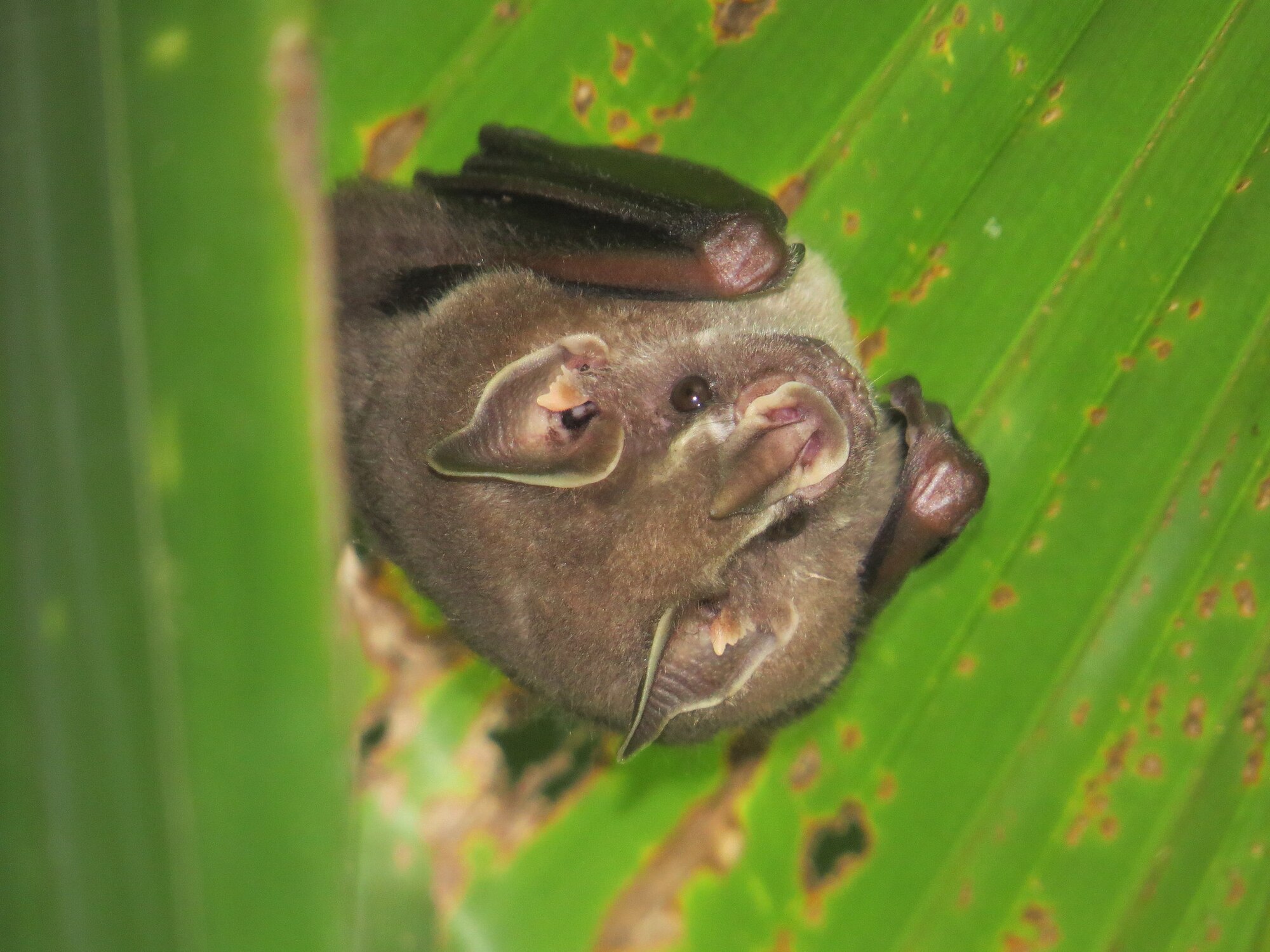
Birds work the day shift. At night, frugivorous bats take over. Research on the small phyllostomid bat Dermanura watsoni in Costa Rica tracked bats roosting in forest fragments and foraging in degraded sites up to 660 meters away. While commuting between roosts and foraging areas, the bats ventured up to 340 meters beyond forest edges into the matrix (the agricultural landscape of pastures and crops surrounding forest patches). They disperse pioneer species like Cecropia and Solanum, the fast-growing colonizers that initiate forest recovery.
The landscape-scale dependency between trees and their dispersers is illustrated dramatically by the Great Green Macaw and the Mountain Almond tree. The critically endangered macaw (Ara ambiguus) has a specialized relationship with Dipteryx panamensis, a massive canopy emergent producing extremely hard nuts. The macaw is one of few animals with a beak strong enough to open these nuts, and it also acts as a disperser, dropping viable seeds far from parent trees. The San Juan-La Selva Biological Corridor connecting Nicaragua's Indio Maíz Reserve with Costa Rica's Braulio Carrillo National Park is essential for this relationship. The macaws conduct seasonal migrations following the fruiting phenology of the Mountain Almond. Without the corridor, both macaw and tree populations would fragment into non-viable clusters. More importantly for the forest, the Dipteryx trees would lose their primary vector for long-range genetic exchange.
Remnant trees play an outsized role in this process. Single large trees left standing in pastures serve as "recruitment nuclei." Birds and bats flying across pastures use these trees as perches and feeding roosts. While there, they defecate seeds brought from nearby forest, creating a "seed shadow" beneath the canopy orders of magnitude denser than in open grassland. Research from Costa Rica's Osa Peninsula demonstrates this empirically: areas under remnant trees regenerate with 25% more species and a composition much more similar to old-growth forest compared to completely cleared sites. A single tree in a pasture can initiate a cluster of forest regeneration, acting as a nucleus that eventually expands to merge with others.
These mechanisms work in concert. Birds and bats move through corridors and use remnant trees as stepping stones. Large species like macaws conduct seasonal migrations along the same pathways, carrying seeds and pollen across landscapes. The result is a continuous pulse of genetic material flowing between forest patches—exactly what fragmented landscapes lack. Corridors don't just connect habitat. They restore the ecological machinery that keeps forests genetically diverse, reproductively viable, and capable of adapting to environmental change.
What the evidence shows
The experimental proof is now overwhelming. Ellen Damschen's 18-year study at South Carolina's Savannah River Site compared forest fragments connected by corridors versus isolated patches, measuring how plant species colonized the landscape. The results were striking. Connected fragments showed a 5% annual increase in colonization rates and a 2% annual decrease in extinction rates compared to isolated patches. This seemingly modest difference compounded like interest: after 18 years, connected fragments harbored 14% more plant species, equivalent to approximately 24 additional species per fragment.
The mechanisms worked across all dispersal types. Animal-dispersed seeds of yaupon holly were more than twice as likely to reach connected patches compared to isolated ones. Wind-dispersed seeds benefited in ways that surprised researchers. Using fluorescent artificial seeds, Damschen's team discovered that corridors increase wind speeds and create vertical uplift, enabling long-distance dispersal. Corridors oriented parallel to prevailing winds showed the greatest species diversity gains, contradicting assumptions that wind-dispersed seeds "go everywhere" regardless of landscape structure. Across nearly 300 plant species surveyed, the benefits showed no sign of plateauing, suggesting corridor effects continue accruing for decades.
Mexican researchers testing this in tropical systems planted small "habitat islands" of young trees in pasturelands. They found that as long as fruit-eating bats and birds still lived in the landscape, these islands captured seeds through natural dispersal. Over the first six years, an astonishing 94% of the new seedlings in experimental plots were species nobody had planted. The wild animals were doing the planting.
These dispersal pathways do more than add a few trees. They knit together the genetic fabric of the forest. A study in Costa Rica's San Juan-La Selva biological corridor examined an old-growth tree of Vochysia ferruginea growing on one side of the corridor. Researchers discovered that pollen from this single tree was traveling long distances to fertilize females on the other side, maintaining genetic diversity in the young secondary forest patch there. One remnant tree's genes were spreading across the corridor into the next grove. This pulse of pollen flow means healthier, more diverse tree populations. Without the corridor, those trees would suffer from inbreeding or fail to reproduce over time.
Connectivity dramatically accelerates this recovery. Studies across the Neotropics show secondary forests connected to old-growth patches recover 80% of old-growth species richness in just 20 years, reaching full species richness in about five decades. Isolated fragments take far longer. The difference is seed supply: corridors and nearby forest remnants provide continuous input of dispersed seeds and the pollinators needed for genetic diversity. Without connectivity, secondary forests must wait for random long-distance dispersal events that may never arrive for many species.
Highways for life
The forest engineer returns to that corridor months later. The seedlings have grown into saplings, their leaves already casting shade. Near them, new arrivals have appeared: more species she recognizes from the old-growth forest several kilometers away. "It's like opening a door between two rooms," she says. "The old forest is sharing its future."
Wildlife corridors are infrastructure for journeys measured in generations. They are highways not just for the deer and the jaguar, but for the invisible passengers: wind-borne samaras channeled through wooded pathways, seeds dispersed by bats and birds, pollen carried by euglossine bees, and the buried seeds scattered by agoutis moving through connected forest. These are the slow botanical pilgrims undertaking migrations that will span centuries. Without these green ribbons connecting fragments, forests remain trapped in thermal prisons, unable to escape a changing climate. The corridors we establish today are acts of intergenerational stewardship, ensuring that forests can walk through time toward cooler ground.
References & Further Reading
Fragmentation Studies
-
Laurance et al. (2011). The fate of Amazonian forest fragments
32-year investigation showing fragments lose up to 30% of biomass and undergo continuous species decline.
-
Haddad et al. (2015). Habitat fragmentation and its lasting impact
Meta-analysis showing extinction debt and continuing biodiversity loss in isolated fragments.
-
Jump & Peñuelas (2006). Genetic effects in wind-pollinated trees
European beech study showing increased inbreeding and reduced genetic diversity in fragmented populations.
-
Laurance et al. (2017). Ecosystem decay of Amazonian forest fragments
Thirty-year study from BDFFP showing fragments experience systematic species loss, biomass decline, and altered ecological processes.
-
Sousa et al. (2015). Araucaria forest fragmentation genetics
Brazilian study demonstrating reduced genetic diversity and increased inbreeding in isolated Araucaria angustifolia populations.
Dispersal & Corridor Studies
-
Levey et al. (2005). Effects of corridors on seed dispersal
Fluorescent seed tracking showing birds 31% more likely in connected patches; landmark corridor experiment.
-
Roles of Birds and Bats in Early Tropical-Forest Restoration
Mexican study showing 94% of seedlings naturally dispersed in habitat islands over 6 years.
-
Damschen et al. 18-year corridor experiment
Connected fragments gained 5% annual colonization increase, harbored 14% more species after 18 years.
-
Muller-Landau (2007). Long-distance seed dispersal mechanisms
Review showing rare long-distance dispersal events are critical for tree migration and genetic connectivity.
-
Mendoza et al. (2011). Bats and figs in tropical forest connectivity
Costa Rican study demonstrating bats disperse fig seeds 3+ km, maintaining genetic flow across fragmented landscapes.
-
Damschen et al. (2019). Plant diversity increase over two decades in connected patches
Long-term Savannah River Site data showing corridors increase plant diversity by 20% over 18 years.
-
Craven et al. (2020). Wind connectivity in tropical forests
Analysis showing wind-dispersed species maintain genetic diversity across greater distances than animal-dispersed species.
Climate & Migration
-
Daniel Janzen on thermal prisons and climate corridors
Janzen explains why tropical species must migrate as climate warms; small reserves will "die" without connectivity.
-
Post-glacial tree migration rates
Chloroplast DNA reveals most trees migrated less than 100 meters/year; climate velocity now 50-80x faster.
-
Sork & Smouse (2006). Genetic analysis of landscape connectivity
Framework showing pollen maintains diversity but seeds enable range expansion.
-
Corlett & Westcott (2013). Will plant movements keep pace with climate change?
Analysis showing most tree species cannot naturally migrate fast enough to track suitable climate zones.
-
Burrows et al. (2013). Climate velocity analysis for global biodiversity
Global study quantifying climate velocity at 1-10 km/year, orders of magnitude faster than tree migration rates.
-
Feeley et al. (2013). Upslope migration and megathermal extinction risk
Costa Rican elevation gradient study showing lowland trees must migrate upslope or face extinction as climate warms.
-
Loarie et al. (2009). Climate velocity and protected areas
Analysis revealing tropical mountains have slow climate velocity but require long-distance connectivity for species to track suitable conditions.
Costa Rica Case Studies
-
Cole et al. Remnant trees in Osa Peninsula
Areas under remnant trees regenerate with 25% more species, composition similar to old-growth.
-
Great Green Macaw and Mountain Almond corridor
San Juan-La Selva corridor essential for macaw migration and Dipteryx panamensis genetic exchange.
-
Rozendaal et al. (2019). Biodiversity recovery of Neotropical secondary forests
Secondary forests recover 80% of old-growth species richness in 20 years when connected; landscape forest cover enhances recovery.
-
Harvey et al. (2006). Patterns of animal diversity in agricultural matrices
Costa Rican study showing shade-grown coffee and remnant trees maintain connectivity for forest species.
-
Área de Conservación Guanacaste - Biological corridor integration
Daniel Janzen's work creating functional connectivity from dry forest through cloud forest, enabling species to migrate elevationally.
Seed Dispersal Mechanisms
-
Holbrook & Loiselle (2009). Wet-season dispersal in Costa Rican rainforest
Study of Oenocarpus bataua showing seed rain extends 100+ meters from parent trees via frugivorous birds.
-
Jones et al. (2009). Importance of frugivore body size for seed dispersal
Large-bodied frugivores disperse seeds much farther; losing large animals creates genetic isolation in fragmented forests.
-
Peres et al. (2016). Dispersal limitation and megafaunal seed dispersers
Analysis showing defaunation reduces seed dispersal distances by 40-95%, leaving "dispersal shadows" in degraded forests.
Genetic & Evolutionary Studies
-
Lowe et al. (2005). Genetic resource impacts of habitat loss and degradation
Review showing habitat fragmentation leads to genetic erosion within 2-3 generations for many tree species.
-
Young et al. (1996). The population genetic consequences of habitat fragmentation
Meta-analysis demonstrating that plant populations in fragments have lower genetic diversity and higher inbreeding.
-
Eckert et al. (2010). Genetic variation across species geographical ranges
Analysis showing edge populations have lower genetic diversity, making connectivity critical for climate adaptation.