The Tallest Trees Were Supposed to Die First
Conventional theory holds that the tallest trees strain hardest to lift water and are the first to die in a drought. A 2026 study of giant trees in Borneo found the opposite.
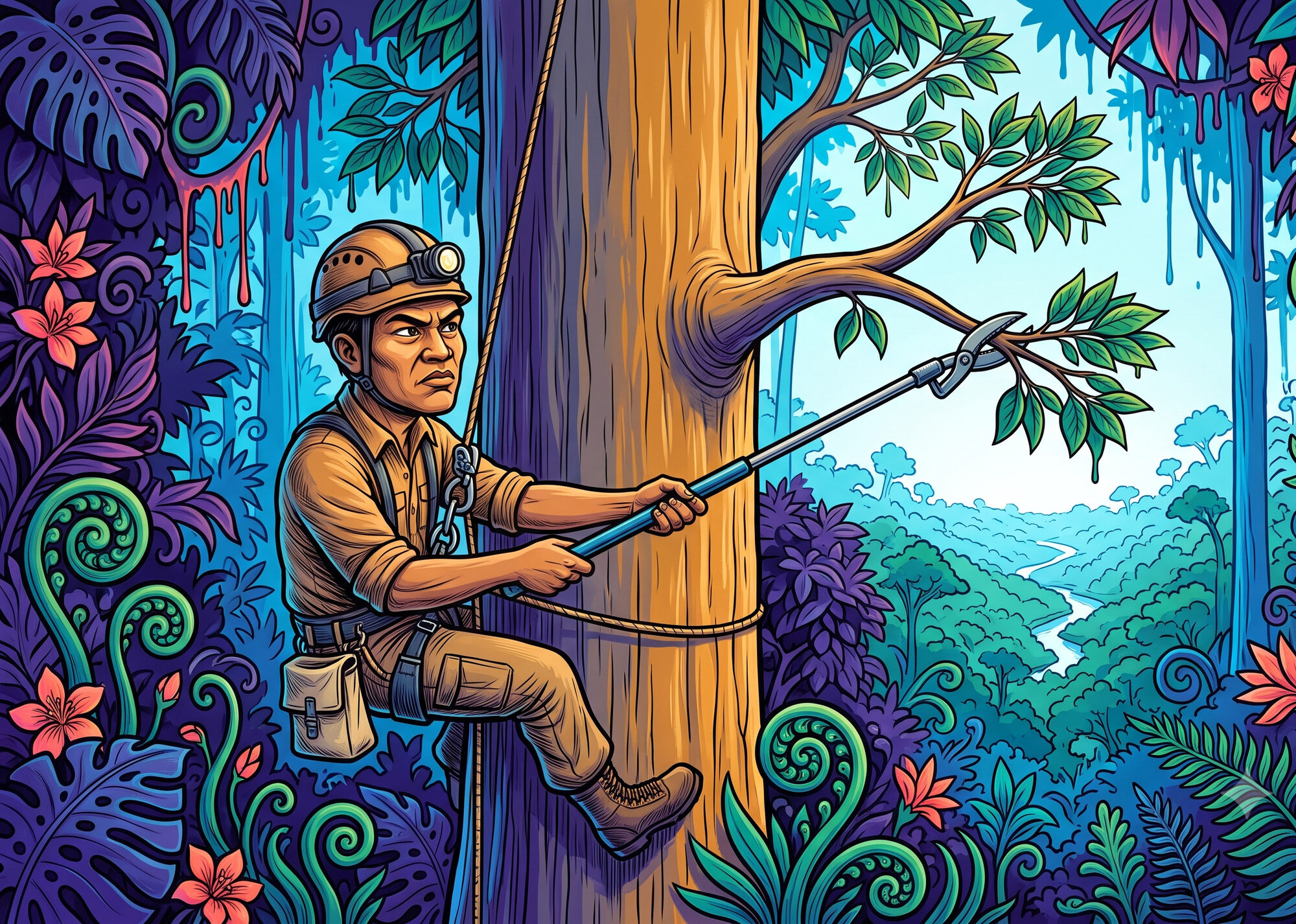
In the Kabili-Sepilok forest reserve in Sabah, on the Malaysian side of Borneo, a climber hangs on a rope high in the crown of a 71 m dipterocarp, one of the tall hardwoods that build the canopy here, and cuts small samples from its branches. The tree is one of 38, ranging across 5 species and every size from a 7 m sapling to this giant. Along each trunk the team measures how the wood carries water. The result, published in July 2026 in Science, runs against a theory that has stood for nearly thirty years. The tallest trees had no trouble moving water to the top.
The largest trees in a forest hold far more than their share of its carbon. One survey of 48 plots around the world found that the biggest 1 percent of trunks by diameter held about half of all the living wood above ground. And a widely held theory says those same giants are the first to die when a drought comes. If the theory is wrong, so are the projections of any climate model that builds it in. The Borneo study says the theory is wrong, at least for Borneo. Four neotropical results bear on the question. The two from Costa Rica side with Borneo, the two from the Amazon against it.
Why height was supposed to be a liability
The theory the study challenges starts with how water moves inside a trunk. Evaporation at the leaves puts the water under tension and drags it up from the roots, held in thin columns under negative pressure the whole height of the trunk. The taller the tree, the longer the column and the more gravity works against it. In 1997 the ecologists Michael Ryan and Barbara Yoder set this out as the hydraulic-limitation hypothesis: past a certain height a tree cannot keep water moving fast enough, so it closes its pores, loses photosynthesis, and slows down. They offered the hypothesis to explain why trees stop getting taller at all.
The tallest trees on Earth seemed to bear it out. When George Koch and colleagues climbed five coast redwoods over 110m in 2004, among them the tallest tree then known on Earth at 112.7 m, they found the topmost leaves small, stiff, and living in what amounts to permanent drought. From those measurements Koch's team estimated the species' ceiling at 122 to 130 m.
If height strains the plumbing, the tallest trees should fail first in a drought, and a global synthesis in 2015 found that pattern: across forests worldwide, larger trees died at higher rates than smaller ones in roughly two-thirds of the droughts examined. Some climate models assume the biggest trees go first.
Some researchers dissented from the start. As early as 2000, they pointed out that if a tree's water vessels are narrow at the top and widen steadily toward the base, the widening can offset the added length and keep resistance roughly flat no matter how tall the tree grows. The Borneo study is among the most direct tests of that idea in very tall tropical flowering trees.
What the climbers found
The dipterocarps did what the dissenters predicted. In the taller trees the water vessels were wider near the ground and tapered as they rose, so the longer path cost the tree little. Their leaves had shifted too, able to keep working under greater tension before wilting, matched to the harder pull at the crown. The adjustments, the authors wrote, "fully compensated" for the height. The compensation was tuned branch by branch. A branch's resistance to embolism, the air bubbles that break a water column and stop water reaching the leaves above, tracked the shade and moisture immediately around it more than the height of the tree it hung from, which suggests each branch builds its wood for its own corner of the canopy rather than for the trunk beneath it.
The tapering vessels and retuned leaves explained how the Borneo trees could move water, but not whether they could hold on when it grew scarce. The 2023 to 2024 El Niño, which ranked among the five most intense on record, brought a severe drought to Sabah, and the team measured trunk growth on dipterocarps at the same site before, during, and after. The tallest trees lost no more growth than the short ones.
The finding is narrow: one tree family, in one reserve, on one island. The authors call for testing whether it holds in other tall trees. The same team is now repeating the work on the giant trees of the Amazon, with some results expected by the end of 2026.
The neotropical split
Costa Rica has no dipterocarps; they are an overwhelmingly Asian family. Whether the Borneo result holds here has to be read from the trees that fill the same role elsewhere in the tropics, and from the droughts that have already tested them.
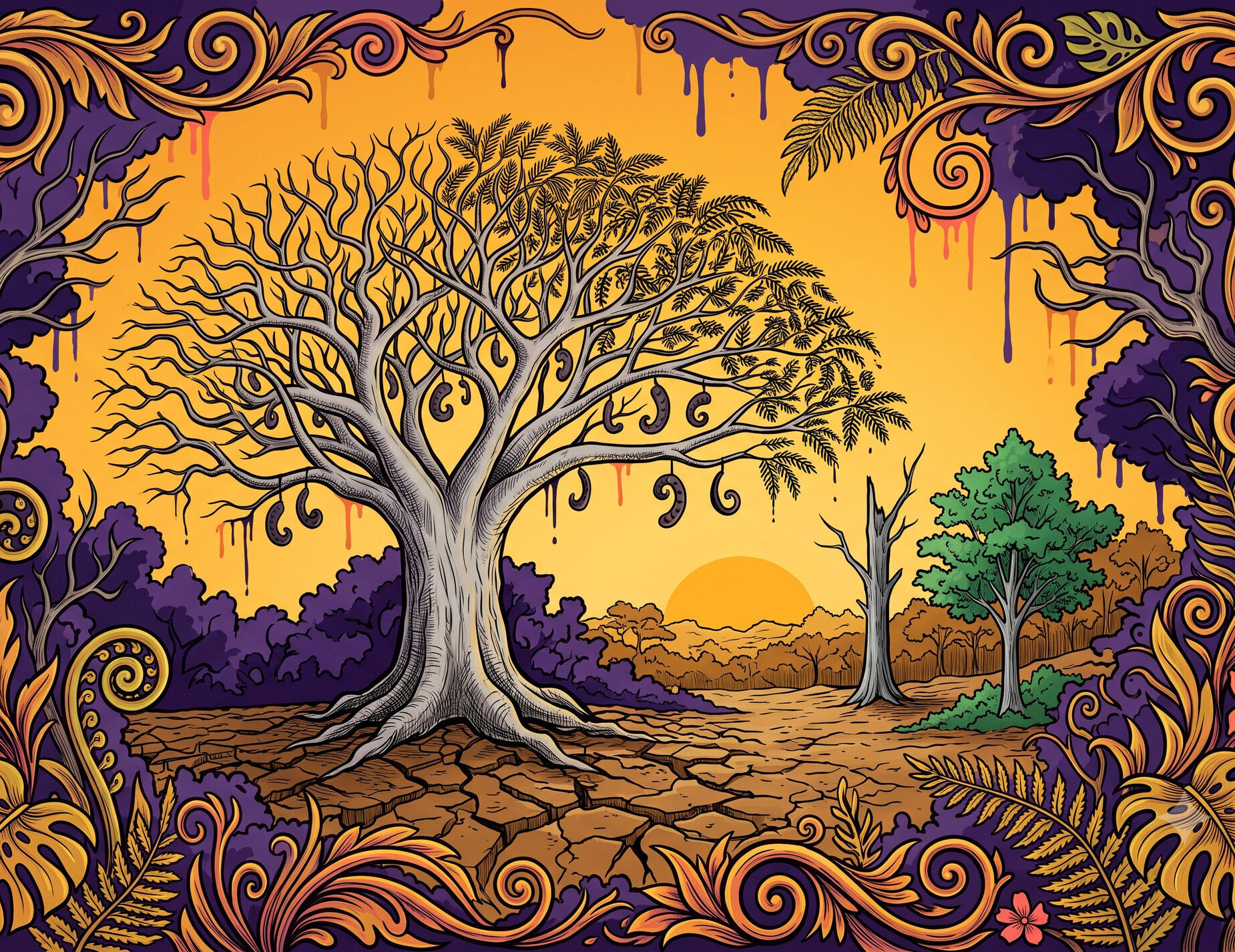
Two neotropical results side with Borneo, and both come from Costa Rica. In the dry forest of Guanacaste, a team led by Jennifer Powers tracked dozens of species through the severe 2015 El Niño drought. Mortality spanned 0 to 34 percent depending on the species. But it varied little with tree size. What predicted whether a species died was its hydraulic safety margin, the reserve its water system held before failure. At La Selva, on the Caribbean lowlands, decades of tree monitoring show the larger, taller trees dying at lower rates than smaller ones: individuals over 40 m died at 1.2 percent a year against a 2.7 percent landscape average.
In contrast, the results that back the theory come from the Amazon. On its southern edge, a 2024 study found that in four canopy species the taller individuals had more embolism-prone xylem, the wood that carries water up the trunk, and narrower safety margins than their shorter neighbors. The tall and the short trees pulled water at much the same tension day to day. What differed was the tension at which the wood gave way, and in the tall trees it came sooner. That is the theory's prediction exactly: in these species, height left a tree closer to hydraulic failure instead of being compensated for. The suspected cause is their wider vessels, the same feature that in Borneo offsets the height. A wide vessel carries more water for the same pull, which is what pays for the longer climb, and in these four species the branches with the widest vessels were the ones that failed at the least tension. One experiment counted deaths rather than measuring xylem. When researchers laid plastic panels through the understory of a hectare of Amazon forest to cut the rain reaching its soil, the large trees died at more than four times their normal rate.
Both sets of results hold. The difference may be how dry the air got in each place.
Height matters once the air is thirsty enough
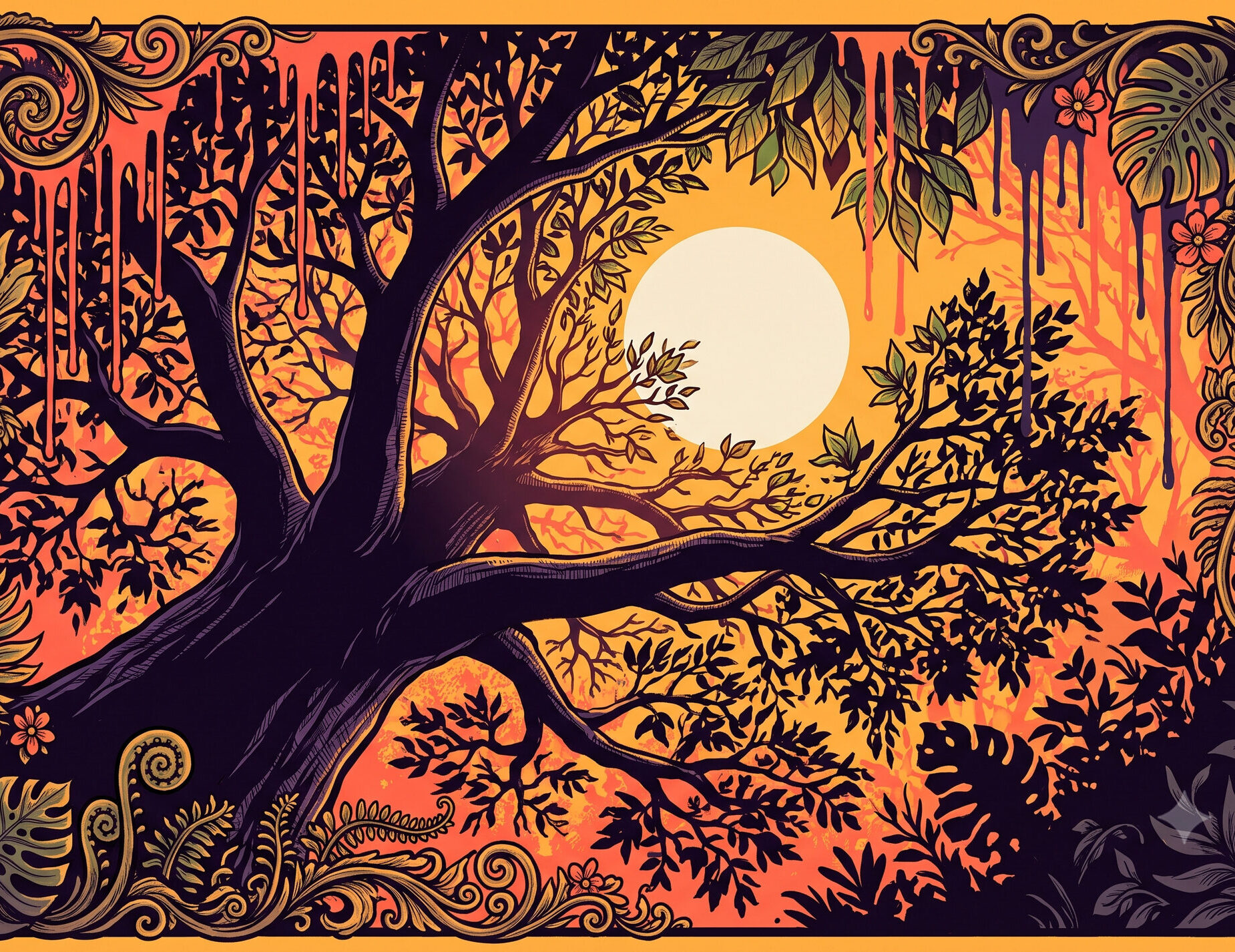
The result that may reconcile the two came from a temperate forest, far outside the tropics. Tracking close to 2 million trees across the drought-struck conifer forests of California's Sierra Nevada, Atticus Stovall and colleagues found tree height to be the single strongest predictor of which trees died. Whether height itself is the cause is disputed. A published reply argues that the tall stands were simply made of different species, and that bark beetles finished off the conifers drought had weakened. Stovall's paper carries a second result, and it is the more interesting one here: the link between height and death steepened as the air grew thirstier, measured as vapor pressure deficit, the difference between how much moisture the air can hold and how much it actually holds, expressed as a pressure in kilopascals. Above 2.4 kilopascals at the drought's peak, trees over 30 m died at about 30 percent a year, against 6 percent for a 10 m tree. Below that, height barely mattered.
The Borneo dipterocarps were measured through a real drought. If that drought never pushed the deficit over Sepilok past 2.4 kilopascals, the flat height-to-growth result is what the California data predict.
Costa Rica's air is getting hotter and drier, toward the conditions where the tallest trees begin dying first. Mesoamerica has already warmed 1 to 2 degrees Celsius in recent decades, and one 2022 analysis finds the wet season delivering less rain across Honduras, Nicaragua, and Costa Rica. The national weather service projects 3.8 to 4.8 degrees of warming by the end of the century under a high-emissions scenario. In the mountains the cloud base that defines the forest appears to be rising off the ridgelines. One projection has nearly all of Central America's cloud forest losing its regular immersion within decades.
The tallest trees face a second limit. It comes from heat, not water. At La Selva, what best predicted how fast the canopy trees grew from one year to the next was the temperature of the nights, ahead of rainfall or daytime heat. The warmer the nights, the less the trees grew, because a warm night makes a tree burn through more of its daytime sugar just to stay alive. By day, heat presses hardest on the tallest trees. Photosynthesis in these forests works best at about 30 degrees Celsius. Across the tropics, canopy leaves reach about 34 at midday in a dry spell, already past that. The leaves at the very top go further still. Nothing stands above them to cast shade, so they take full sun all day while the foliage below spends much of it shaded. Measured against that lower foliage they are up to 4 degrees hotter, and up to 5 degrees hotter than the air around them. That puts them furthest past the optimum and nearest the temperature at which photosynthesis fails outright, near 47 degrees in the leaf itself. A leaf sheds that heat by transpiring, evaporating water through its pores. But a drought forces those pores closed, and the cooling shuts off while the sun keeps heating the leaf. The threat is not settled; some studies find tropical canopies more heat-resilient than the gloomier readings suggest. Still, an emergent crown, one that stands clear above the rest of the canopy, carries the greatest heat load in the forest.
Where the roots drink
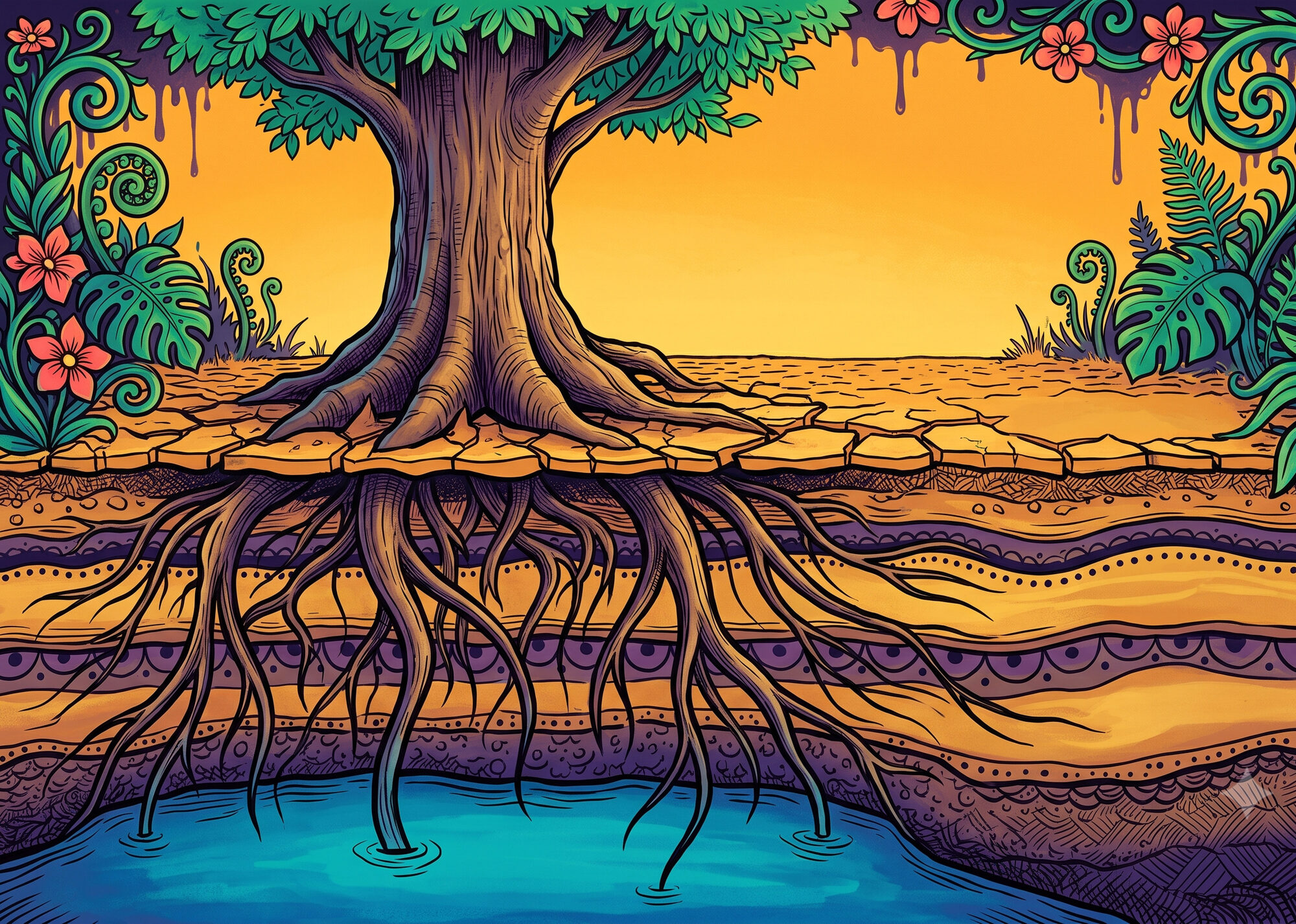
Deep roots carry some trees through a drought. On Barro Colorado Island in Panama, a long-term study found that the species with the most vulnerable, embolism-prone wood were often the ones that died least in drought, at least among the evergreens. They got away with risky plumbing because their roots reached deep, tapping water far below the surface long after the topsoil had dried. Amazon forests do the same thing at scale: half of Brazilian Amazonia's closed forest depends on deep roots, and in northeastern Pará evergreen forests pull from below 8 m to stay green through five-month dry seasons.
A comparison across hundreds of species worldwide found that height and rooting depth often do not correlate. So the trees most likely to die in drought are the ones that come out both tall and shallow-rooted.
Some Costa Rican trees reach deep for water too. Others get through the dry season another way. In Guanacaste, Rolf Borchert's survey of dry-forest trees sorted them into the ones that root deep, the ones that hoard water in soft trunks, and the ones that drop their leaves and wait. A more recent isotope study found that in the dry season, Costa Rican dry-forest plants were drawing roughly a third of their water from baseflow, the slow seepage that keeps streams running after the rains stop. Neither study follows a species from where its roots drink to whether it lives through a drought.

The giants Costa Rica has not measured
Costa Rica has emergents to set beside Borneo's dipterocarps. The almendro, Dipteryx panamensis, pushes past 50 m above the Caribbean lowlands; the biggest on record, a catalogued Árbol Excepcional in Sarapiquí, stands 54 m. It is the tree the great green macaw nests and feeds in, so the Sala Constitucional (the constitutional court) banned cutting it in 2008 to keep the bird from vanishing. The tallest individual tree on record in the country stands in Piedras Blancas National Park. The volunteer-compiled Monumental Trees register lists it as a Pterygota excelsa, laser-ranged at 64.50 m in 2016. A nearby ceiba reaches 60.40 m. On the Osa Peninsula, airborne laser scanning has found canopy reaching 67 m and some of the densest above-ground carbon in the American tropics, over 225 tons per hectare. These are the neotropical counterparts to the dipterocarps, shorter but filling the same place in the canopy, holding half a forest's carbon in a handful of trunks.
In Costa Rica's dry forest and at La Selva, the big trees have not been the ones dying, which lines up with the Borneo result. But the country is warming and drying toward conditions that could change that. The published record does not say which of Costa Rica's giants would fail first, or at what point: sap flow has been logged at breast height at La Selva, but no published study climbs an almendro or ceiba to follow the water to the crown, maps the width of its vessels from base to top, or tests where its xylem fails. The nearest recent whole-tree result on a big Dipteryx is about how it survives lightning strikes. Even that work comes from Panama.
Height by itself does not decide whether a giant survives a dry year. Survival depends on how thirsty the air gets, how the wood is built, and how deep the roots can reach for water the rock below may or may not hold. Borneo answered the second of those three: vessels widening toward the base and leaves retuned to the harder pull carried water 71 m up a dipterocarp without extra strain. But the paper gives no measure of how thirsty the air got over Sepilok, and the team measured no roots.
The published record carries none of those three measurements for a Costa Rican giant. With the neotropical evidence split, the almendro could be built like Borneo's dipterocarps or exposed like the Amazon's taller trees; nothing measured in this country says which. One tree on the Osa, cored from base to crown and read through a single dry season, would answer this question. The giants are already mapped from the air and standing inside a national park, and the next hard drought will run the test either way.
Resources & Further Reading
The study and the theory it tests
Press release for Bittencourt et al., "Height does not impair the hydraulic system of the tallest tropical Dipterocarp trees," Science (DOI 10.1126/science.aea9013).
The most detailed accessible account of the Borneo study: the Kabili-Sepilok site, the 38-tree, 5-species, 7 to 71 m sample, the El Niño drought test, and the Amazon follow-up.
The co-lead institution's half of a joint release with Exeter, describing the vessel-tapering and leaf adjustments that compensate for height, and the planned Amazon repeat.
The study's open data: dendrometer growth records for 42 trees and the full hydraulic trait table by species and crown position. Soil water content was recorded; vapor pressure deficit and roots were not.
The 2000 dissent: conduit tapering can buffer hydraulic resistance against path length, mitigating the hydraulic limitation of tree height.
The hydraulic-limitation hypothesis: the theory that path length and gravity cap tree height and growth.
Five coast redwoods over 110 m, including the then-tallest known tree on Earth at 112.7 m; a modeled height ceiling of 122 to 130 m and treetop leaves in permanent physiological drought.
Across 48 plots, the largest 1 percent of trees by diameter held about half of aboveground live biomass.
Drought, size, and mortality
Guanacaste dry forest, 2015 El Niño: mortality of 0 to 34 percent varied little with tree size and tracked hydraulic safety margins.
La Selva, Costa Rica: tree species reaching larger diameters showed significantly lower death rates than smaller-statured ones. (The 20-year annual census found no difference among size classes; the height result is Thomas et al. 2013, below.)
La Selva, Costa Rica: trees over 40 m died at 1.2 percent a year, less than half the 2.7 percent landscape average for canopy trees.
The published reply contesting Stovall: 90 percent of trees belong to groups whose mortality falls with height, and the overall pattern comes from forest composition and bark beetles rather than from height itself.
The neotropical counter-result: taller trees with more embolism-prone xylem and narrower safety margins. Only upper-crown branches were sampled, and wider vessels are proposed as the cause of the vulnerability.
Tapajós rainfall-exclusion experiment: large-tree mortality rose more than fourfold.
California conifers: height predicts drought death, but the effect is near zero at low vapor pressure deficit and steepens above about 2.4 kPa.
The paradigm the Borneo study contests: larger trees died at higher rates in roughly two-thirds of droughts.
Heat, roots, and the mechanism
How a thirstier atmosphere closes stomata and drives drought mortality independently of other climate-change drivers.
La Selva: canopy tree growth fell most in years with warmer nights, not hotter days.
Critical leaf temperature near 47 degrees Celsius, reached first by the most sun-exposed upper-canopy leaves.
Barro Colorado Island, Panama: over 35 years, deep roots let evergreen species with vulnerable wood survive drought.
Guanacaste: dry-forest trees split between deep roots, stem-water storage, and leaf-dropping.
Mesoamerica warmed 1 to 2 degrees Celsius in recent decades, with wet-season rainfall declining across Honduras, Nicaragua, and Costa Rica.
The national weather service's regionalized projections: a spatial range of 3.8 to 4.8 degrees Celsius of warming by 2070 to 2099 under the high-emissions RCP8.5 scenario.
The uppermost sun-lit canopy reaches up to 5 degrees above air temperature and is the only stratum whose leaves pass the photosynthetic optimum.
The counter-reading: some tropical canopies are more heat-resilient than the gloomier projections suggest.
Half of Brazilian Amazonia's closed forest depends on deep roots; evergreen forests in northeastern Pará draw water from below 8 m through five-month dry seasons.
Across 301 species, height and rooting depth often decouple; tall, shallow-rooted trees carry the greatest drought-mortality risk.
In the dry season, Costa Rican dry-forest plants drew about a third of their water from baseflow.
Costa Rica's giant trees
Airborne LiDAR: Osa canopy to 67 m and carbon over 225 tons per hectare, among the richest in the Neotropics.
Tracks 93 lightning-struck trees at Barro Colorado, Panama, using a tower-mounted strike-location array. The one recent Dipteryx result concerns lightning tolerance, not water transport.
Whole-tree sap flow in 10 species at La Selva, logged with trunk probes at breast height: the closest published Costa Rican measurement to the Borneo work, and it stops well short of the crown.
The 2008 ruling barring the cutting of the almendro de montaña (Dipteryx panamensis) to protect the great green macaw.
A Pterygota excelsa near Piedras Blancas laser-measured at 64.50 m in 2016 is the database's tallest documented tree in the country; a nearby Ceiba pentandra reaches 60.40 m (2014).
Monteverde: mist-frequency and faunal patterns suggest the base of the orographic cloud bank has risen, the lifting-cloud-base hypothesis.
Projects that nearly all Central American cloud forest will lose regular cloud immersion within decades.