Fifty Years From Now
Daniel Oduber Quirós, a Guanacaste rancher who once tried to abolish Santa Rosa, became the president whose decrees built the institutional skeleton of the system that today protects a quarter of Costa Rica.
In 1976, Álvaro Ugalde walked into the Casa Presidencial expecting to be fired. Months earlier, in October 1975, President Daniel Oduber had signed Decreto Ejecutivo 5357-A creating Parque Nacional Corcovado on the Osa Peninsula, against the dismay of his own cabinet and the protests of his ranching constituency in Guanacaste. Ugalde, the young director of the Servicio de Parques Nacionales, had given Oduber an initial cost estimate to compensate and relocate the squatters living inside the proposed park: about a hundred and seventy-five thousand dollars, assuming forty-five families. The reality, as Ugalde discovered, was different. There were more than fifteen hundred precaristas inside Corcovado, with hundreds of head of livestock, some who had been there since 1950, all entitled by Costa Rican law to compensation for "improvements" including the forest they had cleared. There were no roads in. Every family and animal would have to be evacuated by boat or airplane. The real number was closer to a million and a half dollars.
Ugalde delivered the new number. Oduber listened. According to Ugalde's later account, the president did not raise his voice. He asked one question: "Alvarito, dígame una cosa, cuánto cree usted que cueste Corcovado dentro de 50 años?" Tell me one thing, how much do you think Corcovado will be worth in fifty years? He approved the twelve million colones. Within six months, two million dollars had moved through the Park Service to buy out the squatters. Ugalde wrote to a friend at the U.S. National Park Service: "the old dream is now a reality. ... I am as optimistic as ever."
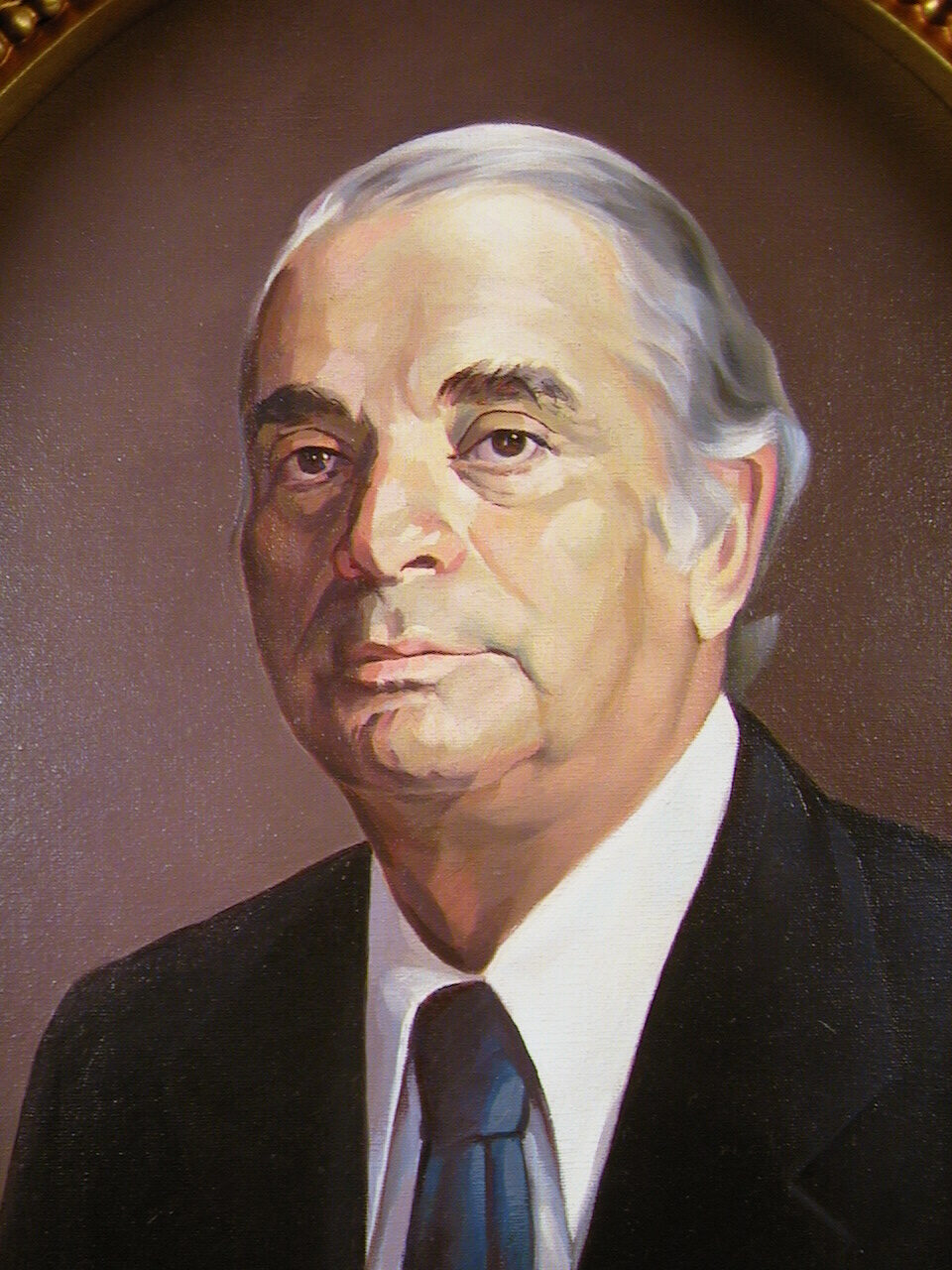
The Guanacaste Rancher
Porfirio Ricardo José Luis Daniel Oduber Quirós was born in San José on August 25, 1921, into one of the oldest political lineages in Costa Rica. His paternal grandmother was the sister of President Bernardo Soto Alfaro. Through his mother, Ana María Quirós y Quirós, he was a first cousin of the IV Archbishop of San José, a second cousin of José Joaquín Trejos Fernández (who would defeat him for the presidency in 1966), and connected to former presidents Juan Bautista Quirós and Rafael Ángel Calderón Guardia. His maternal grandfather had been one of San José's wealthiest coffee exporters and a director of Banco Anglo Costarricense. His paternal grandfather, born in the Dutch Antilles, had studied philosophy at Berlin and chemistry at Göttingen.
Oduber inherited the family's intellectual ambitions. As a law student at the Universidad de Costa Rica he joined the circle of young reformers around Rodrigo Facio Brenes, a few years his senior at the law faculty, who in April 1940 founded the Centro para el Estudio de los Problemas Nacionales, a UCR student-and-faculty study group under the moral patronage of the philosopher Roberto Brenes Mesén. Oduber served as the Centro's treasurer and edited its monthly, Revista Surco.
In March 1945, two months before he received his licenciatura, the Centro merged with José Figueres Ferrer's Acción Demócrata to form the Partido Social Demócrata under the motto "Libertad y Justicia Social." Figueres, fifteen years older than Oduber and recently back from exile after his 1942 radio denunciation of the Calderón government, came from outside the UCR student milieu; the merger united the Centro's intellectuals with his Acción Demócrata combatants under a single banner.
Oduber left later that year for Montreal to take a master's in philosophy at McGill, with a thesis on the dialectic of Plato. He kept up clandestine work for the PSD opposition during his studies; on a Costa Rica visit at the end of 1946 his covert activity forced him to leave the country in something close to exile. He took the M.A. in early 1948 and returned via Guatemala to join Figueres's faction during the brief civil war (12 March - 19 April 1948), as a political ally rather than a field combatant.
With the Pacto de la Embajada de México ending the fighting, the victors installed the Junta Fundadora de la Segunda República on 8 May 1948, an unelected eighteen-month transitional administration that abolished the army, nationalized the banking system, founded the Instituto Costarricense de Electricidad, and convened the 1949 Constituent Assembly. Oduber, by then an eight-year veteran of the Centro and the PSD and a member of Figueres's inner circle, served the entirety of that term as the Junta's Secretary General, the procedural office that drafted and coordinated the body's more than eight hundred decree-laws. The post sat outside the nine-member ministerial cabinet, more chief-of-staff than minister, but at the administrative center of the transition. He stepped down when the Junta handed power to Otilio Ulate on 8 November 1949.
He then traveled to Paris, where from 1950 to 1952 he held a diplomatic post and pursued, but did not complete, a doctorate at the Sorbonne. On 12 October 1951 he was among the co-signers, with Figueres, Orlich, and Monge, of the Carta Fundamental of the Partido Liberación Nacional, the founding charter that fused the PSD leadership with the Movimiento de Liberación Nacional to create the party that would dominate Costa Rican politics for the rest of the century. He sat on its founding board for the next forty years.
Back in Costa Rica, he served as the PLN's Director of Propaganda through Figueres's successful 1953 campaign. Under the first Figueres administration (1953-1958) he was Costa Rican ambassador in Mexico and then in Europe, and in 1956 was elected Secretary General of the PLN. From 1958 to 1962 he served as Diputado for the first post of San José Province and as head of the PLN parliamentary delegation.
In November 1960, during his term as a freshman PLN deputy, Oduber made one of his earliest consequential floor interventions. Deputy Villalobos Arce had attached a separate motion for a progressive tax on tierras incultas to the financing debate of what would become Ley de Tierras y Colonización 2825, the bill that created ITCO. The tax reached any landowner holding more than 100 hectares of uncultivated land. Fernando Volio, the bill's principal floor manager, opposed the motion as out of order, an old law copied without prior study. Oduber rose in favor, framing the tax as one of four revenue sources for the new institute alongside foreign loans, bond emissions backed by three million manzanas of state lands the Assembly was transferring, and appropriations from the Law of Economic Encouragement. The legal historian James Rowles, working from Assembly archives in his definitive 1982-83 study for the U. Miami Inter-American Law Review, recorded the moment plainly: "Whether intentionally or not, Oduber had completely undercut Volio's opposition." Volio reversed; the tax passed; Ley 2825 cleared its principal financing hurdle. The statute that emerged classified land "in its natural state without works of cultivation" as uncultivated, excluded forest harvesting and natural-resource use from the definition of productive use, and made standing forest above the 100-hectare floor a tax liability. The reach of that framework would prove far broader than ITCO's own settlement programs. ITCO would settle some forty thousand families across twenty-three years; the tax it had been built to finance reached every large landowner in the country.
When Francisco Orlich, his old PSD co-founder, won the 1962 presidential election, he named Oduber Minister of Foreign Relations and Worship. Oduber held the cancillería from 8 May 1962 to 31 December 1964, and on 7 February 1963 traveled to Washington for a meeting with John F. Kennedy at the White House.
At the end of 1964 he resigned the cancillería to dedicate himself to his first presidential run. In the 6 February 1966 election he was the PLN's candidate against José Joaquín Trejos Fernández, his second cousin and the standard-bearer of a conservative coalition, the Partido Unificación Nacional, assembled out of the old Calderonista and Ulatista factions. Trejos won 50.48 percent to Oduber's 49.52 percent, a margin of about 4,220 votes; the PLN nonetheless held its parliamentary majority and spent the next four years blocking much of the Trejos legislative program.
When Figueres returned to the presidency in 1970, Oduber was elected diputado for the first post of San José Province, named president of the PLN (a post he would hold until 1977), and chosen the sixteenth president of the Asamblea Legislativa. By then he had also acquired Finca La Flor, a property of roughly thirty-seven hundred acres near Liberia, where he raised cattle, experimented with mango, lime, and sugarcane, and ran a packing plant for small farmers. He kept friendships with the Guanacaste cattle elite. David Rains Wallace, who would later interview many of the principals, summed it up bluntly: "Daniel Oduber was a powerful Guanacaste rancher and politician."
In 1970, the Servicio de Parques Nacionales did not yet exist. The Departamento de Parques Nacionales had been created the year before within the Dirección General Forestal, with a twenty-seven-year-old agronomist named Mario Boza as its first chief and a young biologist named Álvaro Ugalde administering Santa Rosa. Boza and Ugalde had been working with First Lady Karen Olsen Beck and her husband José Figueres to build a national park system from almost nothing. Santa Rosa, the historic battlefield where Costa Rican militias had defeated William Walker's filibusters on March 20, 1856, had been declared a national park on March 27, 1971. The park sat next to the ranch of Pedro Abreu, an Oduber friend, and Abreu had moved his fence sixty hectares into protected land.
The personnel of the Instituto Costarricense de Turismo, who had opposed the 1969 Forestry Law and resented losing Santa Rosa to the new parks department, saw an opening. Oduber, as president of the Asamblea, agreed to sponsor a bill that would have removed Santa Rosa from the park system and returned it to ICT. A source at the attorney general's office told Boza and Ugalde the situation was hopeless: "Forget it, boys, you are going to lose Santa Rosa whether you like it or not. When Daniel Oduber decides something, he is likely to get it." Boza and Ugalde refused to forget it. They read the bill carefully and found an obscure clause that would have raised taxes on liquor, then used it to lobby business associations against the bill. They mobilized the Colegio de Biólogos. They reached Doña Karen, who wrote a personal letter to Oduber asking him to withdraw the bill. To get it delivered, she handed it to Don Pepe Figueres without telling him what was inside. Don Pepe, in a moment that has become Costa Rican parks lore, reportedly told a group of conservationists: "Don't listen to my wife. She's a little crazy."
Don Pepe delivered the letter. Oduber refused to withdraw the bill. It went to a vote and was unanimously defeated. On March 20, 1971, Doña Karen cut the ribbon formally opening Santa Rosa as a national park. Oduber appeared and gave a speech hailing the opening. The Guanacaste rancher who had tried to give Santa Rosa back to the tourist board now stood at its inauguration, in what Sterling Evans would later describe as "an abrupt about-face."
Three years later, on February 3, 1974, Oduber won the presidency. He had defeated Hernán Garrón in the PLN primary on his way to a campaign waged without Figueres's support, the two having been internal rivals for two decades, and he ran in the long shadow of the Vesco Case, the scandal over Figueres's ties to the U.S. fugitive financier Robert Vesco. The opposition was split across eight parties, including Rodrigo Carazo Odio at the head of a PLN splinter, the Partido Renovación Democrática, and Jorge González Martén of the Partido Nacional Independiente, whose campaign was anchored on a pledge to break with the Soviet Union and close the Russian embassy. Oduber took 43.44 percent against Fernando Trejos Escalante's 30.40 percent, with the PLN winning 27 of 57 legislative seats. It was the first time the PLN had won back-to-back presidential elections since 1948. He took office on May 8.
The Bridge Between Continents
The man who walked into the Park Service in mid-1974 had reason to be wary of Oduber. Boza had been pushed out of the directorship in the political reshuffle around the change of administrations, with Sterling Evans recording the departure as a question of "political unity" within MAG. He had moved to teach environmental conservation, eventually at UNED. Boza maneuvered Ugalde, a member of the PLN, into the directorship as his successor. Ugalde, having locked horns with Oduber over Santa Rosa, in his own words "tried to stay out of his sight the first few months."
It did not last. The two men ran into each other at a building entrance. Oduber asked: "Where are you now?" Ugalde, with sinking heart, answered: "In the parks department." Oduber said: "Come see me." It was the start of what Ugalde would later call the most important political relationship of his life.
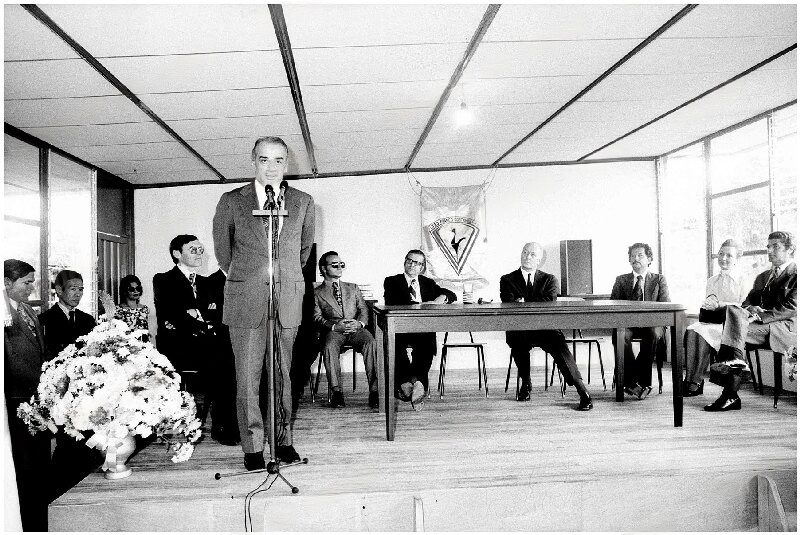
What changed Oduber's mind, by his own account in a 1982 interview with David Carr, was an argument from Boza and Ugalde about Costa Rica's competitive position in tourism. Mexico had its casinos. The Caribbean had its beach resorts. Costa Rica, they told him, had something different. He had always known the country was "a bridge between human cultures," he said. Boza and Ugalde convinced him that it was also "an ecological bridge between continents." The word ecotourism did not yet exist as a term of art and would not enter common use until the mid-1980s, when Costa Rica's own ecolodges would help give it content. Sterling Evans would later call the argument perceptive, a decade ahead of the language that would describe it.
Ugalde gave a more particular reading of the conversion. Oduber, he told Wallace in 1990, was "a rancher, and a very smart person. He saw what happened in Guanacaste, the deforestation and overgrazing, then the droughts, streams drying up. He also took part in the 1955 battle at Santa Rosa, so he liked it a lot. He still visits there quite often, just shows up." The pattern Ugalde recalled was characteristic. Oduber would arrive at Santa Rosa, listen to Pedro Abreu demand that Ugalde be ordered to do something, hear Ugalde out, and tell Abreu: "Do what Alvaro says."
One incident at Santa Rosa, told by Sigifredo Marín to Wallace, captures Oduber's posture toward his own park guards. A guardaparque named Felix found Oduber and his minister of security in the park with guns in their car, in violation of the rules. The minister pointed at Oduber and said, "You know, he's the president." Felix produced his guardaparque ID and asked Oduber if he had a card identifying him as president. Oduber didn't, so Felix detained both men and took them to the park director. Oduber's response, after the situation was sorted out: "It would be a better world if everybody did their jobs as thoroughly as Felix."
Ugalde's procedural method, as he later described it, was straightforward. "Everything this president ordered on behalf of conservation was because I asked him to please do so. I drafted the letters and he signed them." In the same memoir Ugalde called Oduber "the most powerful president I have ever seen in my life, at least in this country," and "the largest and most powerful friend the National Parks have ever had."
The conversion was not total. Oduber proposed in mid-1975 a different kind of program, a three-and-a-half-million-dollar plan to create six small parks within twenty miles of San José, "a great recreational reserve" for an expanding capital. Most of the proposed land was second growth or farmland. Olof Wessberg, then in his last weeks of life, saw the need for accessible green space but felt the money would buy more old-growth forest if spent elsewhere. The urban-parks plan never materialized. The argument it lost gave way to a different one, about which forests deserved priority.
Saving Corcovado
The Osa Peninsula in 1974 was a place where multiple struggles were converging at once. In 1957, an American firm called Osa Productos Forestales had bought 47,513 hectares of forest from a former United Fruit engineer for four hundred and fifty thousand dollars. By 1973 the eastern Osa was two-thirds deforested with more than ten thousand head of cattle. Squatters of varying tenure, some forty years on the land, occupied much of the rest. OFP began aggressive road construction to force evictions. Armed precaristas captured OFP staff and a tractor in the Corcovado Basin and warned that "blood would flow." A Japanese firm called Mitsui investigated logging the area for wood chips. A U.S. firm wanted to convert it to citrus. The conversion of banana plantations to less labor-intensive oil palm in the surrounding region was throwing former banana workers into the forest in search of land.
Christopher Vaughan, a Peace Corps volunteer working under Ugalde, had been promoting Osa as a future park since 1972. Boza had initially been skeptical because of the precaristas. Joseph Tosi of the Tropical Science Center was writing a WWF report on the park's feasibility. When Ugalde took over the directorship in 1974, he rekindled the Osa idea and sent the Swedish-born conservationist Olof Wessberg, who with Karen Mogensen had created Costa Rica's first protected area at Cabo Blanco in 1963, on a feasibility study to Punta Llorona. The cover story was that Wessberg was looking for a particular avocado variety. The reality was that he was on a parks-department survey mission. On July 23, 1975, his guide killed him with a machete.
Less than a month later, on August 21, 1975, Oduber gave an interview to La República in which he announced his intention to create a park on the Osa. "The foreigner who died to defend natural resources deserves a monument," he said. He compared the violence to the Middle East but drew a sharper line: "Here we kill people for defending a tree, an animal, a plant. ... This is very grave." And he made the commitment direct: "The foreigner who protected the natural resources of Costa Rica will be vindicated. I am working to establish a reserve in the Corcovado region, one of the last natural areas in the country."
The proximate trigger, by Ugalde's later account, was a different document: an unsolicited letter from Dr. Paolo Capelli of the University of Bologna, exalting the Osa and suggesting tourism revenue could pay for a park there. Oduber gave Ugalde the letter and told him to look into the feasibility. Ugalde immediately drafted a budget. Tosi finished his WWF report and put up ten thousand dollars from a Rare Animal Relief Effort grant originally intended for Monteverde. WWF added another ten thousand. The international conservation community had hesitated; the seed money broke the impasse.
On October 24, 1975, Oduber signed two simultaneous decrees. One was a land swap with Osa Productos Forestales, exchanging Corcovado Basin lands for surrounding national baldíos that became the Reserva Forestal de Golfo Dulce. The other was Decreto Ejecutivo 5357-A, establishing Parque Nacional Corcovado. Some cabinet members were openly disgusted. The proximate financial commitment was a hundred thousand dollars from the presidential discretionary fund. On December 18, 1975, La República published a letter from the American biologist Daniel Janzen praising the precedent: Corcovado, he wrote, was the first time anyone had shown the courage to establish a rainforest park in lowland Central America. La Nación followed shortly with a headline that read "Creación de Corcovado causa admiración en 52 países."
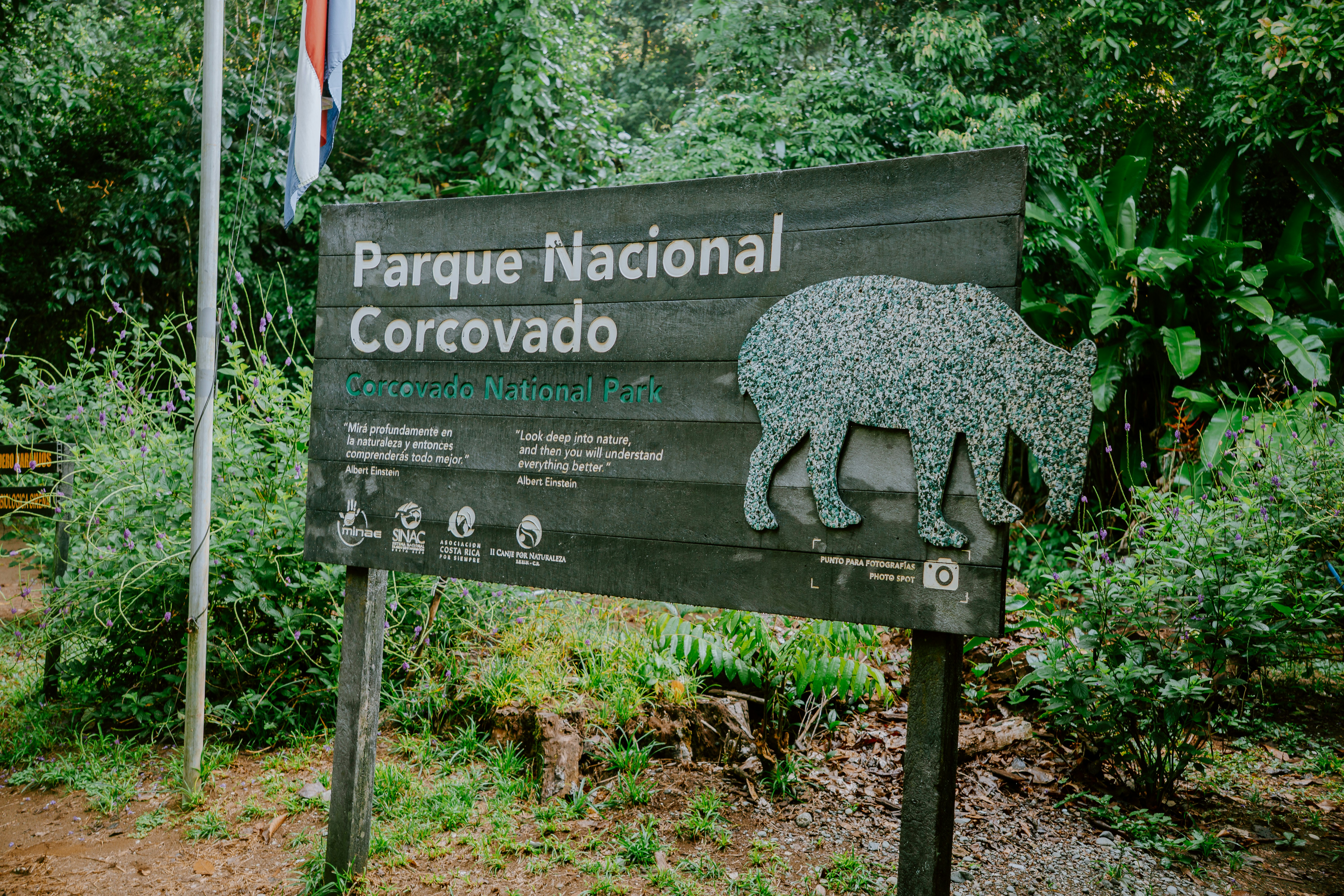
On January 8, 1976, Ugalde and Tosi presented their plans to Oduber. He committed an initial million and a half colones from his presidential discretionary fund and authorized nine new guard positions plus eleven Rural Guard members for four posts and patrols. Then came the discovery: not forty-five families but more than fifteen hundred. Roger Morales, the administrator of the Tropical Science Center's Monteverde Reserve, was loaned to the Park Service to coordinate squatter relocation. He hired Feynner Godínez, who had been Karen Wessberg's guide, to spend a month attending squatters' meetings to identify leaders. Godínez reported back that the Communist Party was strong among the precaristas. Morales went to the Communist deputies in the Asamblea and asked if they could accept a national park. Their answer: "Yes, but you must treat us well." Oduber accepted. The Communist Party assigned the squatters a lawyer-adviser. Trotskyist factions worked alongside. As Juan Diego Alfaro put it: "It was a kind of triangle between us, the Communists, and the Trotskyists."
The first attempts to deliver compensation cheques rather than cash at Río Claro were met with chants of "Nadie acepta cheque" until one settler accepted; thereafter the line formed. Park guard Sergio Volio, one of the first hired at Corcovado, told Wallace: "Ugalde called a special meeting to ask for volunteers to go to Corcovado because of the danger. It was like a novel by Gabriel García Márquez. It was a war, almost. ... I had a .38 pistol with six bullets, total, and when I fired them they didn't always go. We were threatened many times with machetes."
It was after this work began that Ugalde discovered the real cost of relocation. He delivered the new estimate of twelve million colones to Oduber, expecting the project to be killed. He got the question about fifty years instead. In July 1976, Oduber declared Corcovado a national emergency, renewed in three-month increments, allowing cash to flow through the Comisión Nacional de Emergencia without going through Comptroller-General or Treasury procedures. International organizations contributed another hundred thousand dollars to bridge gaps. The eviction took roughly a year. Final cost: about one million seven hundred thousand dollars. Some Corcovado occupants relocated to a finca acquired by ITCO at Cañaza, which locals called "the black city" because the roofs were black-tarred for humidity. By 1978, even the squatters' pigs and cows had been removed, or, as Wallace recorded, "eaten by the park's jaguars (or by the park's staff or researchers, since no other source of fresh meat was available)."
The Decree Pen
In October 1976, the Animal Welfare Institute awarded Oduber the Albert Schweitzer Medal "for outstanding achievement in creating major national parks in Costa Rica where wildlife can flourish." The medal was presented by U.S. Senator Hubert Humphrey. Oduber was the only Latin American to have received it since the medal had been authorized by Schweitzer in 1951. His acceptance speech was a refusal of the assumption that conservation belonged to wealthy countries. "Our respect for our people extends to future generations," he said, "and our respect for diversity in human society includes a desire to maintain and preserve the diversity of nature. This is the reason why Costa Rica firmly and emphatically rejects the point of view that preservation of the natural environment is a preoccupation of privileged nations, and a benefit that poor nations and developing nations cannot enjoy. We are a developing nation, and nevertheless we consider vital the preservation and protection of the natural environment."
The following year he declared 1977 the Year of Natural Resources, and signed protective decrees covering macaws, quetzals, harpy eagles, great curassows, all wild cats, tapirs, manatees, jabiru storks, crocodiles, and caimans. To Excelsior he offered a sentence that has worn well: "The effects of wildlife devastation are worse than those of an earthquake. Scientists estimate it takes from five to ten thousand years to completely reconstruct a virgin rainforest." On October 20, 1977, in La Nación, he wrote that humanity had "committed its greatest error" by trying to improve the quality of life "while forgetting and destroying the environment which is the basis of existence."
The legal architecture followed. On August 24, 1977, the Asamblea passed Ley 6084, the Ley del Servicio de Parques Nacionales. Boza had begun lobbying for it as early as 1972. The Association of Costa Rican Industries had opposed it as too ambitious and too expensive, arguing the existing International Convention for the Protection of Flora and Fauna was sufficient. Karen Olsen had been one of the project's earliest proponents. The new law took the parks department out of its subsidiary place inside the Dirección General Forestal and made the Servicio de Parques Nacionales an independent service unit within MAG. Article 8 listed fifteen prohibitions: cutting trees, extracting plants and forest products, hunting and capturing wildlife, hunting marine turtles, damaging plants or installations, fishing within parks, extracting corals and shells and rocks. Article 7 created the timbre de parques nacionales, a revenue stamp. The act made it illegal for any part of a national park to be removed from park status except by act of the Asamblea Legislativa. Former Park Service attorney Ana María Tato later said the law made these rules "fifteen prohibitions for visitors and property owners in and around the parks" rather than "arbitrary decisions by different administrations."
The same season produced the Ley sobre la Zona Marítimo Terrestre, Ley 6043 of March 2, 1977, which declared the entire two-hundred-meter coastal strip along both Costa Rican coasts inalienable national patrimony, an obligation of the state and all inhabitants to protect. The Ley Indígena 6172 of November 29, 1977, declared indigenous reserves the inalienable property of the indigenous communities that inhabited them. Costa Rica had ratified CITES in October 1974 (Ley 5605). It now ratified the UNESCO World Heritage Convention with Ley 5980 of October 26, 1976.
One ambitious institutional project failed. Ugalde had asked Oduber to create a parks commission; Oduber expanded it into a Consultative Commission on Natural Resources whose members included a young Óscar Arias, the economist Eduardo Lizano, the biologist Pedro León, the urbanist Fernando Zumbado, and the lawyer Armando Aráuz, with Ugalde as coordinator on a six-month leave from the Park Service. The commission drafted an INDERENA bill that would have created an autonomous Instituto de Recursos Naturales, replacing the Dirección General Forestal entirely. Oduber endorsed it. The Asamblea refused. The bill died before the term ended.
The Park Service grew on a different scale. Sterling Evans's accounting, drawn from internal records, gives the budget rising from six hundred thousand dollars in 1976 to a million seven hundred fifty thousand in 1978. Ugalde's memoir says staffing rose from about a hundred at the start of Oduber's term to four hundred by its end. José María Rodríguez, the architect Ugalde hired in 1977 and used as a de facto assistant director, told Wallace that "the Park Service staff doubled that year."
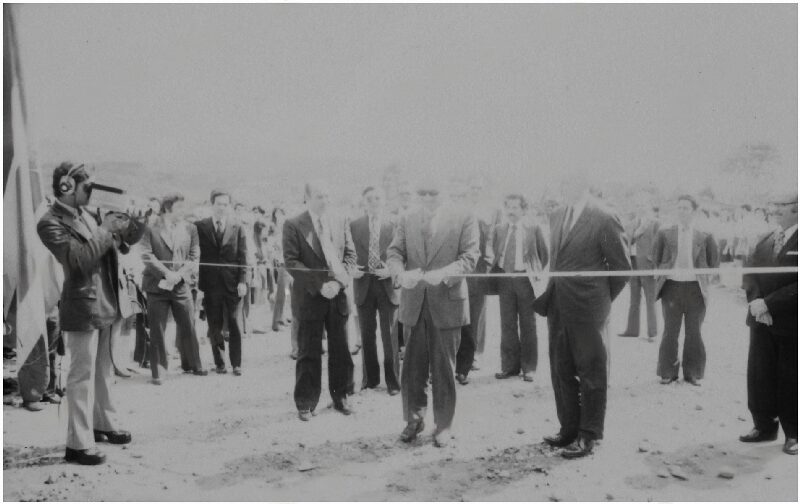
The last months were a sprint. Rodrigo Carazo Odio won the February 1978 election to succeed him, and the bureaucracy began reorienting toward the incoming government before Oduber had left office. Carazo as president-elect had no formal executive authority, but the political center of gravity had shifted and the decrees Oduber wanted were not reaching his desk. Ugalde later told Wallace that Carazo was not hostile to parks; he would soon name Mario Boza his advisor on natural resources. But he "didn't share Oduber's enthusiasm" and "spent the last months of Oduber's administration frustrating the lame duck president's attempts to create new protected areas." Oduber put it more bluntly to Ugalde, pinning the obstruction on Carazo himself: "I won't forgive him. He just didn't obey me for the last three months. He wouldn't prepare decrees for me to sign." He had wanted to declare the Tenorio and Miravalles volcanoes, the Cordillera de Guanacaste, a forest reserve. That decree never came. What he did sign in March, April, and May of 1978 included Reserva Biológica Isla del Caño (Ley 6215, March 9), Reserva Biológica Hitoy Cerere (Decreto 8351-A, April 4), Parque Nacional Braulio Carrillo (Decreto 8367-A, April 15), the elevation of Cahuita from monumento to parque nacional (Decreto 8489-A, April 27), Reserva Biológica Carara (Decreto 8491-A, April 27), Reserva Biológica Palo Verde (Decreto 8492, April 30), and the order to expropriate Hacienda Santa Elena to expand Santa Rosa, signed on May 5, three days before he left office.
Sterling Evans's authoritative accounting puts protected-area coverage at 2.5 percent of national territory when Oduber took office and 4.5 percent when he left, with nine new protected areas covering nearly three hundred fifty thousand acres added during his presidency alone.
What He Couldn't Stop
The same decade that produced the parks produced the deepest deforestation in modern Costa Rican history. Sader and Joyce, in their 1988 Biotropica study, traced forest cover from 43 percent in 1961 to 32 percent in 1977, the third year of Oduber's term, to 17 percent by 1983. Roughly fifty thousand hectares per year were cleared throughout the 1970s, mostly to produce beef for the U.S. market. In 1977 alone, fifty-two thousand hectares were lost. The annual deforestation rate of 3.86 percent prevailing from 1960 to 1980 placed Costa Rica among the highest-rate forest-loss countries in Latin America. Over ninety percent of total Costa Rican forest loss occurred between 1947 and 1980.
The Costa Rican state was driving much of it. The 1961 Ley de Tierras y Colonización taxed any holding above 100 hectares of uncultivated land and excluded standing forest from the definition of productive use; the framework Oduber had helped install as a freshman deputy reached every large landowner in the country, with standing forest a tax liability and clearing the relief. The Ley Forestal 4465 of November 1969, in force throughout Oduber's term and not significantly reformed until 1986, included no restrictions on selective logging, and pre-Forestry Law jurisprudence had treated clear-cutting forested land as an "improvement" allowing illegal occupants to claim property rights after a year. ITCO's own colonization programs — some forty thousand families settled on nearly eight hundred thousand hectares across twenty-three years — were the visible tip of a much larger statutory machine that turned forest into a fiscal cost across the entire countryside. The vice minister of natural resources Jorge Rodríguez, of Oduber's own administration, had a line he used: "Topsoil is Costa Rica's largest export."
Oduber's own administration accelerated the conversion in specific places. In 1975, with Oduber's backing, ITCO expropriated uncultivated lands of United Brands and settled some three thousand farming families on thirty thousand hectares of Coto Sur in the south Pacific. The largest agroindustrial project of the era developed alongside it, an oil-palm plantation and processing complex backed by IDB and the British state development agency at roughly fifty million dollars. The conversion of the surrounding banana plantations to less labor-intensive oil palm threw former banana workers into the forest. Some of those workers ended up as precaristas inside Corcovado, in the same park Oduber had created in part to protect that forest from them.
In April 1978, the same week Oduber's rapid-fire conservation decrees were going through, the Instituto Costarricense de Turismo approved the Master Plan and Preliminary Design of the Bahía Culebra tourism project, what would become the Polo Turístico Golfo de Papagayo, declaring the Papagayo region of "national touristic interest." His administration was building the Liberia airport that would feed it. The development model was a European-style resort enclave, paired with the airport. Researchers at the Center for Responsible Travel and Martha Honey would later argue that Guanacaste's tourism development sacrificed the kind of community-based ecotourism benefits that places like the Osa eventually captured.
The Costa Rican historians Wilson Picado-Umaña and Elisa Botella-Rodríguez framed the contradiction directly in their 2022 study. "In the early 1970s, one of the state's main responses to potrerización and deforestation was the creation of protected areas." The same state simultaneously had to deal with the social effects of land concentration through ITCO. "Ecological and land tenure policies shared a common basis: the creation of sites of ecological and social restoration." That formulation holds the paradox without resolving it. The parks were a partial state response to a crisis the same state was enabling.
The Ley Indígena 6172 carried a similar tension. The reserves it consolidated had been established for the Bribri, Cabécar, Brunca, Maleku, Chorotega, and other peoples by a series of executive decrees in 1976 and 1977. The law declared their reserves inalienable, imprescriptible, non-transferable, and exclusive. The sociologist Emilio Vargas Mena, in his 2025 essay in Revista de Historia, traced what happened next. The expansion of national parks during and after Oduber's term, including La Amistad on Bribri and Cabécar lands in 1982, generated lasting territorial conflicts that Costa Rica continues to negotiate decades later. The law was real. So were the contradictions inside it.
The Heart in Liberia
Oduber left office on May 8, 1978. The next thirteen years were spent on Finca La Flor, in writing (his 1985 Raíces del Partido Liberación Nacional won the national history prize), in correspondence with the friends he had collected as a head of state (Willy Brandt, Omar Torrijos, François Mitterrand, Carlos Andrés Pérez), and in lawsuits. He won most of them. The 1989 Asamblea Comisión de Narcotráfico cited him as having received money from a U.S. fugitive named Lionel Casey through an intermediary; the intermediary was acquitted in U.S. court. His daughter Anna María later said her father had grown privately ill, and increasingly depressed, under what she described as persistent disqualification campaigns.
On October 12, 1991, the Partido Liberación Nacional held an assembly at Finca La Paz in San Ramón de Alajuela to mark its fortieth anniversary. Oduber was one of the founders, a co-signer of the 1951 Carta Fundamental, and had been the party's president from 1970 to 1977. He was publicly questioned at the assembly over funds received from "persons with shady backgrounds" and was not permitted to address it. He went home to Escazú. He was found dead the next morning, on October 13, of a cardiac infarction at age seventy.
His remains were buried at Cementerio General in San José after services at Capilla de Jardines del Recuerdo, the Asamblea's Salón de Ex Presidentes, and the Cathedral of San José. His family had his heart extracted before burial and interred separately in a niche in the building of the antigua gobernación in Liberia, as a symbol of his attachment to the province whose ranching elite he had so often crossed.
On October 17, 1995, the Liberia airport, conceived during his administration, was renamed the Aeropuerto Internacional Daniel Oduber Quirós. In 2004, his family donated Finca La Flor to EARTH University, where the campus carries his name. On April 27, 2017, Acuerdo No. 24 of the Asamblea Legislativa declared him Benemérito de la Patria, after a contested process tied to the 1989 narcotráfico commission allegations.
The Costa Rican biologist Freddy Pacheco León has argued that the title "padre de los Parques Nacionales" properly belongs to Dr. José María Orozco Casorla, who proposed the country's first national park in 1939. In Pacheco León's reading, Oduber was the padrino, the godfather, who provided the executive will the system needed to grow. Sterling Evans, the title of whose chapter on the Oduber years is "Conservation Continued," made a similar argument in different language. David Rains Wallace, summing up his 1990 oral histories, put it this way: "Oduber evidently realized, as few politicians then did (and few do now), that destruction of natural ecosystems is a real disaster, not just a nuisance or a remote pity."
In 1986, in an interview with Andrew Reding, Oduber tried to explain what he had been doing. "I have emphasized conservation in order to afford future generations of Costa Ricans the pleasure of enjoying the nature I enjoyed as a child and adolescent. ... It is of global interest to defend all the treasures we have. ... We're very small, but we can be an example of a society that struggles for peace, justice, and beauty." The Cordillera de Guanacaste forest reserve he had wanted to declare in his last months never came under his pen. The Tenorio and Miravalles volcanoes did become national parks, eventually, after he was gone. The institutional architecture he and Ugalde and Boza built outlived all of them, and is the architecture under which a quarter of Costa Rica is now legally protected.
Resources & Further Reading
Books
Chapter 5, "Conservation Continued: The Oduber Years," is the single most authoritative academic narrative of Oduber's conservation legacy. Provides authoritative figures including the 2.5 to 4.5 percent protected-area expansion and detailed Park Service budget growth.
Wallace's 1990 oral-history interviews with Boza, Ugalde, Sergio Volio, Roger Morales, Karen Wessberg, Pedro León, and José María Rodríguez supply most of the scene-level detail used in this article, including the "fifty years" exchange, the Pedro Abreu episode, the Communist Party negotiation at Corcovado, and the Felix anecdote.
The principal full-length biography in Spanish, roughly 414 pages, drawing on Oduber's papers and interviews with family and colleagues.
Oduber's own history of the PLN, which won Costa Rica's Premio Nacional Aquileo J. Echeverría in History.
The principal recent academic study of how the Costa Rican protected-area system Oduber expanded intersected with indigenous territories, particularly Bribri and Cabécar lands.
Key Articles
The argument that locates Oduber as "padrino" of the parks system, with Dr. José María Orozco Casorla as its true founder.
A transcript of Álvaro Ugalde's 2007 Nectandra Institute oral history covering the Corcovado decision, the cost overrun, and the "fifty years" exchange in his own words.
Ugalde's account of how the founding generation of Costa Rican parks figures came together, including his first encounter with Boza, his training under George Hartzog at the U.S. National Park Service, and the role of Pedro León, Luis Fournier, and Douglas Robinson as mentors.
The principal English-language obituary of Ugalde, with reference to the Oduber partnership.
Reporting on the niche containing Oduber's heart in the building of the antigua gobernación in Liberia.
Institutional record of the 1976 Albert Schweitzer Medal awarded to Oduber, with citations from Hubert Humphrey's presentation.
Family memoir by Oduber's daughter, with details on Finca La Flor, the family donation to EARTH University, and the post-presidential years.
Academic
The authoritative source for the 43 percent (1961) to 32 percent (1977) to 17 percent (1983) forest-cover trajectory.
Frames Oduber-era park expansion as a partial state response to the same potrerización and ITCO-driven colonization the state was simultaneously enabling.
Critical sociology of how the post-Oduber expansion of national parks created lasting territorial conflicts with Bribri, Cabécar, Brunca, Maleku, and Chorotega communities.
The definitive legislative history of Ley 2825, drawn from Assembly archives and personal interviews including Volio. Source for the November 1960 floor vote in which Oduber's intervention undercut Volio's opposition to the progressive tax on uncultivated lands.
One of the most-cited later assessments of the parks system's structural integrity, including the widely repeated 3 to 12 percent figure that, on careful reading, rolls Oduber, Carazo, and early Monge expansions together.
Background on the OTS consortium and the embedded U.S. tropical biologists, including Daniel Janzen, who shaped Costa Rican parks scholarship during the Oduber years.
The principal academic study of CODESA, the state-entrepreneur model, and the macroeconomic context of the Oduber years.
Oduber's own post-presidential conference paper on land tenure and squatter occupation, in his own voice.
A compiled summary of forest-cover trajectory citing Sader and Joyce, with the 1977 single-year clearance figure of fifty-two thousand hectares.
Official ICT record of the Polo Turístico Golfo de Papagayo, confirming the April 1978 approval of the Bahía Culebra Master Plan during the final weeks of Oduber's presidency.
EARTH University's commemoration of the 2004 family donation, confirming the property size and ongoing educational use of the Campus Daniel Oduber Quirós.
Government & Primary Sources
Full text of the cornerstone statute that separated SPN from the Dirección General Forestal and made park boundaries alterable only by act of the Asamblea.
Full text of the law declaring Costa Rica's two-hundred-meter coastal strip inalienable national patrimony.
Full text of the act declaring indigenous reserves inalienable, imprescriptible, and non-transferable.
The institutional biographical record maintained by the National Museum.
Party biographical record, including the PLN attribution of "thirteen protected areas" to Oduber's combined Asamblea-presidency and presidential terms.
Organizations
The successor agency that absorbed the Servicio de Parques Nacionales in 1998 and now administers the protected-area system whose statutory architecture Oduber's Ley 6084 established.
Founded June 25, 1979, by Mario Boza, Álvaro Ugalde, Pedro León, Luis Diego Gómez, and José María Rodríguez. The institutional capstone of the Oduber years, established roughly a year after he left office.
The first public distance-learning university in Latin America, created by Ley 6044 signed by Oduber on March 3, 1977.
The Liberia campus of EARTH, donated by the Oduber Elliott family in 2004.
Institutional record of the medal Oduber received in 1976.
Related Profiles
The young biologist Oduber appointed director of the Servicio de Parques Nacionales, and the partner whose 1990 oral histories supply most of the scene-level detail in this article.
The first director of the Departamento de Parques Nacionales, who began lobbying for Ley 6084 in 1972 and made the ecotourism argument that converted Oduber.
The First Lady whose 1970 letter to Oduber, delivered through Don Pepe without telling him what was inside, helped defeat the bill that would have abolished Santa Rosa.
The Swedish-born conservationist whose July 1975 murder on the Osa Peninsula, on a parks-department survey mission, set the stage for Oduber's October 1975 Corcovado decree.
Wessberg's wife and partner in creating Costa Rica's first protected area at Cabo Blanco, and the woman who continued conservation work alone after his death.
The American biologist whose December 1975 letter to Oduber praised Corcovado as the first courageous lowland Central American rainforest park.
The University of Florida zoologist whose Tortuguero turtle program shaped the 1975 reaffirmation and consolidation of the Tortuguero park boundaries under Oduber.
Director General of IUCN from 1970 to 1976, and a key articulator of the park-based ecotourism model that Boza and Ugalde used to convert Oduber.
The Tropical Science Center mapmaker whose Corcovado feasibility report, and the ten thousand dollars he redirected from a Rare Animal Relief Effort grant, broke the international funding impasse for the 1975 park.
The Peace Corps volunteer whose 1972 work under Ugalde began the formal case for Corcovado as a national park.
Oduber's successor, whose pre-inauguration obstruction blocked the Cordillera de Guanacaste forest reserve, and who later doubled the parks system himself during the worst economic crisis in modern Costa Rican history.
Costa Rica's first environment minister, who built the next institutional layer above the architecture Oduber and Ugalde had drafted.