Darwin's Natural Heir El heredero natural de Darwin
Edward O. Wilson turned a lifetime among ants into a theory of the whole living planet. In 1992 he named Costa Rica's biodiversity institute the prototype the rest of the world should follow. Edward O. Wilson convirtió toda una vida entre hormigas en una teoría de todo el planeta vivo. En 1992 nombró al instituto de biodiversidad de Costa Rica el prototipo que el resto del mundo debería seguir.
The story Bert Hölldobler chose to tell when his closest collaborator died took place in a small park in San José, on the evening before a flight back to Boston. Edward O. Wilson, then in his late seventies, spotted a trail of ants at the park entrance. He dropped to his hands and knees with a glass aspirator and started collecting workers along the line they had laid down. He crawled toward the nest. Park visitors stared. A young embracing couple disentangled and moved away. Police arrived, because, in Hölldobler's words, the behavior of an old man on his knees with a tube in his mouth was "so suspicious" as to require inquiry. By the end of the evening Wilson had identified six or seven species of Pheidole new to science in this one municipal park. He and Hölldobler never made it to the restaurant Wilson had been describing in mouthwatering superlatives all day. La historia que Bert Hölldobler eligió contar cuando murió su colaborador más cercano sucedió en un pequeño parque de San José, la noche antes de un vuelo de regreso a Boston. Edward O. Wilson, ya cerca de los ochenta, vio un rastro de hormigas en la entrada del parque. Se puso de rodillas con un aspirador de vidrio y empezó a recolectar obreras a lo largo de la línea que habían trazado. Avanzó a gatas hacia el nido. Los visitantes del parque se quedaron mirando. Una pareja joven que se abrazaba se separó y se alejó. Llegó la policía, porque, en palabras de Hölldobler, la conducta de un anciano a gatas con un tubo en la boca era "tan sospechosa" que ameritaba una indagación. Al final de la noche Wilson había identificado seis o siete especies de Pheidole nuevas para la ciencia en este único parque municipal. Él y Hölldobler nunca llegaron al restaurante del que Wilson había hablado con superlativos en la boca todo el día.
Hölldobler put the scene at the front of Wilson's PNAS obituary in February 2022, six weeks after Wilson died. It captures the thing that organized his entire life: a total, almost childish absorption in animals two millimeters long. Out of that absorption Wilson built a career on a single wager, that if you looked closely enough at the smallest living things you would find rules that scaled all the way up to the planet. The wager paid out. It produced the theory that told the world how large a nature reserve has to be, and the word, biodiversity, that told governments what was at stake inside one. The same wager produced a darker inheritance: a conviction that human social behavior runs on the same evolutionary rules as an ant colony's. That idea drew the fiercest attack of his career, and, his own archive would later reveal, led him in private to support the science of racial difference. Costa Rica belongs to the constructive half of the record. Wilson did not write about the country often, and he visited it rarely. But he named it, in print, the prototype the rest of the world should follow, and the country built much of what he only theorized. Hölldobler colocó la escena al inicio del obituario de Wilson en PNAS en febrero de 2022, seis semanas después de la muerte de Wilson. Captura aquello que organizó toda su vida: una absorción total, casi infantil, en animales de dos milímetros. De esa absorción Wilson construyó una carrera sobre una sola apuesta: que si uno miraba con suficiente atención las cosas vivas más pequeñas, encontraría reglas que escalaban hasta el planeta entero. La apuesta rindió. Produjo la teoría que le dijo al mundo cuán grande debe ser una reserva natural, y la palabra, biodiversidad, que les dijo a los gobiernos qué había en juego dentro de ella. La misma apuesta produjo una herencia más oscura: la convicción de que la conducta social humana obedece a las mismas reglas evolutivas que la de una colonia de hormigas. Esa idea provocó el ataque más feroz de su carrera y, como su propio archivo revelaría después, lo llevó en privado a respaldar la ciencia de la diferencia racial. Costa Rica pertenece a la mitad constructiva de esa historia. Wilson no escribió sobre el país con frecuencia, y lo visitó pocas veces. Pero lo nombró, en letra impresa, el prototipo que el resto del mundo debería seguir, y el país construyó buena parte de lo que él solo teorizó.
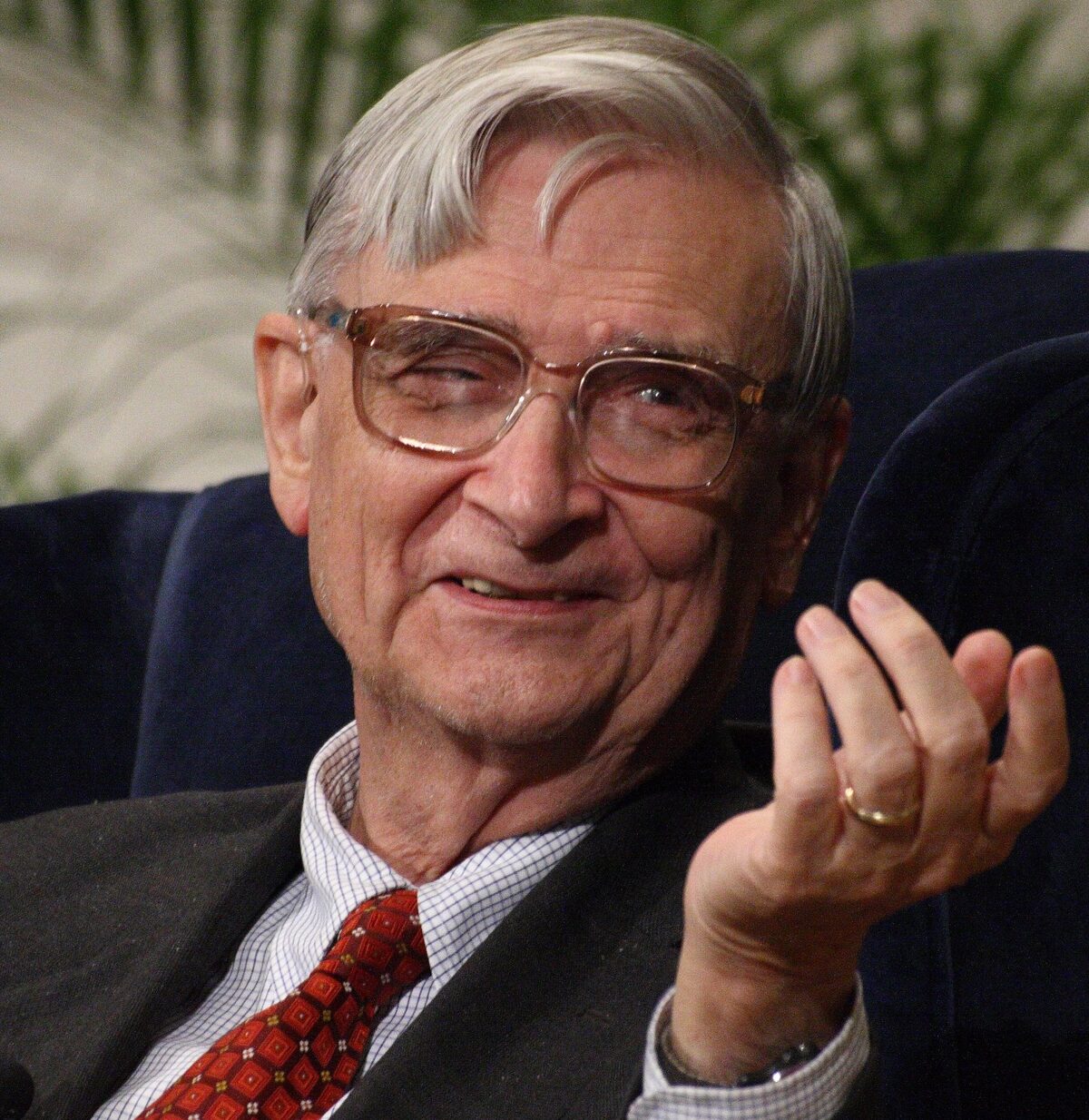
The Boy Who Looked Down El niño que miraba hacia abajo
Edward Osborne Wilson was born in Birmingham, Alabama, on June 10, 1929, the only child of a federal-government accountant who was a chronic alcoholic and a mother who divorced him when the boy was seven. That same year, while the divorce was pending, his parents sent him to board with a family at Paradise Beach, Florida. He was fishing in the surf and hauled in a pinfish. "One of its spines pierced the pupil of my right eye," he wrote. The pain was excruciating, but he did not stop fishing and did not tell anyone, because he was anxious to stay outdoors. A few months later the right pupil clouded over with a cataract, and a surgeon in Pensacola removed the lens while someone held him down and dripped ether into a gauze cone over his face. He called it "a terrifying nineteenth-century ordeal." He attended fourteen schools in eleven years across Alabama and the Florida Panhandle. Edward Osborne Wilson nació en Birmingham, Alabama, el 10 de junio de 1929, hijo único de un contador del gobierno federal con alcoholismo crónico y de una madre que se divorció cuando el niño tenía siete años. Ese mismo año, mientras el divorcio estaba pendiente, sus padres lo enviaron a vivir con una familia en Paradise Beach, Florida. Estaba pescando en la rompiente y sacó un pinfish. "Una de sus espinas me perforó la pupila del ojo derecho", escribió. El dolor era insoportable, pero no dejó de pescar y no le dijo a nadie, porque ansiaba quedarse al aire libre. Unos meses después la pupila derecha se le nubló con una catarata, y un cirujano en Pensacola le retiró el cristalino mientras alguien lo sujetaba y le goteaba éter en un cono de gasa sobre la cara. La llamó "una aterradora odisea del siglo diecinueve". Asistió a catorce escuelas en once años entre Alabama y el Panhandle de Florida.
What remained was a left eye with vision of 20/10 and no depth perception. He could not be the ornithologist he had planned to become; tracking a bird in flight needs stereoscopic vision, and an adolescent hearing loss would later rule out birdsong identification too. The hardware he had was suited to small, slow, close things. "The attention of my surviving eye turned to the ground," he wrote. "I would thereafter celebrate the little things of the world, the animals that can be picked up between thumb and forefinger and brought close for inspection." On a wooded slope in Rock Creek Park in Washington he pulled bark off a rotting stump and found citronella ants underneath, short, fat, brilliant yellow, smelling of lemon. "What netherworld had I briefly glimpsed?" he asked. "What strange events were happening deep in the soil?" He noticed butterflies and ants, he later wrote, "more than other kids did, and took an interest in them automatically." Lo que quedó fue un ojo izquierdo con visión de 20/10 y sin percepción de profundidad. No podría ser el ornitólogo que había planeado ser; seguir un ave en vuelo exige visión estereoscópica, y una pérdida de audición en la adolescencia más tarde descartaría también la identificación por canto. El equipo con el que contaba estaba afinado para cosas pequeñas, lentas, cercanas. "La atención de mi ojo sobreviviente se volvió hacia el suelo", escribió. "En adelante celebraría las pequeñas cosas del mundo, los animales que se pueden tomar entre el pulgar y el índice y acercar para inspeccionarlos." En una ladera boscosa del Rock Creek Park de Washington arrancó la corteza de un tronco podrido y encontró hormigas citronela debajo, cortas, gordas, amarillas brillantes, con olor a limón. "¿Qué inframundo había vislumbrado un instante?", se preguntó. "¿Qué eventos extraños ocurrían en lo profundo del suelo?" Reparaba en mariposas y hormigas, escribió después, "más que otros niños, y me interesé en ellas automáticamente".
By eighteen he intended to specialize in flies. A wartime shortage of insect pins forced him to switch to ants, which could be kept in glass vials. He corresponded with Marion R. Smith, a myrmecologist at the National Museum of Natural History, who suggested he survey the ants of Alabama. The survey produced his first scientific contribution, the discovery of the first colony of imported fire ants in the United States, near the port of Mobile. He took a B.S. and an M.S. at the University of Alabama, transferred to Harvard in 1951, and finished a PhD in 1955 on a revision of the ant genus Lasius. He stayed on the Harvard faculty for the next forty-one years. A los dieciocho pensaba especializarse en moscas. La escasez de alfileres entomológicos durante la guerra lo obligó a cambiar a hormigas, que podían guardarse en frascos de vidrio. Se carteó con Marion R. Smith, mirmecólogo del National Museum of Natural History, quien le sugirió que inventariara las hormigas de Alabama. El inventario produjo su primera contribución científica, el descubrimiento de la primera colonia de la hormiga de fuego importada en Estados Unidos, cerca del puerto de Mobile. Sacó un B.S. y un M.S. en la Universidad de Alabama, se trasladó a Harvard en 1951, y terminó un doctorado en 1955 sobre una revisión del género de hormigas Lasius. Permaneció en la facultad de Harvard los siguientes cuarenta y un años.
The Rules That Scale Las reglas que escalan
Wilson was, by his own account, a poor mathematician. As a tenured professor in his early thirties he had sat through two years of undergraduate math courses to remedy the deficiency, with little success, and he later called the theoreticians he worked with his "intellectual prosthesis." He had the elements of a theory of biogeography, the species-area curves in his files and his idea of a balance of species, but not the mathematics to assemble them. Robert MacArthur, a Princeton ecologist less than a year younger than him and a gifted mathematician with a deep love of birds, supplied it. The two of them worked out a quantitative theory of why islands hold the species they do. The number of species on an island, they proposed, settles at the equilibrium between two curves, one falling and one rising. Immigration of new species falls as more arrive, because fewer of the next arrivals are new. Extinction rises as more species are present, because each new species offers another candidate for local disappearance. Where the two curves cross is the number of species the island can sustain. Increase distance from the source area, and the immigration curve falls. Decrease area, and the extinction curve rises. Either change lowers the equilibrium. Wilson era, según su propio testimonio, un mal matemático. Como profesor titular a comienzos de sus treinta había aguantado dos años de cursos universitarios de matemáticas para remediar la deficiencia, con poco éxito, y más tarde llamó a los teóricos con los que trabajó su "prótesis intelectual". Tenía los elementos de una teoría de la biogeografía, las curvas de especies-área en sus archivos y su idea de un equilibrio de especies, pero no las matemáticas para ensamblarlos. Robert MacArthur, un ecólogo de Princeton apenas unos meses menor que él y un matemático talentoso con un profundo amor por las aves, las aportó. Los dos resolvieron una teoría cuantitativa de por qué las islas albergan las especies que albergan. El número de especies de una isla, propusieron, se asienta en el equilibrio entre dos curvas, una que cae y otra que sube. La inmigración de especies nuevas cae a medida que llegan más, porque cada vez menos de las que llegan son nuevas. La extinción sube a medida que hay más especies presentes, porque cada especie nueva es otra candidata a desaparecer localmente. Donde se cruzan las dos curvas está el número de especies que la isla puede sostener. Aumenta la distancia al área fuente, y la curva de inmigración baja. Reduce el área, y la curva de extinción sube. Cualquiera de los dos cambios baja el equilibrio.
Their species-area equation, S = CAz, with z usually between 0.20 and 0.35, turned this into arithmetic: cut an island to a tenth of its area and you lose roughly half its species. MacArthur and Wilson published a preliminary paper in Evolution in 1963 and the full book, The Theory of Island Biogeography, with Princeton in 1967. To test it, Wilson and his graduate student Daniel Simberloff did something audacious. "There was only one way to solve the problem," Wilson wrote. "Miniaturize the system!" They hired an exterminator, tented six small mangrove islets in the Florida Keys, fumigated them to kill every arthropod, and watched the islands recolonize. Within 250 days the species counts had returned, with distance from the mainland predicting the rates. The first chapter of the 1967 book had shown a four-panel figure of the shrinking woodland of Cadiz Township, Wisconsin, between 1831 and 1950, with the comment that the same principles applied "to formerly continuous natural habitats now being broken up by the encroachment of civilization." It was an aside. They did not yet know what they had written. Su ecuación especies-área, S = CAz, con z usualmente entre 0,20 y 0,35, convirtió esto en aritmética: reduce una isla a una décima parte de su área y pierdes cerca de la mitad de sus especies. MacArthur y Wilson publicaron un artículo preliminar en Evolution en 1963 y el libro completo, The Theory of Island Biogeography, con Princeton en 1967. Para ponerla a prueba, Wilson y su estudiante de doctorado Daniel Simberloff hicieron algo audaz. "Solo había una manera de resolver el problema", escribió Wilson. "¡Miniaturizar el sistema!" Contrataron a un fumigador, cubrieron con carpa seis pequeños islotes de mangle en los Cayos de Florida, los fumigaron para matar cada artrópodo, y observaron la recolonización. En 250 días los conteos de especies habían regresado, con la distancia al continente como predictor de la tasa. El primer capítulo del libro de 1967 mostraba una figura de cuatro paneles con la reducción del bosque del cantón de Cadiz, Wisconsin, entre 1831 y 1950, con el comentario de que los mismos principios se aplicaban "a hábitats naturales antes continuos que ahora son fragmentados por el avance de la civilización". Era una observación al pasar. Aún no sabían lo que habían escrito.
MacArthur did not live to see what the rest of the work would become. He died of renal cancer in 1972 at age 42. The night before he died he and Wilson spoke for an hour by telephone, Cambridge to Princeton, about the future of ecology and the merits of various colleagues, with the calm, Wilson wrote, of a man who had a hundred years to live. Decades later, writing a new preface for the Princeton Landmarks reissue, Wilson acknowledged where the book had actually landed. "In a way that MacArthur and I failed to appreciate," he wrote, "the book has had a major impact on conservation biology." Habitat fragmentation was insularization. The Cadiz Township figure became canonical. The SLOSS debate over reserve design (Single Large or Several Small) ran on their math. The Mesoamerican Biological Corridor, the corredores biológicos that SINAC would later draw on a map of Costa Rica, the fragmentation experiment that Tom Lovejoy would run in the Amazon beginning in 1979: all of it ran downstream of two crossing curves in a 1963 paper. MacArthur no vivió para ver en qué se convertiría el resto del trabajo. Murió de cáncer renal en 1972 a los 42 años. La noche antes de su muerte, él y Wilson hablaron una hora por teléfono, Cambridge a Princeton, sobre el futuro de la ecología y los méritos de varios colegas, con la calma, escribió Wilson, de un hombre que tenía cien años por delante. Décadas después, al escribir un nuevo prólogo para la reedición de Princeton Landmarks, Wilson reconoció dónde había terminado el libro. "De una manera que MacArthur y yo no logramos apreciar", escribió, "el libro ha tenido un impacto mayor en la biología de la conservación". La fragmentación del hábitat era insularización. La figura del cantón de Cadiz se volvió canónica. El debate SLOSS sobre diseño de reservas (Único Grande o Varios Pequeños) corría sobre sus matemáticas. El Corredor Biológico Mesoamericano, los corredores biológicos que SINAC dibujaría después en el mapa de Costa Rica, el experimento de fragmentación que Tom Lovejoy realizaría en la Amazonía a partir de 1979: todo eso corría río abajo de dos curvas que se cruzaban en un artículo de 1963.
The New Synthesis La nueva síntesis
In 1971 Wilson published The Insect Societies, a synthesis of everything known about ants, bees, wasps, and termites, and closed it with a proposal: the same evolutionary logic that explained an ant colony could be extended to the social behavior of all animals. Four years later he made good on it. Sociobiology: The New Synthesis (1975) ran from microbes to mammals and defined a new discipline, "the systematic study of the biological basis of all social behavior." It was an extension of Darwinian thinking on the scale of the Modern Synthesis of the 1930s. For twenty-six chapters it was celebrated. The trouble was the twenty-seventh, on humans, which opened by asking the reader to "consider man in the free spirit of natural history, as though we were zoologists from another planet completing a catalog of social species on Earth." In that light, Wilson wrote, the humanities and social sciences "shrink to specialized branches of biology." He meant the chapter, he later admitted, as "a catalyst dropped among reagents already present and ready to combine." En 1971 Wilson publicó The Insect Societies, una síntesis de todo lo que se sabía sobre hormigas, abejas, avispas y termitas, y la cerró con una propuesta: la misma lógica evolutiva que explicaba una colonia de hormigas podía extenderse a la conducta social de todos los animales. Cuatro años después cumplió la promesa. Sociobiology: The New Synthesis (1975) iba de los microbios a los mamíferos y definió una nueva disciplina, "el estudio sistemático de la base biológica de toda conducta social". Era una extensión del pensamiento darwiniano a la escala de la Síntesis Moderna de los años treinta. Durante veintiséis capítulos fue celebrado. El problema fue el vigésimo séptimo, sobre los humanos, que comenzaba pidiéndole al lector "considerar al hombre con el espíritu libre de la historia natural, como si fuéramos zoólogos de otro planeta completando un catálogo de las especies sociales de la Tierra". Bajo esa luz, escribió Wilson, las humanidades y las ciencias sociales "se reducen a ramas especializadas de la biología". Concibió el capítulo, admitió después, como "un catalizador dejado caer entre reactivos ya presentes y listos para combinarse".
The reaction combined. Fifteen Boston-area scientists, teachers, and students formed the Sociobiology Study Group, allied with the activist organization Science for the People. Two of its most prominent members were Wilson's own colleagues at the Museum of Comparative Zoology, Stephen Jay Gould and Richard Lewontin, whose office sat directly below Wilson's own. On November 13, 1975, they published an open letter, "Against 'Sociobiology,'" in The New York Review of Books. It charged that theories like Wilson's "tend to provide a genetic justification of the status quo," and linked them to the past American sterilization laws "and also for the eugenics policies which led to the establishment of gas chambers in Nazi Germany." Wilson, a registered liberal who had thought he was writing population biology, was stunned. "I had been blindsided by the attack," he wrote. "In the liberal dovecotes of Harvard University, a reactionary professor is like an atheist in a monastery." His defense was that genes account for as little as ten percent of human behavior, the rest environmental, and that describing a tendency is not endorsing it. La reacción se combinó. Quince científicos, docentes y estudiantes del área de Boston formaron el Sociobiology Study Group, aliado con la organización activista Science for the People. Dos de sus miembros más prominentes eran colegas del propio Wilson en el Museo de Zoología Comparada, Stephen Jay Gould y Richard Lewontin, cuya oficina quedaba justo debajo de la de Wilson. El 13 de noviembre de 1975 publicaron una carta abierta, "Against 'Sociobiology'", en The New York Review of Books. Acusaba que teorías como la de Wilson "tienden a ofrecer una justificación genética del statu quo", y las vinculaba a las antiguas leyes de esterilización estadounidenses "y también a las políticas eugenésicas que llevaron al establecimiento de las cámaras de gas en la Alemania nazi". Wilson, un liberal inscrito que creía estar escribiendo biología de poblaciones, quedó atónito. "Me habían tomado por sorpresa con el ataque", escribió. "En los palomares liberales de la Universidad de Harvard, un profesor reaccionario es como un ateo en un monasterio." Su defensa era que los genes explican apenas un diez por ciento de la conducta humana, el resto ambiental, y que describir una tendencia no es respaldarla.
The dispute turned physical once. On February 15, 1978, at the annual meeting of the AAAS, Wilson sat on stage with his leg in a cast when about eight demonstrators rushed the platform, one placard painted with a swastika. A young woman picked up a pitcher of water and poured it over his head while the group chanted, "Wilson, you're all wet!" He described his own reaction as "calm, dare I say icy cold, as I let the protestors' anger wash over me," and the episode as "the only occasion in recent American history on which a scientist was physically attacked, however mildly, simply for the expression of an idea." Gould, from the same stage, condemned the disruption, quoting Lenin on an "infantile disorder." Wilson knew the placard-wavers were not his real problem. "It was the grown-up intellectuals I knew I had to worry about," he wrote. Of Lewontin he was almost admiring: "the only person who could make MacArthur sweat," "stage-cast for the role of contrarian," "an intellectual who preached social change from the temple of hard science." Out of the same period came On Human Nature (1978), the humane companion volume in which Wilson argued that the genes hold culture "on a leash." It won the Pulitzer Prize. The charge that his science gave cover to racism he treated, for the rest of his public life, as a slander. His private papers would complicate that. La disputa se volvió física una vez. El 15 de febrero de 1978, en la reunión anual de la AAAS, Wilson estaba sentado en el escenario con una pierna enyesada cuando unos ocho manifestantes se abalanzaron sobre la tarima, una pancarta pintada con una esvástica. Una joven tomó una jarra de agua y se la vació sobre la cabeza mientras el grupo coreaba: "¡Wilson, estás todo mojado!" Describió su propia reacción como "tranquila, me atrevo a decir gélida, mientras dejaba que la rabia de los manifestantes me pasara por encima", y el episodio como "la única ocasión en la historia estadounidense reciente en que un científico fue atacado físicamente, por leve que fuera, simplemente por expresar una idea". Gould, desde el mismo escenario, condenó la interrupción, citando a Lenin sobre un "desorden infantil". Wilson sabía que quienes agitaban pancartas no eran su verdadero problema. "Eran los intelectuales adultos los que sabía que debían preocuparme", escribió. De Lewontin hablaba casi con admiración: "la única persona que podía hacer sudar a MacArthur", "predestinado al papel de contrario", "un intelectual que predicaba el cambio social desde el templo de la ciencia dura". De ese mismo período salió On Human Nature (1978), el volumen complementario y humano en el que Wilson argumentó que los genes sostienen a la cultura "con una correa". Ganó el Premio Pulitzer. El cargo de que su ciencia daba cobertura al racismo lo trató, por el resto de su vida pública, como una calumnia. Sus papeles privados complicarían eso.
The Unity of Knowledge La unidad del conocimiento
The synthesizing impulse did not stop at human behavior. Wilson had spent his career making one field after another, the island biogeography he built with MacArthur, the chemical ecology he opened by decoding ant pheromones with the Harvard mathematician William Bossert, the sociobiology he assembled on his own, and he came to see the fragmentation of knowledge itself as the next problem to solve. In Consilience: The Unity of Knowledge (1998) he argued that the natural sciences, the social sciences, and the humanities would eventually rest on a single shared foundation of explanation, with biology at its base. He took the word from the Victorian philosopher William Whewell, who had defined consilience as a "jumping together" of knowledge across disciplines. Culture, ethics, and art were not exempt from biological explanation, Wilson held; they were shaped by what he called epigenetic rules, inherited biases in how the mind develops, and could be studied like anything else in nature. El impulso sintetizador no se detuvo en la conducta humana. Wilson había pasado la carrera creando un campo tras otro, la biogeografía de islas que construyó con MacArthur, la ecología química que abrió descifrando las feromonas de las hormigas con el matemático de Harvard William Bossert, la sociobiología que armó por su cuenta, y llegó a ver la fragmentación del conocimiento mismo como el siguiente problema por resolver. En Consilience: The Unity of Knowledge (1998) sostuvo que las ciencias naturales, las ciencias sociales y las humanidades acabarían descansando sobre una sola base compartida de explicación, con la biología en su fundamento. Tomó la palabra del filósofo victoriano William Whewell, que había definido la consiliencia como un "saltar juntos" del conocimiento a través de las disciplinas. La cultura, la ética y el arte no estaban exentas de explicación biológica, sostenía Wilson; estaban moldeadas por lo que llamó reglas epigenéticas, sesgos heredados en el modo en que se desarrolla la mente, y podían estudiarse como cualquier otra cosa de la naturaleza.
It was the boldest claim of an unusually bold career, and not everyone wanted it. Philosophers and social scientists read Consilience as biological imperialism, the same charge sociobiology had drawn, now aimed at the whole of culture. Wilson was unmoved. He had written, in On Human Nature, that "the evolutionary epic is probably the best myth we will ever have," and he meant it as a working faith, a secular successor to the Baptist Christianity he had left behind in Alabama. This was the work that earned him the name that followed him to the end. The Guardian called him Darwin's natural heir, and the obituaries repeated it. Along the way he had gathered the National Medal of Science and the Crafoord Prize, which the Royal Swedish Academy of Sciences created to honor the disciplines the Nobel leaves out. Era la afirmación más audaz de una carrera inusualmente audaz, y no todos la querían. Filósofos y científicos sociales leyeron Consilience como imperialismo biológico, el mismo cargo que había provocado la sociobiología, ahora dirigido a la cultura entera. Wilson no se inmutó. Había escrito, en On Human Nature, que "la épica evolutiva es probablemente el mejor mito que jamás tendremos", y lo decía como una fe operante, una sucesora secular del cristianismo bautista que había dejado atrás en Alabama. Este fue el trabajo que le ganó el nombre que lo acompañó hasta el final. The Guardian lo llamó el heredero natural de Darwin, y los obituarios lo repitieron. Por el camino había reunido la Medalla Nacional de Ciencia y el Premio Crafoord, que la Real Academia Sueca de las Ciencias creó para honrar las disciplinas que el Nobel deja fuera.
The Little Things That Run the World Las pequeñas cosas que mueven el mundo
Through all of it, the grand syntheses and the fights they started, the ant work never stopped, and it was the steadiest thing he did. In 1990 Wilson and Hölldobler published The Ants, 732 pages, which won Wilson his second Pulitzer and remains the only Pulitzer-winning work of professional science. Then he climbed what ant taxonomists had called the Mount Everest of their discipline, too big to attempt: the genus Pheidole. The 2003 monograph, Pheidole in the New World, ran to 794 pages, recognized 624 species in the Western Hemisphere, and described 337 of them new to science, sixteen years of part-time work in his home laboratory, drawing specimens while listening to classical music and soft rock. Of the roughly 450 ant species Wilson described in his career, 354 were Pheidole. A través de todo ello, las grandes síntesis y las peleas que desataban, el trabajo con hormigas nunca se detuvo, y fue lo más constante que hizo. En 1990 Wilson y Hölldobler publicaron The Ants, 732 páginas, que le valió a Wilson su segundo Pulitzer y sigue siendo la única obra ganadora del Pulitzer realizada por la ciencia profesional. Luego escaló lo que los taxónomos de hormigas habían llamado el Monte Everest de su disciplina, demasiado grande para intentarlo: el género Pheidole. La monografía de 2003, Pheidole in the New World, alcanzó 794 páginas, reconoció 624 especies en el Hemisferio Occidental y describió 337 de ellas nuevas para la ciencia, dieciséis años de trabajo a medio tiempo en su laboratorio doméstico, dibujando especímenes mientras escuchaba música clásica y rock suave. De las aproximadamente 450 especies de hormigas que Wilson describió en su carrera, 354 fueron Pheidole.
Costa Rica supplied a measurable share of those names. When Fernando Zara and Harold Fowler reviewed the monograph in 2005 in UCR's Revista de Biología Tropical, they calculated that Costa Rica held 113 of the 624 New World Pheidole species, 18.1 percent of the hemispheric total, behind only Brazil and Mexico. Normalized for area, Costa Rica ranked first in the world, more Pheidole per unit of land than anywhere else on Earth. The reviewers attributed the result, drily, to "the high collecting effort in Costa Rica and Panama, two countries well studied by Wilson." The names carry the geography. Pheidole laselva Wilson 2003, type locality Costa Rica, Heredia, La Selva, named for the field station where it was collected. Pheidole texticeps, Pheidole iracunda, Pheidole browni, Pheidole boltoni, several with holotypes from eight kilometres north of Volcán Barva at 1,830 metres. Pheidole nasutoides, the termite-mimic ant, described by Hölldobler and Wilson in Psyche in 1992 from Costa Rican material, a species that has shaped its body to look like the soldier of a termite colony, presumably to walk through termite galleries without being attacked. Costa Rica aportó una porción medible de esos nombres. Cuando Fernando Zara y Harold Fowler reseñaron la monografía en 2005 en la Revista de Biología Tropical de la UCR, calcularon que Costa Rica albergaba 113 de las 624 especies neotropicales de Pheidole, el 18,1 por ciento del total hemisférico, solo detrás de Brasil y México. Normalizado por área, Costa Rica quedó primera en el mundo, más Pheidole por unidad de tierra que en cualquier otro sitio de la Tierra. Los reseñistas atribuyeron el resultado, con sequedad, a "el alto esfuerzo de recolecta en Costa Rica y Panamá, dos países bien estudiados por Wilson". Los nombres cargan la geografía. Pheidole laselva Wilson 2003, localidad tipo Costa Rica, Heredia, La Selva, nombrada por la estación de campo donde fue recolectada. Pheidole texticeps, Pheidole iracunda, Pheidole browni, Pheidole boltoni, varias con holotipos a ocho kilómetros al norte del Volcán Barva a 1.830 metros. Pheidole nasutoides, la hormiga imitadora de termitas, descrita por Hölldobler y Wilson en Psyche en 1992 a partir de material costarricense, una especie que ha modelado su cuerpo para parecerse al soldado de una colonia de termitas, presumiblemente para caminar entre las galerías de termitas sin ser atacada.
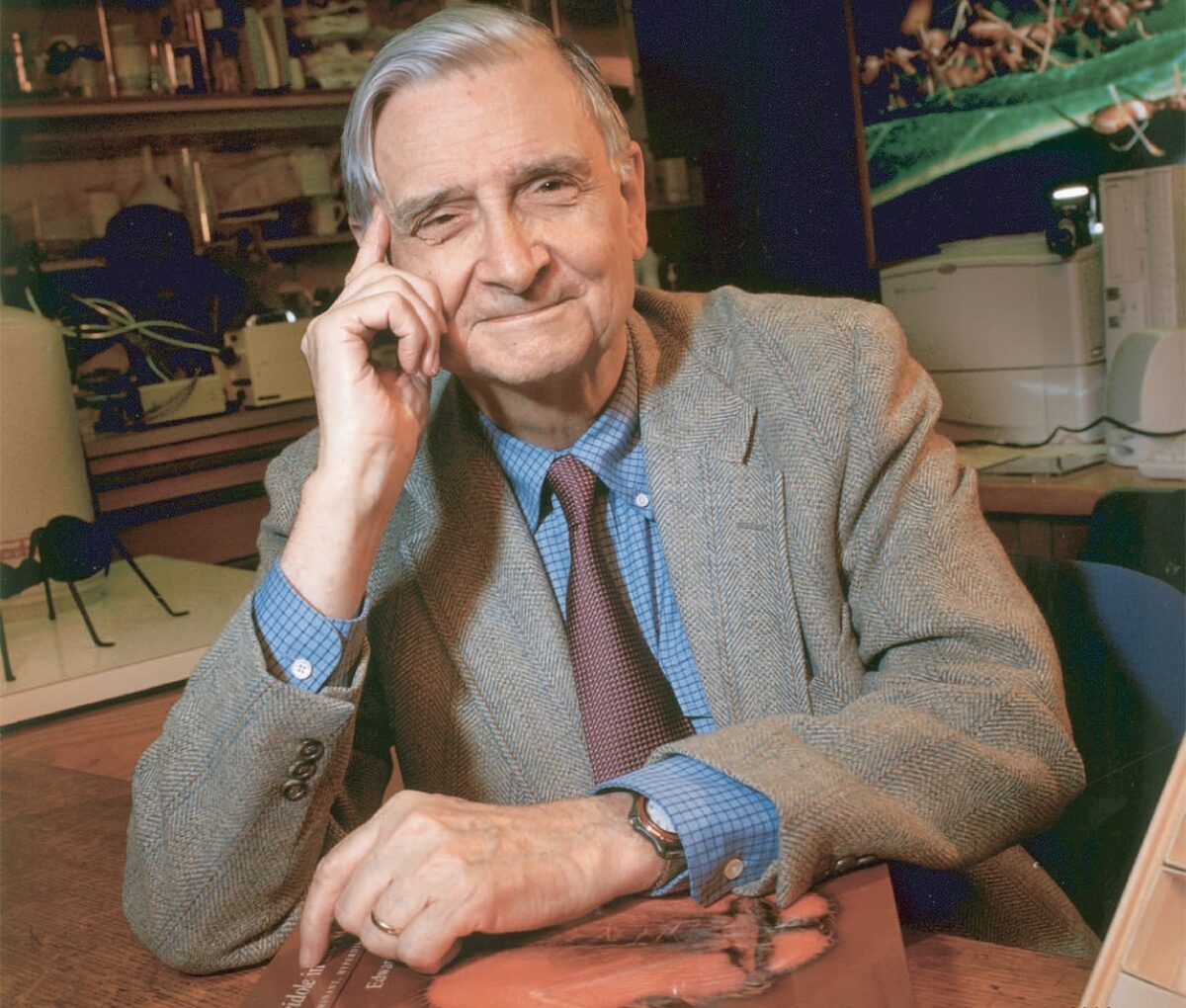
The only Costa Rica field trip Wilson narrated in his autobiography happened in 1985. "We drove north from San José to La Selva, the field station of the Organization for Tropical Studies," he wrote, and spent two weeks working on Prionopelta, a primitive ponerine ant whose colonies had never been observed in life. The trip showed the two men's opposite temperaments. When Hölldobler pointed at flecks of cocoon silk in a nest gallery, Wilson dismissed them: "Nothing, just trash, I answered." Hölldobler persisted, "No, no, look: the pieces are lined up as a smooth layer on the gallery walls," and proved the ants were using silk as wallpaper to control humidity, a technique unknown in ants. He then found the gland in the workers' hind legs that lays their foraging trails. "From two weeks of data gathered in the La Selva forest we wrote five scientific articles," Wilson wrote. He called Hölldobler "the younger brother I never had" and "the most honest scientist I have ever known." El único viaje de campo a Costa Rica que Wilson narró en su autobiografía sucedió en 1985. "Manejamos hacia el norte desde San José hasta La Selva, la estación de campo de la Organización para Estudios Tropicales", escribió, y pasaron dos semanas trabajando con Prionopelta, una ponerina primitiva cuyas colonias nunca habían sido observadas en vida. El viaje mostró los temperamentos opuestos de los dos hombres. Cuando Hölldobler señaló unas motas de seda de capullo en una galería del nido, Wilson las descartó: "Nada, pura basura, respondí." Hölldobler insistió, "No, no, mira: las piezas están alineadas como una capa lisa en las paredes de la galería", y demostró que las hormigas usaban la seda como tapiz para controlar la humedad, una técnica desconocida en hormigas. Luego encontró la glándula en las patas traseras de las obreras que traza sus senderos de forrajeo. "De dos semanas de datos reunidos en el bosque de La Selva escribimos cinco artículos científicos", escribió Wilson. Llamó a Hölldobler "el hermano menor que nunca tuve" y "el científico más honesto que he conocido".
Costa Rica was not always generous to him. In The Creation (2006), Wilson recalled four days "tramping through a Costa Rican rainforest" in search of Thaumatomyrmex, the "wonderful ant" whose mandibles look like a pitchfork and which is, he wrote, among the rarest ants in the world. He wanted to know what the mandibles were for. "Frustrated and depressed, I found not a single worker." He flew home and published an appeal in Notes from Underground, the ant biologists' newsletter, listing the things he wanted to know before, as he put it, going up to that Great Rainforest in the Sky. Two young Brazilian entomologists supplied the answer, later confirmed by a German colleague: Thaumatomyrmex hunts polyxenid millipedes, slipping the tines of its mandibles through the millipede's defensive bristles to pierce the body. They were, Wilson wrote, "porcupine huntresses." The anecdote is his own joke at his expense. Even Wilson, four days in country, came back with nothing. Costa Rica no siempre fue generosa con él. En The Creation (2006), Wilson recordaba cuatro días "recorriendo un bosque lluvioso costarricense" en busca de Thaumatomyrmex, la "hormiga maravillosa" cuyas mandíbulas parecen un trinche y que es, escribió, de las hormigas más raras del mundo. Quería saber para qué servían las mandíbulas. "Frustrado y deprimido, no encontré una sola obrera." Voló a casa y publicó un llamado en Notes from Underground, el boletín de los biólogos de hormigas, listando las cosas que quería conocer antes, como dijo, de subir a aquel Gran Bosque Lluvioso del Cielo. Dos jóvenes entomólogos brasileños dieron la respuesta, confirmada después por un colega alemán: Thaumatomyrmex caza diplópodos polyxénidos, pasando las púas de sus mandíbulas a través de las cerdas defensivas del milpiés para perforar el cuerpo. Eran, escribió Wilson, "cazadoras de puercoespines". La anécdota es su propia broma a costa suya. Incluso Wilson, cuatro días en el terreno, regresó sin nada.
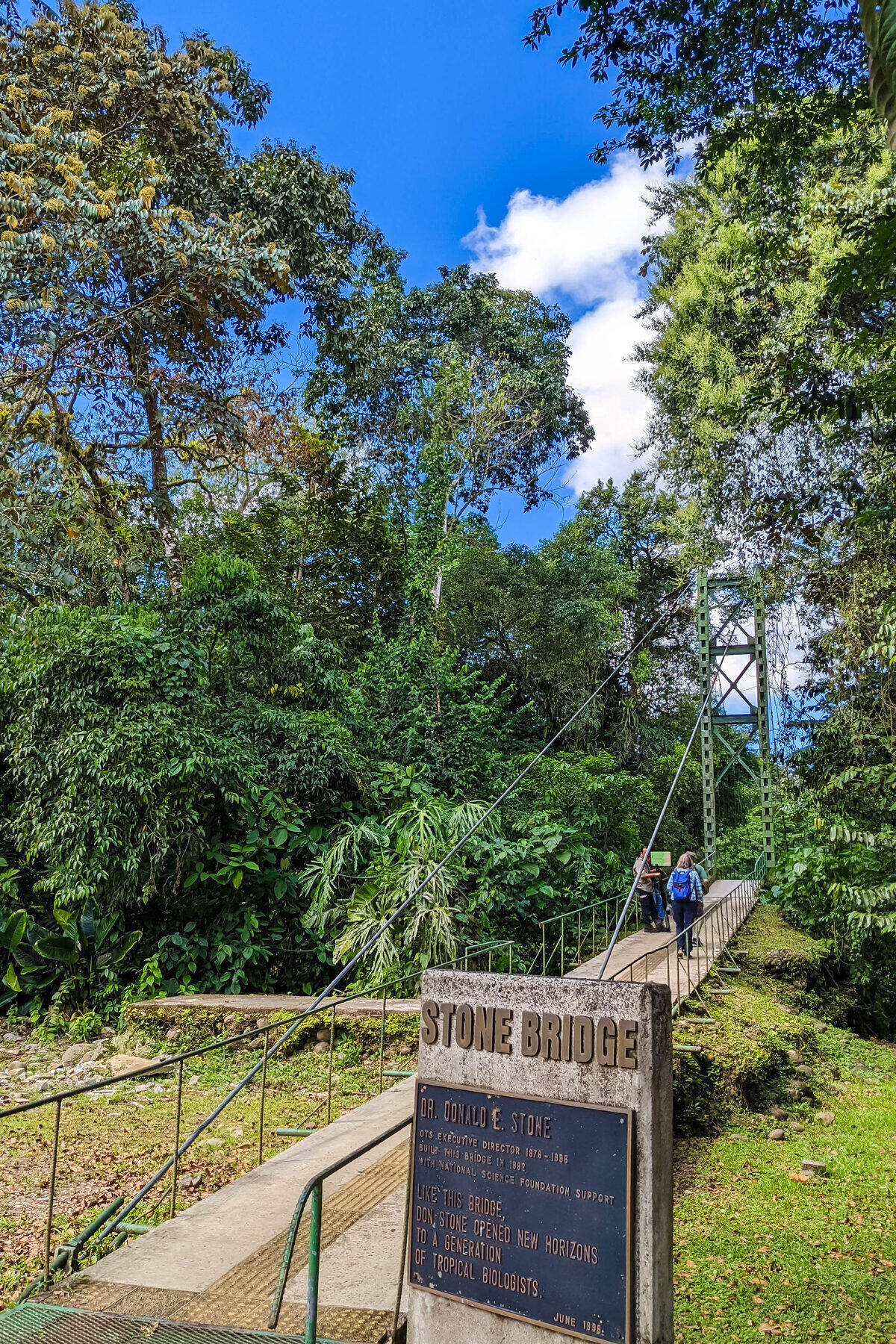
Biophilia and the Word for the Loss Biofilia y la palabra para la pérdida
If sociobiology was the dangerous half of Wilson's claim that humans are animals, biophilia was its tender half. Biophilia (1984) defined a word he had coined for "the innate tendency to focus on life and lifelike processes," the idea that humans carry an inherited affinity for the living world because we evolved inside it. The book opens not in Costa Rica but in Surinam, on March 12, 1961, with the young Wilson standing in an Arawak village looking south across the forest and tracing a single chain of life: "Sunlight to leaf to caterpillar to ant to anteater to jaguar to maggot to humus to termite to dissipated heat." From biophilia he drew a conservation ethic rooted in biology rather than sentiment, and ended the book on a question that became the through-line of the rest of his life: "Is it possible that humanity will love life enough to save it?" Si la sociobiología era la mitad peligrosa de la afirmación de Wilson de que los humanos son animales, la biofilia era su mitad tierna. Biophilia (1984) definió una palabra que él había acuñado para "la tendencia innata a centrarse en la vida y en los procesos semejantes a la vida", la idea de que los humanos llevamos una afinidad heredada por el mundo vivo porque evolucionamos dentro de él. El libro no abre en Costa Rica sino en Surinam, el 12 de marzo de 1961, con el joven Wilson de pie en una aldea arawak mirando al sur sobre el bosque y trazando una sola cadena de vida: "Del sol a la hoja a la oruga a la hormiga al oso hormiguero al jaguar al gusano al humus a la termita al calor disipado." De la biofilia extrajo una ética de conservación arraigada en la biología más que en el sentimiento, y cerró el libro con una pregunta que se volvió el hilo conductor del resto de su vida: "¿Es posible que la humanidad ame la vida lo suficiente para salvarla?"
The word that carried that ethic into policy arrived the next year, and it was not Wilson's. In 1985 Walter G. Rosen of the National Academy of Sciences wrote "biodiversity" into a memorandum while planning a conference. The National Forum on BioDiversity took place in Washington from September 21 to 24, 1986, and Wilson gave the opening address. He edited the proceedings into a 521-page volume, BioDiversity (1988), the first book to put the word in its title; the press shorthand attached his name to it permanently, and he is still loosely called the father of biodiversity, though he always credited Rosen. In 1987, at the opening of the invertebrate exhibit at the National Zoo, he coined the phrase that summed up his life's subject: "the little things that run the world." If humans vanished, he said, the planet would heal; "but if invertebrates were to disappear, I doubt that the human species could last more than a few months." La palabra que llevó esa ética a la política llegó al año siguiente, y no fue de Wilson. En 1985 Walter G. Rosen, de la Academia Nacional de Ciencias, escribió "biodiversity" en un memorando mientras planeaba una conferencia. El National Forum on BioDiversity ocurrió en Washington del 21 al 24 de septiembre de 1986, y Wilson dio el discurso inaugural. Editó las actas en un volumen de 521 páginas, BioDiversity (1988), el primer libro en poner la palabra en su título; la abreviación periodística pegó su nombre al término de manera permanente, y todavía se le llama con soltura el padre de la biodiversidad, aunque él siempre reconoció a Rosen. En 1987, en la apertura de la exposición sobre invertebrados del National Zoo, acuñó la frase que resumía el tema de su vida: "las pequeñas cosas que mueven el mundo". Si los humanos desaparecieran, dijo, el planeta sanaría; "pero si los invertebrados desaparecieran, dudo que la especie humana pudiera durar más que unos pocos meses".
Costa Rica entered Wilson's 1988 volume primarily through Daniel Janzen. Chapter 14, "Tropical Dry Forests: The Most Endangered Major Tropical Ecosystem," argued that the dry forest, more than the rainforest, was the most threatened of the great tropical forest types; only about two percent of the original Mesoamerican cover survived. Janzen anchored the chapter at the 11,000-hectare Santa Rosa National Park in Guanacaste, where he estimated 13,000 insect species and 175 breeding birds, and thanked Álvaro Ugalde by name for help on the manuscript. His closing line: "The people of Costa Rica have inspired me to believe there is still a chance." Wilson's own opening chapter estimated 76,000 square kilometres of tropical forest lost each year, "greater than the area of West Virginia or the entire country of Costa Rica," and an extinction rate of about 17,500 species a year, a thousand to ten thousand times the pre-human background. Costa Rica entró al volumen de Wilson de 1988 principalmente por la vía de Daniel Janzen. El capítulo 14, "Tropical Dry Forests: The Most Endangered Major Tropical Ecosystem", argumentaba que el bosque seco, más que el bosque lluvioso, era el más amenazado de los grandes tipos de bosque tropical; solo sobrevivía cerca del dos por ciento de la cobertura mesoamericana original. Janzen anclaba el capítulo en el Parque Nacional Santa Rosa, de 11.000 hectáreas, en Guanacaste, donde estimó 13.000 especies de insectos y 175 aves nidificantes, y agradeció a Álvaro Ugalde por su nombre por la ayuda con el manuscrito. Su frase de cierre: "El pueblo de Costa Rica me ha inspirado a creer que aún hay una oportunidad." El capítulo inicial del propio Wilson estimó 76.000 kilómetros cuadrados de bosque tropical perdidos cada año, "mayor que el área de West Virginia o el país entero de Costa Rica", y una tasa de extinción de unas 17.500 especies al año, entre mil y diez mil veces el ritmo de fondo prehumano.
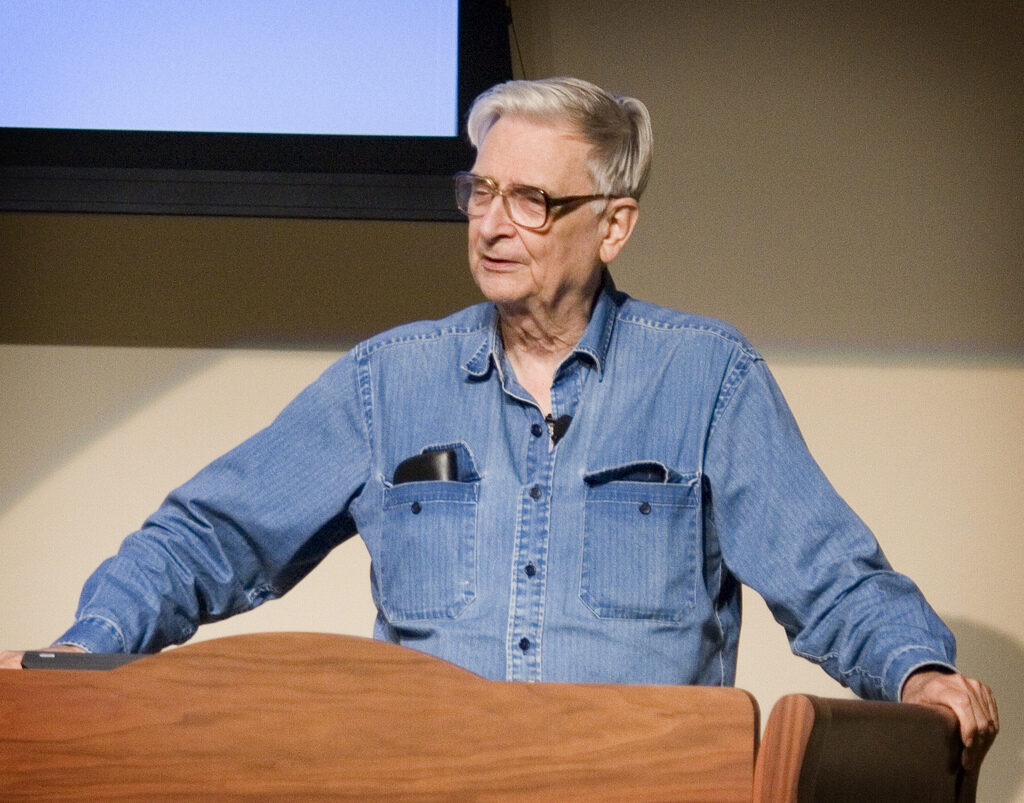
The Prototype in San José El prototipo en San José
In 1992 Wilson published The Diversity of Life, the book that gathered his conservation argument into one place. Its premise was that a country owns a third kind of wealth, as real as the material and the cultural and far more carelessly spent. En 1992 Wilson publicó The Diversity of Life, el libro que reunió su argumento de conservación en un solo lugar. Su premisa era que un país posee una tercera forma de riqueza, tan real como la material y la cultural, y mucho más desatendida.
Three pages later he named the working example. Costa Rica's National Institute of Biodiversity, INBio, founded outside San José in 1989, was, he wrote, the prototype: "perhaps odd that a developing nation should lead the way in such a concerted scientific enterprise, but others will follow." Tres páginas después nombró el ejemplo operativo. El Instituto Nacional de Biodiversidad de Costa Rica, INBio, fundado en las afueras de San José en 1989, era, escribió, el prototipo: "quizás es extraño que una nación en desarrollo lidere el camino en una empresa científica tan concertada, pero otros seguirán".
Wilson's only date-anchored public appearance in Costa Rica came in August 2007. On Wednesday the 22nd, at two in the afternoon, he stood at the lectern of the auditorium of the Ciudad de la Investigación at the University of Costa Rica to give the keynote of the Cátedra Rafael Lucas Rodríguez Caballero, the lecture series named for the UCR botanist who had co-founded the Organization for Tropical Studies in 1963. The occasion was the fiftieth anniversary of UCR's Escuela de Biología; the title was "Biodiversity and the Three Dimensions of the Future of Biology." UCR's news office reported that he told the audience half of all species on Earth could be lost by the end of the century, and singled out Costa Rica's conservation effort. The country, he said, "has become a leader in both philosophy and practice," and Costa Ricans "can be proud of setting an example, even for industrialized countries." He cited one extinct Costa Rican species, a red frog he said had existed for almost a million years, probably the Holdridge toad, Incilius holdridgei, or one of the harlequin frogs of the genus Atelopus that vanished from the country's cloud forests during the chytrid epidemic of the 1980s and 1990s. La única aparición pública de Wilson con fecha anclada en Costa Rica ocurrió en agosto de 2007. El miércoles 22, a las dos de la tarde, estaba en el atril del auditorio de la Ciudad de la Investigación de la Universidad de Costa Rica para dar la conferencia inaugural de la Cátedra Rafael Lucas Rodríguez Caballero, la serie nombrada en honor al botánico de la UCR que había cofundado la Organización para Estudios Tropicales en 1963. La ocasión era el quincuagésimo aniversario de la Escuela de Biología de la UCR; el título era "La biodiversidad y las tres dimensiones del futuro de la biología". La oficina de noticias de la UCR reportó que le dijo al público que la mitad de todas las especies de la Tierra podría perderse para fines de siglo, y singularizó el esfuerzo de conservación de Costa Rica. El país, dijo, "se ha convertido en líder tanto en filosofía como en práctica", y los costarricenses "pueden sentirse orgullosos de poner el ejemplo, incluso para países industrializados". Citó una especie costarricense extinta, una rana roja que dijo había existido durante casi un millón de años, probablemente el sapo de Holdridge, Incilius holdridgei, o una de las ranas arlequín del género Atelopus que desaparecieron de los bosques nubosos del país durante la epidemia de quítrido en los años ochenta y noventa.
The following afternoon, Thursday, August 23, at four o'clock in the auditorium of the Facultad de Educación, Wilson sat down at a long table for a roundtable on "The Future of Biodiversity in Costa Rica." Four Costa Rican biologists and policymakers sat with him: Pedro León Azofeifa, then coordinator of the Iniciativa Paz con la Naturaleza of President Óscar Arias; Jorge Lobo, of UCR's Escuela de Biología; Rodrigo Gámez, director of INBio; and Álvaro Ugalde, director of the Área de Conservación Osa. The roundtable sat inside a particular policy moment: Arias's Paz con la Naturaleza initiative had launched only weeks earlier, committing Costa Rica to becoming the first developing country to pledge carbon neutrality. The men at the table ran much of the apparatus Wilson had spent a career theorizing, the inventory institute, the conservation areas, the national climate commitment. La tarde siguiente, jueves 23 de agosto, a las cuatro de la tarde en el auditorio de la Facultad de Educación, Wilson se sentó a una mesa larga para una mesa redonda sobre "El futuro de la biodiversidad en Costa Rica". Cuatro biólogos y formuladores de política costarricenses se sentaron con él: Pedro León Azofeifa, entonces coordinador de la Iniciativa Paz con la Naturaleza del presidente Óscar Arias; Jorge Lobo, de la Escuela de Biología de la UCR; Rodrigo Gámez, director del INBio; y Álvaro Ugalde, director del Área de Conservación Osa. La mesa redonda se daba en un momento político particular: la iniciativa Paz con la Naturaleza de Arias se había lanzado apenas semanas antes, comprometiendo a Costa Rica a convertirse en el primer país en desarrollo en prometer la neutralidad de carbono. Los hombres en la mesa dirigían buena parte del aparato que Wilson había pasado una carrera teorizando, el instituto de inventario, las áreas de conservación, el compromiso climático nacional.
Of the five men in that room, three are now dead. Ugalde died in February 2015 in a car accident on the Osa Peninsula. Wilson died in Burlington, Massachusetts, on December 26, 2021, four and a half months after his wife Irene. Gámez died in 2025. The most documented direct encounter between Wilson and senior Costa Rican conservation leadership left no transcript and no video that this research has located, only two UCR News articles and the memory of the biologists in the auditorium. The San José park anecdote that Hölldobler chose for the obituary almost certainly belongs to this trip; it is the only date-anchored visit late enough for the police to have read Wilson as elderly. Hölldobler never gave the year, only the scene. De los cinco hombres en aquel salón, tres están muertos ya. Ugalde murió en febrero de 2015 en un accidente de carretera en la Península de Osa. Wilson murió en Burlington, Massachusetts, el 26 de diciembre de 2021, cuatro meses y medio después que su esposa Irene. Gámez murió en 2025. El encuentro directo más documentado entre Wilson y la cúpula de la conservación costarricense no dejó transcripción ni video que esta investigación haya localizado, solo dos artículos de UCR News y la memoria de los biólogos en el auditorio. La anécdota del parque josefino que Hölldobler eligió para el obituario casi con certeza pertenece a este viaje; es la única visita con fecha anclada lo suficientemente tardía como para que la policía leyera a Wilson como un anciano. Hölldobler nunca dio el año, solo la escena.
Half-Earth Mitad de Tierra
Wilson's late-career synthesis began with The Future of Life (2002), which opens as a letter to Henry David Thoreau and lays out the framework he called HIPPO, the drivers of extinction in order of severity: Habitat loss, Invasive species, Pollution, Population, Overharvesting. It distinguished a "natural economy," the free services of living ecosystems, from the "market economy" that ignores them. The argument culminated in Half-Earth: Our Planet's Fight for Life (2016), which took the species-area math from 1967 and applied it to the planet itself. Protect half of Earth's surface, Wilson argued, through linked parks, reserves, marine zones, and corridors, never a single contiguous wilderness, and "more than 80 percent of the species would be stabilized." Anything less slid the planet toward what he named the Eremocene, "the Age of Loneliness, … basically the age of people, our domesticated plants and animals, and our croplands all around the world as far as the eye can see." La síntesis tardía de Wilson empezó con The Future of Life (2002), que abre como una carta a Henry David Thoreau y expone el marco que llamó HIPPO, los motores de la extinción en orden de gravedad: pérdida de hábitat, especies invasoras, polución, población, sobreexplotación. Distinguía una "economía natural", los servicios gratuitos de los ecosistemas vivos, de la "economía de mercado" que los ignora. El argumento culminó en Half-Earth: Our Planet's Fight for Life (2016), que tomó la matemática especies-área de 1967 y la aplicó al planeta mismo. Proteger la mitad de la superficie terrestre, argumentó Wilson, mediante parques, reservas, zonas marinas y corredores encadenados, nunca un único bloque silvestre continuo, "estabilizaría más del 80 por ciento de las especies". Cualquier cifra menor deslizaba al planeta hacia lo que llamó el Eremoceno, "la Edad de la Soledad … básicamente la edad de la gente, de nuestras plantas y animales domesticados y de nuestros cultivos por todo el mundo hasta donde alcanza la vista".
By then Costa Rica had become one of the closest national-scale demonstrations of the proposal. The country had reached roughly 31 percent protected terrestrial cover, well above the 15 percent global baseline Wilson cited for 2015, and it co-chaired the High Ambition Coalition that negotiated the global 30x30 target, with Half-Earth as its acknowledged intellectual antecedent. Wilson's own book names the country only once, in passing. It had quietly built much of what he was proposing. Para entonces Costa Rica se había convertido en una de las demostraciones nacionales más cercanas a la propuesta. El país había alcanzado cerca del 31 por ciento de cobertura terrestre protegida, muy por encima de la línea base global del 15 por ciento que Wilson citó para 2015, y copresidió la High Ambition Coalition que negoció el objetivo global 30x30, con Half-Earth como su antecedente intelectual reconocido. El propio libro de Wilson nombra al país una sola vez, al pasar. Costa Rica había construido en silencio buena parte de lo que él proponía.
He stayed combative to the end, including with himself. For most of his life Wilson had explained the self-sacrifice of worker ants by kin selection, the idea that an animal preserves its genes by helping close relatives. In 2010, at 81, he co-authored a Nature paper with Martin Nowak and Corina Tarnita that rejected kin selection's primacy and re-embraced group selection, and he built The Social Conquest of Earth (2012) around it: "selfish individuals beat altruistic individuals, while groups of altruists beat groups of selfish individuals." Much of the field, including Richard Dawkins, rejected the reversal; Dawkins called the book impossible to recommend, and Wilson waved him off as "a journalist." The fight was a smaller version of the one he had been having since 1975, over how far evolution reaches into social life. He never stopped insisting that it reaches all the way. Se mantuvo combativo hasta el final, incluso consigo mismo. Durante casi toda su vida Wilson había explicado el autosacrificio de las hormigas obreras por la selección de parentesco, la idea de que un animal preserva sus genes ayudando a parientes cercanos. En 2010, a los 81 años, coescribió un artículo en Nature con Martin Nowak y Corina Tarnita que rechazaba la primacía de la selección de parentesco y volvía a abrazar la selección de grupo, y construyó The Social Conquest of Earth (2012) en torno a ella: "los individuos egoístas vencen a los individuos altruistas, mientras que los grupos de altruistas vencen a los grupos de egoístas". Buena parte del campo, incluido Richard Dawkins, rechazó el giro; Dawkins llamó al libro imposible de recomendar, y Wilson lo descartó como "un periodista". La pelea era una versión menor de la que venía teniendo desde 1975, sobre cuán lejos llega la evolución dentro de la vida social. Nunca dejó de insistir en que llega hasta el final.
The Last Refuge El último refugio
Wilson donated his personal papers to the Library of Congress in instalments between 1990 and 2015, 95,000 items in 284 archival boxes, 120 linear feet, plus 975 digital files. The materials span 1931 to 2015, with the bulk falling between 1950 and 2007. The named-correspondents index reads like a roster of twentieth-century biology: William L. Brown, his Harvard mentor; Robert MacArthur; Daniel Janzen; Thomas Lovejoy; Ernst Mayr; Robert Trivers; Stephen Jay Gould. He donated them at the Library's request and seems never to have considered them anything other than open historical material. He was right that they were historical. He may not have reckoned with what else was in them. Wilson donó sus papeles personales a la Biblioteca del Congreso en entregas escalonadas entre 1990 y 2015, 95.000 documentos en 284 cajas archivísticas, 120 pies lineales, más 975 archivos digitales. Los materiales van de 1931 a 2015, con la mayor concentración entre 1950 y 2007. El índice de corresponsales nombrados se lee como una nómina de la biología del siglo veinte: William L. Brown, su mentor en Harvard; Robert MacArthur; Daniel Janzen; Thomas Lovejoy; Ernst Mayr; Robert Trivers; Stephen Jay Gould. Los donó por petición de la Biblioteca y parece no haberlos considerado nunca otra cosa que material histórico abierto. Tenía razón en que eran históricos. Puede que no haya calculado qué más había en ellos.
Among them are four folders labelled "Rushton, John Philippe." Stacy Farina of Howard University and Matthew Gibbons, who had been working through the Wilson Papers since September 2021, read those folders and published "'The Last Refuge of Scoundrels': New Evidence of E. O. Wilson's Intimacy with Scientific Racism" in Science for the People in February 2022, weeks after Wilson's death. The piece documented, with photographic reproductions of typed letters, that in 1986 Wilson had sponsored a paper by J. Philippe Rushton in the Proceedings of the National Academy of Sciences after a split review, one referee strongly favourable and one strongly negative. In a 1987 letter declining to sponsor a follow-up paper on racial differences, Wilson wrote that he had "a couple of colleagues here, Gould and Lewontin, who would use any excuse to raise the charge again," and that he was "the wrong person to sponsor the article, although I'd be glad to referee it for another, less vulnerable member of the National Academy." In a 1990 letter defending Rushton's promotion at the University of Western Ontario, Wilson wrote: "the answer is fear of being called racist, which is virtually a death sentence in American academia if taken seriously. I admit that I myself have tended to avoid the subject of Rushton's work, out of fear." And to his Harvard colleague Bernard Davis he wrote of "our favorite anti-racists of the Left" and that "anti-racism is the last refuge of scoundrels." The archive also holds correspondence with Arthur Jensen and Richard Herrnstein. Entre ellos hay cuatro carpetas rotuladas "Rushton, John Philippe". Stacy Farina, de la Universidad Howard, y Matthew Gibbons, que venían revisando los papeles de Wilson desde septiembre de 2021, leyeron esas carpetas y publicaron "'The Last Refuge of Scoundrels': New Evidence of E. O. Wilson's Intimacy with Scientific Racism" en Science for the People en febrero de 2022, semanas después de la muerte de Wilson. El artículo documentaba, con reproducciones fotográficas de cartas mecanografiadas, que en 1986 Wilson había patrocinado un artículo de J. Philippe Rushton en las Proceedings of the National Academy of Sciences después de una revisión dividida, un revisor fuertemente favorable y otro fuertemente negativo. En una carta de 1987 declinando patrocinar un artículo de seguimiento sobre diferencias raciales, Wilson escribió que tenía "aquí un par de colegas, Gould y Lewontin, que usarían cualquier excusa para volver a levantar el cargo", y que era "la persona equivocada para patrocinar el artículo, aunque con gusto lo arbitraría para otro miembro menos vulnerable de la National Academy". En una carta de 1990 en defensa del ascenso de Rushton en la University of Western Ontario, Wilson escribió: "la respuesta es el miedo a ser llamado racista, que es virtualmente una sentencia de muerte en la academia estadounidense si se toma en serio. Reconozco que yo mismo he tendido a evitar el tema del trabajo de Rushton por miedo". Y a su colega de Harvard Bernard Davis le escribió sobre "nuestros antirracistas favoritos de la Izquierda" y que "el antirracismo es el último refugio de los canallas". El archivo también contiene correspondencia con Arthur Jensen y Richard Herrnstein.
The shape of it is the thing. In 1975 Gould and Lewontin had charged, in public, that Wilson's biology of human behavior would furnish cover for racism, and Wilson had spent decades treating the charge as a political slander he had never earned. The folders show that in the same years, in private, he was quietly furnishing exactly that cover, for exactly the people his critics feared, while naming Gould and Lewontin as the reason he had to do it discreetly. Wilson never raised the subject of race in his published scientific work; the private support was archival, the public reckoning posthumous. In April 2022 the E.O. Wilson Biodiversity Foundation Board issued a statement rejecting "Professor Wilson's support of Rushton," calling the correspondence "hurtful and harmful," and committing to diversity, equity, and inclusion work. The reckoning is real, and it has to be carried alongside the conservation legacy. La forma del asunto es lo importante. En 1975 Gould y Lewontin habían sostenido, en público, que la biología de la conducta humana de Wilson daría cobertura al racismo, y Wilson había pasado décadas tratando el cargo como una calumnia política que nunca se había ganado. Las carpetas muestran que en esos mismos años, en privado, daba en silencio exactamente esa cobertura, exactamente a las personas que sus críticos temían, mientras nombraba a Gould y a Lewontin como la razón por la que debía hacerlo con discreción. Wilson nunca abordó el tema de la raza en su trabajo científico publicado; el apoyo privado quedó en el archivo, el ajuste de cuentas público fue póstumo. En abril de 2022 la Junta de la E.O. Wilson Biodiversity Foundation emitió un comunicado que rechazaba "el apoyo del profesor Wilson a Rushton", calificaba la correspondencia de "hiriente y dañina" y se comprometía a trabajos de diversidad, equidad e inclusión. El ajuste de cuentas es real, y debe cargarse junto al legado de conservación.
What the Small Things Were Worth Lo que valían las pequeñas cosas
Wilson died at ninety-two. Hölldobler's obituary in PNAS gave the count of named species plainly and moved on. The small things he had spent seventy years on were the same small things that had given him a way of looking that scaled up: from a Pheidole worker dragging a hind-leg pheromone gland along a forest-floor trail to the species-area equation that explained why half the planet had to be protected if the rest was to keep its species. It was one method, run at every magnitude. It gave him island biogeography, sociobiology, biophilia, Half-Earth. It also gave him the blind certainty that the rules he found in nature ran cleanly through human beings, which is the certainty the Rushton folders record at its worst. Wilson murió a los noventa y dos. El obituario de Hölldobler en PNAS dio el recuento de especies nombradas sin adornos y siguió adelante. Las cosas pequeñas a las que había dedicado setenta años eran las mismas que le habían dado un modo de mirar que escalaba hacia arriba: desde una obrera de Pheidole arrastrando una glándula de feromonas de las patas traseras por un sendero del suelo del bosque hasta la ecuación especies-área que explicaba por qué había que proteger la mitad del planeta si el resto iba a conservar sus especies. Era un solo método, ejecutado en cada magnitud. Le dio la biogeografía de islas, la sociobiología, la biofilia, Mitad de Tierra. También le dio la certeza ciega de que las reglas que hallaba en la naturaleza atravesaban limpiamente a los seres humanos, que es la certeza que las carpetas de Rushton registran en su peor versión.
What he left conservation was larger than the names. He carried the word biodiversity out of a 1986 conference into the language of governments, helped found conservation biology as a working discipline, and spent his last decades insisting that the little things run the world and that a nation's biological wealth is as real as its material and cultural wealth. Above all he gave the movement its central piece of arithmetic: protect enough of the planet's area and most of its species persist; let the area shrink and the species follow it down. He had found that rule in the comings and goings of ants on islands. He scaled it to the Earth, called the target Half-Earth, and lived to see its nearer, negotiated descendant, the global pledge to protect thirty percent of land and sea by 2030. Lo que dejó a la conservación fue más grande que los nombres. Llevó la palabra biodiversidad de una conferencia de 1986 al lenguaje de los gobiernos, ayudó a fundar la biología de la conservación como disciplina, y pasó sus últimas décadas insistiendo en que las pequeñas cosas mueven el mundo y en que la riqueza biológica de una nación es tan real como su riqueza material y cultural. Sobre todo, le dio al movimiento su pieza central de aritmética: protege suficiente del área del planeta y la mayoría de sus especies persiste; deja que el área se encoja y las especies caen tras ella. Esa regla la había encontrado en el ir y venir de las hormigas en las islas. La escaló a la Tierra, llamó al objetivo Mitad de Tierra, y vivió para ver a su descendiente más cercano y negociado, el compromiso global de proteger el treinta por ciento de la tierra y el mar para 2030.
The people who turned those ideas into working institutions were mostly not in Cambridge. In Costa Rica, Daniel Janzen grew a national park back from cattle pasture, Rodrigo Gámez built the inventory institute Wilson had called the prototype, and Mario Boza and Álvaro Ugalde defended a park system for forty years. Wilson supplied the theory and the words; others supplied the ground. What the small things were worth, in the end, was a way of seeing that began with a boy turning one ruined eye toward the dirt and ended with the case for keeping half the living planet alive. Las personas que convirtieron esas ideas en instituciones funcionales no estaban, en su mayoría, en Cambridge. En Costa Rica, Daniel Janzen hizo rebrotar un parque nacional a partir de potreros, Rodrigo Gámez construyó el instituto de inventario que Wilson había llamado el prototipo, y Mario Boza y Álvaro Ugalde defendieron un sistema de parques durante cuarenta años. Wilson aportó la teoría y las palabras; otros aportaron el terreno. Lo que valían las pequeñas cosas, al final, fue un modo de ver que empezó con un niño volviendo un solo ojo arruinado hacia la tierra y terminó con el argumento de mantener viva la mitad del planeta.
References & Further Reading Referencias y lecturas adicionales
Wilson's principal books Libros principales de Wilson
The foundational text on species-area relationships and habitat-island dynamics. Wilson's 1999 preface admits the book's unintended role in conservation biology.El texto fundacional sobre relaciones especies-área y dinámica de islas de hábitat. El prólogo de Wilson de 1999 reconoce el papel involuntario del libro en la biología de la conservación.
The book that founded sociobiology and triggered the decade-long controversy. Source for the discipline's definition and the Chapter 27 "zoologists from another planet" framing.El libro que fundó la sociobiología y desató la controversia de una década. Fuente de la definición de la disciplina y del encuadre del capítulo 27, "zoólogos de otro planeta".
The humane companion to Sociobiology and Wilson's first Pulitzer (1979). Source for the "genes hold culture on a leash" formulation.El complemento humano de Sociobiology y el primer Pulitzer de Wilson (1979). Fuente de la fórmula "los genes sostienen a la cultura con una correa".
Defines biophilia, "the innate tendency to focus on life and lifelike processes," and opens with the 1961 Surinam rainforest scene. Also the source of Wilson's account of his last conversation with Robert MacArthur.Define la biofilia, "la tendencia innata a centrarse en la vida y en los procesos semejantes a la vida", y abre con la escena del bosque lluvioso de Surinam de 1961. También es la fuente del relato de Wilson sobre su última conversación con Robert MacArthur.
Proceedings of the September 1986 National Forum on BioDiversity. The first book to use "biodiversity" in its title; Daniel Janzen's chapter 14 on Santa Rosa is the Costa Rica thread through the volume.Actas del Foro Nacional sobre BioDiversidad de septiembre de 1986. El primer libro en usar "biodiversidad" en su título; el capítulo 14 de Daniel Janzen sobre Santa Rosa es el hilo costarricense del volumen.
The single most essential Wilson book for the Costa Rica relationship. Contains the "three forms of wealth" passage (p. 311), the "INBio is the prototype" passage (p. 314), the INBio-Merck account (p. 320), and the Guanacaste National Park description (p. 339).El libro de Wilson más esencial para la relación con Costa Rica. Contiene el pasaje de las "tres formas de riqueza" (p. 311), el pasaje "INBio es el prototipo" (p. 314), el relato del acuerdo INBio-Merck (p. 320) y la descripción del Parque Nacional Guanacaste (p. 339).
Wilson's autobiography. Source for the eye injury, the citronella ants, the sociobiology wars and the 1978 AAAS water-pitcher incident, and the 1985 La Selva field trip with Hölldobler.Autobiografía de Wilson. Fuente de la lesión ocular, las hormigas citronela, las guerras de la sociobiología y el incidente de la jarra de agua en la AAAS de 1978, y el viaje de campo a La Selva con Hölldobler en 1985.
Wilson's argument that the sciences, social sciences, and humanities will ultimately unify on a common, biology-grounded foundation of explanation. The fullest statement of the synthesizing ambition that earned him the "Darwin's natural heir" epithet.El argumento de Wilson de que las ciencias, las ciencias sociales y las humanidades acabarán unificándose sobre una base común de explicación fundada en la biología. La expresión más completa de la ambición sintetizadora que le valió el epíteto de "heredero natural de Darwin".
The HIPPO framework, the natural-economy versus market-economy argument, and Wilson's second extended account of the 1991 INBio-Merck bioprospecting agreement.El marco HIPPO, el argumento de economía natural contra economía de mercado, y el segundo relato extendido de Wilson sobre el acuerdo de bioprospección INBio-Merck de 1991.
Sixteen years of revisionary taxonomy yielding 624 New World Pheidole species, 337 new to science. Costa Rica holds roughly 113 of them.Dieciséis años de taxonomía revisionaria que arrojaron 624 especies de Pheidole del Nuevo Mundo, 337 nuevas para la ciencia. Costa Rica alberga aproximadamente 113 de ellas.
An open letter to a Baptist pastor proposing that science and religion unite to save the natural world. Source for the four-day Thaumatomyrmex search in a Costa Rican rainforest.Una carta abierta a un pastor bautista que propone que la ciencia y la religión se unan para salvar el mundo natural. Fuente de la búsqueda de cuatro días de Thaumatomyrmex en un bosque lluvioso costarricense.
Wilson's late re-embrace of group selection over kin selection, the basis of his public dispute with Richard Dawkins.El tardío reabrazo de Wilson a la selección de grupo por encima de la selección de parentesco, base de su disputa pública con Richard Dawkins.
Wilson's late-career thesis: set aside half of Earth for the rest of life, with the species-area equation as the analytical spine. Defines the Eremocene, the Age of Loneliness.La tesis de la etapa tardía de Wilson: separar la mitad de la Tierra para el resto de la vida, con la ecuación especies-área como columna analítica. Define el Eremoceno, la Edad de la Soledad.
The sociobiology controversy and the Rushton archive La controversia de la sociobiología y el archivo Rushton
The open letter by the Sociobiology Study Group accusing Wilson's work of providing a genetic justification of the status quo and linking it to eugenics.La carta abierta del Sociobiology Study Group que acusaba al trabajo de Wilson de ofrecer una justificación genética del statu quo y lo vinculaba con la eugenesia.
Archival investigation drawing on four "Rushton, John Philippe" folders in Wilson's Library of Congress papers. Reproduces the 1987, 1990, and Davis letters discussed in the article.Investigación archivística basada en cuatro carpetas rotuladas "Rushton, John Philippe" en los papeles de Wilson en la Biblioteca del Congreso. Reproduce las cartas de 1987, 1990 y la carta a Davis discutidas en el artículo.
The Foundation's Board statement rejecting Wilson's support of Rushton and committing the Foundation to diversity, equity, and inclusion work.Declaración de la Junta de la Fundación rechazando el apoyo de Wilson a Rushton y comprometiendo a la Fundación a trabajos de diversidad, equidad e inclusión.
Obituaries and tributes Obituarios y tributos
Wilson's principal scientific obituary, written by his closest collaborator. Opens with the San José park Pheidole anecdote and recounts their joint Costa Rica research trips.El principal obituario científico de Wilson, escrito por su colaborador más cercano. Abre con la anécdota de las Pheidole en el parque josefino y narra sus viajes de investigación conjuntos a Costa Rica.
The NYT obituary covering Wilson's life, the sociobiology controversy, biodiversity advocacy, and the late-career Half-Earth proposal.El obituario del NYT que cubre la vida de Wilson, la controversia sobre la sociobiología, su defensa de la biodiversidad y la propuesta tardía de Mitad de Tierra.
Wilson's Nature obituary documenting his career arc from ant taxonomy to global conservation policy.El obituario de Wilson en Nature documentando el arco de su carrera desde la taxonomía de hormigas hasta la política global de conservación.
National Geographic obituary recording the 2019 interview in which Wilson said: "I believe that we're on the edge of a new era, in which value is extended to saving the rest of nature."Obituario de National Geographic que recoge la entrevista de 2019 en la que Wilson dijo: "Creo que estamos al borde de una nueva era, en la que el valor se extiende a salvar al resto de la naturaleza".
The Costa Rica record El registro costarricense
UCR's announcement of Wilson's August 22, 2007 keynote and August 23 roundtable. Lists the panelists Pedro León, Jorge Lobo, Rodrigo Gámez, and Álvaro Ugalde.Anuncio de la UCR sobre la conferencia magistral de Wilson del 22 de agosto de 2007 y la mesa redonda del 23 de agosto. Enumera a los panelistas Pedro León, Jorge Lobo, Rodrigo Gámez y Álvaro Ugalde.
UCR's post-event coverage of the keynote. Source for Wilson's "Costa Rica has become a leader in both philosophy and practice" quote and the extinct red frog reference.Cobertura posterior al evento por parte de la UCR. Fuente de la cita de Wilson "Costa Rica se ha convertido en líder tanto en filosofía como en práctica" y de la mención a la rana roja extinta.
The definitive Costa Rican retrospective on INBio. Cites The Diversity of Life twice and quotes Wilson's "prototype" framing back at him; documents the 2015 transfer of the collections.La retrospectiva costarricense definitiva sobre INBio. Cita The Diversity of Life dos veces y le devuelve a Wilson su propio encuadre de "prototipo"; documenta el traspaso de las colecciones en 2015.
Costa Rica's flagship tropical-biology journal reviewing Wilson's Pheidole monograph. Source for the Costa Rica species count (113 of 624 New World species) and the worldwide first-per-area ranking.La revista costarricense de biología tropical más reconocida reseñando la monografía sobre Pheidole de Wilson. Fuente del conteo de especies costarricenses (113 de 624 del Nuevo Mundo) y del primer puesto mundial por unidad de área.
The earliest documented Costa Rican academic engagement with Wilson's biodiversity framing, published the same year as the volume it reviews.El compromiso académico costarricense más temprano documentado con el encuadre de biodiversidad de Wilson, publicado el mismo año que el volumen reseñado.
The institutional history of OTS, including its 1963 founding by Rafael Lucas Rodríguez Caballero and Jay M. Savage. Wilson is recorded in the broader Harvard founding circle.La historia institucional de la OET, incluida su fundación en 1963 por Rafael Lucas Rodríguez Caballero y Jay M. Savage. Wilson queda registrado dentro del círculo fundador más amplio de Harvard.
The 1992 description of one of the most striking Pheidole species Wilson named from Costa Rican material.La descripción de 1992 de una de las especies más llamativas de Pheidole que Wilson nombró a partir de material costarricense.
Organizations & archives Organizaciones y archivos
The Half-Earth Project's national-scale snapshot of Costa Rica, listing the country at approximately 31% protected terrestrial cover.El panorama del Half-Earth Project a escala nacional para Costa Rica, ubicando al país en aproximadamente 31% de cobertura terrestre protegida.
The OTS station in Sarapiquí, Heredia, where Wilson and Hölldobler spent two weeks in 1985 on Prionopelta, and where many of the Costa Rica-type Pheidole species in Wilson's 2003 monograph were collected.La estación de la OET en Sarapiquí, Heredia, donde Wilson y Hölldobler pasaron dos semanas en 1985 con Prionopelta, y donde se recolectaron muchas de las especies de Pheidole con localidad tipo costarricense en la monografía de Wilson de 2003.
The full archival finding aid for Wilson's personal papers: 95,000 items, 284 boxes, 120 linear feet, span 1931–2015. Includes named-correspondents and subject indexes.El instrumento de descripción del archivo completo de los papeles personales de Wilson: 95.000 documentos, 284 cajas, 120 pies lineales, fechas de 1931 a 2015. Incluye índices de corresponsales nombrados y de temas.
Related Coalición Floresta profiles Perfiles relacionados de Coalición Floresta
The U.S. ecologist who became Wilson's primary Costa Rica-side intellectual collaborator: chapter 14 of Wilson 1988, the All-Taxa Biodiversity Inventory at ACG, and the Janzen correspondence file in Wilson's LOC archive.El ecólogo estadounidense que se convirtió en el principal colaborador intelectual de Wilson del lado costarricense: capítulo 14 de Wilson 1988, el Inventario de Biodiversidad de Todos los Taxones en el ACG, y la carpeta de correspondencia con Janzen en el archivo de Wilson en la Biblioteca del Congreso.
The founding director of INBio, the institution Wilson named "the prototype." Co-author of the 2024 retrospective; the senior Costa Rican panelist on the 2007 UCR roundtable.El director fundador del INBio, la institución que Wilson nombró "el prototipo". Coautor de la retrospectiva de 2024; el panelista costarricense de mayor rango en la mesa redonda de la UCR en 2007.
The co-founder of Costa Rica's national park system. Acknowledged by name in Janzen's 1988 BioDiversity chapter; one of the four Costa Rican panelists at Wilson's 2007 UCR roundtable.El cofundador del sistema de parques nacionales de Costa Rica. Reconocido por nombre en el capítulo de 1988 de Janzen en BioDiversity; uno de los cuatro panelistas costarricenses en la mesa redonda de Wilson en la UCR en 2007.
Wilson's contemporary; co-popularizer of "biological diversity"; named correspondent in Wilson's LOC papers; designer of the BDFFP fragmentation experiment that empirically tested MacArthur and Wilson 1967.Contemporáneo de Wilson; copopularizador de "diversidad biológica"; corresponsal nombrado en los papeles de Wilson en la Biblioteca del Congreso; diseñador del experimento de fragmentación BDFFP que puso a prueba empíricamente a MacArthur y Wilson 1967.
The first director of Costa Rica's Departamento de Parques Nacionales (1970), and later director of the Mesoamerican Biological Corridor project.El primer director del Departamento de Parques Nacionales de Costa Rica (1970), y posteriormente director del proyecto del Corredor Biológico Mesoamericano.
Costa Rica's first environment minister; architect of the early payments-for-environmental-services framework that turned national policy toward Wilson's "make conservation profitable" thesis.Primer ministro de ambiente de Costa Rica; arquitecto del primer marco de pagos por servicios ambientales que orientó la política nacional hacia la tesis de Wilson de "hacer rentable la conservación".
Three-time environment minister and head of the Global Environment Facility; builder of much of the financial machinery that kept Costa Rica's protected areas funded.Tres veces ministro de ambiente y director del Fondo para el Medio Ambiente Mundial; constructor de buena parte de la maquinaria financiera que mantuvo financiadas las áreas protegidas de Costa Rica.
The Swiss botanist whose 1887 mapping work began the scientific cataloguing of Costa Rican biota that the country's later institutions extended into the Wilson-era biodiversity vocabulary.El botánico suizo cuya labor cartográfica iniciada en 1887 comenzó la catalogación científica de la biota costarricense que las instituciones posteriores del país prolongaron hasta el vocabulario de biodiversidad de la era Wilson.