Part VII: Ecotourism and Its Discontents
Costa Rica treats peripheral regions as extraction zones while concentrating real economic development in the Central Valley. Tourism policy perpetuates this colonial pattern: the GAM gets tech jobs paying double the national wage, the coast gets seasonal hotel work. The alternative isn't better ecotourism. It's bringing the high-tech economy to peripheral regions instead of building more airports.
This series began with a question: did Costa Rica invent ecotourism only to lose control of what the word means? The pioneers proved rainforest could be worth more standing than cleared. Forest cover recovered from 21 percent to nearly 60 percent. Then success brought scale, and Guanacaste became an extraction economy: 70-80 percent leakage, communities hollowed out, the word "ecotourism" stripped of meaning.
We found a different pattern in Osa, where lodges stayed small, owners stayed local, and growth stayed within ecological limits. Ecotourism workers earn 1.9 times non-tourism wages. Forest cover doubled. But carrying capacity imposes hard limits: ecotourism works in Osa because it stays small, which means it cannot employ everyone. Osa still has 35 percent poverty. The battle for Osa crystallized the conflict: a $105 million airport announcement, park capacity doubled without scientific justification, a Hilton marina already built.
We took seriously the arguments of mass tourism proponents. Osa's 35 percent poverty is real. Communities turn to poaching when they cannot feed their families. 180,000 tourism jobs matter. But the economic data revealed something else: medical devices generate $9 billion annually, 67 percent more than tourism. High-tech manufacturing already outperforms tourism. Tourism contributes only 4-6 percent of GDP. Costa Rica already has an alternative economy. The question is why it hasn't reached the peripheral regions where poverty persists.
The Uneven Bargain
Previous articles in this series documented how mass tourism transformed Guanacaste: the economic leakage, the coral collapse, the communities hollowed out by vacation rentals. What happened next was worse. The boom continued. Poverty doubled.
Between 2021 and 2024, while real estate prices surged and construction cranes filled coastal skylines, extreme poverty in Guanacaste doubled from 1.9 percent to 3.9 percent. Construction worker poverty tripled, from 7.4 percent to 17.1 percent. The people building the resorts became poorer while the resorts multiplied. This is not a warning about future consequences. It is what happened during the boom itself.
Then water supply hit its limits. The Huacas-Tamarindo aquifer is now under restricted use due to overexploitation. In nearby Matapalo, water demand reaches 19 liters per second against a registered capacity of 8.6. Developers added 58.7 percent more water connections between 2021 and 2025 in areas already running a negative water balance. The result: $320 million in construction projects paralyzed by water shortage.
Then the crime arrived. In 2024, criminal extortion networks began demanding $150 to $1,500 per week from tourism businesses in Brasilito and Potrero. Tamarindo and Playas del Coco were identified as critical areas with an 18 percent rise in homicides. The seasonal workers who cannot afford housing, the young people without year-round employment: they became recruitment targets for narco networks that pay better than legal jobs. Tourism that was supposed to solve poverty is now feeding the security crisis.
In 2025, the sector lost 22,000 jobs in a single year. Seven consecutive months of declining arrivals demonstrated what happens when an economy depends on foreign visitors who can stop coming. Teachers in Nosara earn roughly $2,500 per month. Beachfront rentals in the same town run up to $2,400 per week. The regulatory plan for Nicoya is 42 years old. The one for Santa Cruz is 31. The infrastructure to manage what was built does not exist. The infrastructure to protect what remains is failing.
Ecotourism's Mixed Record
Ecotourism, where implemented properly, works within the carrying capacity of ecosystems. The record varies dramatically across sites.
Monteverde works because the community chose sustainability over scale fifty years ago and held that decision. Almost all money stays local. Hotels are family-owned. Guides are from the community. Visitor numbers are limited.
Tortuguero demonstrates how geography can enforce limits that institutions cannot. Accessible only by boat and small aircraft, the isolation that once made it marginal now protects it from development pressure.
Osa shows ecotourism generating real benefits: workers earn 1.9 times non-tourism wages, 58 percent are local residents, forest cover around Puerto Jiménez doubled between 1985 and 2005. The economics make reforestation profitable.
Manuel Antonio presents the cautionary case. One of Costa Rica's most visited parks, it demonstrates what happens when "ecotourism" branding masks mass tourism dynamics. Local ownership is low, leakage is high, development has proceeded independent of ecological limits. The brand remains. The economics resemble Guanacaste.
Even where ecotourism works, it has not lifted regions from poverty. Osa still has 35 percent poverty. Ecotourism works precisely because it respects carrying capacity, but carrying capacity imposes hard limits on how many jobs it can create. There are only so many tourists a rainforest can absorb before it stops being a rainforest. Ecotourism is part of the answer for Osa. It cannot be the whole answer.
The Middle Ground
Between mass tourism and pure ecotourism sits the vast middle of Costa Rica's tourism economy: the 85 percent of tourism businesses that are micro, small, and medium enterprises. In the Costa Ballena region, 317 lodging businesses operate 1,713 rooms, mostly family-owned. These are not extractive resorts or pristine ecolodges. They are the surf shops, bed-and-breakfasts, and family restaurants that serve tourists without transforming their communities beyond recognition.
This middle ground is generally sustainable. Local ownership means money circulates in the community before leaving. Family operations are not designed to maximize extraction. The environmental footprint is modest. These businesses represent the tourism economy that Costa Rica's reputation was built on: human-scale, locally-rooted, integrated with communities.
But the middle ground is not a solution to regional poverty. Jobs are limited by the scale of operations that keep these businesses sustainable. Small businesses in the tourism sector cannot offer the career advancement, benefits, or year-round employment that workers need to build stable lives. The middle ground demonstrates that tourism can exist without destroying communities. It does not demonstrate that tourism can lift communities from poverty. That requires a different strategy entirely.
The Reputation Costa Rica Earned, and the Part It Didn't
Costa Rica's conservation reputation rests on two foundations: genuine vision and market accident.
The vision came first. In 1968, a young Costa Rican agronomist named Mario Boza stood on a ridge in the Great Smoky Mountains in the United States. He saw uniformed rangers, managed trails, and visitor centers selling maps. Beyond the park boundaries, he saw hotels and restaurants: a local economy funded by people who paid to look at trees rather than cut them. He returned to Costa Rica and wrote his master's thesis as a business plan for Poás Volcano National Park. In 1970, at age 27, he became the first and only employee of a national parks department that existed only on paper.
Boza recruited Álvaro Ugalde, a biology student who had just returned from touring American and Canadian parks. Where Boza was the strategist, Ugalde was the enforcer. He moved into the mud of Corcovado, negotiating with 166 squatter families, fighting gold miners with machine guns, confronting presidents who wanted to shrink park boundaries. His rule was blunt: a decree meant nothing if you couldn't defend it at gunpoint and in court. He armed rangers and trained them to arrest their own cousins. He served as park director for seventeen years, surviving five presidencies. Their political patron was Karen Olsen de Figueres, who provided access impossible for two young men alone.
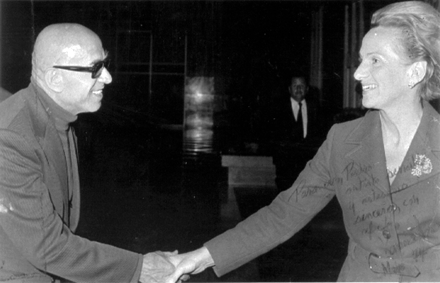
This triumvirate built the park system during the worst of the deforestation crisis, not after it. Poás, Tortuguero, and Cahuita were established in 1970. Santa Rosa in 1971. Manuel Antonio in 1972. Corcovado and Chirripó in 1975. Braulio Carrillo in 1978. La Amistad in 1982. They were not responding to recovering forests. They were fighting to protect what remained while chainsaws cleared 50,000 hectares per year around them.
Then came the accident. The US beef market collapsed in the 1980s. Prices dropped. Cattle ranching became uneconomical. Land was abandoned. Cattle inventory fell from 2.3 million head in 1985 to 1.1 million by 2004. Pasture land shrank from 2.4 million hectares to 1.1 million. The abandoned ranches regenerated naturally. Forest cover, which had hit 21 percent in 1987, began climbing without anyone planting a single tree.
The government recognized what was happening and locked in the gains. The 1996 Forestry Law banned deforestation. The Payment for Environmental Services program, funded by a fuel tax, began paying landowners to keep forests standing. Debt-for-nature swaps converted foreign debt into conservation funding: $53 million from the United States in 2007 and 2010 alone. By the 2000s, forest cover had climbed past 50 percent.
Costa Rica earned its reputation the hard way: Boza's vision, Ugalde's enforcement, Olsen's political patronage, and decades of ranger work. But the forests that tourists now pay to see grew back partly because hamburger prices fell. The parks that Ugalde defended with armed rangers would have been islands in a sea of pasture if the beef market hadn't collapsed. Vision created the parks. Accident filled in the space between them. The next crisis won't come with a convenient market collapse. This time, the pressure points toward more tourism, not less.
The Colonial Default
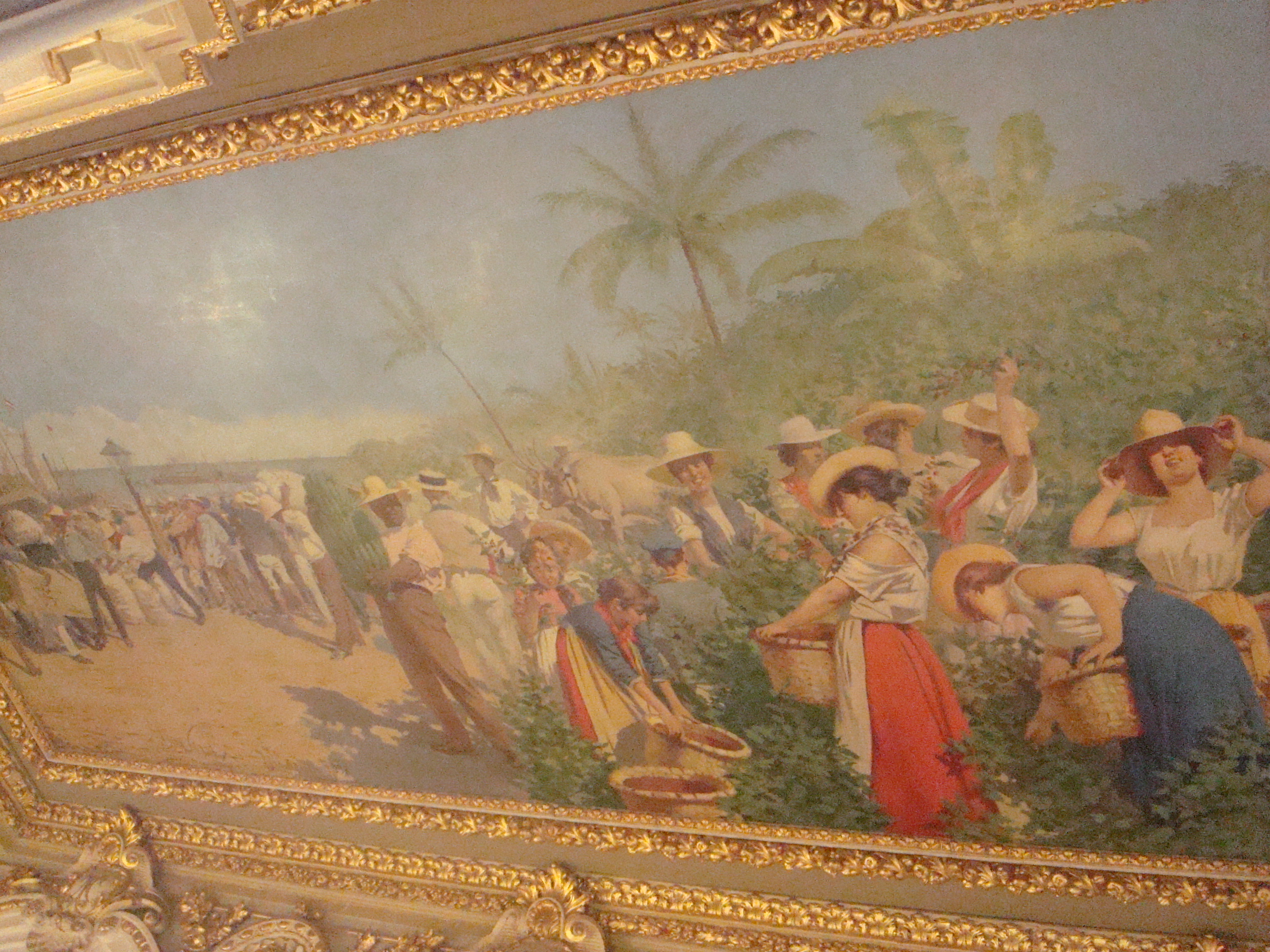
Why does pressure for more tourism keep growing despite evidence that it deepens poverty? The answer follows a pattern set long before tourism existed. In 1563, Spanish settlers established their capital in the temperate highlands rather than the disease-ridden coasts. The Central Valley became the seat of colonial power. Coffee wealth concentrated there. After independence, the pattern continued: the university opened in San José in 1843, the railway connected San José to the port of Limón in 1890, electrification began in the capital. The periphery remained empty until it became useful for extraction. Guanacaste was cattle haciendas, not even part of Costa Rica until 1824. The Caribbean coast was barely inhabited until Minor Keith built his railroad and United Fruit planted bananas on 800,000 acres. Later came pineapples and palm oil. Each time a peripheral region became economically valuable, it became an extraction zone: wealth flowing out, poverty staying behind. The Costa Rica of good hospitals, good schools, and professional careers has always been the Central Valley.
The colonial divide persists in measurable form. Secondary school completion in Heredia reaches 81 percent. In Limón it reaches 58 percent. In Puntarenas, 57 percent. The provinces with the lowest completion rates are the same provinces being offered seasonal tourism jobs as their economic future.
The default assumption in Costa Rican development policy is that peripheral regions get tourism while the GAM gets technology. The GAM holds 81 percent of Free Trade Zone parks, 70 percent of medical device manufacturing, and 82 percent of sales income on 3.8 percent of national territory. CINDE recruits multinational manufacturers for the Central Valley. INA trains workers for medical device assembly in Heredia and Alajuela. Meanwhile, the development plans for Osa and Guanacaste focus on airports and resorts.
The implicit message is clear: if you want a good job, move to the GAM. Some Costa Ricans deserve year-round careers with benefits and advancement. Others deserve seasonal work at wages insufficient to afford housing in their own communities. This pattern does not close the colonial gap. It institutionalizes it.
The consequences extend beyond economics. Youth unemployment stands at 23 percent. Of the country's 880 homicides in 2024, 70 percent were linked to drug trafficking. Regions with few year-round career opportunities become recruiting grounds for narco networks. The colonial development pattern is feeding a security crisis.
The Myopic Doubling
Against this backdrop, CANATUR has announced a 10-year strategy to nearly double tourism arrivals from 2.7 million to 5.2 million by 2035, projecting $11 billion in revenue and 300,000 jobs. The plan emerged after a 1.8 percent decline in visitor numbers and intensifying competition from regional destinations. It represents the industry's response to vulnerability: grow out of the problem.
The 2025 tourism crisis demonstrates the flaw in this logic. The sector lost 22,000 jobs in a single year. Seven consecutive months of declining arrivals exposed the structural vulnerability of an economy dependent on foreign visitors. The strong colón reduced competitiveness; 75 percent of tourism businesses reported lower revenues. US tourists represent 59-70 percent of arrivals, creating dangerous single-market dependency. When demand shocks hit, they hit hard. Growing the sector makes the economy more vulnerable to these shocks, not less.
We've seen that the infrastructure is already failing. Water shortages plague tourist towns. Sewage systems cannot handle current loads. The 2021-2022 water quality study found contamination correlated to tourist arrival patterns. Housing costs have tripled in tourist areas. At 2.7 million visitors, these systems are strained. At 5.2 million, they would collapse. The doubling strategy assumes infrastructure problems can be solved by building more infrastructure. But the infrastructure problem is mass tourism itself. More visitors require more water in regions where aquifers are already depleted. More sewage in coastal areas where treatment capacity does not exist. More housing pressure in communities where workers already cannot afford to live.
Scale is self-defeating. Costa Rica charges premium prices because it offers something Cancún and Phuket do not. The moment it becomes another place with resorts and traffic and environmental degradation, the premium disappears. Without the premium, Costa Rica must compete on price against destinations with weaker currencies and lower costs. "Massive tourism is poisonous for eco-travelers," warns Glenn Jampol, chair of the Global Ecotourism Network. The ecotourism pioneers who built Costa Rica's reputation understood that the business depended on scarcity. What mass tourism proponents call "untapped potential" is actually the constraint that makes the premium possible. Remove the constraint and you remove the premium. The goose that laid the golden eggs dies the moment you try to make it lay faster.
An Alternative Path
The tourism debate frames the choice as "mass tourism versus ecotourism." That framing obscures the deeper choice: tourism versus alternatives that do not require accepting a permanent underclass. Costa Rica already has an economy that creates year-round careers at twice the average wage. It remains confined to the GAM. It does not have to.
The sectors are already there. Medical devices generate $9 billion annually, 67 percent more than total tourism revenue, growing at 18 percent per year. Information and communication technology services produce $2.1 billion at 13 percent annual growth. Aerospace manufacturing has made Costa Rica the largest AS9100-certified cluster outside the United States. These sectors leverage 98 percent renewable electricity as a competitive advantage. They need trained workers. They have near-zero environmental impact. They create the year-round careers that seasonal tourism cannot provide.
The constraint is the failure to prepare people in peripheral regions for the jobs that already exist, or to bring those jobs to them. The same $105 million that Chaves "committed" for the Southern Zone Airport could fund vocational training centers in Osa, Limón, and Guanacaste targeting medical device manufacturing, IT skills, and precision assembly. The capital is already allocated on paper. The choice is where to direct it.
Panama is offering Costa Rica a gift that policy makers should not ignore. In January 2026, construction begins on a 475-kilometer railway from Panama City to Paso Canoas at the Costa Rica border. The $4.1-5 billion project, backed by UK financing, will reduce passenger travel to 3 hours and cut cargo time from 36 hours to 9 hours. Panama is simultaneously building Puerto Baru, a $250 million port 80 kilometers from the border explicitly designed to serve "exports from southern Costa Rica." On the Panamanian side, the Baru Free Economic Zone already operates under Law 19, positioned for Central American trade.

Costa Rica has the legal framework to respond. Law 10,234 of 2022 reduced Free Trade Zone investment thresholds outside the GAM to $100,000, down from $150,000 inside the metropolitan area. INCOFER is conducting prefeasibility studies for building rail to connect with Panama's railway at Paso Canoas. Reports indicate that "the creation of a free trade zone in the connection area is also being studied."
This is the alternative to a $105 million airport in the Brunca region. Instead of replicating the Guanacaste model in the south, Costa Rica could establish a Free Trade Zone and vocational education center on a suitable site between Piedras Blancas and Palmar Sur, chosen for accessibility by area workers, minimal disruption to existing residents, and compliance with environmental laws. Palm plantations in the area could be converted. The investment would leverage $5 billion in Panamanian infrastructure to create year-round logistics, trade, and manufacturing jobs. President Chaves has called the railway concept "profitable and interesting." Costa Rica can act on that interest or default to the colonial pattern of tourism for the periphery.
Does a child born in Puerto Jiménez deserve different economic prospects than a child born in Escazú? Does coastal poverty require seasonal hotel work as its solution, or could those same communities have year-round careers? The answers depend on whether geography is allowed to determine destiny, as it has since 1563.
Breaking the Pattern
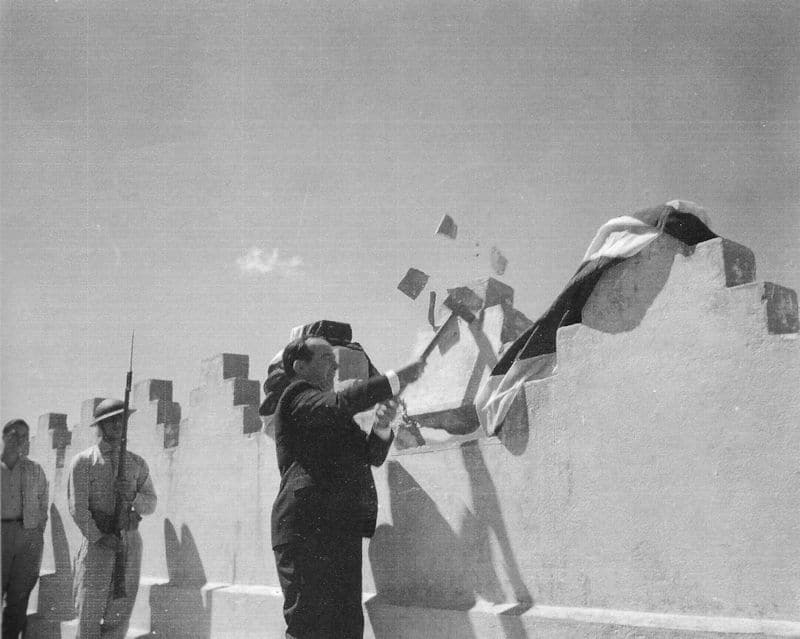
The Southern Zone Airport functions more as symbol than construction project. President Chaves announced $105 million in investment, but the government has spent roughly $1.5 million on studies. The project shows 0% progress in official records. Construction cannot begin until after archaeological rescue operations (scheduled for 2026), a new environmental impact assessment, SETENA approval, a UNESCO-mandated heritage study, and a financing process that has not started. Construction most likely cannot begin before 2030. Chaves will be out of office weeks from now. Whether his successor continues the project or lets it join the archive of previous attempts is uncertain.
Yet symbols matter. The airport carries two meanings, both powerful.
For Chaves, it symbolizes government attention to the periphery. His announcement was a promise that the Brunca region would not be forgotten. The symbol costs almost nothing while delivering political benefit. Whether the airport ever gets built is secondary to the signal it sends.
For Costa Rica's development establishment, the airport symbolizes something deeper: the assumption that tourism is how peripheral regions get developed. When policy makers think about Osa, Limón, or Guanacaste, they reach for airports and resorts. Bringing the high-tech economy to the periphery does not occur to them because the narrative frame does not include it. The symbol shapes what seems possible.
The debate goes beyond whether to build a runway in Palmar Sur. The airport may never be built. The pattern will persist unless someone breaks it.
Costa Rica has made bold decisions before. In 1948, Figueres abolished the army and redirected military spending to education and healthcare. In 1996, the forestry law banned deforestation and locked in gains that market forces had begun. Both required choosing a different path than the obvious one.
Since then, no comparable boldness. The country that abolished its army and reversed deforestation now defaults to the colonial pattern it has followed since 1563: development for the GAM, extraction for the periphery. The airport's fate matters less than Costa Rica's capacity to imagine a future for Osa, Limón, and Guanacaste that does not depend on how many tourists they can attract.
Key Sources
The Ecotourism Series
Costa Rica pioneered authentic ecotourism in the 1980s when biologists and former Peace Corps volunteers proved that forests could be worth more standing than cleared. The legal framework designed to protect small ecolodges has since been captured by luxury developers. State certifications like Blue Flag now mask the environmental problems they were created to prevent.
Mass tourism in Costa Rica's northwest coast operates as an extraction model producing 70-80% economic leakage. Tourist dollars flow to international airlines and hotel chains while workers earn $625-800 monthly and can't afford the $700-800 studio apartments. Coral coverage in Culebra Bay collapsed from 40% to between 1-4% over four decades.
Mass tourism and ecotourism aren't two points on a spectrum. They're different systems with different rules. Carrying capacity science determines which is possible in a given place. In ecosystems like Corcovado, the physics only permit one. Ecotourism workers earn 1.9 times non-tourism wages, and forest cover around Puerto Jiménez doubled between 1985 and 2005.
A $105 million airport would displace 350 farming families to bring mass tourism to the last major wilderness. Park capacity has been doubled without scientific justification. A Hilton marina is already built at Golfito. Mass tourism advocates are actively working to transform the Osa Peninsula into the next Guanacaste.
Mass tourism proponents have real arguments about jobs, poverty, and development. Understanding why those arguments persist despite evidence requires examining them at their strongest. This article presents the economic, employment, and infrastructure claims made by developers, tourism chambers, and government officials.
Medical devices now generate $9 billion annually, 67% more than total tourism revenue. High-tech manufacturing grew at 18% while tourism stagnated. The alternative to mass tourism isn't poverty. It's the $16.1 billion services sector, the aerospace cluster, and the renewable energy grid that already power Costa Rica's economy.
Conservation Economics
World Bank analysis of forest restoration from 21% to 60% cover and $135 million in recent payments for nature.
Mongabay coverage of Glenn Jampol's critique of mass tourism and the shift toward regenerative models.
Landmark study endorsed by Daniel Janzen. Warned that National Geographic rating had dropped (64 to 62), documented Tamarindo land use change (<1% to 27.5%), found Brunca region (least resort development) had greatest poverty decline. Recommended abandoning Palmar Sur airport, prioritizing high-value nature tourism.
Park founding dates: Poás, Tortuguero, and Cahuita (1970); Santa Rosa (1971); Manuel Antonio (1972); Corcovado and Chirripó (1975); Braulio Carrillo (1978); La Amistad (1982).
2024-2025 Data Sources
Observatory of Tourism, Migration, and Sustainability data showing extreme poverty doubled (1.9% to 3.9%) and construction worker poverty tripled (7.4% to 17.1%) during the real estate boom.
AyA determination that Huacas-Tamarindo aquifer is under restricted use due to overexploitation. Water demand (19 l/s) exceeds capacity (8.6 l/s). User connections increased 58.7% between December 2021 and April 2025.
OIJ and CATURGUA confirmation of extortion networks demanding $150-$1,500 weekly from tourism businesses in Brasilito and Potrero.
Congressional Special Tourism Commission identifying Tamarindo and Playas del Coco as critical areas with 18% homicide increase.
ICT data showing tourism employment dropped from 189,093 to 166,923 jobs. Seven consecutive months of declining arrivals.
Teacher salary ($2,500/month) versus beachfront rental costs (up to $2,400/week). Documentation of housing displacement.
Outdated regulatory plans: Nicoya (42 years), Santa Cruz (31 years), Liberia (19 years). Housing qualitative deficit data.
$320 million in tourism projects paralyzed by water shortage in Gulf of Papagayo.
Regional Inequality Data
Secondary completion by province: Heredia (81%), San José (72%), Guanacaste (67%), Alajuela (63%), Cartago (61%), Limón (58%), Puntarenas (57%).
GAM (3.8% of territory) holds 82% of sales income and 65% of business sector. 70% of medical device manufacturing concentrated in central cantons.
Of 85 Free Trade Zone parks, only 16 are located outside the GAM (81% concentration in metropolitan area).
Central Region poverty at 10.8% versus Huetar Caribbean (Limón) at 24.9%. Brunca region at 23.8%.
HDI by province: Heredia (0.833), San José (0.824), Cartago (0.803) versus Limón (0.765), Puntarenas (0.783), Guanacaste (0.790).
Limón province residents have over 2 years lower life expectancy compared to other provinces.
Limón handles 80% of maritime imports and exports yet suffers highest poverty rates. Historical pattern of electoral promises abandoned after campaigns.
Higher education attainment: 31% in San José versus 14% in Liberia. Computer access: 60%+ in GAM versus 23% in rural north.
Continental Corridors
Documentation of the Jaguar Corridor Initiative connecting populations from Mexico to Argentina across 6 million km².
Conservation Corridor analysis of genetic connectivity research and the network of 83 Jaguar Conservation Units.