The Conservation Chairman
A Park Service technician who became Costa Rica's most consequential environmental activist, Alexander Bonilla Durán chaired ASCONA at the moment a president tried to shrink Palo Verde National Park, helped draft the law that made every subsequent president unable to do the same, and spent the next decade diagnosing what was going wrong with the movement he had helped build.
On July 1, 1981, a Park Service technician named Alexander Bonilla wrote President Rodrigo Carazo Odio a ten-page letter. Bonilla had directed Santa Rosa National Park. He had directed Poás Volcano National Park. He held the title of conservation chairman at ASCONA, the country's first major environmental NGO. He worked for Carazo's government. He was writing to ask the president not to do something the administration was about to do.
The next day, July 2, Carazo signed Executive Decree Nº 12765-A, removing roughly seven thousand hectares from Parque Nacional Palo Verde. The reason given was lack of funds to expropriate the farms inside the park. The decree shrank a park his own administration had created the year before. Carazo replied to Bonilla's letter on August 7 with an eight-page letter of his own. The entire correspondence ended up in Servicio de Parques Nacionales expediente number 1090, the archive where Bonilla would deposit the paper trail of the fight.
Bonilla lost in court. The recurso ASCONA filed against the decree was frozen by the competent tribunal for "work overload." A lower court eventually ruled for ASCONA on Forestry Law grounds; the Supreme Court reversed on the constitutionality question. Carazo's reduction stood. But the fight produced a statute. On August 25, 1982, the Asamblea Legislativa passed what became Ley Nº 6794, drafted by ASCONA. Article 2 of that law made the executive branch structurally unable to do again what Carazo had done. That rule is alive in 2026, the foundational legal protection of every Costa Rican national park and biological reserve. It is the rule Bonilla's letter began to take shape.
Before the Law
Costa Rica entered the 1970s with its forests in retreat. Forest cover had been seventy-five percent of the national territory in 1940; by 1961 it was fifty-three percent; by 1983 it would fall to twenty-six. The country had a Forestry Law (Ley 4465, November 1969) that created a Dirección General Forestal and a Departamento de Parques Nacionales, but the protected-area system itself existed only at the level of executive decree. What a president set aside, a president could take back.
The first organized response came in April 1970, when Ricardo Quesada López-Calleja founded the Comité de Defensa del Patrimonio Nacional (CDPN) with University of Costa Rica students and faculty. The CDPN would lead campaigns through the decade: against the Isla del Caño casino, against cetacean kills at Playa Tambor, on contamination of the Golfo de Nicoya, in defense of Braulio Carrillo, and, in 1974, against Ley 5500, the legislative authorization for an interoceanic oleoducto from the Golfo Dulce through the Talamanca cordillera to Limón.
The Asociación Costarricense para la Conservación de la Naturaleza (ASCONA) was founded two years after the CDPN, on September 21, 1972, at the Escuela de Biología of the Universidad de Costa Rica. The organization registered originally as Asociación Costarricense para la Conservación de la Naturaleza (ACCN), the initials later mutating to ASCONA. Its founding motto, "desarrollo sin destrucción" (development without destruction), would survive every other transformation the organization went through.
Who exactly founded ASCONA is contested in the historical record. Sterling Evans, in his 1999 conservation history of Costa Rica, names Alexander Bonilla as a co-founder and the first president, working from interviews Bonilla gave him in San José in July 1996. Three Costa Rican primary sources tell a different story. Hilje (2017), drawing on Mata 2003, lists a founding nucleus of Alfonso Mata, Sergio Salas, Adelaida Chaverri, Chris Vaughan, Guillermo Mata Ulloa, and Freddy Pacheco León. The SINAC and JICA 2017 NGO history names Alexander Skutch, Alfonso Mata, Guillermo Canessa, and Adelaida Chaverri, "and other young people." Eduardo Mora's 1993 Ambientico interview with Noemy Canet, ASCONA's secretary and former president, attributes the founding "principalmente a estudiantes preocupados por el deterioro ambiental, y también a algunos profesores como Joseph Tosi y Alfonso Mata" (mainly to students concerned about environmental deterioration, and also to some professors like Joseph Tosi and Alfonso Mata). None of the three Costa Rican accounts names Bonilla among the founders. The simplest reconciliation is that he joined very early, rose quickly to leadership prominence, and projected that leadership backward in the interview he gave Evans a quarter-century later. The certain thing is that by 1981 he was ASCONA's public face.
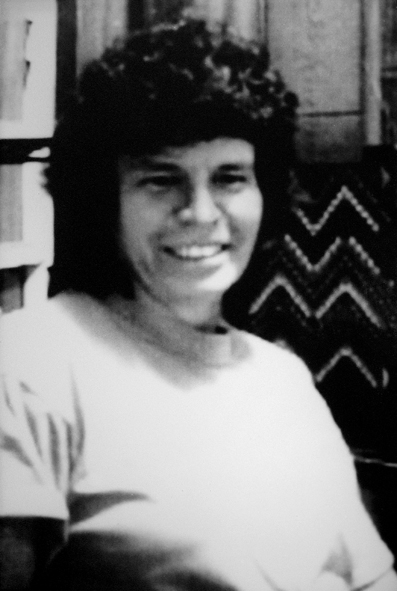
ASCONA's founding objectives, as Canet later articulated them to Mora, were "contribuir al uso razonable de los recursos naturales de Costa Rica … procurando así un 'desarrollo sin destrucción,' y proteger y conservar la naturaleza y dentro de esta la biodiversidad" (to contribute to the rational use of Costa Rica's natural resources … thereby seeking 'development without destruction,' and to protect and conserve nature and within it biodiversity). Educational instruction, fuller legislation, and, in Canet's phrase, "una actitud vigilante, fiscalizadora y de denuncia" (a vigilant, oversight, and denunciatory stance). The CDPN and ASCONA together were the country's environmental movement in the 1970s, and they shared a milieu: students and faculty at the UCR's Escuela de Biología and at the Centro Científico Tropical, working in defense of land they had only recently begun to map.
The Conservation Chairman
Bonilla's first public appearance in the record is academic. In August 1968, the UCR convened its Primer Seminario Sobre los Estudios Generales at Ciudad Universitaria Rodrigo Facio. Bonilla presented a paper titled "Objetivos de los Estudios Generales," published the following year. The Escuela de Estudios Generales was the cross-disciplinary college all UCR undergraduates passed through, established in 1957 by Rodrigo Facio, Enrique Macaya Lahmann, Abelardo Bonilla, and José Joaquín Trejos Fernández. The 1968 paper places the future ASCONA chairman in UCR general-studies circles. It is a thin biographical thread, but it is the one Bonilla offered.
What followed is documented through Evans and through Bonilla's own publications. Bonilla joined the Servicio de Parques Nacionales as a técnico. He directed Santa Rosa National Park. He directed Poás Volcano National Park. He moved into ASCONA's leadership while remaining inside the Park Service. By 1981 his title at ASCONA was conservation chairman; by 1983 the byline of his Tecnología en Marcha article on the Zona Marítimo-Terrestre identified him as "Jefe del Departamento Técnico" (Chief of the Technical Department) of ASCONA. Throughout the 1980s Evans calls him ASCONA's conservation director. The position was unusual on both sides. Bonilla was inside the state, accountable to the same SPN whose decisions ASCONA scrutinized. He was also inside the NGO, where his SPN experience gave him, in Evans's phrase, "the authority of both knowledge of Palo Verde's ecology and of the interworkings of the Park Service."
ASCONA grew rapidly in those years. From 1979, the U.S. Agency for International Development began channeling support that, per Canet, "les proveyó millones de colones" (provided them with millions of colones). Canet's 1993 count placed membership at more than three thousand by the end of 1983, organized across twelve filiales. The SINAC and JICA history written a quarter-century later gives a peak of five thousand active members and twelve chapters, calling ASCONA "perhaps the largest conservation NGO that has ever existed in Costa Rica's history." In 1977, per Evans, ASCONA partnered with the new Universidad Estatal a Distancia to launch the country's first university-level Program for Environmental Education, with Mario Boza as its first director. In 1982 ASCONA co-authored with the Centro Científico Tropical the Perfil Ambiental de Costa Rica for AID, an analysis SINAC and JICA later described as outlining "a new political and institutional scenario for conservation in Costa Rica." The Perfil and the parks ratification fight were running in parallel.
The Letter and the Law
Parque Nacional Palo Verde was created on May 30, 1980, by Carazo's Decreto Ejecutivo Nº 11541-A. Roughly fourteen months later, on July 2, 1981, Carazo signed Decreto Ejecutivo Nº 12765-A, removing seventeen thousand three hundred acres, about seven thousand hectares, from the park. The reduction was justified by the cost of expropriating the farms inside. Some accounts give a smaller figure of five thousand acres; Bonilla's own documentation, preserved in his 1985 book La situación ambiental de Costa Rica, fixes the correct number at seventeen thousand three hundred acres.
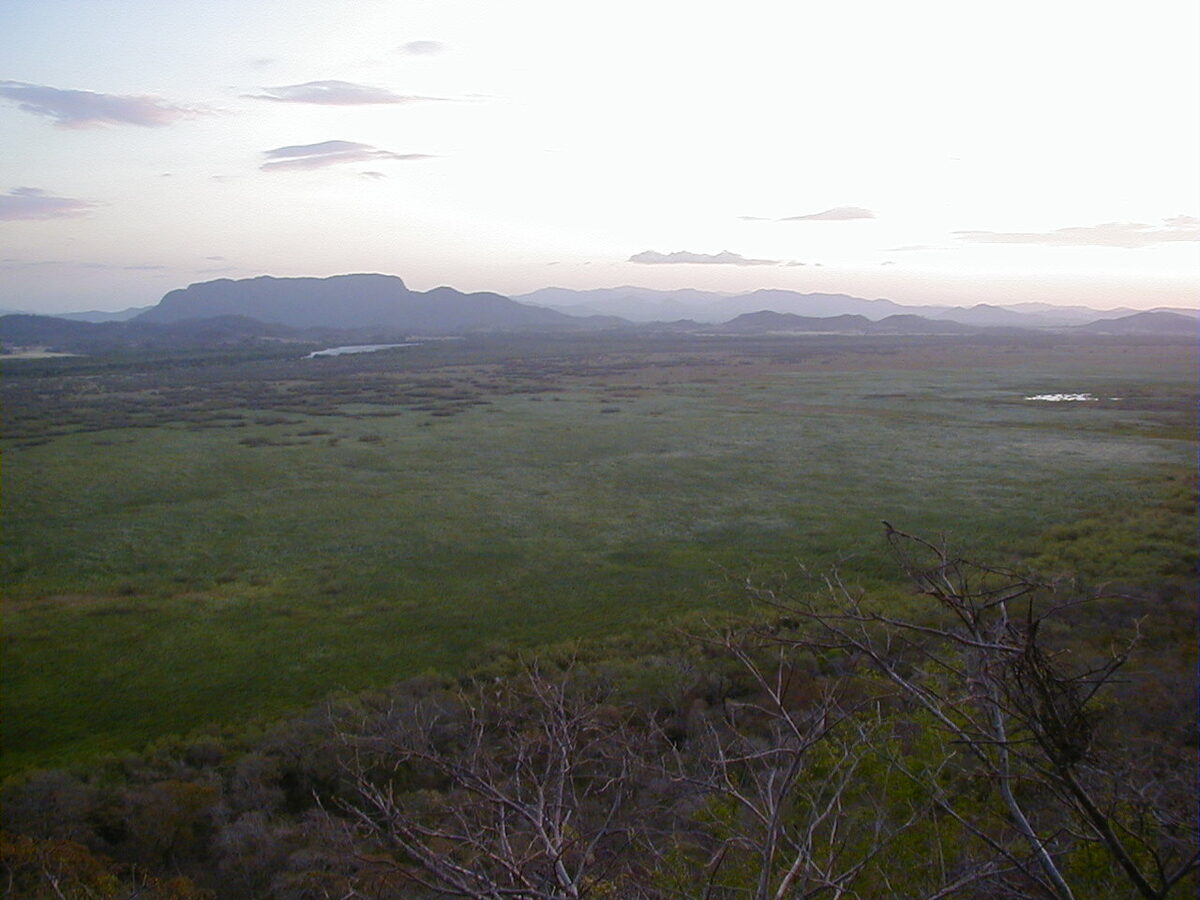
Bonilla's letter went out the day before the decree was signed. Carazo's reply, eight pages long, was dated August 7. ASCONA's then-president, Oscar Hutt, told the press that the administration was "trying to eliminate systematically, by one form or another, almost the entire system of reserves and national parks in Costa Rica." The claim was hyperbolic. The same administration had created Palo Verde fourteen months earlier and would, six months later, decree Parque Internacional La Amistad, the largest single park in the country's history; by the end of Carazo's term the national park system had roughly doubled. The decree at issue shrank one park, not the system. The rhetoric, however, found its audience. On July 28, students from the UCR's and UNA's biology schools protested in front of the presidential mansion. The same day they convened a round-table with Mario Boza and Alexander Bonilla to plan further action. SPN director Álvaro Ugalde wrote to Bonilla on February 3, 1982, in a letter Bonilla later reprinted in Situación ambiental.
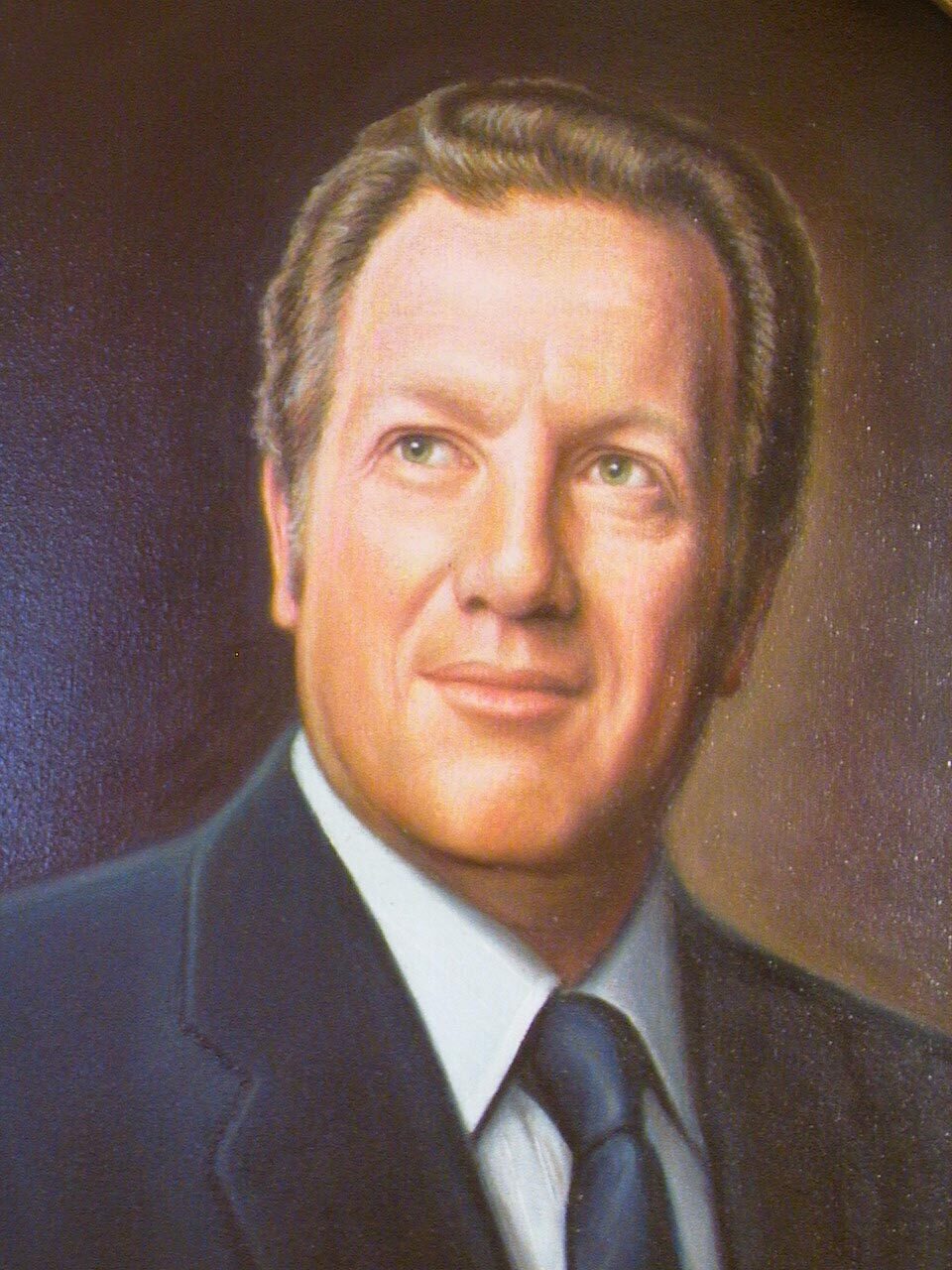
ASCONA filed a recurso against the decree. The competent court did not rule on it. In a 1992 Mappemonde study, the Swiss geographers Bertrand Lévy, Rafael Matos, and Mario Rodriguez confirmed that the case had been frozen by "surcharge de travail," work overload. A lower court eventually ruled in ASCONA's favor on Forestry Law and National Parks Act grounds; the Supreme Court reversed the decision on the constitutionality question. Evans assembled the documentation from SPN expediente 1090, including Bonilla's July 1, 1981, letter, Carazo's August 7 reply, an Executive Decree 12765-A copy, and the anonymous protest poem titled "Requiem por un parque" (Requiem for a Park). The court records, the landowner property list, and the full text of what would become the Ratification Law all ended up in Bonilla's Situación ambiental, on pages 148 through 160. As Bonilla wrote there, Palo Verde was "a national park protected by public opinion."
The legislative path opened where the judicial path closed. ASCONA drafted what became Ley Nº 6794, the Ley de Creación de Parques Nacionales y Reservas Biológicas. The Asamblea Legislativa passed it on August 25, 1982, in the early months of Luis Alberto Monge's administration. The law ratified, as laws of the Republic, every national park and biological reserve that had been created up to that point by executive decree, including Palo Verde at the borders fixed in Decree 12765-A. The fight in court had failed; the fight in the Asamblea produced something more durable. Diputado Hubert Rojas Araya had led the legislative opposition. "I'm not really against ASCONA," he told the chamber, "but ASCONA wants to make Costa Rica into one big national park."
Article 2 of Ley 6794 closes with a single sentence: "En ningún caso el Poder Ejecutivo podrá excluir, de un parque nacional o una reserva biológica, terreno alguno comprendido dentro de los límites señalados en el decreto ejecutivo que lo establezca." In no case can the Executive Power exclude any land from a national park or biological reserve once the establishing decree has been issued. The Executive can no longer take back what the Executive has set aside. This is the rule Costa Rican environmental lawyers now call irreducibility of protected areas. For national parks and biological reserves, Article 2 of Ley 6794 was the first statutory expression of the doctrine; in 1995, Article 38 of the Ley Orgánica del Ambiente generalized it to all protected-area categories. Article 38 is the broader anchor today. Article 2 of Ley 6794 remains the operative rule for parks and biological reserves, and it is what current cases cite when defending park boundaries.
The Oleoducto and the Infiltrators
The Palo Verde fight was the second time ASCONA had pushed back against the same idea. In 1974, the Asamblea passed Ley 5500, authorizing an interoceanic oleoducto from the Golfo Dulce through the Talamanca cordillera to the Caribbean coast at Cahuita. ASCONA and the CDPN ran a public campaign, with street demonstrations and paid newspaper advertisements, until the Asamblea derogated the law. Hannia Franceschi's 2002 socio-political history of the movement frames the 1974 campaign as the moment Costa Rican environmentalism learned to use the press, the courts, and the legislature in concert.
The oleoducto returned in 1983, under the Monge administration. ASCONA helped form the Comité Nacional Contra el Oleoducto and mounted a nationwide publicity campaign. Bonilla wrote Un oleoducto en Costa Rica: Todo lo que debe saber pero no se ha dicho (An Oil Pipeline in Costa Rica: Everything You Should Know That Has Not Been Said), published by ASCONA itself in 1983. He addressed a letter to Diputado Hernán Garrón, chair of the legislative commission handling the issue, on May 25, 1983; the letter is preserved in the Asamblea archives in expediente 9600. Bonilla wrote that ASCONA's opposition was "not romantic, unpatriotic, or much less of the extreme left that some sectors of the government have been suggesting it is." The campaign succeeded. The campaign also broke ASCONA.
AID cut its funding. Evans gives the reason in plain terms: "AID funds to ASCONA were cut off during the oleoducto controversy because the U.S. government supported the pipeline's construction."
The deeper damage came from inside. Per Canet, in 1982 and 1983 a faction of ASCONA members and staff, "movilizados por intereses personales y partidistas" (mobilized by personal and partisan interests), tried to keep the organization from taking a position against the oleoducto. When they failed and were expelled, they launched legal proceedings to have ASCONA declared illegal, exploiting procedural errors in the 1972 founding documents. They succeeded in 1985. ASCONA's legal personhood was revoked; donations became impossible; the organization was paralyzed. In June 1987 the Corte Suprema de Justicia annulled the dissolution ruling. ASCONA began to emerge from what Canet called "su larga postración" (its long prostration) only in 1988. By then the peak of five thousand active members and twelve filiales was gone. Only the Naranjo filial survived; total membership had fallen to about three hundred. Bonilla, who had left ASCONA by the time Evans interviewed him, summed it up: "It does not have any power; the oleoducto ruined it."
SINAC and JICA's 2017 history records that ASCONA led campaigns between 1982 and 1986 against the Canal Seco in the north of the country, the Oleoducto Golfito-Limón, and the Carretera Trans-Talamanca. "The intensity of these fights," the agencies wrote, "wore down ASCONA's militancy." In 1987, almost immediately after Oscar Arias's new administration created MIRENEM and named Álvaro Umaña as the first Minister of Energy and Environment, ASCONA was one of more than a hundred organizations convened to design ECODES, the Estrategia de Conservación para el Desarrollo Sostenible. The strategy would become the basis for Costa Rica's participation in the 1992 Earth Summit in Brazil. ASCONA was present at the design table, but it was no longer the organization that had drafted Ley 6794.
The Critic
In 1984, while ASCONA's internal crisis was building, Bonilla helped found the Partido Ecologista Costarricense (PEC). He served as its first president. Evans calls PEC "one of the few 'green parties' in Central America," loosely modeled on European Greens. Its platform combined national environmental concerns with agrarian reform and nonviolence principles, including adherence to Costa Rica's tradition of permanent unarmed neutrality. Bonilla wrote that PEC was born "as a new alternative among the traditional political parties whose environmental misinformation, ignorance of the ecological interrelationships of a society, and adherence to an ancestral economic hegemony have been transformed into the depredatory economic principles of the economic, social and political structure of Costa Rica." His framing of what separated PEC from environmental movements elsewhere in the region was sharper still: "the problem with many ecology groups in Central America is that they fail to address the political and economic problems as part of the environmental problems."
PEC never broke through electorally. Evans records that the party "has suffered from financial problems" and quotes a contemporaneous study finding that PEC had "not brought with it the fortification of the ecological movement" in Costa Rica. On November 21, 1992, PEC merged into Fuerza Democrática, alongside the Partido del Progreso, the Partido Humanista, and Pueblo Unido. The poet and professor Isaac Felipe Azofeifa took the first presidency of the new party. Fuerza Democrática became briefly the third-largest party in Costa Rica, electing two diputados for the 1994 to 1998 legislature and three for the 1998 to 2002 legislature. It won no seats after 2002 and was formally dissolved on March 18, 2010.
Bonilla's writing in the same years extended the PEC framework into a regional analysis. Between 1987 and 1988 he published four articles in the UNA journal Relaciones Internacionales: on the environmental situation of Central America (1987), on international treaties Central American countries should sign (1988), on disarmament (1988), and on pesticide dependency rooted in the Green Revolution (1988). His 1988 book Crisis ecológica de América Central, published by Ediciones Guayacán, brought the same arc into a single volume. He treated the environment, peace, and regional integration as one set of problems. He called nature "an unsubstitutable capital resource for Costa Rica" and argued that sustainable development required treating society, economics, and ecology as three corners of one triangle.
By the mid-1990s, working as a private environmental consultant, Bonilla offered Evans his unsparing four-category schema for Costa Rican environmental NGOs. There were, he said, those who "truly believe in conservation" and worked with an "environmental spirit," whom he called "the merchants of conservation, the environment is their business." There were post-communist conservationists with "failed ideologies" working to seize international funds or defend indigenous groups but whose lifestyles had not changed; in Bonilla's words, "they still want to drive a Mercedes Benz." There were the status-quo NGOs that supported the government, solicited funds for projects, and did "the easy part, the nice part." In Evans's 1997 doctoral dissertation, Bonilla named the two organizations he placed in this third category: the Fundación de Parques Nacionales and Fundación Neotrópica. Evans softened the passage in the 1999 book, removing the names. The fourth category was the research branch, the consultants and biologists whose papers underwrote policy without their being the activists pushing for it.
It is an uncomfortable schema. Bonilla used it on a movement he had been a founding voice of. Two of the three Fundaciones he placed in the status-quo category had been built by Mario Boza and Álvaro Ugalde, his collaborators in the Palo Verde round-table of 1981. Whatever the right reading of the schema's fairness, the schema is the work of an older activist diagnosing what had been gained and lost since the country signed Ley 6794.
What the Letter Started
ASCONA officially disappeared as a national organization in 1996 "after internal disputes among members," in SINAC and JICA's phrase, "leaving a legacy of dozens of professionals who would later stand out in new NGOs and even in new governments." Around 2006, a community organization in Puerto Jiménez de Golfito, on the Península de Osa, picked up the ASCONA name and called itself the historical successor. Its full name preserves the original 1972 commitment: Asociación de Servicio Comunitario Nacional Ambiental para la Conservación de la Naturaleza y la Biodiversidad. Its motto is still "desarrollo sin destrucción." It runs the Biblioteca Pública de Puerto Jiménez and the Programa Integral de Cultura y Arte, the first cultural and arts program in southern Costa Rica. The original www.asconacr.org domain has been hijacked and as of 2026 hosts a Thai-language STEM education site.
The letter Bonilla wrote on July 2, 1981, did not win in court. The recurso never moved. The Supreme Court ruled against ASCONA on constitutional grounds. Carazo's reduction stood at the time and stands today. But the fight set in motion the drafting of Ley 6794, whose Article 2 made the executive branch structurally unable to do again what Carazo had done. One letter from one Park Service technician did not, by itself, produce Article 2; ASCONA drafted the law, with collaborators inside and outside the Asamblea, against the steady opposition of those who saw the parks system as taking too much. Article 2 is what the letter began to shape. The rule remains in force in 2026. It is the rule current Costa Rican environmental cases still cite when contesting attempts to shrink protected areas. Whether Bonilla is alive to read those filings is not known; no recent record of him is known to us (and please contact us if you know otherwise, so that we can update this!). The rule he helped set in motion is reading the country instead.
Resources & Further Reading
Books by Alexander Bonilla
123 pages. ISBN 9977978174. Covers deforestation, heptachlor, pesticides, Talamanca, Puriscal, Moín, Atlantic and Pacific coasts, montane and tropical forest, fauna, cattle ranching, hydroelectricity, contamination, and export economies. Digitized 2008 by Google Books from the University of Texas copy.
La situación ambiental de Costa Rica (Ministerio de Cultura, Juventud y Deportes, Instituto del Libro, 1985). 272 pp.
Bonilla's reference work. Includes the parks-history section (pp. 129-237), 37 pages on Palo Verde with reprinted correspondence, the landowner property list (p. 148), the court records (pp. 149-155), and the full text of what would become Ley 6794 (pp. 158-160).
Un oleoducto en Costa Rica: Todo lo que debe saber pero no se ha dicho [An Oil Pipeline in Costa Rica: Everything You Should Know That Has Not Been Said] (ASCONA, 1983).
Bonilla's book-length treatment of the 1983 trans-isthmian pipeline fight, published by ASCONA at the height of the campaign.
Boza, Mario, y Alexander Bonilla. The National Parks of Costa Rica. Madrid: INCAFO, 1981.
Photo book on Costa Rica's national parks, co-authored with Mario Boza and published by the Spanish Instituto de la Caza Fotográfica y Ciencias de la Naturaleza.
Articles by Alexander Bonilla
Bonilla's early sketch of the ideas that would become his 1985 book. Uses the phrase "desarrollo sin destrucción."
Byline identifies Bonilla as "Jefe del Departamento Técnico" of ASCONA.
Treats Costa Rican agriculture's technological dependency as derived from the Green Revolution.
Primary Sources on ASCONA
Eduardo Mora's interview with then-secretary and former president Noemy Canet. The single most important contemporary primary source on ASCONA's funding history, the 1985 dissolution, the 1987 reversal, and the 1988 recovery.
Institutional history of Costa Rica's environmental NGOs, including the founding nucleus account, the 1982-1986 campaigns, and ASCONA's 1996 dissolution.
The most detailed academic account of ASCONA's founding nucleus, citing Mata 2003. Lists Alfonso Mata, Sergio Salas, Adelaida Chaverri, Chris Vaughan, Guillermo Mata Ulloa, and Freddy Pacheco León.
Socio-political history of the movement, including the 1974 Ley 5500 derogation campaign.
Swiss geographers' 1992 study confirming that ASCONA's recurso against Decreto 12765-A was frozen by the competent court for "surcharge de travail," work overload.
Legal Sources
Full text. Article 2 contains the irreducibility rule that has bound the executive branch since.
Background on the park, the 1980 creation decree (Nº 11541-A), the 1981 reduction decree (Nº 12765-A), and the 1982 Ley 6831 reform.
Conservation History
The most thorough English-language history of the movement. Evans interviewed Bonilla in San José in July 1996 and named him among the people he thanked in the acknowledgments.
The unsoftened version. Includes Bonilla's named-names version of the four-category schema, identifying the Fundación de Parques Nacionales and Fundación Neotrópica by name.
Bibliography includes Bonilla's 1969 paper on the Estudios Generales and the 1985 Situación ambiental. Lists Bonilla among Costa Ricans who received national or international prizes for their contribution to the conservation movement.
Related Profiles
The president who created Palo Verde National Park in 1980 and then reduced it by seven thousand hectares in 1981, receiving Bonilla's letter on the day he signed the reduction decree.
ASCONA's partner in the founding of the country's first university-level Program for Environmental Education in 1977, and Bonilla's co-author on The National Parks of Costa Rica (1981). Sat with Bonilla at the July 28, 1981 round-table that followed the student protests at the presidential mansion.
SPN director during the Palo Verde fight, who wrote Bonilla on February 3, 1982, in a letter Bonilla preserved in Situación ambiental.
Named in every Costa Rican primary account of ASCONA's founding nucleus, alongside Alfonso Mata and Sergio Salas.
Peace Corps volunteer in Costa Rica's Departamento de Parques Nacionales in 1971 and a non-Costa-Rican member of the founding nucleus that Hilje 2017 identifies.
Centro Científico Tropical co-founder and developer of the Holdridge Life Zone System. Named by Noemy Canet in the 1993 Ambientico interview as one of the professors who supported ASCONA's founding.
First Minister of MIRENEM under the Arias administration, who in 1987 convened ASCONA and more than a hundred other organizations to design ECODES, Costa Rica's first national conservation and sustainable-development strategy.
UCR botanist and conservation historian whose 1991 Desarrollo y perspectivas listed Bonilla among Costa Ricans honored for their contribution to the conservation movement.
Organizations
The community organization in the Península de Osa that took the ASCONA name around 2006 and preserves the "desarrollo sin destrucción" motto.
The federation of grassroots ecological organizations founded in 1988, of which ASCONA was a member during the 1990s.
The political party formed November 21, 1992 from the merger of PEC, Partido del Progreso, Partido Humanista, and Pueblo Unido, with Isaac Felipe Azofeifa as its first president; dissolved March 18, 2010.