Part IV: The Battle for Osa
A $105 million airport would displace 350 farming families. Park capacity has been doubled without scientific justification. A Hilton marina is already built. Mass tourism advocates are actively working to transform the Osa Peninsula into the next Guanacaste.
In April 2023, the Municipal Council of Osa approved a tourism management plan for the Dominical-Bahía Ballena corridor. The plan, developed by ICT (Costa Rica's Tourism Institute), surveyed the region's accommodation sector and found 317 lodging businesses operating with a total of 1,713 rooms.
Of those 317 businesses, 94% operate without a declaratoria turística. This voluntary ICT registration requires infrastructure standards and social security compliance, but most small operators find the paperwork burden not worth the benefits. The vast majority are family-run operations: small hotels under 20 rooms, cabinas, guesthouses, surf camps at $40-60 per night. Beyond the formal sector, the survey found 46 additional unregistered accommodations operating through Airbnb-style platforms, offering another 345 rooms in the shadow economy.
This is not an anomaly. Nationally, 85% of Costa Rica's tourism businesses are micro, small, and medium enterprises. The top five tourism companies hold only 15% of market share. Costa Rica has approximately 3,700 accommodation establishments, but fewer than 400 are CST-certified. The tourism economy is not Four Seasons or Hilton. It is Costa Rican families.
These businesses don't market themselves as ecotourism. But Costa Rica's legal definition requires ecotourism to be "locally beneficial," and these businesses are exactly that. The money circulates through the community before it leaves. The owner pays staff who are neighbors. The staff spend their wages at local shops. The owner buys supplies from nearby farms. Taxes go to the Costa Rican government rather than being routed through offshore structures.
Ownership determines where money goes. In Monteverde, researchers found that "almost all tourism money stays in the region." Handicrafts sold are produced locally. Hotels are family-owned. Guides are from the community. In Manuel Antonio, "local ownership of tourist facilities is very low, which causes much economic leakage out of the region." Same country, same industry, different ownership structures, different outcomes.
The Dominical-Bahía Ballena communities built their own tourism brand: "Costa Ballena." The ICT report describes a "good working relationship" between local operators and Marino Ballena National Park for site protection and permit coordination. It characterizes the Uvita community as "an ally in conservation of natural and cultural resources" whose residents "are conscious of the value of the tourism product offered and the benefits this generates for the community." The plan envisions these communities leading sustainable tourism through 2029, with priorities including ecological routes, cultural centers, and waste management.
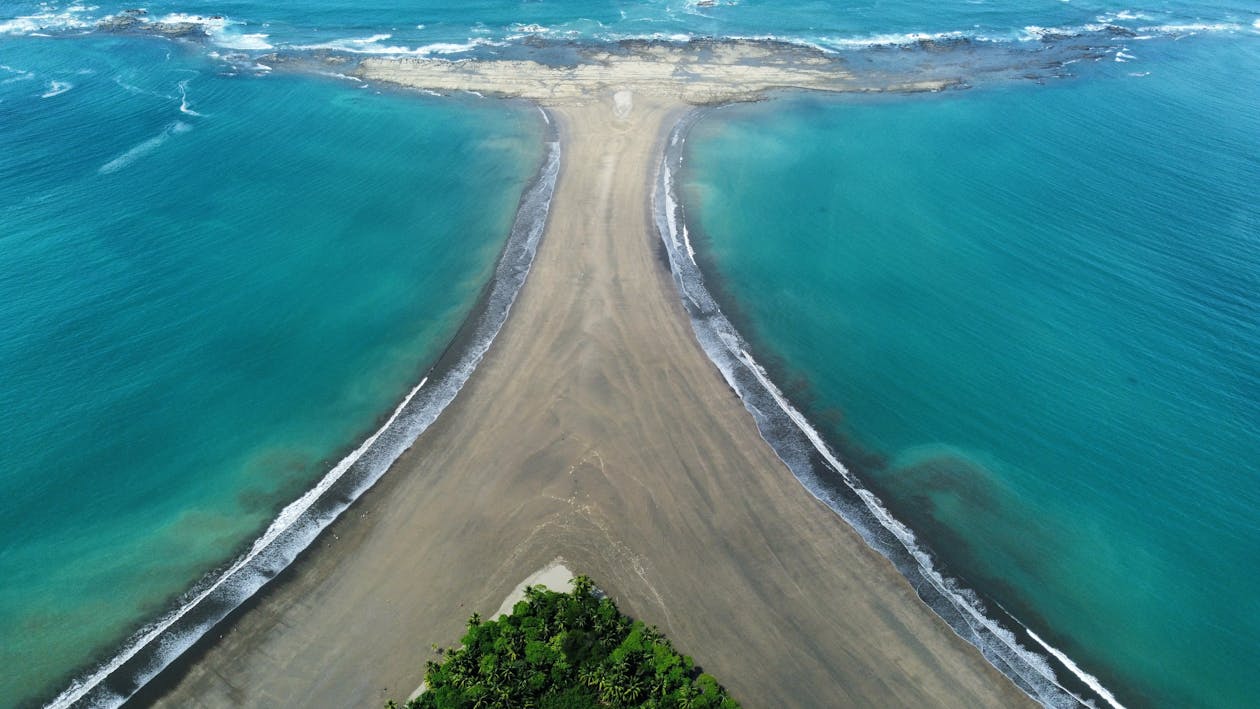
Costa Rican families have been building tourism economies for sixty years. In Tamarindo, Adelita Zuniga petitioned the government for a concession in the 1960s. When they said yes, she dynamited through the hill at the estuary to build the road and opened Hotel Doly. Nearby, Luis Medaglia built Cabinas Medaglia in 1965: rustic huts surrounding a rancho restaurant, serving families from San José during the Christmas-to-Easter season. There was no electricity until 1974, no phones until 1996. The industry was built by locals, from nothing.
Ley 6990, the 1985 Tourism Incentive Law, changed that. To qualify for tax incentives, hotels had to have at least 20 rooms. Family-run cabinas and guesthouses were explicitly excluded. Large developers got property tax moratoria and import duty exemptions; the families who had pioneered tourism got nothing. The Papagayo concession system compounded the effect: the government bought coastal land and leased it in large blocks to foreign developers. Today, upwards of 80% of coastal businesses in Guanacaste are foreign-owned.
The ICT plan for Dominical-Bahía Ballena, with its 94% uncertified local businesses, documents what still exists in southern Costa Rica. The question is whether it will survive what is coming.
Grace Vargas Méndez arrived in Finca 10 with nothing. "We had no other home or work," she explains. Finca 10 is one of 18 numbered farms that United Fruit Company carved from the jungle around Palmar Sur in the 1930s, each between 333 and 500 hectares. When the company abandoned the region in 1984, the government tacitly allowed landless families to settle on the empty plantations. Grace rented three hectares and planted what her family needed to survive: pineapples, bananas, fruit trees. That was decades ago. Now 44, she still farms the same land her sweat turned from scrub into productive soil.
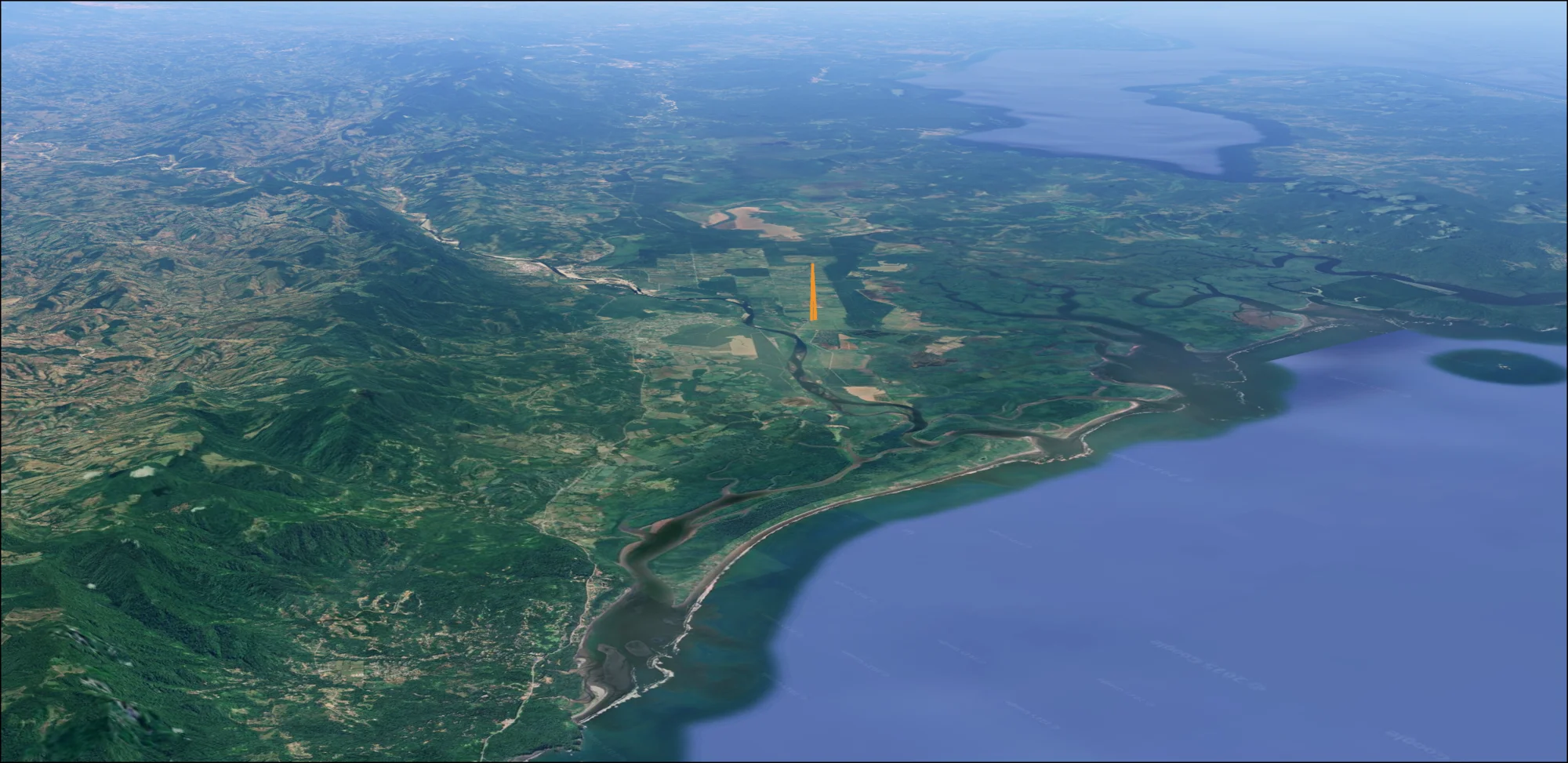
In February 2023, President Rodrigo Chaves announced $105 million to build an international airport. The 2.6-kilometer runway would cut directly through Grace's fields. Her house, and those of approximately 350 other families in Finca 9 and Finca 10, sits in the path of what the government calls progress.
The $105 Million Airport
The families facing eviction have farmed this land for 40 years, since the United Fruit Company departed in 1984. Ana Isabel Vargas Ortiz, 55, is a mother of seven and a community leader in Finca 9. Her grandmother taught her which plants heal fevers, which vines hold water when the dry season comes. They lack formal land titles, but they have something else: decades of work transforming abandoned banana plantation land into subsistence farms that feed their families and communities. The government calls this "abandoned land." Ana Isabel calls it home.
She learned what happened when the airport came to Guanacaste, and she sees the same pattern arriving now.
Apolonia Hernández Sequeira, known to everyone as Doña Pola, bakes bread and corn cakes every morning in her small kitchen to sell to neighbors. Her house sits at the edge of the marked runway location. She would be the first household displaced. If the airport is built, the runway will pass through her kitchen.
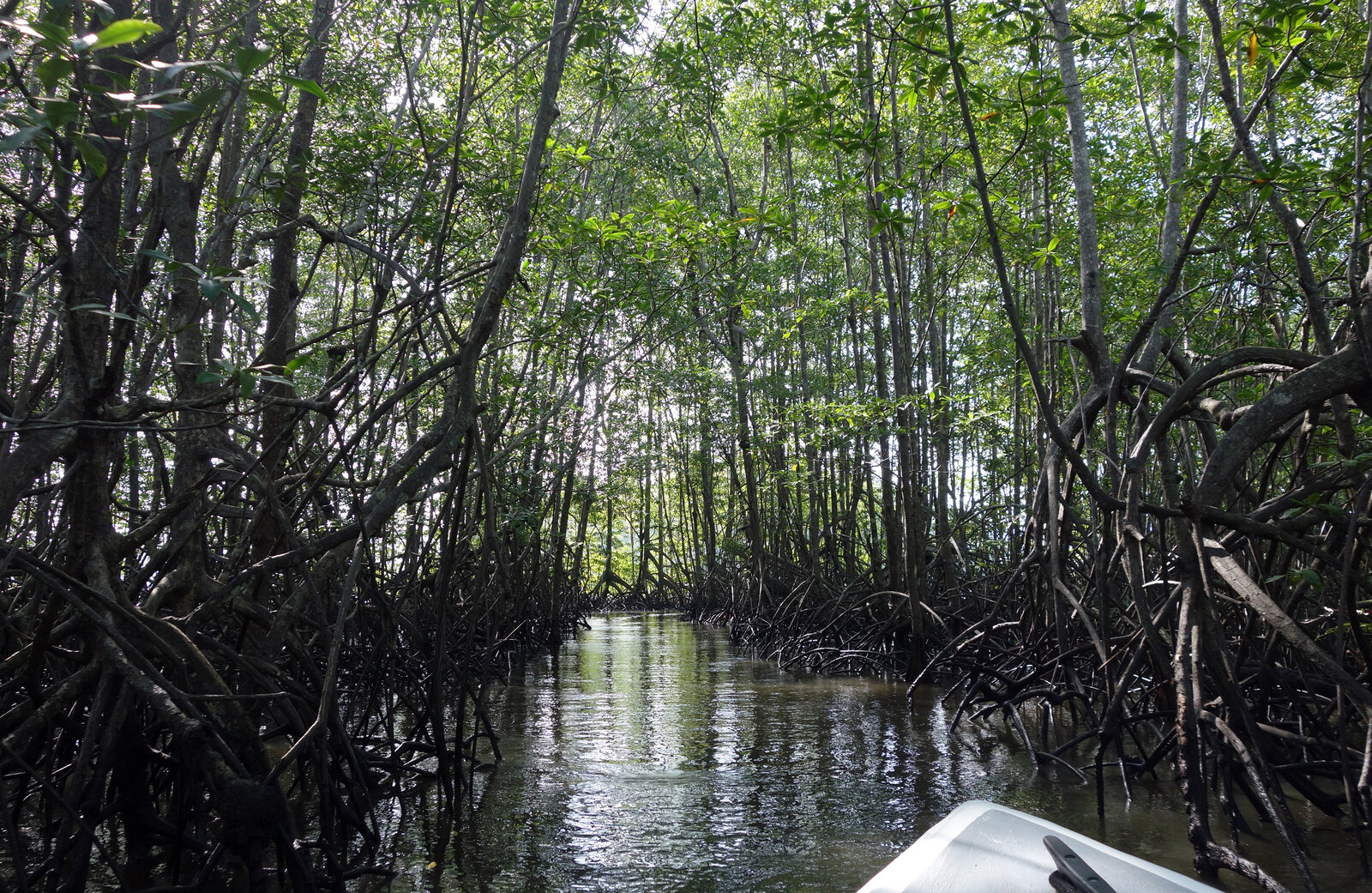
The proposed airport sits at the convergence of three irreplaceable forms of value. The Térraba-Sierpe National Wetlands, 2-3 kilometers from the site, comprise 30,654 hectares of mangrove ecosystem designated under the RAMSAR Convention in 1995. This is the largest mangrove system on Central America's Pacific coast, home to over 300 bird species including the endemic Mangrove Hummingbird found nowhere else in the world.
Directly adjacent is a UNESCO World Heritage Site designated in 2014: the Precolumbian Chiefdom Settlements with Stone Spheres of the Diquís. The mysterious stone spheres, some weighing 15 tons, remain one of archaeology's enduring questions.
In 2024, the National Museum conducted an archaeological survey funded with $560,000 by COCESNA. They excavated 2,752 test pits across 131.5 hectares and found over 1,000 pre-Columbian vestiges from the Chiriquí period (AD 800-1550). But the site is in a floodzone, and the indigenous people who carved the Diquís spheres were practical: they did not concentrate their settlements on flood-prone land. The survey confirmed what archaeologists expected. The airport site itself holds no major archaeological significance.
In July 2025, the Culture Ministry dismissed National Museum director Ifigenia Quintanilla Jiménez, who had overseen the survey. The Minister cited "performance metrics" while praising her for "leading the airport zone study, which gave us such positive results." When asked whether she would resign, she replied: "Fire me, please, because I am not resigning." Quintanilla does not believe her dismissal was connected to the survey, which was positive for the administration. The University of Costa Rica will conduct standard archaeological recovery before construction, as is typical for development projects.
The airport site's minimal archaeological significance does not resolve the heritage question. The Diquís Spheres UNESCO World Heritage Site lies adjacent, and UNESCO designation does not merely protect objects. It protects integrity and authenticity: the spatial relationships between settlement sites, the landscape context, the buffer zones that maintain the setting. An international airport within kilometers of a World Heritage Site, with the development pressure it would bring, threatens exactly those qualities that earned the designation. You cannot build an airport next to a World Heritage Site and claim you are preserving heritage.
In 2020, SETENA, Costa Rica's environmental review agency, had already issued a negative assessment of the airport project, identifying risks to waterways and increased vulnerability to extreme weather events. The Chaves administration overrode that assessment with political will.
Mauricio Álvarez Mora, a geography professor at the University of Costa Rica who has studied the project since 2010, is direct: "The airport's goal is to make tourism explode in the area, as the Guanacaste airport did."
Doubling Corcovado's Capacity
The airport threatens the surrounding communities. Inside Corcovado National Park itself, a parallel push for increased volume is already underway. In August 2023, Paula Mena, director of the Osa Conservation Area (ACOSA), doubled daily visitor capacity at Sirena Station from 120 to 240 people. Overnight capacity increased by 10. A new 100-person quota was created exclusively for cruise ships.
The decision was made without scientific carrying capacity studies. Workshops with stakeholders "notably excluded experts, public institutions, and researchers."
Carlos Eduardo Castro Rojas, legal representative of Ecoturístico La Tarde and a Puerto Jiménez resident, saw the trap immediately. The capacity increase would enable day trips that bypass community infrastructure entirely.
The cruise ship quota revealed the economic logic. A 100-person cruise group can arrive from Golfito, tour Sirena Station, and return to the ship the same day. They pay park entrance fees, but they never stay in a local lodge, never eat at a local restaurant, never hire a local guide for multiple days. The revenue flows to the cruise line, not to Puerto Jiménez.
In August 2025, Costa Rica's Constitutional Chamber struck down the resolution. The court found that SINAC had failed to provide scientific justification for the capacity increases and had violated existing environmental safeguards. It ordered the Ministry of Environment and Energy to revoke the decision and develop a new regulation with verifiable technical support.
Paula Mena defended the increases as necessary to help coastal communities recover from COVID-19. "The problem we have is not an environmental problem. It's a social and economic problem," she explained. The Brunca region faces approximately 30% poverty rates, among the highest in Costa Rica. Communities did lose income during the pandemic. People need to earn a living.
The underlying pressure to increase visitor numbers has not disappeared. The court struck down one resolution. It did not resolve the economic pressures that motivated it, and the next administration may simply try again.
The Hilton Marina
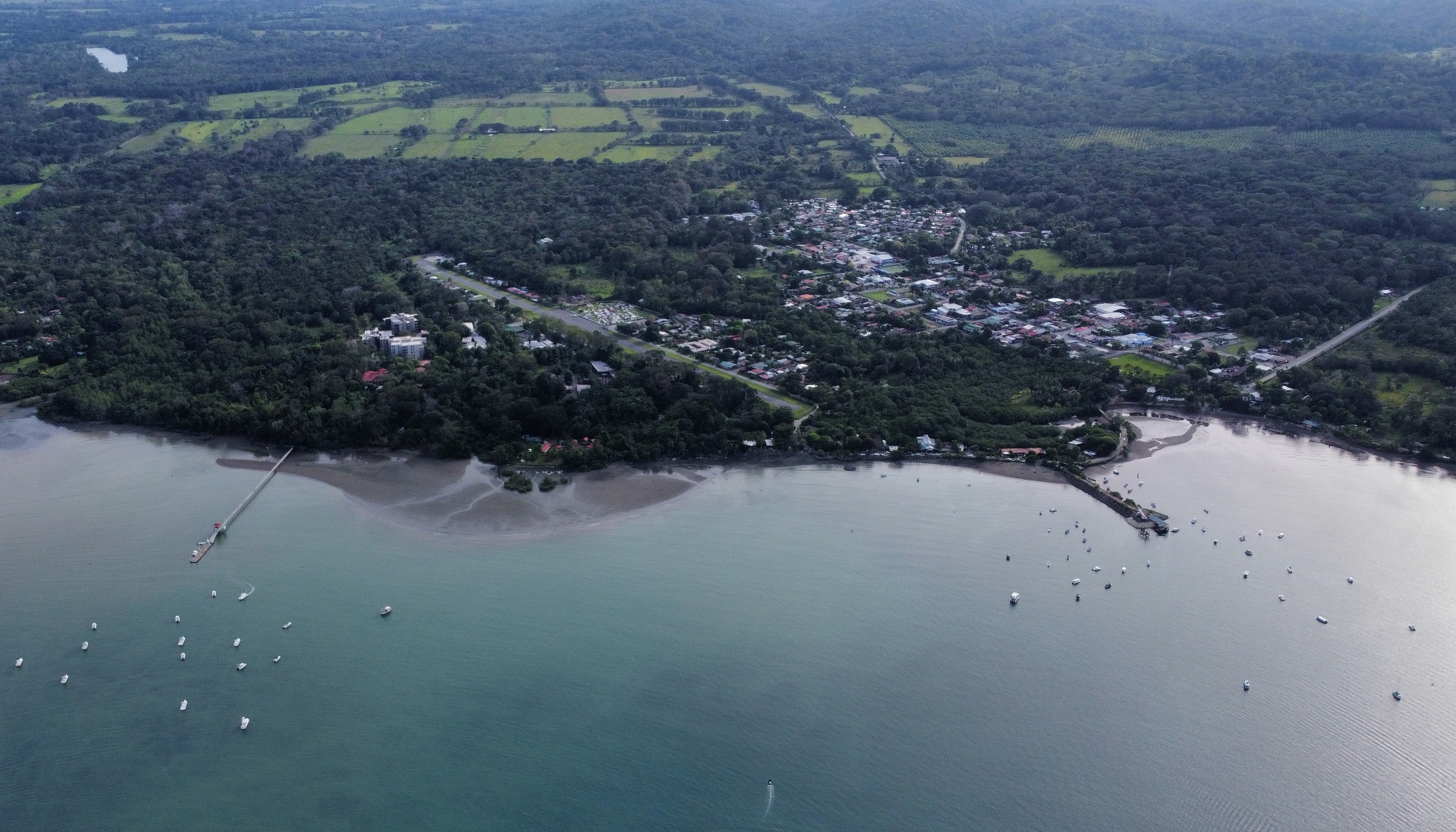
While courts blocked the Corcovado capacity increase, the infrastructure for mass tourism was already being built. In June 2022, Botánika Osa Peninsula opened as the first Hilton-branded development in Osa, part of the Curio Collection. The resort launched with 44 residences and plans to expand to 123, with access to the Crocodile Bay Marina: 150 slips for yachts up to 250 feet in length, positioned as "the closest international full-service marina to the Panama Canal."
This is the Guanacaste model arriving not as proposal but as built infrastructure: international hotel branding, luxury yacht facilities, real estate development, and a "seaside village" with yacht club, over-water tiki bar, and shops.
The project faced over a decade of legal challenges. Álvaro Ugalde, co-founder of Costa Rica's national park system and two-time director of the Osa Conservation Area, opposed the marina despite personal friendship with developer Cory Williams.
Manuel Ramírez, executive director of Conservación Osa, identified how the project minimized apparent environmental impact by dividing permits across construction phases.
The marina is located directly in front of the Platanares river mouth, near the Platanares Marine and Wildlife Refuge. Golfo Dulce is one of only four tropical fjords in the world, designated as a Whale Heritage Site by the World Cetacean Alliance in 2023 and as a Scalloped Hammerhead Shark Sanctuary in 2018. The bottlenose dolphin population in this area represents an "inshore" ecotype with a total population of fewer than 500 individuals along the entire Pacific coast of Costa Rica and Panama.
At community meetings, the development team was "bombarded with statements, opinions, and questions regarding access to the 50-meter public zone, restrictions to kayaks and local fishermen and bathers." The resort "did not walk away with the desired support of the community."

Crocodile Bay is not alone. In the small Golfito Bay, no fewer than four marinas have been planned. Marina Bahia Escondida obtained a concession for 217 berths despite environmental protests. Mangroves have been cut and an extensive area has been filled with gravel, though construction stalled after the 2008 recession. Osa Pointe, a proposed 900-hectare development at Playa Platanares, would include 600 berths and three golf courses.
Marina construction requires large quantities of gravel and stone extracted from riverbeds, threatening rivers already stressed by mining. Environmental experts warn that "extensive damage and disturbance can be caused to marine fauna such as dolphins, whales, and sea turtles" through contamination from paint, anti-fouling compounds, gasoline and lubricant spills, and various types of waste.
The Real Estate Speculation
The airport, the park capacity increase, and the marina development share a common thread: they enable real estate speculation. Currently, approximately 70% of the Osa Peninsula is under protection. It lacks infrastructure for large-scale development: no paved roads to many communities, limited electricity and internet access in remote areas, no international airport.
This is changing. The Natural Resources Defense Council has warned that "rampant real-estate development for tourism is also a looming threat." Real estate marketing now emphasizes scarcity: "limited developable land," "increasing demand," "properties with legal titles, ocean views, and access to amenities are becoming rare." The airport is explicitly positioned as a driver of appreciation.
The airport is not the only infrastructure enabling this transformation. Route 245, the main road connecting Rincón to Puerto Jiménez, was paved between 2008 and 2011. South of Puerto Jiménez, bridge construction and asphalt sealing continue toward Carate, making access more reliable. Conservationists have documented the pattern globally: in the Amazon, researchers found that 95% of deforestation happens within 5.5 km of a road, and road density was "by far the strongest correlate of deforestation" among 38 potential variables. A Mongabay investigation called roads "arteries of destruction," noting that "when a large mass of forest is broken, it becomes vulnerable. The roads cause fragmentation, which intensifies deforestation."
The conflict is real. Osa's communities need roads for healthcare access, school transport, and emergency services. Residents and tourists alike complain about the potholes on Route 245. But research consistently shows that road improvements precede and enable the development patterns they are now experiencing: rising land prices, speculative accumulation, and what one researcher called "elite roadside ecology," where wealthier investors respond to infrastructure upgrades by purchasing roadside plots. The infrastructure does not cause the speculation directly. It makes it possible.
When the Liberia International Airport expanded in Guanacaste, it sparked one of the largest development booms in Costa Rican history. That boom produced 70-80% economic leakage, workers unable to afford housing, aquifer depletion, coral collapse, and profits offshored through tax havens. The Southern Zone Airport is designed to replicate it.
Before that boom, Guanacaste's tourism looked like Osa's does today: family hotels, local guides, money circulating through communities. After, 80% of coastal businesses were foreign-owned. The 317 lodging operations ICT documented in the Dominical-Bahía Ballena corridor, the 94% that are locally owned and uncertified, would face the same trajectory. Not because any individual project intends displacement, but because the economics of mass tourism infrastructure systematically favor consolidated foreign ownership over distributed local enterprise.
The Opposition
Multiple groups are fighting back. The conservation community includes the legacy of Álvaro Ugalde and organizations like Conservación Osa. Local ecotourism operators whose businesses depend on the current model are organizing. The 350 families facing eviction for the airport are pursuing legal challenges. Residents further north are questioning whether the Costanera can handle thousands of extra vehicles every day during tourist season. And the courts, when asked, have proven responsive: the Constitutional Chamber struck down the Corcovado capacity increase when citizens invoked environmental law.
This proves the legal framework still works when invoked. But defensive victories buy time without providing solutions. They block one bad decision without changing the political prioritization that generated it. The economic pressure that drove Paula Mena to double park capacity remains. The $105 million airport commitment remains. The Hilton marina is already built.
The Osa Peninsula contains 2.5% of the world's biodiversity in 0.001% of its surface area. Corcovado National Park's carrying capacity is scientifically limited. The evidence from Maya Bay, Galápagos, and the Great Barrier Reef shows what happens when those limits are exceeded: threshold collapse, ecosystem degradation, closures that last years.
The battle for Osa is not about whether communities need income. They do. The families in Finca 9 and Finca 10 need income. The guides and lodge owners in Puerto Jiménez need income. Paula Mena was right that communities lost revenue during COVID. The disagreement is about what kind of development actually delivers that income to local people, rather than extracting it to hotel chains, cruise lines, and offshore accounts.
The structural irony is sharp. The ICT plan sets out a vision for 2029: the Costa Ballena communities leading sustainable tourism, maintaining their alliance with Marino Ballena National Park, building ecological routes and cultural centers, managing their own development. The Municipal Council of Osa approved this vision in April 2023. Two months earlier, President Chaves had announced $105 million to build an airport designed to make it obsolete. The national tourism institute documented what works while the president funded what would destroy it.
Key Sources & Resources
Ecotourism and Its Discontents
How Costa Rica built the ecotourism concept in the 1980s, codified it into law, and watched the word get hijacked by mass tourism marketing.
Mass tourism in Guanacaste produces 70-80% economic leakage, displaces workers who cannot afford housing, and degrades the ecosystems it claims to protect.
Evidence from Maya Bay, Galápagos, and the Great Barrier Reef shows what happens when carrying capacity is exceeded. Osa's current model works because it respects ecological limits.
Local Tourism Economy
ICT tourism management plan for Osa canton approved by Municipal Council April 2023. Documents 317 lodging businesses with 1,713 rooms. Key finding: 94% (300 businesses) operate without tourism declarations; only 6% (17 establishments) hold official certifications. Source of local ownership statistics.
Canatur data on national tourism structure: 85% of tourism businesses are micro, small, and medium enterprises. Top 5 companies hold only 15% market share. Approximately 3,700 accommodation establishments nationally, fewer than 400 CST-certified.
Documents geographic variation in ownership patterns. Monteverde: "almost all tourism money stays in the region" due to local ownership. Manuel Antonio: "local ownership of tourist facilities is very low, which causes much economic leakage." Same country, different structures, different outcomes.
80% of coastal businesses in Guanacaste are foreign-owned, documenting the displacement of local tourism operators by foreign investment.
Tourism Policy & Legal Framework
Full text of the 1985 Tourism Incentive Law. Provides tax breaks for corporations engaged in tourism infrastructure. Article 7 details fiscal incentives including import duty exemptions, accelerated depreciation, and property tax relief.
Analysis of how Ley 6990's 20-room minimum requirement excluded local people from tax incentives. Documents how "these restrictions often preclude local people from qualifying for incentives" while foreign investment captured coastal development.
Official ICT documentation of the Papagayo concession system. Government purchased 1,658 hectares and leased concession blocks to private developers. 23 concessions granted between 1991-1999. Legal framework: Law 6370 (1979), Law 6758 (1982).
Community Impact & Human Stories
Primary investigative source documenting Ana Isabel Vargas Ortiz (55, mother of seven, community leader), Grace Vargas Méndez (44, rents 3 hectares in Finca 10), and Apolonia Hernández Sequeira (Doña Pola, sells bread and corn cakes, house at runway edge). Approximately 350 families in Finca 9 and Finca 10 facing eviction. Ana Isabel quote: "We witnessed what the Guanacaste airport did to our country."
History of the 18 numbered fincas that United Fruit Company established around Palmar Sur (333-500 hectares each). Documents how landless families settled on abandoned plantations after the company departed in 1984. Fincas 9 and 10 comprise approximately 502 hectares subdivided among over 85 smallholders.
Corroborating coverage of community opposition, 350 families threatened with eviction, connection to UNESCO World Heritage Site and Térraba Sierpe National Wetlands.
December 2025: DGAC announces "archaeological recovery" initiative starting 2026. Over 1,000 artifacts to be excavated and removed before airport construction proceeds.
Airport Project Details
February 2023: President Rodrigo Chaves announced $105 million investment in Southern Zone International Airport. Project included among government objectives despite negative environmental assessment (2020). Purpose: boost tourism and job creation by enabling direct international arrivals.
Environmental Stakes
Official RAMSAR designation documentation. 30,654 hectares (approximately 30,000). Largest mangrove system on Central America's Pacific coast. Designated Forest Reserve (1977), RAMSAR wetland of international importance (1995). Over 300 bird species recorded including endemic Mangrove Hummingbird.
Confirms Osa Peninsula contains 2.5% of world's biodiversity in 0.001% of its surface area, cited from National Geographic 2016.
Archaeological Heritage
Official UNESCO documentation. Four archaeological sites designated World Heritage (June 2014): Finca 6, Batambal, El Silencio, Grijalba-2. Stone spheres created AD 500-1500, some weighing 15 tons. Location directly adjacent to proposed airport site. Finca 6 contains over 200 spheres, only site retaining linear arrangements.
Archaeological survey conducted March-November 2024 by National Museum's Anthropology and History Department. Cost: $560,000 (COCESNA funding). Over 1,000 pre-Columbian vestiges discovered (Chiriquí period 800-1550 AD). 2,752 test pits excavated. Recovered: 1,000+ ceramic fragments, 115 lithic artifacts. High density in Fincas 9 and 10. 131.5 hectares surveyed.
Director Dismissal
July 28, 2025: Ifigenia Quintanilla Jiménez dismissed as National Museum Director. Culture Minister cited "performance metrics" and "greater regional presence" needs. Quintanilla stated no disagreement over archaeological evaluation, conducted professionally. Minister praised her for "leading airport zone study, which gave us such positive results."
Quintanilla stated "mucho machismo" impeded her work at institution. Conflicts more frequent with male colleagues, interpreted as power struggles with sexist undertones. "As a woman, these issues affect you within the institution." Faced "difficult and uncomfortable leadership" over several months.
Opposition & Academic Assessment
Preserve Planet (established 1995) opposition based on ecosystem impact outweighing economic benefit. Defending Corcovado National Park and pristine ecosystems. Building international awareness of threats to wetlands and archaeological heritage. 2020 SETENA negative environmental assessment identified risks to waterways, increased vulnerability to extreme events.
Mauricio Álvarez Mora, geography professor at University of Costa Rica, studied AIZS impacts since 2010. Quote: "The airport's goal is to make tourism explode in the area, as the Guanacaste airport did." Characterized as "an emblematic example of how our country is selling itself to massive tourism."
Corcovado Capacity Battle
May 2024 reporting documenting ACOSA's August 2023 decision to double daily visitor capacity at Sirena Station from 120 to 240 people without scientific carrying capacity studies. Features Carlos Eduardo Castro Rojas' analysis of economic threat and concern about mass tourism conversion.
August 2025 documentation of Constitutional Chamber ruling striking down SINAC's visitor quota increases for lacking scientific justification. Court ordered MINAE to revoke increases and develop proper methodology with verifiable technical support.
Constitutional Chamber annulled visitor increase at Corcovado, ordering authorities to issue new regulation with clear parameters and verifiable technical support for defining entry and lodging quotas.
Ariel Robles Barrantes (Frente Amplio legislator) highlighting how Constitutional Chamber ruling reveals decisions without technical criteria at MINAE.
July 2024 data showing Brunca region faces approximately 30% poverty rates, among the highest in Costa Rica alongside the Caribbean Huetar region. Provides context for economic pressures driving park capacity decisions.
Marina Development
Source for Álvaro Ugalde and Manuel Ramírez quotes opposing the marina project on environmental grounds. Ugalde: "My first reaction was that I wanted to talk to them... Cory was very generous, he came to my house, but we just didn't agree." Ramírez: "Their environmental studies consider the impact of each part individually, but they do not consider the environmental impact as a whole."
Official announcement of Botánika opening June 2022 with 123 residences and Crocodile Bay Marina access. First Hilton-branded development in Osa Peninsula, part of Curio Collection.
Documentation of Marina Bahia Escondida (217 berths, mangroves cut), Crocodile Bay (259 berths intended, 80 villas, 74-room hotel), and Osa Pointe (900-hectare development, 600 berths, three golf courses). Environmental concerns: gravel extraction from stressed riverbeds, contamination threats to dolphins, whales, sea turtles.
July 2015 investigation of Crocodile Bay Marina development. Documents community meetings where development team was "bombarded with statements, opinions, and questions regarding access to the 50-meter public zone, restrictions to kayaks and local fishermen and bathers." Resort "did not walk away with the desired support of the community."
Official designation of Golfo Dulce as a Whale Heritage Site in 2023, the first in Latin America. Documents bottlenose dolphin "inshore" ecotype population of fewer than 500 individuals along entire Pacific coast of Costa Rica and Panama, with approximately 119 dolphins within Golfo Dulce specifically.
Official documentation of Golfo Dulce's 2018 designation as Costa Rica's first Scalloped Hammerhead Shark Sanctuary, protecting critical nursery habitat.
SINAC Enforcement Gap
Documentation of SINAC budget reduction: 38% cut from ₡48.5 billion ($78 million) in 2020 to ₡29.8 billion ($48 million) in 2021. Shortfall reduces patrols and monitoring, leading to increased illegal activities.
152 protected areas managed by just 517 staff members (approximately 3 people per area). Budget constraints severely limit enforcement capacity.
SINAC oversees 25% of country's terrestrial territory and 30% of marine territory. During COVID-19, agency faced danger of possible "technical closure." Resource constraints particularly concerning given scope of conservation responsibility.
Escazú Agreement Rejection
Timeline: February 2020 approval 44-0, 2021 Constitutional Chamber annulment, February 2023 rejection 41-16. With 41 votes against, 11 in favor, Legislative Assembly buried bill in archives.
President Rodrigo Chaves opposition: told businesspeople they could "rest assured" Escazú wasn't on government's agenda. Costa Rican Union of Chambers and Associations of Business Sector supported president's position.
Escazú Agreement adopted in Costa Rican town of Escazú in March 2018. Costa Rica co-leader in developing treaty. Chaves argued ratification would "unjustifiably delay economic reactivation after COVID-19 pandemic."
President Chaves called treaty "superfluous." In 2020, FECON published report on criminalization of ecologist movement documenting 94 acts of violence: 18 lawsuits, 10 arson, 21 threats, 25 attacks, 13 murders. Highlights contradictions between Costa Rica's environmental reputation and actual practices.
Environmental Defenders
Environmental defenders face rising threats. Gender-specific: harassment against women defenders contains high degree of sexual content. Activists face intimidation when denouncing megaprojects and monocultures.
Alcides Parajeles known as "peasant environmentalist." Endured threats, harassment, violence for defending Osa Peninsula. Lived for decades among death threats for being environmental defender. Received Guayacán award from MINAE in 2017. Family still receives death threats, stalked by hunters. Wildlife trafficking involves organized crime mafias.
FECON 2020 report documented 94 acts of violence against defenders: 18 class action lawsuits, 7 individual lawsuits, 10 arson, 21 threats, 25 attacks, 13 murders. Criminalization cycle: disqualification-stigmatization, lawsuits, threats-harassment, attacks, murder. FECON demands special jurisdiction to protect defenders and Truth Commission.
Certification Failures & Tax Avoidance
CST program created 1997 to ensure Costa Rica's success as sustainable tourism destination and prevent greenwashing. Now uses two-tier system: BASIC and ELITE levels.
Andaz Resort Peninsula Papagayo CST certified (GSTC recognized standard). Demonstrates how mass-market resorts obtain official sustainability certification while operating high-impact models.
2024 Green Taxonomy created to "provide credibility, integrity, and transparency to market." Implicit admission existing certifications not credible. Financial regulators vowed to integrate taxonomy into activities.
February 2023: EU added Costa Rica to tax haven blacklist. Secrecy score of 68.65% comparable to large tax havens. Tax incentives for tourism and technology industries including temporary exemptions and reduced rates.
Paradise Papers investigation: FIFCO and Schwan Foundation routed investments through tax havens. FIFCO used Cayman Islands shell companies to structure $14.8 million. Costa Rica fined FIFCO ₡1.68 billion colones ($3 million). Demonstrates systematic tax avoidance undermining cross-subsidy argument.
Infrastructure & Development Research
2022 study finding 95% of deforestation happens within 5.5 km of a road, and 85% of fires within 5 km. Researchers identified 3.46 million kilometers of roads across the Legal Amazon, with at least 86% being unofficial. Source of "arteries of destruction" quote used in article.
Research on how road construction contributes to "speculative accumulation" and inflated land prices. Documents phenomenon of "elite roadside ecology" where wealthier investors respond to infrastructure upgrades by purchasing roadside plots.
Construction records for Route 245 paving project (2008-2010). 32.5 km of asphalt road built connecting Rincón to Puerto Jiménez, gateway to Corcovado National Park and the local airstrip.
March 2021 announcement of bridge construction project over Quebrada Sombrero, Carbonera, Bijagual, Camañín, and Río Piro. Cost: ₡2,016,175,550. 180-day timeline.