The Botanist Costa Rica Made
Peter Raven coined the word coevolution, built the Missouri Botanical Garden into a world power, and spent half a century warning that the planet's plants were vanishing. The conviction behind all of it took shape in a single field course in Costa Rica in 1967.
On a March evening in 1967, a thirty-year-old Stanford botanist stood in the old colonial city of Cartago, Costa Rica, and watched a tree get pollinated. The tree was a Hauya, one of the few trees in the evening-primrose family, with large white flowers that open near sunset. Raven had come looking for it on purpose. The Onagraceae, the evening-primrose family, were his specialty, the plants he had built a doctorate and a young career around, and here was a tropical member of that family doing in the open what he had only read about. As the light failed, hawkmoths arrived to drink from the flowers, and then bats. It was his first visit to Costa Rica, a scouting trip a few months before he was due to teach there. He collected plants widely, admired San José, and took to the national greeting, pura vida. On the same trip he saw, for the first time and in the field, a young ecologist named Daniel Janzen.
The reasons that botanist would matter, far beyond one tree in Cartago, were already in place. Three years earlier he had published the paper that named the idea of coevolution. Four years later he would take over the Missouri Botanical Garden and run it for nearly four decades. He would become one of the most decorated scientists of his generation and the most insistent public voice warning that the world's plants were disappearing. Peter Hamilton Raven was American, born in Shanghai, raised in San Francisco, and he never lived in Costa Rica. He came as a teacher and a visitor. But the month he spent here in 1967 is, by his own account, where his thinking about "conservation, preservation, sustainability, biological diversity, and how humans live on the Earth" began to take its adult shape, and he spent the rest of his life repaying the place that showed it to him.
A Clubhouse in the Parks
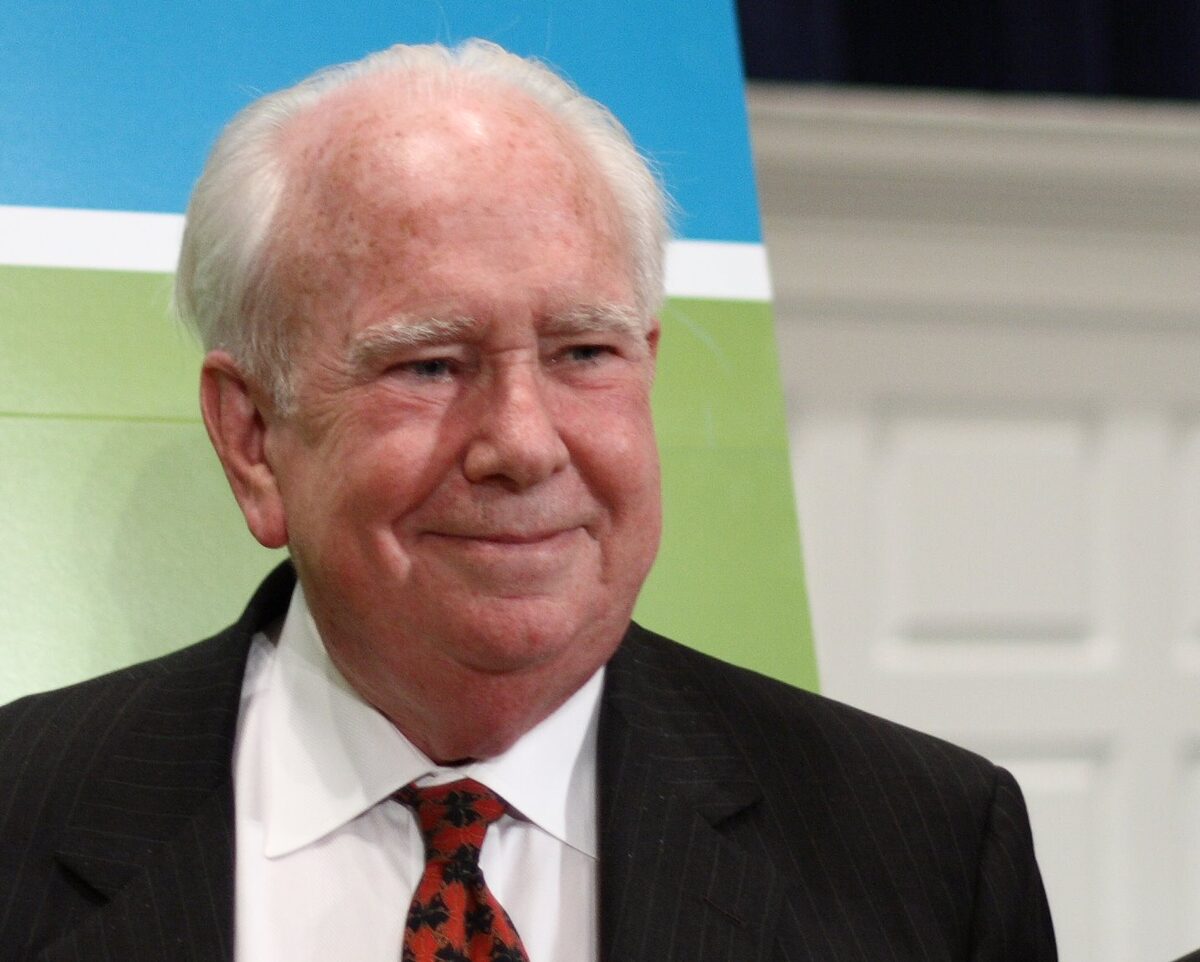
Peter Hamilton Raven was born in Shanghai on June 13, 1936, to American parents, Walter Francis Raven and Isabelle Marion Breen. A great-uncle, Frank Jay Raven, had been for a time one of the wealthiest Americans in China, until he was jailed in a banking scandal. That collapse, together with Japanese aggression in China, sent the family back to San Francisco when Peter was about a year old. He was an only child. As a boy he collected beetles and bugs, then turned to plants, and at age nine he joined the student section of the California Academy of Sciences. He remembered those years as the beginning of everything. "I spent my time wandering through the parks and the wild places in San Francisco," he told the San Francisco Chronicle in 2008. "A supportive group of friends, classes, lectures, it was like a clubhouse."
The boy was good enough to be taken seriously by adults. At fourteen, in 1950, he collected a Clarkia in San Francisco and pressed it into a herbarium sheet. A few years later the plant geneticist Harlan Lewis and his wife Margaret Lewis, working through the genus, came across that sheet, could not match it to any known species, and went looking for whoever had collected it. They visited Raven in 1952, when he was sixteen, to ask where he had found the plant. It proved to be new to science, and in 1958 Lewis and Raven described it as Clarkia franciscana. Raven took a bachelor's degree at Berkeley and a doctorate at UCLA in 1960, on the classification and evolution of the Onagraceae, the evening-primrose family that would occupy him for the rest of his life. He joined the faculty at Stanford, and there he fell in with a butterfly biologist named Paul Ehrlich.
The friendship produced one of the most-cited papers in the history of evolutionary biology, and it began over coffee. "One day in 1963, while Peter Raven and I were having coffee at the round table in the Stanford Herbarium," Ehrlich later wrote, he mentioned that he could not understand why a certain butterfly's caterpillars fed on two unrelated-looking plant families. Raven answered that the two were close relatives, "just wind-pollinated scrophs." That offhand correction launched weeks of conversation about why butterflies eat the plants they eat. The pair concluded that plants and insects were locked in a slow evolutionary contest: plants evolve chemical defenses, insects evolve ways around them, and each side drives the other to diversify. They published the analysis in late 1964 as "Butterflies and Plants: A Study in Coevolution." It named a process that biologists had glimpsed only in particular cases, and it founded a field. By 2021, Ehrlich noted, it had been cited more than 5,000 times. The 2000 National Medal of Science would credit Raven, by name, with introducing the concept.
That same circle carried him to the tropics. One of Ehrlich's graduate students, Tom Emmel, asked Raven in 1966 whether he would teach part of a course on tropical ecology in Costa Rica the following summer. The course was run by the Organization for Tropical Studies, which Raven described as "a consortium of American and Costa Rican universities organized three years earlier to offer instruction in tropical biology." He said yes. The man who had explained why butterflies and plants pull each other through evolutionary time was about to see the most diverse version of that machinery on Earth, and to watch a piece of it disappear.
A Fairyland, and What Happened to It
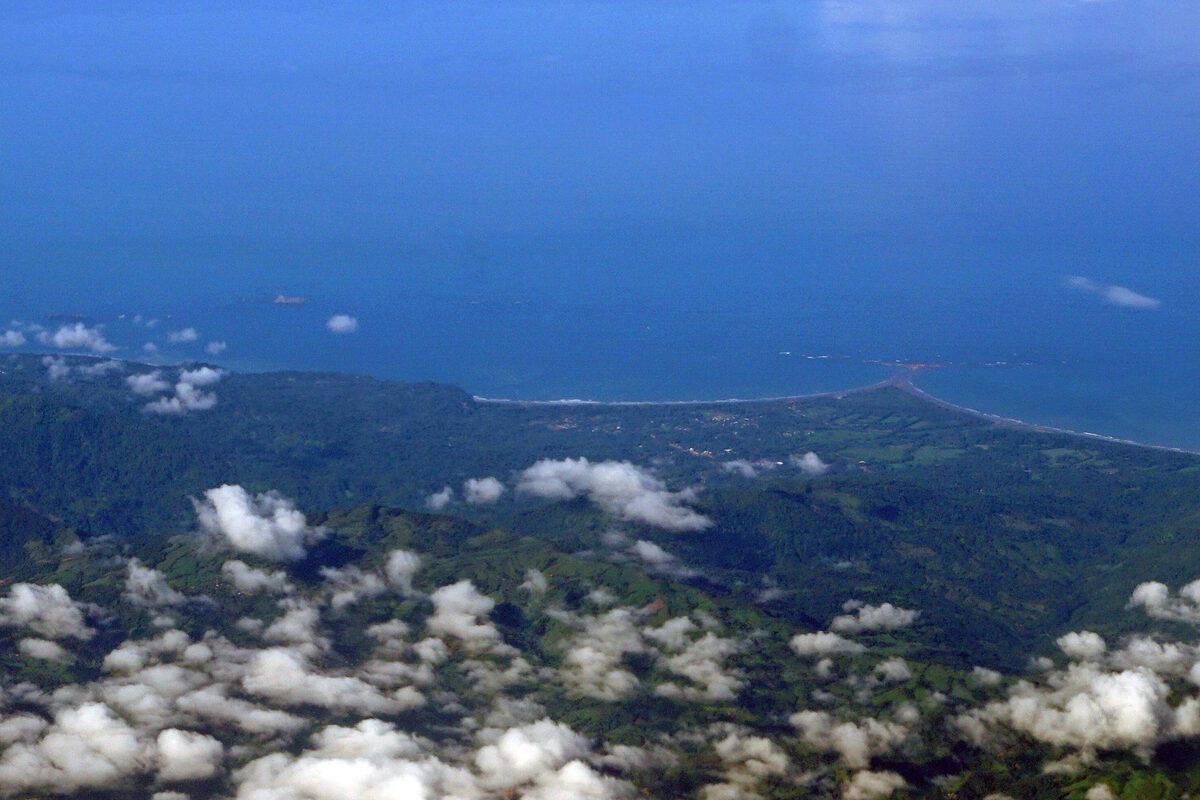
The teaching course came in August 1967. It was an eight-week program called "Fundamentals of Tropical Ecology," for about twenty graduate students, and Raven took the month that covered plants. The first field stop was a twelve-day camp near Rincón, on the Osa Peninsula, in dense lowland rainforest on the Pacific side. Raven called it "a fairyland of biological diversity and a marvelous place to teach." It was also dangerous: fer-de-lance and bushmaster, two of the most venomous snakes in the Americas, lived in the understory, and he noted the alarm when two students briefly went missing. From the Osa the course moved inland and up to San Vito, a town the country had reached only after the Pan-American Highway was pushed over the high pass at Cerro de la Muerte around midcentury. On a ridge above San Vito, Robert and Catherine Wilson were turning their 360 acres into what Raven judged "perhaps the most important botanical garden in the country."
Raven worked. The month gave him, he wrote, the chance to become the first botanist to collect intensively around both Rincón and San Vito. He gathered 600 specimens and sent them to the Field Museum in Chicago, then the major center for the study of Central American plants. One of the graduate students in the class, Tamra Engelhorn, had been recommended to him from UCLA; she would later become his wife and his coauthor on a monograph of the evening-primrose genus Epilobium. The work was a productive break from Stanford, and it did something to him that the herbarium never had.
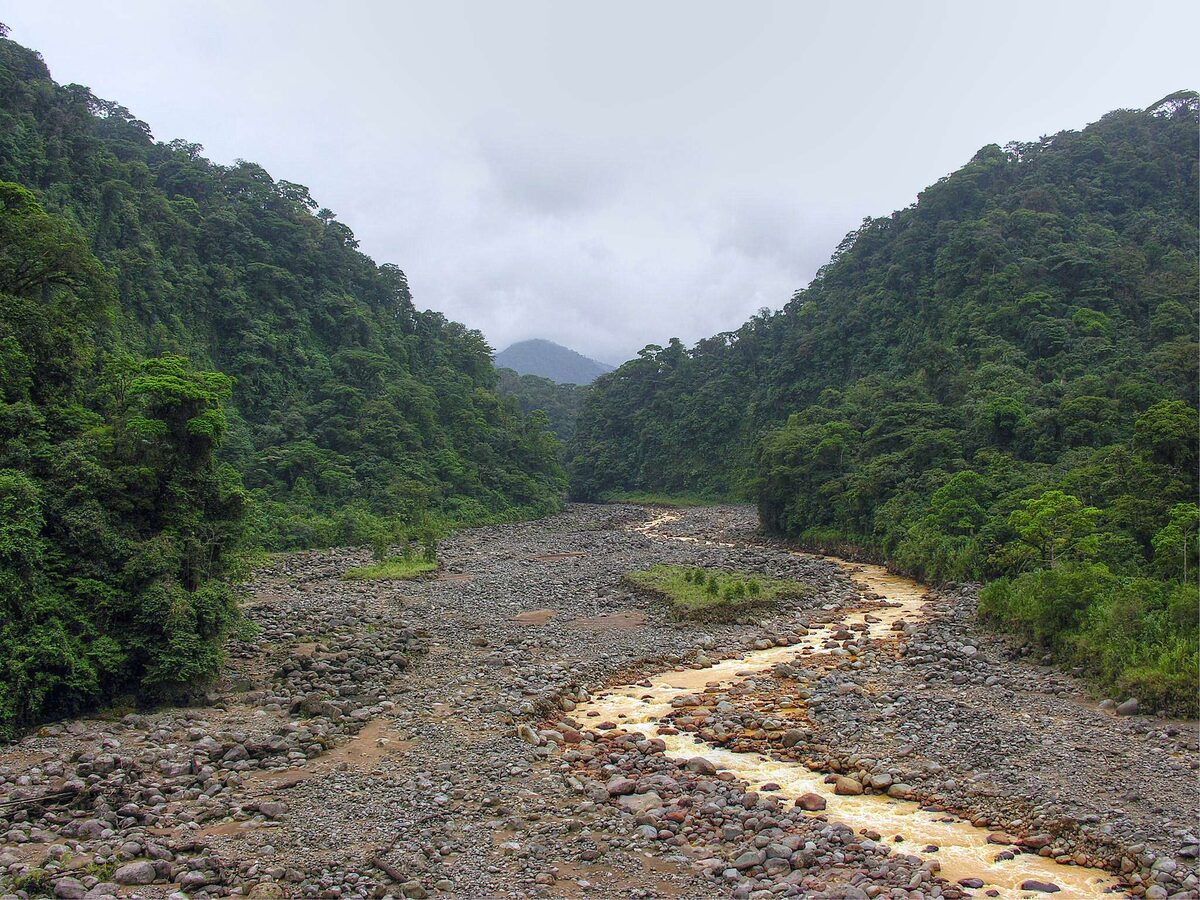
What it did was attach a date to a loss. The cloud forests above San Vito were "virtually intact" in 1967, Raven remembered, the slopes "heavily clothed with forests" running down to the river. He added one flat sentence that did the rest of the work: the eastern Osa Peninsula and the country around San Vito "were both completely deforested before another decade had passed." He had seen the fairyland and the clearing of it inside the span of his own return visits. The coevolution theorist understood better than almost anyone what a forest like that contained, how many millions of years of reciprocal evolution were folded into it, and he had watched a chainsaw economy take it apart in a few seasons. The wonder and the loss arrived together, and the urgency that defined the rest of his career grew out of the gap between them.
The Island Problem
One field station made the danger concrete. In 1968 the Organization for Tropical Studies acquired Finca La Selva, a patch of Caribbean lowland forest in Sarapiquí, and built it into one of the world's great tropical research sites. From the start, the people who ran it feared the obvious thing: that the forest around La Selva would be cleared until the station was left as "an island of vegetation," cut off, slowly bleeding species. The fix was geographic. Above La Selva, along the mountain ridge, rose Braulio Carrillo National Park, created in 1978 to shield the forest from the new San José–Guápiles highway then being cut through it. If a strip of protected land could be run down the mountainside to connect the park to the station, plants and animals could migrate up and down the gradient instead of being stranded on a lowland island.
This is where Raven did his single most concrete piece of Costa Rican conservation. By then he had left Stanford for St. Louis, taking over the Missouri Botanical Garden in 1971, and he had pushed Washington University to join the Organization for Tropical Studies so its students could learn the tropics; it joined in 1977 and he took a seat on the board, which he held until 1991. In 1979, with Bill Burley of The Nature Conservancy and the backing of the OTS board, Raven set out, by his own account, to raise 1.7 million dollars to buy the land that would link La Selva to Braulio Carrillo. The campaign worked. The connecting ground was purchased parcel by parcel over the next couple of years, and the island problem was solved before it could happen. The corridor became the Braulio Carrillo–La Selva altitudinal transect, one of the best-preserved protected elevation gradients in the tropics, an arm of the national park running down to the lowlands at La Selva. William Allen's history of the Guanacaste forest restoration credits Raven plainly with helping to create Braulio Carrillo itself.
Raven rose inside the organization that had brought him south. He served on its board through the early 1980s and was elected president of the Organization for Tropical Studies in March 1985. As one of his first acts he steered the board to adopt the organization's first mission statement, committing it to leadership in education, research, and the wise use of natural resources in the tropics. The presidency came at an uncomfortable moment. Through the 1980s and 1990s, Costa Rican scientists had criticized La Selva as a "gringo enclave," a place where foreign researchers took knowledge and specimens out of the country while Costa Ricans were underrepresented and underpaid. Raven's tenure is remembered as part of a turn toward taking those complaints seriously, broadening the courses, adding instruction in Spanish, and improving relations with the host country. The first Costa Rican to hold the OTS presidency, the geneticist Pedro León, was elected in 1997.
He also lent his weight to the era's most dramatic Costa Rican conservation campaign, the rebuilding of the dry forest in Guanacaste. Daniel Janzen, the ecologist Raven had first seen in the field in 1967, was leading a drive to buy and restore land around Santa Rosa, and he treated Raven as a confidant and a sounding board. The two corresponded steadily through 1986 and 1987 about strategy, fund-raising, and field news; in one letter Janzen reported, with obvious delight, the return of a jaguar to newly protected land at Cerro El Hacha and, on the slope of Orosí, a probable giant anteater, the first he had seen alive in twenty-three years in Costa Rica. Raven worked the donor side. At an American Association for the Advancement of Science keynote titled "We're Killing Our World," he offered Guanacaste as a hopeful example and insisted, over resistance from senior officials, that Janzen's fund-raising flyers be placed on the chairs in the hall. In October 1987 he co-signed a letter to The New York Times with E.O. Wilson and Thomas Eisner, appealing for help to buy the Santa Elena hacienda, a 40,000-acre tract between two halves of the national park that had recently held a CIA-linked airstrip. At 4 dollars an acre, the three wrote, "the venture may well be the conservation bargain of the century."
Writing the Country's Flora
Raven's quietest Costa Rican legacy is also his most durable, and he made sure it would not carry his name. In 1986, as director of the Missouri Botanical Garden, he asked two of his botanists, Barry Hammel and Michael Grayum, to take up the idea of a complete Manual de Plantas de Costa Rica, a manual of all the country's plants. The Costa Rican history of the project credits him as one of its principal inspirers. The decision that mattered most was where it would live. By deliberate choice the project was based in Costa Rica, not Missouri, housed first at the Museo Nacional and then at the new Instituto Nacional de Biodiversidad, and written in Spanish as an illustrated guide that Costa Ricans could use. The family treatments were largely the work of Costa Rican botanists, among them Nelson Zamora, Francisco Morales, Jorge Gómez-Laurito, Alexánder Rodríguez, and Quírico Jiménez. The Manual ran from 1987 to its eighth and final volume at the end of 2020, more than three decades, and catalogued over 9,000 species of seed plants in 237 families. Raven arranged for Costa Ricans to write their own flora, with the world's richest botanical garden as partner and the work owned in Costa Rica.
His other Costa Rican ties, as recorded in his own curriculum vitae, followed the same pattern of long, formal support. He was Honorary Curator of Phanerogams at the Museo Nacional from 1980, received a special citation from the country's First Lady in 1985 for his conservation and research work there, and sat on the international advisory board of the Instituto Nacional de Biodiversidad from 1997. Costa Rica was, for him, both a place he loved and a proof of concept. From his first visit he marveled that a country somewhat smaller than West Virginia held roughly four times as many native plant species, about 10,000 of them. His 1974 work with the paleobotanist Daniel Axelrod, reading plant distributions through the new science of plate tectonics, had convinced him to aim the Missouri Botanical Garden's research at the most diverse and least studied tropical regions on Earth. Costa Rica was an early focus, and the Garden's tropical programs grew to include Peru, Bolivia, Madagascar, and China.
The Diminishing Forests
What Raven learned in a Costa Rican forest, he spent forty years aiming at the world. In September 1986 the National Academy of Sciences and the Smithsonian held the National Forum on BioDiversity in Washington, the meeting that put the word biodiversity into wide circulation. Raven, then president of the Organization for Tropical Studies, wrote the chapter on tropical forests, "Our Diminishing Tropical Forests." Its argument was blunt and quantified. Tropical forests, he wrote, are "home to at least two-thirds of the world's organisms," no fewer than 3 million species and possibly ten times that, while only about 500,000 had been named. Most of those forests, he predicted, would be destroyed or badly damaged within twenty-five years. The coming wave of extinction would run "at least 1,000 times the normal rate," a pace not seen since the end of the Cretaceous. Some 25,000 plant species, about 5 a day, would vanish by the century's end, and roughly 50,000 plant species, he wrote, would "vanish forever during our lives."
He made the case in terms a legislator could feel. "We obtain 85% of our food directly or indirectly from just 20 kinds of plants," he wrote, "and about two-thirds from just three: maize, wheat, and rice." Every species lost was a tested set of genes, a piece of a living library that could never be reassembled once burned. He came back to the warning again and again. As president of the XVI International Botanical Congress, held in St. Louis in 1999 before more than 4,000 scientists from 100 countries, he released a paper called "Plants in Peril: What Should We Do?" predicting that between one-third and two-thirds of all plant and animal species could be lost in the second half of the coming century. "In the face of the worldwide extinction crisis," he said, "we should redouble our efforts to learn about life on Earth while it is still relatively well represented."
He insisted on plants when the conservation world preferred animals. Donors warmed to tigers and pandas; Raven argued, in the words of his colleague Pete Lowry, that "understanding the fundamental role plants play in sustaining the ecology of our planet is every bit as important." His own version was simpler. "We depend entirely on plants for our lives," he told a St. Louis reporter in 2018. "Food, medicines, building materials, chemicals. When species begin to be lost, the ecosystems they lived in get bashed, too." His prescriptions were practical and unsentimental. Protected areas were essential and still not enough; conservation had to reach into farmland and cities, address the needs of the world's poor as well as the consumption of the rich, and start with children, because interest in nature had to be cultivated. Science, he said, could describe the consequences of an action, but the decision about what to do remained political. He resisted despair on principle. "The situation now is better than it will ever be in the future," he liked to say. "The sooner we act the better."
Not everything he believed sat easily with his fellow environmentalists. Raven supported genetically modified crops, convinced that feeding a growing population would require biotechnology and that GMO crops could reduce pesticide use, and the Missouri Botanical Garden's ties to Monsanto and the nearby Donald Danforth Plant Science Center drew steady criticism. He was unrepentant, calling the GMO debate a marketing ploy and noting that "transferring genes is very common in nature." On climate he was incandescent. He called the United States' withdrawal from the Paris Accord "plain evil, it's beyond politics," and he had advised Pope Francis on the 2015 climate encyclical, arguing that the poor would have the hardest time adapting to what was coming and that climate change had to be treated as a moral question and not only an environmental one.
A Kind of Immortality
The institution he ran for almost four decades grew into something unrecognizable. When Raven arrived in 1971 the Missouri Botanical Garden had 3 doctoral botanists and a staff of about 150. By the time he retired in 2010 the staff was close to 500, with nearly 50 research scientists, and he had tripled the herbarium into one of the largest plant collections on Earth. He launched TROPICOS, now one of the world's great botanical databases, and spent thirty-five years co-editing the Flora of China, a 50-volume encyclopedia of the more than 31,000 vascular plant species of China, completed in 2013. Generations of botanists called themselves "Raven's army." Colleagues described a man who told jokes constantly and worked without rest, writing his books at home at night and arriving early to build the Garden by day. Paul Ehrlich, in old age, wrote that his friend "has garnered more honors and prizes than any other scientist I've known personally."
The round table in the Stanford Herbarium where he and Ehrlich invented coevolution is preserved today at the Jasper Ridge reserve, and the two men were photographed standing on it on Ehrlich's seventy-fifth birthday. Raven married four times, kept reporting to his office at the Garden in retirement, driving in from Wildwood, and went on traveling to board meetings in Rome and Washington out of an undimmed concern for the planet. He died in St. Louis on April 25, 2026, at age 89, weeks before what would have been his ninetieth birthday. The Garden held his Celebration of Life on that birthday, June 13, 2026.
He had already written the ending himself, in the memoir he published in 2021. "We have relatively short lives," he wrote, "and yet by preserving the world in a condition that is worthy of us, we win a kind of immortality. We become stewards of what the world is." It was the conviction he had carried out of a Costa Rican forest fifty-four years earlier, when the wonder and the loss arrived in the same month, and it organized everything he did with the time in between.
Resources
Books
Raven's memoir and final book. The Organization for Tropical Studies published the Costa Rica passages (the 1967 course, the collecting, the La Selva–Braulio Carrillo corridor) and the "kind of immortality" closing from p. 277.
The history of the Guanacaste dry-forest restoration. Source for Raven's role helping create Braulio Carrillo National Park, the "We're Killing Our World" keynote, the Janzen correspondence, and the 1987 New York Times letter on Santa Elena.
Raven's chapter from the 1986 National Forum on BioDiversity, in his own words. Source for the "two-thirds of the world's organisms," the "1,000 times the normal rate," the 25,000-plant and 5-species-a-day figures, and the "85% of our food from 20 plants" argument.
The memoir of Raven's coevolution coauthor. Source for the 1963 origin of coevolution over coffee at the Stanford Herbarium round table, the friendship, and Ehrlich's assessment of Raven's honors.
The volume Raven coedited and introduced. Source for his late-career conservation argument, his case for empowering resident tropical scientists, and his global species estimates.
Obituaries and interviews
National Geographic's obituary. Source for the Garden's growth under Raven, the plants-over-animals argument, and the Raven–Axelrod plate-tectonics turn toward the tropics.
Mongabay's obituary, the fullest treatment of Raven's ideas: sustainability, the obligation that comes with knowledge, and his resistance to fatalism.
The richest source for personal and family detail, the childhood "clubhouse" quote, the 2018 "we depend entirely on plants" quote, the climate statements, and the GMO controversy.
A long 2007 interview. Source for Raven's later extinction projections, the global ecological-footprint figures, and the Garden's tropical field programs.
Coverage of Raven's 1999 St. Louis mass-extinction statement as president of the XVI International Botanical Congress, with the "redouble our efforts" quote and the one-third-to-two-thirds prediction.
Academic
The paper that named coevolution. A Citation Classic, cited more than 5,000 times by 2021 (per Ehrlich's memoir).
The peer-reviewed institutional history of OTS. The strongest independent source for Raven's March 1985 election as OTS president, his board service, and the "gringo enclave" debate.
A Costa Rican history of the Manual de Plantas de Costa Rica by one of its contributors. Credits Raven as a principal inspirer and dates his 1986 request to Hammel and Grayum.
Raven and Wilson's call to inventory the world's species, the direct precursor to the all-taxa biodiversity inventory movement pioneered in Costa Rica.
Raven's own CV, the source of record for his Costa Rican roles: Honorary Curator of Phanerogams at the Museo Nacional (from 1980), the 1985 special citation from First Lady Doris Yankelewitz de Monge, and the INBio international advisory board (from 1997).
The official 2000 National Medal of Science citation, crediting Raven with "the introduction of the concept of coevolution" and his contributions to biodiversity conservation.
Project record for the Flora of China that Raven co-edited: a 50-volume work (25 text, 25 illustration) covering the more than 31,000 vascular plant species of China, published 1994–2013.
Organizations
The Sarapiquí research station that Raven taught near and later helped protect, by raising the money for the corridor connecting it to Braulio Carrillo National Park.
The Garden's tribute to its president of nearly four decades. Source for the institutional growth figures, the awards, and the Celebration of Life on June 13, 2026.
Related Coalición Floresta profiles
The ecologist Raven first saw in the field in 1967 and corresponded with through the 1986–87 Guanacaste campaign. Raven praised Janzen's dry-forest restoration in the 1988 BioDiversity volume.
Founding director of INBio, where the Manual de Plantas de Costa Rica was based and where Raven sat on the international advisory board from 1997.
Raven's coauthor on the 1992 "Fifty-Year Plan for Biodiversity Surveys" and cosignatory of the 1987 New York Times letter on Santa Elena; both contributed to the 1988 BioDiversity volume Wilson edited.
Fellow speaker at the 1986 National Forum on BioDiversity and one of the scientists Janzen turned to alongside Raven during the Guanacaste campaign.
The ecologist whose boarded-up house at Finca La Selva Raven passed on his first 1967 visit, before OTS turned the property into its flagship research station.
Cofounder of the Tropical Science Center, whose Rincón station on the Osa Peninsula hosted the early OTS courses, including the field sites where Raven taught and collected in 1967.