The Woman Who Conserved Chirripó
Weeks after a conservationist was murdered, Adelaida Chaverri walked into Corcovado to document what was worth dying for. She spent the rest of her life defending its highest peak.
In 1975, a Swedish conservationist named Olof Wessberg was murdered in the Osa Peninsula while surveying land for a national park. His body was found in a shallow grave beneath leaf litter. The killer claimed he was acting on behalf of residents who did not want their land to become a park. Armed squatters had recently captured a logging company's staff and tractor in the Corcovado Basin, warning that if anyone tried to stop them, "blood would flow."
Weeks later, a young Costa Rican ecologist walked into that forest. Adelaida Chaverri was twenty-seven years old. She went with Karen Wessberg, the murdered man's widow, and Álvaro Ugalde, who was building the national parks system. Gold miners worked the rivers. Loggers had plans to clear the peninsula. The forest that had cost a man his life still needed to be documented.
What Chaverri found was the last great tract of Pacific lowland rainforest in Central America. She documented its biodiversity and proposed that it become a national park. President Oduber, responding to the murder, announced on television that because "the Swede had given his life to protect our rainforests," it was "Costa Rica's duty to realize his dream." On October 24, 1975, Oduber signed the decree creating Corcovado. The forest that killed Wessberg became untouchable. But Corcovado was not Adelaida's mountain. Three months before Oduber signed that decree, she had won a different battle: the protection of Costa Rica's highest peak. That was the place she would spend the rest of her life defending.
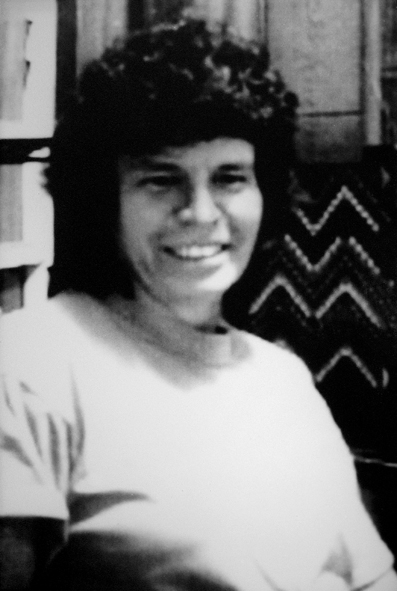
The Sky Islands
Adelaida Chaverri Polini was born on May 21, 1947, in San José. Her father, Gil Chaverri Rodríguez, was one of Costa Rica's most distinguished chemists, known for publishing an original arrangement of the periodic table. At Liceo de Costa Rica, Gil had been classmates with Daniel Oduber, who would later sign both Chirripó and Corcovado into law as president. Adelaida grew up watching her father map the invisible architecture of atoms. She would spend her life mapping mountains.
She studied mathematics at the University of Costa Rica before winning a scholarship to Bryn Mawr College in Pennsylvania. There, in 1970, she met a young American biologist named Christopher Vaughan. They married in December 1972 and returned to Costa Rica together. Christopher joined the National Parks Service as a field biologist, trekking through violent land disputes in the Osa Peninsula, navigating with unreliable guides, sleeping amid scorpions, all to inventory the nation's wildlands for Mario Boza. Adelaida shifted from mathematics to ecology. They co-founded ASCONA, the Costa Rican Association for the Conservation of Nature, using public education and political action to build support for the parks being created.
They were fighting a losing battle. Costa Rica in the 1970s had one of the fastest deforestation rates in the world, losing 50,000 hectares of forest per year. Cattle ranchers burned rainforest for pasture. Loggers cleared what remained. By the 1980s, two-thirds of the country's original forest cover would be gone. But Adelaida's focus was on one place the chainsaws hadn't reached: Cerro Chirripó, Costa Rica's highest peak.
At the summit of Chirripó lies the páramo: a high-altitude grassland above the tree line. Costa Rica's páramo is the northernmost on Earth, isolated at the continent's narrowest point. The peaks function as sky islands, cut off from one another across geological time, allowing species to evolve in isolation. Within just 31 square kilometers live 50 plant species found nowhere else on Earth, including five genera that exist only on these summits. Below them, in the cloud forests and bamboo thickets that ring the peaks, live tapirs, pumas, and the volcano hummingbird.
In the early 1970s, this entire ecosystem had no legal protection. What happened next was already visible on Cerro de la Muerte, another peak along the Pan-American Highway. Fires had burned away the oak forests there, and páramo species colonized the artificial clearings, creating a degraded "faux páramo" of bamboo clones where ancient forest once stood. The same fate awaited Chirripó. Settlers from Santa María de Dota had been farming the valleys below since the 1930s. Fires set for pasture crept upward. Without protection, the last undisturbed páramo in Costa Rica would become another roadside curiosity.
From 1971 onward, Adelaida led the Club de Montañismo at the University of Costa Rica. What began as a hiking group became an organizing force. She and Christopher, along with Roger Bourillon, Alfonso Mata, and Jorge Moya, spent four years building the case for protection. They trekked from Cerro Cuericí to the summit, cataloging species. They hiked down to the farming settlements that ringed the mountain and explained what lived above the clouds. They brought their inventory to the legislature, deputy by deputy, arguing that Costa Rica's highest peak was more than rock and bamboo. It was a system of rivers, endemic plants, and evolutionary isolation that existed nowhere else on Earth. On July 29, 1975, four years after the campaign began, the legislature established Parque Nacional Chirripó.
The Fire
Eight months after Chirripó became a national park, fire came to the páramo.
In March 1976, flames swept across the bamboo and shrub-dominated highlands. The fire burned more than 5,000 hectares, consuming nearly the entire páramo and large swaths of adjacent forest. Scientists and journalists who surveyed the damage predicted "irreversible harm." The newly protected park seemed doomed before it had begun.
Adelaida, Christopher, and the botanist Luis Poveda Álvarez climbed to the summit to document what remained. What they found was catastrophic. The fire had raced through the high grasslands faster than the animals could flee. Some cottontail rabbits had been unable to escape and were charred almost instantaneously, their bodies lying where the flames overtook them. Charred bamboo stalks stood in silent rows. The endemic shrubs that had taken decades to grow were reduced to ash.
But Adelaida did not accept the predictions of irreversible damage. Nine months after the fire, she and Christopher published a newspaper article in La Nación: "El macizo de Chirripó está resucitando." The Chirripó massif is resurrecting. The fire became her research agenda. For more than a decade, she returned to the burned páramo, establishing plots and measuring recovery. Working with researchers like Sally Horn, she documented how the bamboo Swallenochloa subtessellata regrew, how the shrub Vaccinium consanguineum increased in relative importance, how the ecosystem slowly reassembled itself. Nine years after the fire, the bamboo had recovered its original height. The predictions of permanent destruction had been wrong.
The fire gave Adelaida her life's work. She developed Chirripó's first management plan, a document that still guides the park today. Through the 1980s and 1990s, she directed the ECOMA research program at the Universidad Nacional, investigating high-elevation ecology across the Talamanca mountains.
Her most remarkable discovery went unnoticed for seventeen years. In 1983, at 3,775 meters, she collected a specimen of Luzula vulcanica. The botanist Barry Hammel later recognized it as a new record for Mesoamerican flora, a plant never before documented this far south. It had been sitting in herbarium collections since 1983, waiting for someone to understand what Adelaida had found.
The Teacher
From 1975 until 2001, Adelaida taught forest ecology at the Universidad Nacional, taking students into the mountains she had spent her life studying. Colleagues remembered her as someone who approached nature with "spiritual and simple" values, disconnected from commercial interests.
In January 2002, Adelaida was diagnosed with cancer. She was fifty-four years old and had never finished her Ph.D., which she had planned to complete at the University of Amsterdam. Instead, she focused on completing her book on the natural history of Chirripó, the mountain she had fought to protect since she was twenty-four.
She died on September 20, 2003, at the age of fifty-six. Her remains are interred in San Isidro de Heredia. At her memorial, her family read Mary Elizabeth Frye's poem:
Do not stand at my grave and weep
I am not there. I do not sleep.I am a thousand winds that blow.
I am the diamond glints on snow.
I am the sunlight on ripened grain.
I am the gentle autumn rain.When you awaken in the morning's hush
I am the swift uplifting rush
Of quiet birds in circled flight.
I am the soft stars that shine at night.Do not stand at my grave and cry;
— Mary Elizabeth Frye, "Do Not Stand at My Grave and Weep"
I am not there. I did not die.
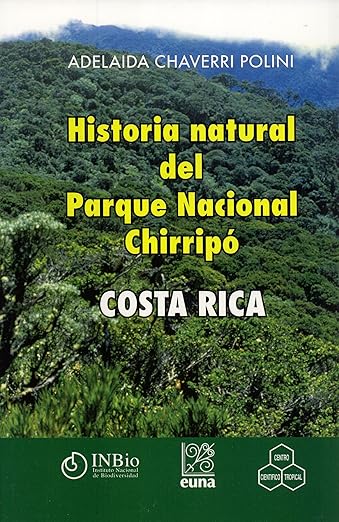
Eighteen years after her death, Costa Rica's legislature finally acknowledged what her colleagues had long known. On July 21, 2021, Adelaida Chaverri Polini was declared Benemérita de la Patria, the nation's highest honor. Her book on Chirripó's natural history was published in 2008, five years after her death. On the summit she fought to protect, the Luzula vulcanica she collected in 1983 still blooms at 3,775 meters.
Resources & Further Reading
Biographies and Tributes
Comprehensive obituary from the journal where she published much of her research, detailing her career and contributions.
Profile from the Beneméritos series recognizing her contributions to Costa Rica's national parks and páramo ecology.
Entry in Costa Rica's National Women's Institute gallery honoring distinguished Costa Rican women.
Related Personas
Adelaida's former husband and conservation partner, who helped build Costa Rica's national parks system and later pioneered community-based macaw conservation.
The Swedish conservationist whose murder in 1974 led to the creation of Corcovado National Park, which Adelaida helped document.
The national parks director who accompanied Adelaida on the Corcovado reconnaissance after Wessberg's murder.
A key collaborator in the Chirripó campaign and founder of Costa Rica's national parks system.
Primary Sources
Christopher Vaughan's memoir of surveying 26 potential national parks as a field biologist from 1971-1975, including the campaigns for Chirripó and Corcovado.
Adelaida's comprehensive natural history of Chirripó, completed posthumously by colleagues from her notes and published by INBio in 2008.
Scientific Context
Profile of Adelaida's father, the Costa Rican chemist who created an original arrangement of the periodic table.
Overview of the high-altitude ecosystem that Adelaida spent her career studying and protecting.
Sally Horn's study documenting páramo recovery after the fire, building on Adelaida's pioneering fieldwork.
Review of the definitive book on Costa Rica's páramo ecosystems, dedicated to Adelaida Chaverri as pioneer of this research field.