An Airport Where the Weeds Are
When the banana company left the Diquís Delta in 1984, 350 farming families stayed and built lives on the land. Now the government wants to build an international airport on their fincas. The government's own aviation authority abandoned the project in 2014, and SETENA never approved it. The Procuraduría has found comparable plans near the wetland legally unviable. The government revived it anyway.
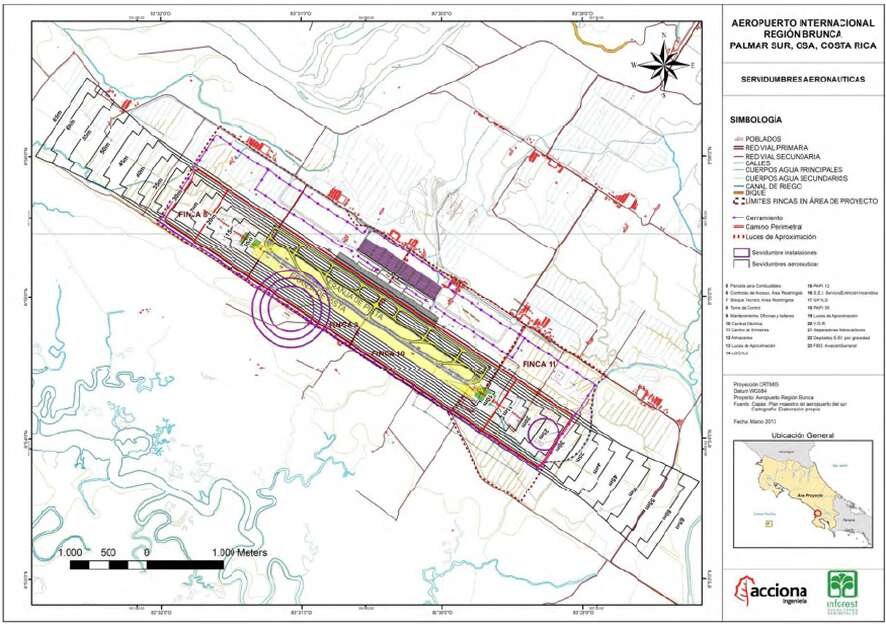
The banana company arrived in the Diquís Delta in the 1930s, carving out thousands of hectares of plantation land. It built an airstrip, a dispensary, and housing for workers at Palmar Sur. In 1984, after a three-month strike, the company abandoned the region and left behind 3,000 unemployed workers. The government purchased the land. The families stayed, planting bananas, yucca, beans, and coconuts on fincas they had worked for decades. They built schools and churches. They raised children. They never received land titles. Palmar Sur still has a small regional aerodrome. What the government proposes is something different: a new international airport, built on the agricultural fincas where those families live. Government officials selected the site because it was "one of the few places free of wetlands." The site is a flood delta formed by sediments from the Grande de Térraba and Sierpe rivers. In 2017, Tropical Storm Nate caused extensive damage across the fincas, demonstrating that the proposed airport site floods when storms hit the southern Pacific.
The idea of building a new international airport on those fincas first took formal shape in 2007, when President Óscar Arias signed an agreement with MOPT, CETAC, and JUDESUR to begin feasibility studies. In 2010, President Laura Chinchilla signed Decreto Ejecutivo 36226-MOPT, declaring "of public interest" all actions to locate and construct an international airport in the southern zone. The decree named four fincas totaling over 950 hectares across the former banana lands, assigned the project to the Consejo Técnico de Aviación Civil, and directed JUDESUR to fund it. The original Phase 1 estimate was $40 million for a 2,200-meter runway.
Government officials promoted the project as "el aeropuerto verde" (the green airport), describing it as "environmentally sustainable, in harmony with the natural environment." The International Civil Aviation Organization (ICAO) produced a Plan Maestro for the site, a preliminary site assessment that identified the location and listed technical justifications: weak crosswinds, homogeneous alluvial soil suitable for runways, sufficient space, connections to the Costanera highway and the Interamericana. It was not the comprehensive master plan, with demand forecasts, financial analysis, environmental studies, and phased construction design, that ICAO standards require before an airport can be built. The Plan said nothing about the social situation on the fincas, nothing about the families who had been living and farming there for over two decades. It described the land as formerly occupied by the banana company, noting that "some sectors are planted with bananas and others are invaded by weeds."
The Communities
Approximately 350 farming families on Fincas 9 and 10 would be displaced by the airport. They have cultivated plantains, corn, and fruit on this land for decades following the banana company's departure, building schools, churches, and meeting halls on fincas where they never received property titles. The institutional history of these fincas compounds the injustice. When the cooperatives that the families had formed collapsed in the 1990s, INFOCOOP told the former cooperative members on Finca 9 to stay and work the land as "cuidadores" (caretakers). Then in 2004 and 2010, INFOCOOP attempted to evict those same people. On Finca 10, INDER began a land-qualification process in 2017 to evaluate farming families for eligibility for land grants, but INDER functionaries told residents directly that because of the airport decree, the institution could not carry out any large-scale productive projects on the fincas covered by it. The decree blocks agrarian development on land whose custodian institution exists to promote agrarian development. After Tropical Storm Nate devastated the fincas in 2017, INDER provided families with tools, zinc roofing, and chickens to rebuild, but told them they could only plant annual crops like yucca and plantain. Permanent crops like fruit trees were prohibited because the airport might still happen. When families asked INDER about the status of the project, the institution had no answer.
The Coordinadora de Lucha Sur-Sur began organizing against the project in 2007, and the Organización de Lucha Campesina por Nuestras Tierras del Sur was founded in 2010, the year the government declared the airport of public interest. Their demands were access to land for campesino production, defense of the fincas' ecological, archaeological, and agricultural value, and rejection of any project that threatened those elements. The UCR's Kioscos Socioambientales program, the Red de Mujeres Rurales, the Asociación de Iniciativas Populares Ditsö, the Federación Costarricense para la Conservación (FECON), and the alternative media outlet Sociovoz supported the resistance. A documentary film, "Botas con machete: La cultura campesina amenazada en la zona sur de Costa Rica," was produced in 2011 to document the threat of displacement. (We have embedded it below and added English subtitles. It is worth your time.)
That same year, the opposition escalated to the point that the Comisión Permanente Especial de Ambiente of the Asamblea Legislativa summoned both Aviación Civil and the campesino organization to testify. Aviación Civil told the legislators that the airport fincas had excellent aeronautical conditions, that cultivation was limited to plantain at the extremes, and that "in reality there are few families to relocate." The campesino organization responded with a map showing otherwise: "Finca 9 and Finca 10 are two campesino communities. Finca 9 and Finca 10 have their caseríos, their plazas, their recreation centers. We use those lands, planting yucca, banana, papaya, beans, rice, ayote, and everything related to agriculture. Groups of men work there, laboring the land, many times with their bare hands, because we have no financing, no economic resources to work with, but we do it with determination to maintain the campesino culture."
The community is now divided. Since President Chaves revived the project in 2023, many families have been offered compensation and support the airport as a path to the land payments and economic investment they have waited decades to receive. For families without property titles who have watched successive governments fail to formalize their land rights, the promise of compensation is tangible in a way that environmental arguments are not. The opposition that remains is concentrated among those who have seen what airport-driven development produced elsewhere and those whose livelihoods depend on the land itself rather than a future payout.
What the Law Protects
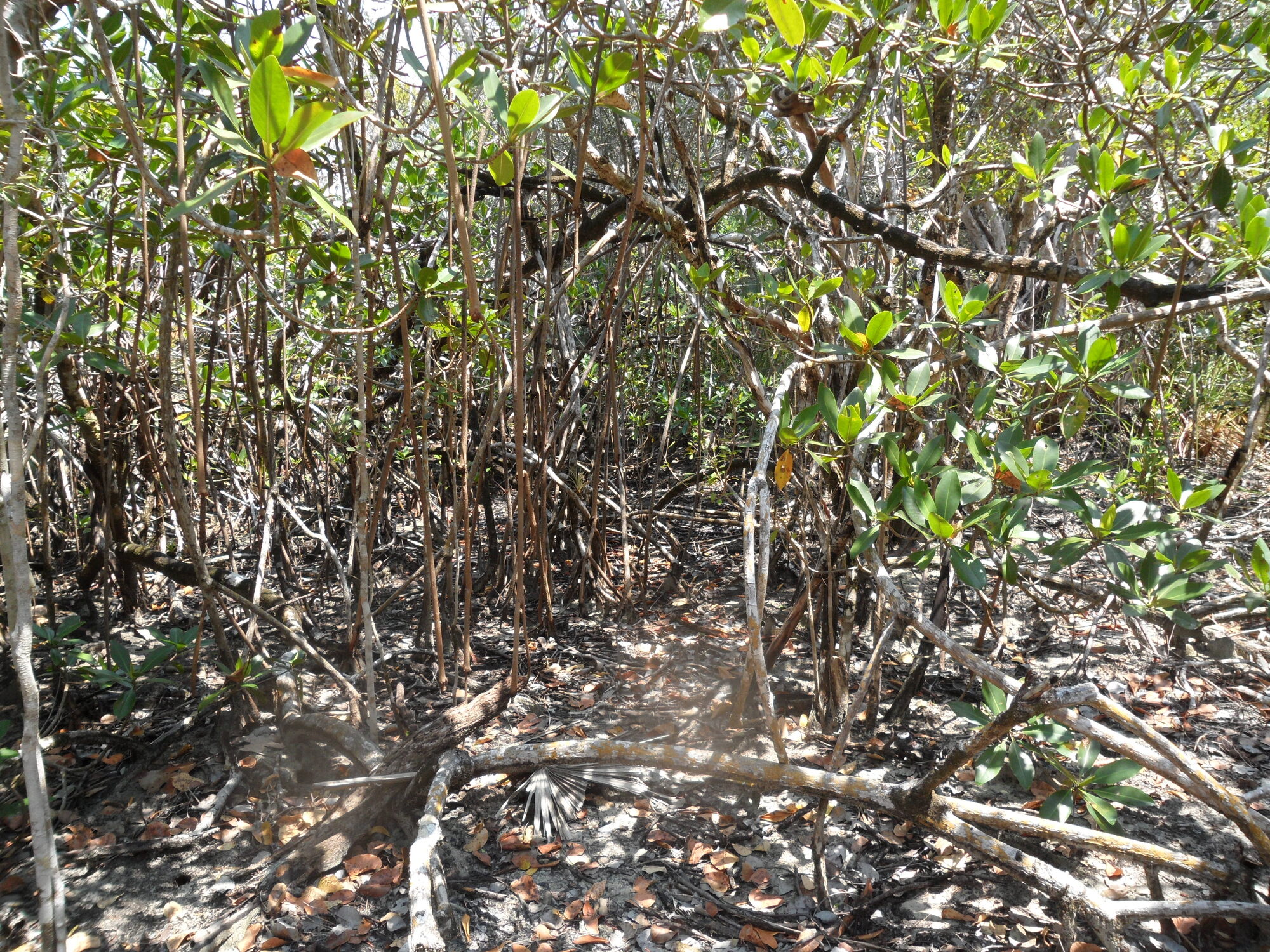
The Térraba-Sierpe National Wetland is a Ramsar site spanning 30,654 hectares, declared by Decreto Ejecutivo 22993-MIRENEM in 1994 and designated under the Ramsar Convention through Ley 7224. It is the largest wetland in Costa Rica and contains the largest intact mangrove forest on Central America's Pacific coast. Researchers value its ecosystem services between $300 million and $2 billion, reflecting its role in carbon storage, fisheries, and biodiversity support. The site hosts 159 documented bird species. In its marine zones, the Important Shark and Ray Area designation protects 14 threatened species.
Article 17 of the Ley Orgánica del Ambiente (7554) requires SETENA's prior approval as a "requisito indispensable" before any project that could alter or destroy environmental elements may begin. No such approval exists for the Southern Zone airport. Article 38 of the same law provides that protected areas can only be reduced by an act of the Legislative Assembly, after prior technical studies justifying the measure. The Sala Constitucional has added a third requirement: compensation with an area of equal size (Voto 12887-2014). None of these conditions have been met.
In 2022 and 2023, the Procuraduría General de la República issued two opinions (PGR-OJ-168-2022 and PGR-OJ-099-2023) on a bill that proposed titling land in Villa Sierpe, adjacent to the Térraba-Sierpe wetland. Both times, the government's own legal advisor found the project "inviable desde el punto de vista jurídico" (legally unviable) because it would reduce environmental protections near the wetland without prior technical studies, in violation of the constitutional principles of non-regression, objectivation of environmental protection, and Costa Rica's obligations under the Ramsar Convention. If titling residential land near the wetland is legally unviable, an international airport two to three kilometers away faces at least the same legal standard.
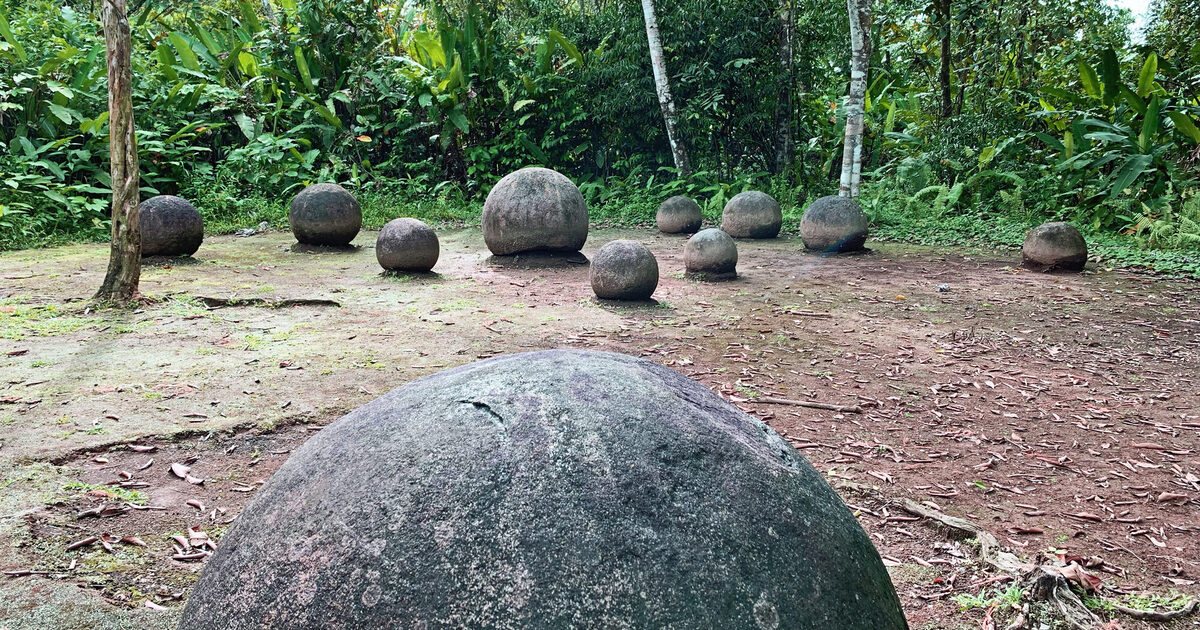
Three kilometers from the proposed runway lies the Diquís Stone Spheres UNESCO World Heritage Site, designated in 2014. UNESCO has specifically recommended Heritage Impact Assessments for the airport project. The designated site at Finca 6 covers 10 hectares, but the archaeological footprint extends far beyond it. At Finca 4 (Chánguena), an area of at least 180 hectares contains significant pre-Columbian mounds with elevated structures built from earth fills and supported by walls of river cobbles. The UNESCO nomination dossier identified Finca 4 as the largest and most complex archaeological site in the delta, with characteristics similar to the four designated sites, and noted that additional sites could be proposed for future inclusion in the World Heritage designation. Part of the proposed airport would be built on Finca 11, which sits directly across the road from the Finca 6 visitor center and the original stone sphere alignment.
Costa Rica has four UNESCO World Heritage Sites. The World Heritage Convention's Article 11.4 provides for a "List of World Heritage in Danger" for sites threatened by "large-scale public or private projects" or "rapid urban or tourist development." UNESCO has revoked World Heritage status in cases where the conditions that earned the designation were lost. If the airport degrades the stone sphere sites, Costa Rica risks losing one of its four sites with this international distinction.
A Project Already Abandoned
In 2013, the Dirección General de Aviación Civil submitted a 2,843-page Environmental Impact Assessment to SETENA under expediente D1-11752-2013-SETENA, prepared by the Acciona-Inforest consortium. SETENA placed the study in "custodia," meaning the agency could not grant environmental viability, and sent the document to multiple state institutions for technical review. The Universidad de Costa Rica and the Universidad Nacional participated alongside professionals in biology, geography, geology, and sociology. The majority of institutions identified significant inconsistencies: incomplete study phases, sampling with little scientific validity, a lack of solid socioeconomic data, and citation problems. UCR argued that entire chapters of the EIA, including the biological and socioeconomic studies, needed to be completely redefined.
In 2014, the government's own aviation council, the Consejo Técnico de Aviación Civil, declared the feasibility study bidding void, requested the return of funds from the International Civil Aviation Organization, and concluded that the country should strengthen regional airstrips instead. SETENA, for its part, never granted the project environmental viability.
The cancellation did not stop the political promises. In the 2013 campaign, presidential candidate Johnny Araya called the airport "un proyecto detonante" for the southern zone. In the 2018 campaign, Libertario candidate Otto Guevara promised to leave the "aeropuerto regional internacional de Osa" operational by the end of his term. La República reported in late 2017 that "Aviación Civil ya presentó los estudios ambientales ante SETENA y adelanta el proceso de adquisición de fincas en Palmar Sur," three years after the government's own aviation council had voided the feasibility tender and requested the return of the ICAO funds. The decree of public interest remained in force, and successive candidates treated it as a live project regardless of that decision.
In February 2023, President Rodrigo Chaves revived the project during a tour of the southern zone. The current plan calls for a 2,600-meter runway designed to handle narrow-body jets (A320s, 737s, and charter flights from North America) on Fincas 8 through 11, within three kilometers of a UNESCO World Heritage Site and two kilometers of Costa Rica's largest wetland. No definitive budget exists because the master plan has not been contracted; estimates range from $40 million to over $80 million, though international media widely reported a $105 million figure that may have been conflated with a separate expansion of the Liberia airport. Whatever the final number, Chaves committed to the project despite the government's own earlier decision to abandon it, despite the project lacking environmental approval, and despite the absence of a new Environmental Impact Assessment. The Sala Constitucional established in Resolución 13100-2010, addressing the Diquís Hydroelectric Project in the same region, that even infrastructure projects declared of national interest are not exempt from environmental impact assessment requirements.
When asked about the archaeological sites near the proposed runway, Chaves dismissed the concern: "Who says, who feeds us the story that it's about protecting our archaeological heritage or building development? The simple fact that there might be something there is no justification for delaying the progress of this zone." MOPT Minister Luis Amador claimed the project already had "technical studies and even a master plan developed by the ICAO, with a defined location on state-owned land." The master plan Amador referenced is the same one the ICAO produced years earlier, the one that described the communities living on the fincas as weeds. Even in 2014, when the project was most active, El Financiero reported that "el plan maestro definitivo" (the definitive master plan) was still pending alongside specific wind studies, airspace studies, and final design. The government knew the existing document was preliminary. No definitive master plan was ever contracted.
Three years later, the project has made no measurable progress. The government's own Mideplan tracking system records 0% advancement as of early 2026. A $560,000 archaeological survey funded by COCESNA, the regional air navigation services corporation that has also financed pre-construction studies for the Orotina airport ($1.5 million) and the San Carlos airport ($400,000), was conducted in 2024. No new Environmental Impact Assessment has been submitted to SETENA. The remaining sequence is archaeological rescue, then environmental studies, then a Heritage Impact Study, then the master plan, then financing, then bidding, then construction. The government projects construction beginning in 2027. This is likely a very optimistic projection.
The Missing Science, the Existing Evidence
In August 2025, Costa Rica's Constitutional Court struck down a SINAC resolution that had increased visitor quotas at Corcovado National Park. The court ruled the measure "lacked scientific justification and violated environmental safeguards." The case exposed a fundamental gap: comprehensive carrying capacity studies for the Osa Peninsula do not exist. Current visitor limits are based on infrastructure capacity rather than ecological thresholds.
This matters for the airport because the Sala Constitucional has repeatedly held that environmental decisions must rest on scientific evidence. The principle of "objectivation of environmental protection" (Voto 2063-2007) requires that government decisions about the environment be grounded in technical studies, not political will. Any new Environmental Impact Assessment for the airport would need to demonstrate that a mass tourism model will not degrade the region's ecosystems. The science to support that claim does not exist. The evidence that does exist points in the opposite direction.
Costa Rica has already tested the model that an international airport at Palmar Sur would enable. The Daniel Oduber International Airport in Liberia opened in 1995. The all-inclusive resort model produces 70-80% economic leakage: vacation packages paid overseas, meals and excursions bundled into upfront payments, profits flowing to international shareholders. Following the Panama Papers and Paradise Papers leaks, investigators revealed that FIFCO and the Schwan Foundation, the two largest investors in Peninsula Papagayo, structured investments through a web of shell companies in tax havens; FIFCO alone routed at least $14.8 million through Cayman Islands entities. In Culebra Bay, live coral cover collapsed from over 40% to under 5% in the decades following resort development. In 2008, inspectors caught the Allegro Papagayo resort dumping raw sewage directly into the bay. Property values increased 400-500% in three years; tourism workers earning $625-800 monthly cannot afford rents of $700-800 for basic studios. Vacancy rates in Cuajiniquil district reached 66.4% as homes sit empty for seasonal tourists while Costa Rica faces a 150,000-home shortage.
The runway was only the catalyst. What followed the Daniel Oduber airport's expansion was a wave of hotels, residential developments, and service industries radiating outward from it. The municipalities that absorbed this growth had regulatory plans between 19 and 42 years out of date; zoning could not contain the sprawl. At Palmar Sur, that sprawl would push directly against the Térraba-Sierpe wetland.
In Guanacaste, 80% of coastal businesses are now foreign-owned according to the Tamarindo Integral Development Association. The pattern has already begun arriving in the southern zone without the airport. A 2025 study of Ojochal, a coastal community approximately 30 km north of Palmar Sur, found that 70-75% of properties are now in foreign hands. Over 3,000 real estate transactions were recorded between 1990 and 2024, with 68% of properties selling between $250,000 and $750,000. Average rents increased 49% in the post-pandemic construction boom. Families who had farmed the land for generations were displaced by the cost of living or forced to integrate as labor in the new tourism economy. The researcher, Óscar Leiva Alpízar, described the process as a "frontera en movimiento" (a moving frontier), shifting from an agricultural frontier to a tourist frontier. A 2024 peer-reviewed study of the airport conflict in the journal Trama confirmed the trajectory: the airport would trigger "un modelo territorial muy distinto al que actualmente hay en la zona sur."
The Sala Constitucional's principle of non-regression (Voto 18836-2014) holds that environmental protection cannot go backward: "En esta materia, el camino es hacia adelante, nunca hacia atrás." Any new Environmental Impact Assessment would need to demonstrate why the model that produced these outcomes in Guanacaste would produce different results in an even more ecologically sensitive region.
The Missing Economic Case
The southern zone has real economic problems. Poverty rates have historically exceeded 30%. Families who have farmed the same land for forty years have no property titles. Roads flood. Schools lack resources. The government says the airport will fix this. Where is the economic study that supports that claim? Where is the analysis showing that a mass tourism development strategy is the best use of tens of millions of dollars in one of Costa Rica's poorest regions? No such study has been published. No comparative analysis of alternative investments has been presented. The government has not demonstrated that an airport would produce better economic outcomes for the southern zone than equivalent investment in land titling, agricultural infrastructure, roads, schools, or clinics, or some other investment designed to create stable, non-seasonal jobs with meaningful career growth. We believe alternative development models exist that would do exactly that.
A researcher interviewed in the 2011 documentary "Botas con machete" described what would follow the airport's construction: "The mega-project of the airport would not come to improve the situation of these people, because it will require a qualified workforce. Companies, hotel corporations will come, and the staff they are going to hire is not the population of this region, but people who are going to come from the Central Meseta, or maybe from other countries, as has happened in Guanacaste."
The only documented evidence of what airport-driven tourism development produces in Costa Rica comes from Guanacaste, and the record is damning. Without an economic study justifying the strategy, the airport revival is political theater: a promise made to a poor region without the analysis to back it up. The government's own aviation council concluded in 2014 that the country should strengthen regional airstrips instead. The Center for Responsible Travel reached the same conclusion independently: "Abandon plans for another international airport and instead upgrade Palmar Sur as a regional airport."
Whatever the outcome of the airport project, one obligation is clear. These families have farmed this land for forty years. The state called them caretakers and then tried to evict them, started a titling process and then told them they could only plant annuals because an airport that may never be built might one day require their removal. If the government builds the airport, they must receive full compensation and genuine relocation. If the government does not build it, they must receive title to the land they have worked since 1984. They cannot be left in limbo for another generation.
Key Sources & Resources
Official Documents & Legal Sources
The 2010 decree declaring the southern zone airport of public interest. Lists specific fincas (8, 9, 10, 11) and assigns the project to CETAC with JUDESUR funding.
Official Ramsar designation documenting 30,654 hectares. Costa Rica's largest wetland and the most significant on Central America's Pacific coast.
UNESCO designation (2014). Airport would be located 3 km from Finca 6. UNESCO recommends Heritage Impact Assessments for the project.
Constitutional Court ruling that SINAC's visitor increase "lacked scientific justification and violated environmental safeguards." No carrying capacity studies exist for Osa Peninsula.
Documents SETENA expediente D1-11752-2013-SETENA and the Consejo Técnico de Aviación Civil's 2014 decision to declare the feasibility study void and strengthen regional airstrips instead.
Legal Opinions & Jurisprudence
The PGR found the Villa Sierpe land titling bill "legally unviable" for violating non-regression, objectivation, and Ramsar Convention obligations. Reiterated findings from PGR-OJ-168-2022.
Established that even infrastructure projects declared of national interest in the Diquís/Térraba-Sierpe area are not exempt from environmental impact assessment requirements.
Research & Analysis
NRDC BioGem designation. Ecosystem services valued at $300 million to $2 billion.
Two-year study (2009-2010) led by Dr. Martha Honey. Recommendation: "Abandon plans for another international airport and instead upgrade Palmar Sur as a regional airport."
Peer-reviewed study based on fieldwork, interviews, and documentary analysis. Documents the competing territorial claims (agrarian, archaeological, conservation, airport), the INDER/INFOCOOP land ownership chain, the 2011 Legislative Assembly testimony, the flood-plain location, and the campesino resistance movement. Independently concludes the airport would repeat the Guanacaste model's negative impacts.
The 2024 National Museum archaeological survey of the airport site. Excavated 2,752 test pits across 131.5 hectares of the proposed construction zone.
Investigative Reporting
Investigation using Panama Papers and Paradise Papers data. Documents FIFCO's $14.8 million routed through Cayman Islands entities and the shell companies created for Peninsula Papagayo development.
Primary source for community voices. Documents 350 families facing displacement, community opposition since 2010, and Chaves's 2023 announcement.
Full documentation of the Guanacaste precedent: 70-80% economic leakage, Panama Papers revelations, coral collapse, water crises, and housing displacement.
Early reporting on the "green airport" concept. $42 million estimate, 2,200m runway, Embraer 190/A320 capacity. Viceminister Luis Carlos Araya promotes the project. States the site was chosen because it was "one of the few places free of wetlands."
Joint open letter from Asociación Pro Vivienda de Llanuras del Térraba, Organización Chánguena por Siempre, and Organización de Lucha Campesina por Nuestras Tierras del Sur. Demands repeal of Decreto 36226-MOPT and resolution of land tenure for 100+ families.
Documents INDER restricting Finca 10 families to annual crops after Tropical Storm Nate, prohibiting permanent plantings because the airport might still be built. Reports on the institutional limbo created by the airport decree.
Direct presidential quote dismissing archaeological concerns: "The simple fact that there might be something there is no justification for delaying the progress of this zone."
Research by Óscar Leiva Alpízar (UNA) documenting that 70-75% of Ojochal properties are foreign-owned. Over 3,000 transactions, rents up 49%, families displaced. The Guanacaste pattern arriving in Osa before the airport is even built.