The Patient Observer El observador paciente
Alexander Skutch spent sixty-three years on a remote Costa Rican farm watching birds, producing the largest body of natural-history information ever collected by a single observer. Alexander Skutch pasó sesenta y tres años en una finca remota de Costa Rica observando aves, y produjo el mayor acervo de información sobre historia natural jamás recopilado por un solo observador.
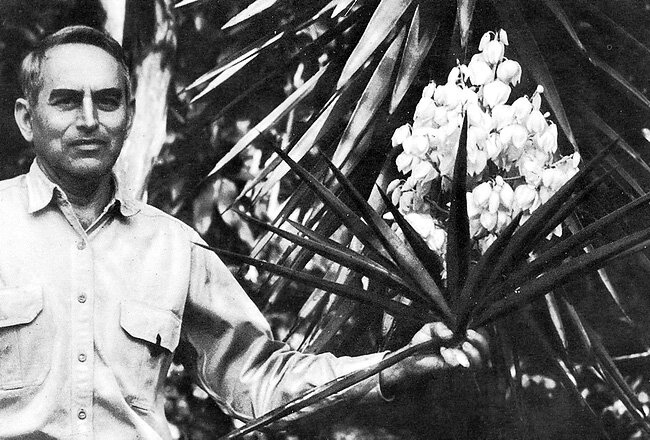
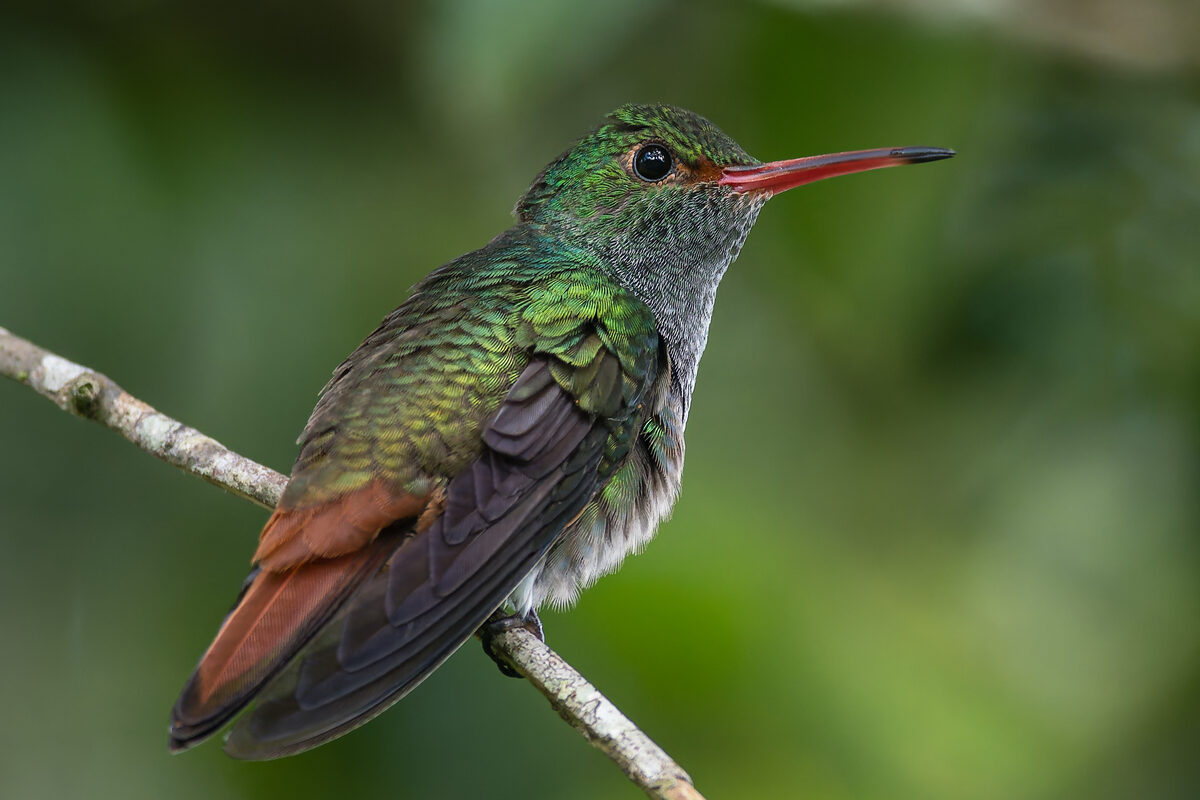
Sometime in late 1928 or early 1929, a twenty-four-year-old botanist sat at a microscope in a laboratory beside Changuinola Lagoon, on the Caribbean coast of Panama. Alexander Skutch had recently completed his doctorate at Johns Hopkins University and was studying banana plant diseases for the United Fruit Company. Outside the laboratory window, a Rufous-tailed Hummingbird had built her tiny nest. His attention, as he later wrote, "repeatedly rose from the microscope to the rufous-tailed hummingbird." By March and April, birds were nesting all around the garden, and the microscope was forgotten. He began writing what would become his first ornithological paper. En algún momento entre finales de 1928 e inicios de 1929, un joven botánico de veinticuatro años estaba sentado ante un microscopio en un laboratorio junto a la laguna de Changuinola, en la costa caribeña de Panamá. Alexander Skutch había terminado recientemente su doctorado en la Universidad Johns Hopkins y estudiaba enfermedades de la planta de banano para la United Fruit Company. Fuera de la ventana del laboratorio, un colibrí colirrufo había construido su diminuto nido. Su atención, como escribiría después, "se elevaba repetidamente del microscopio al colibrí colirrufo". Para marzo y abril, las aves anidaban por todo el jardín, y el microscopio quedó olvidado. Comenzó a escribir lo que sería su primer artículo ornitológico.
That moment of distraction became a career spanning seven decades. From the banana plantations of Panama, Skutch would go on to study the life histories of roughly three hundred species of tropical birds, publish more than two hundred scientific papers and over forty books, and spend sixty-three years on a single farm in southern Costa Rica observing, writing, and thinking. He never held a university position. He never collected a bird specimen. He never banded a bird. He recognized individual birds of the same species by variations in their plumage and watched them, season after season, with a patience that astonished even his peers. F. Gary Stiles, who collaborated with Skutch on the landmark field guide to Costa Rican birds, called his output "the largest body of natural-history information ever collected by a single observer." Ese momento de distracción se convirtió en una carrera que abarcó siete décadas. Desde las plantaciones bananeras de Panamá, Skutch pasaría a estudiar las historias de vida de aproximadamente trescientas especies de aves tropicales, publicar más de doscientos artículos científicos y más de cuarenta libros, y pasar sesenta y tres años en una sola finca del sur de Costa Rica observando, escribiendo y pensando. Nunca ocupó un puesto universitario. Nunca recolectó un espécimen de ave. Nunca anilló un ave. Reconocía aves individuales de la misma especie por variaciones en su plumaje y las observaba, temporada tras temporada, con una paciencia que asombraba incluso a sus colegas. F. Gary Stiles, quien colaboró con Skutch en la guía de campo fundamental de las aves de Costa Rica, calificó su producción como "el mayor acervo de información sobre historia natural jamás recopilado por un solo observador".
Two Imperative Voices Dos voces imperativas
Alexander Frank Skutch was born on May 20, 1904, in Baltimore, Maryland, the eldest of four children in a Jewish family. His father, Robert Frank Skutch, was an antiques dealer whose business eventually failed, the family home lost at auction. The financial crisis marked the son profoundly: Skutch would live his entire adult life in austere, debt-free simplicity, suspicious of material accumulation and committed to self-sufficiency. Alexander Frank Skutch nació el 20 de mayo de 1904 en Baltimore, Maryland, el mayor de cuatro hijos de una familia judía. Su padre, Robert Frank Skutch, era un anticuario cuyo negocio terminó fracasando, y la casa familiar se perdió en una subasta. La crisis financiera marcó profundamente al hijo: Skutch viviría toda su vida adulta en una austeridad libre de deudas, desconfiado de la acumulación material y comprometido con la autosuficiencia.
He spent much of his boyhood on a farm in the Maryland hills, where he entered nature study, as his obituarist noted, "without passing through the egg-collecting stage so characteristic of budding naturalists" of his generation. He kept pigeons as childhood pets. He absorbed his father's love for books and read widely in history, literature, and philosophy as a student. The poetry of Percy Bysshe Shelley awakened both his interest in birds and a moral conviction that would shape his entire life: reading Shelley, and later studying Indian religions at university, he adopted vegetarianism and the Jain concept of ahimsa, the principle of non-violence toward all living things. Pasó gran parte de su infancia en una granja de las colinas de Maryland, donde se inició en el estudio de la naturaleza, según señaló su obituarista, "sin pasar por la etapa de recolectar huevos tan característica de los naturalistas en ciernes" de su generación. De niño tenía palomas como mascotas. Absorbió el amor de su padre por los libros y leyó ampliamente sobre historia, literatura y filosofía durante sus años de estudiante. La poesía de Percy Bysshe Shelley despertó tanto su interés por las aves como una convicción moral que marcaría toda su vida: leyendo a Shelley, y luego estudiando religiones de la India en la universidad, adoptó el vegetarianismo y el concepto jainista de ahimsa, el principio de no violencia hacia todos los seres vivos.
At Johns Hopkins, Skutch found his mentor in Duncan S. Johnson, a professor of botany who took him on field trips to the coast of Maine and, in the summer of 1926, to Jamaica, where the trip was financed by the United Fruit Company. It was Skutch's first encounter with tropical nature, and it transformed him. He committed to studying the leaf anatomy of the banana plant for his doctoral dissertation and received his PhD in 1928. Yet even at Hopkins, a revealing episode had occurred: a visit to a bird-banding station "put him off" ornithology for years. Watching birds subjected to the indignity of being handled and trapped repelled him deeply. The aversion never left. Throughout his career, he would refuse to band or collect birds, arguing that better information could be gathered by watching them alive and undisturbed. En Johns Hopkins, Skutch encontró a su mentor en Duncan S. Johnson, un profesor de botánica que lo llevó en excursiones a la costa de Maine y, en el verano de 1926, a Jamaica, donde el viaje fue financiado por la United Fruit Company. Fue el primer encuentro de Skutch con la naturaleza tropical, y lo transformó. Se comprometió a estudiar la anatomía foliar de la planta de banano para su tesis doctoral y recibió su doctorado en 1928. Sin embargo, ya en Hopkins había ocurrido un episodio revelador: una visita a una estación de anillamiento de aves lo "alejó" de la ornitología durante años. Ver aves sometidas a la indignidad de ser manipuladas y atrapadas lo repelió profundamente. Esa aversión nunca lo abandonó. A lo largo de toda su carrera, se negaría a anillar o recolectar aves, argumentando que se podía obtener mejor información observándolas vivas y sin ser perturbadas.
In the foreword to his autobiography, The Imperative Call, Skutch wrote that "two voices summon men with a call so imperative that few who hear can resist." He meant religion and nature. He suspected they might be the same voice, "calling us in different tones to release our spirit from workaday pettiness." The title of that book, published in 1979 when Skutch was seventy-five, captured what had governed his life since the hummingbird at the window: a compulsion toward the living world that could not be resisted or deferred. En el prólogo de su autobiografía, The Imperative Call, Skutch escribió que "dos voces llaman a los hombres con un llamado tan imperativo que pocos que lo escuchan pueden resistir". Se refería a la religión y la naturaleza. Sospechaba que podrían ser la misma voz, "llamándonos en diferentes tonos a liberar nuestro espíritu de la mezquindad cotidiana". El título de aquel libro, publicado en 1979 cuando Skutch tenía setenta y cinco años, capturaba lo que había gobernado su vida desde el colibrí en la ventana: una compulsión hacia el mundo vivo que no podía resistirse ni posponerse.
Nidification Unknown Nidificación desconocida
After the hummingbird diverted his attention in Panama, Skutch returned to the United States and went to the libraries. He opened Robert Ridgway's multivolume The Birds of North and Middle America, the standard taxonomic reference of the day, and began reading species accounts. What he found astonished him. Genus after genus carried the same notation: "Nidification unknown" (nidification is the process of building a nest and rearing young). Ornithologists had spent decades describing and classifying the skins and feathers of Neotropical birds, naming species and subspecies with great precision, yet nobody had watched how they actually lived. Their nesting habits, breeding behavior, diet, social structures, vocalizations in context, parental care: all of it was a blank page. Skutch resolved to fill it. Después de que el colibrí desviara su atención en Panamá, Skutch regresó a los Estados Unidos y fue a las bibliotecas. Abrió la obra de múltiples volúmenes de Robert Ridgway, The Birds of North and Middle America, la referencia taxonómica estándar de la época, y comenzó a leer las descripciones de las especies. Lo que encontró lo dejó atónito. Género tras género llevaba la misma anotación: "Nidificación desconocida" (la nidificación es el proceso de construir un nido y criar a las crías). Los ornitólogos habían pasado décadas describiendo y clasificando las pieles y plumas de las aves neotropicales, nombrando especies y subespecies con gran precisión, pero nadie había observado cómo vivían realmente. Sus hábitos de anidación, comportamiento reproductivo, dieta, estructuras sociales, vocalizaciones en contexto, cuidado parental: todo era una página en blanco. Skutch se propuso llenarla.
The problem was money. It was the early 1930s, the depths of the Great Depression, and most ornithological fieldwork was funded by museums interested in specimens. Skutch wanted to study birds alive, which meant he could not shoot them for the institutions willing to pay. He discovered an ingenious solution: he could sell botanical specimens instead. His friend Dr. William R. Maxon, a pteridologist and curator at the Smithsonian's Division of Plants, arranged for half a dozen museums and botanical gardens in the United States and Europe to purchase duplicate sets of tropical plants that Skutch collected and Maxon's colleagues identified. For the next seven years, Skutch wandered through Central America as both plant collector and bird watcher, funding the work he loved with the work he could sell. El problema era el dinero. Estaban a principios de los años treinta, en lo más profundo de la Gran Depresión, y la mayor parte del trabajo de campo ornitológico era financiado por museos interesados en especímenes. Skutch quería estudiar aves vivas, lo que significaba que no podía dispararles para las instituciones dispuestas a pagar. Descubrió una solución ingeniosa: podía vender especímenes botánicos en su lugar. Su amigo el Dr. William R. Maxon, pteridólogo y curador de la División de Plantas del Smithsonian, consiguió que media docena de museos y jardines botánicos de Estados Unidos y Europa compraran conjuntos duplicados de plantas tropicales que Skutch recolectaba y que los colegas de Maxon identificaban. Durante los siguientes siete años, Skutch recorrió Centroamérica como recolector de plantas y observador de aves a la vez, financiando el trabajo que amaba con el trabajo que podía vender.
He used personal savings for two long visits to Guatemala: first to the Motagua Valley, then to the western highlands, where he lived a full year amid pine and oak forests above eight thousand feet. He visited the field station on Barro Colorado Island in Panama, where he met Frank Chapman, curator of birds at the American Museum of Natural History, whose life-history studies influenced his own work, though Skutch remained, as his obituarist noted, "totally unsympathetic to the scientific collecting of birds." He spent time at the Lancetilla Research Station in northern Honduras, where his interest in bird behavior deepened with every nesting season. Usó sus ahorros personales para dos largas visitas a Guatemala: primero al valle del Motagua, luego a las tierras altas occidentales, donde vivió un año entero entre bosques de pinos y robles a más de dos mil cuatrocientos metros de altitud. Visitó la estación de campo en la isla de Barro Colorado en Panamá, donde conoció a Frank Chapman, curador de aves del Museo Americano de Historia Natural, cuyos estudios sobre historias de vida influyeron en su propio trabajo, aunque Skutch seguía siendo, como señaló su obituarista, "totalmente contrario a la recolección científica de aves". Pasó tiempo en la estación de investigación de Lancetilla, en el norte de Honduras, donde su interés por el comportamiento de las aves se profundizaba con cada temporada de anidación.
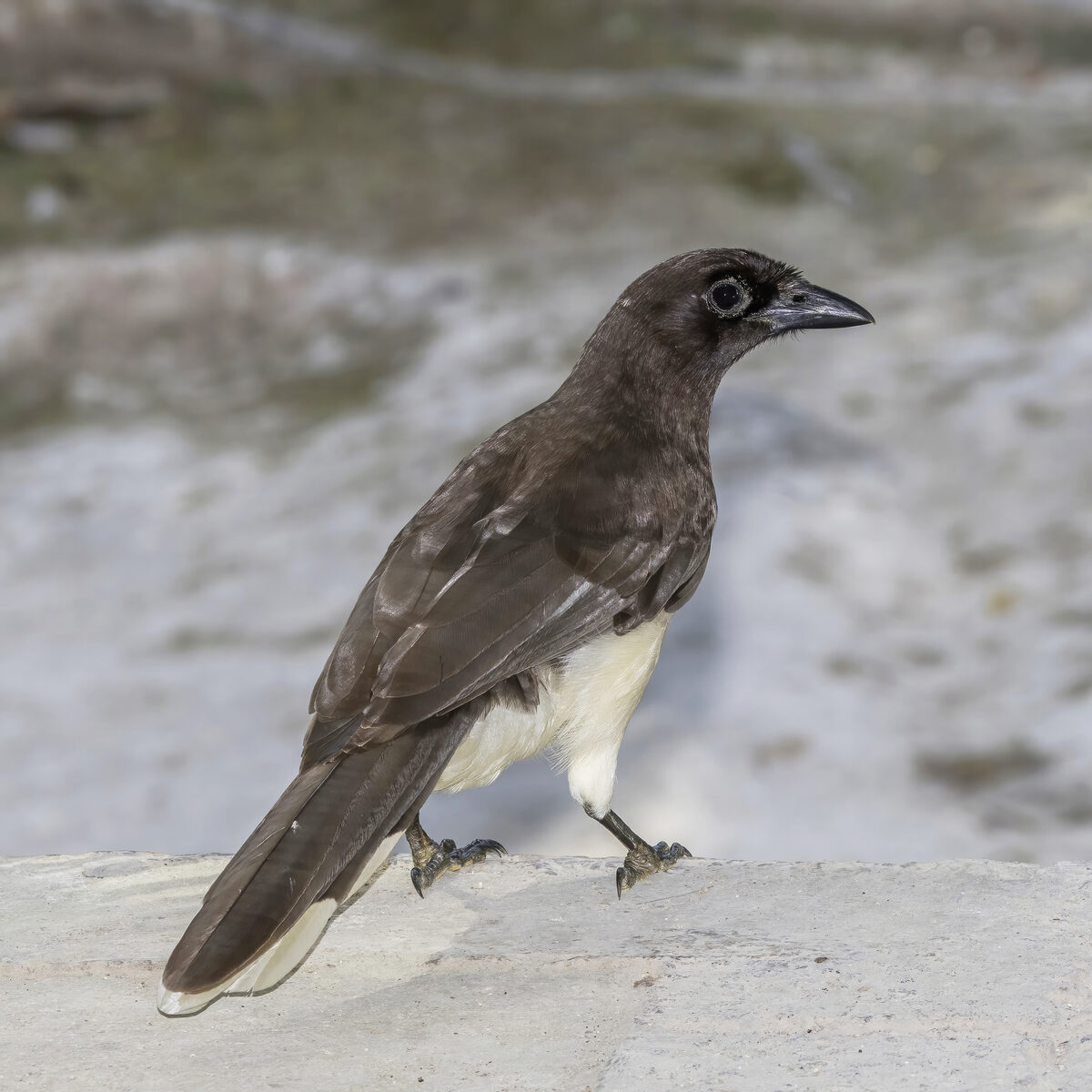
In 1935, a breakthrough. While observing Brown Jays, Skutch noticed something the ornithological literature had not described: adult birds that were neither parents nor mates were assisting at nests, feeding nestlings and tending to young that were not their own offspring. He published his observations in The Auk under the title "Helpers at the Nest," coining a term that would become foundational to avian behavioral ecology. The concept of cooperative breeding, elaborated by Skutch over the next fifty years, opened a field of inquiry that continues to generate research today. He later refined his definition of a helper as "a bird which assists in the nesting of an individual other than its mate, or feeds or otherwise attends a bird of whatever age which is neither its mate nor its dependent offspring." En 1935, un descubrimiento decisivo. Mientras observaba urracas pardas, Skutch notó algo que la literatura ornitológica no había descrito: aves adultas que no eran ni padres ni parejas estaban asistiendo en los nidos, alimentando polluelos y atendiendo a crías que no eran su propia descendencia. Publicó sus observaciones en The Auk bajo el título "Helpers at the Nest", acuñando un término que se convertiría en pieza fundamental de la ecología conductual de las aves. El concepto de reproducción cooperativa, elaborado por Skutch durante los siguientes cincuenta años, abrió un campo de investigación que sigue generando estudios hasta el día de hoy. Posteriormente refinó su definición de ayudante como "un ave que asiste en la anidación de un individuo que no es su pareja, o alimenta o atiende de otra manera a un ave de cualquier edad que no es ni su pareja ni su descendencia dependiente".
That same year, in November 1935, Skutch arrived in Costa Rica, stepping off a little trolley in San José with a knapsack on his shoulder. Plant collecting was still his profession, and during his years of wandering he discovered approximately fifty plant species new to science, many of which now bear the epithet skutchii. A fortunate encounter with the director of Harvard's Arnold Arboretum had provided passage and a contract to return to Central America. Ese mismo año, en noviembre de 1935, Skutch llegó a Costa Rica, bajándose de un pequeño tranvía en San José con una mochila al hombro. La recolección de plantas seguía siendo su profesión, y durante sus años de peregrinaje descubrió aproximadamente cincuenta especies de plantas nuevas para la ciencia, muchas de las cuales hoy llevan el epíteto skutchii. Un encuentro afortunado con el director del Arnold Arboretum de Harvard le había proporcionado pasaje y un contrato para regresar a Centroamérica.
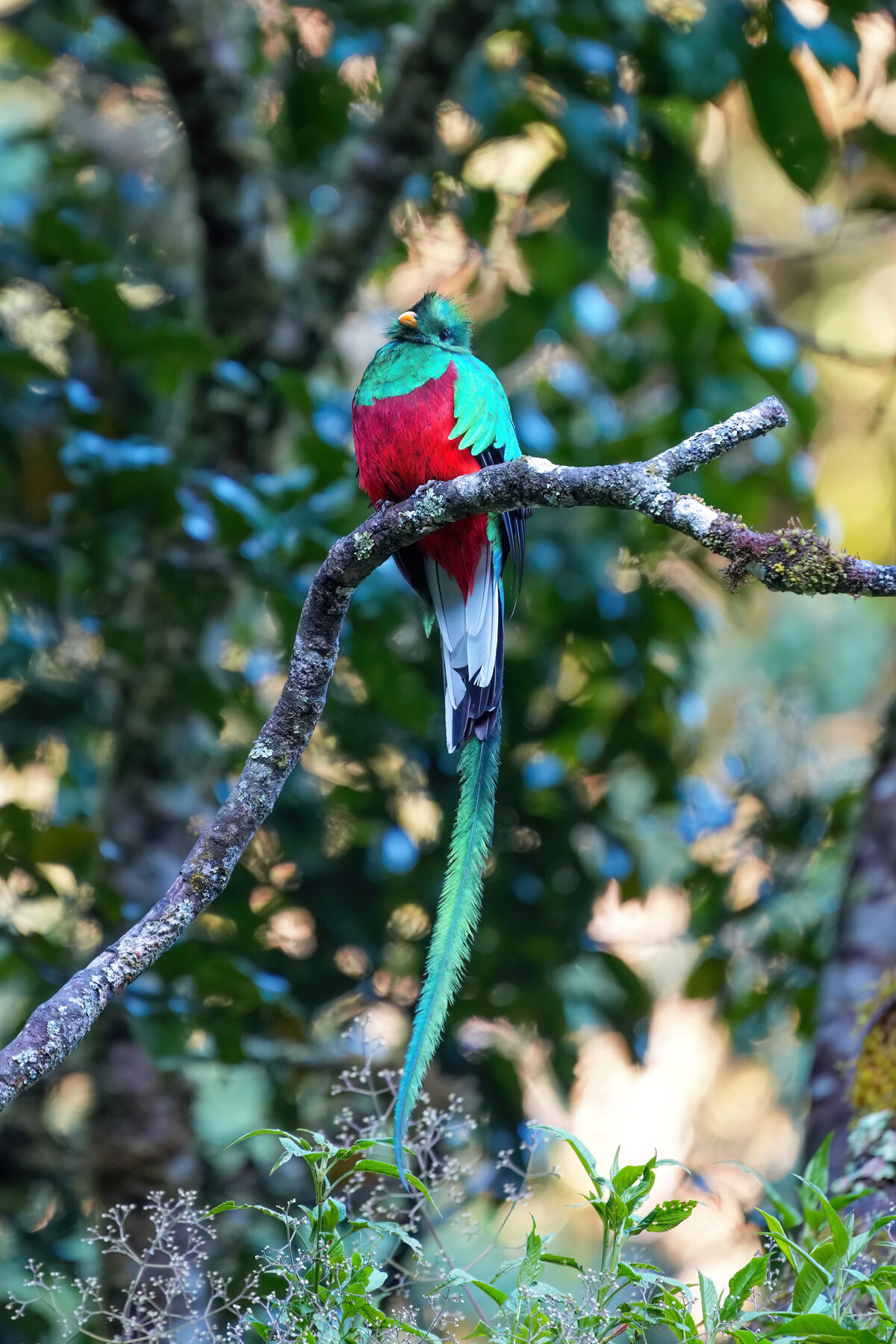
In 1937, a Chapman Fund grant from the American Museum of Natural History sent Skutch to the cloud forests near Vara Blanca, on the slopes of Volcán Poás, to study the Resplendent Quetzal. He spent nearly a year living alone in the remote highlands, watching quetzals nest. His research established that male and female quetzals share nesting duties fairly equally, an unexpected finding for a species with such extravagant male plumage. He documented their use of modified woodpecker holes in dead trees and their dependence on a handful of trees in the family Lauraceae. The resulting paper, "Life History of the Quetzal," published in The Condor in 1944, became a landmark of tropical ornithology. En 1937, una beca del Fondo Chapman del Museo Americano de Historia Natural envió a Skutch a los bosques nubosos cerca de Vara Blanca, en las laderas del volcán Poás, para estudiar al quetzal resplandeciente. Pasó casi un año viviendo solo en las remotas tierras altas, observando la anidación de los quetzales. Su investigación estableció que machos y hembras comparten las tareas de anidación de manera bastante equitativa, un hallazgo inesperado para una especie con un plumaje masculino tan extravagante. Documentó su uso de agujeros de pájaros carpinteros modificados en árboles muertos y su dependencia de un puñado de árboles de la familia Lauraceae. El artículo resultante, "Life History of the Quetzal", publicado en The Condor en 1944, se convirtió en un hito de la ornitología tropical.
A Farm in the Wilderness Una finca en la selva
Skutch first saw the land from a high bluff overlooking the Río Peñas Blancas, in the locality called El Quizarrá, in the Valley of El General in southern Costa Rica. He was traveling with a friend named Don Juan, who was showing him a newly opened trail through the forests. The property belonged to Francisco Mora, universally called Don Chico, described by Skutch as "a restless spirit who could not remain long in one spot," a man who made farms on unclaimed wilderness land only to sell them after a few years. On March 22, 1941, Skutch signed a contract in a visiting lawyer's office in the town of San Isidro de El General. A Swedish surveyor measured the land with a theodolite: Don Chico had estimated seventy hectares, but the survey revealed only fifty-three. The price was five thousand colones, nearly a third of the capital Skutch had accumulated over years of botanical collecting. Skutch vio la tierra por primera vez desde un alto risco que daba al río Peñas Blancas, en la localidad llamada El Quizarrá, en el Valle de El General, al sur de Costa Rica. Viajaba con un amigo llamado Don Juan, quien le mostraba un sendero recién abierto a través del bosque. La propiedad pertenecía a Francisco Mora, conocido universalmente como Don Chico, descrito por Skutch como "un espíritu inquieto que no podía permanecer mucho tiempo en un solo lugar", un hombre que hacía fincas en tierras baldías solo para venderlas después de unos años. El 22 de marzo de 1941, Skutch firmó un contrato en la oficina de un abogado visitante en el pueblo de San Isidro de El General. Un agrimensor sueco midió la tierra con un teodolito: Don Chico había estimado setenta hectáreas, pero el levantamiento reveló solo cincuenta y tres. El precio fue de cinco mil colones, casi un tercio del capital que Skutch había acumulado durante años de recolección botánica.
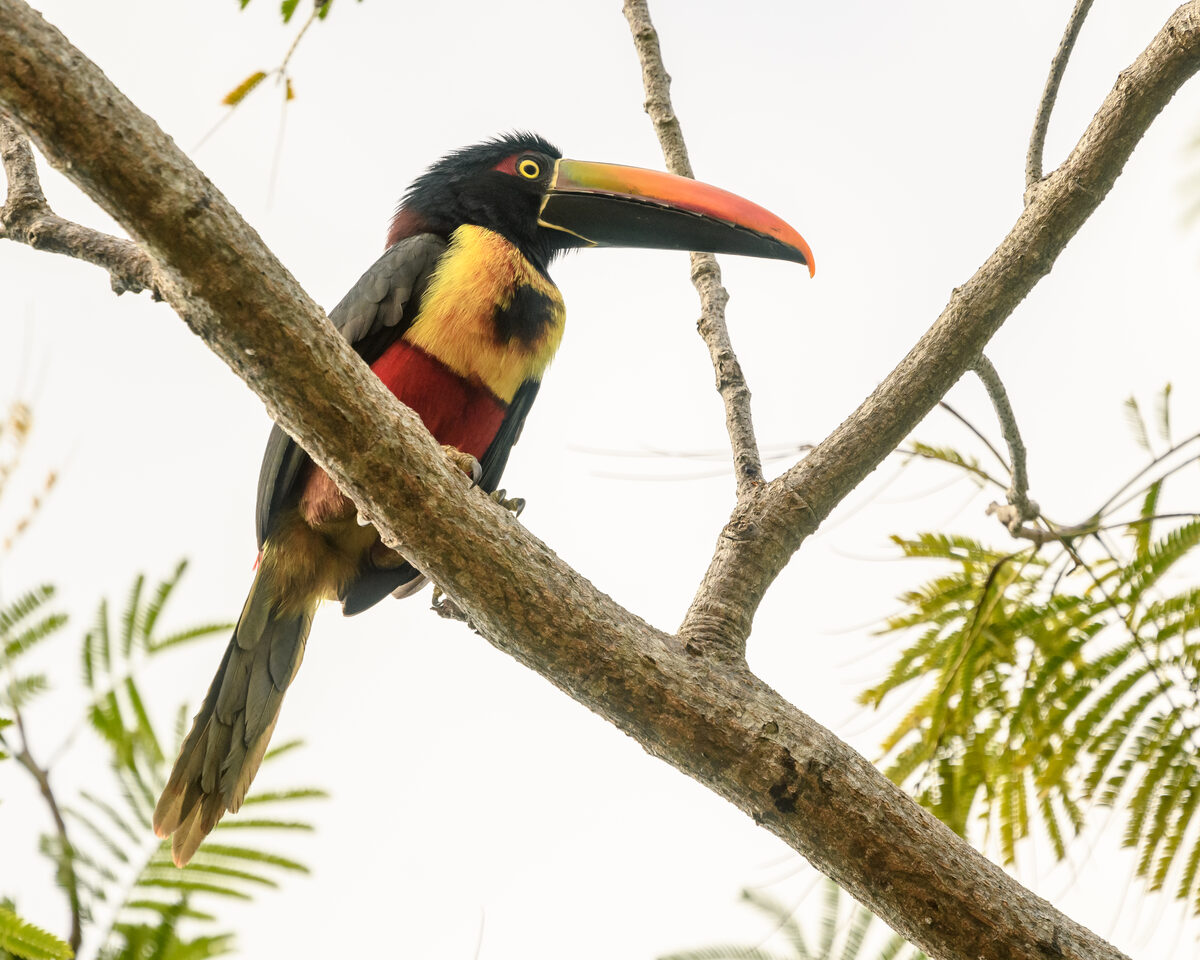
He named the farm Los Cusingos, after the Fiery-billed Aracari that nested on the property. Cusingo was the local name for the bird, a small toucan with a bill of orange, red, and black. A year later he expanded the property to seventy-seven hectares by buying a neighboring farm. He would live there for the remaining sixty-three years of his life. Llamó a la finca Los Cusingos, por el tucancillo piquianaranjado que anidaba en la propiedad. Cusingo era el nombre local del ave, un pequeño tucán con un pico de color anaranjado, rojo y negro. Un año después amplió la propiedad a setenta y siete hectáreas comprando una finca vecina. Viviría allí durante los sesenta y tres años restantes de su vida.
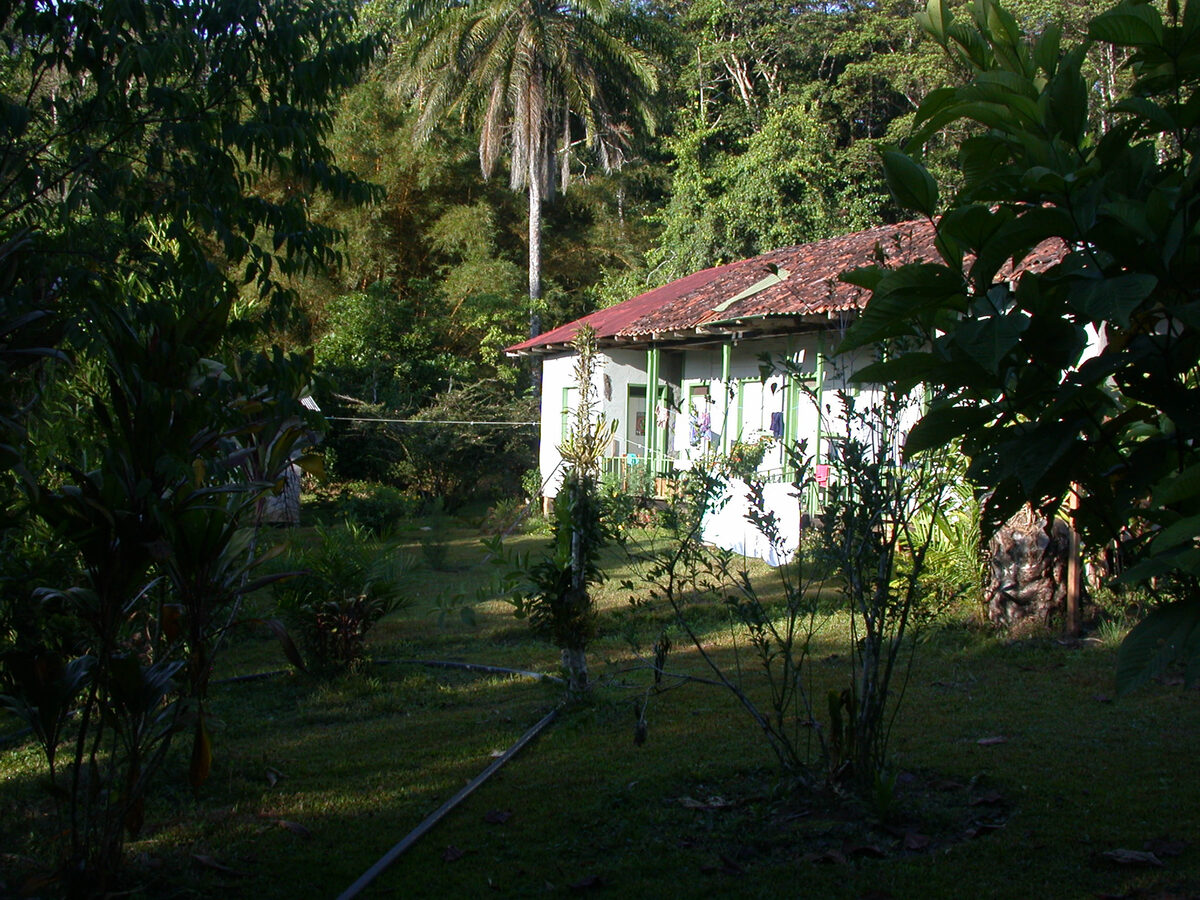
In 1950, Skutch married Pamela Lankester, daughter of Charles H. Lankester, an English-born coffee farmer, botanist, and orchid enthusiast whose private gardens in Cartago would become the Jardín Botánico Lankester, one of Costa Rica's most important botanical research centers. Pamela was sixteen years younger than Alexander. They adopted a local young man named Edwin. Pamela significantly improved the gardens at Los Cusingos and shared Alexander's commitment to the farm, though she brought practical modifications he might never have sought on his own. En 1950, Skutch se casó con Pamela Lankester, hija de Charles H. Lankester, un agricultor cafetalero, botánico y entusiasta de las orquídeas nacido en Inglaterra, cuyos jardines privados en Cartago se convertirían en el Jardín Botánico Lankester, uno de los centros de investigación botánica más importantes de Costa Rica. Pamela era dieciséis años menor que Alexander. Adoptaron a un joven local llamado Edwin. Pamela mejoró significativamente los jardines de Los Cusingos y compartía el compromiso de Alexander con la finca, aunque trajo modificaciones prácticas que él quizás nunca habría buscado por su cuenta.
The house Skutch built had no electricity, no telephone, and no running water. Water came from the nearest stream. He maintained correspondence with scientists worldwide using a manual typewriter, but there was no postal delivery to Los Cusingos; a two-month delay between letter and response was common. He did not own a car. Electricity was not installed until the mid-1990s, when Pamela's declining health made it necessary, and they bought their first refrigerator. He was by then ninety years old. La casa que Skutch construyó no tenía electricidad, ni teléfono, ni agua corriente. El agua venía del arroyo más cercano. Mantenía correspondencia con científicos de todo el mundo usando una máquina de escribir mecánica, pero no había entrega postal en Los Cusingos; un retraso de dos meses entre carta y respuesta era habitual. No tenía automóvil. La electricidad no se instaló hasta mediados de los años noventa, cuando el deterioro de la salud de Pamela lo hizo necesario, y compraron su primer refrigerador. Para entonces él tenía noventa años.
His daily routine was governed by the birds. He emerged early each morning with a tent-like observation blind, positioned himself near an active nest, and spent hours recording detailed field notes. In the evening he transcribed his observations into formal prose on the typewriter. He kept two sets of notebooks throughout his life: Notas de campo for his ornithological observations, and Pensamientos for philosophical reflections. The farm and the work were inseparable. Los Cusingos was both laboratory and home, and over the decades more than three hundred bird species were recorded on the property, more than two hundred of which Skutch himself described in detail. Su rutina diaria estaba gobernada por las aves. Salía temprano cada mañana con un escondite de observación tipo carpa, se posicionaba cerca de un nido activo y pasaba horas registrando notas de campo detalladas. Por la noche transcribía sus observaciones en prosa formal en la máquina de escribir. Mantuvo dos series de cuadernos a lo largo de su vida: Notas de campo para sus observaciones ornitológicas, y Pensamientos para reflexiones filosóficas. La finca y el trabajo eran inseparables. Los Cusingos era tanto laboratorio como hogar, y a lo largo de las décadas se registraron más de trescientas especies de aves en la propiedad, más de doscientas de las cuales Skutch describió en detalle.
Thirty Years at the Nest Treinta años junto al nido
Skutch's scientific output from Los Cusingos was staggering. The three volumes of Life Histories of Central American Birds, published in the Cooper Ornithological Society's Pacific Coast Avifauna series in 1954, 1960, and 1969, totaled more than 1,600 pages and were illustrated by Don R. Eckelberry. A companion volume, Life Histories of Central American Highland Birds, appeared in 1967. His obituarist in The Auk observed that these volumes "would alone make an impressive life's work." Much of what is known about the lives of some three hundred Neotropical bird species derives from Skutch's work in these volumes and in his approximately two hundred scientific papers. La producción científica de Skutch desde Los Cusingos fue impresionante. Los tres volúmenes de Life Histories of Central American Birds, publicados en la serie Pacific Coast Avifauna de la Cooper Ornithological Society en 1954, 1960 y 1969, sumaron más de 1.600 páginas y fueron ilustrados por Don R. Eckelberry. Un volumen complementario, Life Histories of Central American Highland Birds, apareció en 1967. Su obituarista en The Auk observó que estos volúmenes "por sí solos constituirían una impresionante obra de toda una vida". Gran parte de lo que se sabe sobre las vidas de unas trescientas especies de aves neotropicales proviene del trabajo de Skutch en estos volúmenes y en sus aproximadamente doscientos artículos científicos.
In 1949, he published a paper in The Ibis with a question for a title: "Do Tropical Birds Rear as Many Young as They Can Nourish?" His answer proposed that nest predation, rather than food supply, constrains the rate at which parent birds can deliver food to their young. Each visit to the nest risks attracting a predator, so species in environments with high predation evolve lower feeding rates and smaller clutch sizes. This idea, now known as the "Skutch hypothesis," became a major framework in avian life-history research. A recent study of a montane tropical bird community found that the patterns Skutch predicted decades earlier still held. En 1949, publicó un artículo en The Ibis con una pregunta como título: "Do Tropical Birds Rear as Many Young as They Can Nourish?" ("¿Crían las aves tropicales tantos polluelos como pueden alimentar?"). Su respuesta proponía que la depredación de nidos, más que la disponibilidad de alimento, restringe la tasa a la que las aves progenitoras pueden llevar comida a sus crías. Cada visita al nido corre el riesgo de atraer a un depredador, por lo que las especies en ambientes con alta depredación desarrollan tasas de alimentación más bajas y nidadas más pequeñas. Esta idea, conocida hoy como la "hipótesis de Skutch", se convirtió en un marco importante en la investigación sobre historias de vida de las aves. Un estudio reciente sobre una comunidad de aves tropicales de montaña encontró que los patrones que Skutch predijo décadas antes seguían vigentes.
His method was unique among ornithologists of his stature. He never worked for a museum, university, or government agency. He had no laboratory equipment beyond binoculars and notebooks. He disliked statistics and avoided quantitative analysis, preferring richly descriptive prose. His salient characteristic, as a scientist, was described in his Auk obituary as "a capacity for incredibly persistent, patient, careful observation, made with sympathy and respect for his subjects. He reported his observations with detachment and objectivity, and in his writings it is generally clear where observation ends and interpretation begins." He recognized individual birds by subtle plumage variations and followed their lives across seasons, sometimes for years. Su método era único entre los ornitólogos de su talla. Nunca trabajó para un museo, una universidad ni una agencia gubernamental. No tenía equipo de laboratorio más allá de binoculares y cuadernos. Le desagradaba la estadística y evitaba el análisis cuantitativo, prefiriendo una prosa ricamente descriptiva. Su característica más destacada como científico fue descrita en su obituario en The Auk como "una capacidad para una observación increíblemente persistente, paciente y cuidadosa, hecha con simpatía y respeto por sus sujetos. Reportaba sus observaciones con distanciamiento y objetividad, y en sus escritos generalmente queda claro dónde termina la observación y comienza la interpretación". Reconocía aves individuales por sutiles variaciones de plumaje y seguía sus vidas a lo largo de las estaciones, a veces durante años.
He often upbraided colleagues for "loving ornithology too much and birds not enough." The phrase captured an essential tension in his relationship with the scientific establishment. The community honored him: the American Ornithologists' Union awarded him the Brewster Medal in 1950, its highest research honor, and elected him Honorary Fellow in 1979. He received the Arthur A. Allen Award from the Cornell Lab of Ornithology, and Costa Rica's Aquileo J. Echeverría National Prize for his 1977 book Aves de Costa Rica, the first book published in Costa Rica, in Spanish, about the country's birds for a general audience. Jim Bonner of Pittsburgh's National Aviary called him "one of the most famous unknown men" in science. A menudo reprendía a sus colegas por "amar la ornitología demasiado y a las aves no lo suficiente". La frase capturaba una tensión esencial en su relación con el establishment científico. La comunidad lo honró: la American Ornithologists' Union le otorgó la Medalla Brewster en 1950, su más alto reconocimiento en investigación, y lo eligió Miembro Honorario en 1979. Recibió el Premio Arthur A. Allen del Laboratorio de Ornitología de Cornell, y el Premio Nacional Aquileo J. Echeverría de Costa Rica por su libro de 1977 Aves de Costa Rica, el primer libro publicado en Costa Rica, en español, sobre las aves del país para un público general. Jim Bonner del Aviario Nacional de Pittsburgh lo llamó "uno de los hombres desconocidos más famosos" de la ciencia.
Perhaps the most enduring product of his later career was A Guide to the Birds of Costa Rica, published in 1989 after a seventeen-year collaboration with F. Gary Stiles, then a professor at the University of Costa Rica. The guide, illustrated by Dana Gardner with fifty-two color plates covering virtually every species of Costa Rican bird, became the foundational text for birding in the country and played a significant role in Costa Rica's emergence as a premier ecotourism destination. A Spanish edition appeared in 1995, published by INBio. In 1997, at the seventy-fifth meeting of the Association of Field Ornithologists in San José, Skutch personally presented the first medal bearing his name to Stiles. Quizás el producto más perdurable de su carrera posterior fue A Guide to the Birds of Costa Rica, publicado en 1989 tras una colaboración de diecisiete años con F. Gary Stiles, entonces profesor en la Universidad de Costa Rica. La guía, ilustrada por Dana Gardner con cincuenta y dos láminas a color que cubrían prácticamente todas las especies de aves costarricenses, se convirtió en el texto fundamental para la observación de aves en el país y desempeñó un papel significativo en la consolidación de Costa Rica como destino de ecoturismo de primer nivel. Una edición en español apareció en 1995, publicada por el INBio. En 1997, en la septuagésima quinta reunión de la Association of Field Ornithologists en San José, Skutch presentó personalmente la primera medalla que llevaba su nombre a Stiles.
A Startling Vehemence Una vehemencia sorprendente
Skutch was more than an ornithologist. He wrote four books on philosophy, three autobiographies, and nearly fifty philosophical articles. His central concept was "harmonization," the idea that the universe is governed by a principle of harmony, with evolution organizing all elements of existence toward integration. Though he declared himself an atheist, he called this harmonizing process "divine." He argued that appreciation of beauty and harmony in nature constitutes a fundamentally religious attitude, and that what he called "the golden core of religion" was devoted care: for oneself, for one's neighbors, for the natural world. Skutch era más que un ornitólogo. Escribió cuatro libros de filosofía, tres autobiografías y casi cincuenta artículos filosóficos. Su concepto central era la "armonización", la idea de que el universo está gobernado por un principio de armonía, con la evolución organizando todos los elementos de la existencia hacia la integración. Aunque se declaraba ateo, llamaba "divino" a este proceso de armonización. Argumentaba que la apreciación de la belleza y la armonía en la naturaleza constituye una actitud fundamentalmente religiosa, y que lo que él llamaba "el núcleo dorado de la religión" era el cuidado devoto: por uno mismo, por los vecinos, por el mundo natural.
His philosophy was inseparable from his daily life. His vegetarianism, adopted from Shelley and Jain principles of ahimsa, was absolute. He grew what he ate (corn, yucca, rice, beans, coffee, sugarcane), wore no leather, and killed no animals for food. He saw his observation method as an ethical as much as a scientific choice: you could learn more by watching a bird live than by holding its corpse. Su filosofía era inseparable de su vida diaria. Su vegetarianismo, adoptado de Shelley y de los principios jainistas de ahimsa, era absoluto. Cultivaba lo que comía (maíz, yuca, arroz, frijoles, café, caña de azúcar), no usaba cuero y no mataba animales para alimentarse. Veía su método de observación como una elección tanto ética como científica: se podía aprender más observando a un ave vivir que sosteniendo su cadáver.
And yet there was the matter of the snakes. Skutch killed snakes on his property when they threatened nesting birds, and he did so, as his Auk obituary recorded, "with a vehemence startling to see in one so gentle toward most animals." He also disliked bird-eating raptors and encouraged Laughing Falcons, whose diet consisted almost exclusively of snakes, to hunt on his land. Fellow naturalists noted the paradox: a man who championed non-harm and refused to handle a bird to avoid causing it distress would kill a snake without hesitation to protect a nest. Skutch himself never fully resolved the contradiction. His concept of "biocompatibility" valued the harmonious association of diverse species over mere biodiversity, and he condemned predation as "life's greatest evil," a position that put him at odds with mainstream ecological thinking. Y sin embargo, estaba el asunto de las serpientes. Skutch mataba serpientes en su propiedad cuando amenazaban a las aves que anidaban, y lo hacía, según registró su obituario en The Auk, "con una vehemencia sorprendente de ver en alguien tan gentil con la mayoría de los animales". También le desagradaban las rapaces que comían aves y alentaba a los halcones guaco, cuya dieta consistía casi exclusivamente en serpientes, a cazar en sus tierras. Sus colegas naturalistas notaban la paradoja: un hombre que defendía la no violencia y se negaba a manipular un ave para no causarle angustia, mataba una serpiente sin vacilar para proteger un nido. El propio Skutch nunca resolvió del todo la contradicción. Su concepto de "biocompatibilidad" valoraba la asociación armoniosa de especies diversas por encima de la mera biodiversidad, y condenaba la depredación como "el mayor mal de la vida", una posición que lo ponía en desacuerdo con el pensamiento ecológico dominante.
His relationship with the rural community around Los Cusingos was similarly complex. He lived for decades among campesino families in the Valley of El General, lectured occasionally at local schools, and received visitors warmly on his porch overlooking the bird feeders. Los Cusingos became a destination for scientists and naturalists who had read his books, what one writer called a "mecca." Yet he found sustained social relationships with his neighbors difficult. He was more comfortable among intellectual peers, and the social distance between the philosopher-naturalist and the farming families around him remained wide. His influence came through his published work, through the more than forty books and hundreds of articles that shaped how generations of researchers understood tropical bird life. Su relación con la comunidad rural alrededor de Los Cusingos era igualmente compleja. Vivió durante décadas entre familias campesinas del Valle de El General, dio conferencias ocasionalmente en escuelas locales y recibía cordialmente a los visitantes en su porche con vista a los comederos de aves. Los Cusingos se convirtió en un destino para científicos y naturalistas que habían leído sus libros, lo que un escritor llamó una "meca". Sin embargo, encontraba difícil mantener relaciones sociales sostenidas con sus vecinos. Se sentía más cómodo entre pares intelectuales, y la distancia social entre el filósofo-naturalista y las familias campesinas a su alrededor permaneció amplia. Su influencia llegaba a través de su obra publicada, a través de los más de cuarenta libros y centenares de artículos que moldearon la manera en que generaciones de investigadores comprendieron la vida de las aves tropicales.
Pamela died on June 29, 2001. Alexander Skutch died on May 12, 2004, at Los Cusingos, eight days before his one hundredth birthday. He had lived on the farm for sixty-three years. Obituaries appeared in the New York Times, the Boston Globe, the Los Angeles Times, and the Irish Times, which reported that experts said his legacy for ornithology "was paralleled only by that of the legendary John James Audubon." NPR broadcast a remembrance. Both Pamela and Alexander are buried behind the house at Los Cusingos, in simple, unmarked graves on the property where he spent the better part of a century watching birds. Pamela murió el 29 de junio de 2001. Alexander Skutch murió el 12 de mayo de 2004 en Los Cusingos, ocho días antes de cumplir cien años. Había vivido en la finca durante sesenta y tres años. Aparecieron obituarios en el New York Times, el Boston Globe, el Los Angeles Times y el Irish Times, que informó que los expertos decían que su legado para la ornitología "solo era igualado por el del legendario John James Audubon". La NPR transmitió un homenaje. Tanto Pamela como Alexander están enterrados detrás de la casa en Los Cusingos, en tumbas sencillas y sin nombre en la propiedad donde pasó la mayor parte de un siglo observando aves.
In 1993, Skutch had sold Los Cusingos to the Tropical Science Center, the Costa Rican conservation organization he had joined in 1964, trusting it to protect the property after his death. The farm is now the Refugio de Aves Dr. Alexander Skutch "Los Cusingos," a bird sanctuary open to visitors, with maintained trails, the preserved house, and pre-Columbian petroglyphs along the creek. In 2006, the Alexander Skutch Biological Corridor was established by executive decree, linking the sanctuary's seventy-seven hectares at lowland elevation to the Las Nubes Biological Reserve in the highlands along the Río Peñas Blancas watershed. The corridor covers more than six thousand hectares and connects to Chirripó National Park, reaching Costa Rica's highest peak. It is named for a man who spent his life sitting still, watching, and writing down what he saw. En 1993, Skutch había vendido Los Cusingos al Centro Científico Tropical, la organización conservacionista costarricense a la que se había unido en 1964, confiando en que protegería la propiedad después de su muerte. La finca es ahora el Refugio de Aves Dr. Alexander Skutch "Los Cusingos", un santuario de aves abierto a los visitantes, con senderos mantenidos, la casa preservada y petroglifos precolombinos a lo largo del arroyo. En 2006, el Corredor Biológico Alexander Skutch fue establecido por decreto ejecutivo, conectando las setenta y siete hectáreas del santuario en tierras bajas con la Reserva Biológica Las Nubes en las tierras altas a lo largo de la cuenca del río Peñas Blancas. El corredor cubre más de seis mil hectáreas y se conecta con el Parque Nacional Chirripó, alcanzando el pico más alto de Costa Rica. Lleva el nombre de un hombre que pasó su vida sentado, quieto, observando y escribiendo lo que veía.
After the 1997 meeting in San José where he presented the first medal bearing his name, Skutch changed his estate plans. He had intended to leave his funds to the American Museum of Natural History, in gratitude for the Chapman Fund grant that had sent him to study quetzals decades earlier. Instead, he established the Pamela and Alexander F. Skutch Fund through the Association of Field Ornithologists, providing grants for "life history studies of little known neotropical birds, especially their reproductive biology and behavior, with minimal disturbance." The criteria for the medal named in his honor specify encouragement and mentoring of students, particularly Latin Americans. New generations of researchers, working in the tradition Skutch founded, continue to fill in the pages he found blank. Después de la reunión de 1997 en San José, donde presentó la primera medalla que llevaba su nombre, Skutch cambió sus planes testamentarios. Había planeado dejar sus fondos al Museo Americano de Historia Natural, en agradecimiento por la beca del Fondo Chapman que lo había enviado a estudiar quetzales décadas antes. En su lugar, estableció el Fondo Pamela y Alexander F. Skutch a través de la Association of Field Ornithologists, otorgando becas para "estudios de historia de vida de aves neotropicales poco conocidas, especialmente su biología reproductiva y comportamiento, con mínima perturbación". Los criterios para la medalla que lleva su nombre especifican el estímulo y la mentoría de estudiantes, particularmente latinoamericanos. Nuevas generaciones de investigadores, trabajando en la tradición que Skutch fundó, continúan llenando las páginas que él encontró en blanco.
Resources & Further Reading Recursos y lecturas adicionales
Books by Alexander Skutch Libros de Alexander Skutch
Skutch's autobiography, tracing his path from Baltimore boyhood through banana research in Panama to independent ornithology in Central America. The title refers to what he called the two imperative voices: religion and nature. La autobiografía de Skutch, trazando su camino desde su infancia en Baltimore a través de la investigación bananera en Panamá hasta la ornitología independiente en Centroamérica. El título se refiere a lo que él llamó las dos voces imperativas: la religión y la naturaleza.
Life at Los Cusingos: the daily rhythms of the farm, the birds and plants that shared it, and the philosophy of living simply in a tropical landscape. La vida en Los Cusingos: los ritmos diarios de la finca, las aves y plantas que la compartían, y la filosofía de vivir sencillamente en un paisaje tropical.
The landmark field guide to Costa Rica's 830+ bird species, with 52 color plates by Dana Gardner. Stiles contributed systematics and distribution; Skutch contributed unmatched knowledge of breeding biology and behavior. A Spanish edition was published by INBio in 1995. La guía de campo de referencia de las más de 830 especies de aves de Costa Rica, con 52 láminas a color de Dana Gardner. Stiles contribuyó sistemática y distribución; Skutch contribuyó un conocimiento inigualado de biología reproductiva y comportamiento. Una edición en español fue publicada por el INBio en 1995.
The book-length treatment of the phenomenon Skutch named in 1935. Describes cooperative breeding behavior in more than fifty families of birds worldwide. El tratamiento en formato de libro del fenómeno que Skutch nombró en 1935. Describe el comportamiento de cría cooperativa en más de cincuenta familias de aves a nivel mundial.
Books about Alexander Skutch Libros sobre Alexander Skutch
A biographical study focusing on Skutch's philosophical writings and his attempts to reconcile his love of nature with his condemnation of predation. Un estudio biográfico centrado en los escritos filosóficos de Skutch y sus intentos de reconciliar su amor por la naturaleza con su condena de la depredación.
A Spanish-language biography published in the year of Skutch's death, drawing on interviews and correspondence. Una biografía en español publicada el año de la muerte de Skutch, basada en entrevistas y correspondencia.
Key Articles Artículos Clave
The definitive obituary by Skutch's collaborator on the Costa Rica field guide. Source of the characterization of Skutch's output as "the largest body of natural-history information ever collected by a single observer." El obituario definitivo escrito por el colaborador de Skutch en la guía de aves de Costa Rica. Fuente de la caracterización de la producción de Skutch como "el mayor acervo de información de historia natural jamás recopilado por un solo observador."
A comprehensive Costa Rican academic profile covering Skutch's early life, Jewish upbringing, adoption of ahimsa, botanical career, and philosophical evolution. Un perfil académico costarricense integral que cubre la vida temprana de Skutch, su crianza judía, la adopción de ahimsa, su carrera botánica y su evolución filosófica.
The paper that coined the term for cooperative breeding in birds, based on observations of Brown Jays in Costa Rica. El artículo que acuñó el término para la cría cooperativa en aves, basado en observaciones de urraca parda en Costa Rica.
The paper that proposed nest predation, rather than food supply, as the primary constraint on clutch size in tropical birds. Now known as the "Skutch hypothesis." El artículo que propuso la depredación de nidos, y no la disponibilidad de alimento, como la restricción principal del tamaño de nidada en aves tropicales. Hoy conocida como la "hipótesis de Skutch."
How three mid-century ornithologists set the stage for avian life-history research. Lack emphasized food availability; Skutch emphasized nest predation risk. Cómo tres ornitólogos de mediados de siglo sentaron las bases para la investigación de historias de vida de las aves. Lack enfatizó la disponibilidad de alimento; Skutch enfatizó el riesgo de depredación de nidos.
Obituary comparing Skutch's legacy to that of Audubon and describing him as "one of the most famous unknown men" in science. Obituario que compara el legado de Skutch con el de Audubon y lo describe como "uno de los hombres desconocidos más famosos" de la ciencia.
Organizations Organizaciones
Skutch's 77-hectare farm, now a bird sanctuary operated by the Centro Científico Tropical. Over 300 avian species recorded on the property. La finca de 77 hectáreas de Skutch, ahora un refugio de aves operado por el Centro Científico Tropical. Más de 300 especies de aves registradas en la propiedad.
The AFO's biographical page on Skutch, the Skutch Medal for research on life histories of poorly known Neotropical birds, and the Pamela and Alexander F. Skutch Fund for student grants. La página biográfica de la AFO sobre Skutch, la Medalla Skutch para investigación sobre historias de vida de aves neotropicales poco conocidas, y el Fondo Pamela y Alexander F. Skutch para becas estudiantiles.
York University's Las Nubes EcoCampus manages research and conservation in the corridor, which was established by executive decree in 2006 and covers more than 6,000 hectares connecting Los Cusingos to Chirripó National Park. El EcoCampus Las Nubes de la Universidad de York gestiona investigación y conservación en el corredor, establecido por decreto ejecutivo en 2006, que cubre más de 6,000 hectáreas conectando Los Cusingos con el Parque Nacional Chirripó.
The Costa Rican conservation organization Skutch joined in 1964 and to which he sold Los Cusingos in 1993. La organización de conservación costarricense a la que Skutch se unió en 1964 y a la que vendió Los Cusingos en 1993.
Related Profiles Perfiles Relacionados
Co-founder of the Tropical Science Center and creator of the Holdridge life zones system. Skutch joined the organization Holdridge helped build. Cofundador del Centro Científico Tropical y creador del sistema de zonas de vida de Holdridge. Skutch se unió a la organización que Holdridge ayudó a construir.
Co-founder of the Tropical Science Center who mapped Costa Rica's life zones and helped establish the institutional framework for conservation in the country. Cofundador del Centro Científico Tropical que mapeó las zonas de vida de Costa Rica y ayudó a establecer el marco institucional para la conservación en el país.
Costa Rican conservation pioneer, former director-general of IUCN, and colleague of Skutch's at the Tropical Science Center. Pionero de la conservación costarricense, ex director general de la UICN y colega de Skutch en el Centro Científico Tropical.
Academic Académico
Every publication from 1926 to the 2000s: approximately 200 scientific papers and over 40 books on ornithology, philosophy, and autobiography. Cada publicación desde 1926 hasta los años 2000: aproximadamente 200 artículos científicos y más de 40 libros sobre ornitología, filosofía y autobiografía.
A 15-year case study of the Alexander Skutch Biological Corridor, examining how the community around Los Cusingos organized to connect the farm to Chirripó National Park. Un estudio de caso de 15 años del Corredor Biológico Alexander Skutch, examinando cómo la comunidad alrededor de Los Cusingos se organizó para conectar la finca con el Parque Nacional Chirripó.
AFO grants for life-history studies of poorly known Neotropical birds, with priority given to Latin American researchers. Becas de la AFO para estudios de historias de vida de aves neotropicales poco conocidas, con prioridad para investigadores latinoamericanos.