The Sower
Rodrigo Carazo Odio doubled Costa Rica's national park system while presiding over the worst economic crisis in the country's history, founding a university for peace while the world around him collapsed.
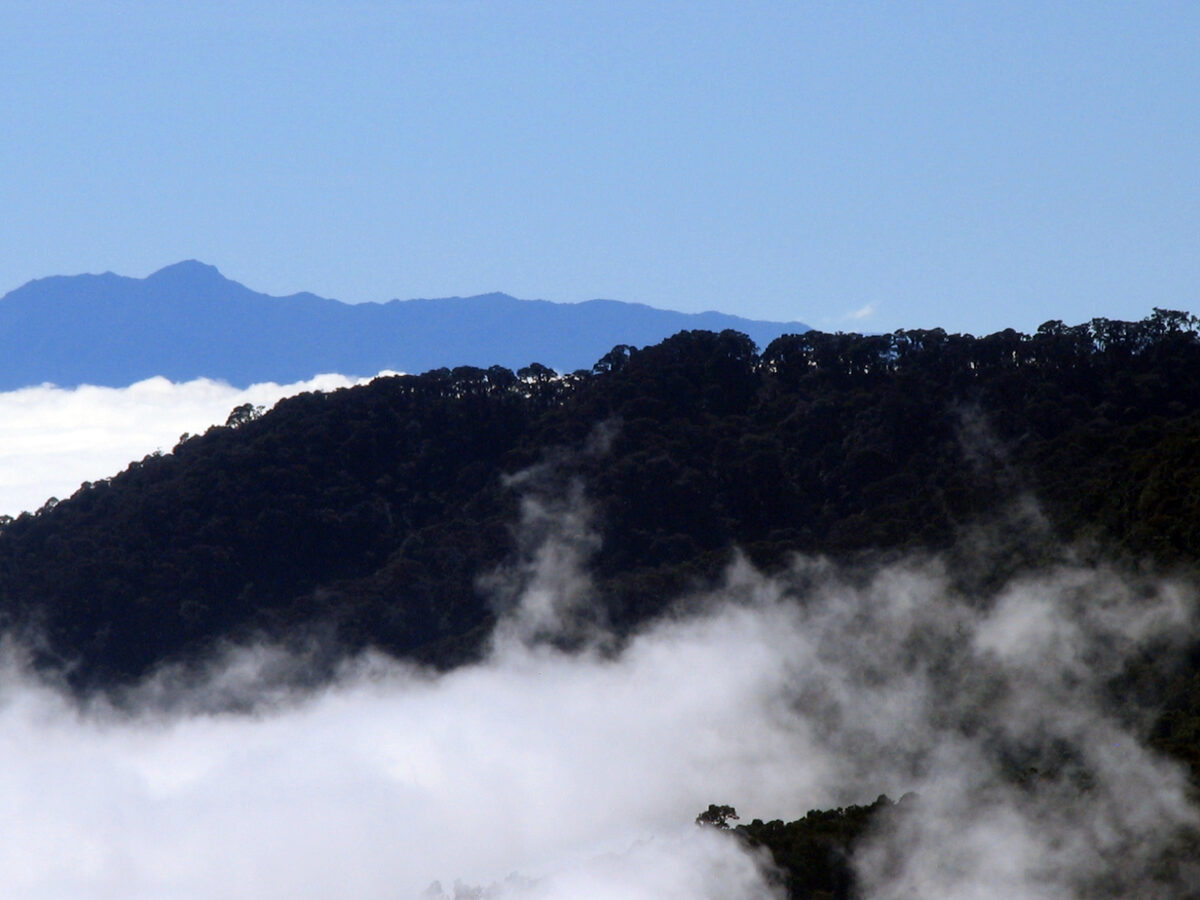
On April 4, 1982, with weeks left in his presidency, Rodrigo Carazo inaugurated La Amistad International Park, which he had created by executive decree two months earlier. The new park covered 199,147 hectares in the Cordillera de Talamanca, nearly doubling the entire national park system in a single stroke. Outside the Casa Presidencial, the economy was in ruins. Inflation was approaching 100 percent. The colón had lost more than 85 percent of its value. The International Monetary Fund had been expelled from the country. For eighteen months, not a single dollar in international aid or loans had entered Costa Rica.
The assembled press corps had other things on their minds. For thirty minutes they peppered Carazo with questions about Manuel Noriega and regional geopolitics. Gerardo Budowski, the conservation scientist who helped plan La Amistad, recalled that Carazo ended the press conference "by begging them to ask him something about the park." Nobody did.
The scene captures everything about Rodrigo Carazo: the grandeur of vision, the political isolation, and the stubborn conviction that protecting forests mattered even when the country was going bankrupt. He called La Amistad "the pride of the nation." In his memoirs he wrote that "Costa Rica had brought forward, with great effort, a fundamental wealth for preserving the planet and humanity." His critics, who were many, called him the worst president in Costa Rican history. His admirers, also many, called him the last dignified one.
Roots in the Land
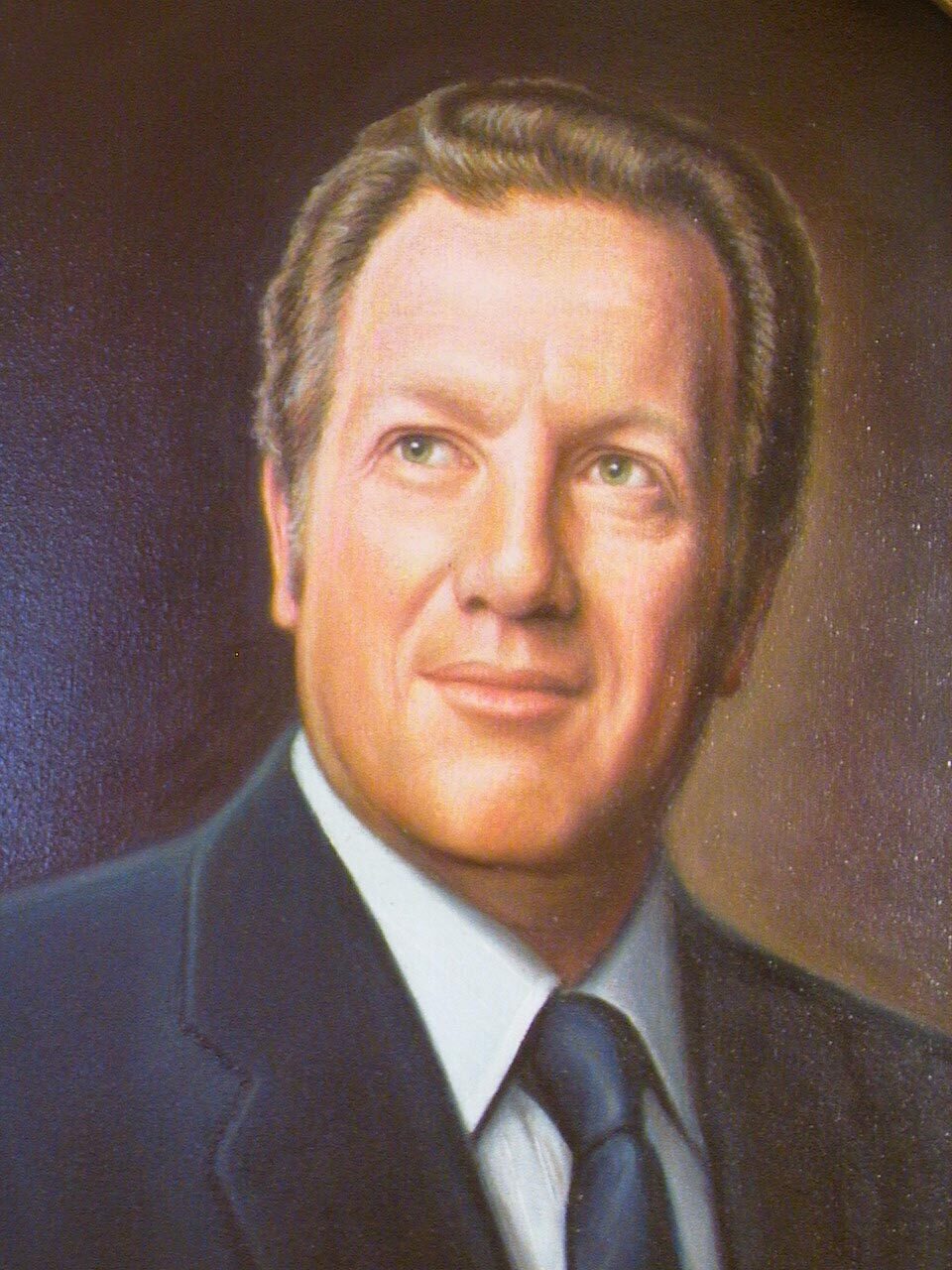
Rodrigo José Ramón Francisco de Jesús Carazo Odio was born on December 27, 1926, in Cartago, the old colonial capital in Costa Rica's Central Valley. His father, Mario Carazo Paredes, worked in agriculture and the timber industry. His mother was Julieta Odio Cooper. It was a middle-class family rooted in the land, and the land shaped everything that followed.
He grew up in a rural, agricultural setting in the mountainous area near Turrialba. "The rural environment shaped my vocation, my love for family, for the Homeland, and for a great interest in the values of that Costa Rica," he wrote in his memoirs. "I had the fortune that my childhood and youth took place in an environment of hard work, poverty, and austerity," which "forged habits in my years as a child that I still appreciate and want to conserve." His conservation ethic grew from this soil. An Arbor Day experience as a college student at the University of Costa Rica deepened it into conviction. And undergirding it was a religious stewardship philosophy: "Insofar as our faith teaches us that man was made in the image and likeness of God, we know that the Creator gave us an important responsibility: to take care of that environment so wisely prepared as our home."
At the University of Costa Rica, Carazo served as personal secretary to Rodrigo Facio Brenes, the rector who modernized the institution. Through Facio, he later said, he "learned the importance and profound meaning of rectitude, nobility, and simplicity." In April 1947, at twenty, he married Estrella Zeledón Lizano, granddaughter of a former president. They would be together for sixty-two years and have five children. After the 1948 civil war, while still finishing his studies, he was named to the city council in Puntarenas, his first public office. He stayed close to the university through the early 1950s as executive secretary of the University Council, and graduated from UCR in economic sciences.
Through the 1950s and into the 1960s, Carazo built the resume of a state-builder. He served as Director of Economics, then as founding manager of the National Institute of Housing and Urban Development (INVU) from its creation in 1954. He worked abroad as an advisor on housing and banking in Venezuela and Panama, then returned to Costa Rica to direct the Central Bank, and by the middle of the decade was running RECOPE, the national oil refinery. By 1966 he was a fixture of the post-1948 technocracy. The titles, however, captured only one slice of the man. His closest friend, Juan José Echeverría Brealey, later described his "multifaceted" life: "Besides politician, he was a sportsman, ham radio operator, tuna fisherman, volunteer firefighter, industrialist, merchant, shopkeeper, hotelier, rancher, teacher, rice grower and above all, in the broadest sense of the word, farmer." Carazo always described himself as an agricultor. Echeverría understood why: "The farmer is above all a sower, a partner of God on earth who with his effort and the help of nature produces food for everyone else. Don Rodrigo sowed ideas as he sowed seeds."
In 1966, Carazo was elected to the Legislative Assembly as a member of the Partido Liberación Nacional and became president of the Assembly in his first year. He led the commissions on economic affairs and finance. He was a party man, an economist, an institution-builder.
In April 1970, with his legislative term nearly over, Carazo became the most prominent deputy to stand with university students protesting the Aluminum Company of America's bauxite mining concession in the Valle de El General. He gave a talk at the university explaining the ecological damage the concession would cause. His son Mario was among the most visible student leaders in the same fight. Twenty-five years later, in 1995, some of those former student protesters, now themselves deputies, offered a tribute in the Legislative Assembly to Carazo and the ten colleagues who had voted against the mining contract.
Breaking with the PLN
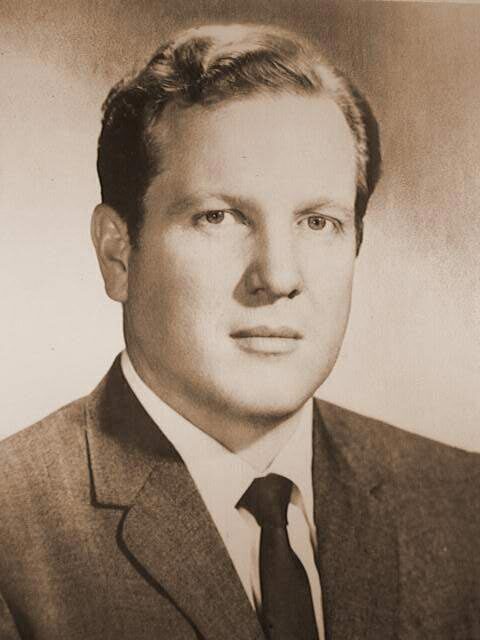
In 1968, Carazo challenged José Figueres Ferrer, the patriarch of the PLN and architect of the modern Costa Rican state, for the party's 1970 presidential nomination. Figueres won, as expected. The surprise was Carazo's share: a full third of the vote, a result that shocked the party establishment. A dissident faction proposed a renewal manifesto known as the "Proclama de Patio de Agua," a document considered so left-wing that Figueres ignored it. When Carazo's legislative term ended in 1970, he left the PLN.
On February 21, 1971, approximately three thousand people gathered at the Gimnasio del Colegio Los Ángeles in San José for the founding assembly of the Partido Renovación Democrática. Its ideology was social-democratic, drawing from Carazo's PLN base and significant numbers of PLN dissidents. In 1974, Carazo ran for president under the new party and finished fourth with about 9 percent of the vote. It was a humbling result. The lesson was that no single opposition party could defeat the PLN's electoral machinery.
What followed was an improbable coalition. On January 30, 1976, representatives of four opposition parties signed the "Pacto de Ojo de Agua": Carazo's Renovación Democrática, Rafael Ángel Calderón Fournier's Partido Republicano Calderonista, former president José Joaquín Trejos's Partido Unión Popular, and the Partido Demócrata Cristiano. By August, the alliance had formally adopted the name "Unidad." Here was the paradox of Carazo's political career: a social democrat assembling a coalition that stretched from the calderonista right to the Christian Democrats to PLN refugees, held together by nothing except the shared conviction that the PLN had held power too long.
Carazo won the coalition's internal convention in March 1977. Disputes over legislative candidate lists drove some allies away, but Calderón Fournier stayed. On February 5, 1978, Carazo won the presidency with 419,824 votes, 50.51 percent. Coalición Unidad took 27 of 57 legislative seats. For many historians, the 1978 election marks the beginning of Costa Rica's two-party system. Carazo came to office on what one account described as "a ground swell of popular support for reform."
Conservation through Crisis
Before becoming president, Rodrigo Carazo had "locked horns as a rancher and land owner" against the national parks and conservation movement. The conservationists expected the worst from his administration. They were wrong. Sterling Evans, in his history of Costa Rican conservation, concluded that "the president became one of the best friends the conservation movement had in the country." For Carazo the economist, "saving as many of Costa Rica's natural resources as possible was a means to promote a long-range economic saving for the country." The farmer and the accountant arrived at the same conclusion by different paths.
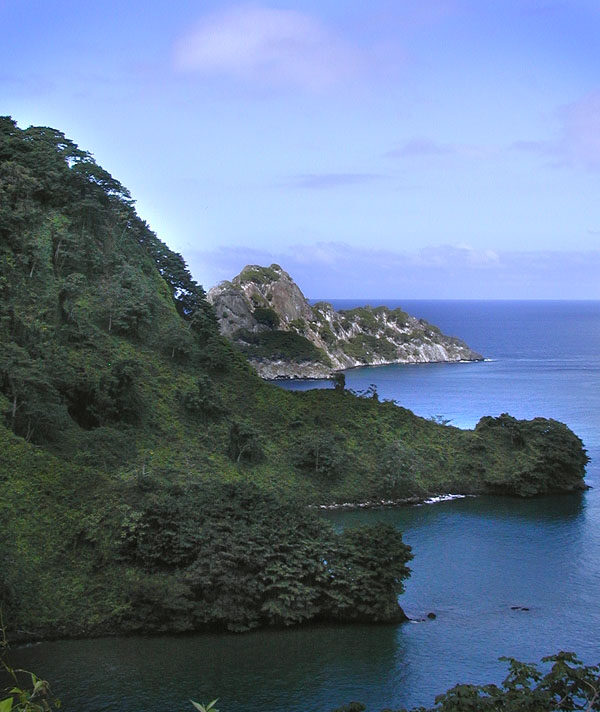
Carazo named Mario Boza, one of the founders of the national parks system, as his presidential advisor on natural resources, and retained Álvaro Ugalde as head of the National Park Service. In his first weeks, Carazo signed the decree creating Isla del Coco National Park, stopping the planned construction of a hotel and casino on the island. He called Cocos "a gift to mankind." Then he became the first Costa Rican president to visit a national park while in office: he and eighty dignitaries made the long trip to Isla del Coco in an old tuna boat to dedicate it.
The decrees kept coming. On February 5, 1980, to commemorate the tenth anniversary of the national parks program, Carazo hosted a ceremony at the Casa Presidencial and signed a decree expanding Guayabo, Manuel Antonio, Corcovado, and Tortuguero national parks, adding roughly 37,000 acres to the system in a single day. His administration created or expanded Palo Verde, Braulio Carrillo, Hitoy Cerere, Carara, the Golfo Dulce Forest Reserve, and Isla Bolaños Wildlife Refuge. He declared the corridor between Braulio Carrillo National Park and La Selva Biological Station a protected zone, writing to his ministers that "given the urgency for immediately and adequately protecting this important zone that has a treasure of natural resources, I'm asking for your maximum cooperation." The MacArthur Foundation provided a million-dollar matching grant for the project, the largest international conservation campaign in Costa Rica to that date.
Carazo personally led the expulsion of Osa Productos Forestales, a U.S. logging company that had bought roughly 47,000 hectares on the Osa Peninsula in 1957 for $450,000 and had been clear-cutting tropical forest for decades. He arrived "accompanied by government ministers, the police and the revenue department" and ejected them. The government expropriated Hacienda El Murciélago, a 16,075-hectare property formerly owned by Nicaraguan dictator Anastasio Somoza, paying 22 million colones raised partly through public collection from Costa Rican citizens. The land was incorporated into Santa Rosa National Park. He regulated gold mining on the Osa Peninsula. In 1979, he vetoed a bill that would have reduced the sea turtle protection zone off the Caribbean beaches from twelve to three miles. Conservation writer George Reiger noted that "whereas many other political leaders would have been inclined to sign the bill precisely because of all the outside agitation, President Carazo recognized the dire ramifications of the legislation and vetoed it."
In March 1979, Costa Rica hosted the Convention on International Trade in Endangered Species of Wild Fauna and Flora (CITES). World Wildlife Fund president Russell Train declared that "Costa Rica has done more for conservation than any other Latin American country." Carazo took personal interest in forming a network of biological research stations in the national parks, writing to his treasury minister that the stations would be "a form of non-extractive natural resource exportation." He backed tax incentives for planting trees and for not cutting timber on private lands. When he became concerned about pesticide-tainted runoff from banana plantations destroying coral reefs at Cahuita, he sent a letter to Standard Fruit requesting they reduce the pollution. When the park superintendent followed up, the Standard Fruit manager reportedly said, "Do you know what I think of this?" and tore up the president's letter.
When Carazo took office, approximately 451,000 acres, or 3.5 percent of Costa Rica's territory, were designated as conservation areas. By the time he left, the figure was approximately 1,033,000 acres, or 8.3 percent. An internal Parks Service report compared the record to his predecessor Daniel Oduber's: Oduber had signed 316,758 new acres into the system. Carazo had approved 572,756. As Carazo saw it, "the national parks are splendid natural laboratories which we offer to the international scientific community and also to the children, young people and adults who should not be denied the joy of direct contact with nature in its pristine state." They also, he said, "represent the contribution of the Costa Rican people to peace among men and good will among nations."
Shipwreck
The conservation achievements happened against a backdrop of economic catastrophe. Costa Rica's economy depended on coffee exports, and the country normally spent the whole of its coffee revenue importing petroleum. When coffee prices collapsed in 1978 after a speculative peak and oil prices doubled the following year, the economy was caught in a vise. The growth rate fell from 8.9 percent in 1977 to negative 8.8 percent in 1982. Terms of trade fell by a third. Debt service quadrupled.
The Nicaragua crisis compounded everything. The Carazo government permitted arms to flow through Costa Rica to the Sandinistas fighting Somoza. When Somoza's forces attacked Costa Rican territory in September 1978, killing two Civil Guardsmen and wounding civilians, the conflict became personal. After the Sandinista victory in July 1979, Carazo allowed U.S. helicopters to touch down on Costa Rican soil to facilitate Somoza's escape, provoking a domestic political firestorm. A legislative investigation into arms trafficking produced accusations of a $30 million bribe, though no hard evidence was found. The coalition he had built began to splinter.
In December 1979, his son Rolando was killed in a motorcycle accident in Rohrmoser. He was twenty-six.
His presidency had two and a half years to run. Against the advice of his Minister of Finance, Hernán Sáenz Jiménez, and of the IMF, Carazo had instructed the Central Bank to borrow heavily to maintain the value of the colón, betting on an imminent recovery. The recovery did not come. By mid-1980, dollar reserves covered only one week of imports. In September 1980 the colón was left to float, triggering catastrophic devaluation. Over eighteen months it fell from 8.54 to the dollar to 65. Inflation soared from 6 percent to nearly 100 percent. Real wages dropped 40 percent. The proportion of families below the poverty line shot up to 70.7 percent. Scenes appeared in the streets that Costa Rica had never known: children singing for coins on buses, beggars going door to door, homeless families huddled under bridges. High school enrollment rates dropped by nearly ten percentage points as families sent teenage children to work.
Sáenz resigned in protest, hoping other officials would follow. None did. Two IMF standby accords broke down in the face of public opposition. In July 1981, Costa Rica declared a moratorium on debt payments, over a year before Mexico's more famous announcement. It was one of the first countries in Latin America to default. Carazo declared the IMF persona non grata and the Fund closed its offices in San José. "Instead of helping us to get fair prices for our products in the international market," Carazo charged, "the IMF has asked us to spend less on everything without considering what this would mean to the population." He told the United States the same. When Thomas O. Enders, the U.S. Assistant Secretary of State for Inter-American Affairs, accused him of corruption at a meeting at the Casa Presidencial, Carazo replied: "You are playing politics."
In September 1981, Carazo wrote to multiple heads of state: "I know that our attitude is what prevents us from getting the economic aid Costa Ricans need, but never, for material interest or any other cause, will I compromise the dignity of a people that must walk through History with their heads held high. Neither money nor the force of the powerful will turn us into their servants." The final eighteen months of the administration saw zero dollars in international aid. By the end of his term, Carazo had the support of just one congressman.
The historian Jorge Marchena Sanabria, drawing on Costa Rica's National Archives, offered a reassessment in 2022. Carazo personally, Marchena argued, was "attached in paper and rhetoric to a kind of social democracy," while his government corresponded to "a convulsive agglomeration of modernizing neoliberals, PLN-style developmentalists, and a few inept ones." The executive served, in Marchena's analysis, as a chivo expiatorio, a scapegoat. His three-point conclusion: "Carazo was not an anti-imperialist paladin or anything similar. Carazo was not a caricatured villain. The crisis was not his fault. More important, at the end of the day, it is very plausible that the United States, the IMF, and even the oligarchy understood this too, but until the immediate tensions diminished, it was preferable that the Presidency bear the blame."
Revolt at Palo Verde
The conservation record had its own casualty. In the summer of 1981, with the colón in free fall and the treasury empty, Carazo announced he would be "segregating" 9,900 acres from Palo Verde National Park because the state could not afford to compensate the landowners whose property had been improperly expropriated. When the decree appeared in La Gaceta on July 16, the actual figure was 17,300 acres: three-quarters of the park.
The reaction was fierce. Mario Boza, Carazo's own conservation advisor, submitted his resignation on July 22. "Could you imagine a worse blow to the system of protected areas of the country?" he wrote. "And could you imagine a more grave precedent against conservation of the country's natural resources?" He pointed out that very few countries, and none in the developing world, had ever completely paid property owners for conservation lands. Alexander Bonilla of ASCONA, Costa Rica's leading environmental organization, wrote a ten-page letter to Carazo. Former president Daniel Oduber publicly supported ASCONA, calling the pretext of insufficient funds "very poor and very doubtful."
Student protesters appeared at the presidential mansion with a banner: "We Defend Our National Parks, STOP Segregation." Letters poured in from biologists' associations, labor unions, legislative members, school employees, conservation organizations, sports clubs, and even a dance troupe. A beekeeper wrote about the impacts on honey production. Someone composed an anonymous poem, "Requiem por un parque," that circulated widely: "Entre decreto y decreto se acaban los parques, / los patos, los piches y el guayacán..." ASCONA filed a lawsuit against the government.
The resolution revealed that Carazo's position was more complicated than it appeared. In a private letter to his agriculture minister Hernán Fonseca, released as a press statement, Carazo showed he had "given the order to purchase" those 17,300 acres in the coming fiscal year's budget. Evans concluded that "Carazo proved he did want to preserve Palo Verde; the money was simply not available in his budget." A lower court ruled in ASCONA's favor and invalidated the decree, though the Supreme Court reversed on constitutional grounds. By February 1982, the government agreed to purchase approximately 8,700 acres from agribusiness corporations. By the end of the decade, the remaining landowners had donated their land back to the Parks Service.
A University for Peace
In 1976, a Costa Rican rancher and conservationist named Cruz Rojas Bennett made a promise to the aspiring politician Rodrigo Carazo. He would donate the forested areas of his farm, in the coffee-growing highlands at El Rodeo some 25 kilometers southwest of San José, for a university dedicated to peace studies, on one condition: that the institution would eternally protect what was the last primary forest in Costa Rica's Central Valley. Rojas Bennett was partly motivated by a fear that environmental degradation had become akin to a war against nature. He often invited young intellectuals to his property for long conversations, and Carazo was one of them. Rojas Bennett died before Carazo took office. His family honored the promise and donated 303 hectares.
On September 27, 1978, just fifteen days after Somoza's forces attacked Costa Rican territory, Carazo proposed the creation of a University for Peace before the United Nations General Assembly. It was precisely the chaos of the moment that inspired the proposal. Robert Muller, a longtime assistant to UN Secretary-General U Thant, had carried the dream of a peace university for years. When he heard Carazo's offer from his office on the 38th floor of the UN building, he jumped up, ran to the General Assembly, embraced Carazo, and thanked him for coming to fulfill the dream of U Thant.
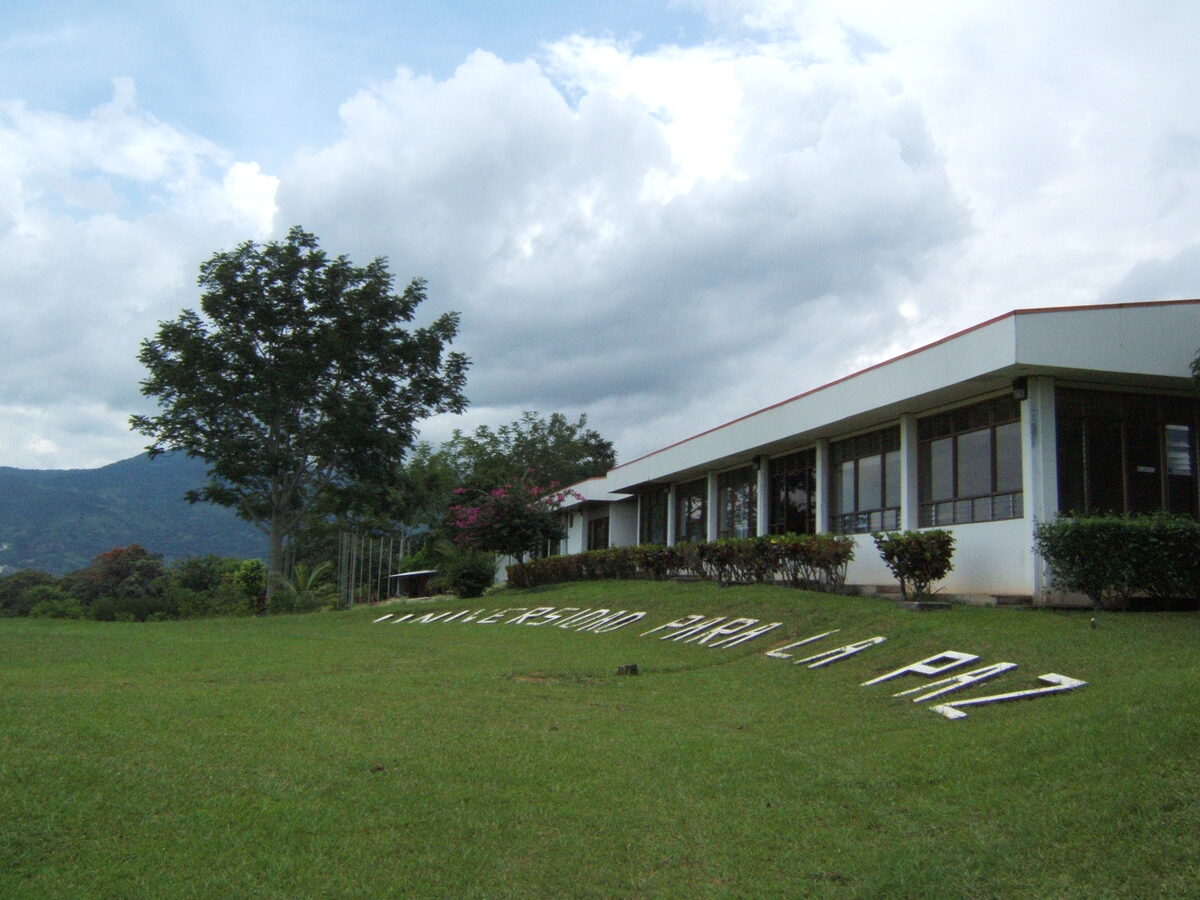
The idea met resistance. "In those days, Central America was in pretty deep trouble," recalled later UPEACE rector Martin Lees, "and the idea of a peace university was not in great favor by some major governments. If you started talking about peace in Central America, people thought that this was kind of left-wing thinking." The General Assembly adopted Resolution 35/55 on December 5, 1980, establishing the University for Peace by consensus. The land Carazo offered was the Rojas Bennett donation at El Rodeo, in the hills of Ciudad Colón, where at the time there was no electricity or running water. When Muller first visited, he went away feeling the dream was dead. An additional 100,000 trees were planted on the campus grounds. Today the university sits within the forest Rojas Bennett asked it to protect: the last remnant of primary forest in the Central Valley, some 200 hectares sheltering roughly 50 species of mammals, 275 tree species, and over 150 bird species.
Carazo understood the link between conservation and peace. "The University for Peace concerns itself with everything that causes conflict in our time," he explained. "We are, for example, enormously preoccupied with the destruction of the natural environment because that destruction is in turn causing serious outbreaks of violence in many parts of the world. What's more, the lack of resources for human survival is itself a source of violence." When asked by a Washington Post reporter what Costa Rica's secret was, Carazo answered: "The explanation is very simple. We don't waste money on weapons, so we have resources for other things. The needs of our people come first."
The Peace Park
In late 1978, Carazo met with a water-user association in southern Costa Rica about protecting the Talamanca watersheds. There he rekindled an older idea: a binational park spanning the Cordillera de Talamanca on both sides of the Costa Rica–Panama border.
In March 1979, six months after announcing the University for Peace at the United Nations, Carazo and Panamanian president Aristides Royo signed a final agreement at Guabito, declaring they would create a binational "Parque de la Paz" and a binational commission on natural resources.
Designing the park stretched over the next two years. The Tropical Science Center surveyed the boundaries; CATIE planned the installations and services; OFIPLAN financed the underlying studies. By the time the studies were complete in September 1981, the colón was collapsing and OFIPLAN's budget for the project had been cut to roughly a fifth of the original allocation. University students were recruited to do the field work the state could no longer pay for. Mario Boza, in Álvaro Ugalde's later account, was the figure inside the administration who "got Cocos Island, Palo Verde and Amistad National Parks created."
The decree came on February 4, 1982: Parque Internacional La Amistad, 199,147 hectares. It was the largest single addition in the history of the Costa Rican park system. After the April inauguration, Carazo took roughly a hundred guests into the cordillera by helicopter and jeep, met with Guaymí caciques, and saw the territory firsthand. UNESCO designated La Amistad a Biosphere Reserve later that year and a World Heritage Site in 1983.
After the Presidency
Carazo left the presidency in May 1982 with his reputation in tatters. His successor, Luis Alberto Monge, quickly negotiated with the IMF and the Reagan administration poured aid into Costa Rica, making it the hemisphere's second-largest recipient. The coalition that Carazo had assembled merged into the Partido Unidad Social Cristiana in 1983. He briefly tried to found yet another party, the Partido Radical Democrático, then became a private businessman. He never ran for office again.
He became the first rector of the University for Peace. "It is very difficult for people to support something that other people have created," he observed. "This is a problem of political character." He was characteristically humble about the founding: "When there are ideas like this, nobody can say, 'I am the father, or I am the mother.' It was born out of the collectivity and culture of Costa Rica." UN Secretary-General Javier Pérez de Cuéllar used the campus as his site for "personal diplomacy," and it became a place where guerrilla leaders from Nicaragua, El Salvador, Colombia, and Guatemala met their respective governments for first peace encounters.
He was far from finished. In 1994, he co-founded FAICO, the Friends of Cocos Island Foundation, to continue protecting the national park he had created sixteen years earlier. "Every time someone contributes with this treasure," he said, "our national prestige increases." He and his wife Estrella created Villa Blanca, a cloud forest hotel and nature reserve in San Ramón, protecting more than 2,000 acres of cloud forest. He became one of the most vocal critics of the International Monetary Fund and global financial institutions. He founded and presided over the Consejo para la Defensa de la Institucionalidad, an organization dedicated to defending public institutions against privatization.
His international work grew broader with time. He made several visits to Pyongyang in the early 1990s, leading delegations of former heads of state, and his efforts contributed to opening unofficial channels of communication between the United States and North Korea. He supported the Tibetan people's struggle for human rights as a member of the Committee of 100 for Tibet. He aided President Oscar Arias in building consensus for the Central American peace agreement. Arias said of him: "Of all the former presidents consulted during the Central American peace talks in the 1980s, he was the first to give support to the peace plan with the firmness and integrity that characterized him."
In his final years, Carazo campaigned vigorously against the Central American Free Trade Agreement. His words carried the same sensibility that had animated his fight with the IMF two decades earlier: "I am a friend of trade, but when I go to the convenience store I count the change. Only this way can I be sure I'm getting the correct change. If I don't count my change, and I become accustomed to what they give me, then they'll never give me the proper change." He considered public institutions "the main guarantors of social justice." In a 2003 address to the Legislative Assembly, he warned: "The companies govern the Governments and dominate the financial organizations, which makes the plutocracy appropriate the entire planet." At his 1998 acceptance of the Premio Rodrigo Facio Brenes, the University of Costa Rica's highest distinction, he said that "the moment had arrived to begin the globalization of solidarity, perhaps the only globalization truly worthwhile."
How Is My Country?
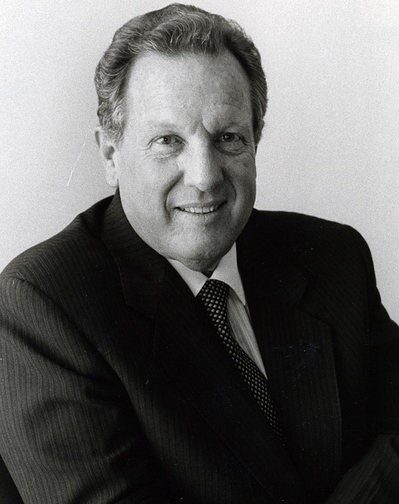
On November 26, 2009, Rodrigo Carazo was admitted to Hospital México in San José for quadruple coronary bypass surgery. It was the first time he had ever been a patient in any hospital. His son Mario noted that his father was impressed: "The care was excellent." He did not make it home. In his final days, he preferred to talk about "simple things like the phases of the moon or the life of a seed." Conversation inevitably turned to the family's well-being and to Costa Rica. "How is my country?" he would ask. And he would often lament the lack of leadership in the coming elections. "He wasn't dramatic during these last few weeks," Mario said. "He accepted what was happening. He knew how to savor life and he was intensely spiritual."
Rodrigo Carazo died on December 9, 2009, at the age of eighty-two. Costa Rica observed three days of mourning. Flags flew at half-mast. A crowded service filled the Metropolitan Cathedral in San José.
His son Rodrigo Alberto, who became Costa Rica's first Ombudsman and later its Permanent Representative to the United Nations, said his father had been "always one, in constant formation and evolution, intensely spiritual and above all a coherent man, with an unwavering consistency between his thought, his word and his action." He was certain his father "left nothing unsaid when he died."
Resources & Further Reading
Books
Chapter 6, "Conservation through Crisis: Carazo and the Economy," is the definitive account of how the national park system expanded during the economic collapse. University of Texas Press.
Carazo's own memoir of his political career. Editorial Universidad Estatal a Distancia (EUNED).
An analytical biography covering Carazo's political career from the founding of Renovación Democrática through the aftermath of his presidency. EUNA, Heredia.
Key Articles
A two-part archival study drawing on Costa Rica's National Archives to reassess the Carazo administration and the economic crisis. Argues persuasively that Carazo served as a scapegoat for structural forces beyond his control.
The Tico Times obituary, featuring interviews with Carazo's son Mario and political analyst Constantino Urcuyo.
A detailed account of the founding of the University for Peace, including the story of Cruz Rojas Bennett and Robert Muller.
Alex Leff's account of the economic crisis and Carazo's legacy, featuring interviews with Costa Ricans who lived through the crisis.
An analysis of the public memories constructed around Carazo from 1969 to 2009, examining how intellectuals shaped his legacy.
Organizations
The UN-mandated university founded through Carazo's initiative, headquartered on the Rodrigo Carazo Campus in Ciudad Colón, Costa Rica.
Co-founded by Carazo in 1994 to continue protecting the national park he created in 1978.
Founded in 1979 during the Carazo administration by Mario Boza, Álvaro Ugalde, and others. The first organization dedicated to fundraising for Costa Rica's protected areas.
Academic
Ugalde's account of the founding of Costa Rica's national parks, including his complicated relationship with the Carazo administration and the Santa Rosa conflict.
Speeches by Carazo's sons Rodrigo Alberto and family friend Juan José Echeverría, providing intimate details of his character and philosophy.
An analysis of Carazo's political thought regarding the state, public enterprise, and institutional defense.
Related Profiles
Costa Rica's first Minister of Natural Resources, Energy, and Mines, who built on the conservation foundations laid during the Carazo era.
The American ornithologist who spent six decades studying Costa Rican birds and whose work contributed to the scientific case for the country's protected areas.