The Forest Gardener: Daniel Janzen and the Art of Cultivating Wildness
Sixty years of patient work demolished the false choice between people and nature—proving that conservation succeeds when communities become partners, not adversaries.
On a humid morning in northwestern Costa Rica, a former cattle rancher named Calixto Moraga crouches beside a caterpillar the length of his thumb. He photographs it from multiple angles, records GPS coordinates, notes the host plant species, then carefully places it in a rearing bag. Within weeks, he'll witness its metamorphosis into an adult moth, photograph that too, and clip a tiny leg sample for DNA analysis. The data will join a database containing records of over 500,000 specimens: one of the most comprehensive tropical biodiversity inventories on Earth.
Moraga isn't a university-trained biologist. He's a parataxonomist, part of a revolution in tropical conservation pioneered by an American ecologist who understood something most conservationists missed: the people who live in and around forests aren't obstacles to conservation. They're the only reason it can succeed.
Daniel Janzen is 86 now, but he still spends half the year in Costa Rica, still maintains an intense work schedule, still publishes research. Over six decades, he's transformed both our understanding of how tropical ecosystems function and our approach to protecting them. His laboratory, the Área de Conservación Guanacaste (ACG), spans 169,000 hectares from Pacific beaches to cloud forests. It protects an estimated 2.6% of Earth's terrestrial biodiversity while employing 150 local residents in permanent conservation careers. For context, ACG represents about 0.0011% of Earth's land area but safeguards 2.6% of its terrestrial species.
But Janzen's real achievement isn't measured in hectares protected or species catalogued. It's in proving that conservation doesn't have to be a zero-sum game between people and nature. When biodiversity becomes comprehensible and valuable to the communities who live with it, they become its most effective guardians. "It's all gardening," Janzen famously said, arguing that the survival of wild nature depends on active cultivation rather than passive protection.
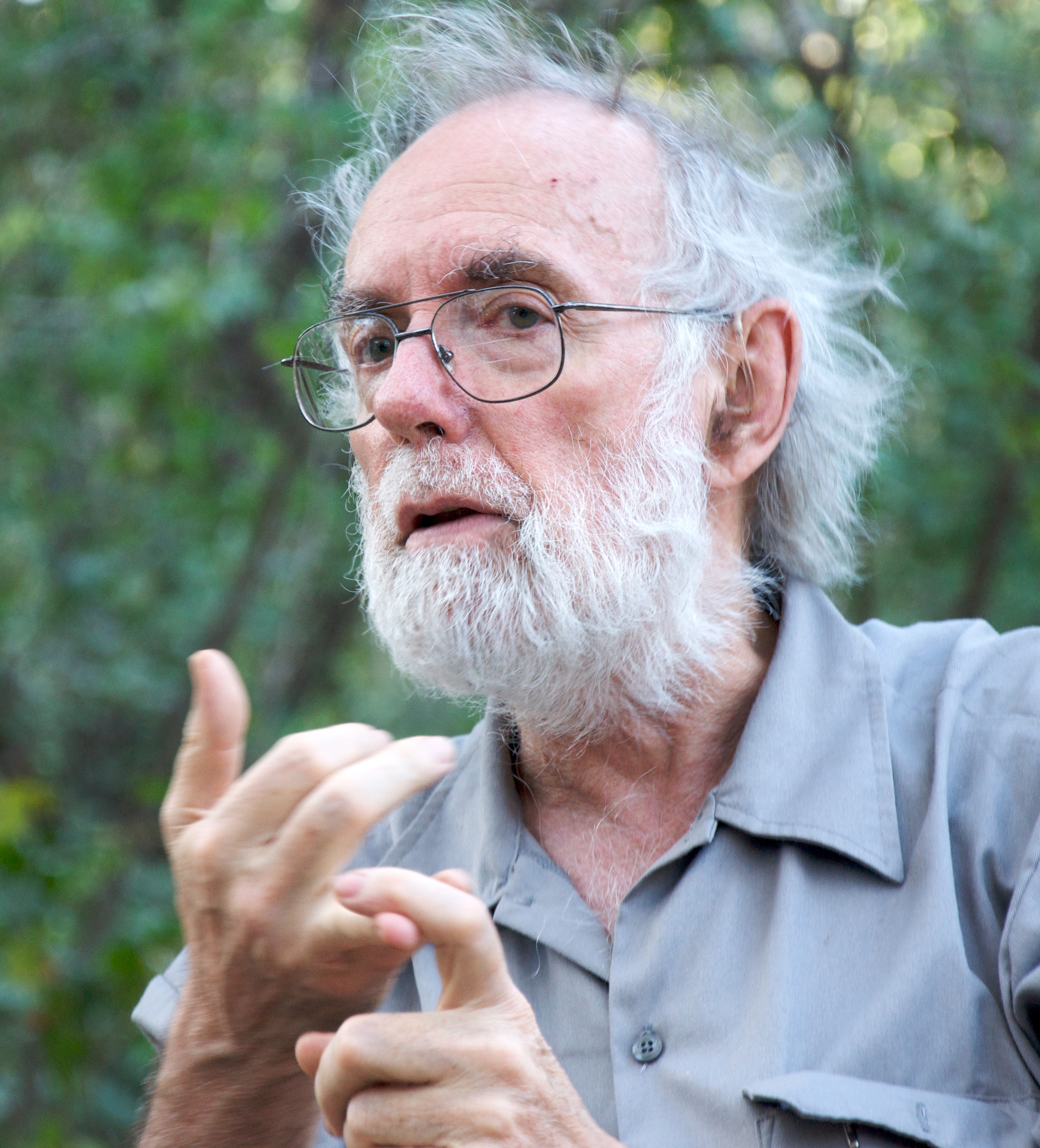
The Boy Who Traded Muskrat Money for Butterflies
A 14-year-old boy stands before a display case of tropical butterflies in the Minneapolis Public Natural History Museum.
Janzen grew up in the kind of mid-century Minnesota boyhood that's nearly extinct. He was close enough to Minneapolis that he could "get the bus off the front steps to the Minneapolis public library," but rural enough that he could "shoot my first pheasant off the back steps." He raised caterpillars, caught butterflies by hand, collected seashells, trapped rabbits and skunks. At age 10, visiting the University of Minnesota's Lake Itasca Biological Station, he spent considerable time catching butterflies while his family looked on. He devoured books about tropical exploration and dreamed of distant forests.
At 14, he saw brilliant tropical butterflies in the museum's collection, impossibly vibrant compared to Minnesota's modest species. He asked the curator where they came from. South America, came the answer. Young Janzen had an idea.
His father had two months of federal leave to use. What if they went to Mexico? He offered to contribute his savings from delivering newspapers and trapping muskrats. His father agreed. It took four days just to reach the Texas-Mexico border. They spent two months driving around Mexico, with Janzen collecting butterflies at every stop.
That summer taught him something no classroom could provide. He could pursue his passion for tropical nature, it could become more than just a boyhood hobby, and the forests he'd dreamed about were real and accessible. The trip sparked an obsession that would shape the next seven decades of his life.
A decade later, in 1963, that fascination brought him to Costa Rica as a 24-year-old Berkeley graduate student enrolled in a tropical biology course run by the Organization for Tropical Studies. He arrived disappointed; the course was classroom-heavy, and he'd come for fieldwork. So he asked if he could spend half the time actually in the forest.
They agreed. Janzen spent the rest of the course in the field.
"The wildlands were vast, equivalent to half the size of Costa Rica at that time, and people there were extremely friendly to people from abroad," he remembered. "I thought the country was heaven."
It was heaven for specific reasons: vast intact forests, political stability rare in Central America, and a culture genuinely welcoming to foreign researchers. But perhaps most crucially, Costa Rica had already abolished its military in 1948 and redirected that funding toward education and healthcare. This established a national ethos of social investment that would, within two decades, extend to environmental protection. When Janzen arrived in 1963, the conservation movement was just emerging: the country's first protected reserve had been established that same year, and the National Park Service would be created in 1970. Seeds of environmental consciousness were germinating. Janzen returned in 1965 as an instructor and hasn't stopped teaching there since. For 60 consecutive years, he's run at least one field course annually through OTS, training thousands of students who would become conservation leaders themselves.
The Questions That Transformed Ecology
Before Janzen could revolutionize how we protect tropical forests, he had to revolutionize how we understand them.
Stand in any temperate forest and you might see ten tree species in a hectare. Stand in a tropical rainforest and you'll see three hundred. Why?
For decades, ecologists lacked a satisfying answer. Janzen found one by studying the unglamorous patterns of seed death and seedling survival beneath parent trees.
Working in Costa Rica's forests in 1970, he proposed an elegantly simple mechanism. Specialist natural enemies (seed-eating beetles, fungal pathogens, insect herbivores) attack seeds and seedlings most intensely near parent trees where their densities are highest. This creates a "mortality shadow," a zone where offspring of a given species have dismal survival odds.
The implications were profound. No species could dominate the landscape because each tree's offspring died in droves near their parents. Rare species, meanwhile, faced fewer specialist enemies, giving them a competitive edge. The forest's diversity was maintained by millions of tiny interactions between seeds, fungi, insects, and pathogens: a self-regulating system where abundance itself becomes a disadvantage.
The "Janzen-Connell hypothesis" (named for Janzen and ecologist Joseph Connell, who independently proposed similar ideas) became one of ecology's most tested and cited theories. A 2014 analysis of 40 years of research confirmed its core predictions. Today, it has over 3,500 citations and continues generating research worldwide.
But Janzen's insights extended beyond seed mortality. In 1967, he published a paper with a deceptively simple title: "Why Mountain Passes Are Higher in the Tropics." Tropical mountains aren't actually higher in elevation, but they function as greater physiological barriers for organisms.
The explanation was fundamental to tropical biology. Species experiencing minimal seasonal temperature variation (the eternal spring of tropical mountains) evolve narrow thermal tolerances. A 1,000-meter elevation gain in Costa Rica represents roughly the same physiological barrier as a 3,000-meter gain in temperate regions, simply because tropical organisms aren't adapted to handle temperature fluctuations.
This explained why tropical mountains harbor so many isolated endemic species; different peaks might as well be different planets for organisms that can't tolerate the temperature drop between them. And it explained something increasingly urgent: why tropical biodiversity faces such acute climate vulnerability. When your entire evolutionary history prepared you for temperatures varying by just a few degrees, even modest warming presents existential threat.
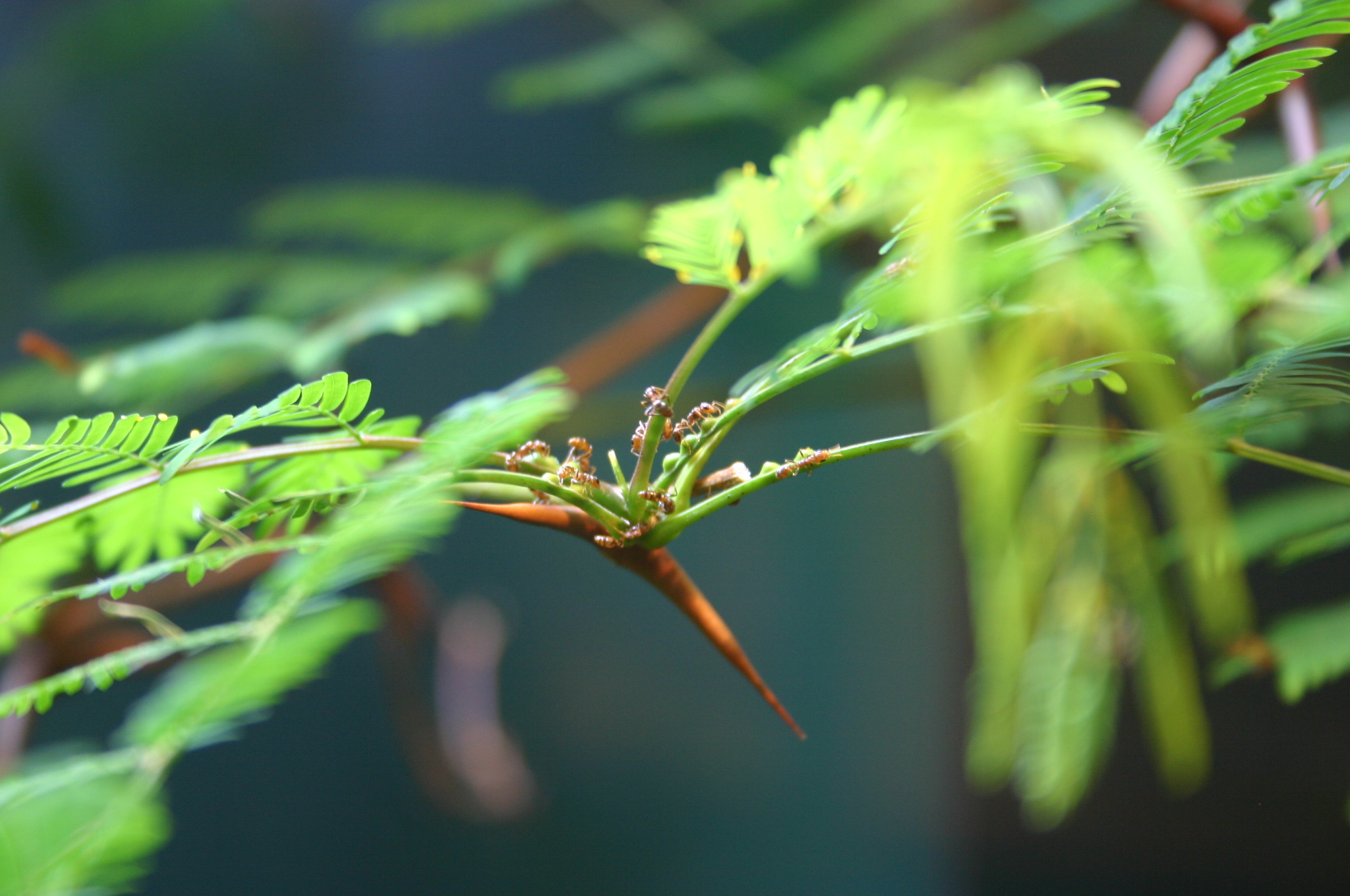
His 1966 work on swollen-thorn acacias illustrated his experimental rigor. These Central American trees house ant colonies in hollow thorns, provide protein-rich Beltian bodies for ant food, and secrete sugary nectar. In return, ants patrol 24/7, attacking herbivores and pruning encroaching vegetation. Mutualism was suspected but not proven.
Janzen's experiment was brutally simple. He fumigated trees with insecticide to eliminate ants, then monitored those trees against ant-inhabited controls for ten months. The results were clear. Ant-free trees suffered dramatically higher herbivory and mortality. The study became a foundational example of coevolution, cited in textbooks worldwide and helping launch the field of mutualistic interactions ecology.
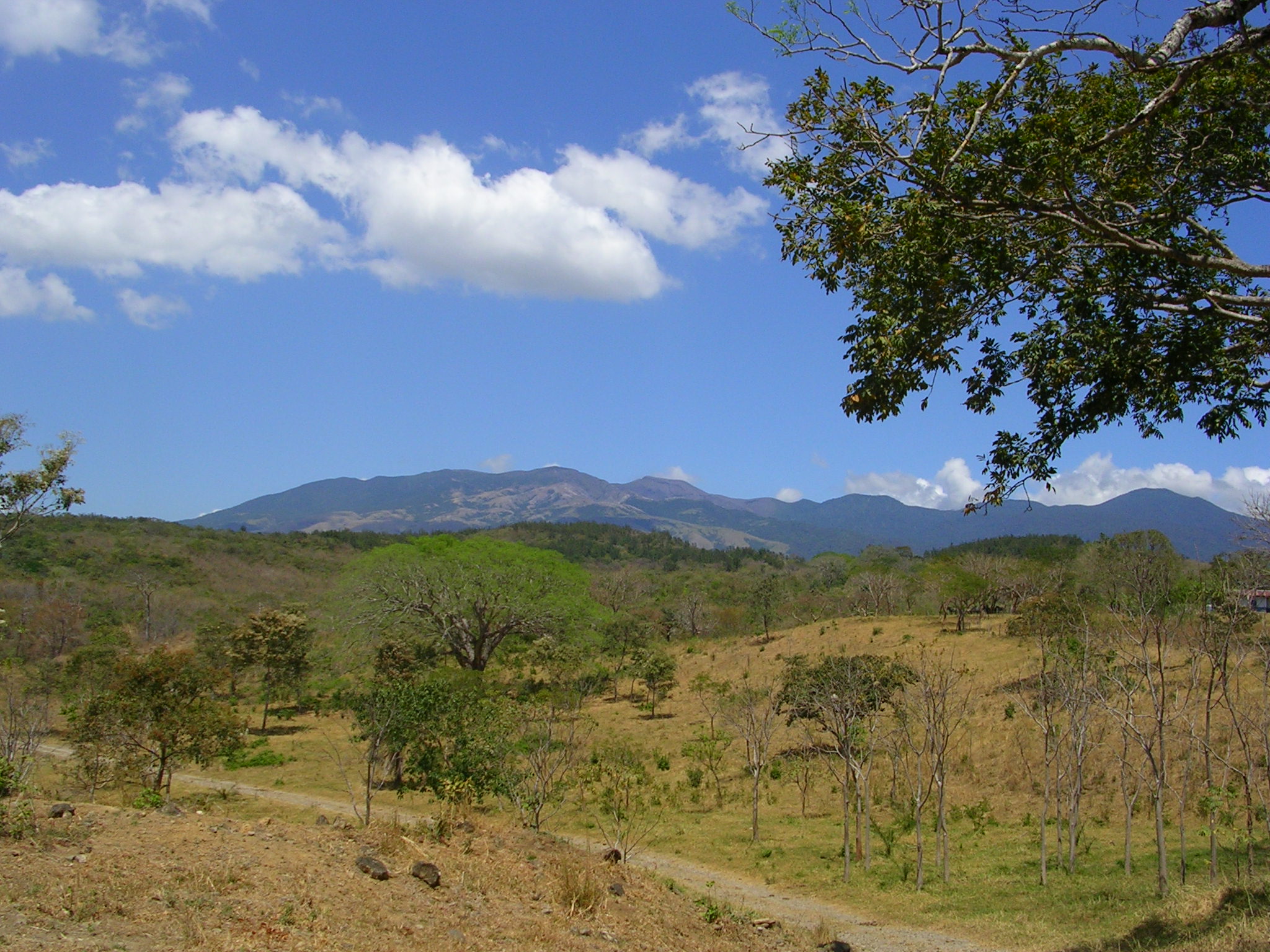
By 1985, Janzen had established himself as one of the world's leading tropical ecologists. He'd published groundbreaking theories, amassed citations, and won major awards including the 1984 Crafoord Prize (ecology's equivalent to the Nobel). His research sites in Costa Rica's national parks were among the world's most intensively studied tropical ecosystems. But throughout those decades of scientific success, he'd been watching the forests disappear around him.
When the Emergency Became Personal
Alvaro Ugalde needed help. As director of Costa Rica's national park service and Janzen's longtime friend, Ugalde was battling illegal gold mining in Corcovado National Park. He asked Janzen to assess the situation in 1985.
What Janzen encountered went far beyond one park's mining problem. Throughout northwestern Costa Rica, forests that had once seemed permanent were vanishing. Illegal logging, agricultural expansion, and conversion to cattle pasture were fragmenting wildlands at accelerating rates. The forests where he'd developed his theories about seed predation and ant-acacia coevolution were being destroyed.
"I've seen biodiversity go from vibrancy all around us, wild forests everywhere, to trashed and void landscapes in my lifetime," he would later reflect. "The next generation has not seen that. The landscape you see today is their ground zero."
The realization transformed his career. At his 1997 acceptance speech for the Kyoto Prize (one of science's most prestigious awards), Janzen surprised the audience expecting a lecture on tropical ecology. "They expected a talk about science, but I'd switched to conservation," he explained. His philosophy had fundamentally shifted: "The biology is easy, but we have to study society. For me, it's all human ecology."
This wasn't theoretical hand-wringing. Janzen and his research partner Winnie Hallwachs (who had joined him as a volunteer in 1978 after taking his course at the University of Pennsylvania) began a practical experiment. They would try to save not just a single park but an entire ecosystem, spanning from Pacific Ocean to Caribbean lowlands. And they would do it by completely reimagining what conservation could mean.
Gardening the Wilderness
The traditional conservation model was simple. Identify important habitat, declare it protected, hire guards, keep people out. Janzen called this the "fortress" approach, and he believed it was doomed to fail in the tropics.
His alternative emerged from years observing both Costa Rican ecosystems and communities. He coined the term "gardenification of wildlands," articulating an uncomfortable truth: "Humanity now owns life on Earth." Rather than pretending protected areas exist in pristine isolation, untouched by human influence, he argued they must be explicitly managed as "wildland gardens": protected, certainly, but also tended, invested in, and integrated into human society.
"Use it or lose it," he wrote in a landmark 1999 paper in the Proceedings of the National Academy of Sciences. "And when you use it, something has to restore it. Sustainability of a large wildland will only be achieved by bestowing garden status to it, with all the planning, care, investment and harvest that implies."
This wasn't advocating exploitation. It was honest acknowledgment that conservation survives only when people value it enough to invest in it. A park that generates no benefits for surrounding communities, that offers no connection to urban populations, that exists only as lines on maps; such a park would inevitably be degraded, defunded, or eliminated when other priorities emerged.
A truly conserved forest, Janzen argued, is by definition an "anthroecosystem," a human-influenced landscape with many uses, rather than an untouched relic. "Conservation into perpetuity demands the abandonment of the model of society fenced out and passive institutional custody," he wrote. In practice this meant active restoration: replanting trees in former pastures, controlling invasive grasses with traditional cattle (yes, even grazing can speed succession), and carefully guiding the regrowth of forests rather than hoping nature "will take care of itself."
As he put it, in ACG "the conservation area is being treated as an extremely complex garden. It must have very knowledgeable caretakers focused on maximum quality biodiversity and ecosystem conservation into perpetuity." The philosophy permeated every aspect of what would become the Área de Conservación Guanacaste.
The principle was simple: "When you go do ecological restoration, don't see your neighbors as enemies. Bring people to your side, make them your ally."
Building a Wildland from Cattle Pasture
Working with Costa Rican President Oscar Arias (who would win the Nobel Peace Prize in 1987), Janzen helped negotiate a unique hybrid structure. ACG would be government-owned but operate with NGO flexibility through a semi-autonomous administrative board. More importantly, it would fundamentally integrate with surrounding communities.
Santa Rosa National Park, established in 1971, covered just 10,000 hectares of dry tropical forest when Janzen and Hallwachs focused their efforts there in the mid-1980s. By 2020, through strategic land purchases and partnerships totaling approximately $450 million from the Costa Rican government and $150 million from international donors, ACG had expanded to 169,000 hectares.
But size alone didn't make ACG revolutionary. Its geography did.
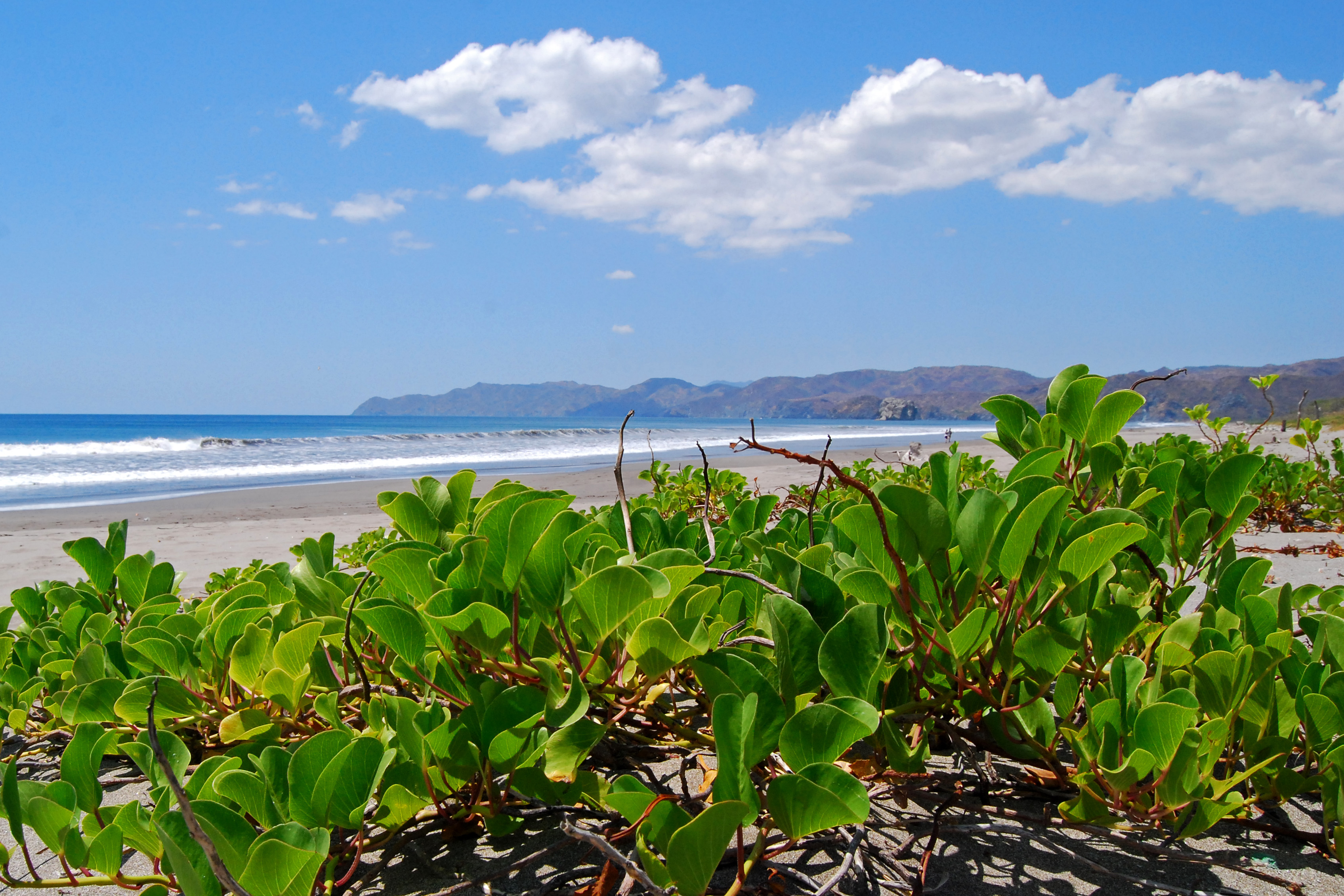
ACG protects the only continuous ecosystem transect in the Neotropics spanning from 6 kilometers offshore in the Pacific to Caribbean lowlands. This encompasses marine habitats, coastal ecosystems, the largest remaining tropical dry forest from Mexico to Panama, cloud forest atop volcanic peaks reaching 1,916 meters, and Caribbean rainforest. In a warming world, such elevation gradients provide potential migration routes for species as climate zones shift upward.
Much of this was degraded cattle pasture in 1985. Janzen and Hallwachs had to prove tropical forests could be restored at landscape scale, not through expensive planting programs, but through strategic protection allowing natural regeneration.
The approach was deceptively simple. Stop fires, eliminate hunting and logging, protect seed dispersers and let them do their work. Fire control proved especially critical. African jaragua grass (Hyparrhenia rufa), imported for cattle forage, created fire-prone conditions throughout the region. These fires prevented forest recovery; young trees couldn't survive annual burning.
With fires suppressed, forest advanced hundreds of meters into abandoned pasture within a decade. Isolated trees left standing in pastures became "recruitment nuclei," attracting bird and bat seed dispersers and creating expansion nodes. Large herbivores (initially horses and cattle, eventually native species like white-tailed deer and Baird's tapirs) dispersed large-seeded species that pioneers couldn't transport.
The process wasn't instantaneous. Full forest recovery requires 40-100 years, but it worked. Today, ACG stands as one of the world's most successful large-scale habitat restoration projects, proving that even severely degraded tropical ecosystems can regenerate given protection, connectivity, and time.
The ecological payoff is substantial. ACG supports Costa Rica's largest jaguar population, intact mangrove forests, nesting beaches for olive ridley sea turtles arriving in massive arribadas, and an estimated 350,000-650,000 multicellular species: roughly 2.6% of Earth's terrestrial biodiversity.
The Revolution in the Rearing Bags
But Janzen's most socially transformative innovation didn't involve habitat or species. It involved jobs.
Traditional conservation employed local people as guards for manual labor requiring minimal education, offering seasonal work at low wages. In the late 1980s, Janzen and Hallwachs envisioned something fundamentally different. They would train residents as "parataxonomists" (the term borrowed from "paramedic") capable of sophisticated biodiversity inventory work traditionally done by PhD specialists.
The program deliberately recruited from surrounding rural communities, intentionally targeting equal numbers of men and women. Many had completed only primary education. Many were former ranchers or farmers whose lands had been incorporated into ACG. Rather than seeing them as displaced or resentful, Janzen saw potential partners.
"These are ordinary people, nonbiologists, who do the biodiversity inventory in the field," Janzen explained in 1992. "We hire bright, interested adults living in the vicinity of the conservation area, who elect to do this as a full-time vocation. [...] Their job is to figure out what's in those parks."
The training was intensive. Parataxonomists learned to rear caterpillars through their complete life cycles, maintain detailed databases, photograph specimens, identify species to family or genus, operate GPS units, prepare DNA samples, and manage biological field stations. Rather than seasonal employment, parataxonomy became a career path offering intellectual engagement, specialized skills, and above-average compensation.
The results exceeded anyone's expectations.
As of 2017, ACG's parataxonomists had identified over 10,000 new species. Today, approximately 30 full-time career parataxonomists operate from 11 biological field stations throughout ACG, having registered over 500,000 specimens representing more than 45,000 species. Some have completed university degrees; several hold government conservation positions; many have become conservation advocates in their communities. One team of five parataxonomists has created what amounts to a botanical "Yellow Pages" for ACG, photographing and documenting each of the region's 6,000-7,000 plant species online, adding hundreds of species per year to the freely accessible database.
Calixto Moraga, the former rancher photographing caterpillars, is one of ACG's most accomplished parataxonomists. He's co-author on scientific papers, specialist in several insect groups, and has trained visiting researchers. He's living proof that conservation expertise doesn't require PhDs; it requires passion, training, and opportunity.
"For the parataxonomists themselves, the career is a release from the life of poorly educated rural people," Janzen wrote. "They develop pride in collecting quality material for museums and in contributing to science and environmental conservation." This contrasts with "the classical method of 'declare the area a national park and engage in decades of cops-and-robbers interactions with the dying and resentful town on its margin.'"
The model spread globally. Parataxonomy programs now operate in Papua New Guinea, southern Africa, India, Namibia, and throughout Amazonian regions.

The Economics of Conservation
For all its ecological and social success, ACG still faced a challenge confronting every protected area: sustainable funding. Most parks worldwide depend on annual appropriations from governments perpetually facing competing budget priorities. Economic crisis or political shifts can devastate conservation funding overnight.
Janzen sought a different model based on endowments generating permanent income streams. He pioneered what he called "non-damaging biodevelopment," generating revenue from biodiversity without destroying it. ACG developed environmental services contracts with neighboring landowners, providing biological pest control for $1 per hectare annually, water provision for $5 per hectare, and biodegradation services for agricultural waste. Tourism generates revenue roughly matching government salary contributions.
Janzen scaled this approach to the national level with Rodrigo Gámez-Lobo, a Costa Rican virologist who served as President Arias's Biodiversity Advisor in the late 1980s. When the government rejected their proposal to create a national biodiversity institute as "unrealistic," Gámez-Lobo resigned and partnered with Janzen to establish INBio as a private organization in 1989. Their collaboration paired Gámez-Lobo's institutional knowledge and political connections with Janzen's international networks and grant-writing expertise. Together with Winnie Hallwachs—who developed the parataxonomist training methodology—they created an institution that would transform how the world thought about biodiversity conservation.
INBio likened Costa Rica's parks to "enormous greenhouses" of species with untapped commercial potential. Under Gámez-Lobo's leadership as General Director (1989-2003), the institute became a gatekeeper for biodiversity information, with pharmaceutical companies and researchers negotiating for samples and data under fair agreements. A well-publicized deal with Merck paid $1 million for rainforest genetic samples, turning ad hoc plant scraping into legitimate transactions with benefits flowing back to Costa Rica. It was bioprospecting formalized, with the country asserting sovereignty over its genetic resources.
Janzen often put it bluntly: "The word 'protecting' probably isn't useful. What we're talking about now is using the forest without damaging it... I'll pay five percent of the biodiversity so that 95 percent is still there a thousand years from now."
In his view, the "ivory-tower" stance that demands saving every scrap of nature leaves no room for compromise and ultimately costs everything. Better to make an explicit trade-off and create sustainable value: treat parks like any other productive landscape (even a rice field) whose output (water, carbon, tourism, genes) pays its way.
These ideas fed into the origin of Costa Rica's world-renowned Payments for Environmental Services (PES) program, under which farmers and ranchers are now paid to keep forests standing, reflecting exactly Janzen's vision that markets should reward, not punish, conservation.
Janzen's pragmatism extended to uncomfortable truths about what conservation can realistically achieve. He embraced what he called "ecological triage," the acceptance that not everything can be saved. A few hundred hectares of forest can sustain thousands of small organisms, he noted, but it will struggle to support viable populations of large mammals like white-lipped peccaries or jaguars no matter how often they are reintroduced. "Accepting triage is perhaps the most painful requirement of tropical restoration," he admitted. Conservation dollars are finite, so focus on what can realistically persist rather than "ladle funds onto the living dead" for sentimental reasons. He was, he admitted, "real callous about what other people think nature ought to be." Rather than chasing a pure historic baseline, he was content to let plants and animals compete and adapt. This blunt pragmatism, once controversial, is increasingly accepted among restoration biologists today.
His most ambitious funding strategy aimed for permanence. He leveraged a $3.5 million donation into a $30 million endowment fund, with investment returns funding operations in perpetuity. His long-term vision is to raise $500 million to endow Costa Rica's entire national park system. "You cash all your fundraising chips and you get this one result and it's done," he explains. "The income stream goes in and pays people on the ground to actually do whatever they need to do."
The Climate Reality
Janzen and Hallwachs don't sugar-coat emerging challenges. Their 2021 paper in the Proceedings of the National Academy of Sciences carried a deliberately sobering title: "To us insectometers, it is clear that insect decline in our Costa Rican tropics is real, so let's be kind to the survivors."
Drawing on decades of intensive monitoring, they documented "conspicuous ongoing decline" in insect biomass and richness since the mid-1970s, intensifying after 2005. The drivers were rising temperatures, increasingly erratic rainfall, and extended droughts. Climate disruption was rendering once-stable tropical environments unpredictable.
For someone who proposed in 1967 that tropical mountain passes are "higher" because tropical organisms evolve narrow thermal tolerances, the implications are sobering. Species adapted to temperature constancy face existential threat from even modest warming. They have nowhere to go; their physiology wasn't designed for the world we're creating.
Yet Janzen remains pragmatic rather than despairing. Climate change, he argues, makes his "big chunks" philosophy more critical than ever: "The only places that are going to survive in the long run are big conserved pieces. Small pieces may be very pretty, but they die, just because of insularity." He predicts 50% of Costa Rica's 160 conservation areas "will be dead and worthless in 50 years."
ACG's size and connectivity (spanning from sea level to 1,916 meters across a continuous transect) provides what smaller reserves cannot: space for species to track shifting climate zones as temperatures rise. Migration routes matter in a warming world.
Yet Janzen held a seemingly paradoxical view. While connectivity within ACG matters immensely, he even found reason for measured optimism in fragmentation between reserves. Every conserved wildland is now an "ecological island" in a sea of agriculture, yes, but that isolation becomes an engine of evolution. "Speciation will occur," he wrote. "Hundreds of small to medium-sized populations... each will occupy a somewhat different set of ecological circumstances." New species will arise from these isolated populations, even as many others go extinct. It's a contrarian perspective: accepting dynamic change rather than mourning the loss of historical baselines, treating extinction and speciation as ongoing processes rather than conservation failures.
The parataxonomist network becomes monitoring infrastructure, tracking which species decline, which colonize new elevations, which disappear. The accumulating data reveals how tropical ecosystems respond to disruption in real time. It's adaptation, not surrender. And it's only possible because ACG invested decades building both ecological restoration and local capacity.
The Deeper Legacy
The traditional conservation narrative pits humans against nature in zero-sum conflict: either we preserve pristine wilderness or we destroy it through our presence. Janzen devoted six decades to demolishing that false dichotomy.
His contribution begins with groundbreaking science: hypotheses about seed predation, thermal tolerance, evolutionary anachronisms, and coevolution that transformed tropical ecology. But it extends to something more profound: demonstrating that conservation succeeds not by locking nature away from people but by helping people understand, value, and sustainably use their biodiversity inheritance.
This philosophy emerged from lived experience: the teenager who traded muskrat-trapping money for a transformative summer in Mexico; the graduate student who found "heaven" in Costa Rica's combination of wild forests and welcoming people; the ecologist who realized that "the biology is easy, but we have to study society."
The ACG transformation, from 10,000 hectares of park besieged by surrounding degradation to 169,000 hectares of regenerating forest supporting 2.6% of global biodiversity, proves even severely damaged tropical ecosystems can recover. But Janzen's deeper legacy is proving that conservation transforms from battle to partnership when communities become stakeholders rather than adversaries.
"Restoring complex tropical wildlands is first and foremost a social endeavor," Janzen wrote. "The technical issues are far less challenging."
It's a lesson extending far beyond Costa Rica. Tropical forests worldwide face the same pressures ACG confronted in 1985: expanding agriculture, illegal logging, hunting, fire, fragmentation. They also offer the same opportunity: communities capable of becoming conservation partners if given proper training, employment, and reason to value intact ecosystems. Janzen's vision includes training street kids to inventory insects, parataxonomists co-authoring scientific papers, smartphone tools that let anyone decode biodiversity: a democratization of expertise that breaks down walls between professional science and local knowledge.
Janzen's commitment to Costa Rica isn't extractive research tourism. It's binational citizenship in practice if not legal status, earned through 60 years of sustained engagement.
At 86, with the same intensity he brought to butterfly collecting as a boy, Daniel Janzen continues gardening his wildland. The garden is 169,000 hectares and growing.
Daniel Janzen: In His Own Words
Watch Janzen discuss his philosophy of conservation and the evolution of Area de Conservación Guanacaste in this talk.
References & Further Reading
Primary Scientific Publications
Experimental fieldwork proving swollen-thorn acacias trade shelter and food for around-the-clock ant defense, cementing mutualism theory.
Introduced the idea that tropical species evolve narrow thermal tolerances, making "mountain passes higher" and foreshadowing climate vulnerability.
Proposed the Janzen–Connell mechanism in which host-specific herbivores and pathogens keep tree species rare enough to share space.
Popularized “neotropical anachronisms,” arguing many fruits evolved with extinct megafauna dispersers such as gomphotheres.
Warned that tropical dry forests are the most endangered major ecosystem and called for restoration at national scale.
Coined “gardenification” to argue that conserved wildlands need active, people-centered management rather than isolation.
Expanded the gardenification concept into a blueprint for multitasking, multiuser management of tropical reserves.
Narrates how ACG used “biodiversity development” to align local livelihoods with conservation goals.
Details how parataxonomists create rural science careers while generating high-quality biodiversity data.
Demonstrates that pairing caterpillar rearing with DNA barcoding accelerates species discovery in complex faunas.
Comprehensive Biotropica case study on converting ACG from a park into an integrated conservation landscape.
Summarizes decades of insect monitoring in ACG showing sharp declines tied to hotter, drier conditions.
Supporting Scientific Literature
Meta-analysis testing Janzen–Connell predictions across 40 experimental datasets.
Global plot network linking stronger negative density dependence with higher plant diversity.
Introduced the COI DNA barcode standard that underpins BioAlfa and many ACG inventories.
Reviews how paraecologists and parataxonomists advance research, conservation, and local livelihoods.
Profiles and Interviews
PNAS profile summarizing Janzen & Hallwachs' partnership and scientific legacy.
Interview distilling Janzen's arguments for big, connected conservation “gardens.”
Prize interview capturing Janzen's fundraising pragmatism and BioAlfa vision.
Janzen's own account of how local adults are recruited and trained as parataxonomists.
Narrative chapter detailing the Janzen/Hallwachs “gardening wildland” playbook.
Institutional and Award Information
Frontiers of Knowledge award page outlining why Janzen received the ecology prize.
Albert Einstein World Award citation recognizing Janzen's biodiversity work.
Blue Planet Prize announcement highlighting Janzen's insect monitoring and bioliteracy efforts.
ACG and Conservation Organizations
Official site with biographies, BioAlfa updates, and options to support ACG's endowment.
Donor briefing describing how ICF supports land purchase, fire control, and parataxonomists in ACG.
Blog post summarizing lessons from ACG for national park financing and community outreach.
Travel guide emphasizing ACG's UNESCO World Heritage status and visitor logistics.
Educational Resources
Short primer on the steps and timescales involved in tropical forest restoration.
Popular explanation of new evidence that natural enemies maintain tropical tree diversity.
Feature on building a “bioliterate” Costa Rica through BioAlfa and citizen sampling.
Academic chapter analyzing how Janzen & Hallwachs pair community engagement with restoration.
Additional Background
High-level biography and list of publications.
Overview of the hypothesis plus supporting math and experiments.
Background on Hallwachs' career and leadership roles in ACG.
Reference for Earth's land area (148,940,000 km²) used to contextualize ACG's footprint.
Live citation dashboard showing Janzen's ongoing influence.