The Bifurcation Point
At twenty-nine, a young Costa Rican wrote that humanity stood at a bifurcation point. At thirty-four, he became Costa Rica's first environment minister and tried to prove that forests could have financial value without being destroyed. At seventy-two, he published a paper in the Royal Society admitting his generation had been naive.
In 1981, a twenty-nine-year-old Costa Rican co-edited a book with the ecological economist Herman Daly. It was published as an AAAS Selected Symposium volume under the title Energy, Economics, and the Environment. He wrote the opening chapter and the book's introduction. In his concluding pages, he made an argument that would not enter mainstream policy discourse for another decade: "It is no longer possible to treat the economic process as if it could maintain a continuous exchange with the infinite reservoir of nature, from which it could draw endless resources."
He went further. "While the basic needs of a significant portion of the human population are not met," he wrote, "the Earth's resources are used to satisfy trivial desires of the few. As long as severe disparities remain, ecologically stable societies are not possible because extreme inequalities are a source of conflict and material growth." And then this: "Humanity stands at a bifurcation point, where fluctuations in the dynamic interactions of the ecosphere will give rise to different structures and organizations. . . . Diversity is the evolutionary strategy to survival."
This was over a decade before "ecological economics" became a recognized field. The word "sustainability" had barely entered the public vocabulary. He was a physicist by training who had taught himself economics, and the language of his argument carries the mark of both disciplines. "Bifurcation point" is a term from dynamical systems theory, naming the moment when a small change in conditions causes a qualitative shift in a system's behavior. Umaña was using it literally. He was saying that humanity had arrived at an unstable threshold where small present-day choices, about inequality, about how economies drew from ecosystems, would determine which of two incompatible futures actually unfolded. One branch led to societies that could hold together inside planetary limits. The other did not. Diversity, biological and social, was the resilience strategy that might let the system survive the passage from one structure to another.
Forty-three years later, in April 2024, the same man published a sole-authored paper in the Philosophical Transactions of the Royal Society B. He was seventy-two. The paper, "Valuing nature: the case of tropical forests and Costa Rica," functioned as a summing-up of his life's work. It described the institutions he had helped build, the financial instruments he had invented, and the forest that had come back. It also contained a candid admission. The international cooperation he and his colleagues had expected to follow Costa Rica's early investments, he wrote, had been "naive." The economy had become "globalized," he observed, but it had "yet to become 'planetized'" regarding planetary constraints. On his personal website, he added a sentence that carried the weight of four decades: "I feel a profound sense of regret over my generation's shortcomings in tackling climate change."
Two Languages
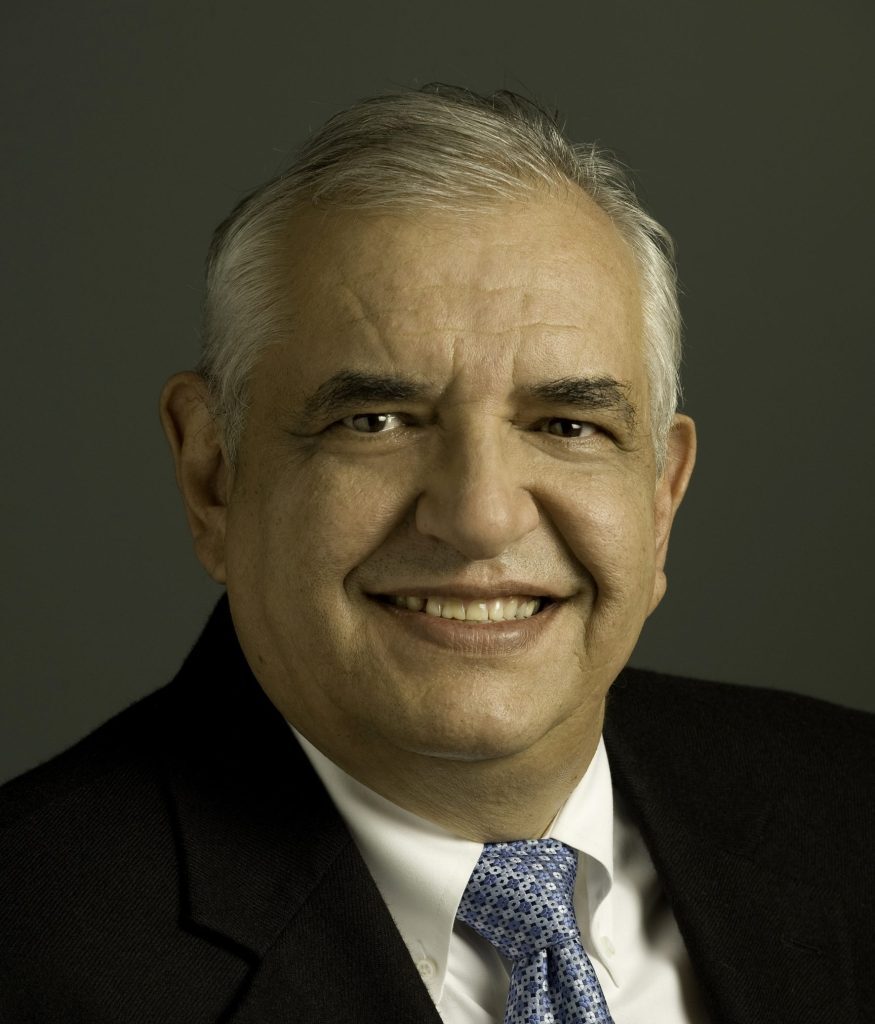
Álvaro Umaña Quesada was born on October 15, 1951, in Costa Rica. He studied physics at the University of Costa Rica in the early 1970s and won a Presidential Scholarship to Penn State. In central Pennsylvania, he read Rachel Carson's Silent Spring and changed direction. The book's account of pesticide poisoning redirected him from physics to environmental engineering. He participated in anti-war protests on the Penn State campus. In 1973 he earned a bachelor's degree in physics with honors; by 1974, a master's in environmental pollution control. The progression was rapid and revealing: a young man from a small country, trained in the abstract certainties of physics, encountering both the American environmental movement and the American anti-war movement simultaneously, and deciding that the systems he had been taught to analyze needed to be changed.
At Stanford, he did something unusual. He pursued a PhD in Environmental Engineering and Science and an MA in Economics at the same time, completing both in 1979. He served as a research assistant and lecturer throughout his doctoral years. The dual training was deliberate: he was teaching himself to read the natural world through two languages at once, one scientific and one economic. The collaboration with Daly, which produced the 1981 book based on a symposium at the 1980 AAAS National Annual Meeting, was the first fruit of this double fluency. At an age when most academics are still completing postdoctoral work, Umaña had already published a book arguing that the economic system was on a collision course with the ecosphere.
The Continent of Energy
Umaña did not return immediately to Costa Rica after Stanford. In 1980, he joined OLADE, the Latin American Energy Organization, in Quito, Ecuador, as Head of Programs of Rational Energy Use and Environment. For two years he traveled the continent, working on energy balances and biomass consumption across Central and South America. He published technical analyses of energy systems in the region. It was the kind of work that does not produce headlines but produces expertise: the detailed understanding of how countries generate power, where they waste it, and what alternatives exist.
In 1982, the UNDP appointed him as Energy Advisor to the Government of Costa Rica. He spent two years contributing to the country's first comprehensive energy plan. At the University of Costa Rica, where he was affiliated with the School of Civil Engineering, he completed a series of research projects that bridged his two fields: anaerobic treatment and methane production from agro-industrial waste, systematic analysis of energy and transportation, biomass fuel studies, and the interactions between energy and the economy. The projects were practical and local, grounded in the specific problems of a small tropical country, but the conceptual framework behind them was the same one he had articulated with Daly: the economy and the ecosphere are a single system, and ignoring their interdependence is a form of institutional blindness.
In 1984 he joined INCAE, the Central American business school near Alajuela, as Associate Professor and Director of the Energy Program. During a work assignment in Chile, he met Óscar Arias, who was preparing his presidential campaign. By 1986, Arias had won the presidency. Umaña had spent the previous six years accumulating an unusual combination of credentials: a Stanford doctorate, Latin American field experience, UNDP policy advising, and academic teaching at a business school that trained Central America's corporate and government leaders. He was fluent in Spanish and English with working knowledge of French, Portuguese, and Italian. He knew how international institutions operated from the inside. He was thirty-four years old and had an idea.
Five Years of Timber
Umaña's idea was structural. Costa Rica's environmental governance was fragmented. The Dirección General Forestal and the Servicio de Parques Nacionales were both under the Ministerio de Agricultura y Ganadería, the Agriculture Ministry, where agricultural pressure groups dominated the agenda. Wildlife was a department within the forestry directorate. Standing trees had no institutional advocate. Umaña proposed to President Arias the creation of a new ministry that would unify natural resources, energy, and mines under a single cabinet authority. His reasoning was specific: Costa Rica depended on hydroelectric power, which meant the country's energy supply depended on watershed health, which meant forests and energy were the same problem. "I wanted to give nature a voice in politics," he later said.
Arias agreed. Rather than creating a ministry from scratch, Umaña gutted the existing Ministry of Industries, Energy and Mines, stripping out industries and filling the shell with forests, wildlife, protected areas, and meteorology. The result was the Ministerio de Recursos Naturales, Energía y Minas (MIRENEM), the first environmental ministry in Central America. It was initially accomplished through a budget provision in 1988; Ley No. 7152 formalized it in law two years later. Umaña, at thirty-four, became its first minister. He called his approach "political ecology," recognizing "the mutual reliance of ecosystems and human well-being."
The crisis he inherited had decades of momentum behind it. In the 1940s, roughly 75 percent of Costa Rica was forested. By the time Umaña took office in 1986, that figure had collapsed to approximately 21 percent. The country had lost forest at an average rate of 3.9 percent per year between 1950 and 1984, with peak deforestation during the 1970s reaching 50,000 hectares annually. The drivers were structural: cheap government credit for cattle ranching, land-titling laws that required clearing as proof of productive use, and rapid road expansion into frontier areas. If the trajectory continued, there would be no forest left outside of parks by 2015.
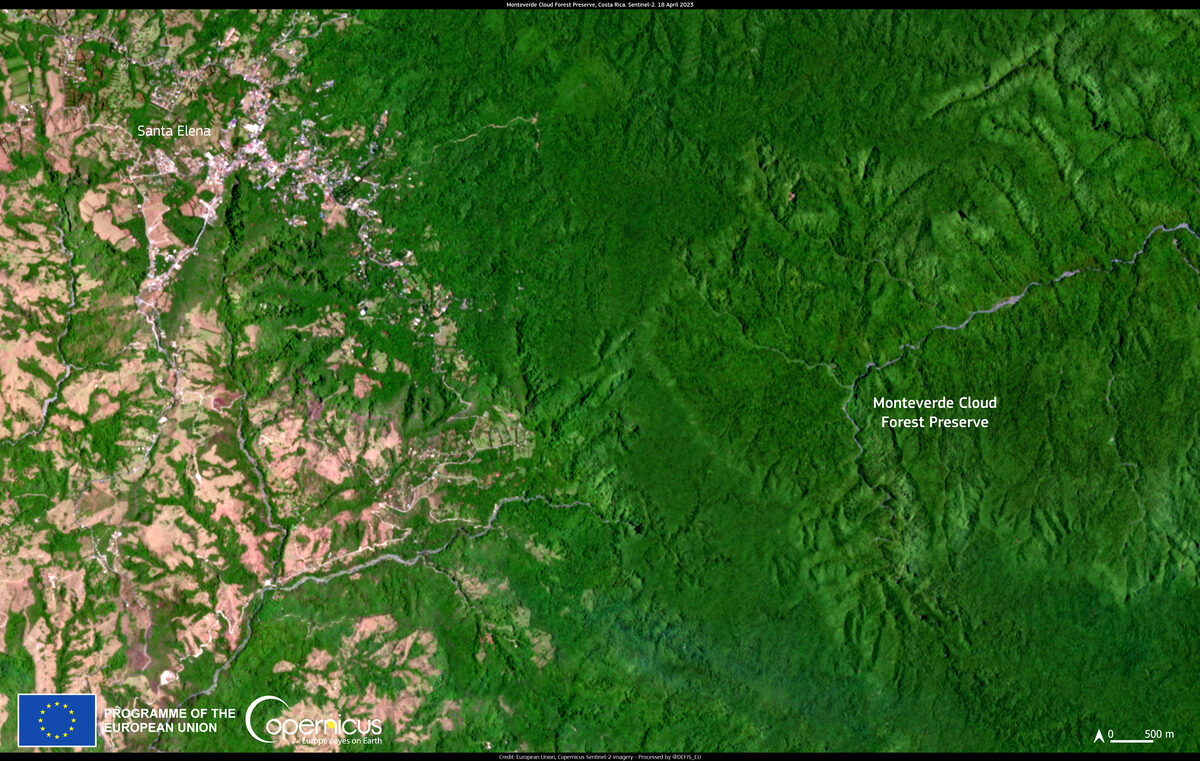
The historian Sterling Evans identified a "grand contradiction" in this trajectory. Costa Rica was simultaneously building one of the world's most celebrated national park systems and destroying everything outside it. Twenty-five percent of the country was protected; sixty percent had been deforested. The parks that Álvaro Ugalde and Mario Boza had fought to create since the 1970s existed as green islands in a landscape of degraded pasture and eroded soil. Many of them existed only on paper, riddled with private inholdings and unfunded mandates.
Arias gave Umaña the ministry but no budget to go with it. This was 1986. Costa Rica was deep in a debt crisis. The government had no money for environmental programs. The constraint forced Umaña to think like the economist he had trained himself to be. If the government could not pay for conservation directly, conservation had to pay for itself. Every instrument he built over the next four years was an attempt to solve this problem.
In February 1988, he received the results of a satellite survey of the country's remaining forest. Evans later summarized the finding: "Instead of the 8 to 9 percent of forested land that aerial photos showed to exist outside of parks and reserves (bad enough as that was), the satellite images showed that only 5 percent remained." At the current rate of extraction, the country had five years of commercial timber left. Umaña went to the press. He told reporters that much of the logging was illegal: trees felled inside national parks, hauled out at night on trucks, hidden under loads of agricultural produce, moved with the help of forged logging permits. He described surprise searches by the Rural Guard that uncovered illegal cuts inside protected areas. The Director General of Forestry petitioned President Arias to declare a national state of emergency. The proclamation empowered the forestry service to suspend all permits to fell trees outside of private plantations and to prohibit the export of unfinished wood products.
A log export ban had already been imposed on May 7, 1986, essentially at inauguration. A sawn wood export ban followed in 1987. In his first year as minister, nearly 15,000 acres were reforested under what Umaña called an "aggressive" reforestation program, which he described as double the acreage of 1985 and more than all the years since 1969 combined. President Arias declared 1988 the Year of Natural Resources.
The Price of a Standing Tree
Umaña's central insight was economic. In 1986, a standing tree in Costa Rica had no financial value. Banks would not accept living forests as loan collateral. A tractor could secure a loan. Cattle could secure a loan. Forest could not. The only way to extract value from forested land was to cut it down. "A standing tree had very little value," he told the Tico Times in 2019. "You couldn't use it as a guarantee for a loan like a cattle or a tractor." His ministry calculated the opportunity cost of conservation at $64 per year per hectare, the foregone income from the single cow per hectare that cleared pasture could support. It was a pittance, but it was still more than a living forest was worth on paper.
The existing policy instruments made the problem worse. Costa Rica's first reforestation incentives, created in 1979, offered $2,000-per-hectare tax deductions to landowners who planted trees. In practice, big companies clearcut native forest, sold the timber, and then collected the tax subsidy for replanting with exotic monocultures. "When you really look at it, it was a racket," Umaña said. "Big companies could cut down trees and replace them with monocultures and collect the tax write off." The incentive system was paying people to destroy biodiversity-rich native forest and replace it with plantations.
Umaña reversed the logic. He shifted 80 percent of incentive allocation to the protection of existing forests, leaving only 20 percent for reforestation. The centerpiece was the Certificado de Abono Forestal (CAF), created under Forest Law 7032 of 1986: a negotiable bearer security tradeable on the National Stock Exchange, usable for tax payments, or convertible to cash. It gave forest protection a financial instrument for the first time. Subsequent variants adapted the concept: the CAFA (1988) for upfront reforestation funding, the CAFMA (1993) for sustainable timber extraction, and the CPB (1995), which paid approximately $50 per hectare per year to landowners who conserved their forest. The CPB was the direct precursor to what the world would come to know as Payment for Ecosystem Services.
Umaña also devised a conservation loan program that functioned, in practice, as a performance-based grant. Small landowners with one to five hectares could take soft loans through existing cooperatives to establish tree cover on their land, with 50 percent disbursed in the first year and the remainder spread over four more to maintain it. If the trees were healthy after five years, the standing forest itself satisfied the loan: the papers were torn up and no cash was owed. Borrowers who lost the trees had to repay in cash. Ninety-seven percent kept their trees. After year five the program made no further claim on the land; whatever protected the forest from there forward came from Costa Rica's forestry law, not the loan contract.
The next step in this evolution was not Umaña's directly. René Castro Salazar, environment minister from 1994 to 1998 under President José María Figueres, built the legislative coalition to pass Forest Law 7575 in 1996. That law recognized four environmental services provided by forests: greenhouse gas mitigation, hydrological services, biodiversity conservation, and scenic beauty. It earmarked one-third of the selective tax on fossil fuel consumption for FONAFIFO, the National Forestry Finance Fund, generating approximately $10 million per year. The first PSA contracts were issued in 1997.
There is an irony in the origins of PES that reveals something about Umaña's instinct for institutional strategy. In 1995, the World Bank's third Structural Adjustment Loan to Costa Rica required eliminating forestry subsidies. The concept of "payment for ecosystem services" provided the Ministry of Finance with a way to continue conservation payments without calling them subsidies. What the World Bank required Costa Rica to abolish, Costa Rica renamed. Umaña has written that "the policies we implemented set the basis for what later became known as Payment for Ecosystem Services." His 2024 Royal Society paper goes further, noting that the Dutch debt-swap money "financed the transition to the payment for ecosystem services system."
Trading Debt for Trees
The idea of debt-for-nature swaps originated with Thomas Lovejoy, then vice-president of the World Wildlife Fund, in the early 1980s. Developing countries held foreign debt they could not repay, and that debt traded on secondary markets at steep discounts. If a conservation organization purchased the discounted debt and forgave it in exchange for environmental commitments, both sides gained. A small deal had been tested in Bolivia in 1987, a $650,000 arrangement brokered by Conservation International. Costa Rica, under Umaña, became the first country to build a systematic national program around the mechanism.
Umaña proposed the mechanism to the Dutch government, which approved a $5 million program focused entirely on forestry. Rabobank purchased $33 million in face value of Costa Rican commercial debt at 14 to 17 percent of face value. The Central Bank exchanged this for $9 million in local currency bonds. The resulting Forestry Development Fund, which Umaña personally co-managed with the Dutch Ambassador, financed the conservation of 13,000 hectares of forest. When President Arias received the Nobel Peace Prize in 1987, the international attention made it easier to bring other partners on board. The program was formally unveiled at the 1988 IUCN General Assembly in San José, where Prince Philip visited for two weeks. USAID eventually added $56 million through the Tropical Forestry Conservation Fund. Costa Rica became the most active country with debt-for-nature programs, retiring over $68 million in face value of debt before halting the swaps at the end of 1989 due to potential macroeconomic impacts.
The debt swaps also carried the biggest single project of Umaña's tenure. When the ecologist Daniel Janzen described his proposal to consolidate fragmented parks and private pastureland in Guanacaste into a single conservation area, Umaña's response was characteristically practical: "Can it be done in four years?" Arias added: "Sounds fine to me, but do not count on us for any funds." Janzen launched his own international fundraising drive, with contributions from the Nature Conservancy, the World Wildlife Fund, and other foundations. Sweden's government joined as the largest single donor, forgiving bilateral loans earmarked specifically for Guanacaste's Pacific dry forest. He timed land purchases to a period of low international beef prices, when ranchers were willing to sell pastureland cheaply. Roughly $12 million in donations and grants was run through Umaña's debt-for-nature mechanism, with Salomon Brothers executing the commercial transactions pro bono and the Fundación de Parques Nacionales handling local disbursement. The process retired $75 million in face-value Costa Rican debt and converted it to colones for land acquisition. Guanacaste National Park was established on July 25, 1989, by executive decree, aggregating 47,000 hectares of purchased pastureland with 23,000 hectares of existing Santa Rosa and Murciélago National Parks into an 82,500-hectare conservation area stretching from the Santa Elena Peninsula to the Orosí and Rincón de la Vieja volcanoes. Umaña later documented the project's political history, including its connection to the Iran-Contra affair and a clandestine airstrip, in his 2016 book PointWest.
Umaña also restructured conservation governance. He developed a system of seven regional conservation units, modeled on UNESCO biosphere reserves, using a core-buffer zone design: state-owned parks as core areas, privately-owned forest reserves as buffer. Each unit combined park and forestry staff with community input. Evans describes this as "the birth of decentralized park administration." The regional units were the direct precursor to SINAC, formally established in 1994-1995 by executive decree and given full legal status through the Biodiversity Law No. 7788 in 1998. ECODES, the Conservation Strategy for Sustainable Development published in 1990, became the country's first national-level strategy linking conservation with economics, urbanization, agriculture, water, and energy.
The Minister and the Park Service
Evans' account of Umaña's tenure is not entirely laudatory. He notes that Umaña "took a very hands-on administrative role with the departments in his agency." He kept Luis Méndez as director of the National Parks Service initially but replaced him in 1989 with Alfonso Matamoros, a Forestry Directorate official, when Umaña judged the Park Service "was starting to slide." The replacement was a signal: the new minister was not going to defer to the existing conservation establishment.
Álvaro Ugalde, who had co-founded the national park system in the 1970s and returned to lead the Parks Service under the subsequent Calderón administration, was direct in his criticism. "The power rested in the minister and his advisors," Ugalde said. "Policy was made without consulting the Park Service." Budgets remained insufficient. Park guards could not be hired in adequate numbers. Employee dissatisfaction grew throughout the four years.
In April 1990, the last month of the Arias administration, Park Service personnel went on strike, shutting parks for days. The action was a measure of the gap between what Umaña was building at the institutional and financial level and what the people on the ground were experiencing. The minister who wanted to give nature a voice in politics had built debt-for-nature swaps, forestry certificates, a new ministry, and a national conservation strategy. The park guards who walked the trails and confronted illegal loggers felt they had been consulted last, if at all.
There was also a legal setback. Forest Law 7032, the legislative foundation for the forestry certificates, was declared unconstitutional by the Constitutional Tribunal in 1990. The law had imposed restrictions on private land, which required a two-thirds supermajority in the Legislative Assembly. It had passed with 37 votes, one short of the required 38. Law 7174 was rushed through on June 28, 1990, as what Evans calls a "Band-Aid" provisional law, preserving the CAF mechanism while addressing the constitutional deficiency. The institution-building continued, but the episode was a reminder that innovative policy is also fragile policy, dependent on procedural details that a physicist-turned-economist might not have anticipated.
Selling Nature to Save It
Of all the institutions Umaña helped create, the one that tested his economic logic most ambitiously was the Instituto Nacional de Biodiversidad (INBio). In October 1987, Umaña established a Biodiversity Office within MIRENEM, led by the virologist Rodrigo Gámez. When the government could not fund a standalone institution, Gámez and Daniel Janzen organized INBio as a private, non-profit association, incorporated in October 1989. Umaña's role was to create the political space in which they could operate. The deal that made INBio famous came in 1991: Merck & Co. paid $1.135 million for access to 10,000 chemical extracts from Costa Rican wild species. The vision was that pharmaceutical royalties would create a direct financial incentive to conserve biodiversity.
No drug was ever produced. Merck terminated the contract in 1999. INBio itself collapsed financially and surrendered its 3.5 million specimens to the National Museum in 2015. The scholarly verdict, delivered by researchers at the University of Manchester, applies to the broader experiment Umaña championed: "The radical critique gains logical and moral power at the expense of practical relevance, while advocates of selling biodiversity have made their case with only limited empirical persuasiveness."
A biographical detail from Umaña's World Bank Inspection Panel biography, published in 1998, suggests that the line between conservation advocacy and personal economic interest was not always bright. The entry describes him as "a private entrepreneur in the ecotourism and conservation areas" who "is involved in sustainable wildlife reproduction and export." The detail does not appear in any other source. It is a reminder that the economist of the forest also lived in the economy he was trying to reform.
The Globalized Economy
After leaving the ministry in 1990, Umaña spent three decades trying to build at the international level what he had built in Costa Rica. The pattern of his career after government was consistent: he moved from institution to institution, each one larger in scope and further from the forests where the work had started, each one an attempt to create accountability mechanisms for problems that resisted accountability.
He returned to INCAE, where he spent the 1990s as Professor and Director of the Natural Resources Management Program. With Ford and MacArthur Foundation support, he launched a master's program in Natural Resources and Sustainable Development that trained a generation of Central American environmental policymakers. He served on the UNESCO Executive Board from 1989 to 1993 and on the Rockefeller Foundation Board from 1991 to 2002, where he chaired the Audit Committee and sat on the Finance and Executive Committees. He was a board member of the World Resources Institute from 1988 to 2000, the Stockholm Environment Institute from 1994 to 1999, and the Arias Foundation. He served as Goldman Environmental Prize jury member from the early 1990s to the present, selecting the winners of the world's largest environmental honor rather than receiving it himself.
In 1994, he was appointed a founding member of the World Bank Inspection Panel, the first mechanism that allowed citizens affected by World Bank-funded projects to seek institutional accountability. He served as chairman from 1997 to 1998 and edited a book documenting the Panel's first four years. In the preface, he framed the Panel as giving voice to private citizens, "especially the poor," against harm from development projects. The language echoed the ministry: he had wanted to give nature a voice in politics; now he was building a mechanism to give affected communities a voice in international finance. From 2001 to 2005, he directed the UNDP's Energy and Environment Group, overseeing more than 120 professionals and a project pipeline exceeding $250 million per year, and leading the organization through the 2002 World Summit for Sustainable Development in Johannesburg. He served as a senior advisor at the IMF from 2007 to 2009.
Climate diplomacy threaded through these decades. He served as Costa Rica's Ambassador for Climate Change and attended COP1 in Berlin in 1995, COP15 in Copenhagen in 2009 as chief negotiator, and COP21 in Paris in 2015 as a delegation member. Copenhagen, he said, "was a disaster, but it was good for us" because it allowed Costa Rica to promote Christiana Figueres, daughter of former president José Figueres Ferrer, as Executive Secretary of the UNFCCC. "Christiana did an outstanding job crafting the Paris Agreement." In 2008, he co-authored a paper in Science with a group that included Elinor Ostrom, who would win the Nobel Prize in Economics the following year. The paper proposed an Earth Atmospheric Trust to manage the global commons. It was the kind of institutional architecture Umaña had spent his career building: a mechanism to make something invisible financially legible, to give the atmosphere the kind of voice in politics that he had once wanted to give forests.
In 2014, he co-founded Climate Transparency with Peter Eigen, the founder of Transparency International. The organization publishes an annual report rating the climate performance of G-20 countries. The partnership was revealing: Eigen had spent his career making corruption visible; Umaña had spent his making environmental value visible. Both believed that measurement and transparency could change institutional behavior. Whether that belief has been vindicated is the question that runs through Umaña's entire career.
Close to the Maximum
The forests came back. From the low point of approximately 21 percent coverage in the late 1980s, Costa Rica's forest doubled to roughly 42 percent by 1997 and continued climbing to approximately 57 to 58 percent by the 2020s. Umaña told George Monbiot in 2023 that the country's forest coverage is now "close to the maximum." Over twenty years, the PES program disbursed $500 million to landowners and covered over one million hectares. Costa Rica received the 2019 UN Champions of the Earth award and the inaugural 2021 Earthshot Prize in the Protect and Restore Nature category. "Any taxi driver will tell you the connection with the parks and tourism," Umaña told the Tico Times.
The question of who deserves credit for this recovery has no clean answer. Mario Boza and Álvaro Ugalde built the national park system in the 1970s. Umaña added economic instruments and institutional architecture in the late 1980s. Castro codified PES into law in 1996. Carlos Manuel Rodríguez, who served three terms as environment minister, doubled the forest and made the electric sector 100 percent renewable. Structural factors mattered too: the abolition of the army in 1948 freed resources, the ecotourism boom created private incentives for conservation, the collapse of international beef prices reduced pressure on pastureland, and high education levels produced a citizenry that valued environmental protection. No single figure owns the outcome.
The contradictions are real. Costa Rica uses approximately 34.45 kilograms of pesticides per hectare per year, far above Europe and the United States. Pineapple production uses around 45 kilograms per hectare, including products banned in Europe. Transportation is "almost all completely fossil fuels," Umaña told the Tico Times, accounting for roughly 50 percent of carbon emissions, with agriculture contributing another 40 percent. Conservation successes, Yale Environment 360 reported, are "jeopardized by conflicts over the government's failure to return traditional lands to the Indigenous people who are regarded as the best forest stewards." And while total forest area has increased, intensive agriculture has created a landscape matrix of poor connectivity and declining biodiversity. The forest is back, but the ecological relationships that make it function are not all intact.
Evans, writing in 1999, had anticipated this critique. The ecologists John Vandermeer and Ivette Perfecto argued that the Costa Rican approach, which protected forest in parks and intensified agriculture everywhere else, was self-defeating because biodiversity cannot survive in the hostile matrix between protected islands: "the fact that the model has been an utter failure in Costa Rica, where it had the greatest chance of success, calls the model itself into serious question." Evans pushed back: the critics "have not considered the alternative. Instead of green, Costa Rica would be a brown republic."
"I feel pretty good about what we did," Umaña told the Tico Times in 2019, "but we have a long way to go; plastics, pesticide use, wastewater treatment, solid waste management to name a few."
Umaña lives in Washington, D.C. with his family. He maintains forest land in the Braulio Carrillo area of Costa Rica. He is a Senior Research Fellow at CATIE, co-chairs Climate Transparency, sits on Stanford's Natural Capital Project Advisory Council, and continues to publish. In 2024, his conservation work was featured in a children's book, Rewild the World at Bedtime. That same year, during System Change Leaders Week in Costa Rica, he guided twenty-five international leaders through the country's reforestation story. He has over 30 peer-reviewed articles and 500 Google Scholar citations. He speaks at TEDx events in San José. He is working on a monograph about "alternatives to break the present stalemate in global climate negotiations."
In 1981, he wrote that humanity stood at a bifurcation point. In 2024, he wrote that the economy had become "globalized" but had "yet to become 'planetized.'" The model he helped build worked in one small country. Costa Rica proved that deforestation could be reversed, that forests could be given financial value without being destroyed, and that economic instruments could align conservation with development. What Costa Rica could not prove was that other countries would follow, that international cooperation would scale the model, or that making nature legible to markets would be enough to save it. The instruments he built fit a country. The bifurcation did not.
Resources & Further Reading
Books
Umaña's first book, co-edited with ecological economist Herman Daly at age 29. Contains his chapter "Toward a Biophysical Foundation for Economics" and the "bifurcation point" argument that frames this article.
The definitive history of Costa Rica's conservation movement, including detailed accounts of Umaña's ministerial tenure, INBio's founding, and the "grand contradiction" thesis.
Umaña's account of the Guanacaste conservation area, including the Iran-Contra connection and the clandestine airstrip.
Key Articles
Umaña's sole-authored summing-up of Costa Rica's conservation trajectory, containing his "naive" admission and the "planetized" observation.
Co-authored with Nobel laureate Elinor Ostrom, proposing an institutional mechanism for managing the global atmospheric commons.
Monbiot's interview with Umaña on the economics of forest conservation, including the "close to the maximum" observation.
Interview with Umaña reflecting on his tenure, the debt-for-nature swaps, and remaining environmental challenges.
Academic
Detailed economic analysis of Costa Rica's PES program, described as "probably the most elaborate such system in the developing world."
Comprehensive academic account of the Merck-INBio bioprospecting deal, its renewals, and its failure to produce drugs.
Princeton case study tracing the political and institutional evolution from Umaña's forestry certificates to Castro's PES legislation.
Organizations
Umaña's profile at the Goldman Environmental Prize, where he has served on the jury since the early 1990s.
Costa Rica's National Forestry Finance Fund, which administers the PES program Umaña's policies helped create.
The organization Umaña co-founded in 2014 with Peter Eigen to promote accountability in climate governance.
Umaña's profile at the World Bank Inspection Panel, where he served as a founding member (1994-1998) and chairman (1997-1998).
Related Profiles
The Quaker farmer who helped protect the Monteverde Cloud Forest, one of the conservation areas that benefited from Umaña's institutional reforms.
The Costa Rican ecologist who classified the country's ecosystems, providing the scientific framework that Umaña's economic instruments were designed to protect.
Film
Dutch documentary on Costa Rica's conservation trajectory, featuring Umaña alongside biologist Hidde Boersma and George Monbiot.