The Patient Observer
Alexander Skutch spent sixty-three years on a remote Costa Rican farm watching birds, producing the largest body of natural-history information ever collected by a single observer.
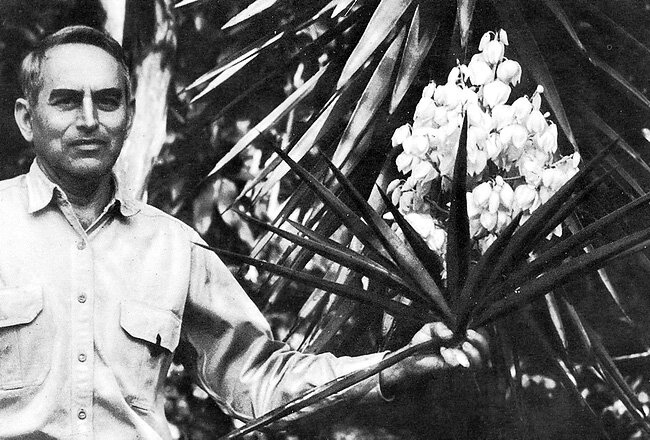
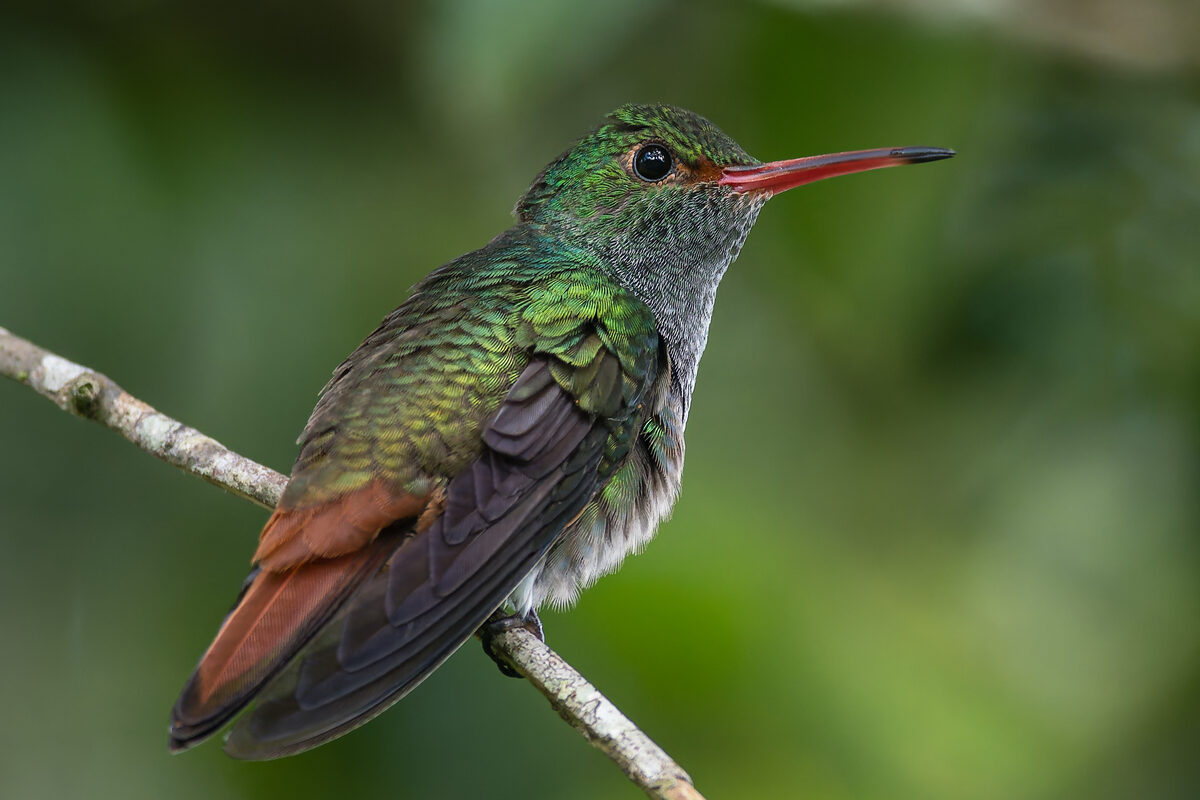
Sometime in late 1928 or early 1929, a twenty-four-year-old botanist sat at a microscope in a laboratory beside Changuinola Lagoon, on the Caribbean coast of Panama. Alexander Skutch had recently completed his doctorate at Johns Hopkins University and was studying banana plant diseases for the United Fruit Company. Outside the laboratory window, a Rufous-tailed Hummingbird had built her tiny nest. His attention, as he later wrote, "repeatedly rose from the microscope to the rufous-tailed hummingbird." By March and April, birds were nesting all around the garden, and the microscope was forgotten. He began writing what would become his first ornithological paper.
That moment of distraction became a career spanning seven decades. From the banana plantations of Panama, Skutch would go on to study the life histories of roughly three hundred species of tropical birds, publish more than two hundred scientific papers and over forty books, and spend sixty-three years on a single farm in southern Costa Rica observing, writing, and thinking. He never held a university position. He never collected a bird specimen. He never banded a bird. He recognized individual birds of the same species by variations in their plumage and watched them, season after season, with a patience that astonished even his peers. F. Gary Stiles, who collaborated with Skutch on the landmark field guide to Costa Rican birds, called his output "the largest body of natural-history information ever collected by a single observer."
Two Imperative Voices
Alexander Frank Skutch was born on May 20, 1904, in Baltimore, Maryland, the eldest of four children in a Jewish family. His father, Robert Frank Skutch, was an antiques dealer whose business eventually failed, the family home lost at auction. The financial crisis marked the son profoundly: Skutch would live his entire adult life in austere, debt-free simplicity, suspicious of material accumulation and committed to self-sufficiency.
He spent much of his boyhood on a farm in the Maryland hills, where he entered nature study, as his obituarist noted, "without passing through the egg-collecting stage so characteristic of budding naturalists" of his generation. He kept pigeons as childhood pets. He absorbed his father's love for books and read widely in history, literature, and philosophy as a student. The poetry of Percy Bysshe Shelley awakened both his interest in birds and a moral conviction that would shape his entire life: reading Shelley, and later studying Indian religions at university, he adopted vegetarianism and the Jain concept of ahimsa, the principle of non-violence toward all living things.
At Johns Hopkins, Skutch found his mentor in Duncan S. Johnson, a professor of botany who took him on field trips to the coast of Maine and, in the summer of 1926, to Jamaica, where the trip was financed by the United Fruit Company. It was Skutch's first encounter with tropical nature, and it transformed him. He committed to studying the leaf anatomy of the banana plant for his doctoral dissertation and received his PhD in 1928. Yet even at Hopkins, a revealing episode had occurred: a visit to a bird-banding station "put him off" ornithology for years. Watching birds subjected to the indignity of being handled and trapped repelled him deeply. The aversion never left. Throughout his career, he would refuse to band or collect birds, arguing that better information could be gathered by watching them alive and undisturbed.
In the foreword to his autobiography, The Imperative Call, Skutch wrote that "two voices summon men with a call so imperative that few who hear can resist." He meant religion and nature. He suspected they might be the same voice, "calling us in different tones to release our spirit from workaday pettiness." The title of that book, published in 1979 when Skutch was seventy-five, captured what had governed his life since the hummingbird at the window: a compulsion toward the living world that could not be resisted or deferred.
Nidification Unknown
After the hummingbird diverted his attention in Panama, Skutch returned to the United States and went to the libraries. He opened Robert Ridgway's multivolume The Birds of North and Middle America, the standard taxonomic reference of the day, and began reading species accounts. What he found astonished him. Genus after genus carried the same notation: "Nidification unknown" (nidification is the process of building a nest and rearing young). Ornithologists had spent decades describing and classifying the skins and feathers of Neotropical birds, naming species and subspecies with great precision, yet nobody had watched how they actually lived. Their nesting habits, breeding behavior, diet, social structures, vocalizations in context, parental care: all of it was a blank page. Skutch resolved to fill it.
The problem was money. It was the early 1930s, the depths of the Great Depression, and most ornithological fieldwork was funded by museums interested in specimens. Skutch wanted to study birds alive, which meant he could not shoot them for the institutions willing to pay. He discovered an ingenious solution: he could sell botanical specimens instead. His friend Dr. William R. Maxon, a pteridologist and curator at the Smithsonian's Division of Plants, arranged for half a dozen museums and botanical gardens in the United States and Europe to purchase duplicate sets of tropical plants that Skutch collected and Maxon's colleagues identified. For the next seven years, Skutch wandered through Central America as both plant collector and bird watcher, funding the work he loved with the work he could sell.
He used personal savings for two long visits to Guatemala: first to the Motagua Valley, then to the western highlands, where he lived a full year amid pine and oak forests above eight thousand feet. He visited the field station on Barro Colorado Island in Panama, where he met Frank Chapman, curator of birds at the American Museum of Natural History, whose life-history studies influenced his own work, though Skutch remained, as his obituarist noted, "totally unsympathetic to the scientific collecting of birds." He spent time at the Lancetilla Research Station in northern Honduras, where his interest in bird behavior deepened with every nesting season.
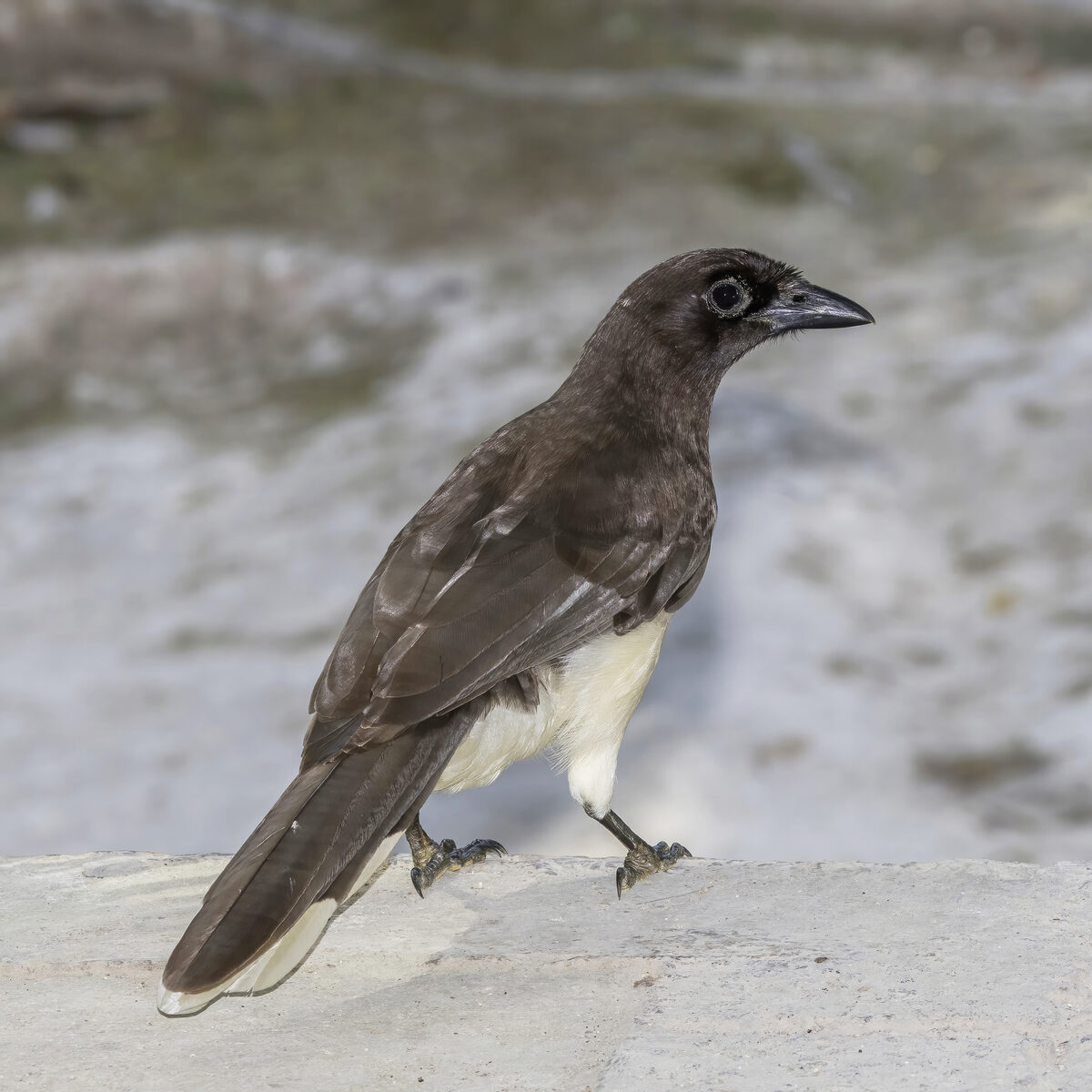
In 1935, a breakthrough. While observing Brown Jays, Skutch noticed something the ornithological literature had not described: adult birds that were neither parents nor mates were assisting at nests, feeding nestlings and tending to young that were not their own offspring. He published his observations in The Auk under the title "Helpers at the Nest," coining a term that would become foundational to avian behavioral ecology. The concept of cooperative breeding, elaborated by Skutch over the next fifty years, opened a field of inquiry that continues to generate research today. He later refined his definition of a helper as "a bird which assists in the nesting of an individual other than its mate, or feeds or otherwise attends a bird of whatever age which is neither its mate nor its dependent offspring."
That same year, in November 1935, Skutch arrived in Costa Rica, stepping off a little trolley in San José with a knapsack on his shoulder. Plant collecting was still his profession, and during his years of wandering he discovered approximately fifty plant species new to science, many of which now bear the epithet skutchii. A fortunate encounter with the director of Harvard's Arnold Arboretum had provided passage and a contract to return to Central America.
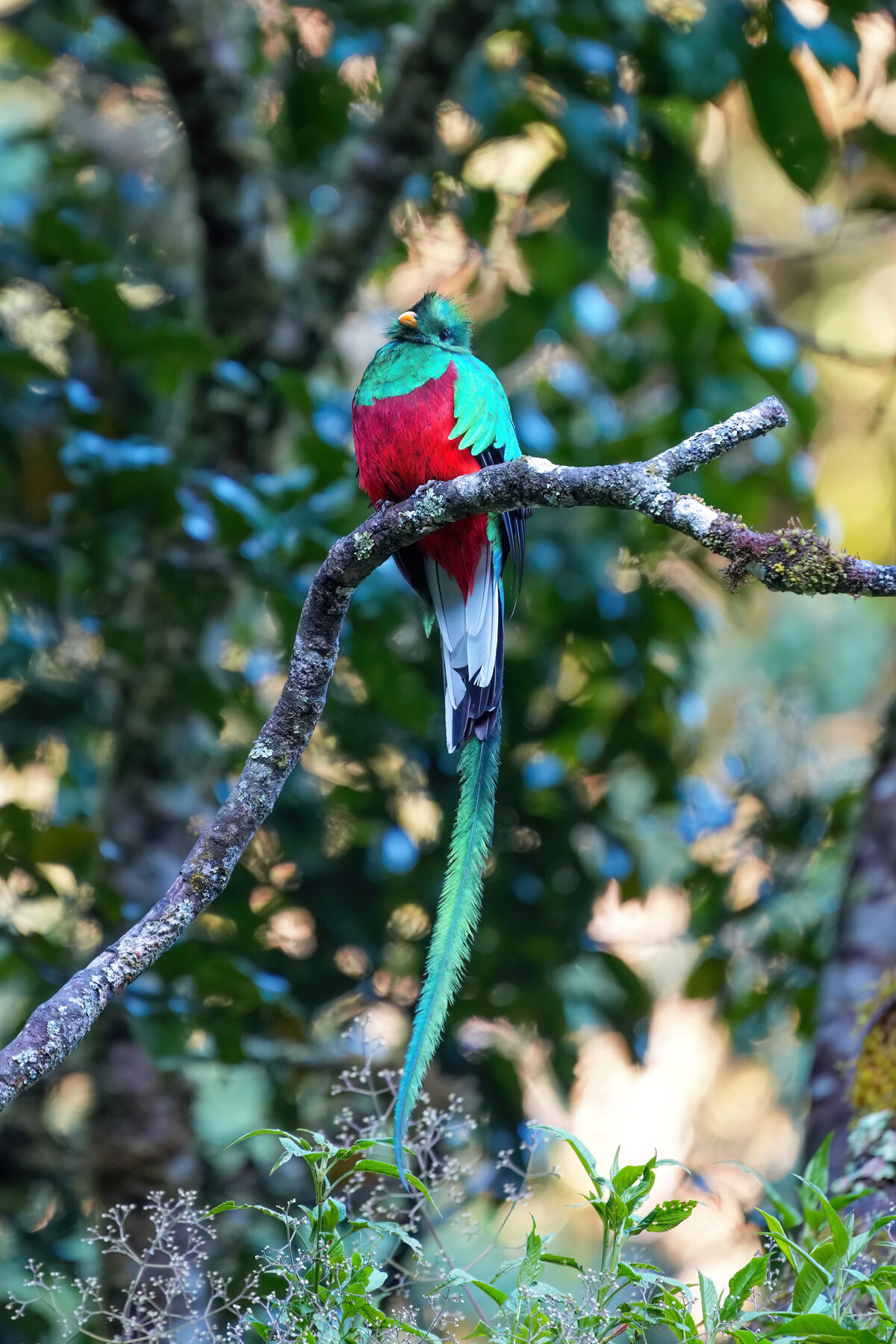
In 1937, a Chapman Fund grant from the American Museum of Natural History sent Skutch to the cloud forests near Vara Blanca, on the slopes of Volcán Poás, to study the Resplendent Quetzal. He spent nearly a year living alone in the remote highlands, watching quetzals nest. His research established that male and female quetzals share nesting duties fairly equally, an unexpected finding for a species with such extravagant male plumage. He documented their use of modified woodpecker holes in dead trees and their dependence on a handful of trees in the family Lauraceae. The resulting paper, "Life History of the Quetzal," published in The Condor in 1944, became a landmark of tropical ornithology.
A Farm in the Wilderness
Skutch first saw the land from a high bluff overlooking the Río Peñas Blancas, in the locality called El Quizarrá, in the Valley of El General in southern Costa Rica. He was traveling with a friend named Don Juan, who was showing him a newly opened trail through the forests. The property belonged to Francisco Mora, universally called Don Chico, described by Skutch as "a restless spirit who could not remain long in one spot," a man who made farms on unclaimed wilderness land only to sell them after a few years. On March 22, 1941, Skutch signed a contract in a visiting lawyer's office in the town of San Isidro de El General. A Swedish surveyor measured the land with a theodolite: Don Chico had estimated seventy hectares, but the survey revealed only fifty-three. The price was five thousand colones, nearly a third of the capital Skutch had accumulated over years of botanical collecting.
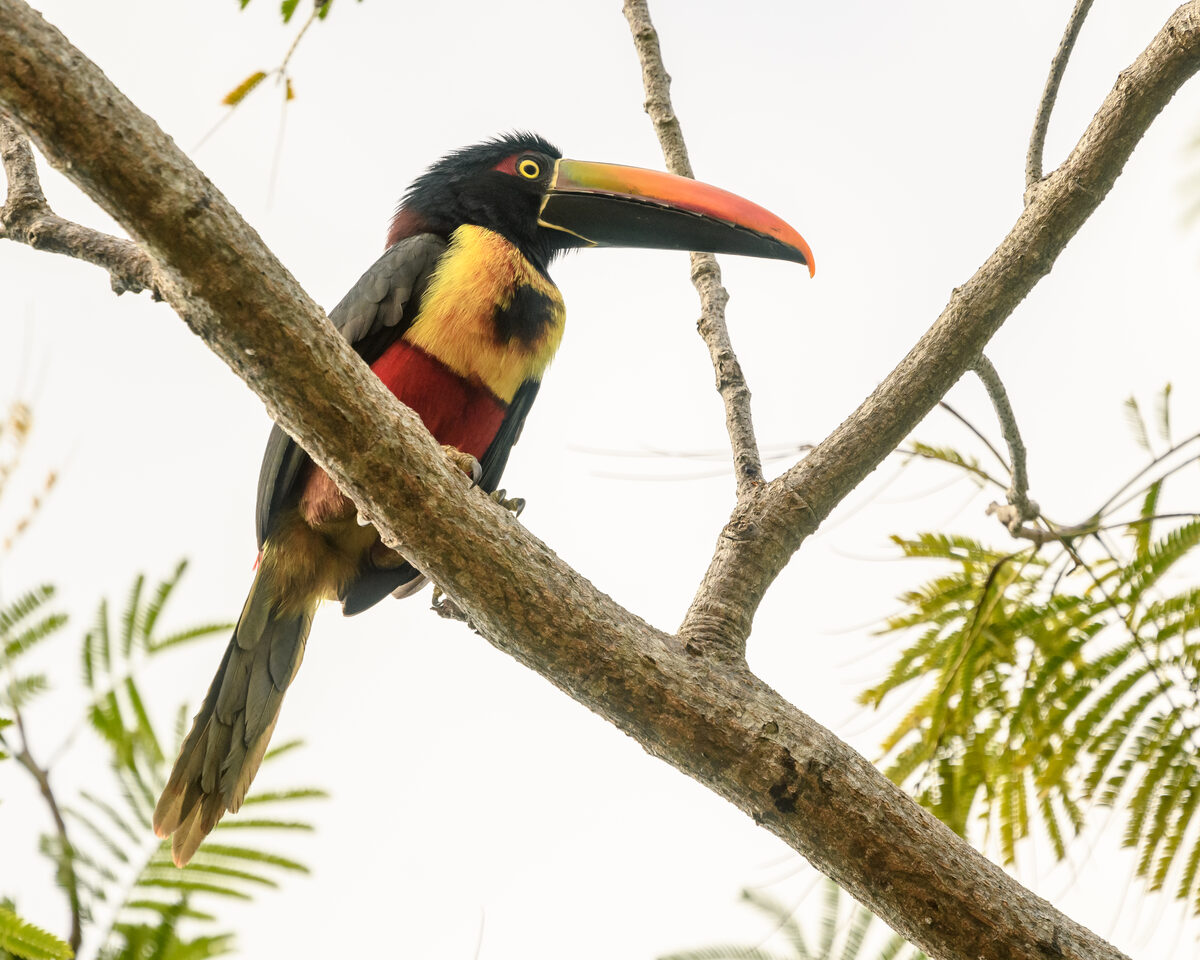
He named the farm Los Cusingos, after the Fiery-billed Aracari that nested on the property. Cusingo was the local name for the bird, a small toucan with a bill of orange, red, and black. A year later he expanded the property to seventy-seven hectares by buying a neighboring farm. He would live there for the remaining sixty-three years of his life.
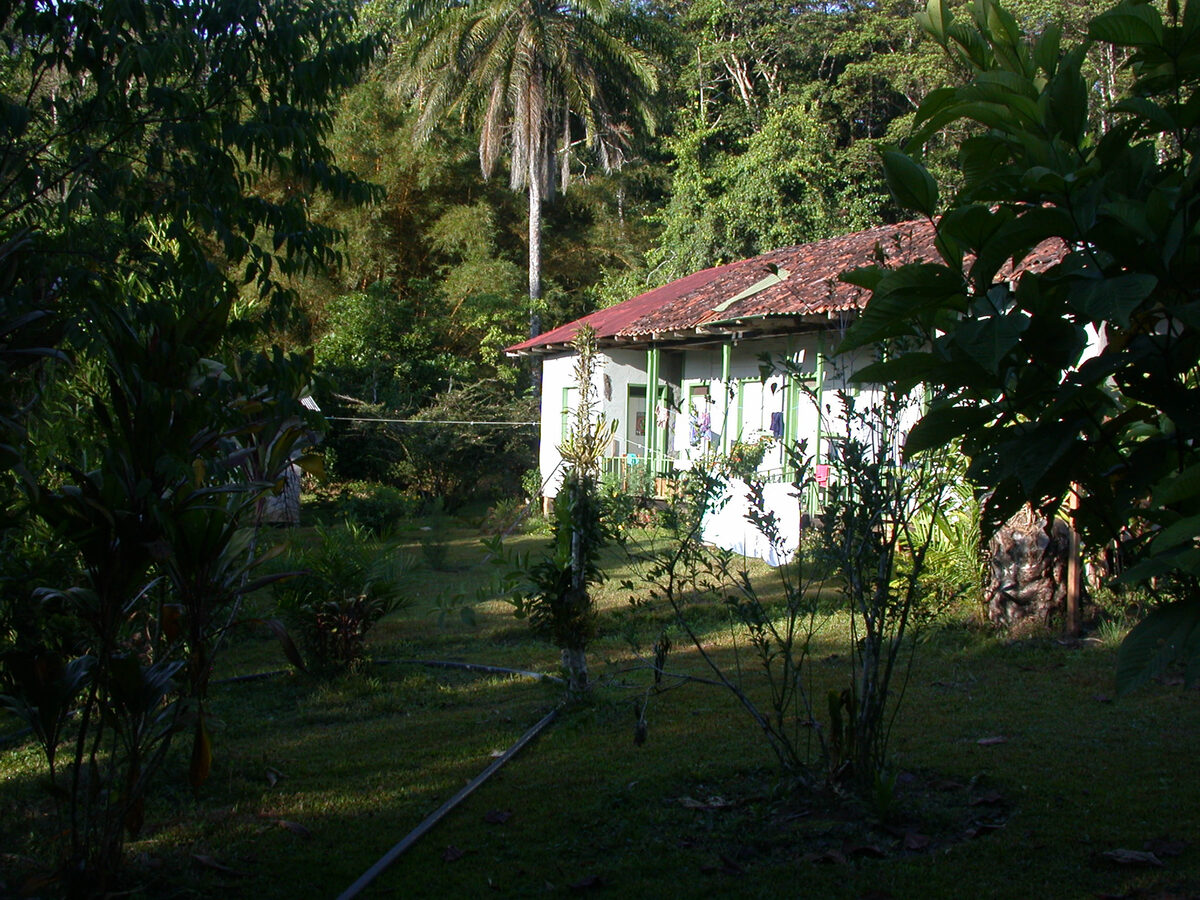
In 1950, Skutch married Pamela Lankester, daughter of Charles H. Lankester, an English-born coffee farmer, botanist, and orchid enthusiast whose private gardens in Cartago would become the Jardín Botánico Lankester, one of Costa Rica's most important botanical research centers. Pamela was sixteen years younger than Alexander. They adopted a local young man named Edwin. Pamela significantly improved the gardens at Los Cusingos and shared Alexander's commitment to the farm, though she brought practical modifications he might never have sought on his own.
The house Skutch built had no electricity, no telephone, and no running water. Water came from the nearest stream. He maintained correspondence with scientists worldwide using a manual typewriter, but there was no postal delivery to Los Cusingos; a two-month delay between letter and response was common. He did not own a car. Electricity was not installed until the mid-1990s, when Pamela's declining health made it necessary, and they bought their first refrigerator. He was by then ninety years old.
His daily routine was governed by the birds. He emerged early each morning with a tent-like observation blind, positioned himself near an active nest, and spent hours recording detailed field notes. In the evening he transcribed his observations into formal prose on the typewriter. He kept two sets of notebooks throughout his life: Notas de campo for his ornithological observations, and Pensamientos for philosophical reflections. The farm and the work were inseparable. Los Cusingos was both laboratory and home, and over the decades more than three hundred bird species were recorded on the property, more than two hundred of which Skutch himself described in detail.
Thirty Years at the Nest
Skutch's scientific output from Los Cusingos was staggering. The three volumes of Life Histories of Central American Birds, published in the Cooper Ornithological Society's Pacific Coast Avifauna series in 1954, 1960, and 1969, totaled more than 1,600 pages and were illustrated by Don R. Eckelberry. A companion volume, Life Histories of Central American Highland Birds, appeared in 1967. His obituarist in The Auk observed that these volumes "would alone make an impressive life's work." Much of what is known about the lives of some three hundred Neotropical bird species derives from Skutch's work in these volumes and in his approximately two hundred scientific papers.
In 1949, he published a paper in The Ibis with a question for a title: "Do Tropical Birds Rear as Many Young as They Can Nourish?" His answer proposed that nest predation, rather than food supply, constrains the rate at which parent birds can deliver food to their young. Each visit to the nest risks attracting a predator, so species in environments with high predation evolve lower feeding rates and smaller clutch sizes. This idea, now known as the "Skutch hypothesis," became a major framework in avian life-history research. A recent study of a montane tropical bird community found that the patterns Skutch predicted decades earlier still held.
His method was unique among ornithologists of his stature. He never worked for a museum, university, or government agency. He had no laboratory equipment beyond binoculars and notebooks. He disliked statistics and avoided quantitative analysis, preferring richly descriptive prose. His salient characteristic, as a scientist, was described in his Auk obituary as "a capacity for incredibly persistent, patient, careful observation, made with sympathy and respect for his subjects. He reported his observations with detachment and objectivity, and in his writings it is generally clear where observation ends and interpretation begins." He recognized individual birds by subtle plumage variations and followed their lives across seasons, sometimes for years.
He often upbraided colleagues for "loving ornithology too much and birds not enough." The phrase captured an essential tension in his relationship with the scientific establishment. The community honored him: the American Ornithologists' Union awarded him the Brewster Medal in 1950, its highest research honor, and elected him Honorary Fellow in 1979. He received the Arthur A. Allen Award from the Cornell Lab of Ornithology, and Costa Rica's Aquileo J. Echeverría National Prize for his 1977 book Aves de Costa Rica, the first book published in Costa Rica, in Spanish, about the country's birds for a general audience. Jim Bonner of Pittsburgh's National Aviary called him "one of the most famous unknown men" in science.
Perhaps the most enduring product of his later career was A Guide to the Birds of Costa Rica, published in 1989 after a seventeen-year collaboration with F. Gary Stiles, then a professor at the University of Costa Rica. The guide, illustrated by Dana Gardner with fifty-two color plates covering virtually every species of Costa Rican bird, became the foundational text for birding in the country and played a significant role in Costa Rica's emergence as a premier ecotourism destination. A Spanish edition appeared in 1995, published by INBio. In 1997, at the seventy-fifth meeting of the Association of Field Ornithologists in San José, Skutch personally presented the first medal bearing his name to Stiles.
A Startling Vehemence
Skutch was more than an ornithologist. He wrote four books on philosophy, three autobiographies, and nearly fifty philosophical articles. His central concept was "harmonization," the idea that the universe is governed by a principle of harmony, with evolution organizing all elements of existence toward integration. Though he declared himself an atheist, he called this harmonizing process "divine." He argued that appreciation of beauty and harmony in nature constitutes a fundamentally religious attitude, and that what he called "the golden core of religion" was devoted care: for oneself, for one's neighbors, for the natural world.
His philosophy was inseparable from his daily life. His vegetarianism, adopted from Shelley and Jain principles of ahimsa, was absolute. He grew what he ate (corn, yucca, rice, beans, coffee, sugarcane), wore no leather, and killed no animals for food. He saw his observation method as an ethical as much as a scientific choice: you could learn more by watching a bird live than by holding its corpse.
And yet there was the matter of the snakes. Skutch killed snakes on his property when they threatened nesting birds, and he did so, as his Auk obituary recorded, "with a vehemence startling to see in one so gentle toward most animals." He also disliked bird-eating raptors and encouraged Laughing Falcons, whose diet consisted almost exclusively of snakes, to hunt on his land. Fellow naturalists noted the paradox: a man who championed non-harm and refused to handle a bird to avoid causing it distress would kill a snake without hesitation to protect a nest. Skutch himself never fully resolved the contradiction. His concept of "biocompatibility" valued the harmonious association of diverse species over mere biodiversity, and he condemned predation as "life's greatest evil," a position that put him at odds with mainstream ecological thinking.
His relationship with the rural community around Los Cusingos was similarly complex. He lived for decades among campesino families in the Valley of El General, lectured occasionally at local schools, and received visitors warmly on his porch overlooking the bird feeders. Los Cusingos became a destination for scientists and naturalists who had read his books, what one writer called a "mecca." Yet he found sustained social relationships with his neighbors difficult. He was more comfortable among intellectual peers, and the social distance between the philosopher-naturalist and the farming families around him remained wide. His influence came through his published work, through the more than forty books and hundreds of articles that shaped how generations of researchers understood tropical bird life.
Pamela died on June 29, 2001. Alexander Skutch died on May 12, 2004, at Los Cusingos, eight days before his one hundredth birthday. He had lived on the farm for sixty-three years. Obituaries appeared in the New York Times, the Boston Globe, the Los Angeles Times, and the Irish Times, which reported that experts said his legacy for ornithology "was paralleled only by that of the legendary John James Audubon." NPR broadcast a remembrance. Both Pamela and Alexander are buried behind the house at Los Cusingos, in simple, unmarked graves on the property where he spent the better part of a century watching birds.
In 1993, Skutch had sold Los Cusingos to the Tropical Science Center, the Costa Rican conservation organization he had joined in 1964, trusting it to protect the property after his death. The farm is now the Refugio de Aves Dr. Alexander Skutch "Los Cusingos," a bird sanctuary open to visitors, with maintained trails, the preserved house, and pre-Columbian petroglyphs along the creek. In 2006, the Alexander Skutch Biological Corridor was established by executive decree, linking the sanctuary's seventy-seven hectares at lowland elevation to the Las Nubes Biological Reserve in the highlands along the Río Peñas Blancas watershed. The corridor covers more than six thousand hectares and connects to Chirripó National Park, reaching Costa Rica's highest peak. It is named for a man who spent his life sitting still, watching, and writing down what he saw.
After the 1997 meeting in San José where he presented the first medal bearing his name, Skutch changed his estate plans. He had intended to leave his funds to the American Museum of Natural History, in gratitude for the Chapman Fund grant that had sent him to study quetzals decades earlier. Instead, he established the Pamela and Alexander F. Skutch Fund through the Association of Field Ornithologists, providing grants for "life history studies of little known neotropical birds, especially their reproductive biology and behavior, with minimal disturbance." The criteria for the medal named in his honor specify encouragement and mentoring of students, particularly Latin Americans. New generations of researchers, working in the tradition Skutch founded, continue to fill in the pages he found blank.
Resources & Further Reading
Books by Alexander Skutch
Skutch's autobiography, tracing his path from Baltimore boyhood through banana research in Panama to independent ornithology in Central America. The title refers to what he called the two imperative voices: religion and nature.
Life at Los Cusingos: the daily rhythms of the farm, the birds and plants that shared it, and the philosophy of living simply in a tropical landscape.
The landmark field guide to Costa Rica's 830+ bird species, with 52 color plates by Dana Gardner. Stiles contributed systematics and distribution; Skutch contributed unmatched knowledge of breeding biology and behavior. A Spanish edition was published by INBio in 1995.
The book-length treatment of the phenomenon Skutch named in 1935. Describes cooperative breeding behavior in more than fifty families of birds worldwide.
Books about Alexander Skutch
A biographical study focusing on Skutch's philosophical writings and his attempts to reconcile his love of nature with his condemnation of predation.
A Spanish-language biography published in the year of Skutch's death, drawing on interviews and correspondence.
Key Articles
The definitive obituary by Skutch's collaborator on the Costa Rica field guide. Source of the characterization of Skutch's output as "the largest body of natural-history information ever collected by a single observer."
A comprehensive Costa Rican academic profile covering Skutch's early life, Jewish upbringing, adoption of ahimsa, botanical career, and philosophical evolution.
The paper that coined the term for cooperative breeding in birds, based on observations of Brown Jays in Costa Rica.
The paper that proposed nest predation, rather than food supply, as the primary constraint on clutch size in tropical birds. Now known as the "Skutch hypothesis."
How three mid-century ornithologists set the stage for avian life-history research. Lack emphasized food availability; Skutch emphasized nest predation risk.
Obituary comparing Skutch's legacy to that of Audubon and describing him as "one of the most famous unknown men" in science.
Organizations
Skutch's 77-hectare farm, now a bird sanctuary operated by the Centro Científico Tropical. Over 300 avian species recorded on the property.
The AFO's biographical page on Skutch, the Skutch Medal for research on life histories of poorly known Neotropical birds, and the Pamela and Alexander F. Skutch Fund for student grants.
York University's Las Nubes EcoCampus manages research and conservation in the corridor, which was established by executive decree in 2006 and covers more than 6,000 hectares connecting Los Cusingos to Chirripó National Park.
The Costa Rican conservation organization Skutch joined in 1964 and to which he sold Los Cusingos in 1993.
Related Profiles
Co-founder of the Tropical Science Center and creator of the Holdridge life zones system. Skutch joined the organization Holdridge helped build.
Co-founder of the Tropical Science Center who mapped Costa Rica's life zones and helped establish the institutional framework for conservation in the country.
Costa Rican conservation pioneer, former director-general of IUCN, and colleague of Skutch's at the Tropical Science Center.
Academic
Every publication from 1926 to the 2000s: approximately 200 scientific papers and over 40 books on ornithology, philosophy, and autobiography.
A 15-year case study of the Alexander Skutch Biological Corridor, examining how the community around Los Cusingos organized to connect the farm to Chirripó National Park.
AFO grants for life-history studies of poorly known Neotropical birds, with priority given to Latin American researchers.