Part V: The Case for Mass Tourism
With 35 percent poverty in Osa, communities need income now. Tourism proponents offer a tested development model: airports, resorts, certification systems. The argument deserves examination at its strongest—and against available evidence.
In February 2020, Costa Rica's parliament voted 44 to zero to approve the Escazú Agreement, the first environmental treaty in Latin American history designed to protect environmental defenders and guarantee public access to environmental information. The vote was unanimous. Three years later, in February 2023, the same Congress rejected re-ratification 41 to 11. The evidence supporting Escazú had not changed. The science had not changed. But a pandemic had devastated tourism revenues, a new president had taken office, and the political calculus had shifted. President Rodrigo Chaves told Congress that environmental protections would "unjustifiably delay economic reactivation." The business sector agreed. The votes flipped.
This reversal reveals something important about how environmental debates are won and lost. The arguments that follow are not straw men. They represent genuine concerns, backed by real data, advocated by people acting in good faith. Paula Mena is not wrong that families around Corcovado are hungry. The government is not wrong that tourism creates jobs. The industry is not wrong that large resorts can afford environmental investments small operators cannot. Understanding why these arguments fail despite their apparent strength requires first giving them their full weight.
Paula Mena's Case: The Poverty Argument
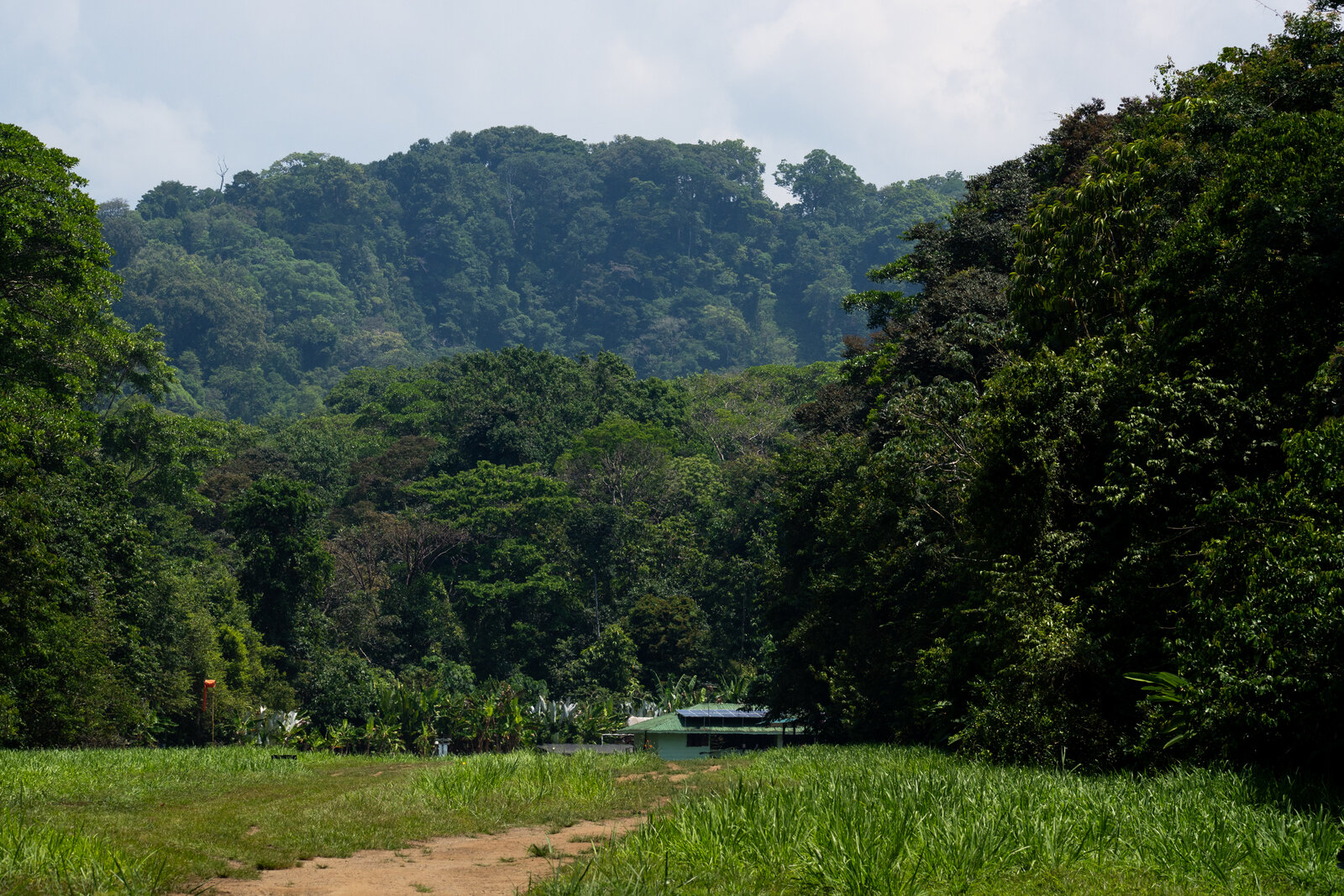
Paula Mena, director of ACOSA (Área de Conservación Osa), frames the conflict over Corcovado National Park's visitor capacity as fundamentally social. "The problem we have is not an environmental problem," she told Mongabay in 2022. "It's a social and economic problem."
Her argument carries the weight of measurable desperation. The Osa Peninsula, in Costa Rica's Brunca region, faces poverty rates around 35 percent, among the highest in the country. Communities surrounding Corcovado saw their economic base evaporate when COVID-19 shut down tourism. Workers who had built livelihoods around park visitors suddenly had no income. The pandemic exposed how precarious the economic situation had always been. Tourism had provided income, and when it vanished overnight, communities had nothing to fall back on. Families earning modest but stable incomes from guiding, lodging, or restaurant work found themselves with zero revenue and no safety net.
"Everyone who lives around protected areas here," Mena explained, "often they enter the parks because they don't have money and they're just hoping to get by." She is describing poaching, gold mining, illegal logging. Survival strategies employed by people who cannot afford to eat. When scientists present data about ecosystem degradation, they are addressing symptoms. Mena is naming the cause: poverty makes conservation a luxury argument.
The education data supports her framing. In rural Osa, educational outcomes fall well below national averages. Secondary school completion in Costa Rica's rural areas hovers around 40 percent compared to 67 percent nationally. Children drop out to work. Teenagers migrate to cities seeking employment. The brain drain compounds the poverty. The statistics describe structural poverty that predates any conservation debate and creates conditions where environmental protection becomes nearly impossible to prioritize.
When ACOSA announced plans in 2023 to double visitor capacity at Corcovado's Sirena station, Mena defended the increase as "necessary to help revive the economies of coastal communities affected by the pandemic." More tourists meant more guide jobs, more lodging income, more restaurant revenue. The current carrying capacity, she argued, "was based on existing infrastructure," and a new visitor management tool would "allow the agency to ensure quality experiences" while increasing volume. The logic was straightforward: communities needed money, tourists provided money, therefore more tourists solved the problem.
Scientists talk about carrying capacity limits and ecosystem thresholds. Communities need to eat this year. When Mena says "the problem is social and economic," she is naming a real tension: environmental protection becomes abstract when people are starving. The argument has moral weight because the poverty is not theoretical.
The Government's Case: Employment and Development
Proponents cite national statistics: 2.66 million tourists arrived by air in 2024. Tourism supplies more than 180,000 jobs across Costa Rica. It is the country's largest foreign exchange earner. The scale is substantial enough to make employment the central justification for expansion.
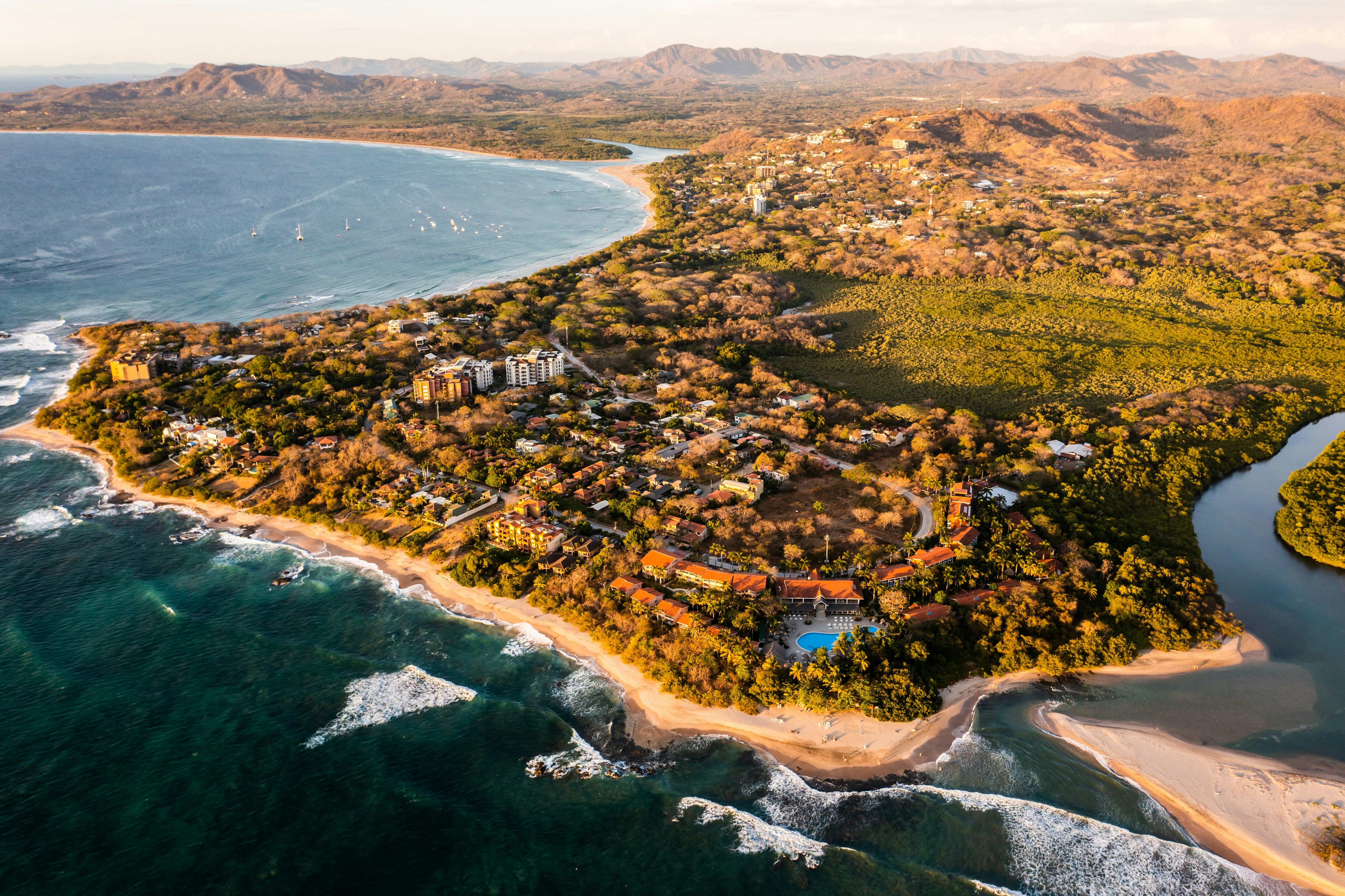
Guanacaste demonstrates the model in practice. Liberia's Daniel Oduber Quirós International Airport processed 881,289 tourists in 2024, a 14.5 percent increase over the previous year. The airport's share of Costa Rica's air arrivals grew from 18 percent in 2011 to 31 percent by 2023. Dozens of nonstop flights now connect Guanacaste to North America and Europe. A 36 million dollar runway renovation in 2024 upgraded capacity to accommodate larger aircraft. Industry reports describe the growth trajectory as "particularly strong."
The logic seems straightforward: a 300-room resort consolidates more employment in a single location than a network of small ecolodges can match. A single Four Seasons property employs hundreds of workers across housekeeping, food service, maintenance, landscaping, security, and administration. Volume drives employment. More tourists mean more jobs, which means more development. Infrastructure investment follows. When President Rodrigo Chaves announced a 105 million dollar commitment for the Southern Zone International Airport in February 2023, he was following a familiar development model: build capacity, attract investment, create employment. Government invests in infrastructure to enable private sector development. The airport creates accessibility. Accessibility attracts developers. Developers build hotels. Hotels employ workers. This is standard development economics, the same model that built tourism industries in Thailand, Mexico's Riviera Maya, and the Caribbean islands. It is applied worldwide because it works to generate visible employment quickly.
The development model underlying the Gulf of Papagayo Tourism Pole demonstrates the pattern. Government bought land, gave the Instituto Costarricense de Turismo responsibility to lease concession blocks to private developers. Between 1991 and 1999, 23 concessions were granted. Development was stimulated by the Law of Incentives for Tourism Development, which provided tax incentives to attract foreign investment. The theory: public infrastructure investment attracts private capital, which creates employment, which generates broader economic activity.
Chaves's framing of environmental protection as an obstacle to economic recovery has been consistent. He has argued that environmental regulations "unjustifiably delay economic reactivation after the COVID-19 pandemic." Environmental protections are positioned as obstacles to investment and recovery. The Costa Rican Union of Chambers and Associations of Business Sector (Uccaep) backed this position. The alignment between government policy and business sector interests was direct and transparent.
The development theory underlying this position is standard economics taught in universities worldwide. It follows the Environmental Kuznets Curve hypothesis: poor countries pollute while industrializing, then clean up after they become wealthy. Poor countries cannot afford to prioritize conservation over employment. Conservation is what rich countries do after they have developed. The United States industrialized first, polluted rivers and cleared forests, then created the EPA and national parks once it could afford environmental protection. Europe did the same. Japan did the same. Costa Rica needs growth now and can address environmental concerns later when it has the wealth to afford protection. The trade-off is presented as necessary: jobs versus environment. Environmental protection follows economic development, it does not precede it. This framing has theoretical coherence and matches how development has historically proceeded in industrialized nations. Development economists have modeled this progression for decades.
The Industry's Case: Sustainable Tourism at Scale
In 2025, Peninsula Papagayo received two global awards from the World Sustainable Travel & Hospitality Awards: "World's Leading Sustainable Hotel or Resort Development" and "World's Leading Sustainable Community Empowerment Programme." These are international awards, judged by industry organizations. The Four Seasons Resort Costa Rica at Peninsula Papagayo holds official CST certification through the government's Certificación para la Sostenibilidad Turística program. The Andaz Resort Peninsula Papagayo carries CST certification recognized by the Global Sustainable Tourism Council, providing international credibility.
The Costa Rican Tourism Institute developed CST in 1997 specifically to ensure Costa Rica's success as a sustainable tourism destination and prevent greenwashing. The certification uses a two-tier system: BASIC and ELITE levels. Businesses are evaluated across multiple sustainability dimensions. The government designed this to be a credible standard that would differentiate genuinely sustainable operations from those merely marketing themselves as green.
The industry's marketing frames certification as evidence that "regenerative tourism" works and that "luxury and sustainability can coexist." The argument is that the modern resort industry has evolved beyond 1980s extraction. Large resorts have resources to invest in environmental protection that small operators lack: professional environmental management teams, water treatment systems, renewable energy installations, conservation programs funded through operations. The technology exists to operate sustainably at scale. Small ecolodges may have authentic commitment, the argument runs, but they lack capital to invest in advanced environmental systems. Large resorts can afford to do sustainability properly.
A funding argument follows naturally: tourism pays for conservation. Park entry fees, hotel taxes, airport departure fees, the portion of every tourist dollar that flows to government coffers: these fund SINAC, pay park rangers, maintain trails and infrastructure in protected areas. Without tourism revenue, how would Costa Rica afford its conservation system? The logic appears circular but self-reinforcing: mass tourism enables conservation financially. The bigger the tourism industry, the more tax revenue available for environmental protection. A small ecolodge serving 30 guests per week contributes modest tax revenue. A 300-room resort contributes at scale.
There is also a competitive positioning argument. Costa Rica competes globally for tourism market share with destinations like Belize, Panama, Ecuador's Galápagos, and Caribbean nations including Jamaica, the Dominican Republic, and the Bahamas. These destinations are building airports, expanding hotel capacity, and marketing aggressively to North American and European travelers. If Costa Rica does not build capacity to accommodate increasing demand, tourists simply book elsewhere. The market does not wait. Competitive advantage comes from both nature and accessibility. Having pristine ecosystems matters, but tourists also need flights, airports, and accommodations that meet international standards. A couple researching tropical vacations considers ease of access alongside natural attractions. Direct flights matter. Hotel availability matters. Small-scale ecotourism cannot capture enough market share to maintain Costa Rica's international tourism profile. Volume is needed to stay competitive. Travelers have dozens of tropical options and choose based on convenience as much as conservation credentials.
The Bind
None of the arguments above are made in bad faith. Certification systems exist and require real compliance. Scale does enable investments that small operators cannot afford: Peninsula Papagayo's water treatment infrastructure cost more than most ecolodges earn in a decade. Tax revenue from tourism does fund SINAC, does pay park rangers, does maintain the trails that visitors hike. Costa Rica does compete globally for tourism market share, and travelers do make decisions based on flight availability and hotel capacity. Paula Mena is not wrong that communities around Corcovado face poverty now, that families need income this year, that waiting for slow-building ecotourism networks feels like asking the hungry to be patient.
The problem is that the model these arguments defend has already been tested. Guanacaste received the airports, the resorts, the international investment, the scale. It received the certification systems designed to ensure sustainability. Peninsula Papagayo won global awards for sustainable tourism leadership while operating in a region where coral coverage on some Culebra Bay reefs dropped from as high as 70 percent in the 1990s to less than 5 percent by 2019. The certification did not prevent the collapse. The Four Seasons has CST certification. The Andaz has CST certification. The bay they overlook lost more than 90 percent of its coral.
Could better enforcement have changed the outcome? The question deserves consideration. Some resorts genuinely invest more in environmental management than others. But certification operates at the property level while ecosystem impacts accumulate at the regional scale. Each hotel can meet its water treatment standards while collective demand still depletes the aquifer. Each development can limit its footprint while cumulative construction still fragments habitat corridors. The coral did not die because the Four Seasons violated its permit. It died because the bay received more sedimentation, more nutrient runoff, more anchor damage, and more thermal stress than the ecosystem could absorb—regardless of how sustainably any individual property operated. The model fails not because of bad actors but because property-level compliance cannot contain regional-scale impacts.

If property-level compliance cannot contain regional impacts, what happens when a jurisdiction manages at the regional scale instead? A 2010 study by the Center for Responsible Travel documented what was already visible: in Tamarindo, land dedicated to tourism and human settlement had exploded from less than one percent in the 1980s to 27.5 percent by 2005. In Puerto Jiménez, which followed the ecotourism model, the change was modest: 1.5 percent to 5.5 percent. But the critical difference was what happened to the forests. In the mass tourism zone, development replaced habitat. In Puerto Jiménez, forest cover doubled from 22 percent to 48 percent during the same period. The study recommended that the government "abandon plans for another international airport and instead upgrade Palmar Sur as a regional airport" and "support high value, nature tourism where Costa Rica has a proven record of success and a clear competitive advantage." Fifteen years later, the government committed $105 million to build that airport.
Does tourism money stay in Costa Rica? The Paradise Papers documented where it actually goes: FIFCO routing 14.8 million dollars through Cayman Islands shell companies, the Schwan Foundation operating through Bahamas and British Virgin Islands structures. The majority of Guanacaste's coastal businesses are foreign-owned, according to the Tamarindo Integral Development Association; a 2024 survey found 85 percent of coastal lands in Costa Rica are held by foreigners. Tax revenue represents what remains after 70 to 80 percent leakage. Does capturing market share benefit local communities? Cuajiniquil has a 66.4 percent vacancy rate: homes purchased as vacation properties sit empty while workers earning 625 to 800 dollars per month cannot afford the 700 to 800 dollar rents. Does scale work sustainably? Sardinal's aquifer conflicts provide one answer.
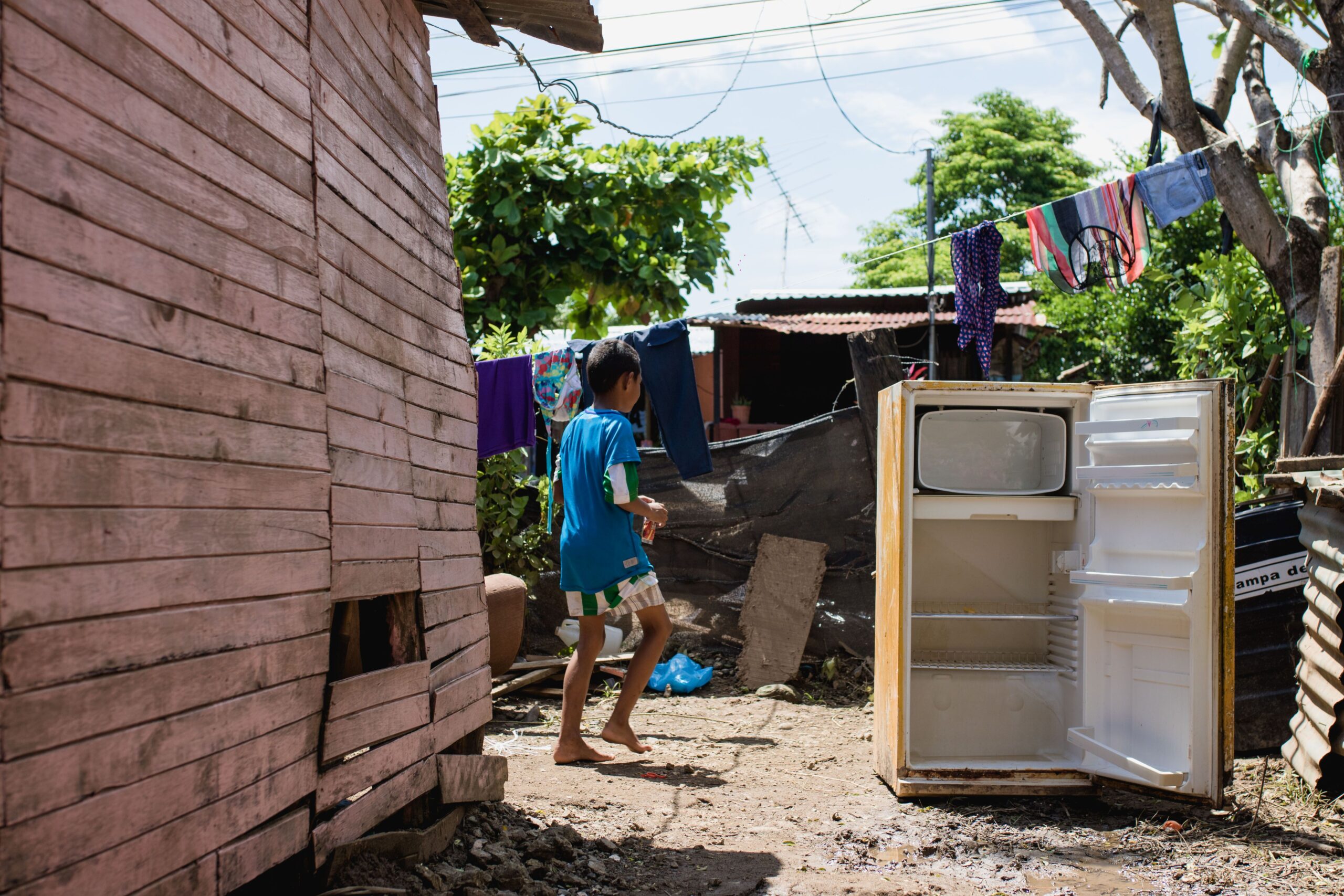
The housing crisis compounds a deeper structural problem: those $625-800 monthly wages are not earned year-round. High season runs December through April. The rest of the year, occupancy collapses. Workers get laid off or see hours cut to nearly nothing. A family cannot build stability on five months of income. They cannot get mortgages, plan for their children's education, or invest in small businesses when seven months of the year offer no reliable work. This is true whether they work at a Four Seasons or a family cabina. Mass tourism and authentic ecotourism both depend on the same seasonal flows. The debate over which model is better obscures the fact that neither provides year-round employment. Tourism workers spend half the year waiting for the next season to begin.
That idle time has consequences beyond economics. Costa Rica recorded 880 homicides in 2024, with 70 percent linked to drug trafficking. Youth unemployment stands at 23 percent. In Limón province, where the Moín container port opened cocaine routes to Europe, a union leader put the employment crisis bluntly: "If there are no jobs, for many the closest thing to a job is being a hit man." Osa faces similar pressures—in June 2025, authorities seized 1.2 tons of cocaine in Sierpe de Osa. Government officials see mass tourism as the fastest path to visible employment before the cartels finish recruiting. The urgency is not manufactured. But the solution they reach for does not actually solve the problem it claims to address. Seasonal tourism jobs leave young men idle for half the year—precisely the vulnerability that criminal organizations exploit.
This raises the counterfactual question: would Guanacaste be worse off without the resorts? Guanacaste has more tourism jobs than Osa. But despite four decades of resort development, Guanacaste's poverty rate remains comparable to the national average. The model created jobs, but it did not solve poverty. The relevant comparison is not "resorts versus nothing" but "resorts versus what the same investment could have built." The $105 million committed to the Southern Zone Airport could fund vocational training centers, expand rural education, or develop the infrastructure for sectors that provide year-round employment. The counterfactual is not poverty—it is the road not taken.
This is the bind. The arguments for mass tourism are not wrong about the facts they cite. They are wrong about what those facts mean. Scale does create jobs. Certification does exist. Tax revenue does flow. But the jobs are seasonal, the certification does not prevent regional collapse, and the revenue leaves. The model is not failing because of bad actors or insufficient enforcement. It is failing because property-level compliance cannot contain regional-scale impacts, because seasonal employment cannot provide year-round stability, and because capturing market share is not the same as building prosperity.
Why Weak Arguments Win
If the evidence against mass tourism is this clear, why does the argument persist?
The answer is political economy, not economics. An airport groundbreaking produces photo opportunities before the next election. A network of family-run cabinas produces no headlines at all. The locally-owned sector does not generate the campaign contributions that development interests provide, the media coverage that international investment announcements produce, or the political leverage that concentrated capital can mobilize.
The policy contradiction is telling. In February 2024, the Costa Rican Tourism Institute published a sustainable tourism management plan for Costa Ballena based on the existing locally-owned sector. The plan makes no mention of the $105 million international airport being built at Palmar Sur. The sustainable tourism strategy and the mass tourism infrastructure exist in separate documents, as if the government is pursuing two incompatible futures simultaneously.
The poverty in Osa is real. But the entire debate—mass tourism versus ecotourism, airports versus conservation—assumes that tourism is the path to prosperity. Before choosing sides, it is worth checking whether that assumption matches how Costa Rica's economy actually works.
Key Sources & Resources
Poverty & Regional Context
-
Is Costa Rica's Corcovado National Park on the verge of collapse? Mongabay (2022).
Paula Mena: "The problem is not environmental. It's social and economic." 35% poverty rate in Osa, communities entering parks "because they don't have money."
-
World Inequality Database on Education: Costa Rica.
Rural secondary completion around 40% vs 67% nationally. Structural educational inequality in rural areas.
-
Guanacaste: Between Tourism and the Roof. La Voz de Guanacaste (2024).
66.4% vacancy rate in Cuajiniquil (highest in Costa Rica), workers earning $625-800/month unable to afford $700-800 rents.
-
The Impact of Tourism-Related Development on the Pacific Coast of Costa Rica. CREST (2010).
Landmark study endorsed by Daniel Janzen. Brunca region (ecotourism focus, least resort development) saw greatest poverty decline: 12.1% to 4.7%. Stayover visitors spent 18x more than cruise passengers. Recommended abandoning Palmar Sur airport plans.
Government's Case: Employment & Development
-
Costa Rica Tourism Statistics. Pat Beland Travel Research.
881,289 tourists through Liberia (2024, +14.5%). Airport share grew from 18% (2011) to 31% (2023).
-
Record 2.66 Million Tourist Arrivals. Travel & Tour World (2024).
Tourism is Costa Rica's largest foreign exchange earner. Guanacaste growth "particularly strong."
-
Tourism Employment Numbers. Tico Times (2024).
Tourism sector supplies 180,000+ jobs nationally.
-
Costa Rica's Proposed Southern Zone Airport. The Costa Rica Times.
$105 million government commitment (February 2023) despite negative environmental assessment (2020).
-
Gulf of Papagayo Tourism Pole Development. World Bank ICSID.
23 concessions granted 1991-1999. Law of Incentives for Tourism Development. Government-led infrastructure model.
-
Daniel Oduber Quiros Airport Expansion. Airport Technology.
$36M renovation (2024), runway upgrade for larger aircraft, 1.91M passengers (2024 record).
Industry's Case: Sustainable Tourism at Scale
-
Peninsula Papagayo: Global Awards for Sustainable Tourism. PR Newswire (2025).
"World's Leading Sustainable Hotel or Resort Development" and "Community Empowerment Programme" awards. Claims of "regenerative tourism" and that "luxury and sustainability can coexist."
-
CST Tourism Sustainability Certification. Costa Rican Tourism Institute.
Official certification system (1997) with BASIC and ELITE tiers. Created to "prevent greenwashing."
-
Four Seasons Papagayo CST Certification. Official CST Database.
Large resort achieving government sustainability certification.
-
Peninsula Papagayo Sustainability. Official Site.
Andaz Resort CST certified (GSTC recognized standard). Industry argument: international recognition validates claims.
-
Costa Rica: A Global Leader in Ecotourism. Green Circle Experience (2024).
Industry claim: "professional management + technology investment = sustainability at scale."
-
Lapa Rios Sustainability and Conservation.
$25 conservation fee per guest funds park rangers. Industry cites as template (though notably this is an ecolodge, not mass resort).
Political Economy: Why Weak Arguments Win
-
Costa Rica Pulls Back on Escazú Agreement. U.S. News (2023).
Chaves: Escazú would "unjustifiably delay economic reactivation." Environmental protection framed as obstacle to investment.
-
Costa Rican Congress Abandons Escazú Agreement. Tico Times (2023).
Reversal from 44-0 approval (2020) to 41-16 rejection (2023). Same evidence, different political calculus.
-
Business Sector Support for Escazú Rejection. Tico Times (2023).
Uccaep backed Chaves. As president-elect, he told businesspeople they could "rest assured" Escazú wasn't on his agenda.
-
Court Blocks Corcovado Visitor Increase. Tico Times (2025).
Government doubled capacity without studies; courts intervened. Scientists have evidence but not political leverage.
-
Culebra Bay Coral Reef Degradation. Revista de Biología Tropical (UCR).
Coral coverage fell from 70% to 5% over decades. Gradual collapse means each administration defers costs to successor.
-
Residential Tourism and Socio-Ecological Conflicts in Guanacaste. ResearchGate.
Academic analysis of structural pattern: massive uncontrolled urbanization without adequate infrastructure.
Evidence from Earlier Parts
-
Tourism Economic Leakage. UNWTO Data.
70-80% leakage for all-inclusive package tours (UNWTO 2014). Expenditures flow to international airlines and hotel chains.
-
Paradise Papers: Papagayo Investors and Tax Havens. La Voz de Guanacaste.
Over 100 shell companies in tax havens. Systematic tax avoidance undermines the claim that tourism funds conservation.
-
Water Conflict in Guanacaste. Global Water Forum.
Sardinal aquifer conflict (2007-2010). Community blockaded pipeline to tourism development. Illegal well perforation, over-exploitation documented.
-
CREST Osa Peninsula Study. Journal of Sustainable Tourism (2014).
Ecotourism workers earn 1.9x income ($709 vs $357), 58% local employment vs 35% in other sectors.
-
Costa Rica Struggles to Protect Nature Amid Budget Cuts. Tico Times (2024).
SINAC budget reduced 38% for 2021: from $78 million to $48 million. Tourism revenue doesn't translate to conservation funding.