Paradise Lost and Regained: Costa Rica's Forest Revolution
How a tropical nation nearly destroyed its forests in 50 years—then became the first to reverse deforestation
Costa Rica's environmental reputation as a beacon of conservation is well-earned—but recent. Most tourists arriving at Juan Santamaría International Airport don't know they're landing on some of the youngest land on Earth, a dramatic biological melting pot where tectonic violence birthed a narrow corridor between oceans. Nor do they know this country, within living memory, had one of the world's highest deforestation rates. The story of how Costa Rica went from 75% forest coverage in 1940 to as low as 21% by the 1980s, then reversed course to reach 60% today, is one of devastation, political will, and hard-won restoration. It's also a story that risks repeating itself if the forces that drove the first collapse aren't remembered and resisted.
Deep Time: The First Tree
But the real story begins much earlier. Around 70 million years ago, long before Costa Rica existed, a massive tectonic plate called the Farallon Plate was grinding eastward beneath the Pacific Ocean toward the North American and Caribbean plates. Where the oceanic Farallon Plate dove beneath the lighter continental crust in subduction, volcanic islands began to emerge from the sea—raw, black, lifeless cones of lava and ash steaming in tropical seas. For tens of millions of years, this pattern continued: the Farallon Plate subducting, volcanoes erupting, islands rising and subsiding. By 45 million years ago—the Middle Eocene—a scattered archipelago of volcanic islands dotted the space between the Americas, nameless sentinels rising from the deep.
Then, approximately 23 million years ago, the Farallon Plate fractured. The breakup created two new plates—the Cocos Plate to the north and the Nazca Plate to the south. The newly formed Cocos Plate began its inexorable journey eastward toward the Caribbean, spreading from a mid-ocean ridge called the East Pacific Rise at a rate of 70-90 millimeters per year. This was young, hot oceanic crust, dynamic and restless. Where the Cocos Plate met the Caribbean Plate in the abyssal depths off the Pacific coast, the denser oceanic crust began its descent beneath the lighter Caribbean Plate. As it plunged at an angle—80, 100, 120 kilometers into the earth—the immense heat and pressure squeezed water from the oceanic crust like water wrung from a sponge. That superheated water rose upward into the underside of the Caribbean Plate, penetrating the hot rock above and lowering its melting point enough to trigger partial melting. Magma formed—not where the two plates met at the subduction zone, but dozens of kilometers inland from that collision point, in the mantle wedge above the descending Cocos Plate. The molten rock, lighter than the surrounding stone, found pathways through fissures in the overriding Caribbean Plate, rising toward the surface. Volcanoes erupted underwater, building seamounts. As activity intensified, some peaks grew tall enough to break the surface, adding new islands to the archipelago.
Throughout this entire period—from the first volcanic islands 45 million years ago onward—life was colonizing these raw landscapes. The geology was complex—not pure volcanic stone, but a mix of materials. On the Pacific slope (the western side facing the Pacific Ocean), the geology was particularly chaotic: fresh volcanic ash and lava from the active arc mixed with accreted oceanic rocks near the coast. As the Cocos Plate dove beneath the Caribbean, layers of oceanic sediment riding on its surface—limestone, chert, shale—were scraped off like snow from a plow blade and plastered onto the Pacific margin (the edge where the plates collided), creating jumbled complexes of basalt, gabbro, and sedimentary layers. The Caribbean slope told a different story: there, older igneous and metamorphic rocks dominated, remnants of ancient volcanic arcs long since extinct, overlain with sediments eroded from the rising mountains and deposited in backarc basins. Wind and torrential tropical rain tore at all of it—volcanic stone, accreted ocean floor, metamorphic basement—breaking it down into fine powder with varying mineral chemistry depending on the parent rock. This geological diversity would eventually produce extraordinary soil variation—but that was far in the future. At first, the volcanic islands were simply raw stone rising from the sea.
And on these barren surfaces, something miraculous began. Plant propagules washed ashore on ocean currents, seeds encased in salt-tolerant husks floating coconut-like across hundreds of miles of open water. Birds began landing, waypoints on their epic migrations between the continents to the north and south, leaving behind rich guano laden with seeds from fruits they'd eaten to fortify themselves for their incredible journeys. The first colonizers were humble—mosses and lichens clinging to crevices, then grasses, then shrubs. But slowly, incrementally, millimeter by millimeter, life gained purchase. Soil accumulated in pockets and cracks. Microbes and fungi wove networks through the developing loam, eating minerals and making them available to plants. What had been sterile volcanic stone was transforming into living earth.
And then—perhaps 40 million years ago, perhaps earlier—the first tree in the Central American archipelago germinated and grew. Imagine that moment: a seed, carried by wind or bird or ocean current, lands on a volcanic island that has never known a tree. It germinates. It grows. We don't know where it stood, or what species it was. Perhaps it was a fig, its roots prying into crevices in the volcanic rock, its fruit carried there by a bird blown off course between continents. Perhaps it was something else entirely, long extinct and unknown to us. That first tree changed everything. Its roots broke rock into finer soil. Its falling leaves fed the microbes below. Its branches offered perches for more birds, who brought more seeds in their bellies and on their feathers. Its trunk became a highway for climbing vines and epiphytes. Where there had been one tree, there were soon ten, then a hundred, then a grove, then a forest.
Over the following millions of years, as volcanic islands continued to rise and the tectonic collision beneath intensified, forests spread across the archipelago. By perhaps 20 million years ago, primeval forests richly carpeted these volcanic islands—not the prim Northeast American forest of hickory and oak, but a riot! Kapok trees (Ceiba pentandra) reached 200 feet into the sky, their massive buttressed roots spreading like cathedral walls. Almendro giants (Dipteryx panamensis) towered above the canopy, their broad crowns sheltering entire ecosystems. Strangler Fig seeds, deposited by bats and birds high in the canopy, sent down wriggling aerial roots that snaked toward the forest floor, took hold in the soil, and then slowly, inexorably, swallowed up their host trees, becoming giants in their stead. Spanish Cedar (Cedrela odorata) grew straight and tall, their trunks exhaling fragrant oils that kept insect borers at bay. Guanacaste trees (Enterolobium cyclocarpum) spread immense canopies wider than they were tall, their twisted ear-shaped seedpods littering the forest floor. Massive Guapinol trees (Hymenaea courbaril) oozed sticky amber resin that trapped insects and hardened into jewels. Cristóbal trees (Platymiscium pinnatum) bloomed in explosions of purple flowers that carpeted the understory. Espavel trees (Anacardium excelsum) rose on pale smooth trunks, their wood so light it could float even when waterlogged. Every niche was filled, every vertical layer occupied—from the dark forest floor where ferns unfurled and fungi glowed in bioluminescent patches, through the understory where palms and tree ferns created a mid-level canopy, up to the main canopy 100-130 feet high where howler monkeys would one day roar and spider monkeys would swing, and finally to the emergent layer where the true giants broke free of the canopy to stand alone against the sky, their crowns home to harpy eagles and toucans.
Meanwhile, beneath it all, the tectonic collision that had birthed these islands continued to build toward culmination. As forests spread across the scattered archipelago, the rate of volcanic activity intensified. More islands rose from the sea. The volcanic arc thickened, spread, grew—no longer isolated peaks but a widening spine of land. Then, approximately 7 million years ago, a threshold was reached: the volcanic mountains had risen high enough and spread wide enough that they were no longer isolated islands but a nearly continuous landmass. And finally, 3 million years ago, the last gaps closed. For the first time in over 100 million years, North and South America were connected by land. The Great American Biotic Interchange began—an explosion of migration as northern species moved south and southern species moved north, mixing and evolving in the narrow corridor between oceans. The forests that had been developing on isolated volcanic islands for tens of millions of years suddenly became connected, and new species poured in from both continents. The forests thickened, diversified, stratified into the complex layered structure we see today. The Caribbean slope caught the trade winds and drenched the land in rain. Rivers carved deep valleys through volcanic rock. Watersheds formed. The forest became the most biodiverse ecosystem per square kilometer on Earth.
And into these forests walked giants. Eremotherium—ground sloths the size of elephants, weighing up to 5 tons—moved through the understory on massive clawed feet, their long arms reaching high to strip leaves from branches. 3.5-ton gomphotheres (Cuvieronius) with curved tusks and prehensile trunks trumpeted in forest clearings, browsing on vegetation. Glyptodonts—giant armadillos the size of Volkswagen Beetles with armored carapaces and spiked club tails—rooted through leaf litter. Toxodon, bizarre hippo-like creatures with chisel teeth, wallowed near streams. Saber-toothed cats (Smilodon) stalked through the shadows, their 7-inch canines designed to deliver killing blows to thick-skinned prey. These megafauna shaped the forests as profoundly as the forests shaped them.
Giant ground sloths dispersed enormous seeds—many Costa Rican tree species still produce avocado-like fruits adapted for dispersal by animals that went extinct 12,000 years ago. The trees remember, even though their dispersers are gone.
But not all trees welcomed these giants. Costa Rica's Coyol palm (Acrocomia aculeata) bristles with viciously sharp black spines up to 10 cm (4 inches) long jutting from its trunk—a defense that scientific research suggests evolved to deter climbing by Pleistocene megafauna. Studies published in the Botanical Journal of the Linnean Society and Annals of Botany demonstrate that these armed palms still respond to large herbivore pressure today, their spine density increasing when threatened. The defenses remain, though the giants they evolved to repel vanished 12,000 years ago. Evolutionary scars etched in bark.
Then, sometime in the past 100,000 years—at least 12,000 years ago—humans arrived. Our understanding is that the first humans were settlers from the north, traversing the landscape to find their own personal Edens. And what an Eden it was. But their arrival coincided with the end of the Pleistocene ice age, and within a few thousand years, the megafauna vanished. Victims of climate change, hunting pressure, or both, the giant ground sloths, gomphotheres, saber-toothed cats, and countless other large mammals went extinct around 12,000 years ago. The forests remained—now inhabited by smaller mammals, birds, reptiles, amphibians, insects beyond counting, and human communities that lived within the ecosystem rather than transforming it. For thousands of years, the balance held. Costa Rica's forests, built over more than 20 million years of volcanic emergence, patient colonization, ecological succession, and evolutionary refinement, stood intact. What took millions of years to build would take less than a century to nearly destroy.
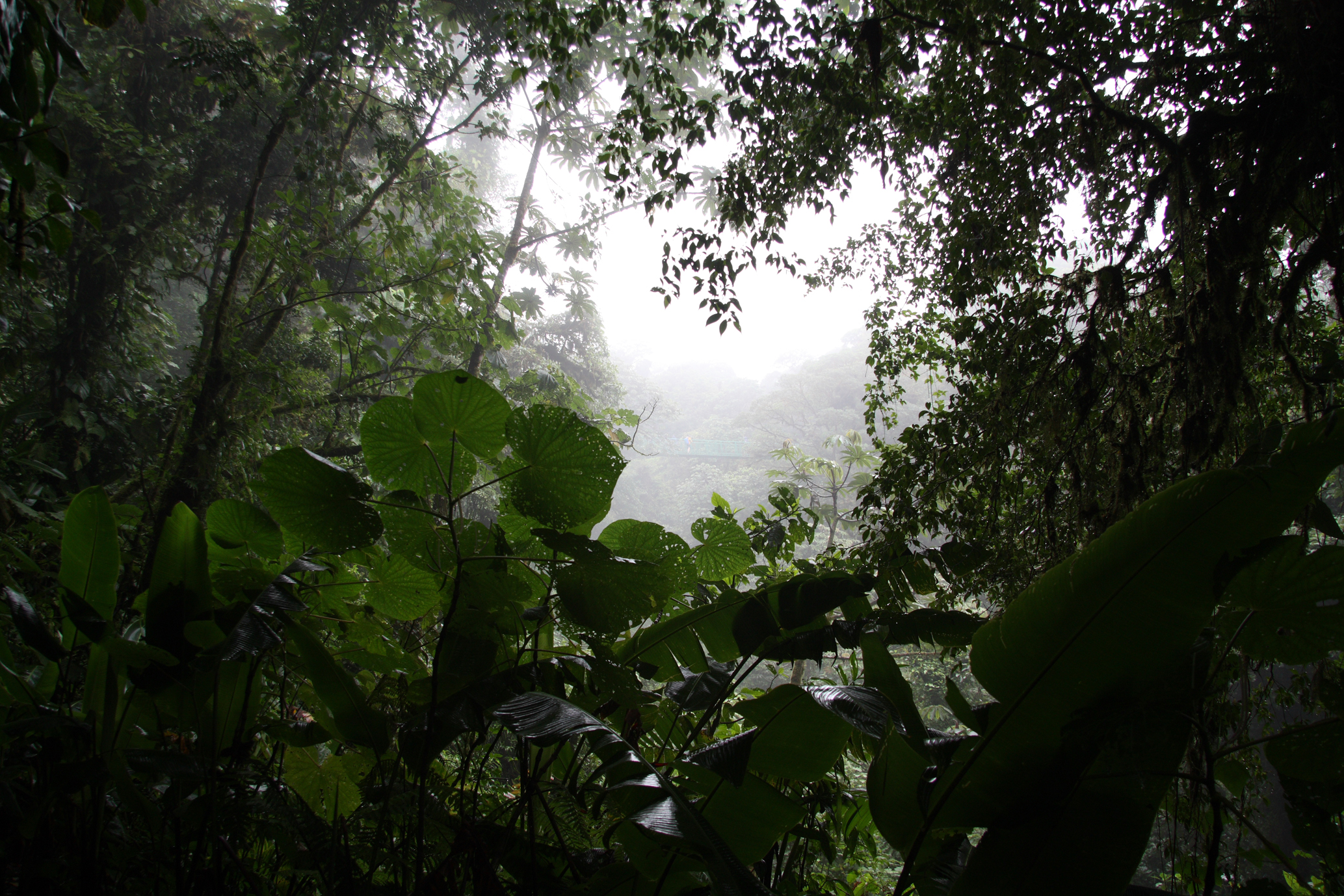
Before the Catastrophe: Indigenous Stewardship
For thousands of years before Spanish conquest, Costa Rica's forests remained largely intact—not because the land was empty, but because the people who lived there had developed a way of life in equilibrium with the ecosystem. The Chorotega, Cabécar, Bribri, Huetar, Maleku, Boruca, Térraba, and Guaymí peoples were not passive inhabitants of the forest. They were active managers of it, shaping the landscape through controlled burns, selective harvesting, and cultivation while maintaining the forest's fundamental integrity.
Indigenous communities practiced what modern ecologists would call rotational agriculture or swidden systems. Families would clear small plots—perhaps a hectare or less—using slash-and-burn techniques, cultivating maize, beans, squash, and root crops for a few seasons until soil fertility declined. Then they would abandon the plot and move to a new area, allowing the forest to regenerate over decades. The clearings were small enough and dispersed enough that forest regeneration was rapid and complete. Birds and mammals recolonized the recovering plots, dispersing seeds from surrounding intact forest. Within 20 to 40 years, secondary forest had reclaimed the land. Within a century, the signs of cultivation were nearly erased. This was not industrial agriculture—it was cyclical use that recognized forests as renewable only if given time to recover.
Learn More About Forest Succession
For a detailed exploration of how forests regenerate and evolve over time, check out our article What Is a Forest?
Indigenous peoples also maintained agroforestry systems—cultivating over a hundred species of useful trees alongside crops, creating forest gardens rich in biodiversity. Cacao grew under the forest canopy. Fruit trees were encouraged near settlements. Palms were managed for construction materials and food. This wasn't wilderness preservation in the modern sense—it was active cultivation integrated into the forest matrix. The result was a cultural landscape that outsiders perceived as pristine wilderness but was actually a mosaic of managed and wild ecosystems, sustained by detailed ecological knowledge passed down through generations.
Daily life was woven into the rhythms of the forest. Families rose with the dawn chorus—the mechanical trill of cicadas giving way to the territorial roars of howler monkeys echoing across the canopy. Women gathered medicinal plants whose properties had been tested over generations: the bark of quinine trees for fever, resin from copal trees for ceremonial incense, leaves of specific vines to treat snakebite. Shamans—the awapa among the Bribri—prepared sacred plant concoctions: tobacco, morning glory seeds, and certain mushrooms that opened doorways to the spirit world, used in healing ceremonies to diagnose illness and communicate with the spirits of plants and disease. Hunters moved through the understory with intimate knowledge of animal behavior, tracking peccaries by the scent of musky glands, recognizing the trails that tapirs carved through the undergrowth, knowing which trees would fruit when and which animals would come to feed. The Bribri and Cabécar peoples identified hundreds of plant species by leaf shape, bark texture, and growth habit—a botanical expertise that would take a modern taxonomist years to acquire. They knew which hardwoods would resist termites for house construction, which palm fibers would hold strongest for rope, which tree resin could waterproof canoes, which bark could be beaten into cloth. The forest was not an obstacle or an enemy—it was home, pharmacy, hardware store, and spiritual temple all at once.
Population density remained relatively low, and cultural practices—including territorial boundaries and resource taboos—prevented overexploitation. Certain groves were sacred, off-limits for hunting or harvesting. Fishing in particular streams was prohibited during spawning seasons. Knowledge of these restrictions was encoded in oral tradition, stories that taught ecological principles through narrative. Children learned not just what to harvest but when and how much—the difference between use and exhaustion. An elder might forbid cutting a particular palm species in a certain area not because of superstition, but because that species was becoming locally rare and needed time to recover.
What Spanish colonists would later dismiss as primitive taboos were actually sophisticated conservation practices, evolved over centuries of trial and error, disaster and recovery.
When the Spanish arrived, they found a forested landscape inhabited by sophisticated agricultural societies living within the carrying capacity of the ecosystem—a balance that had persisted for thousands of years and would be shattered within a few generations of European contact.
The Spanish Arrival: Extraction Without Understanding
When Christopher Columbus spotted Costa Rica's Caribbean coast in 1502—his fourth and final voyage to the Americas—he named it the "Rich Coast," expecting to find gold and wealth to rival other Spanish conquests. He didn't find it. Spanish colonists who arrived in the early 1500s discovered a densely forested, mountainous country lacking the easily exploitable mineral wealth of Mexico or Peru. What they did find were indigenous communities with sophisticated agricultural knowledge and a land rich in resources the Spanish didn't initially value. The conquistadors responded with characteristic brutality: forced labor, encomienda systems that enslaved indigenous peoples, and systematic destruction of indigenous social structures. European diseases—smallpox, measles, typhus—devastated populations that had no immunity, killing vast numbers within decades of contact. But compared to the wholesale transformations of Mexico or the Caribbean islands, Spanish impact on Costa Rica's forests remained relatively limited for centuries.
Costa Rica became one of the poorest and most neglected provinces of the Spanish Empire. The terrain was difficult, the climate harsh for Europeans unaccustomed to tropical diseases, and the economic opportunities limited. Spanish settlements remained concentrated in the Central Valley around Cartago and later San José, where the higher elevation provided a more temperate climate. Colonists cleared forests for small-scale agriculture—wheat, cattle, and later coffee—but the scale of clearing was modest compared to plantation colonies in the Caribbean or coastal lowlands elsewhere. The indigenous populations, decimated by disease and exploitation, retreated into regions where Spanish control was weak or nonexistent: the Talamanca mountains in the southeast, the Caribbean lowlands that remained impenetrable swamps and jungle, and the remote southwest Pacific region around the Osa Peninsula—precisely the areas where the densest primary forests remained intact. In these refuges, indigenous peoples maintained their forest-based lifeways, though always under threat from colonial expansion.
By independence in 1821, an estimated 90% or more of Costa Rica remained forested. With a population of only about 60,000 people concentrated almost entirely in the Central Valley, and coffee cultivation just beginning to expand from small-scale production (only 17,000 coffee trees existed nationwide), the vast majority of the country—the Caribbean lowlands, Pacific coast, and mountainous interior—remained untouched wilderness. The colonial period had introduced extractive economic models—viewing land and forests as resources to be exploited for profit rather than ecosystems to be managed for long-term sustainability—but the scale of exploitation was limited by Costa Rica's poverty, difficult terrain, and small population. The catastrophic deforestation would come later, driven not by colonial poverty but by 20th-century industrial agriculture backed by foreign capital and mechanized technology. The Spanish colonial legacy was not wholesale forest destruction but rather the ideological and legal framework that viewed forests as empty wastelands awaiting conversion to "productive" use—a framework that would enable far more devastating exploitation in the centuries to come.

The Octopus: United Fruit Company Devours the Forest
Minor Keith and the Railroad That Became an Empire
The story of United Fruit in Costa Rica begins not with bananas but with a railroad—and one man's ruthless ambition. In 1871, Minor Cooper Keith, a 23-year-old from Brooklyn, arrived in Costa Rica at the invitation of his uncle, railroad entrepreneur Henry Meiggs. Meiggs had secured a contract from the Costa Rican government to build a railroad connecting San José to the Caribbean port of Limón—a line that would open the country's interior to export markets. But the construction was cursed from the start. Dense jungle, torrential rains, malaria, yellow fever, and brutal terrain killed workers by the thousands. When Meiggs died in 1877, his nephew Minor Keith inherited the nightmare.
Keith pushed forward with a brutal calculus: cheap labor was expendable. He imported thousands of workers from Jamaica, China, and Italy. They died clearing jungle and laying track—some 4,000 workers died before the line was completed in 1890, including three of Keith's own brothers. Malaria, yellow fever, and dysentery killed more workers than the brutal labor itself. To feed the surviving workers cheaply, Keith began planting bananas along the railroad right-of-way. The experiment was profitable: his first banana shipment reached New Orleans in 1882, and he realized the fruit could be more lucrative than the railroad itself. By 1884, Keith was deeply in debt and the Costa Rican government was on the verge of default. He offered a deal: he would complete the railroad and refinance Costa Rica's £1.2 million debt to London banks. In exchange, he demanded 800,000 acres of tax-free land along the railroad route plus a 99-year lease to operate the line. The government, desperate and with few alternatives, agreed.
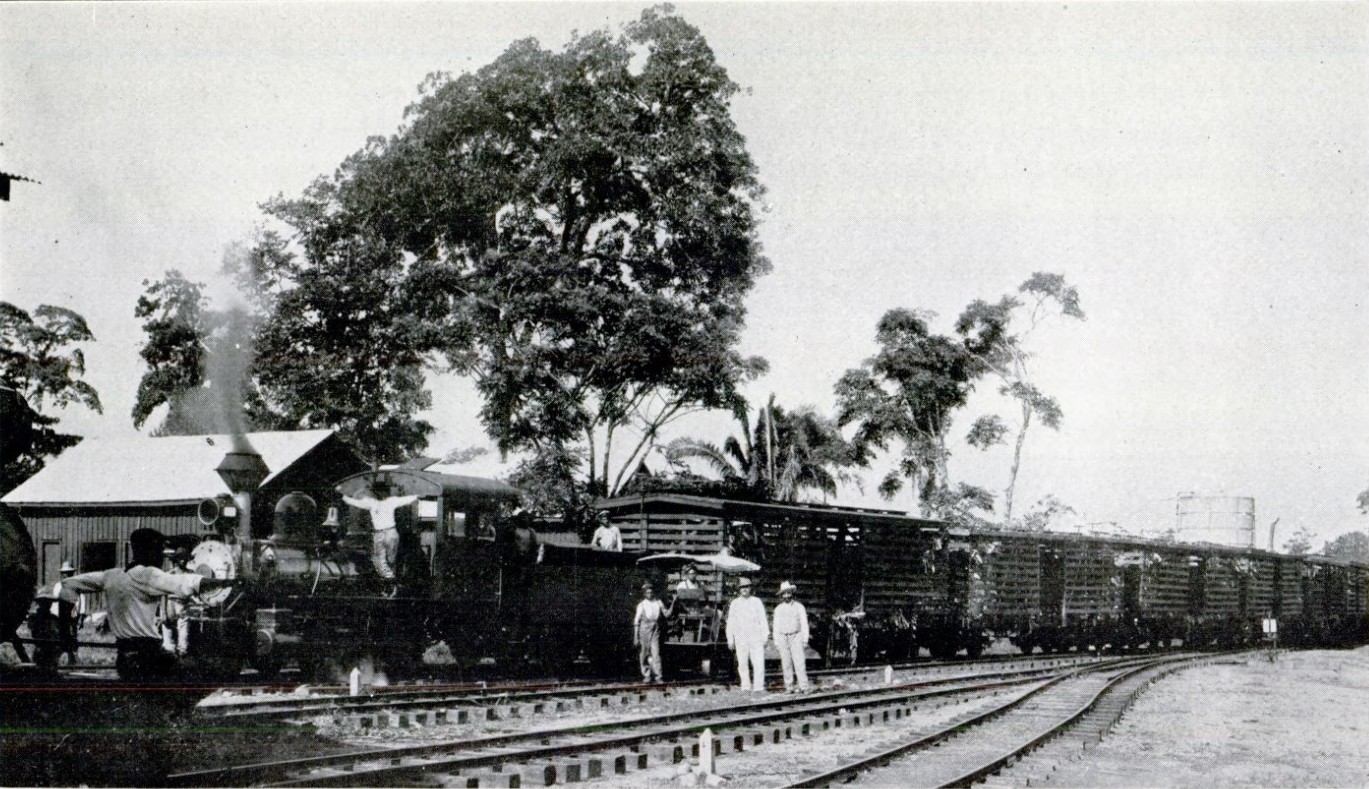
With nearly a million acres of prime tropical land under his control and a railroad to transport his product, Keith built a banana empire. In 1899, he merged his operations with Boston Fruit Company to create the United Fruit Company. The new corporation controlled vast territories not just in Costa Rica but throughout Central America and the Caribbean—land, railroads, ports, steamship lines, and telegraph networks. United Fruit became the largest employer in Central America and the most powerful political force in the region. The company earned its nickname "El Pulpo"—The Octopus—for how its tentacles reached into every aspect of life: government, law, labor, land, and economy. Entire countries became "banana republics," their politics and policies dictated by United Fruit's profit margins.
Labor as Disposable: The Human Cost of Bananas
The forests weren't the only thing United Fruit destroyed. The company's treatment of workers was systematic brutality. Laborers on banana plantations faced pathetic wages, grueling hours, and dangerous conditions with zero safety protections. Most workers weren't even paid in real money—United Fruit issued company scrip, vouchers redeemable only at company-owned stores where prices were inflated and workers remained perpetually in debt. If you worked for United Fruit, you lived in company housing, shopped at company stores, and had no choice but to accept whatever terms it imposed. Long work hours with no rest days were standard. Injuries and deaths from machete accidents, snake bites, and collapsing trees went uncompensated. When workers tried to organize for better conditions, the corporation used third-party contracting systems to circumvent labor laws, ensuring workers had few legal protections and no right to unionize.
The 1928 Banana Massacre
In 1928, these conditions exploded into strikes across United Fruit's Colombian operations. Workers demanded what should have been basic human rights: an eight-hour workday, a six-day work week, medical treatment, and wages paid in cash rather than company scrip. On December 6, 1928, thousands of striking workers and their families gathered in the town square of Ciénaga, Colombia. The Colombian military, acting at the behest of United Fruit and under pressure from the U.S. government, declared the assembly illegal and ordered troops to open fire on the unarmed crowd.
The death toll remains disputed. The U.S. Ambassador to Colombia reported to the Secretary of State that "the total number of strikers killed by the Colombian military exceeded one thousand"—a figure provided by United Fruit's Bogotá representative. The Colombian government claimed only 47 died. Estimates range from the official 47 to as many as 3,000. Bodies were loaded onto trains and dumped in the ocean or mass graves, making an accurate count impossible. The massacre crushed the strike, and United Fruit continued operations without interruption.
In Costa Rica, workers organized the Great Banana Strike of 1934—one of the era's most consequential labor mobilizations in the country. Beginning on August 4, 1934, over 100,000 workers from 30 separate unions demanded an eight-hour workday, overtime pay, and cash payment instead of company-issued coupons. The strike lasted nearly a month. While it didn't end in massacre like Colombia, United Fruit initially agreed to terms on August 28, then reneged and launched a propaganda campaign branding the strike a communist insurrection, leading to violent repressions. Despite the crackdown, the strike forced the company to sign a collective agreement with workers in 1938 and helped spark the "Generation of 1940"—a movement that produced Costa Rica's landmark social reforms and labor protections. The strike proved that United Fruit's power, while formidable, was not absolute.
Guatemala: When a Company Overthrows a Democracy
United Fruit's most notorious crime came in Guatemala. By the 1950s, the company owned approximately 550,000 acres—42% of Guatemala's arable land—much of it lying unused while Guatemalan peasants starved. In 1952, Guatemala's democratically elected president, Jacobo Árbenz, initiated land reform: the government would expropriate unused United Fruit land and redistribute it to landless peasants, compensating the company at the value United Fruit itself had declared for tax purposes. It was a reasonable policy in a desperately poor country with extreme land inequality. United Fruit saw it as theft. The company launched a massive lobbying and propaganda campaign in Washington, portraying Árbenz as a communist threat to U.S. interests. United Fruit's board included influential Americans with government connections, and they used every lever of power available.
In 1954, the CIA orchestrated a coup—Operation PBSUCCESS—that overthrew Árbenz and installed a military dictatorship friendly to United Fruit. The land reforms were reversed, and Guatemala descended into 36 years of military rule and civil war. An estimated 200,000 civilians were killed, most of them indigenous Maya. The Guatemalan Truth Commission later concluded that the violence constituted genocide.
United Fruit got its land back, and the company's profits were protected. The message to Latin America was clear: challenge United Fruit, and the U.S. government will destroy you.
Devouring Costa Rica's Forests: 1937–1984
For decades after its 1899 formation, United Fruit operated primarily on Costa Rica's Caribbean coast, where Minor Keith had first established his banana operations. But in 1937, the company expanded to virgin territory: the southwest Pacific region around Palmar and Golfito. This wasn't adaptation to changing conditions or disease pressure—it was conquest of the last pristine rainforests. When United Fruit moved into this remote wilderness, it encountered a landscape that had remained largely untouched by industrial activity—dense primary rainforest with almost no human habitation, precisely the areas where indigenous peoples had maintained refuges during Spanish colonial rule. What followed was systematic obliteration. Dense underbrush was cleared, massive trees cut down, intricate drainage systems excavated to convert swamps into plantations. Entire watersheds were altered. Bird habitats vanished. Wildlife corridors were fragmented into isolated patches surrounded by monoculture deserts of Gros Michel bananas.
Between 1938 and 1962, United Fruit applied biocidal agrochemicals on an industrial scale—fungicides and insecticides sprayed as many as 40 times per year to protect the fragile monoculture from disease and pests. These cancer-causing chemicals seeped into groundwater, poisoned rivers, accumulated in fish and wildlife, and contaminated drinking water supplies. The health effects on workers and surrounding communities would manifest for decades: elevated cancer rates, reproductive disorders, birth defects. The soil itself was destroyed. Banana monoculture depletes nutrients rapidly, and United Fruit's model was to extract maximum profit from land until it was exhausted, then move on and clear more forest. The company operated in a perpetual cycle of expansion and abandonment—clearing virgin rainforest, mining its fertility for a decade or two, then leaving behind degraded wasteland.
By the time United Fruit left Costa Rica in 1984—driven out by anti-trust laws, labor conflicts, soil exhaustion, disease pressure, and rising operating costs—the company had transformed tens of thousands of acres of irreplaceable primary rainforest into degraded plantation land. Much of this land was subsequently converted to palm oil plantations, perpetuating the monoculture model and preventing forest regeneration.
The forests United Fruit destroyed had taken millions of years to develop. The company extracted profit from them for less than 50 years, left behind ecological wreckage, and moved on.
The scars remain visible today in the fragmented landscapes and chemically contaminated soils of Costa Rica's southern Pacific region.
From United Fruit to Chiquita: Rebranding a Dark Legacy
Faced with mounting criticism of its labor practices and political interventions, United Fruit began distancing itself from its notorious reputation through a carefully orchestrated rebranding campaign. In 1944, the advertising agency BBDO (Batten, Barton, Durstine & Osborn) created the "Chiquita Banana" jingle and character—a friendly, cartoonish mascot designed to give a cheerful face to the company's products. The campaign was wildly successful: at its peak, the jingle played 376 times per day on U.S. radio stations. The character Miss Chiquita, illustrated by cartoonist Dik Browne (creator of Hägar the Horrible), became one of the most recognizable advertising icons of the 20th century.
The Chiquita brand was registered as a trademark in 1947, though the parent company retained the United Fruit name for decades. In 1970, following a merger with AMK Corporation, the company became United Brands Company. Finally, in 1990—six years after leaving Costa Rica—the corporation completed its reinvention, officially renaming itself Chiquita Brands International.
The rebrand was effective marketing but didn't erase the legacy. Chiquita (as the company is now known) has continued to face legal and ethical controversies, including a 2024 jury finding that the company was liable for financing Colombian paramilitary groups responsible for killings in banana-growing regions. The friendly mascot couldn't hide the continuing pattern of exploitation.
Settling the Frontier: Government-Sponsored Deforestation
While United Fruit cleared forests for corporate profit, the Costa Rican government simultaneously promoted deforestation through organized settlement programs that formalized centuries-old patterns of frontier expansion. The pressure had been building since the 1930s: the Great Depression had collapsed international coffee prices, devastating Costa Rica's primary export economy and throwing thousands out of work. Panama Disease ravaged banana plantations across the Caribbean lowlands, forcing United Fruit to abandon infected zones and leaving entire communities of workers unemployed and stranded. Meanwhile, Costa Rica's population was growing rapidly—the Central Valley, already densely settled, couldn't absorb the surplus rural population. Land ownership had become increasingly concentrated in the hands of a small elite: large coffee estates and cattle ranches controlled the best agricultural land, while a growing class of landless campesinos faced stark choices: work as poorly paid laborers on someone else's plantation, migrate to overcrowded urban slums, or push into the forested frontier to carve out their own farms.
For desperate families with no capital, no education, and no prospects, the frontier represented hope—however brutal the reality. The government saw this migration as a safety valve: directing landless poor toward "empty" forests would relieve social pressure in the Central Valley, reduce unemployment, and avoid political unrest. It was cheaper to give families an axe and a plot of forested land than to implement genuine land reform or invest in urban development. The frontier would absorb Costa Rica's surplus population, and if settlers died from disease, malnutrition, or accidents in the remote wilderness—well, that was the price of progress. The government responded by institutionalizing this migration.
In 1961, Costa Rica established ITCO—the Instituto de Tierras y Colonización (Institute of Lands and Colonization)—to manage and accelerate frontier settlement. The agency's mandate was explicit: identify "unused" forested lands, facilitate their acquisition, and settle landless farmers on them. Viewing forested land as "unproductive," the government encouraged citizens to claim and clear frontier areas. Land titles were granted to those who could demonstrate they had "improved" the land—a legal standard that explicitly meant clearing forest for agriculture or pasture. The 1961 Law of Land and Colonization (Law 2825) codified these principles, making forest clearing the primary mechanism for establishing land ownership.
The scale was massive. Over 23 years, ITCO settled 40,326 farmers on 793,940 hectares of land—nearly 2 million acres, much of it carved from primary forest. One example: in the mid-1960s, ITCO purchased land from Anselmo Poma and used it to establish Colonia Gutiérrez Braun, a 135-member agrarian reform project named after one of the engineers who had surveyed the border in the 1940s. Across the country, similar colonies sprang up: settlers arrived with machetes, axes, and chainsaws, cutting down centuries-old trees to plant corn, beans, and pasture grass. The clearing was systematic and relentless. In southern Costa Rica alone, deforestation rates reached 3.86% annually between 1960 and 1980—among the highest in the world.
This policy created perverse incentives: the fastest way to secure property rights was to destroy forest. Thousands of small farmers cleared land not necessarily because they needed it immediately for production, but because clearing was the legal mechanism to establish ownership. The result was widespread forest fragmentation as settlers pushed into previously intact regions, creating a patchwork of clearings that disrupted wildlife corridors and watershed protection. By the time ITCO was reorganized into the ADI (Agrarian Development Institute) in 1984, the damage was done: Costa Rica's frontier regions had been transformed from continuous forest into a mosaic of farms, pastures, and isolated forest fragments.
Hamburger Connection: The Cattle Boom and Forest Collapse
The final blow came in the 1960s and 1970s when U.S. demand for cheap beef triggered a cattle ranching boom. American fast-food chains, led by McDonald's and Burger King, needed inexpensive beef to fuel their rapid expansion. Costa Rica—along with other Central American nations—became a supplier. The United States offered Costa Rican cattle ranchers millions of dollars in loans specifically to produce beef for export.
The numbers are staggering. From the 1950s onward, pasture land expanded by approximately 62%, meaning that huge amounts of forest were cleared to make room for cattle grazing. At the height of the boom, Costa Rica sold 60% of its beef to Burger King alone. During the 1970s and much of the 1980s, all major U.S. fast-food retailers—including McDonald's—used beef from cattle raised on recently deforested Costa Rican land. Between 1960 and the late 1980s, Costa Rica suffered one of the fastest deforestation rates in the world, at times approaching 4% annually—a pace of destruction that would have eliminated the country's remaining forests within a generation if left unchecked.
Costa Rica's rainforests were being sacrificed to feed American fast-food expansion.
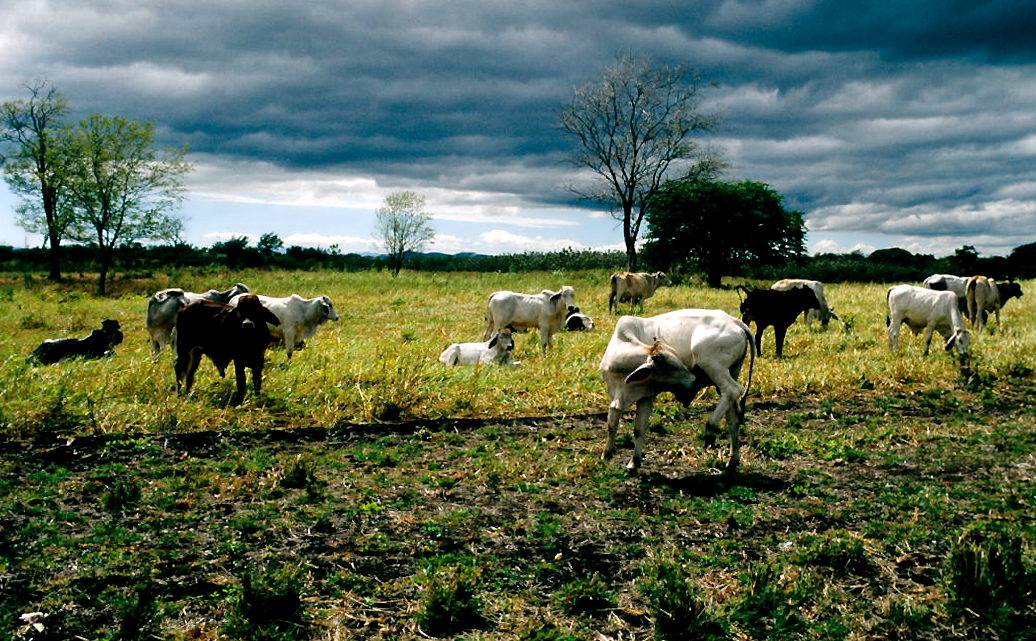
By the 1980s, Costa Rica's forest coverage had plummeted from 75% in 1940 to as low as 21-26%—the precise nadir is disputed due to varying measurement methods, with some sources citing 26% in 1983 and others 21% in 1987—representing catastrophic loss either way. The country faced ecological collapse: watersheds degraded, soil eroded, biodiversity declined, and water sources became unreliable. The meat market eventually collapsed in the late 1980s, but the damage was done. Costa Rica stood at a crossroads: continue down the path of environmental destruction, or find a new model.
The Turnaround: How Costa Rica Stopped the Collapse
Costa Rica's reforestation success didn't happen by accident—it required deliberate policy choices, legal frameworks, sustained political commitment, and visionary leaders willing to challenge centuries of extractive economics. But the story of how Costa Rica reversed deforestation begins not in the 1990s with laws, but decades earlier with a handful of conservationists who understood what was at stake.
The Park Pioneers: Mario Boza and Álvaro Ugalde (1970s)
In the 1970s, as cattle ranching was devouring Costa Rica's forests at historically unprecedented rates, two young conservationists—Mario Boza and Álvaro Ugalde—embarked on an audacious campaign to create a national park system. Boza, who had studied agricultural engineering at the University of Costa Rica and received his master's degree in forestry from CATIE (the Tropical Agricultural Research and Higher Education Center), teamed up with Ugalde, a biologist with infectious passion for wilderness. Building on the foundation of Cabo Blanco Nature Reserve—Costa Rica's first protected wilderness area, established in 1963 on the southern tip of the Nicoya Peninsula—they set out to create a comprehensive national park system. It was time to scale up: what had been a modest 1,200-hectare experiment would become a national movement.

What followed was a decade of relentless advocacy against overwhelming odds. Remember: this was happening while forest cover was actively collapsing—while cattle ranchers were clearing thousands of hectares annually, while ITCO was settling farmers with chainsaws, while all economic incentives pointed toward destruction. Yet Boza and Ugalde persisted. In 1971, they successfully lobbied for the creation of Poás Volcano National Park, protecting the cloud forests around one of Costa Rica's most active volcanoes. Then came Santa Rosa National Park (1971), protecting crucial dry tropical forest in Guanacaste—an ecosystem as threatened as rainforest but far less celebrated. Manuel Antonio (1972), Tortuguero (1970, with expansions in 1975), Corcovado (1975)—each new park required Boza and Ugalde to convince skeptical politicians and hostile ranchers that conservation was worth the foregone cattle profits. The resistance was fierce. Landowners threatened violence. Politicians warned that "locking up" productive land would condemn Costa Rica to poverty. Ranchers illegally grazed cattle in new parks and logged protected trees with impunity.
But Boza and Ugalde persisted, building alliances with international conservation organizations, educating the public about ecological services, and training a new generation of park rangers and managers. Boza served as the first director of Costa Rica's National Parks Service, professionalizing what had been an ad-hoc volunteer effort. Ugalde spent years living in remote parks, often without salary, personally patrolling boundaries and confronting illegal loggers. Their dedication was infectious. Young Costa Ricans who might have become cattle ranchers or banana plantation managers instead became park rangers and conservation biologists. By the 1980s, their efforts had resulted in Costa Rica protecting approximately 25% of its national territory—a global outlier that would prove critical to the country's eventual reforestation.
They had created not just parks, but a conservation culture that would make the legal reforms of the 1990s politically possible.
Álvaro Umaña and the Crisis Response (1986)
The parks that Boza and Ugalde created had bought precious time—they protected critical areas from immediate destruction. But parks alone couldn't reverse national deforestation trends. Costa Rica needed systemic change: new laws, new economics, new ways of valuing forests. By the mid-1980s, Costa Rica had hit bottom: forest coverage had crashed to somewhere between 21-26% of national territory (depending on measurement methods), and the country had one of the world's highest deforestation rates. In 1986, facing this ecological and economic crisis, President Óscar Arias created a new cabinet-level Ministry of Natural Resources, Energy and Mines (MIRENEM) and appointed Álvaro Umaña as its first minister. Umaña's mandate was to consolidate disparate environmental agencies that had operated with almost no coordination, minimal budgets, and little power to stop rampant illegal clearing or challenge entrenched economic interests opposed to conservation. But he understood the urgency. As he later summarized: "We had to act fast and effectively to save our forests."
"We had to act fast and effectively to save our forests."
— Álvaro Umaña, Costa Rica's first Environment Minister (1986)
Umaña's team aggressively implemented innovative financing mechanisms, most notably debt-for-nature swaps. The mechanism had been conceived by ecologist Thomas Lovejoy in 1984 and first tested in Bolivia in 1987. Here's how it worked: Like many Latin American countries in the 1980s, Costa Rica was drowning in foreign debt. International banks held Costa Rican government bonds that were trading at deep discounts—sometimes 20-30 cents on the dollar—because investors doubted Costa Rica could ever repay. Conservation organizations like The Nature Conservancy and World Wildlife Fund realized they could buy this discounted debt on secondary markets, then forgive it in exchange for Costa Rica investing the equivalent value in conservation. In 1987, Costa Rica became one of the first countries to execute such a swap: environmental groups purchased $5.4 million in Costa Rican debt for $918,000, then forgave it in exchange for Costa Rica establishing a $5.4 million conservation fund. The mechanism was brilliant—it reduced Costa Rica's debt burden while generating conservation funding at a fraction of the cost international donors would have paid directly.
They leveraged international partnerships with organizations like WWF, The Nature Conservancy, and later the MacArthur Foundation, building a network of support that provided both funding and technical expertise. Umaña and his team began to reorient national policy from extraction to conservation, laying the groundwork for the legal revolution that would come in the 1990s. It was the beginning of a fundamental shift in how Costa Rica viewed its forests—not as obstacles to development, but as the foundation of sustainable prosperity. When Umaña left office in 1990, Costa Rica had not yet reversed deforestation, but he had assembled the tools and the political will that would make reversal possible.
Dismantling "Mejoras": Changing the Legal Framework (1990s)
But even with parks protecting critical areas and innovative financing mechanisms generating funds, Costa Rica still faced a fundamental problem: the law itself demanded forest destruction. Until this legal foundation changed, true reversal would remain impossible.
For centuries, Costa Rican land policy had been built on a destructive premise inherited from Spanish colonial law: forest clearing was considered a "mejora" (improvement) that increased land value and strengthened ownership claims. Crown land grants and republican titling systems explicitly prized cleared land over forested land.
The 1961 Law of Land and Colonization (Law 2825) institutionalized this bias: settlers could claim public land by clearing it, and tenure was often secured only after demonstrating "improvements"—which meant cutting down trees. Credit flowed more readily to deforested parcels. Forest was legally and economically classified as "idle" land awaiting conversion to "productive" use.
The 1990s legal reforms reversed this centuries-old framework. Under President José María Figueres Olsen (1994-1998) and his administration's Ministry of Environment and Energy (MINAE), Costa Rica enacted a suite of interconnected laws that established forests as inherently valuable and worthy of protection: Environment Law No. 7554 (1995) set broad environmental principles and institutional frameworks. Most critically, Forest Law No. 7575 (1996) made forest conversion illegal and created the institutional architecture for paying people to conserve forests rather than destroy them. Biodiversity Law No. 7788 (1998) reinforced conservation and sustainable use, establishing mechanisms for benefit-sharing from biological resources. This legislative package—combined with expanded protected areas, judicial enforcement of constitutional environmental rights, ecotourism growth, rural-to-urban migration, declining beef prices, and land abandonment—created the conditions for forest recovery.
Forest Law 7575 (1996): Making Deforestation Illegal
In 1996, Costa Rica passed Forest Law 7575, which made it illegal to change land use on forested land without government approval. Article 19 of this law establishes the fundamental principle: "In lands covered with forest, changing the land use will not be permitted." This simple sentence reversed centuries of policy that viewed forest clearing as "improvement." Now, forest was recognized as valuable in itself, and its destruction became a crime punishable by prison sentences.
Learn More About Costa Rica's Conservation Laws
For an in-depth analysis of Forest Law 7575 and the other landmark conservation laws that transformed Costa Rica, check out our article Costa Rica's Most Important Conservation Laws
The law also created FONAFIFO (Fondo Nacional de Financiamiento Forestal), an institution that would become the engine of Costa Rica's reforestation success. FONAFIFO was tasked with administering a revolutionary program: paying landowners to conserve and restore forests rather than clear them.
Creating the legal framework was the first step. Making it economically viable for landowners was the second. Within a year of Forest Law 7575's passage, Costa Rica would implement the mechanism that made forest conservation not just legally required but financially attractive.
Payment for Environmental Services (PES): Making Conservation Profitable
In 1997, Costa Rica launched its Payment for Environmental Services (PES) program, recognizing that forests provide four critical services: carbon sequestration (climate regulation), biodiversity protection, water protection for urban/rural/hydroelectric use, and scenic beauty for tourism and science. Rather than treating these services as free externalities, the program pays landowners directly for maintaining or restoring forests that provide them.
The funding mechanism was ingenious: a tax on fossil fuels. By making those who emit greenhouse gases pay for forest conservation—which sequesters carbon—the program created a direct link between pollution and restoration. Over the last 25+ years, FONAFIFO has paid out over $500 million to landowners, saved more than 1 million hectares of forest, and planted over 6.8 million trees. The program transformed the economic calculus: suddenly, keeping forest standing was more profitable than clearing it for pasture. As Carlos Manuel Rodríguez, former Environment Minister, framed it: PES's biggest achievement was correcting a market failure by putting a value on forests that hadn't existed before. Forests were no longer externalities to be ignored in economic calculations—they were assets generating measurable returns.
But the program's future faces challenges. PES funding originally relied heavily on the fossil fuel tax, which creates a tension as Costa Rica works to decarbonize its economy: the more successful the country becomes at reducing fossil fuel consumption, the less funding is available for forest conservation. Recognizing this, FONAFIFO has been diversifying funding sources—tourism fees, water user payments, and international results-based payments. As FONAFIFO director Jorge Mario Rodríguez Zúñiga put it: "If it benefits the world, it's only fair that the world contributes to its protection." Costa Rica's forests sequester carbon and protect biodiversity for the entire planet—why shouldn't global beneficiaries help pay for their conservation?
Ecotourism: Making Nature More Valuable Than Cattle
Perhaps most importantly, Costa Rica bet on ecotourism as an economic development strategy. Rather than competing on commodity exports—bananas, beef, coffee—the country positioned itself as a nature destination.
This strategic pivot worked spectacularly: today, over 3 million tourists visit Costa Rica annually, with more than 60% participating in ecotourism activities—visiting national parks, wildlife refuges, and protected areas to experience the country's biodiversity firsthand.
Ecotourism created a powerful economic constituency for conservation. Landowners who might once have cleared forest for cattle could now earn more from hosting tourists or selling land to eco-lodge developers. Communities near national parks and biological reserves benefited from employment in tourism services. The more forest Costa Rica protected, the more valuable its tourism brand became—a virtuous cycle that reinforced conservation rather than undermining it.
These mechanisms—protected areas, legal prohibition of forest conversion, payments for ecosystem services, and ecotourism economics—didn't work in isolation. They formed an integrated system where each element reinforced the others. Parks protected core habitats while demonstrating conservation value. Laws made destruction illegal while creating financial incentives for protection. PES payments made forest conservation economically rational. Ecotourism created jobs and revenue streams that depended on forest preservation. Together, they transformed Costa Rica's relationship with its forests. The results speak for themselves.
The Results: From Collapse to Recovery
By the early 2020s, Costa Rica's forest coverage had rebounded to approximately 60%—nearly tripling from its 1980s nadir of 21-26%. Costa Rica became the first tropical country to have stopped and reversed deforestation. Natural regeneration, aided by PES incentives and reduced pressure from cattle ranching, allowed secondary forests to expand across former pastures. Biological corridors reconnected fragmented habitats. Watershed function improved. Biodiversity rebounded.
But Not All Forest Is Equal
That 60% figure includes both primary (old-growth) and secondary (regenerating) forest—and the distinction matters profoundly. Of Costa Rica's current forest cover, only approximately 24% is primary forest—roughly 12-14% of total land area. The remaining 76% is secondary forest, most with ages between 10 and 60 years. Primary forests contain irreplaceable biodiversity, structural complexity, and ecological relationships that developed over centuries or millennia. Secondary forests, while valuable, take 50 years to recover tree species richness, 80 years to recover biomass, over 100 years to recover epiphyte diversity, and centuries to approach the compositional complexity of primary forest. Once primary forest is cleared, it is effectively lost within any human timeframe. This is why protecting remaining old-growth forest—especially in biological corridors—is non-negotiable.
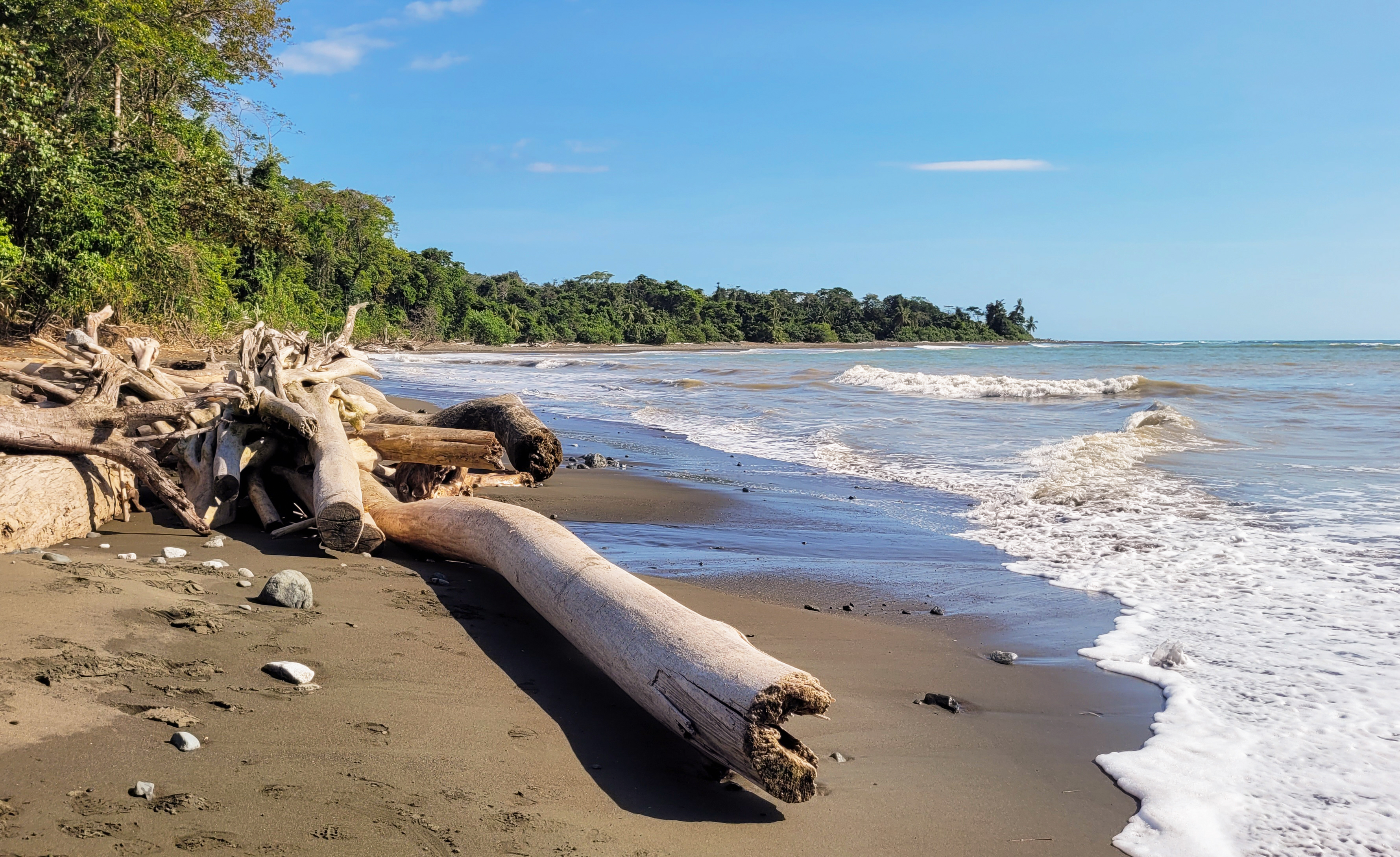
The success story attracted international attention and became a model for other nations facing deforestation crises.
Timeline: Costa Rica's Forest Journey
High forest cover (~75%), indigenous and traditional land use, Spanish colonial "mejoras" doctrine established
The Catastrophe: Road expansion, cattle boom for U.S. fast-food (60% to Burger King), United Fruit operations, ITCO settlement programs requiring forest clearing. Deforestation rates reach 4% annually—among world's highest.
The Nadir: Forest cover crashes to 21-26% (1983-1987). Conservationists Mario Boza, Álvaro Ugalde, and Álvaro Umaña sound alarm. National park system expands to protect ~25% of territory. Beef market collapses, cattle pressure reduces.
The Turnaround: President Figueres' administration enacts Forest Law No. 7575 (1996) banning land-use conversion, creates FONAFIFO. PES program launches (1997), paying landowners for carbon, water, biodiversity, scenic beauty. Biodiversity Law No. 7788 (1998). Multiple factors converge: judicial rulings, ecotourism growth, land abandonment, declining beef prices, rural migration. Secondary forests begin expanding on abandoned pastures.
Recovery & New Threats: Ecotourism boom (3+ million visitors, 60% in ecotourism activities). Forest cover rebounds to ~60% (2022). REDD+ payments begin (2018). Costa Rica becomes first tropical country to reverse deforestation. BUT: Real estate speculation (2000s boom, 2008 bust), development pressure on biological corridors, enforcement challenges persist.
From near-total collapse to global model in one generation—but the story isn't over.
Green Gold: The Real Estate Boom and Conservation Backlash (2000s–2010s)
Costa Rica's reforestation success and international reputation as an eco-paradise created a new threat: foreign investment-driven real estate development. From 2001 to 2008, the country experienced an unprecedented property boom as American and European buyers, attracted by the "green" image, tropical climate, and political stability, poured money into coastal and mountain properties—with housing loans surging 36% annually. Real estate agents marketed Costa Rica as an ecological Eden where buyers could own a piece of paradise, and developers carved roads into forested hillsides, cleared coastal land for gated communities, and fragmented biological corridors for "eco-lodges" and "sustainable developments."
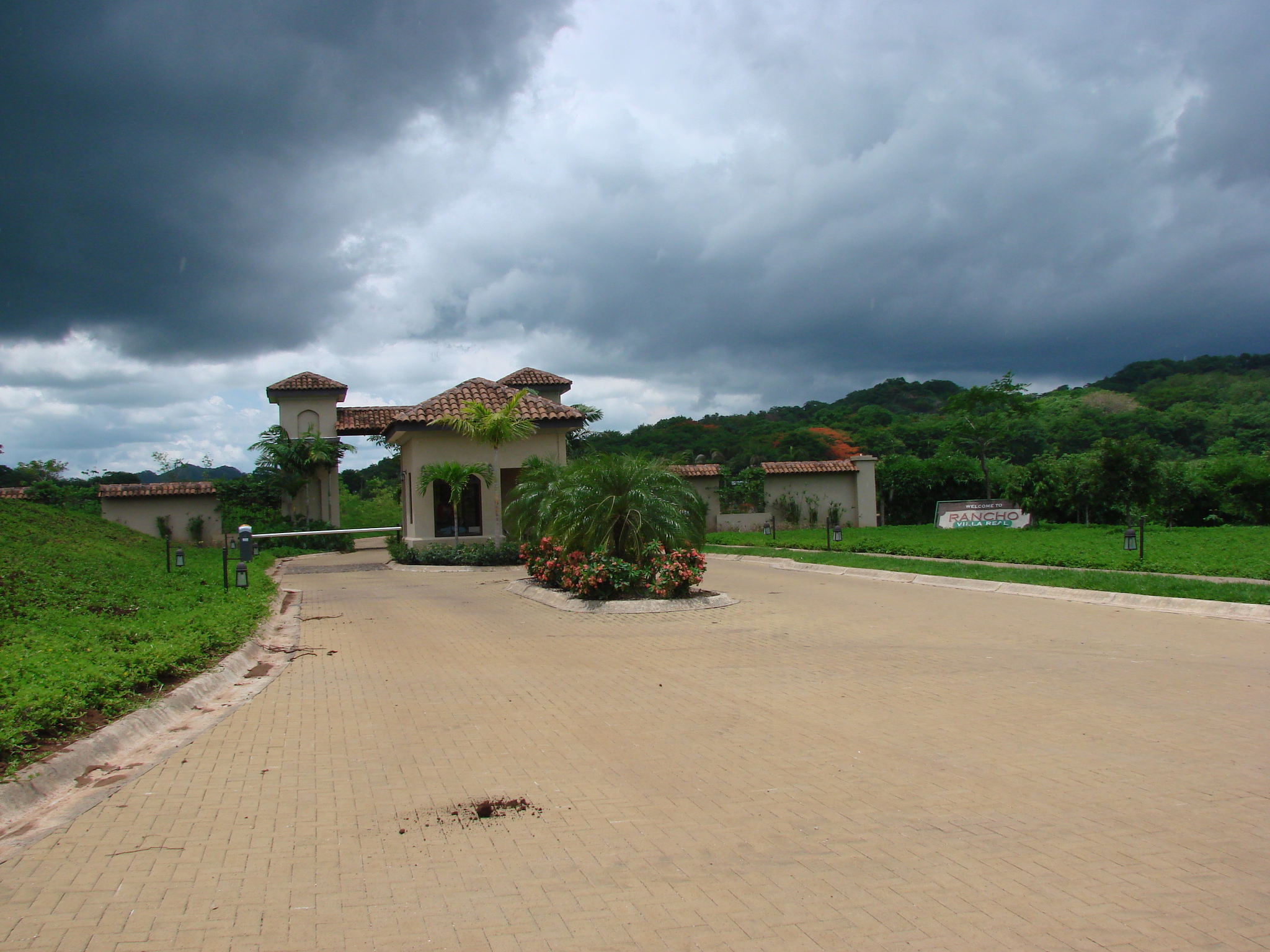
The boom was particularly intense in Guanacaste, where developers built massive resorts, luxury condominiums, and residential complexes along the Pacific coast. Land prices skyrocketed: a half-acre plot that sold for $50,000 in 2000 reached $400,000 by 2008. Too much new construction led to oversupply. When the global financial crisis hit in 2008, the bubble burst. Property values collapsed overnight. A half-acre plot that had been worth $400,000 in 2008 was worth only $150,000 by 2010—and prices remained depressed for years. Many developments came to a crashing halt, leaving half-finished structures, scarred landscapes, and contaminated water sources. But even the bust didn't stop development pressure; it merely slowed it temporarily.
Conservation Fights Back: FECON and Community Resistance
The development boom triggered a conservation backlash. Local communities and environmental organizations began organizing to resist projects that threatened forests, water sources, and protected areas. The Costa Rican Federation for Environmental Conservation (FECON) documented the growing conflict: between 1994 and 2016, collective actions for environmental issues increased by 14%. But resistance came with a cost. FECON's research revealed that environmental defenders faced systematic intimidation: the organization documented 94 acts of violence against nature defenders, including threats, assaults, and legal harassment designed to silence opposition to development projects.
One landmark conflict emerged in 2007 in Sardinal, Guanacaste, when the community opposed construction of an aqueduct that would divert water to coastal residential complexes. Residents argued the developments contributed little to local prosperity while consuming scarce water resources. Anonymous threats against residents and journalists followed, but the community persisted. The Sardinal conflict became a symbol of the tension between conservation values and development pressure—a tension that has only intensified as Costa Rica's green reputation continues to attract investment that threatens the very forests that created that reputation.
But here's the deeper problem: many of those fueling this new development wave—foreign investors, real estate agents, even local officials—have no idea this has all happened before. They don't know about the 1980s crisis, the decades of recovery, or why the laws protecting forests exist in the first place. This historical amnesia makes the current threat even more dangerous.
The Scale of the Threat
The numbers reveal the crisis: in Guanacaste province, one in every four developments was found to be illegal—a 2007 study by the Federated Association of Engineers and Architects found 45 out of 217 sampled projects lacked basic government permits. More recently, coastal property prices surged 400% between 2020 and 2023. Unchecked development led to aquifer salinization, biodiversity loss, and damage to protected areas. Construction outpaced oversight, and developers routinely sought SETENA permits under false pretenses.
The Danger of Forgetting: History Threatens to Repeat
Success has bred complacency. Today, a new wave of deforestation threatens Costa Rica's forests—this time driven not by cattle or bananas, but by luxury real estate development marketed to foreign buyers as "eco-friendly" investment opportunities.
Developers clear forest or fragment corridors to build residential communities, often falsely claiming their projects qualify as "ecotourism" under Forest Law exceptions. Many buyers have no knowledge of Costa Rica's deforestation history or the decades of effort required to restore what was lost.
The ignorance is dangerous. Those who don't understand how close Costa Rica came to ecological catastrophe in the 1980s are more likely to support—or remain silent about—development projects that undermine the very conservation frameworks that enabled the country's recovery. The rhetoric is hauntingly familiar. When developers market "forest lots" in biological corridors, they're repeating the same logic that justified ITCO's settlement programs in the 1960s: that "unproductive" forest should be converted to "higher uses." When real estate agents describe luxury developments as the property's "highest and best use," they're channeling the mejoras doctrine that made forest clearing a legal requirement for land ownership. When projects fragment wildlife corridors to build gated communities with manicured lawns and swimming pools, they recreate precisely the landscape patterns that caused biodiversity collapse during the cattle boom.
Perhaps the most insidious justification is the one that sounds reasonable: "This was just cattle pasture 30 years ago—it's not pristine forest." The implication is that regenerating secondary forest has less value, that clearing it is acceptable because it's "recent" growth. But expand the timeline slightly: yes, it was pasture during the catastrophe period—but it was forest for millions of years before that. The "pasture interlude" represents a geological eyeblink—a brief destructive episode. The forest history here stretches back more than 20 million years, to when these volcanic islands first rose from the sea. That secondary forest, painstakingly regenerated through decades of conservation policy and billions of colones in public investment, represents not just ecological recovery but a hard-won reversal of catastrophe. To dismiss it as "just regrowth" is to privilege the worst chapter in Costa Rica's environmental history over millions of years of evolutionary development. It's ecological amnesia masquerading as realism.
A Word to the Wise:
Next time you hear a realtor telling you that the "highest and best use" for a forested property is to have the ecosystem replaced by white concrete boxes with a tub of chlorinated water, think back on the history of this area, look them in the eye, and back slowly away. The same pitch was used to sell forest clearing in the 1960s, cattle pastures in the 1970s, and banana monocultures before that. The forest you're being told to destroy required decades of deliberate policy and billions of colones in public investment to restore. It didn't regrow by accident—and once cleared, it won't return in your lifetime.
The numbers tell the story starkly. What took decades of concerted national effort to restore can be destroyed in a single dry season with a bulldozer and a SETENA permit obtained under false pretenses. Forest regeneration is painfully slow: pioneer species take root in 5-10 years, secondary forest emerges in 20-40 years, and above-ground carbon biomass can recover within 80 years—but full biodiversity recovery, including rare species, epiphytes, and complex ecological relationships, requires 150+ years. Structural complexity and the full complement of primary forest ecological services develop over centuries. Every hectare cleared today for a "sustainable development" represents not just immediate loss, but decades or centuries of lost ecological development: carbon that won't be sequestered, water that won't be filtered, wildlife corridors that won't function, seed dispersers that won't nest, and biodiversity that won't recover within any human lifetime.
When Permits Fail: Documented SETENA Violations
The phrase "permits obtained under false pretenses" is not hyperbole. SETENA and the Public Prosecutor's Office have confirmed multiple cases where developers submitted false documentation claiming prohibited forested land was suitable for construction. In a 2025 case, SETENA revoked a permit after discovering construction was occurring in a protected forested area, with investigations revealing land use change, illegal logging, document forgery, and invasion of a protected area. A prosecutor investigating illegal logging in the Gandoca-Manzanillo Wildlife Refuge stated bluntly: "There is environmental criminality backed by a phenomenon of corruption"—a case involving the mayor of Talamanca, directors of conservation areas, and officials from SINAC and MINAE.
One developer told researchers: "A bribe can get you a permit right away. But if you submit your environmental impact study, you can wait for a year or more." This is not hearsay—this is documented corruption undermining conservation laws.
The PES program and Forest Law 7575 are powerful tools, but they're only as strong as enforcement and public support make them. Developers routinely seek exemptions claiming their projects qualify as "ecotourism" or "sustainable development" under Forest Law exceptions. SETENA, understaffed and under political pressure, often approves projects that clearly violate the law's intent. When communities lack knowledge of their own environmental history—when they don't understand that these laws were hard-won responses to near-total ecological collapse—they're less likely to organize resistance, demand enforcement, or challenge approvals in court. Ignorance enables repetition.
But knowledge is power. When you understand this history—when you grasp how close Costa Rica came to ecological catastrophe and how hard-won this recovery has been—you become not just a witness but a defender. You recognize the rhetoric when developers recycle it. You know why the laws exist and what happens when they're weakened. You understand what's truly at stake. That transformation from ignorance to understanding is the most powerful tool for preventing history's repetition.
Not All Development Is Created Equal
To be clear: this is not an argument against all development. Costa Rica—particularly Guanacaste—faces a real housing crisis. Coastal property prices surged 400% between 2020 and 2023, pricing out local workers. Rents for 20-square-meter apartments now run $700-800 per month—roughly equal to or exceeding the average local income of $820/month, making them unaffordable for most workers. Over 40% of properties in Tamarindo have been converted to vacation rentals operating year-round, removing housing stock from the permanent rental market and displacing residents who need long-term housing. Nationally, Costa Rica faces a quantitative housing deficit of over 150,000 units and a qualitative deficit (homes needing repairs) of over 750,000 units—and Guanacaste feels this acutely as luxury development consumes land while local workers share apartments between multiple people just to afford shelter. This is a crisis that demands solutions.
But here's the critical distinction: luxury gated communities carved into biological corridors do not solve Costa Rica's housing crisis. They worsen it. When developers clear forest to build $500,000 vacation homes marketed to foreign buyers, they're not providing housing for local workers—they're driving up land prices, converting rental units to short-term vacation properties, and consuming scarce water resources while contributing little to local prosperity. The housing Costa Ricans need is affordable, dense, transit-oriented development near employment centers—not sprawling luxury estates fragmenting wildlife corridors.
Costa Rica needs infrastructure: roads, schools, hospitals, sewage treatment, affordable housing. What it doesn't need is more luxury vacation homes in protected areas. Conservation is not anti-development—it's anti-destructive-development. The question isn't whether Costa Rica should develop, but where, what kind, and for whose benefit. Developments that fragment biological corridors, consume aquifers, displace local workers, and generate profits for foreign investors while leaving ecological wreckage behind are not development—they're extraction, wearing a greener mask than United Fruit but pursuing the same logic.
Defend What Took Millions of Years to Build
You've traveled with us from volcanic islands rising from an ancient seafloor, through 25 million years of forest succession, into ecosystems that sheltered entire civilizations—then watched them nearly collapse in a single generation, and witnessed their painstaking restoration over three decades of policy, sacrifice, and collective will. From deep time to crisis to recovery: that's the arc of these forests.
And now the monster returns. Where United Fruit promised development through bananas and cattle ranchers promised prosperity through beef, today's speculators promise "sustainable living" and "eco-communities" while pursuing the same outcome: converting living forest into dead capital. The "mejoras" doctrine has been reborn as "highest and best use." It's happening now in Guanacaste, Osa, and biological corridor zones—developers seeking SETENA permits, realtors marketing "opportunities," the same institutional weaknesses being exploited again. The difference is that this time, we know exactly what we're losing, and we have the history, laws, and scientific understanding to stop it. What we need is the will to defend what has been rebuilt.
Defend these forests. Share this history with everyone who lives here, visits here, or contemplates investing here. Report illegal clearing. Challenge false permits. Support corridor protection. Understand that real estate speculation is as dangerous as banana monocultures—prettier packaging, same destruction. These ecosystems took millions of years to evolve and thirty years of national effort to partially restore. The choice that reversed Costa Rica's ecological collapse is before us again. Choose wisely. Choose life. Choose forest.
Take Action
- Learn and share this history with your community, especially newcomers and tourists
- Report illegal forest clearing to SINAC and demand enforcement of Forest Law 7575
- Question development projects that claim to be "eco-friendly" while clearing forest or fragmenting corridors
- Support organizations defending biological corridors and enforcing conservation laws
- Understand that conservation requires constant defense—it's not a completed project but an ongoing commitment
Resources & References
Historical Sources
-
Sixty-Seven Years of Land-Use Change in Southern Costa Rica (PLOS One, 2015)
Comprehensive analysis of deforestation patterns in Costa Rica from 1947-2014, documenting the transformation from 98% forest to 43% forest and subsequent recovery
-
Deforestation in Costa Rica (Wikipedia)
Overview of historical forest loss, from 75% coverage in 1940 to 17-21% in 1987, and recovery to 60% by 2020s
-
Harvesting History: The Untold Story of United Fruit in Costa Rica (Harvard ReVista)
Detailed history of United Fruit Company operations in Costa Rica, including environmental and social impacts
-
The United Fruit Company's Impact on Costa Rica
Analysis of United Fruit's systematic forest clearing, drainage system construction, and chemical contamination between 1937-1984
Railroad Construction and Minor Keith
-
Minor Cooper Keith Biography (Wikipedia)
Comprehensive account of Keith's railroad construction (1871-1890), including ~4,000 worker deaths from malaria and yellow fever, and the 1884 land grant of 800,000 acres
-
Minor Keith and the History of Costa Rica's Train to Limón (Tico Times)
Historical account confirming that some 4,000 workers, including Keith's three brothers, died during the first 25 miles of construction
1928 Banana Massacre
-
The Colombia Banana Massacre of 1928: The Shocking Story
Detailed account of December 6, 1928 massacre in Ciénaga, including US Ambassador Jefferson Caffery's report citing UFC's claim of "over one thousand" deaths, Colombian government's claim of 47, and estimates ranging to 3,000
-
United Fruit Company (Wikipedia)
Comprehensive history including formation in 1899, "El Pulpo" nickname, 1928 massacre, 1954 Guatemala coup, and operations across Central America
The 1934 Great Banana Strike
-
Trade unions in Costa Rica (Wikipedia)
Documents the 1934 Great Banana Strike involving over 100,000 workers from 30 unions demanding eight-hour workday, overtime pay, and cash payment
-
Harvesting History: The Untold Story of United Fruit in Costa Rica (Harvard ReVista)
Analysis of the strike's impact on Costa Rican labor history and its role in catalyzing the 1940s Generation social reform movement
-
Huelga bananera del Atlántico (Wikipedia Español)
Spanish-language documentation of the Atlantic banana strike, August 4-9, 1934, involving 7,000-10,000 workers led by Carlos Luis Fallas
-
Algunas consideraciones sobre la Huelga Bananera de 1934 (Universidad de Costa Rica)
Peer-reviewed scholarly analysis from Costa Rica's national university on the strike's causes, participants, and impact
Forest Coverage Statistics
-
Accounting reveals that Costa Rica's forest wealth is greater than expected (World Bank, 2016)
Confirms forest coverage reached its lowest point of 26% in 1983, compared to over 50% today
-
Deforestation in Costa Rica (Wikipedia)
Comprehensive data showing forest cover declined from 75% in 1940s to 21% in 1987, with recent recovery to approximately 60%
-
Sistema Nacional de Áreas de Conservación (SINAC)
Official Costa Rican government source documenting forest coverage at 52.4% (2015) and 57.1% (2021) of national territory
-
El hacha decimonónica: El avance silencioso de la deforestación en Costa Rica entre 1821-1900 (Scielo)
Peer-reviewed Spanish-language analysis documenting 19th century deforestation patterns with primary source research
-
Forest area (% of land area) - Costa Rica (World Bank Data)
Official World Bank statistics showing forest area at 60.08% in 2022, confirming recovery from 1980s low of 21-26%
-
Costa Rica Deforestation Rates & Statistics (Global Forest Watch)
Real-time monitoring showing Costa Rica had natural forest extending over 51% of its land area in 2020, with continued gains
Demographics and Early Settlement History
-
Political and Economic History of Costa Rica (San Jose State University)
Documents that at independence in 1821, Costa Rica had approximately 60,000 people with the "overwhelming majority" residing in the Central Valley, compared to only 20,000 in 1700; notes that "large areas of land were available for cultivation" when coffee exports began in 1830
-
History of Costa Rica (Wikipedia)
Confirms population of fewer than 70,000 at independence in 1821; documents that Spanish settlement remained concentrated in Central Valley (Cartago founded 1564, Heredia 1706, San José 1736, Alajuela 1782) with most of the country remaining unsettled wilderness
-
Coffee production in Costa Rica (Wikipedia)
Documents that by 1821 there were only 17,000 coffee trees producing beans in Costa Rica; major deforestation began in the 1830s with coffee cultivation in the Meseta Central, indicating minimal agricultural clearing at the time of independence
-
Costa Rica - Demographic trends (Britannica)
Context on Costa Rica's population concentration in Central Valley and demographic growth patterns through the 19th and 20th centuries, supporting the inference that early 19th century forest coverage exceeded 90%
Cattle Ranching and the "Hamburger Connection"
-
U.S. activists stop Burger King from importing rainforest beef, 1984-1987
Details the Rainforest Action Network campaign documenting that Costa Rica sold 60% of its beef to Burger King, ending with the "Hamburger Connection" being broken in July 1987
-
Deforestation, Cattle, and Fast Food
Documents how U.S. fast-food demand drove Central American deforestation, with 60% of Costa Rican beef going to Burger King
-
Witness Statement on McDonald's and Tropical Deforestation
Testimony documenting that during 1970s-1980s, all major U.S. fast-food chains including McDonald's used beef from recently deforested Costa Rican land
-
Land speculation and interest rate subsidies as a cause of deforestation: The role of cattle ranching in Costa Rica
Economic analysis of how U.S. loans and subsidies to Costa Rican cattle ranchers drove forest clearing during the beef boom
-
Colonization in Costa Rica (United Nations University)
Documents ITCO's role from 1961-1984: settled 40,326 farmers on 793,940 hectares, requiring forest clearing as "improvement" for land tenure
Reforestation and Conservation Policy
-
Costa Rica's Forest Conservation Pays Off (World Bank, 2022)
Analysis of PES program success: $500 million paid to landowners, 1 million hectares saved, 6.8 million trees planted over 25 years
-
How Costa Rica Reversed Deforestation and Became an Environmental Model (Earth.Org)
Comprehensive overview of conservation laws, PES program, and ecotourism's role in Costa Rica becoming first tropical country to reverse deforestation
-
Payment of Environmental Services - FONAFIFO
Official FONAFIFO description of PES program recognizing four environmental services: carbon sequestration, biodiversity, water protection, scenic beauty
-
Resultados FONAFIFO 2023 (Official Statistics)
Official FONAFIFO annual results: ₡11+ billion invested in 2022, 247,000+ hectares protected, 194 contracts in indigenous territories
-
2015-2019: FONAFIFO invirtió cerca de ₡65 mil millones (Presidencia de la República)
Official government communication documenting ₡65 billion investment over 5 years protecting 337,000+ hectares
-
This country regrew its lost forest. Can the world learn from it? (CNN, 2020)
Feature on Costa Rica's reforestation from low coverage to 60%, highlighting role of ecotourism (3 million visitors annually, over 60% participating in ecotourism activities)
-
Lauded as Green Model, Costa Rica Faces Unrest in Its Forests (Yale E360)
Critical analysis noting that despite reforestation success, new threats from development and enforcement challenges persist
-
Enabling the legal framework for PES, Costa Rica (Convention on Biological Diversity)
Details Forest Law 7575 (1996) creating FONAFIFO and establishing PES program recognizing four environmental services, launched in 1997
-
Where Tapirs and Jaguars Once Roamed: Ever-Evolving Costa Rica (Jack Ewing, 2015)
First-hand account of transforming Hacienda Barú from cattle ranch to National Wildlife Refuge (1970s-1990s), documenting the lived experience of Costa Rica's reforestation era and the creation of biological corridors
Costa Rican Law
-
Ley Forestal No. 7575 (Costa Rica Legal System)
Full text of Forest Law 7575 (1996), including Article 19 prohibition on land use change and creation of FONAFIFO
Geological and Ecological History
-
Tectonic evolution of the Central American land bridge (Science Direct)
Scientific analysis of the geological formation of Costa Rica through plate tectonics, volcanic activity, and the closure of the Isthmus
-
Formation of the Isthmus of Panama (Science)
Research on the timing and ecological consequences of the Great American Biotic Interchange
-
Central America: A Natural and Cultural History (Yale University Press, 1997)
Edited by Anthony G. Coates. Comprehensive treatment of Central America's geological origins, natural corridors, native peoples, and conservation efforts from Guatemala to Panama, with contributions from leading scholars on the region's natural and cultural history
Megafauna and Plant Evolution
-
Impacts of large herbivores on spinescence and abundance of palms in the Pantanal, Brazil (Botanical Journal of the Linnean Society, 2016)
Scientific study demonstrating that palm spine density increases in response to large herbivore pressure, suggesting defensive structures evolved in response to megafauna browsing and climbing
-
Trunk spines of trees: a physical defence against bark removal and climbing by mammals? (Annals of Botany, 2022)
Research examining trunk spine function as physical defense against climbing mammals, with evidence that species like Acrocomia aculeata developed elaborate spine systems to deter Pleistocene megafauna
-
The legacy of the Pleistocene megafauna extinctions on functional diversity and composition of Neotropical forests (Nature Communications, 2018)
Analysis of how the extinction of Pleistocene megafauna 12,000 years ago fundamentally altered Neotropical forest structure, including the persistence of plant defense traits and seed dispersal strategies adapted for animals that no longer exist
-
Megafauna and ecosystem function from the Pleistocene to the Anthropocene (PNAS, 2015)
Comprehensive review of how megafauna shaped ecosystems through seed dispersal, herbivory, and trampling, and how their extinction created "evolutionary anachronisms" visible in modern forests
Real Estate Development and Modern Threats
-
Costa Rica: Criminalization of the Environmental Movement (Albasud)
Documentation of FECON's findings on violence against environmental defenders and conflicts over development, including the 2007 Sardinal water conflict
-
Guanacaste Housing Crisis Deepens Amid Luxury Boom (Tico Times, 2025)
Current analysis of how luxury development in Guanacaste creates local housing crises while threatening natural resources
-
Lauded as Green Model, Costa Rica Faces Unrest in Its Forests (Yale E360)
Critical analysis noting that despite reforestation success, new threats from development and enforcement challenges persist, including conflicts on indigenous lands
-
Costa Rica Orders Halt to Illegal Building in Protected Forest (Tico Times, 2025)
Documentation of 2025 case where SETENA revoked permit after discovering false documentation was used to obtain construction approval in prohibited forested area, leading to investigations of environmental crimes including document forgery
-
Environmental Crime and Corruption Exposed in Costa Rica's Protected Areas (Tico Times, 2024)
Investigation revealing corruption in Gandoca-Manzanillo Wildlife Refuge involving government officials from SINAC, MINAE, and local authorities, with prosecutor stating "There is environmental criminality backed by a phenomenon of corruption"
Primary vs Secondary Forest
-
Costa Rica Forest Information and Data (Rainforests.org)
Data showing that of Costa Rica's 51% rainforest coverage, only 23.9% is primary forest—meaning most recovery is secondary forest aged 10-60 years, not old-growth ecosystems
Indigenous Peoples and Traditional Knowledge
-
Bribri people (Wikipedia)
Overview of Bribri culture, shamanic traditions (awapa), medicinal plant knowledge, and spiritual healing practices combining herbal medicine with special songs to connect with plant and disease spirits
-
Ritual consumption of psychoactive fungi and plants in ancestral Costa Rica (ResearchGate)
Archaeological and paleobotanical study documenting pre-Columbian use of tobacco (Nicotiana), morning glory (Ipomoea), cohoba (Anadenanthera peregrina), and psychedelic fungi in shamanistic healing practices and ceremonial contexts
Conservation Pioneers and History
-
Colonization in Costa Rica (UN University)
Detailed history of ITCO colonization programs, settlement patterns, and the systematic conversion of forests to agriculture (1961-1984)
-
Álvaro Ugalde, father of Costa Rica's national park system, dies at 68 (Tico Times)
Obituary covering Ugalde's 17-year tenure as director of Costa Rica's national park system, work with Mario Boza, and receipt of the J. Paul Getty Wildlife Conservation Prize from President Reagan in 1983
-
Costa Rica salutes 'father figure' of protected areas (IUCN)
Profile of Mario Boza and Álvaro Ugalde's pioneering work creating Costa Rica's national park system starting in 1970, protecting over 25% of national territory
Environmental Governance and Institutional Development
-
Alvaro Umaña (Wikipedia)
Biography of Costa Rica's first environment minister (1986-1990), appointed by President Óscar Arias to head the newly created Ministry of Natural Resources, Energy and Mines (MIRENEM); implemented debt-for-nature swaps, financial compensation for farmers, and reforested nearly 15,000 acres in first year
-
Ministry of Environment and Energy (Costa Rica) (Wikipedia)
Official history of MINAE, formed October 4, 1995 from predecessor MIRENEM (created 1986); documents institutional evolution of Costa Rica's environmental governance
-
Former environment minister looks back (and ahead) at Costa Rica's green road (Tico Times, 2019)
Interview with Álvaro Umaña reflecting on his tenure as environment minister and Costa Rica's conservation transformation from the 1980s crisis to modern success
Guatemala 1954 Coup
-
1954 Guatemalan coup d'état (Wikipedia)
Comprehensive account of CIA Operation PBSuccess, the overthrow of democratically elected President Jacobo Árbenz, United Fruit's role, and land reform that expropriated 600,000 unused acres from the company
-
June 27, 1954: Elected Guatemalan Leader Overthrown in CIA-Backed Coup (Zinn Education Project)
Educational resource documenting the coup, including the Dulles brothers' connections to United Fruit as former partners of the company's main law firm
Forest Regeneration Science
-
Recovery of aboveground biomass, species richness and composition in tropical secondary forests in SW Costa Rica (ScienceDirect)
Scientific study documenting that regenerating tropical forests take approximately 50 years to recover tree species richness, 80 years to recover above-ground biomass, and over 100 years to recover epiphyte diversity
-
The ephemerality of secondary forests in southern Costa Rica (Conservation Biology)
Research showing that secondary forests in Costa Rica are recleared quickly: 50% within 20 years and 85% within 54 years, highlighting the fragility of forest recovery
Biological Corridors
-
Ecological corridors in Costa Rica: An evaluation applying landscape structure, fragmentation‐connectivity process, and climate adaptation (Conservation Biology)
Comprehensive analysis of Costa Rica's 53 biological corridors covering 38% of territory, established through the National Biological Corridors Program
-
Regulation of Costa Rica's National Biological Corridors Program (Interlace Hub)
Overview of the National Biological Corridors Program established in 2006 to connect protected areas, safeguard water sources, and support ecological processes
REDD+ and Climate Finance
-
Costa Rica Receives First Emission Reductions Payment from Forest Carbon Partnership Facility (World Bank, 2022)
Announcement of Costa Rica's first REDD+ payment of $16.4 million for reducing 3.28 million tons of carbon emissions in 2018-2019, with up to $60 million available through 2025
-
FP144: Costa Rica REDD-plus Results-Based Payments for 2014 and 2015 (Green Climate Fund)
Details of Costa Rica's earlier REDD+ results-based payment from Green Climate Fund for 14.08 million tonnes of carbon dioxide equivalent reduced in 2014-2015
Environmental Defenders
-
Costa Rica (Front Line Defenders)
Documentation of threats against human rights defenders in Costa Rica, including environmental activists facing intimidation and violence
Previous Chapter:
Interactive Guide to Stopping Environmental CrimesNext Chapter:
Costa Rica's Most Important Conservation Laws