Mangle Racemosa Mangle Racemosa
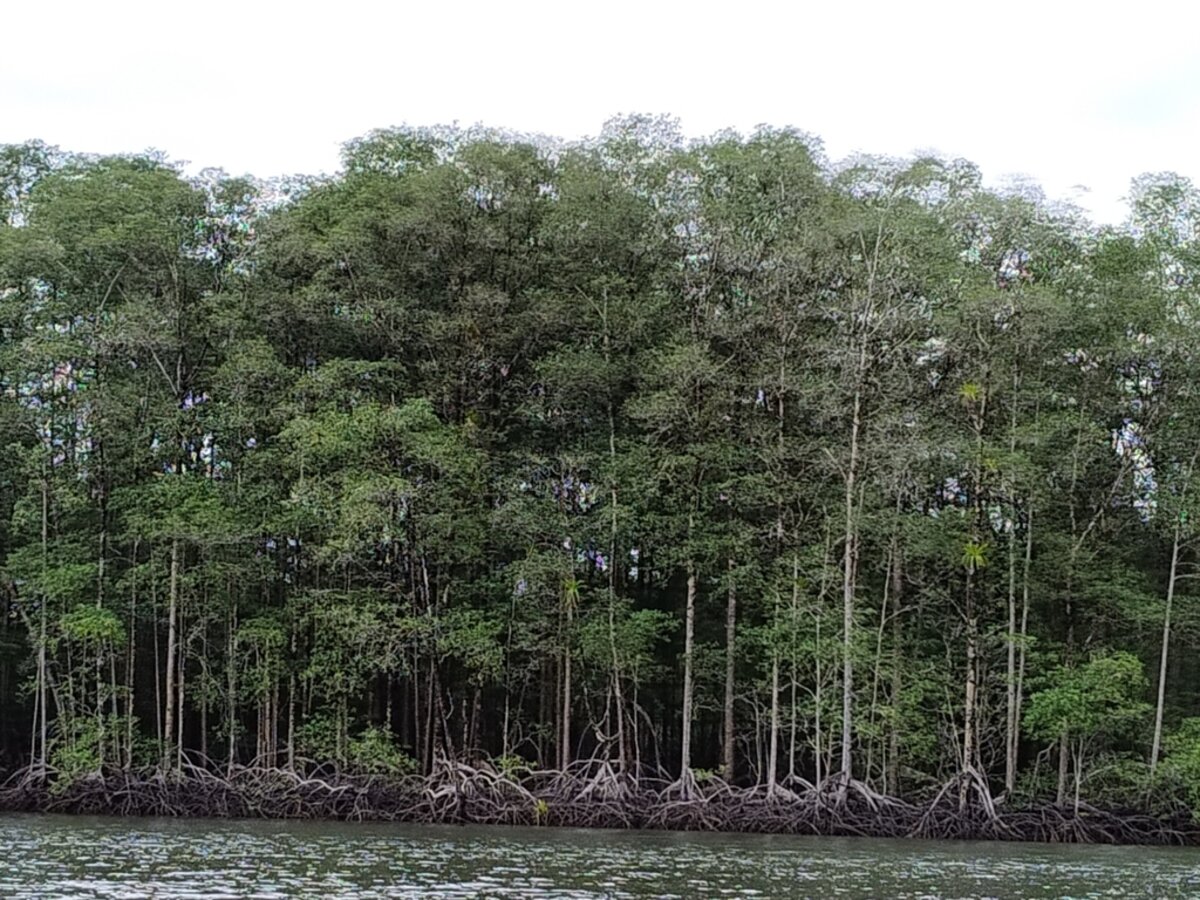
Rhizophora racemosa — In the Térraba-Sierpe wetlands where freshwater rivers meet the Pacific, this red mangrove dominates the landscape. Its towering stilt roots stabilize sediments, shelter fish, and protect Costa Rica's most important coastal ecosystem. Rhizophora racemosa — En los humedales de Térraba-Sierpe donde los ríos de agua dulce se encuentran con el Pacífico, este mangle rojo domina el paisaje. Sus imponentes raíces fúlcreas estabilizan sedimentos, refugian peces y protegen el ecosistema costero más importante de Costa Rica.
Where the Térraba and Sierpe rivers empty into the Pacific Ocean, they create Central America's largest mangrove system. Here, in the brackish waters where freshwater mixes with sea, grows Rhizophora racemosa: the dominant red mangrove of Costa Rica's southern Pacific coast. Studies of the Térraba-Sierpe National Wetland have found that this species accounts for nearly half of all mangrove cover, with over 7,600 hectares of forest dominated by its distinctive stilt roots. Unlike its more famous relative Rhizophora mangle, which thrives in the saltiest waters at the ocean's edge, R. racemosa prefers the brackish zones where river water dilutes the sea. Donde los ríos Térraba y Sierpe desembocan en el Océano Pacífico, crean el sistema de manglares más grande de Centroamérica. Aquí, en las aguas salobres donde el agua dulce se mezcla con el mar, crece Rhizophora racemosa: el mangle rojo dominante de la costa del Pacífico sur de Costa Rica. Los estudios del Humedal Nacional Térraba-Sierpe han encontrado que esta especie representa casi la mitad de toda la cobertura de manglar, con más de 7,600 hectáreas de bosque dominado por sus distintivas raíces fúlcreas. A diferencia de su pariente más famoso Rhizophora mangle, que prospera en las aguas más saladas en el borde del océano, R. racemosa prefiere las zonas salobres donde el agua del río diluye el mar.
Stand at the edge of a mangrove channel in Sierpe, and you will see trees rising 20 to 30 meters above the water, supported by an intricate scaffold of aerial roots that arch from the trunk into the mud below. These are not true roots in the anatomical sense, but specialized organs called rhizophores, with vascular tissue arranged more like a stem than a root. They anchor the tree in unstable sediments, absorb oxygen from the air through pores called lenticels, and create the tangled underwater architecture that makes mangroves the most productive nursery habitat on Earth. Párate al borde de un canal de manglar en Sierpe, y verás árboles que se elevan de 20 a 30 metros sobre el agua, sostenidos por un intrincado andamiaje de raíces aéreas que se arquean desde el tronco hacia el lodo abajo. Estas no son raíces verdaderas en el sentido anatómico, sino órganos especializados llamados rizóforos, con tejido vascular dispuesto más como un tallo que como una raíz. Anclan el árbol en sedimentos inestables, absorben oxígeno del aire a través de poros llamados lenticelas, y crean la enmarañada arquitectura submarina que hace de los manglares el hábitat de crianza más productivo de la Tierra.
Identification Identificación
Taxonomy & Nomenclature Taxonomía y Nomenclatura
Rhizophora racemosa was described by German botanist Georg Friedrich Wilhelm Meyer in 1818, based on specimens collected along the Essequibo River in what is now Guyana. Meyer named the species in his work Primitiae Florae Essequeboensis, the first systematic flora of that region. The genus name Rhizophora comes from Greek rhiza (root) and phoros (bearing), referring to the conspicuous stilt roots. The species epithet racemosa means "bearing racemes," describing the branched flower clusters that distinguish this species from its relatives. Rhizophora racemosa fue descrito por el botánico alemán Georg Friedrich Wilhelm Meyer en 1818, basándose en especímenes recolectados a lo largo del río Essequibo en lo que hoy es Guyana. Meyer nombró la especie en su obra Primitiae Florae Essequeboensis, la primera flora sistemática de esa región. El nombre del género Rhizophora viene del griego rhiza (raíz) y phoros (portador), refiriéndose a las conspicuas raíces fúlcreas. El epíteto específico racemosa significa "que porta racimos," describiendo los racimos florales ramificados que distinguen esta especie de sus parientes.
For much of the 20th century, R. racemosa was treated as a variety of the widespread Rhizophora mangle. Modern taxonomic work, however, recognizes it as a distinct species based on differences in floral structure, habitat preference, and geographic distribution. The two species can hybridize where their ranges overlap, producing Rhizophora × harrisonii, which shows intermediate characteristics and was first described by Leechman in 1918. In Costa Rica, all three taxa occur along the Pacific coast, with R. racemosa dominating the large river-influenced systems of the south, R. mangle more common in higher-salinity areas, and the hybrid R. × harrisonii found where the two parent species meet. Durante gran parte del siglo XX, R. racemosa fue tratado como una variedad del ampliamente distribuido Rhizophora mangle. El trabajo taxonómico moderno, sin embargo, lo reconoce como una especie distinta basándose en diferencias en la estructura floral, preferencia de hábitat y distribución geográfica. Las dos especies pueden hibridarse donde sus rangos se superponen, produciendo Rhizophora × harrisonii, que muestra características intermedias y fue descrito por primera vez por Leechman en 1918. En Costa Rica, los tres taxa ocurren a lo largo de la costa del Pacífico, con R. racemosa dominando los grandes sistemas influenciados por ríos del sur, R. mangle más común en áreas de mayor salinidad, y el híbrido R. × harrisonii encontrado donde las dos especies parentales se encuentran.
Distinguishing from R. mangle Distinción de R. mangle
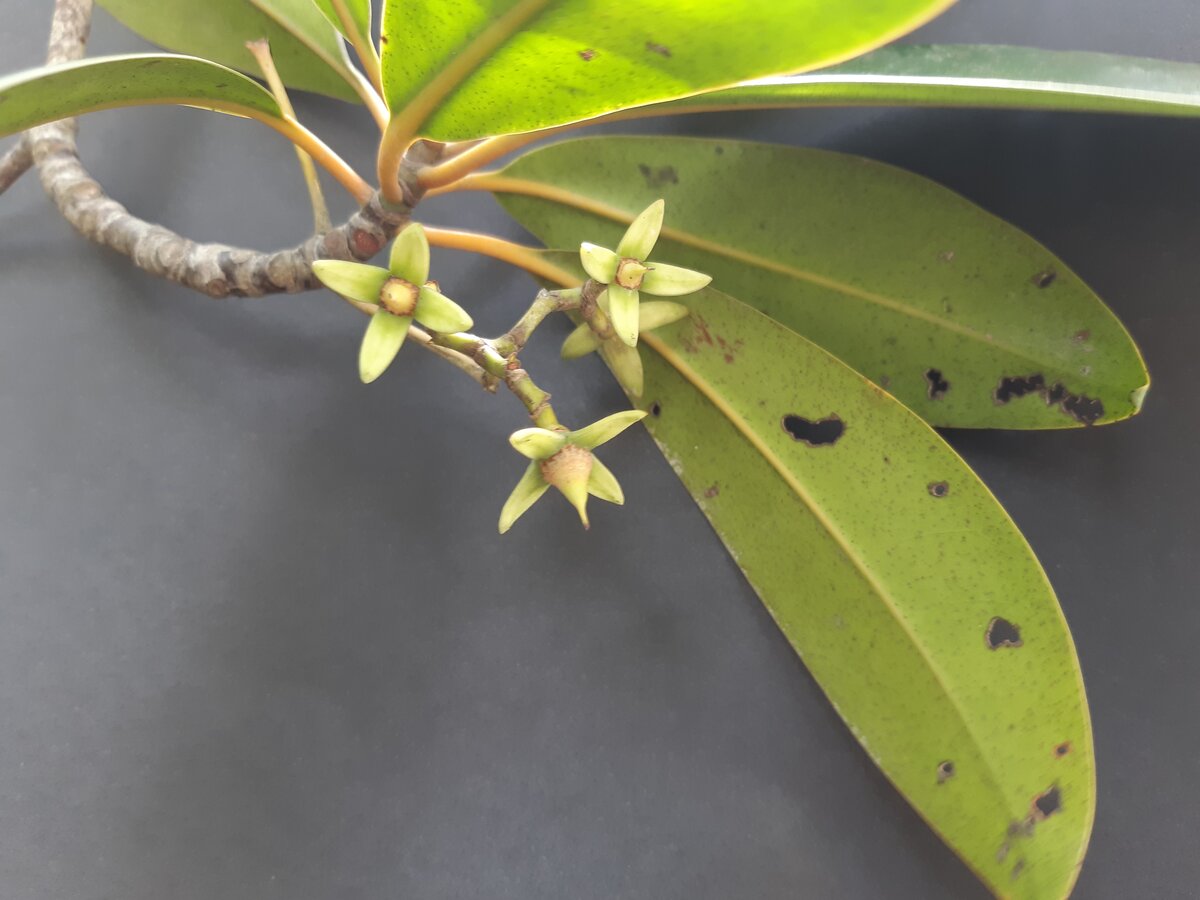
Separating Rhizophora racemosa from R. mangle requires careful observation. The most reliable diagnostic feature is the position of flower buds along the branch: in R. racemosa, mature buds and flowers occur 7-9 nodes down from the growing tip, while in R. mangle they appear only 2-4 nodes from the apex. The inflorescences of R. racemosa are also more branched, with multiple flowers in raceme-like clusters, whereas R. mangle typically produces pairs or trios of flowers. Some authorities report that R. mangle leaves have small black spots (cork warts) on the underside, absent or less pronounced in R. racemosa. In the field, habitat provides a useful clue: R. racemosa predominates where rivers bring abundant fresh water, while R. mangle tolerates the highest salinities at the seaward fringe. Separar Rhizophora racemosa de R. mangle requiere observación cuidadosa. La característica diagnóstica más confiable es la posición de los botones florales a lo largo de la rama: en R. racemosa, los botones y flores maduras ocurren 7-9 nudos abajo de la punta en crecimiento, mientras que en R. mangle aparecen solo 2-4 nudos desde el ápice. Las inflorescencias de R. racemosa también son más ramificadas, con múltiples flores en racimos, mientras que R. mangle típicamente produce pares o tríos de flores. Algunas autoridades reportan que las hojas de R. mangle tienen pequeños puntos negros (verrugas de corcho) en el envés, ausentes o menos pronunciados en R. racemosa. En el campo, el hábitat proporciona una pista útil: R. racemosa predomina donde los ríos traen abundante agua dulce, mientras que R. mangle tolera las salinidades más altas en el borde hacia el mar.
Physical Characteristics Características Físicas
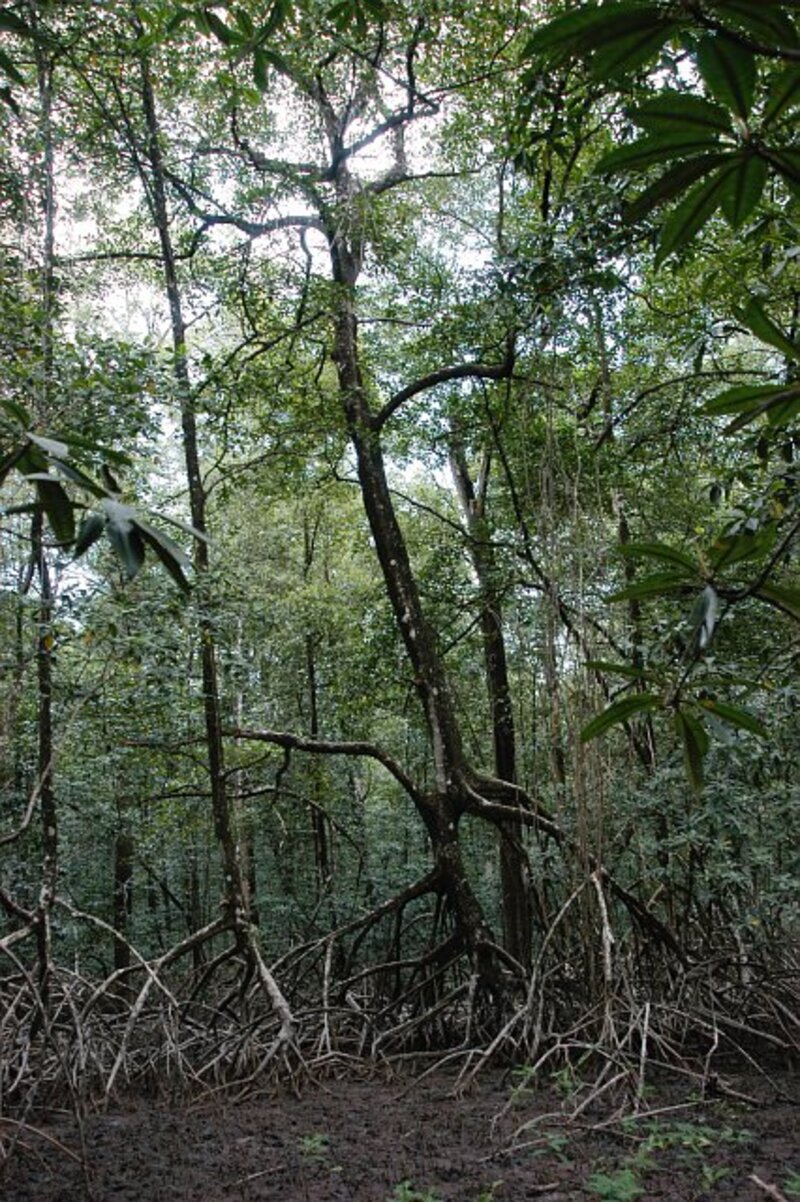
Stilt roots: The defining feature of Rhizophora is its network of aerial prop roots, which arch from the trunk and lower branches into the substrate. In R. racemosa, these can extend several meters from the trunk, creating a tangled maze that shelters fish and invertebrates. Anatomical studies have revealed that these structures, though commonly called "roots," have vascular tissue arranged like stems, with endarch protoxylem and collateral bundles. Botanist Pitot (1958) proposed they be termed "rhizophores" rather than true roots. Lenticels on the surface of these aerial organs allow gas exchange, a critical adaptation for roots growing in oxygen-poor mud. Raíces fúlcreas: La característica definitoria de Rhizophora es su red de raíces aéreas de soporte, que se arquean desde el tronco y ramas inferiores hacia el sustrato. En R. racemosa, estas pueden extenderse varios metros desde el tronco, creando un laberinto enmarañado que refugia peces e invertebrados. Estudios anatómicos han revelado que estas estructuras, aunque comúnmente llamadas "raíces," tienen tejido vascular dispuesto como tallos, con protoxilema endárquico y haces colaterales. El botánico Pitot (1958) propuso que se les llame "rizóforos" en lugar de raíces verdaderas. Las lenticelas en la superficie de estos órganos aéreos permiten el intercambio de gases, una adaptación crítica para raíces que crecen en lodo pobre en oxígeno.

Leaves: The leaves are opposite, simple, elliptical, 8-15 cm long and 4-7 cm wide, with entire margins and slightly rolled edges. They are leathery and glossy dark green above, paler below, with an inconspicuous midrib. In dried specimens, fine corky warts may be visible on the lower surface. The paired stipules at the base of each leaf pair are interlocking, a characteristic shared by all Rhizophora species. Hojas: Las hojas son opuestas, simples, elípticas, de 8-15 cm de largo y 4-7 cm de ancho, con márgenes enteros y bordes ligeramente enrollados. Son coriáceas y de color verde oscuro brillante arriba, más pálidas abajo, con una nervadura central inconspicua. En especímenes secos, pueden ser visibles finas verrugas de corcho en la superficie inferior. Las estípulas pareadas en la base de cada par de hojas están entrelazadas, una característica compartida por todas las especies de Rhizophora.
Flowers: The small, yellowish-white flowers appear in branched clusters (racemes) in the leaf axils. Each flower has four leathery sepals, four narrow petals, and eight stamens. Unlike many tropical trees, R. racemosa relies primarily on wind pollination, though some insect visitation occurs. Flowering peaks in the late dry season, from February to April in Costa Rica. Flores: Las pequeñas flores blanco-amarillentas aparecen en racimos ramificados en las axilas de las hojas. Cada flor tiene cuatro sépalos coriáceos, cuatro pétalos estrechos y ocho estambres. A diferencia de muchos árboles tropicales, R. racemosa depende principalmente de la polinización por viento, aunque ocurre alguna visitación por insectos. La floración alcanza su pico en la estación seca tardía, de febrero a abril en Costa Rica.
Propagules and Vivipary Propágulos y Viviparidad
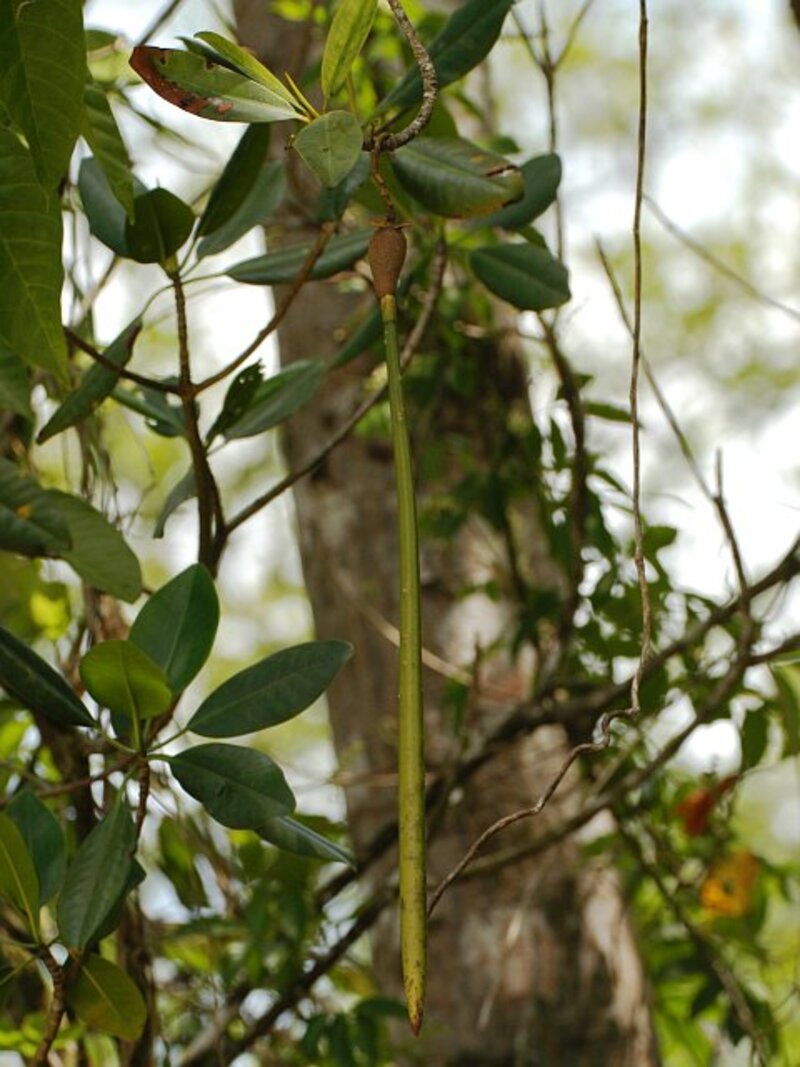
One of the most remarkable features of Rhizophora is its vivipary: the embryo germinates while still attached to the parent tree, growing into an elongated propagule that can reach 50 cm before dropping. This structure is neither a seed nor a fruit in the conventional sense, but a fully developed seedling complete with a long hypocotyl and embryonic root. Propagules require 14-18 weeks to develop on the tree after flowering, with an additional 14-18 weeks of maturation before they fall, typically between August and November. Una de las características más notables de Rhizophora es su viviparidad: el embrión germina mientras aún está unido al árbol madre, creciendo en un propágulo alargado que puede alcanzar 50 cm antes de caer. Esta estructura no es ni una semilla ni un fruto en el sentido convencional, sino una plántula completamente desarrollada con un largo hipocótilo y raíz embrionaria. Los propágulos requieren 14-18 semanas para desarrollarse en el árbol después de la floración, con 14-18 semanas adicionales de maduración antes de que caigan, típicamente entre agosto y noviembre.
When the propagule falls, it may float for months in salt water while remaining viable, carried by currents to colonize new substrates. Rhizophora propagules have superior dispersal capacity compared to other mangroves, maintaining viability for a year or more. Upon stranding in suitable habitat, the propagule quickly roots and establishes. This reproductive strategy bypasses the vulnerable seedling phase, giving Rhizophora an advantage in the dynamic, challenging mangrove environment. Cuando el propágulo cae, puede flotar durante meses en agua salada mientras permanece viable, transportado por corrientes para colonizar nuevos sustratos. Los propágulos de Rhizophora tienen una capacidad de dispersión superior comparada con otros mangles, manteniendo la viabilidad durante un año o más. Al varar en hábitat adecuado, el propágulo rápidamente echa raíces y se establece. Esta estrategia reproductiva evita la fase vulnerable de plántula, dando a Rhizophora una ventaja en el ambiente dinámico y desafiante del manglar.
Habitat & Distribution Hábitat y Distribución
Rhizophora racemosa has an amphi-Atlantic distribution, occurring on both sides of the tropical Atlantic Ocean. In the Americas, it ranges from Honduras south through Central America, along the Pacific and Atlantic coasts of South America to Brazil, and occurs in Trinidad and other Caribbean islands. In Africa, it grows from Senegal to Angola. Unlike R. mangle, which has the widest distribution of any New World red mangrove, R. racemosa appears more restricted to large river estuaries where freshwater input moderates salinity. Rhizophora racemosa tiene una distribución anfi-atlántica, ocurriendo en ambos lados del Océano Atlántico tropical. En las Américas, se distribuye desde Honduras hacia el sur a través de Centroamérica, a lo largo de las costas del Pacífico y Atlántico de Sudamérica hasta Brasil, y ocurre en Trinidad y otras islas del Caribe. En África, crece desde Senegal hasta Angola. A diferencia de R. mangle, que tiene la distribución más amplia de cualquier mangle rojo del Nuevo Mundo, R. racemosa parece más restringido a grandes estuarios de ríos donde el aporte de agua dulce modera la salinidad.
In Costa Rica, R. racemosa dominates the mangrove forests of the southern Pacific coast, where the Térraba and Sierpe rivers create vast brackish wetlands. Studies in the Térraba-Sierpe National Wetland have documented that this species and the tea mangrove Pelliciera rhizophorae together account for over 85% of the mangrove area. R. racemosa shows continuous distribution throughout the wetland, with highest abundance (45%) and the largest area (7,670 ha) of any single species. Further north, in the Gulf of Nicoya and Guanacaste, R. mangle becomes more prevalent as precipitation decreases and salinity increases. En Costa Rica, R. racemosa domina los bosques de manglar de la costa del Pacífico sur, donde los ríos Térraba y Sierpe crean vastos humedales salobres. Estudios en el Humedal Nacional Térraba-Sierpe han documentado que esta especie y el mangle piña Pelliciera rhizophorae juntos representan más del 85% del área de manglar. R. racemosa muestra distribución continua a través del humedal, con la mayor abundancia (45%) y la mayor área (7,670 ha) de cualquier especie individual. Más al norte, en el Golfo de Nicoya y Guanacaste, R. mangle se vuelve más prevalente a medida que la precipitación disminuye y la salinidad aumenta.
Mangrove Zonation Zonación del Manglar
Mangrove species arrange themselves in distinct zones based on their tolerance to flooding and salinity. In Costa Rica's Pacific mangroves, the classic zonation pattern places Rhizophora species along channel edges and in the lowest intertidal zones, where they tolerate the deepest and most prolonged flooding. Behind the Rhizophora zone, black mangrove (Avicennia germinans) occupies slightly higher ground that is less frequently inundated. White mangrove (Laguncularia racemosa) and buttonwood (Conocarpus erectus) grow in the landward fringe, in areas of lower salinity with more freshwater influence. Las especies de manglar se organizan en zonas distintas según su tolerancia a la inundación y salinidad. En los manglares del Pacífico de Costa Rica, el patrón de zonación clásico ubica a las especies de Rhizophora a lo largo de los bordes de los canales y en las zonas intermareales más bajas, donde toleran la inundación más profunda y prolongada. Detrás de la zona de Rhizophora, el mangle negro (Avicennia germinans) ocupa terreno ligeramente más alto que es menos frecuentemente inundado. El mangle blanco (Laguncularia racemosa) y el mangle botón (Conocarpus erectus) crecen en el borde hacia tierra, en áreas de menor salinidad con más influencia de agua dulce.
Within the Rhizophora zone itself, R. racemosa and R. mangle segregate by salinity. R. racemosa dominates where river discharge is strongest and salinity lowest, while R. mangle predominates at the seaward edge where salt concentrations are highest. The hybrid R. × harrisonii occupies an intermediate position. This ecological segregation explains why R. racemosa reaches its greatest abundance in the Térraba-Sierpe system, where two major rivers provide year-round freshwater input, while it is less common in the drier northern Pacific where freshwater is scarce. Dentro de la zona de Rhizophora misma, R. racemosa y R. mangle se segregan por salinidad. R. racemosa domina donde la descarga fluvial es más fuerte y la salinidad más baja, mientras que R. mangle predomina en el borde hacia el mar donde las concentraciones de sal son más altas. El híbrido R. × harrisonii ocupa una posición intermedia. Esta segregación ecológica explica por qué R. racemosa alcanza su mayor abundancia en el sistema Térraba-Sierpe, donde dos ríos principales proporcionan aporte de agua dulce durante todo el año, mientras que es menos común en el Pacífico norte más seco donde el agua dulce es escasa.
Co-occurring Species Especies Asociadas
In the Térraba-Sierpe wetland, Rhizophora racemosa grows alongside a characteristic community of mangrove species. The tea mangrove (Pelliciera rhizophorae) is the second most abundant species, accounting for nearly 40% of the mangrove area. This unusual species, endemic to the Pacific coast of Central and South America, produces large white flowers pollinated by the endemic Mangrove Hummingbird. Avicennia germinans and A. bicolor (black mangroves) occupy higher ground, while Laguncularia racemosa (white mangrove) and Conocarpus erectus (buttonwood) occur at the landward margins. The mangrove fern (Acrostichum aureum) forms dense stands in disturbed areas and clearings. En el humedal Térraba-Sierpe, Rhizophora racemosa crece junto a una comunidad característica de especies de manglar. El mangle piña (Pelliciera rhizophorae) es la segunda especie más abundante, representando casi el 40% del área de manglar. Esta especie inusual, endémica de la costa del Pacífico de Centro y Sudamérica, produce grandes flores blancas polinizadas por el endémico Colibrí del Manglar. Avicennia germinans y A. bicolor (mangles negros) ocupan terreno más alto, mientras que Laguncularia racemosa (mangle blanco) y Conocarpus erectus (mangle botón) ocurren en los márgenes hacia tierra. El helecho de manglar (Acrostichum aureum) forma rodales densos en áreas perturbadas y claros.
Ecological Importance Importancia Ecológica
Mangrove forests are among the most productive ecosystems on Earth, and Rhizophora racemosa contributes to this productivity through multiple pathways. Its roots stabilize sediments against erosion, its leaves fuel detrital food webs, and its structure creates the complex three-dimensional habitat that makes mangroves such productive nurseries for marine life. Los bosques de manglar están entre los ecosistemas más productivos de la Tierra, y Rhizophora racemosa contribuye a esta productividad a través de múltiples vías. Sus raíces estabilizan los sedimentos contra la erosión, sus hojas alimentan las redes tróficas de detritos, y su estructura crea el complejo hábitat tridimensional que hace a los manglares criaderos tan productivos para la vida marina.
Fish Nursery Criadero de Peces
The tangled stilt roots of Rhizophora create sheltered habitat where juvenile fish can hide from predators while feeding on the abundant detritus and small invertebrates of the mangrove ecosystem. Global analyses estimate that mangrove forests support an annual abundance of over 700 billion juvenile fish and invertebrates. In the Térraba-Sierpe wetland, more than 55 species of fish use the mangroves, including commercially important species like snook, tarpon, snapper, and mullet. According to commonly cited estimates, 75% of commercially caught fish depend at some stage on mangroves or food webs traced back to these forests. Las enmarañadas raíces fúlcreas de Rhizophora crean hábitat protegido donde los peces juveniles pueden esconderse de los depredadores mientras se alimentan de los abundantes detritos e invertebrados pequeños del ecosistema de manglar. Los análisis globales estiman que los bosques de manglar sustentan una abundancia anual de más de 700 mil millones de peces juveniles e invertebrados. En el humedal Térraba-Sierpe, más de 55 especies de peces usan los manglares, incluyendo especies comercialmente importantes como el róbalo, el sábalo, el pargo y la lisa. Según estimaciones comúnmente citadas, el 75% de los peces capturados comercialmente dependen en alguna etapa de los manglares o de redes alimentarias que se remontan a estos bosques.

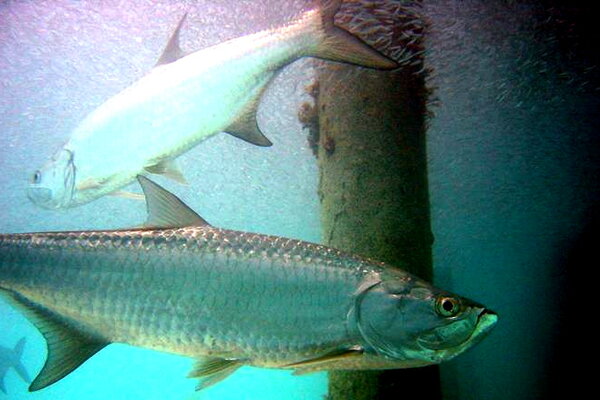
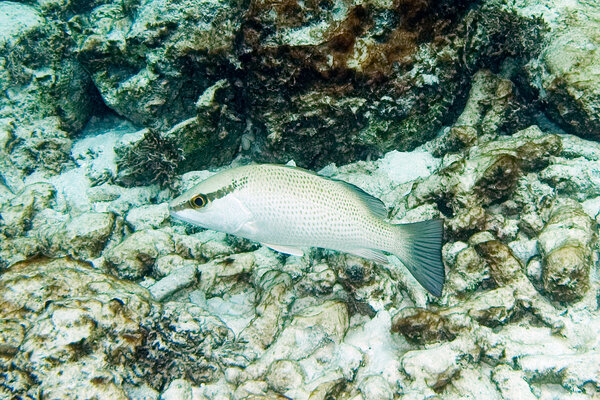
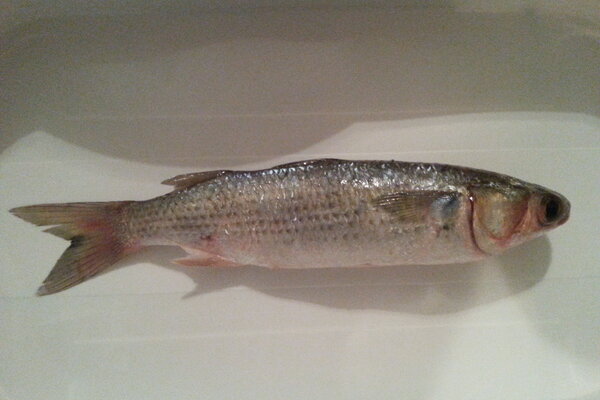
Commercially important fish species that depend on mangrove forests as nursery habitat. Photos: Wikimedia Commons (CC BY/CC BY-SA). Especies de peces comercialmente importantes que dependen de los bosques de manglar como hábitat de crianza. Fotos: Wikimedia Commons (CC BY/CC BY-SA).
Carbon Sequestration Secuestro de Carbono
Mangroves are remarkably efficient at capturing and storing carbon. The waterlogged, oxygen-poor soils beneath Rhizophora forests trap organic matter and prevent decomposition, locking carbon away for centuries or millennia. This "blue carbon" storage makes mangroves up to ten times more effective at sequestering carbon per hectare than upland tropical forests. As climate change accelerates, the carbon storage capacity of mangrove forests becomes increasingly valuable for climate mitigation. Los manglares son notablemente eficientes en capturar y almacenar carbono. Los suelos anegados y pobres en oxígeno debajo de los bosques de Rhizophora atrapan materia orgánica y previenen la descomposición, guardando el carbono durante siglos o milenios. Este almacenamiento de "carbono azul" hace que los manglares sean hasta diez veces más efectivos en secuestrar carbono por hectárea que los bosques tropicales de tierras altas. A medida que el cambio climático se acelera, la capacidad de almacenamiento de carbono de los bosques de manglar se vuelve cada vez más valiosa para la mitigación climática.
Coastal Protection Protección Costera
The dense network of Rhizophora stilt roots dissipates wave energy, reducing erosion and protecting inland areas from storm surge. Studies have shown that even narrow mangrove fringes can reduce wave heights by 50-99% over short distances. Communities behind healthy mangrove forests experience less flooding and storm damage than those where mangroves have been removed. In an era of rising seas and intensifying hurricanes, this natural infrastructure provides protection that would cost millions to replicate artificially. La densa red de raíces fúlcreas de Rhizophora disipa la energía de las olas, reduciendo la erosión y protegiendo las áreas interiores contra la marejada ciclónica. Los estudios han demostrado que incluso franjas estrechas de manglar pueden reducir la altura de las olas en un 50-99% en distancias cortas. Las comunidades detrás de bosques de manglar saludables experimentan menos inundaciones y daños por tormentas que aquellas donde los manglares han sido removidos. En una era de mares crecientes y huracanes intensificándose, esta infraestructura natural proporciona protección que costaría millones replicar artificialmente.
Wildlife Relationships Relaciones con la Vida Silvestre
The Térraba-Sierpe wetland, dominated by Rhizophora racemosa, supports over 300 species of birds, 31 species of mammals, and countless fish, crabs, and other invertebrates. This biodiversity makes it a RAMSAR Wetland of International Importance and one of Costa Rica's most significant conservation areas. El humedal Térraba-Sierpe, dominado por Rhizophora racemosa, sustenta más de 300 especies de aves, 31 especies de mamíferos, e innumerables peces, cangrejos y otros invertebrados. Esta biodiversidad lo convierte en un Humedal RAMSAR de Importancia Internacional y una de las áreas de conservación más significativas de Costa Rica.
The Piangua Clam La Almeja Piangua
The mangrove forests of Térraba-Sierpe support an important traditional fishery for the piangua clam (Anadara tuberculosa), a blood cockle harvested by local communities for at least 1,200 years. Archaeological evidence from the Térraba region shows that indigenous peoples have relied on this resource since pre-Columbian times. Today, piangua harvest remains a primary source of income for many families living near the wetland, though overharvesting and habitat degradation threaten the fishery's sustainability. Los bosques de manglar de Térraba-Sierpe sustentan una importante pesquería tradicional de la almeja piangua (Anadara tuberculosa), un berberecho de sangre cosechado por las comunidades locales durante al menos 1,200 años. La evidencia arqueológica de la región del Térraba muestra que los pueblos indígenas han dependido de este recurso desde tiempos precolombinos. Hoy, la cosecha de piangua sigue siendo una fuente principal de ingresos para muchas familias que viven cerca del humedal, aunque la sobrepesca y la degradación del hábitat amenazan la sostenibilidad de la pesquería.
Traditional Uses Usos Tradicionales
Like other red mangroves, Rhizophora racemosa has been used by coastal communities for timber, fuel, and traditional medicine throughout its range. The dense, durable wood resists decay in wet conditions, making it valuable for boat building, fence posts, and construction. Mangrove charcoal burns hot and long, and has historically been an important fuel source. The bark, rich in tannins (12-24% by weight), was once used for leather tanning and dyeing. Como otros mangles rojos, Rhizophora racemosa ha sido usado por las comunidades costeras para madera, combustible y medicina tradicional a lo largo de su rango. La madera densa y duradera resiste la descomposición en condiciones húmedas, haciéndola valiosa para construcción de botes, postes de cerca y construcción. El carbón de manglar quema caliente y por largo tiempo, y ha sido históricamente una fuente importante de combustible. La corteza, rica en taninos (12-24% en peso), fue usada una vez para curtido de cuero y teñido.
In Costa Rica, all mangroves are now protected by law, and commercial extraction is prohibited except under special permits. The stripping of bark for tannins, which kills the trees, was historically a significant threat. Today, the greatest value of Rhizophora racemosa lies in the ecosystem services its forests provide: coastal protection, fish nurseries, carbon storage, and habitat for endangered species. En Costa Rica, todos los manglares ahora están protegidos por ley, y la extracción comercial está prohibida excepto bajo permisos especiales. El desprendimiento de corteza para taninos, que mata los árboles, fue históricamente una amenaza significativa. Hoy, el mayor valor de Rhizophora racemosa reside en los servicios ecosistémicos que proporcionan sus bosques: protección costera, criaderos de peces, almacenamiento de carbono y hábitat para especies en peligro.
Conservation Conservación
Although Rhizophora racemosa is classified as Least Concern globally by the IUCN, the mangrove ecosystems it dominates face serious threats. Costa Rica lost significant mangrove area during the 20th century to coastal development, agriculture, and aquaculture, particularly shrimp farming. Today, the remaining mangroves are protected by law, but enforcement remains challenging, and indirect threats like pollution and upstream development continue to degrade these ecosystems. Aunque Rhizophora racemosa está clasificado como Preocupación Menor globalmente por la UICN, los ecosistemas de manglar que domina enfrentan serias amenazas. Costa Rica perdió área significativa de manglar durante el siglo XX debido al desarrollo costero, la agricultura y la acuicultura, particularmente el cultivo de camarones. Hoy, los manglares restantes están protegidos por ley, pero la aplicación sigue siendo desafiante, y las amenazas indirectas como la contaminación y el desarrollo aguas arriba continúan degradando estos ecosistemas.
The Térraba-Sierpe National Wetland represents Costa Rica's greatest mangrove conservation success. Designated as a Forest Reserve in 1977 and recognized as a RAMSAR Wetland of International Importance in 1995, this 30,000-hectare system provides critical habitat for the Mangrove Hummingbird, American crocodile, and countless other species. The wetland also supports local livelihoods through traditional fishing and the piangua clam harvest, demonstrating that conservation and sustainable use can coexist. El Humedal Nacional Térraba-Sierpe representa el mayor éxito de conservación de manglares de Costa Rica. Designado como Reserva Forestal en 1977 y reconocido como Humedal RAMSAR de Importancia Internacional en 1995, este sistema de 30,000 hectáreas proporciona hábitat crítico para el Colibrí del Manglar, el cocodrilo americano e innumerables otras especies. El humedal también sustenta medios de vida locales a través de la pesca tradicional y la cosecha de almeja piangua, demostrando que la conservación y el uso sostenible pueden coexistir.
Climate change poses both threats and opportunities for Rhizophora racemosa. Rising sea levels may drown existing mangrove forests, particularly where coastal development prevents their landward migration. More intense hurricanes and changing precipitation patterns could alter salinity regimes in ways that favor or disadvantage different mangrove species. Yet warmer temperatures may also allow mangroves to expand their range poleward. As conditions change, the ecological role of R. racemosa in Costa Rica's mangroves may shift, but these forests will remain critical for coastal protection, biodiversity, and climate regulation. El cambio climático presenta tanto amenazas como oportunidades para Rhizophora racemosa. El aumento del nivel del mar puede ahogar los bosques de manglar existentes, particularmente donde el desarrollo costero previene su migración hacia tierra. Los huracanes más intensos y los patrones cambiantes de precipitación podrían alterar los regímenes de salinidad de maneras que favorecen o desfavorecen diferentes especies de manglar. Sin embargo, las temperaturas más cálidas también pueden permitir que los manglares expandan su rango hacia los polos. A medida que las condiciones cambian, el papel ecológico de R. racemosa en los manglares de Costa Rica puede cambiar, pero estos bosques seguirán siendo críticos para la protección costera, la biodiversidad y la regulación climática.
For visitors to Costa Rica's southern Pacific coast, a boat trip through the mangroves of Térraba-Sierpe offers an unforgettable experience. Gliding through channels lined with towering Rhizophora racemosa, you enter one of the world's most productive ecosystems. Watch for crocodiles sunning on mudbanks, herons hunting in the shallows, and the flash of a Scarlet Macaw overhead. In the tangle of stilt roots below the waterline, a hidden world of fish and crabs goes about its business, sheltered by the same trees that protect the coast and store carbon for the planet. Para los visitantes de la costa del Pacífico sur de Costa Rica, un viaje en bote a través de los manglares de Térraba-Sierpe ofrece una experiencia inolvidable. Deslizándose a través de canales bordeados de imponentes Rhizophora racemosa, uno entra en uno de los ecosistemas más productivos del mundo. Busca cocodrilos tomando sol en los bancos de lodo, garzas cazando en las aguas poco profundas, y el destello de una Guacamaya Roja arriba. En la maraña de raíces fúlcreas debajo de la línea del agua, un mundo oculto de peces y cangrejos sigue con sus asuntos, refugiado por los mismos árboles que protegen la costa y almacenan carbono para el planeta.
Key Sources & Resources Fuentes y Recursos Clave
Species Information Información de la Especie
General overview of the species with information on distribution, ecology, and taxonomy. Resumen general de la especie con información sobre distribución, ecología y taxonomía.
Authoritative taxonomic information and nomenclatural history from the Royal Botanic Gardens, Kew. Información taxonómica autorizada e historia nomenclatural del Real Jardín Botánico de Kew.
Detailed species fact sheet on the closely related R. mangle, with information applicable to R. racemosa. Ficha técnica detallada sobre R. mangle estrechamente relacionado, con información aplicable a R. racemosa.
Costa Rica Mangroves Manglares de Costa Rica
Overview of Costa Rica's mangrove ecosystems and species, including the eight mangrove species found in the country. Resumen de los ecosistemas y especies de manglar de Costa Rica, incluyendo las ocho especies de manglar encontradas en el país.
Information about Central America's largest mangrove wetland and the wildlife found there. Información sobre el humedal de manglar más grande de Centroamérica y la vida silvestre que se encuentra allí.
Visitor information and ecological overview of the Térraba-Sierpe system. Información para visitantes y resumen ecológico del sistema Térraba-Sierpe.
Scientific Research Investigación Científica
Scientific study documenting mangrove species distribution and abundance in Térraba-Sierpe, finding R. racemosa accounts for 45% of mangrove area. Estudio científico que documenta la distribución y abundancia de especies de mangle en Térraba-Sierpe, encontrando que R. racemosa representa el 45% del área de manglar.
Collection of scientific literature excerpts about R. racemosa ecology, distribution, and taxonomy. Colección de extractos de literatura científica sobre ecología, distribución y taxonomía de R. racemosa.
Conservation status and ecology of Costa Rica's only endemic hummingbird, dependent on mangrove habitat. Estado de conservación y ecología del único colibrí endémico de Costa Rica, dependiente del hábitat de manglar.
Mangrove Ecology Ecología del Manglar
Scientific study on the anatomy of Rhizophora stilt roots, demonstrating they are structurally more like stems than true roots. Estudio científico sobre la anatomía de las raíces fúlcreas de Rhizophora, demostrando que estructuralmente son más como tallos que raíces verdaderas.
Comprehensive review of Western Hemisphere Rhizophora species, including taxonomy, distribution, and hybridization. Revisión completa de las especies de Rhizophora del Hemisferio Occidental, incluyendo taxonomía, distribución e hibridación.