Chomelia Venosa
Chomelia venulosa W.C. Burger & C.M. Taylor — One of the tallest members of its genus, this rainforest tree is distinguished by leaves with prominently raised venation, earning it the epithet "venulosa" (full of small veins).
In the humid forests of the Osa Peninsula and Monteverde cloud forest reserve, a tall canopy tree stands out for its distinctively veined leaves. Chomelia venulosa reaches heights of up to 25 meters, making it an unusually large representative of a genus that typically comprises understory shrubs and small trees. The species remained unknown to science until 1993, when William Burger and Charlotte Taylor described it as part of their comprehensive treatment of Costa Rican Rubiaceae for the Flora Costaricensis project. Today it is known from fewer than 110 documented specimens, most collected from the protected forests of Costa Rica's Pacific slope.
The genus Chomelia belongs to tribe Guettardeae within the coffee family (Rubiaceae), a group characterized by pale tubular flowers and fleshy fruits dispersed by birds. Unlike many of its shrubby relatives, C. venulosa has evolved to compete in the forest canopy, filling a niche usually occupied by other tree families in Central American wet forests. Its restricted range, spanning only southwestern Costa Rica to western Panama, and its habitat in protected areas make it a species worth documenting as part of Costa Rica's botanical heritage.
Identification
Leaves
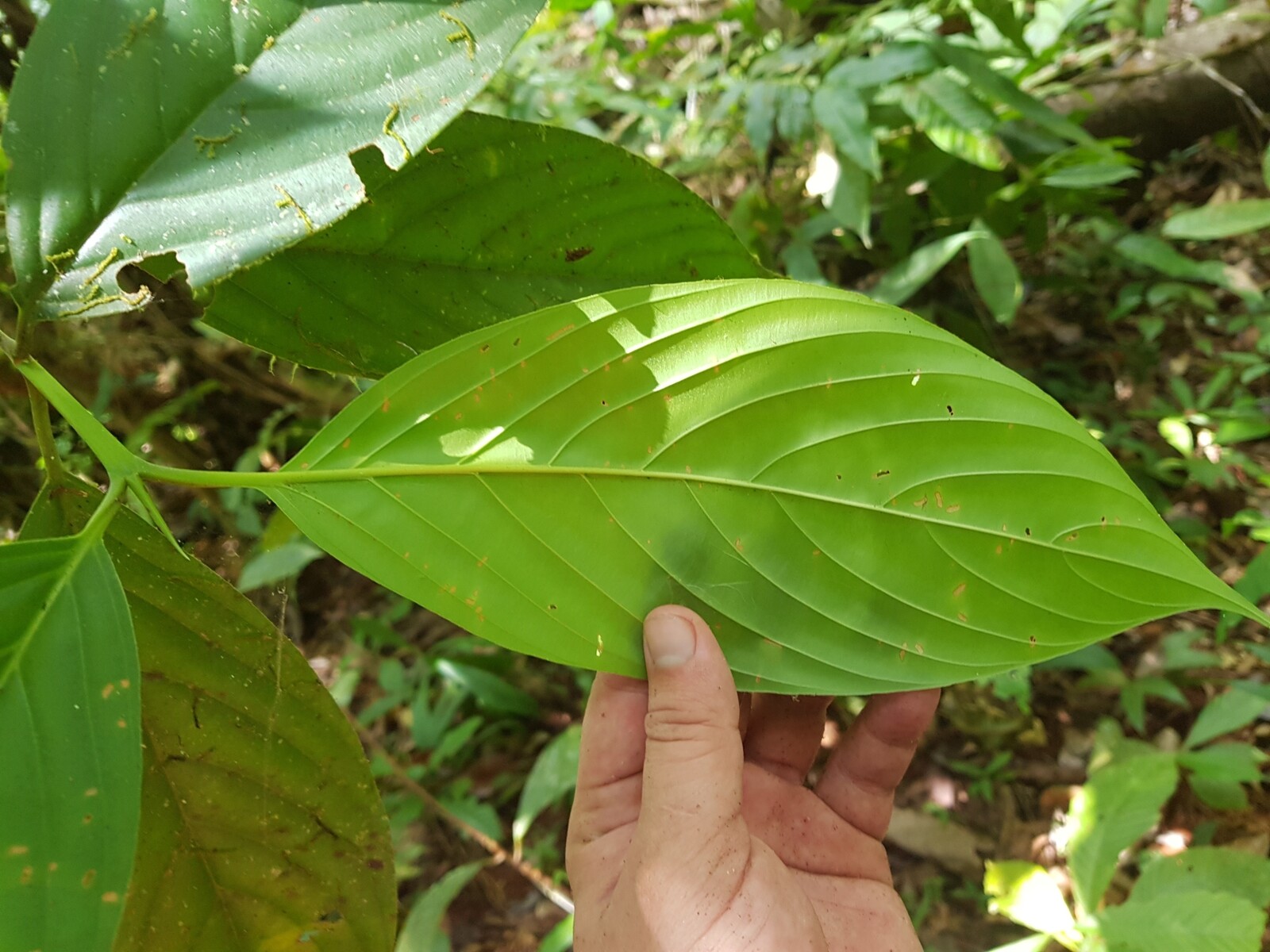
The most diagnostic feature of this species is its leaf venation. The leaves are simple and opposite, as is typical of Rubiaceae, with an elliptic to oblong shape. What sets them apart is the prominent network of secondary veins that are conspicuously raised on the lower leaf surface, creating a pattern visible to the naked eye. This character inspired both the scientific epithet venulosa (from Latin venula, small vein, plus -osa, full of) and distinguishes the species from its congeners. The leaves are relatively large for the genus, consistent with the species' canopy-tree habit.
Flowers
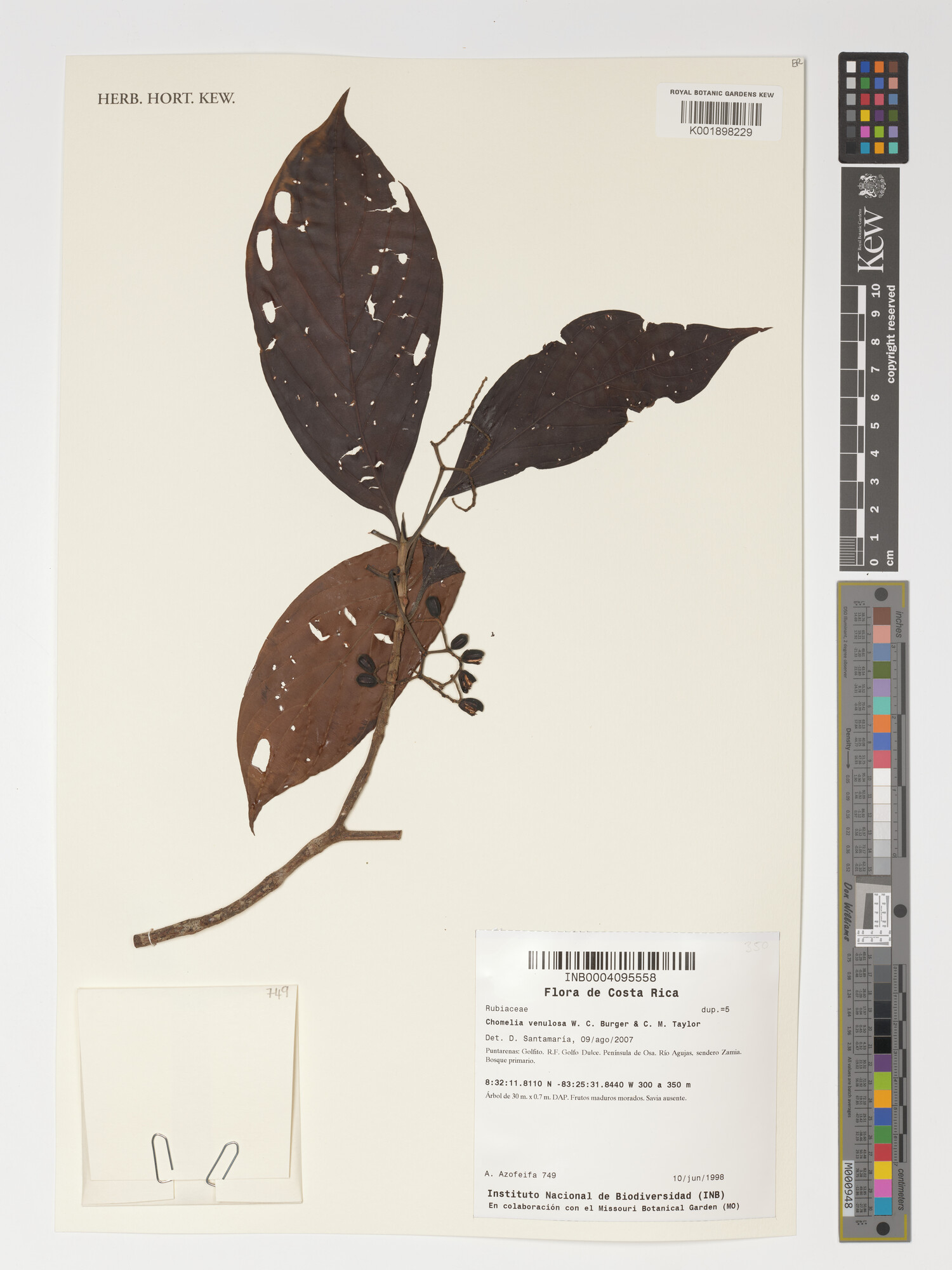
The flowers are cream to yellowish-white and tubular, arranged in axillary inflorescences emerging from the nodes along the branches. Like other members of tribe Guettardeae, the flowers have a silky (sericeous) exterior and lobes that are either valvate or imbricate in bud. The pale, tubular floral morphology suggests pollination by nocturnal moths (sphingophily) or possibly hummingbirds, though no direct pollination studies have been conducted on this species. Related species in the tribe produce fragrant flowers that open in the evening to attract moth pollinators.
Fruits
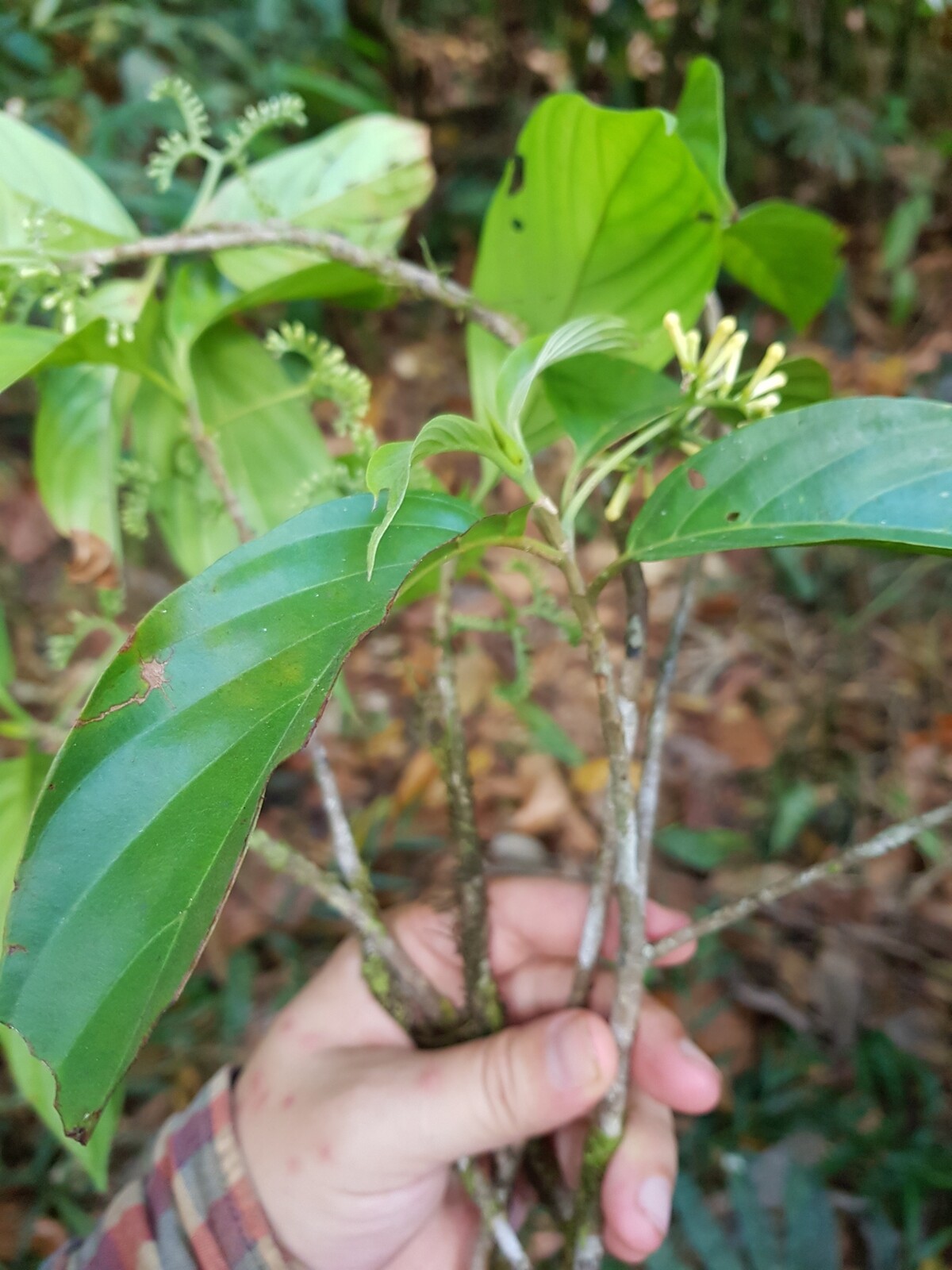
The fruits are fleshy drupes, typical of the genus and tribe. The genus Chomelia is characterized by a 2-celled ovary with pendulous ovules, producing fleshy fruits containing cylindrical seeds. This fruit type is adapted for dispersal by birds (endozoochory), which consume the fleshy pulp and deposit the seeds in their droppings away from the parent tree. Specific frugivores have not been documented for C. venulosa, but toucans, cotingas, and tanagers are likely dispersal agents based on the diets of these birds in Central American forests.
Bark and Trunk
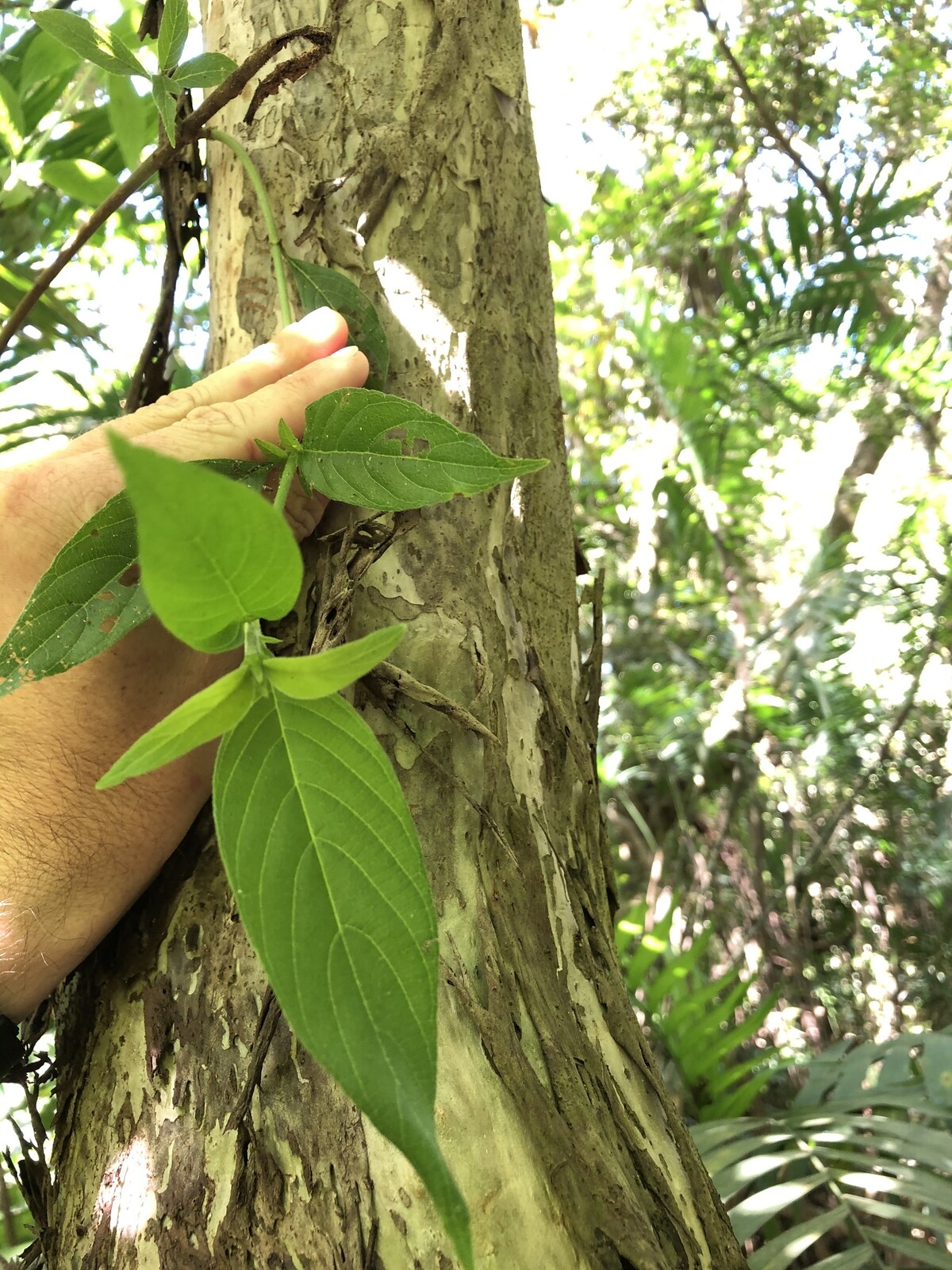
As one of the tallest species in its genus, C. venulosa develops a substantial trunk to support its canopy position. The bark has not been formally described in the botanical literature, but field observations suggest a relatively smooth surface on younger branches. Unlike some of its congeners such as C. spinosa, this species lacks the axillary spines found in other members of the genus.
Distribution
Chomelia venulosa is endemic to Costa Rica and Panama, with the vast majority of documented occurrences in Costa Rica. GBIF records show approximately 103 occurrences, concentrated in three main areas: the Osa Peninsula and Golfo Dulce region (39+ specimens from Corcovado National Park and Golfo Dulce Forest Reserve), the Monteverde-Rio Penas Blancas corridor (28+ specimens), and the northern Caribbean slope including Braulio Carrillo National Park. In Panama, the species has been collected near Fortuna Dam and in the Chiriqui Grande region near the border with Bocas del Toro.
The species occurs across a relatively broad elevation range from 50 to 1,445 meters, though most collections fall between 200 and 900 meters. The average elevation of documented specimens is approximately 521 meters, indicating a preference for lower montane and premontane forest zones. The highest record (1,445 m) comes from Parque Nacional Guanacaste, suggesting the species can occasionally occur in lower cloud forest conditions.
Ecology
With its 25-meter height, Chomelia venulosa occupies the canopy or sub-canopy layer of lowland and premontane wet forests. This is unusual for the genus Chomelia, whose approximately 75 species are predominantly understory shrubs or small trees. The evolution of this tall stature suggests adaptation to exploit canopy resources including greater light exposure and access to long-distance pollinators and seed dispersers.
The white, tubular flowers suggest a moth pollination syndrome (sphingophily), which is common in tropical Rubiaceae. Species in the related genus Guettarda are documented moth-pollinated plants with fragrant, white, evening-opening flowers. Bird dispersal of the fleshy fruits is the presumed dispersal mechanism, as is typical for the tribe Guettardeae. The species likely plays a role in forest food webs, providing nectar to nocturnal pollinators and fruits to avian frugivores.
Taxonomic History
Chomelia venulosa was described by William C. Burger and Charlotte M. Taylor in 1993, published in Fieldiana: Botany (New Series) volume 33, page 101, with an accompanying illustration (figure 34). The description appeared in the Flora Costaricensis treatment of Rubiaceae, a comprehensive 333-page monograph documenting the coffee family for Costa Rica. The holotype specimen, collected by E. Bello (no. 414) at the Monteverde Biological Reserve, is deposited at the National Museum of Costa Rica (CR), with isotypes at the Field Museum (F) and Missouri Botanical Garden (MO).
William Burger (1932-2022) was a prolific American botanist who served as curator of vascular plants at the Field Museum in Chicago for 35 years. His prolific career focused on Central American flora, and his Flora Costaricensis project produced comprehensive treatments for many plant families. Charlotte Taylor is a specialist in neotropical Rubiaceae at the Missouri Botanical Garden. The genus Chomelia was established by Nikolaus Joseph von Jacquin in 1760 and currently contains approximately 75 accepted species distributed from Mexico to South America, with the greatest diversity in Brazil.
The species name has remained stable since its original publication, with no synonyms. This nomenclatural stability is typical for recently described species that have not undergone subsequent taxonomic revision.
Conservation Outlook
Chomelia venulosa has not been formally assessed for the IUCN Red List. However, several factors suggest the species may be relatively secure. The majority of documented occurrences fall within Costa Rica's protected area system, including Corcovado National Park, Golfo Dulce Forest Reserve, Monteverde Biological Reserve, Braulio Carrillo National Park, and Parque Nacional Guanacaste. These protected areas encompass significant portions of the species' known range.
The species' occurrence across a relatively broad elevation range (50-1,450 m) may provide some resilience to climate change, as populations could potentially shift upslope as conditions warm. The restricted geographic distribution (Costa Rica and Panama only) and limited number of documented specimens (approximately 103) warrant continued monitoring. A formal IUCN assessment would be valuable to establish baseline conservation status and identify any specific threats to this endemic species.
Resources & Further Reading
Species Information
Species profile from the Costa Rican botanical database.
Global distribution records and specimen data from herbarium collections.
Citizen science observations with photographs from Costa Rica.
Taxonomy & Nomenclature
Type specimen information and nomenclatural details from Missouri Botanical Garden.
Genus-level taxonomy and accepted species list from Kew Science.
Original species description in Fieldiana Botany volume 33 (1993).