The Man Who Measured Paradise Dying
Tom Lovejoy's forty-year experiment in the Amazon revealed the scientific blueprint for understanding what's at stake in Costa Rica's fragmenting corridors.
In 1979, a Yale-educated ecologist convinced a group of Brazilian cattle ranchers near Manaus to do something that seemed completely insane. Leave islands of rainforest standing while they cleared the land around them. Not for profit. Not for timber. For science. Thomas Lovejoy wanted to watch what happened when you turned continuous forest into isolated fragments, then measure the decay in real time.
The ranchers agreed because Brazilian law required them to leave some forest standing anyway. Lovejoy convinced them to leave it in experimental patterns. One hectare plots. Ten hectare plots. Hundred hectare plots. All measured, mapped, and monitored before the chainsaws started. Then the clearing began, and the world's largest controlled experiment in habitat fragmentation was underway.
Forty years later, the Biological Dynamics of Forest Fragments Project has generated nearly 800 scientific papers and trained 150 graduate students. It has documented, in excruciating detail, exactly how forests die when you cut them into pieces. The findings are grim, precise, and predictive. And they are playing out right now in Costa Rica, where the biological corridors that were supposed to prevent fragmentation are being functionally severed by industrial agriculture and unplanned development.
Lovejoy died in 2021, but the experiment he started still runs. The fragments are still dying. And Costa Rica is still deciding whether it will heed the warning.
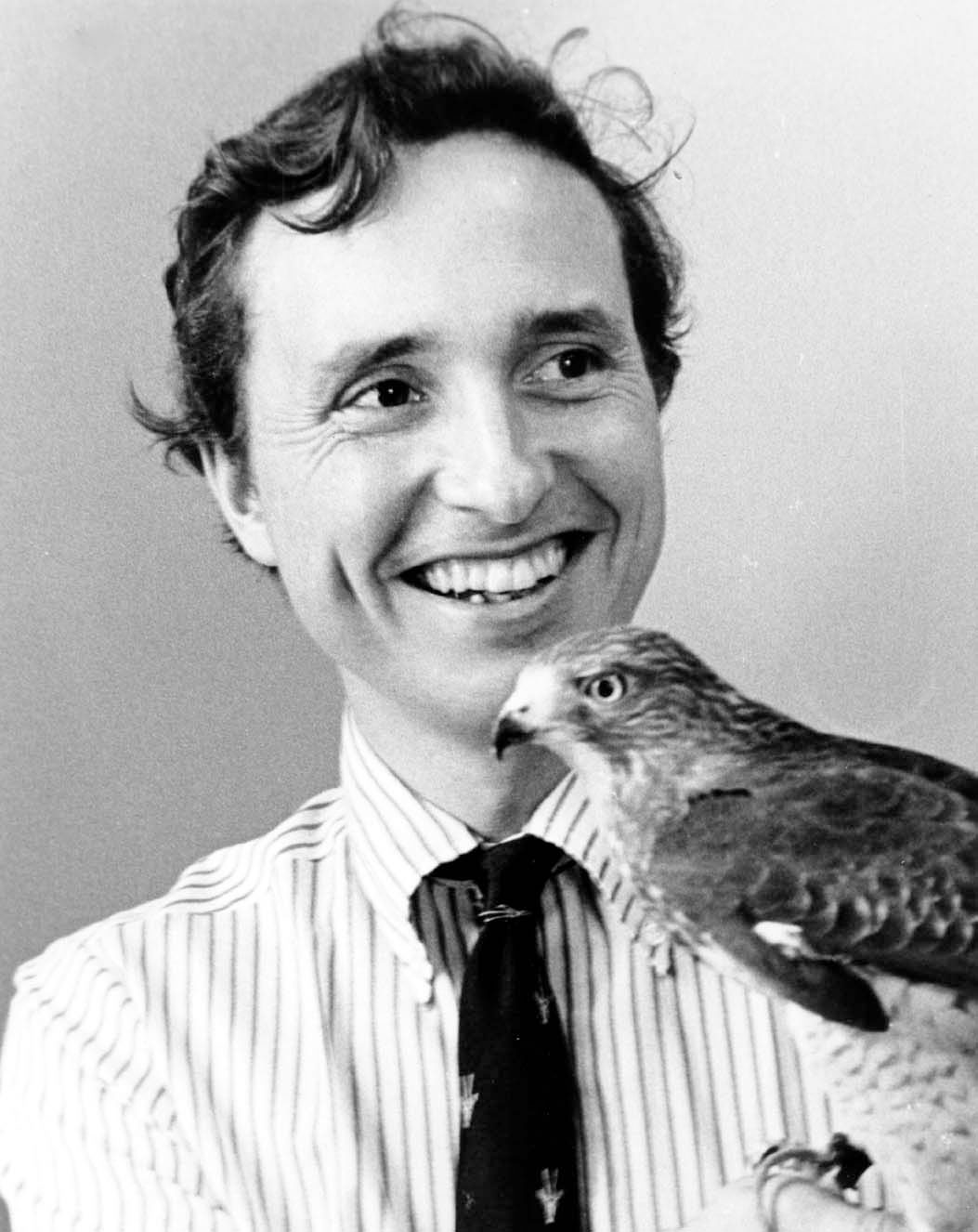
The Boy with the Bird Book
Thomas Eugene Lovejoy was born in New York City in 1941, an only child raised in privilege on the Upper East Side. His origin story begins on a family vacation to the Caribbean when he was eight years old. His uncle gave him a field guide to Caribbean birds. The boy became obsessed. He started keeping lists, tracking species, learning taxonomy. By the time he was a teenager, he knew he wanted to work in the tropics.
He went to Yale for college and stayed for his PhD, studying bird biology in the Brazilian Amazon. This was 1965. The Amazon was still considered infinite, impenetrable, mostly unmapped. Development had barely begun. Lovejoy spent his dissertation years tracking birds through primary rainforest near Belém, learning the ecosystems that would become his life's work.
He kept coming back. After finishing his doctorate, Lovejoy returned to the Amazon repeatedly throughout the late 1960s and early 70s, building relationships with Brazilian scientists and watching the forest with the kind of attention that only comes from intimate familiarity. He knew specific trails, specific trees, the seasonal movements of bird populations. The Amazon wasn't an abstract research site. It was a place he understood in the way you understand your own neighborhood.
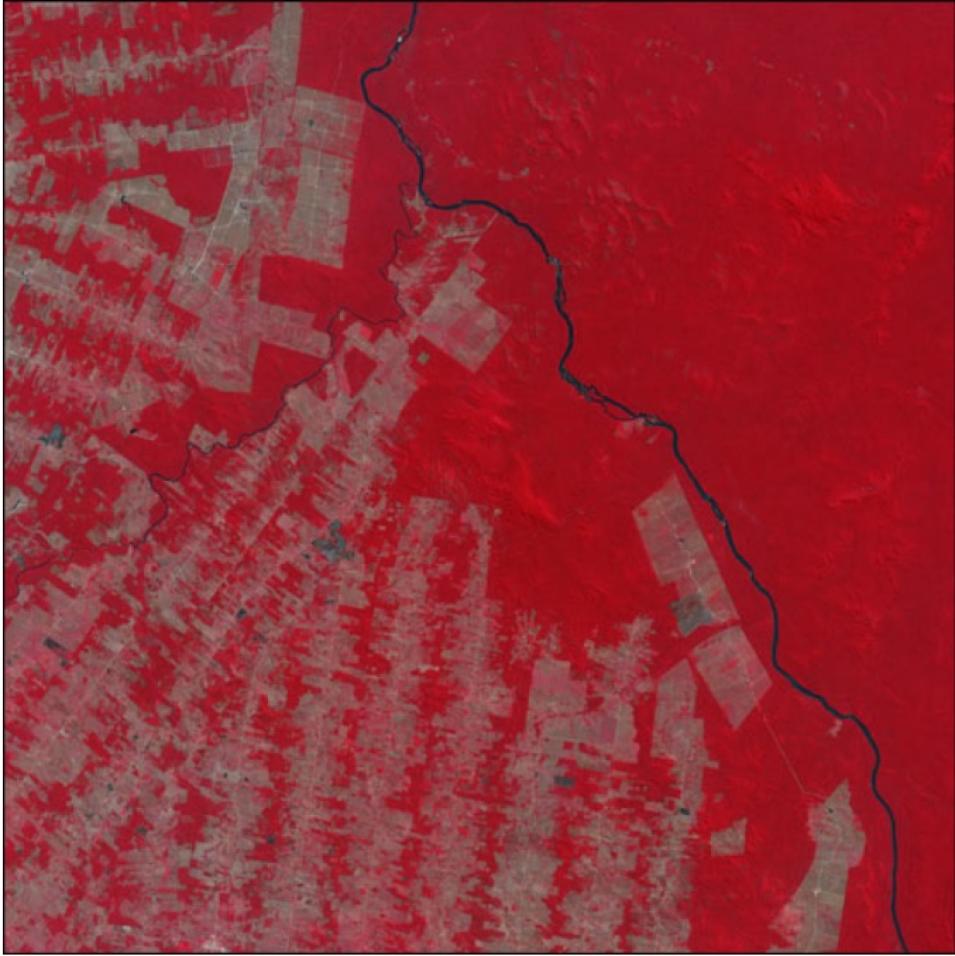
Which made watching it die that much harder. By the early 1970s, Brazil's military government had launched a massive development push. Roads cut deep into forest that had been roadless. Ranchers cleared thousands of hectares for subsidized cattle operations. Tax breaks rewarded anyone willing to destroy trees. The Trans-Amazonian Highway carved through previously untouched forest. Places Lovejoy had walked through as continuous canopy became patchworks of clearings separated by shrinking fragments. The destruction was systematic, government-funded, and accelerating.
At the same time, conservation biologists were stuck in a theoretical argument that was going nowhere. The debate was called SLOSS: Single Large or Several Small. If you had limited land to protect, was it better to create one big reserve or several smaller ones totaling the same area? The argument was based on island biogeography theory, pioneered by Robert MacArthur and E.O. Wilson. Islands lose species over time because small, isolated populations are vulnerable to extinction. But did that apply to forest fragments? Nobody had tested it. The debate was all theory, no data.
Lovejoy saw an opportunity. Brazilian law required ranchers to leave 50% of their land forested. What if you could convince them to leave that forest in scientifically useful patterns? What if you measured everything before clearing, then tracked what happened after? You could turn uncontrolled deforestation into a controlled experiment. You could finally answer SLOSS with data.
In 1976, Lovejoy pitched the idea to the World Wildlife Fund, where he worked as vice president for science. They funded it. He pitched it to Brazil's National Institute for Amazonian Research. They partnered. He pitched it to ranchers near Manaus who were about to clear their land anyway. They agreed, as long as the science didn't interfere with cattle operations. In 1979, the project formally began. They called it the Minimum Critical Size of Ecosystems Project. Later it would be renamed the Biological Dynamics of Forest Fragments Project. Either way, the acronym was terrible, but the findings would reshape conservation biology.
The Experiment: Making Islands in the Forest
The setup was deceptively simple. Researchers marked out forest plots of different sizes: one hectare, ten hectares, one hundred hectares. They inventoried everything before clearing. Bird species. Mammal tracks. Tree composition. Insect populations. Seed densities. Microclimate measurements. They strung mist nets to catch and band birds. They walked transects counting primates. They set camera traps for jaguars and peccaries.
Then the ranchers cleared around the plots, leaving the experimental forests as islands surrounded by cattle pasture. The rare genius of the project was this before-and-after measurement. Most fragmentation studies look at already-isolated patches and try to infer what was lost. This experiment knew exactly what had been there, which meant every loss could be precisely documented.

What happened next was worse than anyone expected.
The problems began at the edges. When you clear forest around a fragment, you create an artificial boundary that the rainforest ecosystem is not evolved to handle. The edge is suddenly exposed to wind, heat, and direct sunlight. Trees that spent centuries growing in humid, shaded, windless understory are abruptly subjected to harsh, dry, turbulent conditions.
They started dying. Big trees toppled. Canopy gaps opened. Pioneer species and vines invaded. The edge effect penetrated at least 100 meters into the fragment, sometimes 300 or 400 meters when wind turbulence was involved. In a one-hectare plot, that meant the entire fragment was edge. There was no interior left.
The species losses followed a brutal pattern. Larger, roaming mammals disappeared first. Specialists that needed specific food sources vanished quickly. Insectivorous and frugivorous birds declined. Monkeys left or died. Shade-loving butterflies were replaced by generalists that thrive in disturbed areas.
The ecosystem didn't just lose species. It was replaced. Complex rainforest biodiversity decayed into simpler, weedy, disturbed-habitat communities. Lovejoy called this process ecosystem decay. Even the hundred-hectare plots, supposedly large enough to stay stable, kept losing species. "The 100-hectare plots will continue to change over hundreds of years," he told an interviewer late in his life. There was no equilibrium point. Just ongoing, measurable decline.
This was the breakthrough. Conservation isn't a one-time act of protection. It's permanent defense against decay. An isolated protected area begins dying the moment you cut it off from the larger ecosystem. The death is slow, measured in centuries, but inevitable unless connectivity is maintained.
For decades, Lovejoy split his time between Washington policy work and the Manaus research station. He'd fly back to Brazil, visit the fragments, consult with researchers, then return to DC with fresh data that made theoretical debates suddenly concrete. The fragments weren't abstractions. They were numbered plots with documented species lists and measurable decline rates. And they were providing definitive answers to questions conservation biologists had been arguing about for years.
The Answer to SLOSS
The data answered the SLOSS debate decisively. Single large reserves are vastly superior to several small ones. But in a world where humans dominate most landscapes, single large is rarely an option. The real answer wasn't single large versus several small. It was connected versus isolated.
Back in Manaus, researchers documented something Lovejoy hadn't predicted. Many of the cattle ranches surrounding the fragments failed economically within a few years of the experiment's start. Ranchers abandoned their pastures. Left alone, the pastures began regrowing into secondary forest. And the fragments that reconnected, no longer isolated, began to recover.
The recovery was slow but measurable. Forest-dwelling birds started recolonizing the regrowing areas. Most species needed decades. Terrestrial insectivores avoided secondary forest for many years, only crossing once the understory had developed enough structural complexity. Some species required 50 years or more to fully recolonize. But the fragments that reconnected stabilized. Species diversity stopped declining. The fragments that remained isolated continued their slow collapse. The contrast provided the cleanest possible evidence: connectivity wasn't theoretical. It was the difference between ecosystem recovery and ecosystem death.
The land between fragments matters just as much as the fragments themselves. In Lovejoy's Amazon, that land was cattle pasture. Some species could cross it, especially where scattered trees remained. Ecologists call this the matrix, and its quality determines whether animals can actually move between forest patches. Cattle pasture turned out to be a relatively permeable matrix. But industrial monoculture is different. Pineapple or oil palm plantations are biological deserts. No trees, heavy pesticide use, zero habitat value. They create a hard barrier that functionally isolates fragments as effectively as total deforestation.
Lovejoy's work provided the first massive, empirical argument for wildlife corridors. It pushed policymakers to think bigger and be more ambitious. And it established that conservation areas needed to be large and intact, or failing that, functionally connected. Anything else was just slow-motion extinction.
The Godfather of Biodiversity
In 1984, Lovejoy sat in a congressional hearing about World Bank loans to developing countries. He was executive vice president of World Wildlife Fund by then, wearing the jacket and bowtie he'd adopted for Washington meetings. The hearing was about environmental impacts of development lending. Lovejoy listened to testimony about Latin American countries drowning in debt, cutting every program they could to make interest payments. Environmental protection always went first.
He had an idea. What if countries could pay down foreign debt by investing in conservation instead? He wrote an op-ed for the New York Times proposing debt-for-nature swaps. Three years later, Bolivia implemented the first one. Conservation International bought $650,000 of Bolivian debt from a US bank for $100,000, then forgave it in exchange for conservation commitments. The mechanism became one of international conservation's major funding tools.
Throughout all this policy work, Lovejoy never stopped returning to the Amazon. Camp 41, the tin-roofed research station deep in the fragments project, became his tool for converting data into political will. In the late 1980s, after Lovejoy shared satellite evidence of Amazon deforestation with Congress, Senators Tim Wirth, Al Gore, and John Heinz made the trip to Manaus. They slept in hammocks strung between posts—the only way to reduce the odds of scorpions creeping into sleeping bags. Lovejoy walked them to fragment edges, showed them the hard boundaries where clearing stopped, pointed to the dead trees at the borders, explained what ecosystem decay looked like in real time.
Over the years, Tom Cruise, Walter Cronkite, Tom Brokaw, and other powerful voices made the same journey. They ate tambaqui fish, drank caipirinhas, woke to softball-sized jaguar tracks where a cat had walked through camp during the night. Lovejoy understood that recruiting allies for preservation required more than scientific papers. It required showing people what was being lost, making the abstractions concrete, letting them feel the difference between living forest and dying fragments.
Camp 41 wasn't his only venue for building conservation networks. Back in McLean, Virginia, he hosted dinners at Drover's Rest, a log cabin where senators, scientists, and foundation heads gathered over fine wine to discuss forest policy. The Amazon field station showed them dying fragments. The cabin brought them together to figure out what to do about it.
He also became known for popularizing the term "biological diversity" in the 1980s, shortened to "biodiversity." Around 1975, he'd had lunch with E.O. Wilson and they'd discussed the need for a better term than "species richness." Both started using "biological diversity" independently. The word didn't exist in common usage before Lovejoy championed it. Now it's the foundation of international conservation policy.
When he died on Christmas Day 2021 at age 80, the tributes called him "the godfather of biodiversity." But the title sells him short. He didn't just name biodiversity or invent funding mechanisms. He provided the operational manual: how ecosystems collapse and what's required to prevent that collapse. The fragment experiment still runs, still produces data, still trains researchers. Some plots have reconnected to continuous forest as pastures were abandoned. Others remain isolated. The comparison provides the evidence: connectivity works, isolation kills.
The Final Warning
By 2018, Lovejoy had spent nearly fifty years watching deforestation spread across the Amazon. What he'd learned from his experimental plots pointed to something far more alarming than isolated ecosystem decay. The fragmentation patterns he'd documented at the hectare scale were playing out across the entire basin. And the Amazon, unlike his experimental fragments, wasn't just a biological system. It was a climate system. The rainforest generates approximately half of its own rainfall by recycling moisture five to six times as air masses move from the Atlantic across the basin to the west. Fragment the forest enough, and that hydrological cycle breaks.
That February, Lovejoy and Carlos Nobre, South America's leading climate scientist, published a warning in Science Advances. The Amazon was approaching a tipping point. Earlier estimates had suggested the system would flip from rainforest to degraded savanna at around 40% deforestation. Lovejoy and Nobre's analysis, informed by recent drought severity and fire dynamics, put the deforestation threshold much lower: 20-25%. The negative synergies between clearing, climate change, and widespread fire use were accelerating the system toward collapse. That same year, Lovejoy co-founded the Amazon Biodiversity Center to ensure the fragments project would continue beyond his lifetime, training researchers and documenting ecosystem decay whether the world heeded his warnings or not.
The droughts of 2005, 2010, and 2015-16 had been severe enough to turn parts of the Amazon from carbon sink to carbon source. Trees died standing, releasing stored carbon. Rivers dried. Fish populations crashed. These weren't normal climate variability. They were, Lovejoy and Nobre argued, the first flickers of an ecological tipping point. And the deforestation at that time was already substantial: 17% across the entire Amazon basin, approaching 20% in the Brazilian Amazon. The threshold they'd identified wasn't some distant theoretical boundary. The Amazon was already inside the danger zone.
The consequences of crossing that threshold would be catastrophic. The eastern, southern, and central Amazon would flip to non-forest ecosystems. Regional climate would shift. The remaining forest would die back. Biodiversity would crash. Massive amounts of stored carbon would release to the atmosphere, accelerating global warming. And the dieback wouldn't stop at Brazil's borders. The Amazon's moisture recycling affects rainfall patterns across South America, including the agricultural regions that feed hundreds of millions of people. Lovejoy's fragment experiments had shown how isolated patches die. Now the same principles applied to the largest rainforest on Earth.
In April 2021, the scientific community finally inducted Lovejoy into the National Academy of Sciences, recognition that had come decades late for work that had reshaped conservation biology. Eight months later, on Christmas Day, he died at age 80. The deforestation had accelerated. The warning he'd spent a lifetime building toward—first in fragments, then in policy, finally at planetary scale—remained unheeded. The Amazon was still fragmenting. The tipping point was still approaching. And the world was still deciding whether it would listen.
Costa Rica's Test
Lovejoy's work traveled beyond the Amazon. By the 1990s, his BDFFP findings had become essential reading for conservation planners worldwide. In Costa Rica, where forest cover had collapsed to 23% by the 1980s before beginning its recovery, his science provided both warning and blueprint. Carlos Manuel Rodríguez, who would become Costa Rica's environment minister and later CEO of the Global Environment Facility, later credited Lovejoy directly: "He inspired a whole generation of conservationists, including in my home country of Costa Rica. His work in the consolidation of our system of protected areas, particularly in Osa, is a living testimony of his vision."
The lesson was clear: protected areas, no matter how numerous, risk ecosystem decay if they become isolated islands. Costa Rica's answer was the National Biological Corridors Program, established to prevent exactly the kind of fragmentation Lovejoy had documented. By the 2020s, 44 designated corridors covered approximately one-third of the country with the explicit goal of maintaining functional connectivity. The design drew directly from BDFFP findings: large core protected areas connected by corridors with managed matrix quality to allow species movement.
But the corridor program has a vulnerability. The land is privately owned, managed through voluntary participation and payment incentives. Industrial monoculture, particularly pineapple plantations, is expanding into critical areas. Luxury development compounds the threat: gated communities, resort projects, infrastructure that fragments corridors as effectively as industrial agriculture. The corridors are attempting to maintain connectivity, but against mounting pressure that risks replicating exactly the kind of ecosystem decay Lovejoy documented.
Jaguars prove the point. Lovejoy's work predicted larger mammals disappear first from isolated fragments. Recent research shows corridor areas have lower jaguar occupancy than protected parks. When corridors fail for jaguars, they've already failed for hundreds of less charismatic species. The test of Costa Rica's conservation model isn't whether corridors exist on paper. It's whether jaguars can actually move between Corcovado and the Talamanca mountains, whether bats maintain genetic diversity, whether the matrix between fragments stays permeable enough for wildlife to cross.
Costa Rica markets itself as a green paradise. That reputation is built on functional corridors. If those corridors are severed, the marketing becomes fiction. The parks will decay following the exact timeline Lovejoy documented. The decay is slow enough that tour operators can pretend nothing is wrong for decades while the system underneath loses complexity, specialists, and resilience. The choice is between real conservation and theater. Lovejoy provided the data to tell the difference.
References & Further Reading
Core Research & Scientific Publications
Comprehensive technical overview of the BDFFP project methodology, findings on edge effects, species loss patterns, and long-term ecosystem dynamics in isolated forest fragments.
Three-decade review documenting cumulative and variable edge effects, demonstrating that ecosystem decay is an ongoing process that continues far longer than initial predictions suggested.
Detailed examination of the "ecosystem decay" concept introduced by Lovejoy, showing how fragmented forests hemorrhage species systematically over decades rather than experiencing one-time losses.
Analysis of how edge effects vary with age, demonstrating that as vine proliferation "seals" fragment edges, some microclimatic stresses lessen while wind turbulence paradoxically increases.
Comprehensive 40-year bird study documenting species recovery in reconnected fragments, including finding that terrestrial insectivores like Formicarius colma avoided secondary forest for 27-31 years before recolonizing once understory complexity developed.
Lovejoy's Life & Legacy
Tribute examining Lovejoy's role in popularizing the term "biological diversity" and his decades-long influence on international conservation policy and scientific practice.
Interview with Lovejoy reflecting on the SLOSS debate origins, the political challenges of convincing ranchers to participate, and how the project "pushed policymakers to think bigger."
Comprehensive obituary covering Lovejoy's early bird-watching origins, his dissertation work in Brazil, establishment of the fragment experiment, and prediction that 100-hectare plots would "continue to change over hundreds of years."
International conservation community's tribute detailing how the BDFFP established that "conservation areas needed to be large and intact" or, failing that, functionally connected.
Lovejoy's original 1984 op-ed proposing debt-for-nature swaps, arguing that developing countries could pay down foreign debt by investing in conservation instead of extracting natural resources.
Documentation of debt-for-nature swap mechanism, including the pioneering 1987 Bolivia deal where Conservation International purchased $650,000 of debt for $100,000 and forgave it in exchange for conservation commitments.
Obituary detailing Lovejoy's use of Camp 41 to recruit conservation allies, including the late 1980s visit by Senators Tim Wirth, Al Gore, and John Heinz after Lovejoy shared satellite evidence of Amazon deforestation with Congress.
Statement from Carlos Manuel Rodríguez (former Costa Rican Environment Minister, CEO of Global Environment Facility) crediting Lovejoy's direct influence on Costa Rica's protected area system, particularly in Osa Peninsula consolidation.
Landmark 2018 paper warning that Amazon rainforest could reach tipping point at 20-25% deforestation (lower than previous 40% estimates), with negative synergies between deforestation, climate change, and fire pushing the system toward savanna collapse. Documents droughts of 2005, 2010, and 2015-16 as early warning signs.
Application to Costa Rica: Corridors & Connectivity
Overview of Costa Rica's National Biological Corridors Program (PNCB), detailing its 44 designated corridors covering 34% of national territory and explicit focus on "structural and functional ecosystem connectivity."
Technical documentation of corridors designed to connect Corcovado National Park with Talamanca highlands, implementing the connectivity principle Lovejoy's work established as essential.
Camera trap study showing mammal richness significantly lower in corridor areas than in protected parks, demonstrating ecosystem decay is occurring in designated corridors that lack functional connectivity.
Genetic study proving pineapple plantations functionally sever corridors for specialist bat species, demonstrating that industrial monoculture creates "hard matrix" barriers Lovejoy warned against.
Analysis using jaguar as "umbrella species" to test corridor functionality, echoing Lovejoy's finding that "larger, roaming mammals" are first species lost from isolated fragments.
Costa Rica's Conservation Context
Documentation of Costa Rica's "forest revolution" reversing deforestation from 40% cover (1987) to nearly 60% today, establishing context for why Lovejoy's connectivity science became nationally critical.
Analysis of how Costa Rica's recovery from fragmentation parallels conditions Lovejoy studied in Amazon, and how new threats from industrial monoculture create "biological desert" matrix unlike earlier cattle pasture.